

P2800 on 2013-2019 Ford Escape 6F35: Transmission Range Sensor 'B' Circuit Causes and Fixes
On a 2013-2019 Ford Escape, code P2800 is most often caused by a faulty internal Transmission Range Sensor (TRS), which is part of the molded lead frame assembly inside the transmission. This is a complex repair requiring valve body removal and reprogramming, costing $600-$1200 at a shop. The lead frame assembly is often part number AE8Z-7G276-D or AE8Z-7G276-A. Before attempting this, inspect external wiring harnesses for corrosion or damage, a less common but much cheaper fix.
- P2800 on a 2013-2019 Escape points to a fault in the Transmission Range Sensor 'B' circuit.
- The sensor is INTERNAL, part of the molded lead frame on the valve body. Do not buy an external sensor.
- Before condemning the internal part, thoroughly inspect external wiring and connectors for corrosion, especially if symptoms appeared after rain.
- Replacing the lead frame is a complex job that requires removing the valve body and mandatory computer reprogramming with a tool like FORScan.
- Due to the complexity and risk of a rollaway or no-start condition, this repair is best left to a professional unless you are an experienced DIY mechanic with the proper tools.
What's Unique About the 2013-2019 Ford Escape
The key issue for the 6F35 transmission in the 2013-2019 Escape is that the Transmission Range Sensor (TRS) is not a simple, external bolt-on part. It is integrated into a component called the 'molded lead frame,' which is mounted to the valve body inside the transmission. This makes replacement a much more involved job than on many other vehicles, requiring removal of the transmission pan and valve body, plus mandatory computer reprogramming with the new part's specific calibration data.
Symptoms You May Notice
- Check Engine Light is on
- Vehicle will not start, especially when in Park
- Engine may only start when in Neutral
- Incorrect gear position displayed on the instrument cluster (e.g., shows 'R' when in 'D')
- Transmission enters 'limp mode' (may feel stuck in 3rd gear)
- Harsh or delayed shifting
- Reverse lights do not work correctly
- Wrench light may be illuminated on the dash
- Replacing the external shift linkage cable. A cable issue is mechanical and unlikely to cause a specific 'B' circuit electrical fault code.
- Purchasing an external Transmission Range Sensor (like Motorcraft SW-6817). This part is for different Ford transmissions and will not fit the 6F35, which uses an internal sensor.
Most Likely Causes
- Failed Internal Molded Lead Frame / Transmission Range Sensor 🔴 High Probability → Shop Transmission Assembly The TRS is part of a complex electronic assembly inside the transmission, exposed to heat and fluid. Over time, the internal circuitry can fail, causing a loss of signal. This is a well-documented failure point on 6F35 transmissions.
How to confirm: After confirming external wiring is intact, a diagnostic scan tool can monitor the TRS PIDs (Parameter IDs). If the 'B' circuit shows an invalid or static signal while shifting gears, the internal lead frame has likely failed. This is a process of elimination after checking external factors.
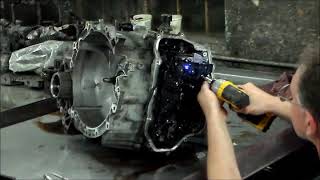
Typical fix: Replace the entire molded lead frame assembly, which is attached to the valve body inside the transmission. This requires draining the fluid, dropping the pan, removing the valve body, swapping the lead frame, and reinstalling. 🎬 See: 6F35 valve body and solenoid replacement walkthrough The PCM must then be reprogrammed with the new solenoid strategy ID provided with the new part.
Est. part cost: $200-$450 - Damaged or Corroded Wiring / Connectors 🟡 Medium Probability Ford TSB SSM 47790 for the related C-MAX/Fusion platform highlights a known issue of water intrusion into body harness connectors, causing this exact code. The Escape shares a similar design, making connectors in the driver's kick panel and under the hood susceptible to corrosion from moisture. The TSB specifically calls out connectors C134, C1812, and others for inspection.
How to confirm: Visually inspect the main transmission harness connector (C1812) and body harness connectors (like C134 in the driver's kick panel) for any signs of green or white corrosion, moisture, or pushed-out pins. Perform a continuity and voltage drop test on the TRS 'B' circuit wires between the transmission and the PCM.
Typical fix: Clean the corroded connector pins using a specialized contact cleaner and small brush. Apply dielectric grease to the connector seal to prevent future moisture intrusion. If the wiring is physically damaged, it will need to be repaired or spliced.
Est. part cost: $5-$25
Rare But Worth Checking
- Faulty Powertrain Control Module (PCM): → Shop Engine Control Module (ECM) This is rare. The PCM should only be considered after both the internal lead frame and all related wiring have been thoroughly tested and proven to be good.
- Chafed Wiring Harness: Ford has issued TSBs for the 2017-2019 Escape (SSM 48895, SSM 47086) regarding wiring harnesses chafing due to improperly installed retainers. While P2800 is not explicitly listed in these bulletins, a chafed wire could short the TRS circuit, making it a plausible, though uncommon, cause.
Diagnosis Steps
- Scan for all DTCs in the PCM and TCM to see if other codes are present, such as P0706 or P0707.
- Using a capable scan tool, monitor the live data for the Transmission Range Sensor circuits (TR_A, TR_B, etc.). Observe if the values change correctly as you move the shifter through each gear (P, R, N, D). An unchanging or invalid reading on the 'B' circuit points to the problem area.
- Perform a thorough visual inspection of the main external transmission connector for any signs of corrosion, damage, or loose pins. Also inspect key body harness connectors, particularly in the driver-side kick panel area (Connector C134), for evidence of water intrusion as noted in TSB SSM 47790.
- If connectors look clean, perform a continuity test on the wires for the TRS 'B' circuit between the transmission connector and the PCM connector to rule out a broken wire.
- Check for voltage and ground at the transmission connector for the TRS circuit. A loss of power or ground points to a wiring issue, not a failed sensor.
- If all external wiring, connectors, power, and ground test good, the fault is almost certainly the internal molded lead frame assembly.
Parts You'll Likely Need
- Molded Lead Frame / Conductor Plate
(OEM #AE8Z-7G276-A / AE8Z-7G276-D)— This assembly contains the internal Transmission Range Sensor (TRS) that is the most common point of failure for a P2800 code. It is not sold as a separate sensor. Part number may vary, always confirm with VIN. The AL3Z-7G276-D part is for the 6R80 transmission found in trucks and is not correct for the Escape.
Trusted brands: Motorcraft, Dorman
OEM price range: $170-$250
Aftermarket price range: $180-$250 - Transmission Pan Gasket — The transmission pan must be removed to access the valve body and lead frame. The gasket should always be replaced.
Trusted brands: Motorcraft, Fel-Pro
OEM price range: $25-$40
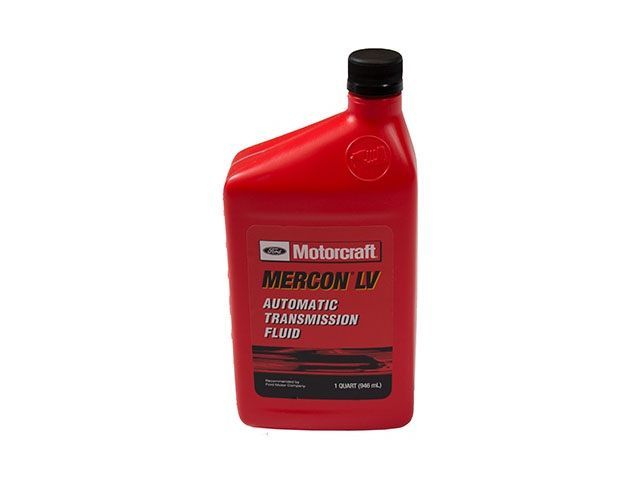
Aftermarket price range: $15-$30 - Motorcraft MERCON LV Automatic Transmission Fluid
(OEM #XT-10-QLVC)— Approximately 6-8 quarts will be needed to refill the transmission after dropping the pan. This is the required fluid type for the 6F35 transmission.
Trusted brands: Motorcraft
OEM price range: $8-$12 per quart
Related Codes That Often Appear With This One
- P0707 — This code is for 'Transmission Range Sensor Circuit Low Input'. Seeing it with P2800 strongly suggests a problem with the sensor or its connector, as multiple circuits are faulting simultaneously.
- P0706 — This code indicates 'Transmission Range Sensor Circuit Range/Performance'. It often appears with P2800 and points towards a sensor that is providing an erratic or illogical signal.
- P2802 — This code is for 'Transmission Range Sensor 'C' Circuit'. Like P2800, it points to a fault in one of the redundant sensor circuits. TSB SSM 47790 lists this code alongside P2800 as a common result of water intrusion.
Technical Service Bulletins (TSBs) & Recalls
- SSM 47790: While written for the Ford C-MAX and Fusion with 2.0L HEV/PHEV engines, this TSB is highly relevant as it addresses code P2800 caused by water intrusion into electrical connectors (C134, C1812, etc.) on a similar platform. The bulletin notes that vehicles may exhibit multiple drivability concerns with codes P2800 and P2802 being common.
- SSM 48895 / SSM 47086: These TSBs relate to wiring harness chafing on 2017-2019 Escapes due to improperly installed retainers. While not listing P2800 specifically, they establish a known potential for wiring harness damage on this platform.
Platform-Specific Known Issues
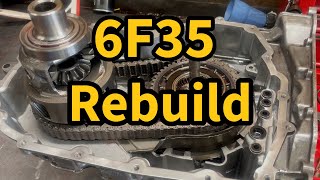
- The internal location of the Transmission Range Sensor within the molded lead frame is the most critical vehicle-specific issue. This design choice turns a potentially simple sensor replacement into a significant transmission service requiring valve body removal. 🎬 Watch: Step-by-step 6F35 transmission rebuild guide
Mechanic-Grade Diagnostic Values
- TRS Signal Wire Voltage (Live Data) — expected: Smoothly transition from ~0.5V to ~4.5V as the shifter moves from Park to Drive.. Failure: Voltage is stuck, erratic, jumps, or reads 'Invalid' or 'Fault' on the scan tool.
- TRS Harness Circuit Continuity — expected: Less than 5 ohms.. Failure: Resistance greater than 5 ohms indicates an open or high resistance in the circuit.
- TRS Harness Circuit Resistance to Ground — expected: Greater than 10,000 ohms (>10 kΩ).. Failure: Resistance less than 10,000 ohms indicates a short to ground in the wiring harness.
- TRS Duty Cycle (TR_DC PID) — expected: Park: ~15.5%, Reverse: ~33-35%, Neutral: ~40-47%, Drive: ~58-61%.. Failure: The duty cycle percentage is out of range for the selected gear, is erratic, or does not change when shifting.
Scan Tool Commands That Help
- Ford IDS / FORScan: Module Programming > Programmable Parameters > Transmission — This function is required after replacing the molded lead frame (conductor plate). It allows the technician to enter the new 13-digit Solenoid Body Strategy and 8-digit Solenoid Body ID numbers that come with the new part. This calibrates the PCM/TCM to the specific flow rates of the new solenoids, which is critical for proper shift quality.
- Ford IDS / FORScan: Service Functions > Clear Transmission Adaptive Tables — This should be performed after replacing the lead frame and programming the new solenoid strategy. It erases the learned values the transmission has adapted over time to compensate for wear. A relearn procedure (a series of specific upshifts and downshifts) must be performed after clearing the tables.
Wiring & Ground Locations
- C134 — An inline harness connector located in the driver's side kick panel area, inside the cabin. It can also refer to a connector behind the driver's side front bumper near the headlamp on related platforms.. This connector is a known weak point for water intrusion from clogged cowl or sunroof drains. TSB SSM 47790 identifies it as a primary cause of corrosion that can disrupt the TRS signals, leading to P2800.
- C1812 — The main 16-pin electrical connector on the transmission case for the lead frame. On related platforms like the C-Max, it can also refer to a connector in the passenger footwell. For the Escape 6F35, this is the main external connection point to the internal lead frame.. This is the primary external connector to test the TRS circuits. All voltage, ground, and signal wires for the internal lead frame pass through here. Corrosion or pushed-out pins at this location will directly cause TRS circuit faults.
- G104 / G105 — Main engine compartment ground points, typically located on the inner fender apron on the driver's side (left front of engine compartment).. The PCM and its sensor circuits rely on clean ground connections. A corroded or loose G104/G105 ground can cause erratic sensor readings and communication issues, including TRS faults.
Real Owner Repair Stories
- Ford C-Max Hybrid Forum user (Ford C-Max (platform mate to Escape)) — No-start condition with P2800 code present.
❌ Tried (didn't work) Initial diagnosis pointed towards internal transmission failure.
✅ What actually fixed it The user found significant corrosion in connector C134, located in the driver's kick panel. Cleaning the corrosion from the connector resolved the no-start condition and cleared the P2800 code. - NHTSA ODI #10845590 — An owner reported that both P2803 and P2800 sensors were defective, noting that the cost to repair the hydraulic control was significantly high.
OEM Part Supersession History
AE8Z-7G276-A→AE8Z-7G276-D (and other revisions like B, C, E, F)— Revisions to improve reliability and address failure points in the internal circuitry of the molded lead frame.
Heads up: It is critical to use the correct part for the 6F35 transmission. Part number AL3Z-7G276-D is for the 6R80 transmission used in F-150s and Mustangs and is physically different and will not work. Always verify the part number with the vehicle's VIN.
Model Year Variations Within This Range
- 2013-2019: While the 6F35 was used throughout this generation, there were internal updates and part revisions. For example, remanufacturers note that models with 1.5L and 1.6L engines had specific torque converter failure issues that were addressed with updated parts. The lead frame itself went through multiple revisions (A, B, D, etc.) over the years. It's crucial to match the replacement part to the vehicle's specific VIN to ensure compatibility.
Diagnostic Flowchart
Other Known Issues on This Vehicle
Issues unrelated to this code that are worth knowing about as an owner of this generation:
- EcoBoost Engine Coolant Intrusion 🔴 High — Common on 1.5L, 1.6L, and 2.0L EcoBoost engines. Can occur at various mileages, often leading to engine replacement. (Ref: TSB 20-2100 (supersedes 19-2375) for 1.5L engines; Recall 13S12 for 1.6L; Subject of multiple class-action lawsuits for all engine sizes.)
- General 6F35 Transmission Harshness/Shudder 🟠 Medium → Shop Transmission Assembly — Widespread complaints of harsh shifting, shuddering between 35-45 mph, and delayed engagement. Often attributed to torque converter issues or fluid breakdown. (Ref: Subject of class-action lawsuits (e.g., Jones et al. v. Ford Motor Company), but no specific recall for this general condition.)
- AWD Rear Drive Unit (RDU) Shudder/Clunk 🟠 Medium — On AWD models, a clunk or shudder from the rear during slow-speed turns may occur. This is often due to a failing viscous coupler clutch in the RDU. (Ref: SSM 46965)
- Degrading Shifter Cable Bushing 🟠 Medium — The bushing that attaches the shifter cable to the transmission can degrade, potentially causing the vehicle to be in a different gear than indicated or roll away. (Ref: Recall 22V413000 for some 2015 models, but the issue can affect other years.)
Used vs. New Parts: Buying Guide for This Vehicle
When a used part is the smart pick: A used part is generally NOT recommended for the molded lead frame. It is a high-failure electronic component, and a used part carries a high risk of premature failure. A used wiring harness connector (pigtail) or a complete body harness from a junkyard can be a very cost-effective solution if the failure is due to a damaged connector and not the internal lead frame.
Donor-vehicle mileage cap: roughly under 60000 miles for the part to have meaningful remaining life.
What to inspect on the donor part:
- For connectors: Check for zero signs of green or white corrosion on the pins.
- For connectors: Ensure the plastic housing is not brittle or cracked and that the locking tabs are intact.
- For a complete harness: Inspect the entire length for any signs of chafing, melting, or previous repairs (e.g., splices wrapped in electrical tape).
OEM-only on this vehicle (don't cheap out):
- Transmission Fluid (Motorcraft MERCON LV): The use of non-specified fluid can cause shift quality issues and long-term damage. There is no reason to risk using anything else.
- Molded Lead Frame: While aftermarket options exist, the OEM Motorcraft part is the most trusted replacement. Given the high labor cost, using a part with the highest probability of success is recommended.
Aftermarket brands forum-validated for this vehicle:
- Jasper (Remanufactured Transmission): For a complete transmission failure, Jasper is a well-regarded remanufacturer that often includes updates to address original design flaws.
Brands owners have reported issues with on this vehicle:
- Dorman (for Lead Frame/Solenoid Pack): While Dorman makes a replacement (e.g., 609-040 for other models), reviews are mixed, with some users reporting out-of-box failures. Given the extensive labor to replace this part, the risk of a faulty aftermarket unit may outweigh the cost savings.
Real Owner Stories
Aggregated from forums and TSBs cited above. Mileages and costs reflect what owners reported in those sources.
2017 Ford Escape Titanium
Symptoms: Slipping, harsh shifting, and a 'Transmission Fault Service Now' message appeared on the dash.
What fixed it: Replacement of the transmission control module (part of the lead frame) and programming using FORScan or a Ford mechanic.
Source hint: Reddit r/fordescape thread titled 'transmission'
2013-2020 Ford Fusion
Symptoms: Code P2800 triggered by water intrusion into electrical connectors.
What fixed it: Inspection and cleaning of connectors C134 and C1812 for corrosion or moisture.
Source hint: TSB SSM 47790
Ford Escape Hybrid Owner
Symptoms: Diagnostic codes P2803 and P2800 present.
What fixed it: The owner reported both sensors were defective and required a high-cost repair to the hydraulic control system.
Source hint: NHTSA ODI #10845590
Related OBD-II Codes
Frequently Asked Questions
Does TSB SSM 47790 apply to my Ford Escape if I have code P2800?
My 2017 Escape is stuck in gear and has a wrench light; could this be the wiring harness issue mentioned in SSM 48895?
Can I use a used molded lead frame to fix the P2800 code on my 6F35 transmission?
Why does my Escape only start in Neutral when the P2800 code is present?
Is the P2800 code related to the shifter cable bushing recall on my 2015 Escape?
Do I need to program anything after replacing the lead frame on my 6F35 transmission?
Helpful Videos

We Have This Part in Stock




The information in this article is provided for general reference and educational purposes only. Vehicle specifications, procedures, and part compatibility can vary by production date, trim level, and region. Always consult your vehicle's factory service manual and verify part numbers before purchasing or performing repairs. Safety-critical components such as airbags, seat belts, and braking systems should be installed by a qualified professional.
- Ford Escape:
- 🧭 Diagnostic Flowchart
- 🎬 Helpful Videos
- 🛍️ Shop This Part
- What's Unique About the 2013-2019 Ford Escape
- Symptoms You May Notice
- Most Likely Causes
- Rare But Worth Checking
- Diagnosis Steps
- Parts You'll Likely Need
- Related Codes That Often Appear With This One
- Technical Service Bulletins (TSBs) & Recalls
- Platform-Specific Known Issues
- Mechanic-Grade Diagnostic Values
- Scan Tool Commands That Help
- Wiring & Ground Locations
- Real Owner Repair Stories
- OEM Part Supersession History
- Model Year Variations Within This Range
- Other Known Issues on This Vehicle
- Used vs. New Parts: Buying Guide for This Vehicle
- Real Owner Stories
- 2017 Ford Escape Titanium
- 2013-2020 Ford Fusion
- Ford Escape Hybrid Owner
- Related OBD-II Codes
- Frequently Asked Questions
- 🎟️ Get 5% Off