

P2800 on 2009-2017 Ford Expedition: Transmission Range Sensor Causes and Fixes
On a 2009-2017 Ford Expedition with the 6R80 transmission, code P2800 almost always means the internal transmission molded lead frame has failed. This component houses the transmission range sensor, speed sensors, and temperature sensor. Failure is extremely common, leading Ford to issue extended warranty programs (now expired). Replacement is complex, requiring removal of the transmission pan and valve body, with shop costs typically ranging from $1,100 to $2,200.
- P2800 on a 2009-2017 Expedition is a strong indicator of a failed internal transmission lead frame.
- This is not a simple DIY fix; it requires specialized tools and knowledge to work inside the transmission.
- Expect a repair bill of over $1,000. Get quotes from both dealers and trusted independent transmission shops.
- Always replace the transmission fluid, filter, and pan gasket when performing this repair.
- The correct, updated OEM part number for the lead frame is AL3Z-7G276-D.
What's Unique About the 2007-2017 Ford Expedition
On the Ford Expedition with the 6R80 transmission (used from 2009-2017), the Transmission Range Sensor (TRS) is not a simple, externally mounted switch. Instead, it is integrated into a large internal component called the 'molded lead frame,' which is bolted to the valve body inside the transmission. This entire lead frame assembly is a well-documented, high-failure part due to heat and vibration causing cracks in the internal electrical pathways. Ford acknowledged this widespread issue by issuing Customer Satisfaction Program 19N01, which extended the warranty on this specific part for certain model years, though the program is now expired. Therefore, a P2800 code on this vehicle almost never points to a simple external sensor swap and instead indicates a more involved internal transmission repair is necessary.
Generation note: The 2007-2017 range covers the third generation Ford Expedition (U324). However, the 6R80 transmission was introduced for the 2009 model year, replacing the 6R75. Therefore, this guide applies specifically to 2009-2017 models. The lead frame is a known failure point across all years of the 6R80 in this platform.
Symptoms You May Notice
- Check Engine Light and/or Wrench Light are illuminated.
- Vehicle will not crank or start, as the computer cannot confirm it is in Park or Neutral.
- Gear selector indicator on the dashboard is blank, shows '---', or displays the wrong gear.
- Transmission enters 'limp mode,' often getting stuck in 3rd or 5th gear.
- Sudden, harsh downshifts, sometimes to 1st gear at speed, which can be very dangerous.
- Harsh or delayed transmission engagement.
- Reverse lights do not work correctly.
- Speedometer reads zero or behaves erratically while driving.
- Replacing only the external shift cable. While a misadjusted cable can cause shifting issues, it will not set a P2800 electrical circuit fault code.
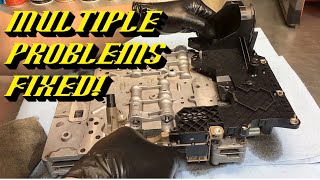
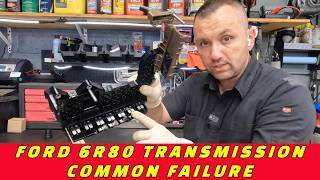
- Condemning the entire transmission for replacement. Shops unfamiliar with the 6R80's specific issues may quote a full transmission replacement when only the much cheaper lead frame is needed. 🎬 See: Explanation of this common 6R80 electrical failure This is a known issue acknowledged by Ford.
- Replacing the battery or alternator due to the no-start condition without first scanning for diagnostic trouble codes.
Most Likely Causes
- Failed Molded Lead Frame 🔴 High Probability The lead frame, which houses the range sensor, output speed sensor (OSS), and turbine speed sensor (TSS), is a well-documented failure point in 6R80 transmissions. The internal circuitry and sensor connections are prone to cracking from heat cycles and vibration, leading to open circuits. This was the subject of Ford's TSB 13-6-8 and Customer Satisfaction Program 19N01.
How to confirm: A professional scan tool can monitor the live data from the Transmission Range Sensor. If the signal is erratic, absent, or does not correspond to the physical gear selection, the lead frame is the primary suspect. The diagnosis is strongly confirmed if other related transmission sensor codes, such as P0720 (Output Speed Sensor Circuit) or P0722 (Output Speed Sensor No Signal), are also present, as these sensors are part of the same lead frame assembly.
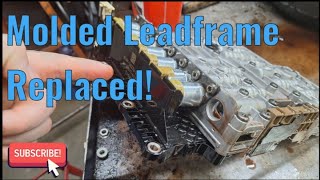
Typical fix: Replace the entire molded lead frame assembly inside the transmission. This requires dropping the transmission pan, draining the fluid, and removing the valve body to access the part. While the valve body is out, it's also best practice to replace the bulkhead connector sleeve to prevent future leaks. The fluid, pan gasket, and filter must be replaced.
Est. part cost: $200-$400 - Leaking/Damaged Bulkhead Connector or Wiring ⚪ Low Probability The main transmission case connector, known as the bulkhead connector sleeve, can develop leaks, allowing transmission fluid to contaminate the electrical pins. While this is a common leak point, it is less likely to cause the specific P2800 circuit code than an internal lead frame failure. External wiring harness damage is rare without physical impact. A manufacturer service bulletin for other Ford models, Bulletin #SSM 47790, notes that water entry or corrosion in specific connectors can lead to multiple electrical concerns and codes including P2800.
How to confirm: Visually inspect the main round electrical connector on the passenger side of the transmission for signs of red transmission fluid. Disconnect the harness (with the battery disconnected) and check for fluid inside the connector pins. Test for continuity and voltage at the connector pins corresponding to the range sensor circuit.
Typical fix: If the bulkhead connector sleeve is leaking, it must be replaced. This also requires dropping the transmission pan for access. If the connector is just contaminated, clean it with electrical contact cleaner and ensure a secure connection. Repair any damaged external wires.
Est. part cost: $25-$120
Rare But Worth Checking
- Powertrain Control Module (PCM) Failure: → Shop Engine Control Module (ECM) A faulty PCM can fail to interpret a correct sensor signal. This is extremely rare and should only be considered after the lead frame and wiring have been definitively ruled out as the cause. PCM replacement is expensive and requires programming by a dealer or specialized shop.
Diagnosis Steps
- Scan the PCM/TCM for all stored trouble codes. Note any codes that accompany P2800, especially P0720, P0722, or P0731, as this strongly indicates 🎬 Watch: How to diagnose and fix these harsh shifting codes lead frame failure.
- Using a scan tool with live data capability, monitor the PID for the Transmission Range Sensor (TRS). Shift the vehicle through all gears (P, R, N, D) and observe if the reading is stable and correct for each position. An erratic or missing signal points to a fault.
- If the signal is faulty, perform a visual inspection of the main transmission electrical connector (bulkhead connector) on the passenger side of the transmission case. Look for signs of fluid leakage or damage to the wiring harness.
- If the external wiring and connector are in good condition, the fault is almost certainly the internal molded lead frame. This is the most common failure by a wide margin.
- Confirm the diagnosis by ordering the necessary parts (lead frame, gasket, filter, fluid, bulkhead sleeve) and proceeding with the replacement. The repair involves draining the fluid, dropping the pan, and removing the valve body to access and replace the lead frame assembly.
Parts You'll Likely Need
- Molded Lead Frame (Connector Plate)
(OEM #AL3Z-7G276-D)— This is the primary failure point. It contains the range sensor that sets the P2800 code. The 'D' version supersedes older, less reliable -A and -B parts. Always confirm the latest part number with a dealer.
Trusted brands: Motorcraft, Dorman
OEM price range: $210-$315
Aftermarket price range: $150-$250 - Transmission Fluid
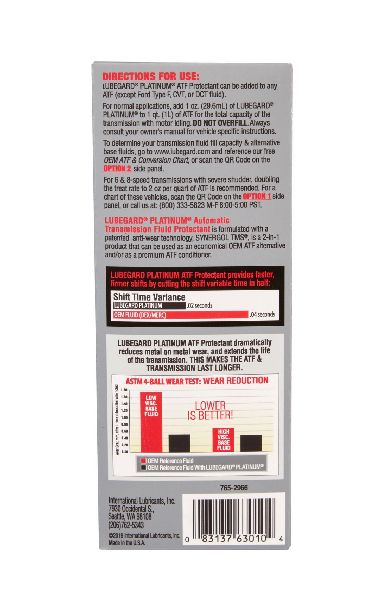
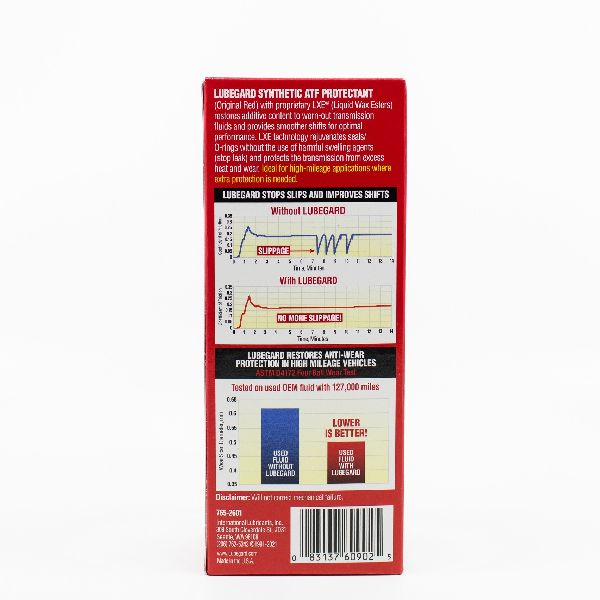
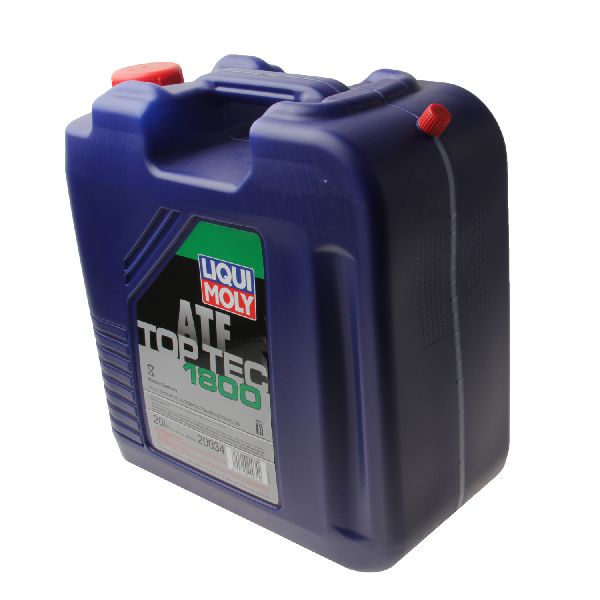
(OEM #XT-10-QLVC)— The transmission fluid must be drained to perform the repair. Approximately 8-9 quarts will be needed for a pan-drop and fill. Only use Motorcraft Mercon LV or a licensed equivalent.
Trusted brands: Motorcraft Mercon LV
OEM price range: $90-$130
Aftermarket price range: $70-$110 - Transmission Pan Gasket
(OEM #BL3Z-7A191-C)— The pan must be removed for the repair. The original gasket is reusable but it is highly recommended to replace it to ensure a leak-free seal.
Trusted brands: Motorcraft, Fel-Pro
OEM price range: $20-$40
Aftermarket price range: $15-$30 - Transmission Filter
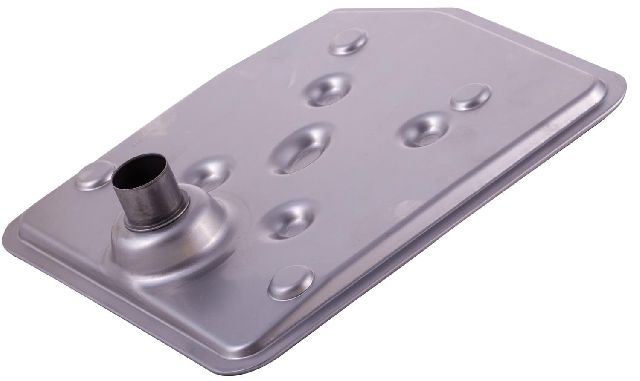
(OEM #BL3Z-7A098-A)— The filter should always be replaced when the pan is removed for service.
Trusted brands: Motorcraft
OEM price range: $20-$35
Aftermarket price range: $15-$25 - Bulkhead Connector Sleeve
(OEM #8L2Z-7G276-A (verify latest))— This is a common leak point and is easily accessible when the valve body is out. It is cheap insurance to replace it during the lead frame job to prevent a future leak. The original part often had orange O-rings; the replacement has black ones.
Trusted brands: Motorcraft
OEM price range: $20-$35
Aftermarket price range: $15-$25
Related Codes That Often Appear With This One
- P0720 — Output Speed Sensor (OSS) Circuit fault. The OSS is located on the same molded lead frame, and its failure is extremely common and directly linked to this issue. The presence of this code alongside P2800 makes a failed lead frame diagnosis almost certain.
- P0722 — Output Speed Sensor (OSS) Circuit No Signal. This is another common code pointing directly to a lead frame failure for the same reason as P0720.
- P0731 — Gear 1 Incorrect Ratio. This code can be triggered when the PCM is confused about the transmission's state due to faulty sensor inputs from the lead frame.
Technical Service Bulletins (TSBs) & Recalls
- TSB 13-6-8: Addresses transmission engagement in 5th gear from a stop, inoperative speedometer, and other symptoms related to lead frame failure on 2012-2013 Expeditions (and other models) built before 4/8/2013. It instructs dealers to replace the molded lead frame if codes P0720 or P0722 are present.
- Customer Satisfaction Program 19N01: Extended warranty coverage for the molded lead frame on 2012-2013 Expedition/Navigator vehicles. The coverage was for 10 years or 150,000 miles. Refund requests for prior repairs expired on November 30, 2019.
- TSB 11-3-25: Addresses transmission fluid leakage from the bulkhead connector sleeve on 2009-2010 Expedition and other models, instructing replacement of the sleeve.
- Bulletin #SSM 47790: Notes that the engine may exhibit multiple drivability or electrical concerns with codes including P2800, P2802, and U019F, often due to water entry or corrosion in electrical connectors.
Platform-Specific Known Issues
- Ford issued Customer Satisfaction Program 19N01 which extended the warranty on the molded lead frame to 10 years or 150,000 miles for certain 2012-2013 model year Expeditions due to high failure rates. While these programs have now expired due to age, they serve as official acknowledgment of the widespread problem. The program was initiated to address symptoms like sudden downshifts and MIL/wrench light illumination caused by codes P0720, P0722, and P0731.
Mechanic-Grade Diagnostic Values
- Transmission Range Sensor Duty Cycle (PID: TR_DC) — expected: Park: 8.0-25.8%, Reverse: 30.5-39.3%, Neutral: 40.5-52.5%, Drive: 54.3-71.2%. Failure: The duty cycle percentage is out of range for the selected gear, is erratic, or does not change when shifting.
- Transmission Range Sensor Frequency (PID: TR_FREQ) — expected: 100 to 150 Hz. Failure: Frequency is outside the expected range or is unstable while in gear.
- TRS Ground Circuit Voltage Drop — expected: Less than 0.1V. Failure: A reading above 0.1V between the sensor's ground pin and the negative battery terminal indicates a poor ground connection.
- Transmission Fluid Temperature (TFT) Sensor Resistance — expected: Varies with temperature: ~37 kΩ at 68°F (20°C), ~5.5 kΩ at 140°F (60°C), ~1.2 kΩ at 212°F (100°C).. Failure: Resistance is infinite (open) or near zero (shorted), or does not correlate with the approximate fluid temperature. This helps condemn the lead frame assembly as the TFT sensor is integrated.
Hidden / Shadow Codes Worth Checking
- P0720, P0722, P0731: These are not hidden codes, but Ford's Customer Satisfaction Program 19N01 required one or more of these DTCs (related to Output Speed Sensor and Gear Ratios) to be present in the PCM to qualify for a no-charge lead frame replacement. The presence of these codes alongside P2800 makes the lead frame diagnosis definitive. (see via Standard OBD-II scan tool.)
Scan Tool Commands That Help
- Ford IDS (or equivalent professional scanner): Live Data PID Monitoring: TR_DC and TR_FREQ — This is the primary diagnostic step. It allows a technician to see the raw electrical signal the PCM is receiving from the range sensor in real-time as the shifter is moved, confirming if the signal is valid, erratic, or absent.
- Any Scan Tool: Keep Alive Memory (KAM) Reset — After replacing the lead frame, a KAM reset should be performed. This clears the adaptive learning tables in the PCM/TCM. While a full valve body replacement requires reprogramming the solenoid strategy, just replacing the lead frame typically does not.
Wiring & Ground Locations
- C175T — The large, 52-pin Powertrain Control Module (PCM) connector located in the engine bay.. This is where the signals from the Transmission Range Sensor terminate. A technician can backprobe these pins to test the integrity of the wiring harness from the transmission to the PCM. Key pins are: Pin 17 (TR4), Pin 26 (TR1), Pin 27 (TR2), and Pin 30 (TR3).
- C1575 — The main 16-pin round electrical connector on the passenger side of the 6R80 transmission case. Also called the bulkhead connector.. This is the main interface between the internal lead frame and the vehicle's external wiring harness. It is a common point for fluid leaks (from a failed internal sleeve) which can contaminate pins and disrupt signals, including the one for the TRS.
- G104 — A primary chassis ground point located on the left front of the engine compartment.. A poor engine or chassis ground can cause a host of floating voltages and erratic sensor readings. While not a direct cause of P2800, verifying major grounds like G104 are clean and tight is a crucial step in diagnosing any complex electrical fault.
Real Owner Repair Stories
- Ford F150 Forum user (2013 Ford F-150 Raptor (6R80 Transmission)) — Wrench light illuminated, speedometer stopped working, odometer displayed dashes, and the truck would barely accelerate from a stop as if stuck in a high gear.
❌ Tried (didn't work) The issue was intermittent and would sometimes clear after an ignition cycle, making it hard for the dealer to diagnose initially.
✅ What actually fixed it The dealer replaced the molded lead frame inside the transmission and flushed the fluid. The user reported two weeks later that the problem had not returned. - NHTSA ODI #10845590 — An owner reported that both P2803 and P2800 sensors were defective and noted that the cost to repair was far above fair pricing for the hydraulic control.
OEM Part Supersession History
AL3Z-7G276-A→AL3Z-7G276-D— The original lead frame design was prone to internal circuit cracks from heat and vibration. The -D revision is the updated, more durable version designed to address the widespread failures.
Heads up: The -A, -B, and -D revisions are generally interchangeable, but installing anything other than the latest 'D' revision is not recommended as you are installing a part with a known design flaw.
Model Year Variations Within This Range
- 2009-2010: Some very early 6R80 transmissions may have an integrated TCM on the valve body (a true 'mechatronic' unit), which is significantly more expensive to replace than the later design where the lead frame is a separate component from the external PCM. Vehicles from 2011-2017 use the separate lead frame discussed in this guide.
- 2012-2013: These specific model years of the Expedition were covered by Ford's Customer Satisfaction Program 19N01, which extended the warranty on the molded lead frame to 10 years or 150,000 miles. This program has since expired for all vehicles.
Diagnostic Flowchart
Other Known Issues on This Vehicle
Issues unrelated to this code that are worth knowing about as an owner of this generation:
- Ford 5.4L 3V Cam Phaser Failure ('Triton Tick') 🔴 High — Extremely common on 2007-2014 models with the 5.4L engine, often starting around 80,000-100,000 miles. Caused by worn phasers, low oil pressure, or failing VCT solenoids.
- Stuck/Inoperative Power Deployable Running Boards 🟡 Low — Very common across all model years with this option. Hinge points corrode and bind, preventing deployment or retraction. Often fixable with thorough cleaning and lubrication, but motors can also fail.
- Failing HVAC Blend Door Actuators 🟠 Medium — Common issue causing clicking sounds from the dash and/or inability to change temperature or airflow direction. Multiple actuators are in the system and can fail independently.
- Ignition Coil Failure (5.4L 3V) 🟠 Medium — Frequent failure item, leading to engine misfires (P030x codes) and rough running. Often caused by excessive spark plug gap as plugs wear.
- Timing Chain Tensioner Failure (5.4L 3V) 🔴 High — Related to the cam phaser issue, the plastic timing chain tensioners can fail, causing loss of oil pressure to the guides, leading to chain slap and potential catastrophic engine damage.
Used vs. New Parts: Buying Guide for This Vehicle
When a used part is the smart pick: For this specific P2800 fault, buying a USED molded lead frame is strongly discouraged. The part has a very high failure rate due to its design, and a used part from a junkyard carries a high risk of being faulty or failing shortly after installation. The significant labor involved in the replacement makes gambling on a used part a poor economic choice. A used part would only be considered for peripheral components like a physically damaged external wiring pigtail if a new one is unavailable.
What to inspect on the donor part:
- For the lead frame itself, there are no reliable visual cues to determine its health. The failures (micro-cracks in circuitry) are internal and not visible.
- If sourcing a related part like a wiring harness, inspect for intact plastic clips, absence of corrosion on pins, and flexible, uncracked wire insulation.
OEM-only on this vehicle (don't cheap out):
- Molded Lead Frame: Due to the high failure rate of the original design, it is critical to use the latest revised OEM Motorcraft part (AL3Z-7G276-D). Using a lesser-known aftermarket brand or an older OEM revision is a significant risk.
Aftermarket brands forum-validated for this vehicle:
- Motorcraft (OEM) for the lead frame and transmission filter.
- Fel-Pro for the transmission pan gasket.
Brands owners have reported issues with on this vehicle:
- Unbranded, low-cost lead frames from online marketplaces. The potential for premature failure is high, and the cost of re-doing the labor far outweighs the initial parts savings.
Real Owner Stories
Aggregated from forums and TSBs cited above. Mileages and costs reflect what owners reported in those sources.
2013 Ford F-150 Raptor
Symptoms: The vehicle was getting stuck in gear and the dashboard lights went out completely.
What fixed it: Dealer replacement of the molded lead frame assembly.
Source hint: f150forum.com - Thread 'Tsb 13-6-8'
2013 Ford F-150
Symptoms: Experienced lead frame failure symptoms including erratic transmission behavior after the 19N01 warranty extension had already expired.
What fixed it: Replacement of the lead frame; community members noted costs for this repair at independent shops versus dealerships.
Cost: $1400-$3000
Source hint: Reddit (r/f150) - Thread 'Recall 19N01 expire, what now?'
2012 Ford Expedition
Symptoms: Sudden downshifts and illumination of the MIL/wrench light.
What fixed it: Replacement of the molded lead frame under Customer Satisfaction Program 19N01.
Source hint: Customer Satisfaction Program 19N01
Related OBD-II Codes
Frequently Asked Questions
Is there a Ford warranty extension that covers the P2800 or lead frame failure on my 2012 Expedition?
My 2013 Expedition is stuck in 5th gear and the speedometer isn't working. Does TSB 13-6-8 apply to me?
Can a leaking bulkhead connector cause the P2800 code on my 2010 Expedition?
Why won't my Expedition start or crank when the P2800 code is present?
What parts should I replace along with the lead frame to prevent future issues?
Is the 'Triton Tick' related to my transmission P2800 code?
Helpful Videos
We Have This Part in Stock



The information in this article is provided for general reference and educational purposes only. Vehicle specifications, procedures, and part compatibility can vary by production date, trim level, and region. Always consult your vehicle's factory service manual and verify part numbers before purchasing or performing repairs. Safety-critical components such as airbags, seat belts, and braking systems should be installed by a qualified professional.
- Ford Expedition:
- 🧭 Diagnostic Flowchart
- 🎬 Helpful Videos
- 🛍️ Shop This Part
- What's Unique About the 2007-2017 Ford Expedition
- Symptoms You May Notice
- Most Likely Causes
- Rare But Worth Checking
- Diagnosis Steps
- Parts You'll Likely Need
- Related Codes That Often Appear With This One
- Technical Service Bulletins (TSBs) & Recalls
- Platform-Specific Known Issues
- Mechanic-Grade Diagnostic Values
- Hidden / Shadow Codes Worth Checking
- Scan Tool Commands That Help
- Wiring & Ground Locations
- Real Owner Repair Stories
- OEM Part Supersession History
- Model Year Variations Within This Range
- Other Known Issues on This Vehicle
- Used vs. New Parts: Buying Guide for This Vehicle
- Real Owner Stories
- 2013 Ford F-150 Raptor
- 2013 Ford F-150
- 2012 Ford Expedition
- Related OBD-II Codes
- Frequently Asked Questions
- 🎟️ Get 5% Off