

P2800 on 2011-2016 Hyundai Elantra: Transmission Range Sensor Failure Causes and Fixes
On a 2011-2016 Elantra, code P2800 almost always means the Transmission Range Sensor (also called an Inhibitor Switch) has failed. This is a very common issue causing a no-start condition or erratic shifting. The fix is to replace the sensor, which costs about $40-$80 for the part and is a straightforward DIY job for many.
- P2800 on a 2011-2016 Elantra is almost always a failed Transmission Range Sensor (Inhibitor Switch).
- Key symptoms are an intermittent no-start condition or a blank gear display on the dash.
- The repair is straightforward for a DIYer and involves replacing the switch on top of the transmission.
- The most critical step of the repair is putting the car in NEUTRAL before swapping the part to ensure correct alignment.
- Before buying the part, always inspect the wiring and connector for corrosion, as this can sometimes be the root cause.
What's Unique About the 2011-2016 Hyundai Elantra
On the fifth-generation Elantra (MD/UD) and its platform mates, the Transmission Range Sensor, which Hyundai calls the 'Inhibitor Switch', is a known high-failure item. While P2800 specifically refers to the 'B' circuit, it's part of a family of codes (including the more common P0705) that all point to this same switch. The failure is so frequent that Hyundai has issued Technical Service Bulletin 17-AT-005 for related codes, and the genuine replacement part, 42700-26700, supersedes older, less reliable versions like 42700-26500 and 42700-26000.
Symptoms You May Notice
- Intermittent no-crank, no-start condition (car won't start in Park but might in Neutral).
- Having to jiggle the gear shifter to get the car to start.
- Gear position indicator on the dashboard is blank, incorrect, or flashes.
- Transmission gets stuck in one gear (fail-safe or 'limp mode').
- Harsh or delayed gear engagement, sometimes described as 'banging' into gear.
- Reverse/backup lights do not turn on.
- Check Engine Light is on.
- Replacing the starter motor when a no-start condition is present. The key difference is that a bad range sensor typically prevents the starter from even trying to crank the engine.
- Replacing the battery without checking for this code first. While low voltage can cause electrical issues, the specific symptoms of a no-start that is resolved by moving the shifter strongly point to the range sensor.
Most Likely Causes
- Failed Transmission Range Sensor (Inhibitor Switch) 🔴 High Probability → Shop Transmission Assembly This is a very common failure part on many Hyundai/Kia models of this era due to internal wear and tear. The original part design is prone to failure, and updated versions are available. The part number has been superseded multiple times, indicating revisions to improve reliability.
How to confirm: If wiggling the shifter allows the car to start, or if the gear indicator is blank, the sensor is the prime suspect. A scan tool may show an 'Invalid' or 'Fault' status for the sensor's data pid. A multimeter can be used to check for continuity across specific pins for each gear position, as outlined in the factory service manual.
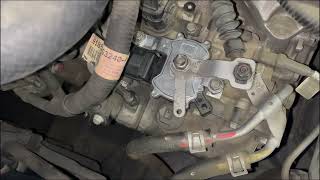
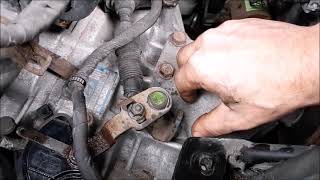
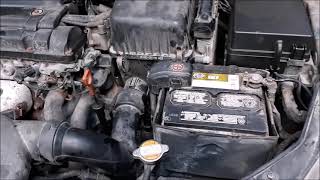
Typical fix: Replace the inhibitor switch located on top of the transmission. This requires removing the air filter housing and battery tray for access. 🎬 Watch this step-by-step Elantra range switch replacement walkthrough The genuine Hyundai replacement part is 42700-26700. 🎬 Watch: How to test and replace the inhibitor switch
Est. part cost: $40-$80 - Corroded Wiring or Connector 🟡 Medium Probability The sensor is located on top of the transmission, where its electrical connector is exposed to moisture and heat, which can lead to corrosion or damaged wires over time.
How to confirm: Visually inspect the sensor's electrical connector and nearby wiring for green or white corrosion, melted plastic, or frayed wires after removing the airbox for access. TSB 17-AT-005 specifically instructs technicians to check for bent or damaged pins in the connector as a primary step.
Typical fix: Clean the connector terminals with an electrical contact cleaner and a small brush. If the wiring is damaged, it will need to be repaired or spliced. Apply dielectric grease to the connector before reassembly to prevent future corrosion.
Est. part cost: $5-$20 - Misadjusted Inhibitor Switch or Shift Cable ⚪ Low Probability → Shop Transmission Park Inhibitor Switch The switch's position is adjustable. If it has been serviced before and not aligned correctly, or if the shift cable has stretched, it can send an incorrect signal. TSB 17-AT-005 notes that symptoms can be caused by a misaligned switch, not necessarily a broken one.
How to confirm: With the shifter in Neutral, check the alignment marks on the switch and the transmission lever; they should line up perfectly. A 5mm drill bit or pin can be inserted through the alignment hole on the switch to verify its position.
Typical fix: Loosen the two mounting bolts for the switch, rotate it until the alignment marks are correct, and retighten the bolts. Adjust the shift cable tension if necessary.
Est. part cost: $0
Rare But Worth Checking
- Faulty Powertrain Control Module (PCM) or Transmission Control Module (TCM): → Shop Engine Control Module (ECM) This is extremely rare. Before considering replacing a control module, all other possibilities (sensor, wiring, adjustment) must be exhaustively ruled out. TSB 17-AT-005 suggests this as a final diagnostic step if a new sensor and verified wiring do not resolve the issue.
Diagnosis Steps
- Read the trouble codes with an OBD-II scanner and confirm P2800 (or related codes like P0705) are present.
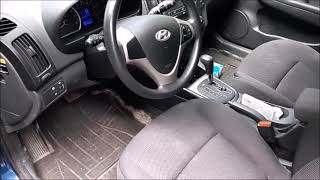
- Test the symptoms. Try starting the car in Park. If it doesn't crank, shift to Neutral and try again. If it starts in Neutral, the range sensor is almost certainly the issue.
- Disconnect the battery.
- Remove the engine cover, air intake duct, and the entire air filter housing (held by 10mm bolts).
- Remove the battery and the battery tray to gain clear access to the top of the transmission.
- Locate the Inhibitor Switch. It's a black plastic component mounted on the transmission where the shift lever connects.
- Inspect the electrical connector plugged into the switch. Look for any signs of corrosion, bent pins, or damaged wires. If corrosion is found, clean it thoroughly.
- If the wiring looks good, the switch itself is the likely culprit. Proceed with replacement.
- CRITICAL ALIGNMENT STEP: Before removing the switch, place the gear shifter inside the car into the NEUTRAL position. This aligns the transmission's manual shaft for correct installation of the new switch.
- Disconnect the shift cable from the lever on the switch (14mm nut). Remove the lever itself.
- Remove the two 10mm bolts holding the inhibitor switch to the transmission and remove the old switch.
- Install the new switch, making sure it is properly seated. Loosely install the two 10mm bolts.
- Align the new switch. TSB 17-AT-005 specifies inserting a 5mm guide pin or drill bit through the alignment hole on the switch body and into the transmission case to ensure perfect alignment before tightening.
- Tighten the mounting bolts and reinstall the shift lever and cable.
- Reconnect the electrical connector, reinstall the battery tray, battery, and air filter housing.
- Reconnect the battery, clear the codes, and start the vehicle to confirm the repair.
Parts You'll Likely Need
- Transmission Range Sensor / Inhibitor Switch
(OEM #42700-26700)— This is the component that fails, causing the P2800 code and associated symptoms. It is a known high-failure part on this vehicle. This part number supersedes 42700-26500 and 42700-26000.
Trusted brands: Genuine Hyundai, Standard Motor Products, Wells, Rostra
OEM price range: $60-$120
Aftermarket price range: $40-$80
Related Codes That Often Appear With This One
- P0705 — This is the primary, more general code for a Transmission Range Sensor Circuit Malfunction. P2800 is a more specific fault within that same system. The diagnosis and fix are identical. TSB 17-AT-005 covers P0705 directly.
- P0706, P0707, P0708 — These codes also indicate range/performance, open circuit, or short circuit issues with the same sensor and are covered by the same Hyundai TSB 17-AT-005.
Technical Service Bulletins (TSBs) & Recalls
- 17-AT-005: Addresses diagnosis for inhibitor switch DTCs P0705, P0706, P0707 & P0708, confirming this is a recognized issue by the manufacturer. It provides detailed steps for inspection, replacement, and the critical alignment procedure.
Platform-Specific Known Issues
- Hyundai issued Technical Service Bulletin 17-AT-005 for a range of models including the 2011-2016 Elantra, addressing DTCs P0705, P0706, P0707, & P0708, all of which relate to the inhibitor switch. While P2800 isn't explicitly named, the symptoms and faulty component are identical, making the TSB directly applicable for diagnosis and repair.
Mechanic-Grade Diagnostic Values
- Inhibitor Switch Continuity Test (Park) — expected: Continuity (audible beep or ~0 Ohms). Failure: No continuity (OL reading)
- Inhibitor Switch Continuity Test (Reverse) — expected: Continuity (audible beep or ~0 Ohms). Failure: No continuity (OL reading)
- Inhibitor Switch Voltage Test (Park) — expected: 12V. Failure: 0V or significantly lower voltage
- Rear Combination Lamp Ground Voltage Drop — expected: Less than 0.2 V. Failure: Voltage greater than 0.2V indicates a poor ground that can cause this code.
Scan Tool Commands That Help
- Hyundai GDS (Global Diagnostic System): Data Analysis - 'Current Gear' and 'Next Gear Position' — To verify what gear position the TCM is seeing from the sensor. In a failure state, this may be fixed to '3rd' regardless of the actual shifter position, confirming a sensor or circuit fault.
- Hyundai GDS (Global Diagnostic System): DTC Self-Diagnosis — This is the first step in the official diagnostic procedure to pull all active and history codes from the TCM, which may include related codes like P0705.
Wiring & Ground Locations
- Inhibitor Switch Connector Pin 8 — On the main electrical connector for the inhibitor switch, located on top of the transmission.. This pin, which has a brown wire, is the specific signal for the Park position. A voltage test here can directly confirm if the switch is sending the correct signal for Park.
- TCU / TCU2 Fuses — In the engine compartment junction box (fuse box).. These fuses supply power to the Transmission Control Unit. A blown fuse here would cut power to the control module, preventing it from reading the inhibitor switch and causing various transmission-related codes.
- Rear Combination Lamp Ground — In the trunk/rear of the vehicle, where the taillight harness grounds to the chassis.. A Hyundai TSB identifies a poor ground at this location as a potential root cause for inhibitor switch DTCs. The faulty ground can introduce electrical noise that disrupts the sensor signal.
Real Owner Repair Stories
- AliExpress Reviewer (2014 Hyundai Elantra) — Car wouldn't start unless the gearshift was wiggled into 'Neutral'. Dashboard would flash 'Transmission Error'. OBD-II code P0705 was present.
❌ Tried (didn't work) Three separate dealership repair attempts costing over $600 each.
✅ What actually fixed it The owner replaced the inhibitor switch (part number 42700-26700) themselves. The process involved cleaning corrosion off the connectors and took about two hours. This permanently resolved the issue. - YouTube user 'gilles soucy' (2011 Hyundai Elantra Touring) — No crank, no start condition related to the transmission shifter park position.
❌ Tried (didn't work) Initial diagnosis pointed towards replacing the switch.
✅ What actually fixed it The problem was resolved by lubricating the transmission pivot arm rod where the neutral switch sits and performing a shift cable adjustment. The switch itself was not faulty and did not need replacement.
OEM Part Supersession History
42700-26000, 42700-26500, 427003B100, 427003B500, 427003B710→42700-26700— Revisions to improve reliability and prevent premature failure.
Model Year Variations Within This Range
- 2011-2016: No significant variations for this specific issue have been documented within the 5th generation (MD/UD) Elantra. The inhibitor switch part number, failure mode, and repair procedure are consistent for all 2011-2016 Elantras with the A6GF1 automatic transmission.
Diagnostic Flowchart
Other Known Issues on This Vehicle
Issues unrelated to this code that are worth knowing about as an owner of this generation:
- Engine Ticking / Piston Slap (1.8L Nu Engine) 🔴 High — Very common, can start at any mileage but often noted around 60k-80k miles. It may lead to excessive oil consumption or eventual engine failure. (Ref: A class-action lawsuit was filed regarding this issue, alleging premature engine failure. Hyundai has been known to deny warranty claims, blaming poor maintenance.)
- Worn Steering Coupler 🟠 Medium — Extremely common. Owners report a clicking or clunking noise in the steering column when turning the wheel. The steering may also feel loose. (Ref: Hyundai extended the warranty for this part to 10 years/100,000 miles under campaign TXX7 (TSB 17-ST-002). The part itself is a small, inexpensive rubber piece, but labor can be significant.)
- Peeling White Paint 🟡 Low — Common on vehicles with white paint, particularly 'Frost White Pearl'. Large flakes of paint peel off the hood, roof, and trunk, exposing the primer. (Ref: Hyundai eventually extended the paint warranty for this issue on many models, but the 2011-2016 generation was often excluded, leading to customer complaints.)
- Timing Chain Slap / Failure 🔴 High — Less common than engine ticking, but can occur. Symptoms include a chattering noise from the engine that can lead to a no-start condition if the chain jumps timing. Often throws codes P0340 or P0016.
Used vs. New Parts: Buying Guide for This Vehicle
When a used part is the smart pick: A used part is generally not recommended due to the high failure rate of this component. It should only be considered if it is confirmed to be the latest OEM part number (42700-26700) and is from a very low-mileage donor vehicle.
Donor-vehicle mileage cap: roughly under 50000 miles for the part to have meaningful remaining life.
What to inspect on the donor part:
- Verify the part number is the newest revision: 42700-26700.
- Inspect the electrical connector pins for any signs of corrosion or damage.
- Check the plastic housing for cracks or brittleness from heat exposure.
OEM-only on this vehicle (don't cheap out):
- For this repair, the inhibitor switch itself is the primary component. While not strictly 'OEM-only', using a Genuine Hyundai part is highly recommended due to the known issues with earlier designs.
Aftermarket brands forum-validated for this vehicle:
- Standard Motor Products (Standard Ignition)
- Rostra Powertrain
Real Owner Stories
Aggregated from forums and TSBs cited above. Mileages and costs reflect what owners reported in those sources.
2012 Hyundai Elantra
Symptoms: Intermittent starting issues where the car would not crank in Park. The owner discovered that wiggling the shifter or moving it to Neutral would allow the car to start.
What fixed it: Replacement of the neutral safety switch (range inhibitor), part number 42700-26700.
Source hint: youtube.com video 'Hyundai Elantra 10-13 neutral safety switch (range inhibitor) intermittent starting issue SOLVED!' by user LifeTac
2015 Hyundai Elantra
Symptoms: The transmission range switch failed, requiring a replacement that necessitated a specific alignment in the Neutral position.
What fixed it: Installed a new inhibitor switch and used the critical alignment step involving the alignment holes on the switch and lever.
Source hint: youtube.com video by user Mr.Hyundai '2015 Hyundai Elantra Transmission Range Switch'
2014 Hyundai Elantra
Symptoms: The vehicle experienced a 'no start in park' condition, a problem frequently discussed by multiple owners on community forums.
What fixed it: Replacing the inhibitor switch resolved the problem.
Source hint: hyundai-forums.com threads regarding 'no start in park' issues
Related OBD-II Codes
Frequently Asked Questions
My 2013 Elantra won't start in Park, but it starts in Neutral. Is this related to code P2800?
Does Hyundai have a technical service bulletin for inhibitor switch issues on the 2011-2016 Elantra?
What is the specific part number I need to fix the P2800 code on my Elantra?
I'm replacing the switch myself; is there a specific alignment procedure for the 2015 Elantra?
Why does my dashboard gear indicator go blank or flash while driving?
Can a bad inhibitor switch cause my Elantra to 'bang' into gear?
Helpful Videos

We Have This Part in Stock




The information in this article is provided for general reference and educational purposes only. Vehicle specifications, procedures, and part compatibility can vary by production date, trim level, and region. Always consult your vehicle's factory service manual and verify part numbers before purchasing or performing repairs. Safety-critical components such as airbags, seat belts, and braking systems should be installed by a qualified professional.
- Hyundai Elantra:
- 🧭 Diagnostic Flowchart
- 🎬 Helpful Videos
- 🛍️ Shop This Part
- What's Unique About the 2011-2016 Hyundai Elantra
- Symptoms You May Notice
- Most Likely Causes
- Rare But Worth Checking
- Diagnosis Steps
- Parts You'll Likely Need
- Related Codes That Often Appear With This One
- Technical Service Bulletins (TSBs) & Recalls
- Platform-Specific Known Issues
- Mechanic-Grade Diagnostic Values
- Scan Tool Commands That Help
- Wiring & Ground Locations
- Real Owner Repair Stories
- OEM Part Supersession History
- Model Year Variations Within This Range
- Other Known Issues on This Vehicle
- Used vs. New Parts: Buying Guide for This Vehicle
- Real Owner Stories
- 2012 Hyundai Elantra
- 2015 Hyundai Elantra
- 2014 Hyundai Elantra
- Related OBD-II Codes
- Frequently Asked Questions
- 🎟️ Get 5% Off