

P2800 on 2017-2020 Hyundai Elantra: Transmission Range Sensor Fixes
On a 2017-2020 Elantra, P2800 almost always points to a faulty Transmission Range Sensor, also known as an inhibitor switch. This can cause a no-start condition or limp mode. Replacing the switch is the most common fix, with the correct OEM part being #42700-26700. The part costs between $45 and $125.
- P2800 on a 2017-2020 Elantra is a serious code that can leave you stranded; do not drive with it.
- The most likely cause is a failed Transmission Range Sensor, also called an inhibitor switch.
- The switch is located on top of the transmission and requires removing the battery and airbox to access.
- When replacing the switch, it is critical to put the transmission in Neutral and align the new switch correctly using the alignment holes.
- Before replacing the switch, always inspect its electrical connector for corrosion or damage, as this can cause the same symptoms.
What's Unique About the 2017-2020 Hyundai Elantra
For the 2017-2020 (AD generation) Elantra, this issue is extremely well-documented. The transmission range sensor, or inhibitor switch, is located externally on the transmission housing, making it susceptible to moisture and heat over time. Unlike some vehicles where the sensor is internal, the Elantra's external placement makes it a more straightforward part to replace. The problem is so common that it also affects its platform mate, the Kia Forte, and many other Hyundai/Kia models with the same 6-speed automatic transmission. Hyundai's TSB 17-AT-005 directly addresses this component's failure across multiple models, providing a clear diagnostic path.
Symptoms You May Notice
- Check Engine Light is on
- Vehicle will not start, or has an intermittent no-crank condition
- Shifting the gear lever from Park to Neutral may allow the car to start
- Gear indicator on the dashboard is blank, incorrect, or flashes
- Transmission enters 'limp mode,' often stuck in 3rd or 4th gear
- Harsh or delayed gear engagement
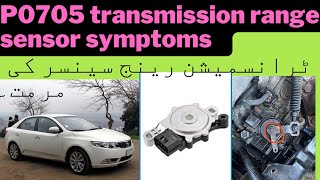
- Reverse lights may not work 🎬 Watch: Common symptoms of a bad range sensor
- Gear selector may feel physically stuck in Park
- Replacing the starter motor for a no-crank condition without first checking for transmission-related codes.
- Replacing the entire transmission valve body when only the external switch is faulty.
- Mistaking a no-start for a dead battery. A loose battery terminal clamp is another common issue on Hyundais that can mimic these symptoms.
Most Likely Causes
- Failed Transmission Range Sensor (Inhibitor Switch) 🔴 High Probability → Shop Transmission Assembly The switch is mounted externally on the transmission, exposed to heat, vibration, and moisture, which can cause internal components to wear out or fail. This is a known pattern failure across many Hyundai and Kia models with the 6-speed automatic transmission.
How to confirm: After confirming power and ground to the switch, use a scan tool to monitor the sensor's output data while shifting gears. If the data is erratic, missing, or doesn't correspond to the gear position, the switch is faulty. You can also test the switch's internal continuity with a multimeter 🎬 Watch: How to test and replace the inhibitor switch according to the service manual specifications.
Typical fix: Replace the inhibitor switch. This requires removing the battery and air cleaner assembly to access the switch on top of the transmission. The new switch must be properly aligned in the Neutral position before being fully tightened.
Est. part cost: $45-$125 - Corroded or Damaged Wiring/Connector 🟡 Medium Probability The connector for the inhibitor switch is also exposed to the elements, making it prone to corrosion or wires breaking from heat and vibration. TSB 17-AT-005 specifically calls for an inspection of the connector for bent or damaged pins.
How to confirm: Visually inspect the inhibitor switch connector and harness for any signs of corrosion, melted plastic, or broken wires. Perform a voltage drop test on the power and ground circuits to check for high resistance.
Typical fix: Clean the connector terminals with an electrical contact cleaner or replace the connector pigtail if it's severely damaged. Repair any broken or frayed wires.
Est. part cost: $10-$50 - Misadjusted Inhibitor Switch or Shift Cable ⚪ Low Probability → Shop Transmission Park Inhibitor Switch This is most likely to occur after a recent transmission service or if the shift cable has stretched over time. It can also happen if a replacement switch was installed without the proper alignment procedure.
How to confirm: With the gear selector in Neutral, check if the alignment hole on the switch lines up with the hole on the transmission case. If it doesn't, it's out of adjustment.
Typical fix: Loosen the switch mounting bolts and rotate it until the alignment holes line up. A 5mm drill bit or alignment pin (SST 09480-A3800) must be inserted to ensure it's perfectly set before tightening the bolts and the manual control lever nut.
Est. part cost: $0
Rare But Worth Checking
- Faulty Powertrain Control Module (PCM) or Transmission Control Module (TCM): → Shop Engine Control Module (ECM) This is extremely rare and should only be considered after all other possibilities (switch, wiring, adjustment) have been exhaustively ruled out. TSB 17-AT-005 lists this as the final step if the DTC returns after all other repairs.
Diagnosis Steps
- Scan the vehicle for all OBD-II codes. Note any other transmission-related codes (P0705, P0706, P0707, P0708).
- Using a scan tool with live data, monitor the Transmission Range Sensor parameter. Shift the lever through all gears (P, R, N, D) and verify that the computer is reading the correct gear position for each selection.
- If the reading is incorrect or erratic, proceed to a physical inspection. If the reading is stable and correct, the issue may be intermittent or in a different system.
- Set the shift lever to the 'N' (Neutral) position and engage the parking brake.
- Locate the inhibitor switch on top of the transmission. You will need to remove the air intake duct, the battery, and the battery tray for access.
- Disconnect the inhibitor switch connector and inspect for bent pins, corrosion, or damage as per TSB 17-AT-005.
- If the wiring appears good, test for power (approx. 12V) and ground at the connector using a multimeter to ensure the switch is receiving the correct voltage.
- If power and ground are present, the most likely culprit is the inhibitor switch itself. Replace the switch.
- During installation, ensure the vehicle is in Neutral. Install the new switch and lightly tighten the mounting bolts. Insert a 5mm bolt or alignment pin through the alignment hole on the switch and into the transmission body to lock it in the correct position.
- With the alignment pin in place, tighten the two inhibitor switch mounting bolts to 7.2 ~ 8.7 lb-ft (9.8 ~ 11.8 N.m).
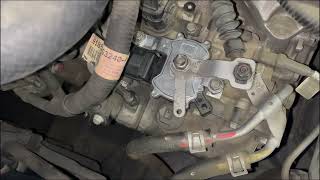
- Install the manual control lever and tighten its nut to 13.0 ~ 18.1 lb-ft (17.7~24.5 N.m). Remove the alignment pin. 🎬 See this step-by-step range sensor replacement tutorial
- Reassemble all components (shift cable, battery tray, battery, air cleaner), clear the trouble codes, and perform a test drive to confirm the repair.
Parts You'll Likely Need
- Inhibitor Switch (Transmission Range Sensor)
(OEM #42700-26700)— This is the component that fails most often, causing the P2800 code and associated symptoms. Part number 42700-26700 is the current OEM part that supersedes older versions like 42700-26500 and 42700-26000.
Trusted brands: Hyundai (Genuine), Kia (Genuine), Dorman, Standard Motor Products (SMP)
OEM price range: $85-$125
Aftermarket price range: $45-$75
Related Codes That Often Appear With This One
- P0705 — P0705 refers to a general circuit malfunction for the Transmission Range Sensor. P2800 is more specific to the 'B' circuit, but they often appear together as they relate to the same component. TSB 17-AT-005 covers both codes.
- P0706 — This code indicates a range/performance issue with the sensor, often triggered by intermittent signals that can also cause a P2800.
- P0707 — This code for an open circuit in the sensor is also covered by the same TSB and points to the same root causes.
- P0708 — This code for a short circuit or multiple inputs is also covered by TSB 17-AT-005 and points to the same root causes.
Technical Service Bulletins (TSBs) & Recalls
- TSB 17-AT-005: A Hyundai TSB that provides the official diagnostic procedure for DTCs P0705, P0706, P0707, & P0708 on 2017+ Elantra 2.0L models. It details checking connector pins, replacing the switch, and the critical alignment procedure using a 5mm pin.
- Kia Service Action SA317A: While for Kia, this service action addresses inhibitor switch replacement on several 2017 models, including the platform-mate Forte, for the exact same symptoms, confirming this is a known issue across both brands.
Platform-Specific Known Issues
- DIY Repair Walkthrough: Owners have documented the replacement process on video, confirming the location under the airbox/battery and the steps required. It is considered a manageable DIY for those with basic tools, though the alignment step is critical.
- Updated Part Design: The replacement OEM part may look slightly different from the original factory-installed part. This is due to an updated design intended to improve reliability. As long as the mounting holes and electrical connector match, it is the correct part.
Mechanic-Grade Diagnostic Values
- Inhibitor Switch Power Supply Voltage — expected: Approximately 12V (battery voltage) at Pin 3 (typically a pink wire) of the switch connector with the ignition ON.. Failure: Zero or significantly low voltage indicates a problem with the fuse or wiring leading to the switch, not the switch itself.
- Inhibitor Switch Signal Output Voltage — expected: Approximately 12V (battery voltage) on the specific output signal pin that corresponds to the selected gear (e.g., Pin 8 for Park, then a different pin for Reverse, etc.), while other signal pins show 0V. This test requires back-probing the connector while it's connected.. Failure: No voltage on the correct pin when a gear is selected, or voltage present on multiple pins at once, indicates a faulty switch.
- Inhibitor Switch Continuity Test — expected: With the switch disconnected, there should be continuity (near 0 Ohms resistance) between specific pairs of terminals for each gear position (P, R, N, D). The exact pin pairs must be referenced from a service manual for the specific model.. Failure: No continuity (Open Line/OL) when there should be, or continuity in incorrect gear positions, confirms an internal failure of the switch.
- Rear Combination Lamp Ground Voltage Drop — expected: Less than 0.2V between the ground terminal at the rear lamp assembly and a known good chassis ground.. Failure: Voltage greater than 0.2V indicates high resistance in the ground circuit, which can cause electrical feedback and trigger transmission codes. This is a non-obvious check called for in Hyundai TSB 17-AT-005.
Scan Tool Commands That Help
- Hyundai GDS (Global Diagnostic System): Current Data / Live Data — This is the primary diagnostic step. Use it to monitor the 'Gear Shifter Switch' or similar parameter. As you move the physical shifter, the data on the scan tool should display the correct position (P, R, N, D). If it's blank, erratic, or incorrect, it points to a fault in the switch or its circuit.
- Hyundai GDS (Global Diagnostic System): Vehicle S/W Management (Special Function) — This menu contains functions like 'Resetting adaptive values'. While not a direct fix for a failed switch, it's a good practice to reset transmission adaptations after replacing a major component like the range sensor to ensure the TCM relearns shift points with accurate gear data.
Wiring & Ground Locations
- Inhibitor Switch Connector — On top of the 6-speed automatic transmission housing, located underneath the battery and battery tray.. This is the primary connection point for the sensor. It is exposed to engine bay heat and moisture, making it a common point for corrosion, pin damage, or wire fatigue. TSB 17-AT-005 specifically requires inspecting this connector.
- PCM Connector Pin 94 — At the Powertrain Control Module (PCM).. On a 2018 Elantra with an automatic transmission, pin 94 is the input for the 'Transaxle Range Switch (P)' signal. If the switch and wiring test good at the transmission, a technician can test for signal continuity directly at this pin to isolate a wiring break versus a faulty PCM.
- Inhibitor Switch Power Supply Pin 3 — At the inhibitor switch connector.. This pin (typically a pink wire) provides the 12V power supply to the switch. No power here means the diagnostic focus should shift upstream to the fuse box and wiring, not the switch itself.
- Rear Combination Lamp Ground — In the rear of the vehicle, near the tail light assemblies.. Hyundai TSB 17-AT-005 identifies a poor ground connection for the tail lights as a potential, though less common, cause for range sensor codes. A bad ground can cause electrical noise or voltage feedback on shared circuits, confusing the TCM.
OEM Part Supersession History
42700-26000→42700-26500, then 42700-26700— Design updates to improve durability and resistance to heat and moisture.
Heads up: The newest part, 42700-26700, is the correct and most reliable replacement for all previous versions on this vehicle. Using old stock (New Old Stock) of the -26000 or -26500 parts is not recommended as they are prone to the original failure.42700-3BXXX series (e.g., 42700-3B100, 42700-3B500)→42700-26700 (in some applications)— Part consolidation and updates.
Heads up: While some parts catalogs show 42700-26700 replacing the 42700-3BXXX series, it is critical to verify fitment by VIN. The 3BXXX series was used on other Hyundai transmissions and may have slight differences. For the 2017-2020 Elantra 2.0L with the 6-speed auto, 42700-26700 is the correct part.
Model Year Variations Within This Range
- 2017-2019 (and some 2020 trims): These models primarily used the 6-speed torque converter automatic transmission, to which this P2800 code and the 42700-26700 inhibitor switch apply.
- 2020 (base models): For the 2020 model year, the base Hyundai Elantra switched to a Continuously Variable Transmission (CVT), which Hyundai calls an Intelligent Variable Transmission (IVT). This transmission does not use the same inhibitor switch and has a different control architecture. Therefore, this guide does not apply to 2020 Elantras equipped with the IVT.
- 2019-2020: The Elantra received a significant exterior facelift for the 2019 model year, with new headlights, grille, and bumpers. However, the underlying 2.0L engine and 6-speed automatic transmission powertrain, and thus the P2800 fault, remained the same as the 2017-2018 models.
Diagnostic Flowchart
Other Known Issues on This Vehicle
Issues unrelated to this code that are worth knowing about as an owner of this generation:
- 2.0L Nu MPI Engine Piston Ring Failure / Oil Consumption 🔴 High — Affects 2019-2020 models with the 2.0L Nu MPI engine. Can lead to excessive oil consumption, engine knocking, stalling, and catastrophic engine failure. (Ref: NHTSA Recall 21V301000 (Hyundai Recall 209))
- Ignition Coil Failure 🟠 Medium — A common failure item leading to engine misfires and a flashing Check Engine Light. Often recommended to replace all four coils at once.
- Crankshaft Position Sensor Failure 🟠 Medium — Can fail intermittently, causing the engine to stall while driving or result in a no-start condition.
- Failing Door Lock Actuators/Latches 🟡 Low — Common for door latches, especially on rear doors, to fail, requiring multiple pulls of the handle to open the door.
Used vs. New Parts: Buying Guide for This Vehicle
When a used part is the smart pick: For this specific repair, buying a used inhibitor switch is NOT recommended. The part is a known high-failure item due to internal wear and exposure to heat. The risk of the used part failing shortly after installation is very high, and the labor involved in replacement makes it an unwise gamble.
What to inspect on the donor part:
- Not applicable as used parts are not recommended.
OEM-only on this vehicle (don't cheap out):
- While not strictly 'OEM-only', using a Genuine Hyundai/Kia part (42700-26700) is the safest choice due to the known failure pattern and subsequent part revisions. It ensures you get the latest, most durable design.
Aftermarket brands forum-validated for this vehicle:
- Standard Motor Products (SMP) is a generally well-regarded aftermarket manufacturer for electronic components.
Brands owners have reported issues with on this vehicle:
- Be cautious with unbranded, low-cost parts from online marketplaces. While some may work, forum discussions often contain mixed reviews about the longevity of Dorman parts for certain electronic applications, though their specific switch for this car has some positive user reviews. Given the critical function of this switch (allowing the car to start and shift), saving a small amount on a questionable brand is a poor trade-off.
Real Owner Stories
Aggregated from forums and TSBs cited above. Mileages and costs reflect what owners reported in those sources.
2017 Hyundai Elantra 2.0L
Symptoms: The vehicle had an intermittent no-crank condition and the gear indicator on the dashboard was blank or incorrect. The transmission would also enter limp mode, getting stuck in a single gear.
What fixed it: Replacement of the inhibitor switch located under the airbox and battery. The repair required removing the battery tray and air intake duct, followed by a critical alignment of the new switch in the Neutral position.
Source hint: vehicle_specific_issues - DIY Repair Walkthrough
2017 Kia Forte (BD)
Symptoms: Experienced no-start conditions and limp-mode issues identical to the Elantra, caused by the shared 6-speed automatic transmission platform.
What fixed it: Inhibitor switch replacement as addressed under Kia Service Action SA317A.
Source hint: Kia Service Action SA317A
Related OBD-II Codes
Frequently Asked Questions
Does TSB 17-AT-005 apply to my 2017 Hyundai Elantra 2.0L?
Why won't my Elantra start unless I shift it into Neutral?
Is there a specific tool needed to align the new inhibitor switch?
My gear indicator on the dashboard is flashing; is this related to P2800?
Could my reverse lights not working be tied to this transmission code?
Is the replacement part for the Elantra inhibitor switch different from the original?
Helpful Videos


We Have This Part in Stock



The information in this article is provided for general reference and educational purposes only. Vehicle specifications, procedures, and part compatibility can vary by production date, trim level, and region. Always consult your vehicle's factory service manual and verify part numbers before purchasing or performing repairs. Safety-critical components such as airbags, seat belts, and braking systems should be installed by a qualified professional.
- Hyundai Elantra:
- 🧭 Diagnostic Flowchart
- 🎬 Helpful Videos
- 🛍️ Shop This Part
- What's Unique About the 2017-2020 Hyundai Elantra
- Symptoms You May Notice
- Most Likely Causes
- Rare But Worth Checking
- Diagnosis Steps
- Parts You'll Likely Need
- Related Codes That Often Appear With This One
- Technical Service Bulletins (TSBs) & Recalls
- Platform-Specific Known Issues
- Mechanic-Grade Diagnostic Values
- Scan Tool Commands That Help
- Wiring & Ground Locations
- OEM Part Supersession History
- Model Year Variations Within This Range
- Other Known Issues on This Vehicle
- Used vs. New Parts: Buying Guide for This Vehicle
- Real Owner Stories
- 2017 Hyundai Elantra 2.0L
- 2017 Kia Forte (BD)
- Related OBD-II Codes
- Frequently Asked Questions
- 🎟️ Get 5% Off