

P2800 on 2011-2018 Volkswagen Jetta: Transmission Range Sensor Causes and Fixes
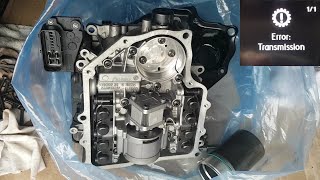
For Jetta models with a DSG transmission, P2800 almost always means a failure inside the Mechatronic unit, a complex and expensive repair often costing over $2,500. On models with a traditional automatic transmission, it's typically a much simpler and cheaper fix: a faulty external Transmission Range Sensor, costing around $150-$400 to replace.
- The first and most important step is to identify if your Jetta has a DSG or a conventional automatic transmission, as the cause and cost of repair are drastically different.
- On a DSG, P2800 is a serious code that almost always points to a failure within the Mechatronic unit, requiring professional replacement or rebuilding.
- On a conventional automatic, P2800 is a much less severe issue, typically caused by a faulty external sensor that is far cheaper and easier to replace.
- Do not drive the vehicle. A P2800 fault can cause the car to stall, fail to start, or get stuck in gear, posing a significant safety hazard.
- Always check wiring and connectors before replacing expensive components, as a simple electrical short can mimic a major part failure.
What's Unique About the 2011-2018 Volkswagen Jetta
The key difference on the 2011-2018 Jetta platform is whether you have a Direct-Shift Gearbox (DSG) or a conventional torque-converter automatic (like the 6-speed 09G). On DSG models, particularly the 7-speed dry clutch DQ200, the range sensor is not a separate, simple switch; it is integrated deep inside the complex Mechatronic unit, which is the electro-hydraulic brain of the transmission. Therefore, a P2800 code on a DSG-equipped Jetta often points to an expensive internal Mechatronic failure. In contrast, the conventional automatic uses a traditional, external, and relatively inexpensive bolt-on Transmission Range Sensor (also called a multifunction switch F125), making the diagnosis and repair much more straightforward.
Symptoms You May Notice
- Flashing gear indicator (PRNDS) on the dashboard.
- Check Engine Light or EPC (Electronic Power Control) light is on
- Vehicle will not start, or only starts in Neutral.
- Transmission enters 'limp mode,' often stuck in 2nd or 3rd gear.
- Delayed or harsh engagement when shifting into Drive or Reverse.
- Incorrect gear position displayed on the dash, or it appears blank.
- Backup lights do not work when in Reverse.
- Sudden loss of drive or inability to select any gears.
- Replacing the gear shifter assembly when the fault is in the transmission itself.
- Condemning the entire transmission when the issue is a simple external range sensor (on non-DSG models) or its wiring.
- Replacing the Mechatronic unit (on DSG models) when the actual problem is a wiring or power supply issue to the unit, such as a blown fuse or bad ground.
Most Likely Causes
- Internal Mechatronic Unit Failure (DSG Models Only) 🔴 High Probability The range sensor is integrated into the Mechatronic's circuit board (TCU), which is a known failure point on DSG transmissions, especially the 7-speed DQ200. Failures can be electronic (bad sensor, cracked circuit board, blown internal fuse) or hydraulic (loss of pressure from the accumulator). The accumulator housing is made of thin aluminum that can develop micro-cracks over time from the high hydraulic pressure (60-70 bar), leading to pressure loss.
How to confirm: A professional diagnosis with a VW-specific scan tool (like VCDS) is needed to read fault codes directly from the transmission module (TCM). If the TCM is unresponsive or shows internal fault codes for sensors, it points to a Mechatronic failure. A common symptom is a repeatedly blowing 30-amp main fuse for the transmission. A key indicator of internal hydraulic failure is the P17BF fault code for 'Hydraulic Pump Play Protection 🎬 Watch: See what causes this common DSG hydraulic failure.'.
Typical fix: Replacement of the entire Mechatronic unit. Specialists can sometimes repair the original unit by replacing the internal circuit board or hydraulic components, which is more cost-effective. Repair kits are available to replace the failed accumulator housing.
Est. part cost: $1200-$2500 - Faulty External Transmission Range Sensor (Non-DSG Automatics Only) 🔴 High Probability → Shop Transmission Assembly This external sensor (multifunction switch F125) is exposed to heat, moisture, and road debris, which can cause internal corrosion or electronic failure over time.
How to confirm: A mechanic can test the sensor's output signal with a multimeter while moving the gear selector. If the signal is erratic, absent, or doesn't match the specified values for each gear, the sensor is faulty. This often requires removing the battery and battery tray to access the sensor on top of the transmission. A VW-specific scanner can read the binary codes from the switch; an incorrect bit pattern for a selected gear confirms a faulty switch or wiring.
Typical fix: Replace the Transmission Range Sensor located on the exterior of the transmission case and perform an adjustment to align it with the neutral position.
Est. part cost: $70-$200 - Damaged Wiring or Corroded Connector 🟡 Medium Probability The wiring harness leading to the transmission can become brittle from heat cycles or damaged by road debris, leading to a short or open circuit. The main connector can also suffer from water intrusion.
How to confirm: Visually inspect the wiring harness and connector going to the Mechatronic unit (DSG) or the external range sensor (Automatic). Check for chafed wires, melted insulation, or green/white corrosion on the connector pins. A voltage drop test can confirm power and ground issues. On 09G models, a frayed wire between the F125 switch and the TCM is a known issue.
Typical fix: Repair the damaged section of the wiring harness or replace the connector pigtail. In some cases, a jumper wire may be run to bypass a break deep within the harness.
Est. part cost: $20-$100
Rare But Worth Checking
- Misadjusted Shifter Cable: If the cable connecting the gear lever to the transmission is stretched or loose, the sensor may not correctly align with the gear position. This can sometimes be fixed with a simple adjustment rather than part replacement. This is a more common issue on the non-DSG automatics.
- Low Battery Voltage: Modern transmission control modules are sensitive to voltage. A weak or failing battery can cause a variety of spurious electronic fault codes, including P2800, even if the primary component is not faulty.
Diagnosis Steps
- Scan for Codes: Use a VW-compatible OBD-II scanner to confirm P2800 and check for any other related transmission codes from the TCM (e.g., P17BF, P0705).
- Identify Transmission Type: Determine if the vehicle has a DSG (often a 7-speed DQ200) or a conventional 6-speed automatic (09G). This is the most critical step as it dictates the entire diagnostic path.
- If Conventional Automatic (09G):
- a. Inspect Wiring: Visually inspect the wiring and connector for the external Transmission Range Sensor (F125), located on top of the transmission under the battery tray. Pay close attention to frayed wires near the connector.
- b. Test Sensor: Back-probe the sensor's 8-pin connector to test for correct voltage supply (approx. battery voltage) and grounds. Use a scanner to monitor the binary output from the switch in each gear position to check for implausible signals.
- c. Check Adjustment: Ensure the shifter cable is properly adjusted. The sensor itself must also be aligned correctly in the 'Neutral' position during installation using a setting gauge or alignment marks.
- If DSG Transmission:
- a. Check Fuses and Power: Check the main 30-amp fuse for the transmission system. If it blows repeatedly, it strongly suggests a short circuit inside the Mechatronic unit. Verify the unit is receiving proper battery voltage and has a solid ground connection.
- b. Advanced Scan: Use a tool like VCDS to monitor live data from the transmission module. Inability to read gear position or other internal Mechatronic faults (like hydraulic pressure codes P17BF, P189C) strongly suggests the unit has failed.
- Final Diagnosis: If wiring and power are good, the fault is isolated to the component itself—either the external sensor (09G) or the internal Mechatronic unit (DSG).
Parts You'll Likely Need
- DSG Mechatronic Unit
(OEM #0AM927769D, 0AM927769G (Varies by specific DQ200 version))— For DSG models, the range sensor is internal to this unit. A P2800 code, often with other hydraulic faults, typically requires the replacement of the entire assembly.
Trusted brands: Volkswagen Genuine
OEM price range: $1500-$2500
Aftermarket price range: $800-$1500 (Rebuilt/Remanufactured) - Transmission Range Sensor (Neutral Safety Switch)
(OEM #09G919823)— For models with a conventional 6-speed automatic (non-DSG, code 09G), this external switch is the most common part to fail and cause a P2800 code.
Trusted brands: Volkswagen Genuine, Bosch, Meyle, Vemo
OEM price range: $120-$200
Aftermarket price range: $70-$130
Related Codes That Often Appear With This One
- P0705 — This code indicates a fault in the 'A' circuit of the Transmission Range Sensor. Since modern systems use multiple circuits for redundancy, a fault in one (P2800) can sometimes be accompanied by a fault in the other (P0705).
- P17BF — On DSG models, this code for 'Hydraulic Pump Play Protection' is a very common companion to Mechatronic failures, indicating a problem with the unit's ability to build or hold hydraulic pressure due to a crack in the accumulator housing.
- P189C — Another DSG-specific code, 'Function Restriction due to Insufficient Pressure Build-Up', which points directly to the internal hydraulic pump or accumulator within the Mechatronic unit failing.
- P2711 / 19143 (VAG) — This code for 'Unexpected / Implausible Mechanical Gear Disengagement' can be triggered alongside P2800, especially on DSG models, indicating the TCM is losing track of gear positions, sometimes due to metal fragments on position sensors.
Technical Service Bulletins (TSBs) & Recalls
- VW TSB 34-16-02 (Transaction ID 2034406/5): Provides a diagnostic procedure for addressing various transmission noises, instructing technicians on how to properly diagnose and report issues to the VW technical helpline. While not specific to P2800, it is relevant to overall transmission diagnostics on this platform.
Platform-Specific Known Issues
- The 7-speed dry clutch (DQ200) DSG transmission, found in some Jetta models (like the Hybrid and certain 1.4T engines), is particularly known for Mechatronic failures related to hydraulic pressure loss and electronic faults. These failures often present with a flashing PRNDS indicator and codes like P17BF.
Mechanic-Grade Diagnostic Values
- DSG Mechatronic Hydraulic Pressure (Actual Value) — expected: Should not be in the negative when checked with a scan tool like VCDS.. Failure: A negative pressure reading indicates faulty pressure sensors within the Mechatronic unit.
- Voltage Supply to F125 Multifunction Switch (Non-DSG) — expected: Approximately battery voltage at the 8-pin connector with ignition on.. Failure: If voltage is not present, there is a wiring issue between the power source and the switch.
- F125 Multifunction Switch Binary Output (Non-DSG) — expected: P: 1001, R: 1100, N: 0101, D: 0110, S: 1111. Failure: If the binary code displayed in VCDS measuring blocks is incorrect for the selected gear (e.g., showing 0001 for Park), it indicates a fault in the switch or its wiring.
Hidden / Shadow Codes Worth Checking
- 19143 (VAG equivalent for P2711): Unexpected / Implausible Mechanical Gear Disengagement. This often accompanies other DSG faults and points towards the TCM losing track of the gear position, which can be related to the range sensor function. (see via VW-specific scanners like VCDS or ODIS.)
Scan Tool Commands That Help
- VCDS (or equivalent VW-specific scanner): Basic Settings - Group 060 / 061 — This procedure is mandatory after replacing a DSG Mechatronic unit or clutches. It performs the basic adaptation of clutch engagement points and gear selector positions. Failure to perform this will result in harsh shifting or no engagement.
- VCDS: Resetting of all adaption values — As part of a full Mechatronic reset procedure, this command clears learned values. If it fails with a 'safety reasons' message, it indicates a problem with the preceding steps or a persistent hardware fault.
- VCDS: Defined Test Drive (Adaptation Drive) — After a successful Basic Setting, a specific test drive procedure is required to allow the clutches and selectors to adapt under load. This involves specific patterns of acceleration and shifting in both Drive and Manual modes.
Wiring & Ground Locations
- F125 Connector (Non-DSG 09G) — On top of the transmission case, typically under the battery and battery tray.. This is the main connector for the external range sensor. Pin 1 (white/black) is a signal wire to TCM pin 47, Pin 10 is a switched positive connection, and Pins 2, 3, and 4 are grounds. Damage to any of these wires can cause P2800.
- TCM Connector (Non-DSG 09G) — The Transmission Control Module (J217) location can vary but is often found in the engine bay or plenum area.. This is the destination for the F125 sensor signals. A common failure is a break in the wire for Pin 1 of the F125 connector before it reaches Pin 47 of the TCM connector, which can be bypassed with a jumper wire.
- Mechatronic Connector (DSG DQ200) — Large multi-pin connector on the front of the DSG transmission.. This is the sole electrical connection to the Mechatronic unit. Testing for power, ground, and CAN bus signals at this connector is the first step in diagnosing an unresponsive unit before condemning it.
Real Owner Repair Stories
- Ross-Tech Forums user (2009 VW Golf City, 09G Automatic Transmission) — PRNDS indicator always showed 'D' except for Reverse. Transmission was in limp mode. Fault code for F125 implausible signal.
❌ Tried (didn't work) Replacing the F125 Transmission Range Sensor with a brand new part did not solve the issue.
✅ What actually fixed it The wire for pin 1 (white/black) on the F125 sensor connector was damaged somewhere in the harness. The fix was to run a new jumper wire directly from pin 1 of the sensor connector to pin 47 on the Transmission Control Module (TCM) connector, bypassing the break.
OEM Part Supersession History
0AM927769D→0AM927769G, 0AM927769K— Revisions to improve reliability of the DQ200 Mechatronic control unit.
Heads up: While later revisions can often replace earlier ones, the new unit MUST be programmed with the correct software for the specific vehicle's VIN. It is not a plug-and-play part.
Model Year Variations Within This Range
- 2013-2016: The Jetta Hybrid model was introduced for 2013, which used a 1.4L engine paired with the 7-speed DQ200 DSG transmission. These models are susceptible to the Mechatronic failures common to the DQ200, whereas other non-GLI Jettas of the same era might have the more robust conventional automatic.
- Post-2013: VW made improvements to the DQ200 Mechatronic unit after widespread failures in early models. Units produced after 2013 are generally considered more reliable, though not immune to failure. One key change was switching from synthetic to mineral oil in the mechatronic unit to prevent electrical conductivity issues.
Diagnostic Flowchart
Other Known Issues on This Vehicle
Issues unrelated to this code that are worth knowing about as an owner of this generation:
- Timing Chain Tensioner Failure (2.0T TSI) 🔴 High — Common on earlier TSI engines (approx. 2008-2013). Failure can occur with little warning, often between 60k-100k miles, leading to catastrophic engine damage. (Ref: VW issued multiple TSBs and there was a class-action lawsuit regarding this issue. An updated tensioner part was released.)
- Water Pump Failure (TSI/TDI Engines) 🟠 Medium — The plastic housing of the water pump is prone to cracking and leaking, typically between 40k-80k miles. Can lead to overheating if not addressed. (Ref: Multiple class-action settlements have been reached, extending the warranty for the water pump on affected vehicles.)
- Clogged Heater Core 🟠 Medium — Very common across the model range, leading to poor or no heat in the cabin. Often caused by coolant contamination or breakdown. Symptoms can appear at various mileages. (Ref: While no specific recall, it is a widely discussed problem. A full coolant flush is required when replacing the core to prevent repeat failure.)
- Window Regulator Failure 🟡 Low — The plastic clips holding the window glass to the regulator are known to break, causing the window to fall into the door. This is a common issue on many VW models of this era.
- Ignition Coil Failure (TSI Engines) 🟡 Low — Causes engine misfires, rough running, and a flashing check engine light. Relatively common and can happen at any mileage. Easy to diagnose and replace.
Used vs. New Parts: Buying Guide for This Vehicle
When a used part is the smart pick: For the conventional (non-DSG) automatic, a used external Transmission Range Sensor (F125) from a low-mileage donor vehicle is a reasonable, cost-effective option. The part is simple and its condition is easy to assess.
Donor-vehicle mileage cap: roughly under 80000 miles for the part to have meaningful remaining life.
What to inspect on the donor part:
- For an F125 sensor, check the electrical connector pins for any signs of green or white corrosion.
- Ensure the plastic housing is not cracked or showing signs of extreme heat stress.
- Verify the part number (09G919823) matches exactly.
OEM-only on this vehicle (don't cheap out):
- DSG Mechatronic Unit: Due to extremely high failure rates and the need for vehicle-specific software programming, a used Mechatronic unit is a very high-risk purchase. There is no reliable way to know its history or remaining life. A new OEM unit or a unit from a highly reputable rebuilder with a warranty is strongly recommended.
Aftermarket brands forum-validated for this vehicle:
- For the external F125 sensor (09G transmission), brands like Bosch and Meyle are generally considered reliable alternatives to OEM.
Brands owners have reported issues with on this vehicle:
- For the F125 sensor, avoid unbranded, no-name parts from online marketplaces, as fitment and electronic longevity can be poor.
- For the DSG Mechatronic, avoid generic rebuilt units without a solid warranty and clear information on what components were replaced (e.g., original Bosch solenoids, new accumulator).
Real Owner Stories
Aggregated from forums and TSBs cited above. Mileages and costs reflect what owners reported in those sources.
2016 Jetta Hybrid
Symptoms: The vehicle presented with transmission fault codes and issues selecting gears.
What fixed it: Replacement of the Mechatronic unit.
Cost: $3800-$3800
Source hint: CarComplaints.com report regarding Mechatronic failure and dealer quote.
2012 Jetta GLI 2.0TSI DSG
Symptoms: Owner described timing chain stretch issues alongside platform-specific transmission concerns.
What fixed it: Repair of timing chain and related platform issues.
Source hint: Reddit (r/Volkswagen) user thread regarding 2012 GLI platform issues.
Related OBD-II Codes
Frequently Asked Questions
My 2011-2018 Jetta has a flashing PRNDS indicator on the dash; what does this mean for my DSG transmission?
Is there a specific TSB for diagnosing transmission issues on this Jetta platform?
I have a Jetta Hybrid with P2800; is my transmission different from the standard automatic?
Can I replace the range sensor on my 7-speed DSG Jetta myself?
Why does my Jetta only start in Neutral and not in Park?
Could a simple fuse be causing my P2800 code and transmission failure?
Helpful Videos
We Have This Part in Stock



The information in this article is provided for general reference and educational purposes only. Vehicle specifications, procedures, and part compatibility can vary by production date, trim level, and region. Always consult your vehicle's factory service manual and verify part numbers before purchasing or performing repairs. Safety-critical components such as airbags, seat belts, and braking systems should be installed by a qualified professional.
- Volkswagen Jetta:
- 🧭 Diagnostic Flowchart
- 🎬 Helpful Videos
- 🛍️ Shop This Part
- What's Unique About the 2011-2018 Volkswagen Jetta
- Symptoms You May Notice
- Most Likely Causes
- Rare But Worth Checking
- Diagnosis Steps
- Parts You'll Likely Need
- Related Codes That Often Appear With This One
- Technical Service Bulletins (TSBs) & Recalls
- Platform-Specific Known Issues
- Mechanic-Grade Diagnostic Values
- Hidden / Shadow Codes Worth Checking
- Scan Tool Commands That Help
- Wiring & Ground Locations
- Real Owner Repair Stories
- OEM Part Supersession History
- Model Year Variations Within This Range
- Other Known Issues on This Vehicle
- Used vs. New Parts: Buying Guide for This Vehicle
- Real Owner Stories
- 2016 Jetta Hybrid
- 2012 Jetta GLI 2.0TSI DSG
- Related OBD-II Codes
- Frequently Asked Questions
- 🎟️ Get 5% Off