

OBD-II Code P2801: Transmission Range Sensor 'B' Circuit Performance Problem
What P2801 means, why it triggers, and how to fix it
- Code P2801 triggers when the Powertrain Control Module detects an illogical voltage signal from the transmission range sensor's secondary 'B' circuit.
- A failing neutral safety switch creates a severe safety hazard by allowing the engine to start in Drive or Reverse, causing the vehicle to lurch unexpectedly.
- Replacing an external transmission range sensor costs between $150 and $500, but internal sensor replacements (like Ford's molded lead frame) exceed $1,000.
- Driving in limp mode for more than 50 miles with this code overheats the transmission, risking $2,500+ in internal clutch and seal damage.
What Does P2801 Mean?
The P2801 code means your car's Powertrain Control Module (PCM) detects an irrational signal from the transmission range sensor's 'B' circuit. This sensor, also known as a neutral safety switch, tells the computer which gear you selected (Park, Reverse, Neutral, Drive). When the sensor's secondary ('B') signal doesn't match expected values, the PCM gets confused about the gear selection, triggering the code.
Technical definition: The official SAE/OBD-II definition is "Transmission Range Sensor 'B' Circuit Range/Performance". This indicates the Powertrain Control Module (PCM) or Transmission Control Module (TCM) detects the voltage signal from the 'B' circuit is outside the manufacturer's expected performance range for the selected gear. This is not a simple 'circuit high' or 'circuit low' fault, but an illogical signal that is intermittent, glitchy, or doesn't correlate with other sensor inputs.
Can I Drive With P2801?
No, immediate towing needed but high risk Driving is not recommended. A failing neutral safety switch allows the engine to start in any gear and lurch unexpectedly, creating a serious safety hazard. Driving in 'limp mode' (stuck in 2nd or 3rd gear) for more than a few miles overheats the transmission, causing internal damage like burnt clutches or seals that adds $2,500+ to repair costs.
Common Causes
- Faulty Transmission Range Sensor (TRS) (Very Common) — The sensor itself is the most common culprit, failing from internal wear on its potentiometer, Hall-effect elements, or internal electrical shorts.
- Wiring Harness and Connector Damage (Common) — The wiring harness or connector becomes damaged, loose, or shorted. Moisture, road salt, and fluid leaks penetrate the connector, causing corrosion and erratic signals over time.
- Poor Electrical Ground (Common) — A corroded, loose, or broken ground wire for the sensor or the Transmission Control Module (TCM) causes erratic voltage readings, triggering a performance code even if the sensor functions perfectly.
- Misadjusted Sensor or Shift Linkage (Less Common) — If the sensor was recently replaced or the physical shift cable stretches, it misaligns with the transmission's manual valve, sending the wrong gear position signal.
- Low or Unstable System Voltage (Less Common) — A weak battery, failing alternator, or corroded battery terminals causes fluctuating voltage, which the sensitive TCM misinterprets as a sensor performance issue.
- Faulty Powertrain Control Module (PCM) or Transmission Control Module (TCM) (Rare) — The computer module itself fails. This is a known issue in Ford models with the DPS6 transmission, but remains the last item to diagnose on most vehicles.
Symptoms
- Car Won't Start or Starts in Any Gear — The sensor acts as a neutral safety switch. A complete failure prevents the engine from cranking. A shorted switch allows the car to start in Drive or Reverse, causing it to lurch unexpectedly.
- Vehicle Enters 'Limp Mode' — The transmission defaults to a single gear (usually 2nd or 3rd) to prevent damage, resulting in poor acceleration, high engine RPM at cruising speeds, and decreased fuel economy.
- Delayed or Harsh Shifting — The transmission hesitates for 1-2 seconds before engaging a gear or shifts abruptly and harshly between gears.
- Incorrect Gear Display — The PRNDL indicator on the dashboard flashes, shows the wrong gear, or fails to illuminate.
- Reverse Lights Inoperative — The transmission range sensor controls the reverse lights. A fault causes them to stop working, creating a safety issue and failing vehicle inspections.
- Check Engine Light is On (also visible on scanner) — The PCM illuminates the Malfunction Indicator Lamp (MIL) to alert the driver of a fault.
Diagnostic Flowchart
Tap your situation to follow the diagnostic path that matches what you're seeing on this code.
Common Fixes & Costs
- Replace Transmission Range Sensor
— Parts: $50-$350, Labor: $100-$500, ~1.5 hr book time
(Intermediate)
Ford Focus/Fiesta (DPS6): OEM AE8Z-7F293-A (Alt: Dorman 511-100)
Ford F-150 (Internal/6R80): OEM MB3Z-7A100-B (Alt: Dorman 917-730 (Lead Frame Assembly))
Chevrolet Silverado (Internal/6L80): OEM ACDelco 24259377 (Alt: Dorman 511-107) - Repair Wiring or Connector — Parts: $10-$50, Labor: $100-$200, ~1.5 hr book time (Intermediate)
- Adjust Transmission Range Sensor — Parts: $0, Labor: $50-$150, ~0.8 hr book time (DIY)
- Clean or Repair Ground Connection — Parts: $5, Labor: $50-$100, ~0.5 hr book time (DIY)
- Replace Powertrain/Transmission Control Module (PCM/TCM) — Parts: $600-$1200, Labor: $150-$300, ~2.5 hr book time (Professional)
Used vs. New Parts: Buying Guide
When a used part is worth it: For a simple external sensor, buying new is mandatory as it is a wear item. A used part is only viable for a complete valve body or lead frame assembly from a verified low-mileage donor vehicle to save on extreme costs.
Donor-vehicle mileage cap: roughly under 60000 miles for the part to have meaningful remaining life.
Donor quality checklist:
- Verify the donor vehicle was not scrapped due to transmission or electrical issues.
- Match the OEM part number exactly; superseded parts have critical updates.
- Avoid parts from vehicles in the 'Salt Belt' or flood-damaged areas.
Decision logic:
- If The new aftermarket or OEM sensor costs less than $150. → Always buy new. The small savings from a used part isn't worth the risk and repeat labor cost.
- If The repair requires an expensive internal assembly (e.g., lead frame) and the vehicle is over 150,000 miles. → A used assembly from a donor under 60k miles is a cost-effective option, but accept it may not last the remaining life of the vehicle.
- If The part is electronic with known wear components (contacts, potentiometers). → Strongly favor a new OEM or reputable aftermarket part with a warranty.
Warranty tradeoff: Used salvage yard parts offer a 30-90 day warranty on the part only. New aftermarket parts carry a 1-year to limited lifetime warranty. New OEM parts offer a 1-2 year warranty.
Worst-case if a used part fails: 400-800. This represents the cost of a second replacement part plus repeat labor if the used part fails shortly after the 30-90 day warranty period.
What Happens If You Wait — Timeline
- 0-1 month: Intermittent fault. Check Engine Light appears but may turn off. Occasional delayed shift or incorrect gear indicator. No-start occurs rarely. (MPG impact: 0-5%% · Added cost: $0-25 in wasted fuel)
- 1-3 months: Fault becomes consistent. Check Engine Light stays on. Vehicle enters 'limp mode' (stuck in 2nd/3rd gear) frequently. Starting in gear becomes a severe safety risk. (MPG impact: 10-20%% · Added cost: $50-150 in wasted fuel and increased strain on transmission)
- 3-6 months: Vehicle is permanently in 'limp mode.' Driving at highway speeds causes the engine to run at very high RPMs, leading to transmission overheating. Fluid degrades and burns. (MPG impact: 20-30%% · Added cost: $250-800 as fluid degrades and internal seals harden from heat.)
- 6+ months: Catastrophic internal transmission damage. Prolonged overheating burns clutch packs and warps seals. The transmission slips severely or fails to engage altogether. (MPG impact: N/A (Vehicle likely undrivable)% · Added cost: $2,500-5,000+ for a transmission rebuild or replacement.)
Cost of Not Fixing It
- Immediate (0-1 month): Significant safety hazard due to potential for starting in gear. Vehicle gets stuck in 'limp mode,' causing poor acceleration and a 10-20% drop in fuel economy. (Added cost: 50-100)
- Medium Term (1-6 months): Operating in limp mode forces the transmission to run at non-optimal RPMs, causing overheating. This degrades transmission fluid and accelerates wear on internal clutches and seals. (Added cost: 250-800)
- Long Term (6+ months): Severe and irreversible internal transmission damage occurs from prolonged overheating. Burnt clutch packs, damaged valve bodies, and warped seals require a complete transmission rebuild or replacement. (Added cost: 2500-5000+)
Diagnosis Steps
- Scan Codes & Live Data Analysis
Use an advanced scan tool to confirm P2801 and monitor the live data PID for 'TRS B' voltage. Slowly move the shifter through each gear (P-R-N-D-L). The reading must change smoothly and logically. Watch for jumps, glitches, or dropouts.
Tools: Advanced OBD-II Scan Tool (Intermediate) - Visual Inspection & Fluid/Voltage Check
Inspect the transmission fluid level and condition. Verify the battery provides at least 12.4V (engine off) and the alternator charges at 13.5V-14.5V (engine on). Inspect the sensor, connector, and wiring harness for frayed wires, corrosion, or debris damage.
Tools: Multimeter, Flashlight, Safety Glasses, Rag (Beginner) - PRO TIP: Manual Voltage Test at the Sensor
Disconnect the sensor connector. With the key on, engine off, confirm a steady 5V reference and a solid ground (less than 0.1V). Back-probe the signal wire with the connector re-attached. As you move the shifter, the voltage must sweep smoothly between ~0.5V and ~4.5V. Erratic readings point to a faulty sensor.
Tools: Multimeter, Vehicle-Specific Wiring Diagram, Back-probe Kit (Advanced) - Circuit Integrity Check (Resistance and Shorts)
Disconnect the sensor and the PCM/TCM. Use a multimeter to check for continuity on the signal, power, and ground wires from end-to-end. Check for a short to ground and a short to power on the signal wire. Ground circuit resistance must be less than 1 ohm.
Tools: Multimeter, Vehicle-Specific Wiring Diagram (Advanced) - Check Sensor Adjustment
If the sensor and wiring pass tests, check the physical adjustment. Ensure the vehicle is in Neutral, then align the sensor's neutral line with the corresponding mark on the transmission housing or shaft per the service manual.
Tools: Socket/Wrench Set, Service Manual (Intermediate) - PRO TIP: Resistance Test at the Sensor
For analog sensors, disconnect the sensor and measure resistance between specified pins for each gear position. A good sensor shows distinct resistance values matching the manufacturer's chart. An infinite reading (OL) indicates a failed sensor.
Tools: Multimeter, Vehicle-Specific Service Manual (Advanced) - PRO TIP: Waveform Pattern Analysis
For intermittent issues, use an oscilloscope to graph the sensor's signal voltage. A bad sensor shows 'hash,' noise, voltage dropouts, or misaligned transitions between voltage levels as the shifter moves. This catches failing sensors that multimeters miss.
Tools: Oscilloscope, Wiring Diagram (Professional) - PRO TIP: Digital Sensor Voltage State Analysis (Ford)
Ford digital TR sensors use four signal circuits (TR1, TR2, TR3A, TR4) sending unique voltage patterns. Using a scan tool, verify these voltages. For example, TR3A should read 1.3-1.8V in R, N, and OD; a 0V reading points to a fault. Compare live readings to the service manual's voltage chart.
Tools: Advanced OBD-II Scan Tool, Breakout Box, Service Manual (Professional)
When This Code Triggers (Freeze-Frame Conditions)
- Engine Coolant Temp: 180-210°F (Triggers when the vehicle reaches normal operating temperature.)
- RPM: 1500-2500 RPM (Sets during steady-state cruise when the PCM expects a stable gear signal but receives an erratic one.)
- Engine Load: 25-50% (Occurs under light to moderate engine load, consistent with city or highway cruising.)
- Vehicle Speed: 30-60 mph (Triggers at constant speeds where the signal should remain stable, or during a shift event.)
Related Codes
- P0705 — Indicates 'Transmission Range Sensor 'A' Circuit Malfunction'. Seeing P0705 and P2801 together strongly suggests a failure of the entire sensor assembly, its main connector, or the TCM.
- P0700 — A general transmission system fault code. It is an informational code set by the PCM indicating the Transmission Control Module (TCM) stored a specific fault like P2801.
- P2800 — Indicates 'Transmission Range Sensor 'B' Circuit Malfunction'. P2800 points to a general electrical fault like an open circuit, whereas P2801 means the signal is present but irrational.
- P0852 — Indicates 'Park/Neutral Switch Input Circuit High'. On Subarus, this code sets alongside P2801 and points directly to a problem with the inhibitor switch or its adjustment.
Climate & Environmental Factors
- Moisture and Road Salt: In regions with heavy winter road salt usage ('Salt Belt'), the external transmission range sensor, connector, and wiring harness are highly susceptible to corrosion. Water penetrates worn seals, causing short circuits and erratic signals that trigger P2801.
- Extreme Cold Weather: Cold temperatures cause transmission fluid to thicken, leading to delayed shifting that mimics a sensor issue. Cold also makes old plastic wiring insulation brittle and prone to cracking, creating entry points for moisture.
- High Altitude: There is no direct correlation between high altitude and a P2801 failure. The sensor's operation relies on mechanical position and voltage, unaffected by atmospheric pressure.
How to Talk to a Mechanic About This Code
Say this: "I have an OBD code P2801 for the Transmission Range Sensor 'B' Circuit. I'd like to schedule a diagnostic to test the circuit, including the sensor, wiring, and connector, before replacing any parts. Can you check the live data from the sensor to see if the signal is erratic?"
This signals to the shop that you understand the problem is in a 'circuit' and not necessarily a bad sensor. It directs them to perform a proper diagnosis rather than just replacing the most common part.
Avoid saying:
- 'My car is shifting weird, can you fix it?'
- 'My check engine light is on, I think it's the transmission.'
- 'Just replace the transmission sensor.'
Questions to ask before authorizing the repair:
- What were the results of the diagnostic? Did you test the sensor's voltage, or just read the code?
- Can you confirm the problem isn't in the wiring harness or connector before we replace the sensor?
- If the sensor is internal, is the quote all-inclusive for the part, new fluid, filter, and labor?
- What is the warranty on the new part and the labor for this repair?
Where to Take It: Dealer vs Independent vs Chain
- Dealer:
Necessary for warranty/recall work and complex electronic programming. The most expensive option for out-of-warranty fixes.
Best for: Vehicles still under powertrain warranty., Specific models with known recalls or warranty extensions (e.g., Ford Focus/Fiesta TCM, Subaru inhibitor switch)., Complex internal repairs like replacing a molded lead frame or TCM programming.
Downsides: Highest labor rates., Prefers replacing large assemblies (like a valve body) instead of smaller components. (Typical cost: +50% vs. baseline) - Independent Shop:
Best overall choice for most out-of-warranty P2801 repairs. Seek a well-regarded independent shop specializing in transmissions.
Best for: Out-of-warranty vehicles., Diagnosing and repairing external sensors, wiring issues, and ground faults., Transmission specialty shops with deep expertise in these systems.
Downsides: Quality and diagnostic capability vary greatly. Vet shops for ASE certifications., Lacks access to the latest manufacturer-specific software updates. (Typical cost: +0% vs. baseline) - Chain Shop:
AVOID for diagnosing P2801. The risk of misdiagnosis and unnecessary, expensive repairs is extremely high.
Best for: Simple, unrelated maintenance like oil changes or tires.
Downsides: Technicians lack specialized tools and training for in-depth transmission diagnostics., High pressure to upsell services; often recommends complete transmission replacements for sensor issues. (Typical cost: -10% vs. baseline)
When to Walk Away From the Repair
If the estimated repair cost exceeds 50% of your car's private-party value, seriously consider selling or trading it in.
- Car worth $4000, fix is $1200: Fix it. The repair cost is 30% of the car's value, a reasonable investment to keep it running.
- Car worth $3000, fix is $1500: Borderline. The repair is 50% of the car's value. Get a second opinion. If the rest of the car is in excellent shape, fix it. Otherwise, sell.
- Car worth $2500, fix is $1800: Walk away. The repair cost is over 70% of the car's value. It is not a sound financial decision.
What Scan Tool You Need for This Code
Minimum: A scanner that reads and graphs live transmission data PIDs (Parameter IDs).
A basic $20 code reader only shows the P2801 code. It cannot display the live voltage signal from the sensor, which is essential to spot glitches or dropouts as you move the shifter.
Budget: BlueDriver Pro (~$90) — Connects to your smartphone to read and graph live data, including transmission parameters. A powerful tool for DIYers to confirm erratic sensor signals before visiting a shop.
Mid-range: Innova 5610 or Foxwell NT809BT (~$350) — Robust handheld units offering extensive OEM-level live data and bidirectional tests to command specific functions, greatly speeding up diagnosis.
Professional: Autel MaxiCOM MK808 / Launch X431 series (~$500-1200) — Provides professional-level diagnostics, full bidirectional control, access to all manufacturer-specific transmission data, and advanced functions like TCM coding.
Rent vs buy: Free scans at auto parts stores are insufficient for this code. Buy a 'Budget Pick' scanner; its cost is less than a single hour of diagnostic labor at a shop ($100-$150).
How to Clear the Code After You Fix It
- Use an OBD-II scan tool to erase the P2801 and related fault codes.
- Reconnect the battery if disconnected during repair.
- Perform a complete OBD-II drive cycle to set readiness monitors to 'Ready'.
Drive cycle (~30 minutes): 1) Cold start (vehicle sits for 8+ hours). 2) Idle for 2-3 minutes. 3) Drive for 15 minutes in mixed stop-and-go city conditions. 4) Drive for 10-15 minutes at a steady highway speed (55-60 mph). 5) Allow the vehicle to cool down. Multiple trips are often required.
Readiness monitors affected: Comprehensive Component Monitor, Catalyst Monitor, Oxygen Sensor Monitor
Before emissions retest: drive at least 100 miles to fully set monitors.
Watch out for:
- Clearing the code does not fix the underlying electrical or mechanical problem; the code returns immediately.
- Taking the vehicle for an emissions test immediately after clearing the code results in a 'Not Ready' failure.
- Disconnecting the battery clears codes but resets all readiness monitors and adaptive learning tables, requiring a full drive cycle.
Will This Fail Emissions / State Inspection?
Yes — this code typically fails an OBD-II emissions inspection.
- California: An active Check Engine Light for a P-code is an automatic failure of the Smog Check. All required readiness monitors must be 'Ready'.
- New York: The NYS inspection includes an OBD-II scan. An illuminated Malfunction Indicator Lamp (Check Engine Light) causes an automatic failure.
- Texas: In the 17 Texas counties requiring emissions testing, an illuminated Check Engine Light is an automatic failure.
Most Commonly Affected Vehicles
- Ford Focus (2012-2018) — Equipped with the DPS6 dual-clutch transmission. P2801 is often a symptom of a failing Transmission Control Module (TCM), a widely known issue causing shuddering and hesitation.
- Ford Fiesta (2011-2019) — Uses the problematic DPS6 transmission. TCM failure is a common cause for this code, requiring module repair or replacement rather than just the sensor.
- Ford F-150 (2011-2020) — On models with the 6R80 transmission, the sensor is integrated into an internal component called the molded lead frame, making replacement complex. Part numbers supersede frequently (e.g., FL3Z-7A100-C replaced by MB3Z-7A100-B).
- Chevrolet Silverado (2007-2013) — The external sensor and wiring harness are vulnerable to environmental damage. On models with the 6L80 transmission, the sensor is located internally, requiring removal of the transmission pan and valve body.
- Honda Pilot (2016-2020) — Uses a ZF 9-speed transmission subject to complaints for erratic shifting. P2801 relates to underlying software calibration issues in the PCM/TCM. Checking for software updates via TSBs (like 20-029) is critical.
- Nissan Altima (2007-2012) — Models with Continuously Variable Transmissions (CVTs) report failures of the transmission range sensor, exacerbated by high transmission temperatures.
- Volkswagen Fox (2005-2011) — The code appears frequently on this model, pointing directly to wiring harness chafing or internal sensor failure.
- Subaru Various Models (Outback, Forester, Legacy) (2010-2023) — Subaru calls the range sensor an 'inhibitor switch'. Recall 23V-755 covers 2021-2023 models for water ingress into the switch due to a bad weld.
Manufacturer-Specific Notes
- Ford: On Focus (2012-2016) and Fiesta (2011-2015) models with the DPS6 transmission, the TCM is a common failure point covered under Customer Satisfaction Program 14M02 (10 years/150,000 miles). Investigate TCM health before replacing sensors.
- Honda: On models with the ZF 9-speed automatic, software glitches cause erratic shifting and trigger transmission codes. Dealers must check for software updates per TSBs 20-029 and 16-091 before replacing hardware.
- Subaru: Subaru refers to the Transmission Range Sensor as an 'Inhibitor Switch'. Recall WRQ-23 (NHTSA 23V-755) covers 2021-2023 models because a bad weld allows water to enter the switch, causing failure.
- General Motors (Chevrolet/GMC): On GM trucks, the range sensor wiring harness routes near the exhaust system. Heat makes the plastic loom brittle, exposing wires to the elements and causing shorts.
Real Owner Stories
2013 Ford F-150 at 125K miles
Truck suddenly downshifted to 3rd gear on the highway and the wrench light illuminated. After restarting, the check engine light showed code P2801.
What they tried:
- Initially suspected a software issue from a previous recall.
- Took it to a transmission shop that diagnosed a faulty transmission molded lead frame.
Outcome: Replaced the internal molded lead frame assembly. The shop charged $1,200 for the repair, including parts, new fluid, and labor. The repair resolved the shifting issues and cleared the code.
Lesson: On modern Ford trucks, the range sensor is internal to the transmission as part of the lead frame. This requires dropping the transmission pan and valve body, making it a job for a professional.
2014 Ford Focus at 110K miles
Car experienced intermittent no-start conditions and harsh, jerky shifting. Codes P2801 and P0700 were present. The PRNDL indicator failed to light up.
What they tried:
- The owner suspected the Transmission Range Sensor.
- A mechanic familiar with the DPS6 transmission immediately suspected the Transmission Control Module (TCM).
Outcome: The TCM was faulty. The repair was covered under Ford's Customer Satisfaction Program 14M02, which extended the TCM warranty to 10 years or 150,000 miles. The dealer replaced the TCM at no cost.
Lesson: For Ford Focus (2012-2016) and Fiesta (2011-2015) models, investigate the TCM warranty status before paying for transmission repairs. P2801 is a common symptom of a failing TCM on these models.
2021 Subaru Outback at 30K miles
Check engine light illuminated, reverse lights stopped working, and the rearview camera failed. The car hesitated to start. Dealer pulled code P2801.
What they tried:
- The owner took the vehicle directly to the Subaru dealership due to the active warranty.
Outcome: The dealer identified a faulty inhibitor switch caused by water intrusion from a bad weld. This is a known issue covered by Subaru recall WRQ-23 (NHTSA 23V-755). The switch was replaced for free.
Lesson: Always check for recalls and Technical Service Bulletins (TSBs) related to your vehicle's symptoms. A known manufacturing defect saves you the time and expense of diagnosis and repair.
How to Prevent This Code From Triggering
- Apply Dielectric Grease to the Sensor Connector (Anytime the connector is disconnected for service) — Dielectric grease seals out moisture and prevents corrosion on connector pins and seals, a crucial preventive step in wet or salty climates.
- Inspect and Secure Wiring Harness (During every oil change) — The wiring harness is easily damaged by road debris, exhaust heat, or vibration. Ensure it is properly secured in its clips and protected by its loom.
- Perform Regular Transmission Fluid Changes (Every 30,000 to 60,000 miles) — Old fluid leads to overheating. Excessive heat accelerates the degradation of internal plastic components and seals, including internal range sensors and lead frames.
- Clean the Vehicle's Undercarriage (Seasonally, especially after winter in 'Salt Belt' regions) — Washing away road salt and grime prevents corrosive buildup that destroys wiring insulation, connectors, and the sensor housing itself.
Frequently Asked Questions
What is the 'B' circuit and why does it exist?
Modern vehicles use redundant sensors for reliability and self-diagnosis. The 'B' circuit is a secondary, parallel circuit within the transmission range sensor. The computer compares the 'A' and 'B' signals; if they disagree, it sets code P2801.
What is the most common misdiagnosis for P2801?
The most common mistake is replacing the Transmission Range Sensor without testing the full circuit. A simple wiring issue, a bad ground, or low system voltage mimics a failed sensor. Thorough diagnosis prevents replacing good parts.
Can a bad battery cause a P2801 code?
Yes. Electronically controlled transmissions rely on a stable voltage supply. A weak battery, bad alternator, or poor connections cause voltage drops that confuse the Transmission Control Module (TCM), triggering performance codes.
Can I fix P2801 myself?
A DIYer can perform basic checks like inspecting wiring, checking fluid, and testing battery voltage. Replacing an externally mounted sensor is possible for those with mechanical skill. Replacing an internal sensor requires advanced tools and professional expertise.
How much does it cost to fix P2801?
Replacing an external sensor costs between $150 and $500 for parts and labor. A simple wiring repair runs $100-$250. Replacing an internal sensor or a faulty TCM exceeds $1,000.
Will clearing the code fix the problem?
No. Clearing the code only erases the fault record temporarily. The code returns as soon as the PCM/TCM runs its diagnostic self-test and detects the underlying fault again.
Is the transmission range sensor the same as a neutral safety switch?
Yes. On modern vehicles, the transmission range sensor's duties expanded to include the functions of the traditional neutral safety switch, preventing the engine from starting in gear.
Can a transmission fluid change fix a P2801 code?
No. While dirty fluid causes mechanical transmission problems, it does not directly cause a P2801 electrical circuit performance code. However, if you replace an internal sensor, a fluid and filter change is required.
Key Takeaways
- Code P2801 triggers when the Powertrain Control Module detects an illogical voltage signal from the transmission range sensor's secondary 'B' circuit.
- A failing neutral safety switch creates a severe safety hazard by allowing the engine to start in Drive or Reverse, causing the vehicle to lurch unexpectedly.
- Replacing an external transmission range sensor costs between $150 and $500, but internal sensor replacements (like Ford's molded lead frame) exceed $1,000.
- Driving in limp mode for more than 50 miles with this code overheats the transmission, risking $2,500+ in internal clutch and seal damage.
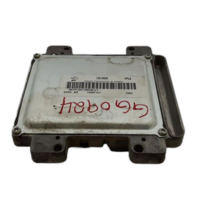
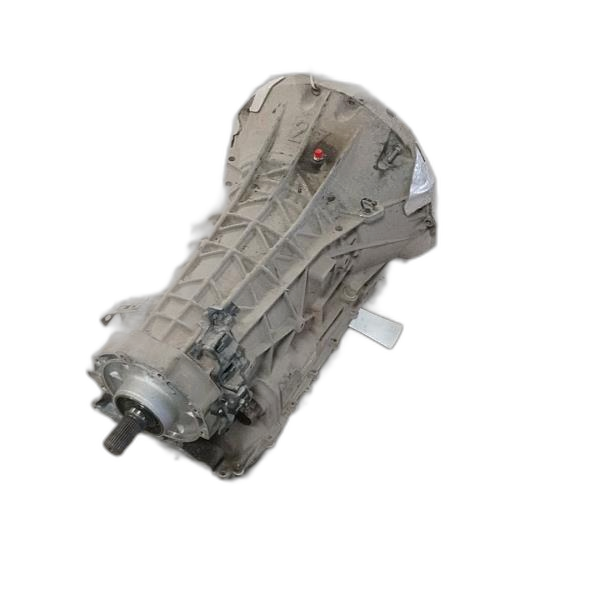
Shop the Parts Behind P2801
Below are the parts most often responsible for code P2801, ranked by how frequently each one is the actual culprit (per the diagnosis above). Tap any to see what we have for your vehicle.

The information in this article is provided for general reference and educational purposes only. Vehicle specifications, procedures, and part compatibility can vary by production date, trim level, and region. Always consult your vehicle's factory service manual and verify part numbers before purchasing or performing repairs. Safety-critical components such as airbags, seat belts, and braking systems should be installed by a qualified professional.
- 🧭 Diagnostic Flowchart
- 🛍️ Shop This Part
- What Does P2801 Mean?
- Can I Drive With P2801?
- Common Causes
- Symptoms
- Common Fixes & Costs
- Used vs. New Parts: Buying Guide
- What Happens If You Wait — Timeline
- Cost of Not Fixing It
- Diagnosis Steps
- When This Code Triggers (Freeze-Frame Conditions)
- Related Codes
- Climate & Environmental Factors
- How to Talk to a Mechanic About This Code
- Where to Take It: Dealer vs Independent vs Chain
- When to Walk Away From the Repair
- What Scan Tool You Need for This Code
- How to Clear the Code After You Fix It
- Will This Fail Emissions / State Inspection?
- Most Commonly Affected Vehicles
- Manufacturer-Specific Notes
- Real Owner Stories
- 2013 Ford F-150 at 125K miles
- 2014 Ford Focus at 110K miles
- 2021 Subaru Outback at 30K miles
- How to Prevent This Code From Triggering
- Frequently Asked Questions
- What is the 'B' circuit and why does it exist?
- What is the most common misdiagnosis for P2801?
- Can a bad battery cause a P2801 code?
- Can I fix P2801 myself?
- How much does it cost to fix P2801?
- Will clearing the code fix the problem?
- Is the transmission range sensor the same as a neutral safety switch?
- Can a transmission fluid change fix a P2801 code?
- Key Takeaways
- 🎟️ Get 5% Off