

P2802 on 2011-2014 Hyundai Sonata: Transmission Range Sensor Circuit Low Fixes
On a 2011-2014 Hyundai Sonata, code P2802 is most often caused by a failed transmission range sensor, also known as an inhibitor switch. This can cause a no-start condition, incorrect gear display, or get the transmission stuck in limp mode. Replacing the sensor, located on top of the transmission under the battery tray, is the typical fix, costing around $50-$120 for the part. Proper alignment of the new sensor is critical.
- P2802 on a 2011-2014 Sonata almost always points to a problem with the transmission range sensor (inhibitor switch) or its wiring.
- Symptoms are serious and can include the car not starting or getting stuck in gear, so driving is not advised.
- The most likely fix is replacing the inhibitor switch, which is located under the battery tray.
- Crucially, the new sensor must be properly aligned during installation as detailed in Hyundai TSB 17-AT-005. Failure to do so will result in continued problems.
- Always verify the correct part number; 42700-26700 is an updated version that replaces several older numbers.
What's Unique About the 2011-2014 Hyundai Sonata
The 2011-2014 Hyundai Sonata (YF generation) and its platform mates are known for issues with the inhibitor switch. In fact, Hyundai has released a Technical Service Bulletin (TSB 17-AT-005) that covers diagnostic procedures for a range of codes (P0705-P0708) related to this specific sensor, highlighting its prevalence as a problem area. While P2802 itself isn't listed, the symptoms (no-start, limp mode, no gear indication) and the component are identical to those covered in the TSB, making it a highly relevant document for diagnosis.
Symptoms You May Notice
- Check Engine Light is on
- Transmission is stuck in a single gear (fail-safe or 'limp' mode)
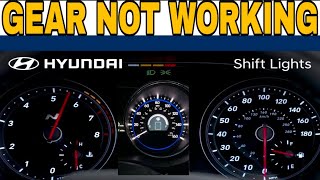
- Gear position indicator on the dashboard is blank, incorrect, or flashing 🎬 See how a bad switch affects the gear display
- Engine will not crank or start, or starts intermittently
- Harsh or delayed transmission engagement
- Inability to shift out of Park
- Replacing the transmission fluid. While old fluid can cause shifting problems, it will not cause a specific 'circuit low' electrical code like P2802.
- Replacing the battery. A weak battery can cause various electrical issues, but it's unlikely to isolate the fault to just the transmission range sensor circuit.
- Replacing the shifter assembly. The issue is almost always at the sensor on the transmission, not the shifter inside the car.
Most Likely Causes
- Failed Transmission Range Sensor (Inhibitor Switch) 🔴 High Probability → Shop Transmission Assembly This is a documented common failure point on the YF Sonata platform and related Hyundai/Kia vehicles, as acknowledged by multiple service bulletins (TSB 17-AT-005, 19-AT-024H). The internal contacts of the switch wear out over time.
How to confirm: After confirming wiring is intact, use a multimeter to test the sensor's voltage output at its connector while an assistant moves the gear shifter. The voltage should change consistently with each gear position. If it stays low or is erratic, the sensor is bad. A scan tool can also monitor the switch position data in real-time.
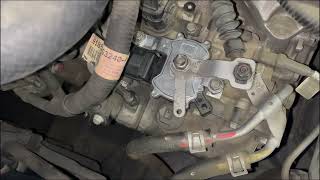
Typical fix: Replace the inhibitor switch located on top of the transmission. The new switch must be correctly aligned in the Neutral position before tightening.
Est. part cost: $50 - $120 - Damaged Wiring or Corroded Connector 🟡 Medium Probability The wiring harness to the sensor is located in the engine bay, exposed to heat, vibration, and moisture, which can cause wires to chafe, break, or pins in the connector to corrode over time.
How to confirm: Visually inspect the wiring harness leading to the inhibitor switch for any signs of abrasion, melting, or breaks. Disconnect the sensor and check for green/white corrosion, bent, or pushed-out pins. Perform a 'wiggle test' on the harness while monitoring the sensor signal to see if the fault is intermittent.
Typical fix: Repair the damaged section of the wiring harness or clean the connector terminals with electrical contact cleaner. If the connector housing or pins are severely damaged, the connector pigtail may need to be replaced.
Est. part cost: $10 - $50 - Improperly Aligned Sensor ⚪ Low Probability This occurs if the sensor was previously replaced but not installed correctly. The alignment is critical for sending the correct signal, and failure to do so is a common mistake.
How to confirm: Check the alignment of the inhibitor switch. Hyundai TSB 17-AT-005 specifies placing the transmission in Neutral, then inserting a 5mm pin or special tool (SST 09480-A3800) through the switch body and the manual control lever to ensure they are correctly positioned before tightening the lever nut.
Typical fix: Loosen the manual control lever nut, properly align the switch using the pin method, and retighten to specification.
Est. part cost: $0
Rare But Worth Checking
- Faulty Powertrain Control Module (PCM): → Shop Engine Control Module (ECM) This is very rare. The PCM should only be considered after the sensor, wiring, and alignment have all been confirmed to be good.
Diagnosis Steps
- Scan the vehicle for all stored trouble codes. Confirm P2802 is present and check for related codes like P0705 or P0707.
- Check for Hyundai Technical Service Bulletin 17-AT-005, which provides the official diagnostic procedure for the inhibitor switch.
- Locate the inhibitor switch on top of the transmission. This requires removing the air intake duct, the battery, and the battery tray.
- Visually inspect the sensor's electrical connector and wiring harness for any signs of corrosion, damage, or loose connections. Pay close attention to where the harness may rub against other components.
- If the wiring looks good, use a multimeter to back-probe the connector. With the ignition on, check for the correct reference voltage and ground signals from the PCM.
- With the key on, monitor the signal wire voltage as a helper slowly moves the shifter through each gear (P-R-N-D). If the voltage remains low (near 0V) or does not change as expected, the sensor has likely failed.
- If a new sensor is installed, ensure the transmission is in NEUTRAL, then align the switch using a 5mm drill bit or alignment pin before tightening the lever and cable.
- If the sensor, wiring, and alignment all test good, the issue may be with the PCM, but this is extremely uncommon and should be the last resort.
Parts You'll Likely Need
- Transmission Range Sensor / Inhibitor Switch
(OEM #42700-26700, 42700-3B710)— This is the most common cause of code P2802 on this vehicle, often failing internally due to age and wear. Part number 42700-26700 is an updated part that supersedes older versions like 42700-26000 and 42700-26500.
Trusted brands: Hyundai (Genuine OEM), Dorman, Standard Motor Products (SMP)
OEM price range: $80-$120
Aftermarket price range: $50-$90
Related Codes That Often Appear With This One
- P0705 — This is a general 'Transmission Range Sensor Circuit Malfunction' code. P2802 is a more specific version of this fault, and they frequently appear together as they point to the same component.
- P0707 — This code means 'Transmission Range Sensor Circuit Low Input', which is functionally identical to P2802 and indicates the PCM is seeing a signal voltage below the expected range.
- P0708 — This code for 'Circuit High Input' can sometimes appear with low input codes if the sensor is failing erratically or there is an intermittent short in the wiring.
Technical Service Bulletins (TSBs) & Recalls
- TSB 17-AT-005: Addresses diagnosis for inhibitor switch DTCs (P0705, P0706, P0707, P0708), which involves the same component and identical symptoms as P2802. It provides the official procedure for inspection, replacement, and the critical alignment step using a 5mm pin with the transmission in Neutral.
- TSB 19-AT-024H: Supersedes earlier TSBs and provides the most current diagnostic procedure for P0705-P0708, confirming the inhibitor switch as the likely cause.
Platform-Specific Known Issues
- Owner Experience: Intermittent No-Start and Incorrect Gear Display: A 2012 Sonata owner on Reddit reported their car would intermittently fail to start, and the gear indicator on the dash would not show 'P' or 'N'. After replacing the inhibitor switch themselves, the problem persisted because they had not aligned it correctly. The vehicle was in Park during the installation, but the procedure requires it to be in Neutral. A mechanic later corrected the alignment for $75, which resolved the issue completely. This highlights the critical importance of the alignment step detailed in TSB 17-AT-005.
- Forum Discussion: Replaced Switch but Problem Remained: On a Reddit thread for a 2014 Sonata, an owner replaced the inhibitor switch but the car still wouldn't register Neutral or Drive. A technician in the thread emphasized that proper alignment in Neutral is mandatory and that simply clearing the code would not fix it. The user confirmed they had installed the new part while the car was in Park, which is the incorrect procedure.
Mechanic-Grade Diagnostic Values
- Inhibitor Switch Power Supply — expected: Battery Voltage (approx. 12V) at pin 3 of the sensor connector with ignition on.. Failure: A reading of 0V indicates an open circuit in the power supply wire from the fuse box.
- Inhibitor Switch Signal Voltage ('B' Circuit) — expected: The switch sends battery voltage (approx. 12V) to the PCM on one of four different signal wires, depending on gear position (P, R, N, D).. Failure: P2802 is set when the 'B' circuit wire shows near 0V when it should be high. This indicates a short to ground or an internal failure in the switch.
- Transmission Ground Circuit Resistance — expected: Below 1.0 Ω between the transmission case and the chassis ground point.. Failure: A reading higher than 1.0 Ω indicates a poor ground connection, which can cause low voltage codes.
- Manual Control Lever Nut Torque — expected: 7-9 lb-ft (1.0~1.2kgf.m).. Failure: An improperly torqued nut can lead to misalignment or a loose connection at the switch.
Scan Tool Commands That Help
- Hyundai GDS (Global Diagnostic System): Data Analysis > A/T > Shift Lever Switch — This is the primary OEM-level method to diagnose the inhibitor switch. It allows a technician to view the gear position (P, R, N, D) that the TCM is seeing in real-time as the shifter is moved. If the display on the scan tool does not match the physical gear lever position, it confirms a fault in the switch, its adjustment, or the wiring.
Wiring & Ground Locations
- Transmission Ground Strap — Connects the transmission case directly to the vehicle's chassis frame rail, typically located under the battery tray.. A corroded or loose main transmission ground is a primary cause of low voltage and communication codes. This ground provides the return path for the inhibitor switch; a poor connection can cause a voltage drop that triggers P2802.
- GHG01 — Main engine compartment ground, located on the left side of the engine compartment.. This is a primary grounding point for multiple components in the engine bay. While not specific to the inhibitor switch, a poor connection here can cause widespread, intermittent electrical issues that could mimic a sensor fault.
- Rear Combination Lamp Ground — Ground point for the rear tail light assembly.. Hyundai TSB 17-AT-005 specifically instructs technicians to check the tightness and voltage drop (less than 0.2V) of this ground as part of the diagnostic procedure for range sensor codes. A bad ground here can unexpectedly affect the transmission control circuit.
Real Owner Repair Stories
- Reddit user TheToolMan on r/MechanicAdvice (2011 Hyundai Sonata, 134k miles) — Check Engine Light with code P0706 (Transmission Range Sensor Performance), gear indicator on the dashboard went blank while driving.
❌ Tried (didn't work) Initial diagnosis was uncertain between a bad sensor or internal transmission slipping.
✅ What actually fixed it Another user confirmed the issue is the ATM Inhibitor Switch (Hyundai p/n starting with 42700) located on top of the transmission under the air filter box and battery. They provided detailed replacement and alignment instructions, which is the standard, confirmed fix for this code.
OEM Part Supersession History
42700-26000, 42700-26500, 42700-3B100, 42700-3B500, 42700-3B710→42700-26700— The original switches were prone to internal wear and corrosion. The updated part has design improvements for better durability.
Heads up: Using an older, non-superseded part number may lead to premature failure. 42700-26700 is the most current and reliable replacement for the YF Sonata.42700-3B700→42700-3B710— Part revision for improved reliability.
Model Year Variations Within This Range
- 2011-2014 (YF) vs 2015+ (LF): The YF generation (2011-2014) and the subsequent LF generation (2015-2018) use different inhibitor switch part numbers, although the failure mode and diagnostic procedure are nearly identical. The YF generation primarily uses part numbers that supersede to 42700-26700. Always confirm the correct part number with the vehicle's VIN.
Diagnostic Flowchart
Other Known Issues on This Vehicle
Issues unrelated to this code that are worth knowing about as an owner of this generation:
- Theta II Engine Seizure/Failure 🔴 High — Widespread on 2.0L Turbo and 2.4L GDI engines. Can occur at various mileages, often preceded by engine knocking. (Ref: Multiple recalls (e.g., NHTSA 17V226000) and class-action lawsuits led to lifetime warranty extensions for the engine short block for affected vehicles that have had the Knock Sensor Detection System (KSDS) software update performed.)
- Worn Steering Coupler 🟠 Medium — Very common. Owners notice a clicking or clunking noise in the steering column when turning the wheel. Typically appears after 50,000 miles. (Ref: Hyundai extended the warranty for this part to 10 years/100,000 miles under TSB 17-ST-002. The part number for the improved coupler is 56315-2K000-FFF.)
- Transmission Speed Sensor Failure 🟠 Medium → Shop Transmission Assembly — Commonly reported, causing harsh/erratic shifting, shuddering, and illumination of the Check Engine Light. (Ref: A known issue, though not always covered by a specific recall. The transmission temperature sensor harness is also a related failure point.)
- Clock Spring Failure 🟠 Medium — Common failure causing the airbag warning light to illuminate and steering wheel controls (cruise, audio) to stop working. (Ref: Hyundai issued a warranty extension for this component (e.g., TSB 10-BE-008).)
- Parking Lights Stay On 🟡 Low — Owners report parking lights remain on after turning the car off, leading to a drained battery. This is often caused by an internal fault in the cabin fuse box (Junction Block).
Used vs. New Parts: Buying Guide for This Vehicle
When a used part is the smart pick: For this specific repair, a used part from a salvage yard is NOT recommended. The inhibitor switch is a known high-failure component due to internal wear and corrosion. The labor to access the part is significant enough that installing a used part with unknown remaining life carries a high risk of repeat failure.
What to inspect on the donor part:
- Not applicable as used parts are not recommended.
OEM-only on this vehicle (don't cheap out):
- While not strictly 'OEM-only', using a genuine Hyundai part (specifically the latest superseded number like 42700-26700) is the safest choice due to the known issues and multiple revisions.
Aftermarket brands forum-validated for this vehicle:
- Standard Motor Products (SMP)
- Dorman
Brands owners have reported issues with on this vehicle:
- No specific brands are consistently reported as problematic, but some owners have reported that cheaper, unbranded parts may have alignment or longevity issues. Given the critical function and labor involved, it is wise to avoid no-name online marketplace parts.
Real Owner Stories
Aggregated from forums and TSBs cited above. Mileages and costs reflect what owners reported in those sources.
2012 Hyundai Sonata — 110000 miles
Symptoms: Intermittent fail to start; gear indicator on the dash would not show 'P' or 'N'.
What fixed it: A mechanic corrected the alignment of the inhibitor switch using the Neutral-position procedure after a DIY replacement in Park failed to fix it.
Cost: $75-$75
Source hint: Reddit r/MechanicAdvice - '2012 Hyundai Sonata at 110K miles - Intermittent no-start.'
2014 Hyundai Sonata Limited 2.0
Symptoms: Car wouldn't register Neutral or Drive on the shifter or the dashboard display.
What fixed it: The owner had to redo the installation because they initially installed the part while the car was in Park; proper alignment in Neutral is mandatory.
Source hint: Reddit r/Hyundai - 'Please help, 2014 hyundai sonata limited 2.0 won't register nuetral or drive on shifter or dash.'
Related OBD-II Codes
Frequently Asked Questions
Does Hyundai TSB 17-AT-005 apply to my 2011-2014 Sonata regarding the P2802 code?
I replaced the inhibitor switch on my Sonata but it still won't start. What did I do wrong?
Where is the inhibitor switch located on the 2011-2014 Sonata?
Can a bad inhibitor switch cause my dashboard gear indicator to go blank?
Is there a specific tool I need to align the new sensor?
Are there other common issues on the 2011-2014 Sonata I should be aware of while fixing this?
Helpful Videos

We Have This Part in Stock

The information in this article is provided for general reference and educational purposes only. Vehicle specifications, procedures, and part compatibility can vary by production date, trim level, and region. Always consult your vehicle's factory service manual and verify part numbers before purchasing or performing repairs. Safety-critical components such as airbags, seat belts, and braking systems should be installed by a qualified professional.
- Hyundai Sonata:
- 🧭 Diagnostic Flowchart
- 🎬 Helpful Videos
- 🛍️ Shop This Part
- What's Unique About the 2011-2014 Hyundai Sonata
- Symptoms You May Notice
- Most Likely Causes
- Rare But Worth Checking
- Diagnosis Steps
- Parts You'll Likely Need
- Related Codes That Often Appear With This One
- Technical Service Bulletins (TSBs) & Recalls
- Platform-Specific Known Issues
- Mechanic-Grade Diagnostic Values
- Scan Tool Commands That Help
- Wiring & Ground Locations
- Real Owner Repair Stories
- OEM Part Supersession History
- Model Year Variations Within This Range
- Other Known Issues on This Vehicle
- Used vs. New Parts: Buying Guide for This Vehicle
- Real Owner Stories
- 2012 Hyundai Sonata — 110000 miles
- 2014 Hyundai Sonata Limited 2.0
- Related OBD-II Codes
- Frequently Asked Questions
- 🎟️ Get 5% Off