

P2802 on 2016-2021 Hyundai Tucson: Transmission Range Sensor 'B' Circuit Low Causes and Fixes
On a 2016-2021 Tucson with the 6-speed automatic transmission, code P2802 almost always indicates a failed transmission range sensor, also known as an inhibitor switch. This common failure can cause a no-start condition, incorrect gear display, or get the transmission stuck in gear. The fix is to replace the externally-mounted sensor, which costs around $70-$130 for an OEM part (42700-26700) and is a known issue acknowledged by Hyundai in TSB 17-AT-005.
- P2802 on a 2016-2021 Tucson is a strong indicator of a failing transmission range sensor (inhibitor switch).
- Key symptoms are a no-start condition, incorrect gear display, or the transmission being stuck in a fail-safe gear.
- The most likely fix is replacing the inhibitor switch. The updated OEM part number is 42700-26700.
- This is a manageable DIY repair for those with moderate experience, but requires removing the battery and airbox for access.
- Proper alignment of the new switch in the Neutral position is critical for the repair to be successful.
What's Unique About the 2016-2021 Hyundai Tucson
The 2016-2021 (TL generation) Tucson, specifically models with the 2.0L engine and 6-speed automatic transmission (A6MF1), has a widely documented issue with the transmission range sensor (inhibitor switch) failing. This is not a major issue on the 1.6L Turbo models with the 7-speed DCT. Hyundai has issued Technical Service Bulletin (TSB) 17-AT-005 for a group of related codes (P0705-P0708) that points directly to this switch as the culprit for no-start or fail-safe conditions. While P2802 is a generic code, on this specific vehicle configuration, it strongly points to this known failure point rather than a more complex wiring or module issue.
Symptoms You May Notice
- Check Engine Light is on
- Vehicle will not start, or only starts in Neutral but not Park
- Gear indicator on the dashboard is incorrect or does not display
- Transmission is stuck in one gear (fail-safe or 'limp mode'), often 4th gear
- Harsh or erratic shifting between gears
- No crank, no start condition, sometimes intermittent
- Replacing the starter motor or battery when the vehicle has a no-crank, no-start condition, without first checking for transmission-related fault codes.
Most Likely Causes
- Failed Transmission Range Sensor (Inhibitor Switch) 🔴 High Probability → Shop Transmission Assembly This is a widely documented failure point on Hyundai and Kia vehicles of this era using the 6-speed automatic transmission, acknowledged by Hyundai through TSB 17-AT-005 for related codes.
How to confirm: With the ignition on, shift through the gears and see if the gear indicator on the dash matches the shifter position. If it's incorrect, blank, or delayed, the sensor is the likely cause. A multimeter can be used to test the sensor's output signals at the connector against the service manual specifications.
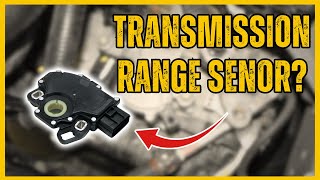
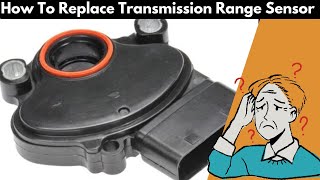
Typical fix: Replace the inhibitor switch located on the outside of the transmission case. The new switch must be carefully aligned in the Neutral position during installation using an alignment pin or a 5mm bolt. 🎬 See how to replace the range sensor without special tools
Est. part cost: $70-$130 - Damaged Wiring or Connector 🟡 Medium Probability The sensor's wiring harness is exposed to engine bay heat and vibration, which can cause wires to become brittle, chafe, or break over time. The connector can also suffer from corrosion or bent pins.
How to confirm: Visually inspect the wiring harness and connector leading to the inhibitor switch for any signs of damage, corrosion, melting, or loose/bent pins. Perform a continuity and short-to-ground test on the 'B' circuit wire between the sensor and the TCM.
Typical fix: Repair the damaged section of wire or replace the connector pigtail. Clean any corrosion from the connector pins with electrical contact cleaner.
Est. part cost: $10-$50 - Misadjusted Inhibitor Switch or Shift Cable ⚪ Low Probability → Shop Transmission Park Inhibitor Switch This is most likely to occur after a recent repair, such as a switch replacement or transmission service. TSB 17-AT-005 notes that misalignment can cause the same symptoms as a failed switch.
How to confirm: Check that the manual lever on the transmission moves fully into each gear detent as the shifter is moved. Ensure the inhibitor switch's alignment marks line up correctly when the transmission is in Neutral.
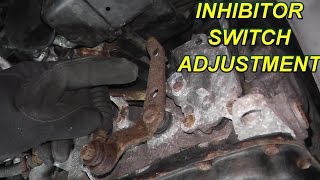
Typical fix: Loosen the inhibitor switch mounting bolts or the shift cable adjustment nut and realign the components correctly. An alignment pin hole is provided on the switch 🎬 Watch: How to properly adjust an inhibitor switch for this purpose.
Est. part cost: $0
Rare But Worth Checking
- Faulty Powertrain Control Module (PCM) or Transmission Control Module (TCM): → Shop Engine Control Module (ECM) This is very uncommon and should only be considered after the sensor, wiring, and connectors have been thoroughly tested and confirmed to be good.
Diagnosis Steps
- Scan the vehicle for all OBD-II codes to confirm P2802 and check for any other related codes (e.g., P0705, P0707).
- With the key on and engine off, move the gear shifter through all positions (P, R, N, D) and observe the gear indicator on the instrument cluster. Note any discrepancies, delays, or blank spots.
- Turn off the vehicle. Locate the inhibitor switch on the top/side of the transmission. You will need to remove the air filter housing, battery, and battery tray for access.
- Disconnect the electrical connector. Carefully inspect the connector and the switch's pins for corrosion, moisture, or bent pins. This is a common point of failure.
- If the wiring looks good, use a multimeter to test the circuit. Check for battery voltage at the power supply pin (often Pin 3) and check the output signal on the 'B' circuit wire as you move the shifter. A reading near zero volts when it should be higher confirms the 'Circuit Low' condition.
- If power supply is good but the signal is bad, the inhibitor switch is faulty and should be replaced.
- If power supply to the sensor is missing, trace the wiring back to the fuse box (check TCU and TCU2 fuses) and TCM to find the open circuit.
- When replacing the switch, ensure the transmission is in Neutral and align the new switch by inserting a 5mm bolt or alignment pin (Hyundai tool 09480-A3800) through the alignment hole before tightening the mounting bolts.
Parts You'll Likely Need
- Transmission Range Sensor (Inhibitor Switch)
(OEM #42700-26700)— This is the most common failure part for this code on the 2016-2021 Tucson with the 6-speed automatic, as documented in owner forums and TSB 17-AT-005. Note: There is conflicting information in some parts catalogs; verify by VIN, but this is the most frequently cited part for a successful repair.
Trusted brands: Hyundai (Genuine OEM), Kia (Genuine OEM), Dorman, Standard Motor Products (SMP), WVE
OEM price range: $70-$130
Aftermarket price range: $40-$80
Related Codes That Often Appear With This One
- P0705 — This is a general 'Transmission Range Sensor Circuit Malfunction' code and is the primary code mentioned in TSB 17-AT-005 for this issue.
- P0707 — This code for 'Transmission Range Sensor Circuit Low Input' is very similar to P2802 and points to the same underlying issue with the sensor or its circuit.
- P0708 — This code for 'Transmission Range Sensor Circuit High Input' can sometimes appear with low input codes if the sensor is failing erratically.
Technical Service Bulletins (TSBs) & Recalls
- 17-AT-005: Outlines the official diagnostic procedure for inhibitor switch DTCs P0705, P0706, P0707 & P0708, and applies directly to the 2016+ Tucson (TL) 2.0L. It details checking for bent pins, testing the circuit, and the replacement/alignment procedure.
Platform-Specific Known Issues
- Hyundai has issued TSB 17-AT-005, which provides diagnostic steps for inhibitor switch codes P0705-P0708 on the 2016+ (TL) Tucson with the 2.0L engine, confirming this is a recognized issue.
- Owner Experience: A common owner story involves the car suddenly refusing to start. The lights work, but turning the key results in nothing. Jiggling the shifter 🎬 Watch: Diagnose a Tucson that won't start or crank or shifting to Neutral sometimes allows it to start, strongly pointing to a failing inhibitor switch.
- This issue is specific to the 6-speed automatic transmission found with the 2.0L engine. The 1.6L Turbo engine was paired with a 7-speed Dual-Clutch Transmission (DCT) which has its own, different set of known issues (like hesitation and clutch actuator failures) but does not use this inhibitor switch.
Mechanic-Grade Diagnostic Values
- Inhibitor Switch Signal Voltage (Multi-Signal Type) — expected: When a gear is selected, the corresponding signal pin should show ~12V (battery voltage) while the other signal pins show 0V.. Failure: Voltage is near zero on the 'B' circuit pin when it should be high, voltage on multiple pins at once, or voltage that doesn't correspond to the selected gear.
- Rear Combination Lamp Ground Voltage Drop — expected: Less than 0.2 V. Failure: Voltage greater than 0.2V indicates a poor ground, which should be cleaned and re-secured before further diagnosis.
Scan Tool Commands That Help
- Hyundai GDS (Global Diagnostic System): Current Data / Live Data — To monitor the 'Transaxle Range Switch' parameter in real-time. While shifting through P-R-N-D, confirm that the data displayed on the scan tool matches the physical gear selector position instantly and accurately. Any lag, incorrect reading, or blank data points to a fault in the sensor or circuit.
- Hyundai GDS (Global Diagnostic System): Vehicle S/W Management > Resetting adaptive values — After replacing a transmission component like the inhibitor switch, it is good practice to reset the transmission's adaptive learning values. This forces the TCM to relearn shift points and behaviors with the new, correctly-functioning sensor, ensuring smooth operation.
Wiring & Ground Locations
- TCU and TCU2 Fuses — Located in the main fuse and relay box (junction box) in the engine compartment.. As per TSB 17-AT-005, these fuses supply power to the transmission control circuits. A blown or poorly seated fuse will cause a loss of power to the control module or sensors, potentially triggering a circuit low code.
- Inhibitor Switch Connector — On top of the transmission case, underneath the battery tray and air cleaner assembly.. This is the primary connection point for the sensor. TSB 17-AT-005 specifically calls out checking for bent or damaged pins in this connector as a key diagnostic step before replacing the switch.
- Rear Combination Lamp Ground — Typically located in the trunk area, near one of the tail light assemblies.. This is a non-obvious but critical check from TSB 17-AT-005. Shared grounding points can cause bizarre electrical issues. A poor ground here can introduce voltage fluctuations or drops on circuits that are unexpectedly shared with the transmission control system, leading to false codes.
- Transmission Ground Strap — A braided strap or heavy gauge wire connecting the transmission case directly to the vehicle's chassis/frame.. While not the first check, a corroded or broken main transmission ground can cause a host of electrical issues, including erratic sensor readings and shifting problems. It ensures the entire transmission assembly has a solid ground reference.
Real Owner Repair Stories
- Reddit r/MechanicAdvice (2018 Hyundai Tucson) — Check Engine Light with code P0705 appeared about a week after having a remanufactured transmission installed at a dealership.
❌ Tried (didn't work) The user was seeking advice before attempting a fix, but the context implies the dealership's transmission replacement did not resolve the new code.
✅ What actually fixed it The problem was solved by the user replacing the inhibitor switch (neutral safety switch) with a new genuine Hyundai part (42700-26700). The repair was noted as being straightforward, requiring only the removal of the airbox for access.
OEM Part Supersession History
42700-26500, 42700-26000→42700-26700— Part revision and consolidation by the manufacturer.
Heads up: While 42700-26700 is the most commonly cited successful repair part for the 2016-2021 Tucson 2.0L, several automotive parts databases create confusion by listing it for the older (2010-2015) generation and suggesting different parts (e.g., 42700-3B700, 42700-23000) for the 2016+ models. This is a known data trap. Always verify by VIN if possible, but be aware that real-world repairs point to 42700-26700 as the correct part.
Model Year Variations Within This Range
- 2019-2021: For the 2019 model year refresh, the optional 1.6L Turbo engine with the 7-speed DCT was discontinued. The base 2.0L engine with the 6-speed automatic (A6MF1) transmission—the powertrain affected by this issue—was retained for the SE and Value trim levels. The upper trims received a new 2.4L engine, also with a 6-speed automatic. Therefore, this P2802 fault remains relevant for 2019-2021 models, but only those equipped with the 2.0L engine.
Diagnostic Flowchart
Other Known Issues on This Vehicle
Issues unrelated to this code that are worth knowing about as an owner of this generation:
- Theta II Engine Failure & Oil Consumption 🔴 High — Widespread across multiple model years, particularly the 2.4L GDI and some 2.0L GDI/MPI engines. Can occur at various mileages. (Ref: Subject of multiple class-action lawsuits and recalls (e.g., NHTSA 21V727000) leading to lifetime warranties and engine replacement programs for affected VINs.)
- 7-Speed Dual-Clutch Transmission (DCT) Failure 🔴 High → Shop Transmission Assembly — Common on 1.6L Turbo models. Symptoms include hesitation from a stop, shuddering, and complete loss of motive power. (Ref: Multiple recalls (e.g., NHTSA 16V-628) and TSBs (e.g., 19-AT-002H, 22-AT-007H) issued for software updates and clutch/actuator replacements.)
- ABS Module Fire Risk 🔴 High — Affects a large range of 2016-2021 models. An electrical short can occur in the HECU, potentially causing a fire even when the car is off. (Ref: Major recall campaign (NHTSA 20V543000, Hyundai recall 195) advises parking outside away from structures until the recall fix (a new fuse/software update) is performed.)
- Secondary Hood Latch Failure 🟠 Medium — Reported on early-production 2016 models. (Ref: Recall issued (NHTSA 16V-348000) to replace the secondary hood latch, which might not secure the hood if the primary latch is released, potentially allowing the hood to open while driving.)
Used vs. New Parts: Buying Guide for This Vehicle
When a used part is the smart pick: Almost never. This is a known high-failure-rate electronic component. The cost savings of a used part (approx. $20-$40) are negligible compared to the 1-2 hours of labor required for access and replacement. The risk of premature failure of a used part is very high.
What to inspect on the donor part:
- Not applicable, as a used part is not recommended for this repair.
OEM-only on this vehicle (don't cheap out):
- Transmission Range Sensor (Inhibitor Switch)
Aftermarket brands forum-validated for this vehicle:
- While OEM (Genuine Hyundai/Kia) is strongly recommended, Standard Motor Products (SMP) is a reputable aftermarket manufacturer that produces this part.
Brands owners have reported issues with on this vehicle:
- No specific brands are consistently reported as poor, but given the sensitive alignment and critical safety function (preventing starts in gear), unknown or 'white-box' brands from online marketplaces are a significant gamble.
Real Owner Stories
Aggregated from forums and TSBs cited above. Mileages and costs reflect what owners reported in those sources.
2017 Hyundai Tucson 2.0L
Symptoms: Intermittent no-start problem. The dealership initially suspected the starter, but it was actually the neutral safety switch.
What fixed it: Replacement of the neutral safety switch (inhibitor switch).
Cost: $350-$350
Source hint: Reddit (r/Hyundai)
2016-2018 Hyundai Tucson 2.0L
Symptoms: Vehicle was stuck in gear or experienced a no-start condition; P0705 and P2802 codes were present.
What fixed it: Replacing the inhibitor switch (part 42700-26700). DIYers noted the switch is located under the battery tray.
Source hint: hyundai-forums.com
2016 Hyundai Tucson 2.0L
Symptoms: The car suddenly refused to start. Lights worked, but turning the key resulted in nothing. Shifting to Neutral allowed it to start.
What fixed it: Replacement of the failing inhibitor switch.
Source hint: vehicle_specific_issues
Related OBD-II Codes
Frequently Asked Questions
Does TSB 17-AT-005 apply to my 2016 Tucson with the 2.0L engine?
My 2017 Tucson won't start unless I move the shifter to Neutral. Is this related to P2802?
I have a 1.6L Turbo Tucson with a 7-speed DCT; could I have a failed inhibitor switch?
What is the specific part number needed to fix the P2802 code on a 2016-2018 Tucson?
Can I align the new inhibitor switch myself during installation?
Is there a fire risk associated with my 2016-2021 Tucson?
Helpful Videos
We Have This Part in Stock


The information in this article is provided for general reference and educational purposes only. Vehicle specifications, procedures, and part compatibility can vary by production date, trim level, and region. Always consult your vehicle's factory service manual and verify part numbers before purchasing or performing repairs. Safety-critical components such as airbags, seat belts, and braking systems should be installed by a qualified professional.
- Hyundai Tucson:
- 🧭 Diagnostic Flowchart
- 🎬 Helpful Videos
- 🛍️ Shop This Part
- What's Unique About the 2016-2021 Hyundai Tucson
- Symptoms You May Notice
- Most Likely Causes
- Rare But Worth Checking
- Diagnosis Steps
- Parts You'll Likely Need
- Related Codes That Often Appear With This One
- Technical Service Bulletins (TSBs) & Recalls
- Platform-Specific Known Issues
- Mechanic-Grade Diagnostic Values
- Scan Tool Commands That Help
- Wiring & Ground Locations
- Real Owner Repair Stories
- OEM Part Supersession History
- Model Year Variations Within This Range
- Other Known Issues on This Vehicle
- Used vs. New Parts: Buying Guide for This Vehicle
- Real Owner Stories
- 2017 Hyundai Tucson 2.0L
- 2016-2018 Hyundai Tucson 2.0L
- 2016 Hyundai Tucson 2.0L
- Related OBD-II Codes
- Frequently Asked Questions
- 🎟️ Get 5% Off