

OBD-II Code P2803: Transmission Gear Position Sensor 'B' Circuit High
The Ultimate Guide to Understanding, Diagnosing, and Fixing P2803
- P2803 indicates the transmission range sensor 'B' circuit is stuck at a high voltage, typically exceeding 4.5 volts.
- Do not drive with this code; the vehicle defaults to a 2nd or 3rd gear limp mode and can unexpectedly start in Drive or Reverse.
- Inspect the wiring harness and connector for water damage or corrosion before spending $150 to $250 on a replacement sensor.
- Use a multimeter to verify the signal wire voltage drops below 4.5V when shifting gears to confirm the sensor is functioning.
- On 2014 and newer GM vehicles, the sensor uses a Pulse Width Modulated (PWM) signal requiring an oscilloscope or advanced scan tool to diagnose.
What Does P2803 Mean?
P2803 means your car's main computer (PCM or TCM) is receiving a signal from the transmission range sensor's 'B' circuit that is stuck at an abnormally high voltage. This sensor tells the computer which gear you selected (Park, Reverse, Neutral, Drive). The 'Circuit High' fault means the voltage exceeds the manufacturer's specified limit, confusing the computer into thinking the car is in the wrong gear or two gears at once. The Check Engine Light illuminates after this fault is detected on two consecutive ignition cycles.
Technical definition: The official SAE/OBD-II definition is 'Transmission Range Sensor 'B' Circuit High'. This indicates the Powertrain Control Module (PCM) or Transmission Control Module (TCM) detects voltage from the 'B' circuit of the transmission range sensor above the specified range. This condition, typically exceeding 4.5 volts, proves a direct short to a power source or an internal sensor failure.
Can I Drive With P2803?
No — Do Not Drive. Driving is not recommended. This code indicates the computer has lost reliable information about the gear selection, creating a significant safety risk. The vehicle fails to shift, gets stuck in one gear (limp mode), or dangerously starts in Drive or Reverse. Continuing to drive causes excessive stress on internal clutch packs and other components, leading to catastrophic transmission damage.
Common Causes
- Damaged, Corroded, or Shorted Wiring/Connectors (Very Common) — The wiring harness between the transmission range sensor and the control module is exposed to harsh undercarriage conditions. Water intrusion from driving through deep puddles or pressure washing creates an electrical bridge between pins. Wires also fray, break, or short-circuit to a power source, causing a constant high voltage reading.
- Faulty Transmission Range Sensor (TRS) (Common) — The sensor itself, also known as a neutral safety switch or inhibitor switch, fails internally over time. An internal short circuit forces it to send a continuous high voltage signal regardless of the actual gear position.
- Misadjusted Shift Linkage or Cable (Less Common) — The mechanical cable connecting your gear shifter to the transmission stretches or misaligns. This causes the sensor's physical position to mismatch the selected gear, putting the sensor in an 'in-between' state that the computer reads as an irrational high voltage.
- Poor Ground Connection (Less Common) — A corroded ground connection for the sensor circuit causes the signal voltage to 'float' to a higher-than-normal level. The circuit requires a solid ground reference to function correctly; without it, the voltage reading becomes unreliable.
- Software Glitch or Calibration Error (Rare) — The Transmission Control Module's software occasionally contains logic errors, misinterpreting a normal voltage as out of range. A software update or re-flash from the manufacturer resolves these specific issues without replacing hardware.
- Faulty Transmission/Powertrain Control Module (TCM/PCM) (Very Rare) — An internal fault in the module's input circuit causes it to misread the sensor's signal. This is extremely rare and is only considered after exhaustively testing the wiring, connectors, and sensor.
Symptoms
- Transmission Stuck in 'Limp Mode' — The vehicle locks into a single gear (often 2nd or 3rd) to prevent internal damage. This results in very poor acceleration from a stop and severely limits top speed.
- Car Won't Start or Starts in the Wrong Gear — Because the sensor functions as a neutral safety switch, a faulty signal prevents the engine from cranking or allows it to start dangerously in Drive or Reverse.
- Incorrect or Blank Gear Indicator on Dashboard — The PRNDL display on your dash fails to match the selected gear, goes completely blank, or flashes continuously.
- Harsh, Delayed, or Failed Shifting — The transmission shifts violently, hesitates before engaging a gear, or refuses to shift out of Park or Neutral.
- Check Engine Light or Transmission Warning Light is on — The primary dashboard indicator that the vehicle's computer registered a critical powertrain fault.
- Increased Fuel Consumption — When stuck in limp mode, the engine operates outside its optimal RPM range, leading to a severe decrease in fuel economy.
Diagnostic Flowchart
Tap your situation to follow the diagnostic path that matches what you're seeing on this code.
Common Fixes & Costs
- Repairing Damaged Wiring or Connectors — Parts: $10-$50, Labor: $100-$250, ~1.5 hr book time (Intermediate)
- Cleaning and Securing Connectors — Parts: $5-$15, Labor: $50-$100, ~0.5 hr book time (DIY)
- Replacing the Transmission Range Sensor (TRS) — Parts: $40-$250, Labor: $100-$300, ~1.5 hr book time (Intermediate)
- Adjusting the Shift Linkage/Cable — Parts: $0-$20, Labor: $75-$150, ~1.0 hr book time (Intermediate)
- Updating or Re-flashing the TCM/PCM — Parts: $0, Labor: $100-$200, ~1.0 hr book time (Professional)
- Replacing the Transmission Control Module (TCM) — Parts: $600-$1200, Labor: $200-$400, ~2.5 hr book time (Professional)
Used vs. New Parts: Buying Guide
When a used part is worth it: Buying a used Transmission Range Sensor (TRS) is never recommended. It is a relatively low-cost electronic part with internal moving components that wear out. The labor cost to replace it makes the risk of a premature failure from a used part economically unsound.
Donor-vehicle mileage cap: roughly under 20000 miles for the part to have meaningful remaining life.
Donor quality checklist:
- If forced to buy used, it must be from a very low-mileage vehicle wrecked for non-transmission related reasons.
- Match the part number exactly; superseded or similar-looking parts are often incompatible.
- Avoid parts from flood-damaged or rust-belt vehicles, as internal corrosion is a primary failure mode.
Decision logic:
- If The part is a Transmission Range Sensor. → Buy a new OEM or high-quality aftermarket part. The risk and repeat labor cost of a used part failing is not worth the initial savings.
- If The vehicle is older and budget is the absolute primary concern. → A used part is a gamble. Be prepared for it to fail within a short period.
Warranty tradeoff: Used parts typically have a 30-90 day warranty that does not cover labor. New aftermarket parts offer a 1-year to limited lifetime warranty. New OEM parts carry a manufacturer's warranty (typically 1-2 years).
Worst-case if a used part fails: $200-$400 (The cost of repeating the labor to install another sensor after a used one fails.)
What Happens If You Wait — Timeline
- 0-2 Weeks: Check Engine Light illuminates. The code P2803 is stored. You notice occasional harsh shifting or a slight delay when engaging Drive or Reverse. No other major symptoms yet. (MPG impact: 0-2%% · Added cost: $0)
- 2 Weeks - 3 Months: The vehicle intermittently enters 'limp mode,' getting stuck in 2nd or 3rd gear. This results in poor acceleration and high engine RPM. The gear indicator on the dash goes blank. The car refuses to start in Park. (MPG impact: 10-25%% · Added cost: $50-$200 in wasted fuel and potential towing costs.)
- 3-6 Months: Limp mode becomes permanent. Driving this way causes the transmission to run hot, accelerating wear on internal clutch packs and seals. You smell burning transmission fluid. The risk of being stranded increases significantly. (MPG impact: 20-40%% · Added cost: $500-$1500 (Accelerated wear on clutch packs and internal seals due to overheating).)
- 6+ Months: Catastrophic failure is imminent. Constant overheating and stress from operating in limp mode leads to complete failure of clutch packs. The vehicle stops moving altogether. (MPG impact: N/A (Vehicle likely undrivable)% · Added cost: $3000-$7000 (Full transmission rebuild or replacement).)
Cost of Not Fixing It
- Immediate: Vehicle fails to start or gets stuck in one gear ('limp mode'), leaving you stranded. Significant safety risk if the car starts in gear unexpectedly. (Added cost: $100-$300 (Towing))
- Weeks to Months: Driving in limp mode causes the transmission to operate inefficiently and overheat, leading to accelerated wear on clutch packs and seals. Fuel economy decreases severely. (Added cost: $500-$1500 (Premature clutch pack wear, internal seal damage))
- 6+ Months: Sustained overheating and stress from limp mode leads to catastrophic transmission failure, requiring a complete rebuild or replacement. (Added cost: $3000-$7000 (Complete transmission replacement/rebuild))
Diagnosis Steps
- Read Trouble Codes & Freeze Frame Data
Use an OBD-II scanner to confirm P2803 is present and check for related codes. Analyze the freeze-frame data to capture the exact vehicle speed, RPM, and temperature at the moment the code triggered.
Tools: OBD-II Scanner (Beginner) - Inspect Wiring and Connectors
Perform a thorough visual inspection of the wiring harness from the transmission range sensor to the control module. Unplug the connector at the sensor and check for green corrosion, bent pins, or water intrusion. This is the most common failure point.
Tools: Flashlight, Inspection Mirror (Beginner) - [PRO TIP] Perform a Harness Wiggle Test
Connect a multimeter to the signal wire. Gently wiggle and manipulate the wiring harness along its entire length from the sensor to the control module. If the voltage reading spikes or drops out as you move a section, you located an intermittent short in the wiring.
Tools: Multimeter, Wire Piercing Probes (Intermediate) - Test Circuit Voltage at the Sensor Connector
Using a multimeter and a wiring diagram, backprobe the sensor's signal wire ('B' circuit). With the key on and engine off, have a helper slowly move the shifter through each gear. The voltage must change in distinct steps. A signal stuck above 4.5V in all gears proves a wiring short to power or a bad sensor.
Tools: Multimeter, Vehicle-Specific Wiring Diagram (Intermediate) - Test the Transmission Range Sensor Directly
If the wiring, power, and ground are good, bench test the sensor. Apply power and ground to the appropriate pins and check for the correct resistance or voltage output at the signal pins as you manually move the selector arm. If readings do not change, the sensor failed.
Tools: Multimeter, Service Manual, Power Probes (Advanced) - Research Technical Service Bulletins (TSBs)
Check online databases for TSBs related to P2803 for your specific year, make, and model. Manufacturers release updated parts or software re-flash procedures for known issues, saving hours of diagnostic time.
Tools: Internet Access, Vehicle VIN (Beginner) - [ADVANCED] Scan Tool Live Data Analysis
Using a professional scan tool, monitor the specific PIDs for the Transmission Range Sensor (e.g., TR_V, TR_D). Compare the live data readings for each gear position against the manufacturer's chart. A reading that remains stuck high confirms the fault.
Tools: Advanced OBD-II Scan Tool, Manufacturer Data Charts (Advanced) - [ADVANCED] Advanced Voltage and Resistance Checks
Check for continuity on the signal, power, and ground wires between the sensor connector and the TCM connector; resistance must be less than 5 ohms. Check for a short to ground by measuring resistance from the signal wire to a known good ground; the reading must exceed 10,000 ohms.
Tools: Multimeter, Vehicle-Specific Wiring Diagram (Advanced) - [PRO TIP] Test Sensor with an Oscilloscope (for PWM)
For modern vehicles (especially 2014+ GM), the sensor uses a Pulse Width Modulated (PWM) signal instead of simple voltage steps. An oscilloscope is required to view the signal's duty cycle. P2803 means the duty cycle is stuck high (e.g., >96%).
Tools: Oscilloscope, Vehicle-Specific Specifications (Advanced)
When This Code Triggers (Freeze-Frame Conditions)
- Engine Coolant Temp: 175-210°F (The fault is often detected after the engine reaches normal operating temperature.)
- RPM: 700-2500 RPM (The code sets during idle, steady cruising, or during a shift event when the computer expects a specific voltage change that fails to occur.)
- Vehicle Speed: 0-60 mph (Occurs at any speed, including when stationary and shifting from Park to Drive.)
- Gear Position: Any (The fault logs when the voltage on the 'B' circuit is high regardless of the shifter's actual physical position.)
Related Codes
- P0705 — A general malfunction code for the transmission range sensor circuit. Having both P0705 and P2803 strongly confirms a fault within the TRS system, with P2803 pinpointing the 'B' circuit's high voltage condition.
- P2802 — The direct opposite of P2803, indicating 'Circuit Low'. P2803 proves a short to power, while P2802 proves a short to ground or an open circuit. They are mutually exclusive electrical faults.
- P0706 — Indicates the sensor's signal is irrational (e.g., between valid gear positions). P2803 indicates a constant 'high' electrical fault, whereas P0706 is more often associated with mechanical issues like a misadjusted shift linkage.
- P0707 — Indicates a 'Circuit Low' input for the 'A' circuit. Seeing this alongside P2803 indicates a major connector or wiring harness failure affecting multiple circuits simultaneously.
Climate & Environmental Factors
- Road Salt (Winter Climates): Road salt and brine spray onto the undercarriage, accelerating corrosion of the transmission range sensor's wiring harness. The salt mixture acts as an electrolyte, creating electrical shorts between pins or eating away copper, causing a direct circuit high fault.
- High Humidity / Water Exposure: Driving through high water or pressure washing the engine bay forces moisture past connector seals. This moisture directly short circuits the pins within the connector, triggering the P2803 code.
How to Talk to a Mechanic About This Code
Say this: "I have a P2803 code and my car is experiencing limp mode and harsh shifting. I'd like to schedule a diagnostic. Since this is a 'Circuit High' code, please start by inspecting the wiring harness and connector for the transmission range sensor before testing the sensor itself."
This signals you understand the most common, and cheapest, failures. It directs the technician to perform a logical, cost-effective diagnosis instead of immediately quoting for a new sensor, which may not be the problem.
Avoid saying:
- 'My transmission is broken, how much to fix it?'
- 'My check engine light is on, can you just look at it?'
- 'Just replace the transmission sensor.'
Questions to ask before authorizing the repair:
- Did you find the fault in the wiring, the connector, or the sensor itself?
- Can you show me the damaged wire or the corrosion on the connector?
- If the sensor needs replacement, does the new part require a special alignment or programming procedure?
- What is the warranty on this specific repair, including both parts and labor?
Where to Take It: Dealer vs Independent vs Chain
- Dealer:
Recommended if the vehicle is under warranty or known to have a complex, manufacturer-specific issue (like a software update). Otherwise, a qualified independent shop is more cost-effective.
Best for: Vehicles under powertrain warranty, Complex diagnostics on late-model cars (e.g., PWM sensors on GMs), When a known TSB or software re-flash is the likely solution
Downsides: Highest labor rates, May be quicker to replace the entire sensor or harness than to perform a more detailed circuit repair (Typical cost: +50% vs. baseline) - Independent Shop:
Best overall fit. An experienced independent mechanic with good diagnostic skills efficiently traces this electrical fault, providing the most cost-effective repair. Look for ASE certifications.
Best for: Out-of-warranty vehicles, Diagnosing and repairing common wiring and connector issues, Standard sensor replacement and alignment
Downsides: Quality and expertise vary; ensure they are comfortable with transmission electrical diagnostics, May not have access to the very latest manufacturer software updates (Typical cost: +0% vs. baseline) - Chain Shop:
AVOID for diagnosis. They are likely to replace the sensor without proper circuit testing, potentially wasting your money on a part you don't need.
Best for: Simple, unrelated maintenance like oil changes or tires
Downsides: Technician skill for electrical diagnostics is highly variable, Often lack the advanced diagnostic tools or experience for anything beyond basic code reading and parts replacement (Typical cost: -10% vs. baseline)
When to Walk Away From the Repair
If the estimated repair cost for the P2803 fault exceeds 40-50% of your car's private-party value, pause and consider your options.
- Car worth $4000, fix is $350: Fix it. This is a relatively inexpensive repair that restores a critical safety and drivability function.
- Car worth $3000, fix is $1800: Walk away. The diagnosis points to a rare but expensive TCM failure. The repair cost is over 50% of the car's value. It's not economically viable.
- Car worth $8000, fix is $500: Fix it. The cost to replace the sensor and align it is well below the threshold and is a necessary repair.
What Scan Tool You Need for This Code
Minimum: A scanner that reads and graphs live data for transmission-related PIDs (Parameter IDs). A simple code reader is not enough.
A basic code reader only confirms P2803 exists. To diagnose it, you must see the live voltage or signal from the sensor as you move the shifter. Without live data, you are just guessing at what part to replace.
Budget: BlueDriver Pro (~$100) — Connects to your smartphone and reads and clears transmission codes, displays freeze-frame data, and graphs live data from the transmission range sensor to verify its operation.
Mid-range: Foxwell NT510 Elite / NT604 Elite (~$180) — A dedicated handheld unit providing live data for transmission sensors. It offers broader compatibility and includes special functions like transmission adaptation resets useful after a repair.
Professional: Autel MaxiCOM MK808 / MK906BT (~$500-1200) — Professional-level tool with full bidirectional control and access to manufacturer-specific PIDs. It diagnoses complex PWM-based sensors and performs necessary software relearns or programming after a part replacement.
Rent vs buy: For a one-time diagnosis, AutoZone's Loan-A-Tool program allows you to borrow an OBD-II scanner for free with a refundable deposit. This is a great way to read the code and check live data without buying a tool.
How to Clear the Code After You Fix It
- Use an OBD-II scan tool to clear the Diagnostic Trouble Codes (DTCs).
- Perform a complete drive cycle to allow the vehicle's readiness monitors to run and confirm the fix.
- Rescan the vehicle to ensure P2803 and related codes have not returned.
Drive cycle (~20 minutes): A general drive cycle includes a cold start (engine off for 8+ hours), followed by 2-3 minutes of idling. Proceed with mixed city driving (stop-and-go) and steady highway driving (55 mph for 5-10 minutes). Shift through all gears, allowing the TCM to verify the sensor's operation.
Readiness monitors affected: Comprehensive Component Monitor, Transmission System Monitor
Before emissions retest: drive at least 50 miles to fully set monitors.
Watch out for:
- Disconnecting the battery clears the code but resets all readiness monitors, causing an automatic emissions test failure until a full drive cycle is completed.
- If the underlying electrical fault (e.g., shorted wire) is not fixed, the code returns immediately after being cleared.
Will This Fail Emissions / State Inspection?
Yes — this code typically fails an OBD-II emissions inspection.
- California: An illuminated Check Engine Light is an automatic failure for the smog check. After repairs, a complete drive cycle must be performed to set the readiness monitors before re-testing.
- New York: NYS vehicle inspection includes an OBD-II scan. A P2803 code with the Check Engine Light on results in an automatic emissions inspection failure.
- Texas: In counties requiring emissions testing, an active P2803 code causes the vehicle to fail the OBD-II portion of the inspection.
Most Commonly Affected Vehicles
- Ford Edge, Explorer, F-150 (2010-2024) — Particularly noted on the Ford Edge, where wiring harness chafing near the transmission case triggers P2803.
- Chevrolet / GMC Silverado, Sierra, Equinox, Traverse (2014-2024) — Common on vehicles with 6, 8, 9, and 10-speed automatic transmissions. Later models use a PWM sensor, requiring an oscilloscope for diagnosis.
- Hyundai Elantra, Sonata, Santa Fe (2000-2024) — Appears frequently as a generic code. Diagnosis follows the standard multimeter testing procedure.
- Kia Optima, Sorento, Sportage (2000-2024) — Shares components and diagnostic procedures with Hyundai counterparts; sensor alignment issues are common post-repair.
- Nissan Altima, Maxima, 350Z (2003-2024) — Wiring harness degradation is the primary cause on older Nissan models.
- Dodge / Jeep / Chrysler Grand Caravan, Charger, Grand Cherokee (2000-2024) — Wiring and sensor failure are the most common causes on Stellantis brand vehicles.
- Toyota / Honda Camry, Accord, CR-V, RAV4 (1996-2024) — Less common than on domestic brands, but triggers under similar water intrusion or corrosion circumstances.
- Volkswagen Jetta, Passat, Golf (1996-2024) — Often related to degraded wiring harnesses in the engine bay.
- Subaru Outback, Forester, Impreza (2000-2024) — Often related to the inhibitor switch (Subaru's term for the range sensor) or associated wiring corrosion.
- Mazda Mazda3, Mazda6, CX-5 (2006-2024) — On 2006-2014 Mazda3 models, transmission issues stem from a poorly placed TCM susceptible to heat failure.
Manufacturer-Specific Notes
- General Motors (GM): On late-model GM vehicles with 8, 9, and 10-speed transmissions, the range sensor is a Pulse Width Modulated (PWM) device. The TCM reads a duty cycle, not a simple voltage. P2803 means the duty cycle exceeds the maximum allowed (e.g., >96%). Diagnosis requires a scan tool that reads PWM duty cycle or an oscilloscope.
- Ford: On models like the Ford Edge, the wiring harness to the transmission range sensor is a known weak point. Technicians check for chafing or corrosion on the harness near the transmission case before testing the sensor itself, especially in regions using road salt.
- Mazda: For 2006-2014 Mazda3 and Mazda5 models, the Transmission Control Module (TCM) mounts directly on top of the transmission case, exposing it to excessive heat. This causes the TCM to fail, leading to various transmission codes. A common fix involves repairing and relocating the TCM.
Real Owner Stories
2008 Ford Edge with ~85,000 miles
While driving on the highway, the speedometer dropped to zero, the odometer displayed dashes, and the transmission shifted very harshly. The car entered limp mode.
What they tried:
- A repair shop diagnosed a faulty OSS (Output Shaft Sensor) and replaced the TSS (Turbine Shaft Sensor) as a precaution. Total cost was ~$715.
Outcome: The initial repair fixed the sensor codes, but the owner found small metal shavings in the transmission fluid pan, indicating underlying transmission damage.
Lesson: Even after fixing the specific sensor code, pay attention to the mechanic's other findings. Metal shavings in the fluid indicate serious internal wear that the sensor fault might be a symptom of, not the root cause.
2011 Kia Sorento with limp mode and P0705/P0706 codes
The car was stuck in limp mode, the check engine light was on, and the dash gear indicator was incorrect. The owner replaced the sensor once, but the problem persisted.
What they tried:
- The owner brought the car to a mechanic who tested the 'new' sensor and found it was functional but installed incorrectly.
Outcome: The mechanic correctly realigned the existing new sensor with the transmission linkage (ensuring it was set to Neutral when the transmission was in Neutral). This fixed the problem without needing new parts.
Lesson: Replacing the sensor isn't enough; it must be perfectly aligned. Failure to align the sensor correctly during installation is a common mistake that causes the code to persist.
General vehicle with intermittent P2803
The Check Engine Light and shifting problems appeared randomly, especially in wet weather or after hitting a bump, but sometimes went away on their own.
What they tried:
- Owner performed a 'wiggle test' on the wiring harness leading to the sensor while monitoring voltage with a multimeter.
Outcome: The voltage reading spiked and dropped when a specific section of the harness near the transmission was moved. The owner found a wire with chafed insulation intermittently shorting to the transmission case. Repairing the wire fixed the issue.
Lesson: For intermittent electrical codes like P2803, a damaged wire or loose connector is a very high probability. Always perform a thorough visual inspection and a wiggle test on the harness before replacing the sensor.
How to Prevent This Code From Triggering
- Apply Dielectric Grease to Connectors (Anytime the connector is disconnected for service.) — Applying a thin layer of dielectric grease on the connector's weather seal prevents moisture and road salt from getting inside, which is a primary cause of corrosion and short circuits.
- Regular Undercarriage Washes (Monthly, especially during winter in salt-belt regions.) — Washing away road salt, brine, and grime from the undercarriage reduces the corrosive materials that attack the transmission range sensor and its wiring harness.
- Inspect and Secure Wiring Harnesses (During every oil change.) — Periodically check that the wiring harness leading to the transmission is properly secured in its clips and is not rubbing against sharp edges or hot exhaust components to prevent chafing.
Frequently Asked Questions
Can I just clear the P2803 code and keep driving?
No. Clearing the code is like hitting snooze on an alarm; it doesn't fix the problem. The code returns quickly, leaving you with an unsafe vehicle that can leave you stranded or cause an accident.
What is the most common mistake when diagnosing P2803?
The most common and costly mistake is immediately replacing the transmission range sensor without testing the wiring first. Corrosion, a loose pin, or a frayed wire is a frequent cause and a much cheaper fix.
What is the 'B' circuit in P2803?
Modern transmission range sensors use multiple circuits (A, B, C, D) to create a unique combination of signals for each gear position. This redundancy allows the computer to verify the shifter position with high confidence. The 'B' circuit is simply one of those specific electrical pathways monitored by the computer.
Can a weak car battery cause a P2803 code?
It is highly unlikely. While a weak battery causes numerous bizarre electrical problems, P2803 points specifically to a high voltage condition in one circuit. This indicates a short to power or a sensor fault, not low system voltage.
Is the transmission range sensor the same as the neutral safety switch?
Yes, these terms are often used interchangeably. The component's primary role is to report the gear position. This includes the safety function of preventing the engine from starting unless it is in Park or Neutral.
Why does my car go into 'limp mode' with this code?
Limp mode is a self-preservation strategy for the transmission. When the computer loses confidence in the gear position data, it locks the transmission into a single safe gear (usually 2nd or 3rd). This prevents catastrophic damage to internal clutches and gears.
Can a misadjusted shift cable cause P2803?
Yes. If the mechanical cable linking the shifter to the transmission is out of adjustment, the sensor will not align perfectly with the gear detents. This causes an irrational signal that triggers a P2803 or P0706 code.
What happens if I don't replace a faulty transmission range sensor?
Ignoring a faulty sensor is dangerous. You risk the car not starting, or worse, starting in gear and lurching unexpectedly. Continued driving in limp mode causes premature wear and overheating, turning a $200 repair into a $3,000 overhaul.
Key Takeaways
- P2803 indicates the transmission range sensor 'B' circuit is stuck at a high voltage, typically exceeding 4.5 volts.
- Do not drive with this code; the vehicle defaults to a 2nd or 3rd gear limp mode and can unexpectedly start in Drive or Reverse.
- Inspect the wiring harness and connector for water damage or corrosion before spending $150 to $250 on a replacement sensor.
- Use a multimeter to verify the signal wire voltage drops below 4.5V when shifting gears to confirm the sensor is functioning.
- On 2014 and newer GM vehicles, the sensor uses a Pulse Width Modulated (PWM) signal requiring an oscilloscope or advanced scan tool to diagnose.
Shop the Parts Behind P2803
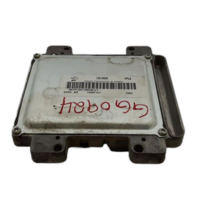
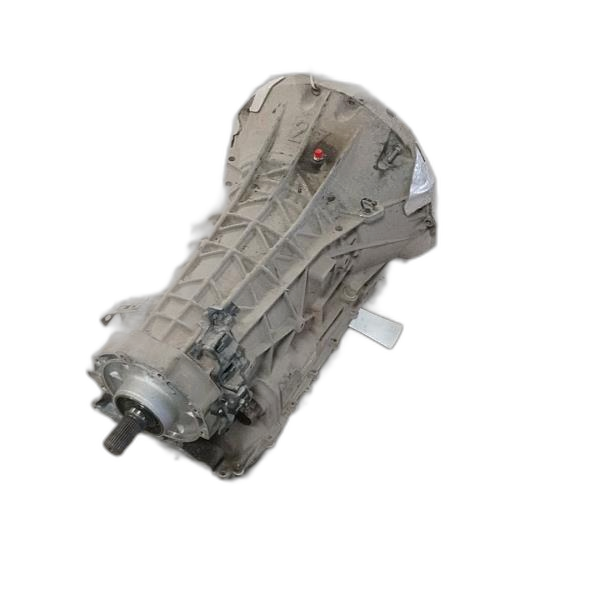
Below are the parts most often responsible for code P2803, ranked by how frequently each one is the actual culprit (per the diagnosis above). Tap any to see what we have for your vehicle.

The information in this article is provided for general reference and educational purposes only. Vehicle specifications, procedures, and part compatibility can vary by production date, trim level, and region. Always consult your vehicle's factory service manual and verify part numbers before purchasing or performing repairs. Safety-critical components such as airbags, seat belts, and braking systems should be installed by a qualified professional.
- 🧭 Diagnostic Flowchart
- 🛍️ Shop This Part
- What Does P2803 Mean?
- Can I Drive With P2803?
- Common Causes
- Symptoms
- Common Fixes & Costs
- Used vs. New Parts: Buying Guide
- What Happens If You Wait — Timeline
- Cost of Not Fixing It
- Diagnosis Steps
- When This Code Triggers (Freeze-Frame Conditions)
- Related Codes
- Climate & Environmental Factors
- How to Talk to a Mechanic About This Code
- Where to Take It: Dealer vs Independent vs Chain
- When to Walk Away From the Repair
- What Scan Tool You Need for This Code
- How to Clear the Code After You Fix It
- Will This Fail Emissions / State Inspection?
- Most Commonly Affected Vehicles
- Manufacturer-Specific Notes
- Real Owner Stories
- 2008 Ford Edge with ~85,000 miles
- 2011 Kia Sorento with limp mode and P0705/P0706 codes
- General vehicle with intermittent P2803
- How to Prevent This Code From Triggering
- Frequently Asked Questions
- Can I just clear the P2803 code and keep driving?
- What is the most common mistake when diagnosing P2803?
- What is the 'B' circuit in P2803?
- Can a weak car battery cause a P2803 code?
- Is the transmission range sensor the same as the neutral safety switch?
- Why does my car go into 'limp mode' with this code?
- Can a misadjusted shift cable cause P2803?
- What happens if I don't replace a faulty transmission range sensor?
- Key Takeaways
- 🎟️ Get 5% Off