

OBD-II Code P2812: Pressure Control Solenoid 'G' Control Circuit/Open
The Ultimate 2026 Guide to Diagnosing and Fixing P2812
- Code P2812 indicates a complete electrical break in the 'G' pressure control solenoid circuit, requiring immediate attention to prevent catastrophic transmission failure.
- On 2019 and newer GM and Ford 10-speed trucks, P2812 frequently points to a known internal valve body failure that requires a $1,300 to $3,000 replacement.
- Never replace a valve body without first using a multimeter to verify solenoid resistance (typically 3-8 ohms) and ground integrity (under 0.5 ohms) to rule out a simple $150 wiring repair.
- Limit driving to a maximum of 10 miles to reach a repair shop; continuing to drive with harsh shifts causes irreversible damage to clutch packs and planetary gears.
What Does P2812 Mean?
The Transmission Control Module (TCM) detected a complete electrical break in the circuit for the 'G' pressure control solenoid. This precise electro-hydraulic valve manages transmission fluid pressure, which is essential for smooth gear shifts. An 'open circuit' means the electrical signal from the TCM is not reaching the solenoid, preventing it from functioning and causing erratic transmission behavior.
Technical definition: Pressure Control Solenoid 'G' Control Circuit/Open. This diagnostic trouble code (DTC) sets when the Transmission Control Module (TCM) detects a loss of continuity or an electrical opening in the control circuit for the pressure control solenoid designated as 'G'.
Can I Drive With P2812?
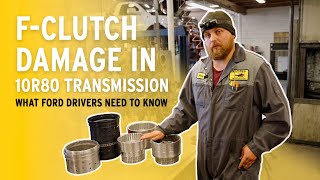
No, immediate repair needed Do not drive the vehicle. Continuing to operate the vehicle with harsh shifting causes catastrophic damage to internal components like clutch packs and planetary gear sets. A severe shift event damages drivetrain components like the rear differential. Ignoring this code turns a potential wiring or solenoid repair into a multi-thousand dollar transmission rebuild. 🎬 See common 10R80 and 10L80 transmission failure points Limit driving strictly to reaching a repair facility.
Common Causes
- Chafed or Damaged Wiring Harness (Common) — Exposed transmission wiring harnesses rub against the chassis, control arms, or brackets, breaking and causing an open circuit. GM TSB 21-NA-149 details multiple chafe points on specific trucks.
- Corroded or Loose Electrical Connector (Common) — The main transmission or TCM connector becomes loose, contaminated with moisture, or develops corroded pins, interrupting the signal. GM TSB 19-NA-228 highlights an improperly seated TCM connector as a primary cause.
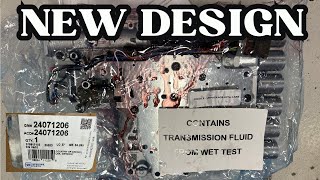
- Faulty Transmission Valve Body Assembly (Very Common) — On modern transmissions like the GM 10L80 and Ford 10R80, solenoids are integrated into the valve body. 🎬 Watch: A first look at the new 10L80 valve body Internal electrical faults within the valve body assembly are a primary cause, addressed by manufacturer Technical Service Bulletins (TSBs).
- Failed Pressure Control Solenoid 'G' (Common) — The solenoid's internal coil winding breaks, creating an open circuit that prevents activation. This is common on older vehicles with individually replaceable solenoids. 🎬 Watch: How to fix P2812 and replace the solenoid
- Poor Ground Connection or Failing Battery (Less Common) — A weak battery, failing alternator, or a corroded ground strap causes unstable voltage. The TCM misinterprets these voltage drops as an open circuit in a solenoid.
- Faulty Transmission Control Module (TCM) (Rare) — The internal driver circuit within the TCM that sends power to the solenoid fails. Consider this only after exhaustively ruling out all wiring, connector, and component faults.
- Software or Calibration Glitches (Rare) — The TCM's firmware contains errors that incorrectly flag an open circuit. A software update or re-flash from the manufacturer resolves the issue without hardware replacement.
- Low or Contaminated Transmission Fluid (Rare) — Low fluid causes overheating, melting internal wiring. Contaminated fluid clogs solenoids, though this typically triggers performance codes (P2813) rather than open circuit codes (P2812).
Symptoms
- Harsh, Jerky, or Banging Shifts — The most common symptom is a severe clunk or jolt during upshifts or downshifts, as the transmission struggles to regulate pressure.
- Vehicle Enters 'Limp Mode' — To prevent further damage, the TCM locks the transmission into a single gear (often 2nd or 3rd), severely limiting speed and acceleration.
- Check Engine Light is On — The TCM requests the Malfunction Indicator Lamp (MIL) to illuminate on the dashboard to alert the driver of the detected fault.
- Transmission Slipping or Hesitation — The engine revs up without a corresponding increase in speed, or there is a noticeable delay before a gear engages.
- Failure to Shift Into Certain Gears — Depending on which solenoid failed and its function, the transmission is unable to engage specific gears.
- Decreased Fuel Economy — Inefficient shifting and being stuck in the wrong gear cause the engine to operate outside its optimal RPM range, increasing fuel consumption.
Diagnostic Flowchart
Tap your situation to follow the diagnostic path that matches what you're seeing on this code.
Common Fixes & Costs
- Repair Wiring Harness or Connector — Parts: $10-$100, Labor: $150-$450, ~2.5 hr book time (Intermediate)
- Replace Transmission Valve Body / Mechatronic Unit — Parts: $700-$1500, Labor: $600-$1500, ~4.5 hr book time (Professional)
- Replace Individual Pressure Control Solenoid — Parts: $50-$200, Labor: $250-$600, ~3.5 hr book time (Intermediate)
- Replace or Reprogram Transmission Control Module (TCM) — Parts: $400-$1400, Labor: $100-$300, ~1.5 hr book time (Professional)
- Transmission Fluid and Filter Service — Parts: $100-$300, Labor: $150-$250, ~1 hr book time (DIY)
DIY vs Professional
- Repair Wiring Harness or Connector 🟢 Beginner
Tools: Multimeter, wire strippers, soldering iron or quality crimp tool, heat shrink tubing, wiring diagrams. - Replace Transmission Valve Body / Mechatronic Unit 🟢 Beginner
Tools: Professional scan tool, torque wrench (in-lb), transmission fluid pump, extensive socket/wrench set, clean assembly area. - Replace Individual Pressure Control Solenoid 🟢 Beginner
Tools: Torque wrench (in-lb), socket set, transmission fluid pump, service manual. - Replace or Reprogram Transmission Control Module (TCM) 🟢 Beginner
Tools: Socket set, professional scan tool with programming capabilities. - Transmission Fluid and Filter Service 🟢 Beginner
Tools: Drain pan, funnel, socket set, torque wrench, fluid pump (for sealed transmissions).
Used vs. New Parts: Buying Guide
When a used part is worth it: A used valve body/mechatronic unit from a low-mileage vehicle (under 50K miles) wrecked due to collision is a cost-effective option, but carries significant risks.
Donor-vehicle mileage cap: roughly under 50000 miles for the part to have meaningful remaining life.
Donor quality checklist:
- Verify the donor vehicle's VIN to confirm it was not scrapped for a transmission-related issue.
- Match the part number and solenoid strategy ID exactly. A mismatch causes communication errors or prevents programming.
- Obtain the solenoid characterization data (often a QR code or tag on the part) required for programming.
Decision logic:
- If The part is a modern mechatronic unit (e.g., 10L80, 10R80, ZF 8HP) that requires programming → Buy new or a professionally remanufactured unit. Used units cannot be reprogrammed to a new vehicle's VIN, making them useless.
- If Vehicle is older (>10 years) and the valve body is purely hydraulic/mechanical with no integrated TCM → A used part is a viable, but risky, option.
- If The cost of a used part plus programming and labor is more than 70% of a new part → Buy new for the warranty and guaranteed compatibility.
Warranty tradeoff: Used parts typically have a 30-90 day warranty covering only the part itself, not the expensive labor to install it. A new OEM or quality remanufactured part comes with a 1-3 year warranty.
Worst-case if a used part fails: $1000-$2000 if a used valve body fails after installation, requiring a repeat of the labor-intensive replacement process.
What Happens If You Wait — Timeline
- 0-1 month: Check Engine Light illuminates with code P2812. Driver notices intermittent, harsh shifts, often a bang or clunk, especially during 1-2 or 2-3 upshifts. Vehicle occasionally hesitates. (MPG impact: 3-5%% · Added cost: $0-$50 in wasted fuel)
- 1-3 months: Harsh shifting becomes consistent and more violent. The TCM triggers 'limp mode,' locking the transmission in a single gear (e.g., 3rd) to prevent damage. Slipping between gears becomes noticeable. (MPG impact: 5-15%% · Added cost: $50-$200 in wasted fuel)
- 3-6 months: Repeated hydraulic shocks from harsh shifting cause permanent mechanical damage. Clutch pack friction material wears excessively, and metal shavings contaminate the fluid. Transmission starts to make whining or clunking noises. (MPG impact: 10-20%% · Added cost: $2500-$5000 (The initial electrical repair is no longer sufficient; a transmission rebuild is now likely needed due to mechanical damage).)
- 6+ months: Catastrophic failure is imminent. The clutch packs are destroyed, planetary gear sets have broken teeth, and the torque converter is damaged. The vehicle loses the ability to move altogether. (MPG impact: 20%+% · Added cost: $4000-$8000 (A complete transmission replacement or a complex, expensive rebuild is the only option).)
Cost of Not Fixing It
- 0-1 month: Severe, harsh shifting events ('banging' into gear) cause immediate, excessive wear on clutch packs, gear sets, and drivetrain components like U-joints and differential gears. Fuel economy drops by 5-10%. (Added cost: $0)
- 1-6 months: Continued harsh shifting permanently damages transmission clutch packs and bands. Metal debris contaminates the entire hydraulic system, including the new valve body if replaced without a full system flush. The risk of catastrophic failure increases significantly. (Added cost: $2500-$5000)
- 6+ months: Catastrophic transmission failure occurs. This includes broken planetary gear sets, a destroyed torque converter, and a transmission case damaged beyond repair. The vehicle becomes completely undrivable, requiring a full transmission rebuild or replacement. (Added cost: $4000-$8000)
Diagnosis Steps
- Scan for Codes and Review TSBs
Confirm P2812 and related codes (e.g., P0700, P2814) using an OBD-II scanner. Immediately check manufacturer Technical Service Bulletins (TSBs) for documented fixes.
Tools: OBD-II Scanner (Beginner) - Perform Detailed Wiring and Connector Inspection
Visually inspect the entire transmission wiring harness for chafing, burns, or breaks. Disconnect and inspect the main transmission connector and the TCM connector for corrosion, moisture, or bent pins. Ensure connectors are fully seated.
Tools: Flashlight, Mirror, Electrical Contact Cleaner (Intermediate) - Test Solenoid Resistance at the Connector
Using a multimeter and a wiring diagram, access the main transmission harness connector. Measure the resistance across the pins for the 'G' solenoid. A typical Pulse-Width Modulated (PWM) solenoid reads between 3-8 ohms. An infinite (OL) reading confirms an open circuit in the solenoid coil.
Tools: Multimeter, Vehicle-specific wiring diagram (Advanced) - Test Circuit Continuity and Ground
If solenoid resistance is in spec, test the wiring. Disconnect the TCM and transmission connectors. Check for continuity on the control wire for solenoid 'G' between the two connectors. An infinite resistance (OL) reading confirms an open circuit in the harness. Check the resistance between the ground pin at the transmission connector and a clean chassis ground; it must be less than 0.5 ohms.
Tools: Multimeter, Vehicle-specific wiring diagram (Advanced) - Verify Power Supply Voltage
Back-probe the power supply wire at the transmission connector with the engine running. Using a multimeter set to DC volts, verify a steady voltage of 12 volts (+/- 0.5V). Fluctuations or a low reading point to a problem in the power supply circuit, alternator, or battery.
Tools: Multimeter, Back-probe kit (Advanced) - Check Transmission Fluid Level and Condition
Verify the fluid is at the correct level. Inspect the fluid's condition on a white rag. Dark, burnt-smelling, or metallic-flecked fluid indicates internal wear that must be addressed.
Tools: Gloves, Rag, Dipstick (if equipped) (Beginner) - Pro Tip: Active Solenoid Command Test
Using a bidirectional scan tool, access the TCM functions and command the 'G' solenoid on and off. While commanding the solenoid, use a multimeter to check for voltage at the solenoid's control wire by back-probing the connector. If the scanner shows the command is sent but no voltage is present, it points to a wiring issue or a faulty TCM driver.
Tools: Advanced Bidirectional Scan Tool, Multimeter, Back-probe kit (Professional) - Pro Tip: Oscilloscope Waveform Analysis
Connect an oscilloscope to the solenoid's control and ground wires. A healthy pressure control solenoid circuit shows a distinct square wave. An open circuit shows a flat line with no signal activity when the solenoid should be active. This test definitively proves whether the TCM is sending a signal and if the circuit is intact.
Tools: Automotive Oscilloscope, Probes, Wiring Diagram (Professional) - Isolate the TCM
If all wiring tests good, the solenoid resistance is within spec, and the oscilloscope shows no command signal from the TCM, the fault is internal to the Transmission Control Module. This requires replacing and reprogramming the module.
Tools: Advanced Scan Tool (Professional)
When This Code Triggers (Freeze-Frame Conditions)
- Engine Coolant Temp: 185-210°F (The TCM runs continuous circuit integrity tests after the vehicle reaches normal operating temperature.)
- RPM: 1300-2500 (The code sets during steady-state driving or light acceleration when the transmission expects to perform a routine upshift.)
- Vehicle Speed: 30-55 mph (Highway or city cruising speeds where the transmission shifts through higher gears (e.g., 4th-10th) are common trigger points.)
- Gear: Any, often during a shift command (The fault is detected at the exact moment the TCM commands the 'G' solenoid to activate or deactivate during a gear change.)
Related Codes
- P0700 — A general transmission fault code that acts as a 'check engine light' for the transmission system. It indicates the TCM stored a specific code, such as P2812, and is requesting the MIL be turned on.
- P2814 — This code is for the 'H' pressure control solenoid. On GM 10-speed transmissions, P2812 and P2814 frequently appear together. GM TSB PIP5799 addresses both codes.
- P2813 — Indicates a 'Range/Performance' issue with the same 'G' solenoid. P2812 is a purely electrical fault (open circuit), while P2813 means the circuit is electrically sound, but the solenoid is not responding mechanically.
- P0796 — This is a performance code for a different solenoid ('C'), but it produces similar symptoms like harsh shifting and limp mode. It highlights that multiple solenoids perform similar functions.
Climate & Environmental Factors
- High Humidity / Moisture: Accelerates corrosion on external wiring harness connectors and ground points. Moisture ingress causes short circuits or high resistance, directly triggering open circuit codes like P2812.
- Extreme Cold Weather: Cold temperatures increase the viscosity of transmission fluid. This causes delayed engagements and puts extra strain on hydraulic components, including solenoids, exacerbating existing mechanical weaknesses.
- Road Salt (Winter Climates): In regions where road salt is used, corrosion of the transmission case, wiring harness brackets, and ground straps is common. A corroded ground causes unstable voltage and triggers false solenoid codes.
How to Talk to a Mechanic About This Code
Say this: "I have a P2812 code on my [Vehicle Year, Make, Model] and it's having harsh shifts. I'd like to schedule a diagnostic. Please check for relevant TSBs, like the ones for wiring chafe and valve bodies, and perform electrical tests on the solenoid circuit before recommending a valve body replacement."
This signals you are an informed customer. It directs the shop to perform a proper diagnosis to rule out cheaper causes like wiring or connector faults first, preventing unnecessary valve body replacements.
Avoid saying:
- 'Just fix my transmission'
- 'My check engine light is on, can you look at it?' (too vague, invites upselling)
- 'I think I need a new transmission.' (Don't diagnose it for them)
Questions to ask before authorizing the repair:
- Did you find any Technical Service Bulletins (TSBs) for this code on my vehicle?
- What were the results of the electrical tests? Specifically, what was the resistance reading for the 'G' solenoid and did you confirm continuity from the TCM to the transmission connector?
- Have you inspected the wiring harness for chafing and checked the main TCM connector for a secure connection?
- If you are recommending a valve body replacement, is that because the open circuit was confirmed to be internal to the unit?
- Does your quoted price include the necessary fluid, filter, and post-replacement programming/adaptive learning cycle?
- What is the warranty on this specific repair, and does it cover both parts and labor?
Where to Take It: Dealer vs Independent vs Chain
- Dealer:
Recommended if the vehicle is under warranty or if the fix requires programming a new valve body or TCM, as they have guaranteed access to the latest software.
Best for: Vehicles still under powertrain warranty, Complex repairs on modern transmissions (e.g., 10L80, 10R80) that require proprietary software for programming new components., When a known TSB exists that the dealer is best equipped to execute.
Downsides: Highest labor rates, often 1.5-2x an independent shop., Defaults to replacing large, expensive assemblies (full transmission) instead of repairing a sub-component (valve body). (Typical cost: +50% vs. baseline) - Independent Shop:
Excellent choice, *if* it's a reputable transmission specialty shop. They are more experienced with internal repairs and TSBs than generalists and cheaper than dealers. Verify they handle required programming.
Best for: Out-of-warranty vehicles where the owner is cost-sensitive., Diagnosing and repairing common external issues like chafed wiring or bad connectors., Shops that specialize in transmissions are highly preferred over general repair shops.
Downsides: Quality varies greatly. A general mechanic lacks the specific knowledge for modern 10-speed issues., Lacks the expensive, manufacturer-specific tools to program a new valve body or TCM. (Typical cost: +0% vs. baseline) - Chain Shop:
AVOID. P2812 is a complex diagnostic code that requires specialized knowledge far beyond the scope of a typical chain shop. The risk of misdiagnosis and being sold an unnecessary, expensive repair is extremely high.
Best for: Simple, routine maintenance like oil changes or tire rotations.
Downsides: Technician skill and experience with complex transmissions are very low., High pressure to upsell; misdiagnoses the issue or recommends a full transmission replacement from a third-party rebuilder without proper diagnostics. (Typical cost: -10% vs. baseline)
When to Walk Away From the Repair
If the estimated repair cost exceeds 50% of the car's private-party value, seriously consider selling or trading it in as-is.
- Car worth $25000, fix is $3500: Fix it. The repair cost is only 14% of the vehicle's value and is a worthwhile investment to restore function.
- Car worth $8000, fix is $3200: Borderline. The repair is 40% of the car's value. Get a second opinion to confirm no cheaper fix exists before proceeding.
- Car worth $4000, fix is $2800: Walk away. The repair cost is 70% of the vehicle's value. It is not economically sensible to invest this much.
What Scan Tool You Need for This Code
Minimum: A tool that reads manufacturer-specific transmission codes (not just generic 'P' codes) and views live data for the Transmission Control Module (TCM).
A $20 basic code reader only shows the P0700 'general transmission fault' code, not the specific P2812 stored in the TCM. To diagnose properly, you need to see transmission-specific codes, live solenoid command status, and perform bidirectional tests.
Budget: BlueDriver Pro (~$100) — Reads and clears specific transmission codes like P2812, shows freeze-frame data, and graphs live data from the TCM. It's a powerful diagnostic tool for confirming the code and monitoring data before going to a shop.
Mid-range: Foxwell NT604 Elite / XTOOL D7 (~$150-350) — These tools offer bidirectional control, allowing you to command the 'G' solenoid on and off to test its function and the wiring circuit. This is a critical step for differentiating a wiring/TCM issue from an internal solenoid failure.
Professional: Autel MaxiCOM MK808 / Launch X431 series (~$500-1200) — Provides full bidirectional control, OEM-level diagnostics, and special functions. Crucially, some of these tools perform the 'Solenoid Body Strategy' programming required after replacing a valve body on Ford/GM vehicles, a function previously reserved for dealer tools.
How to Clear the Code After You Fix It
- Reconnect battery if disconnected for repair.
- Use an OBD-II scan tool to clear all Diagnostic Trouble Codes (DTCs) from the ECM and TCM.
- Perform the manufacturer-specific transmission adaptive learning drive cycle.
Drive cycle (~30 minutes): A typical transmission relearn cycle involves a cold start, warming up to operating temperature (over 175°F), followed by a series of gentle accelerations from a stop through all gears, and gentle braking to a stop. For a Ford 10R80, accelerate gently to 55 mph to allow all 10 gears to engage, brake gently to a stop, and repeat the process at least six times.
Readiness monitors affected: Comprehensive Component Monitor, Catalyst Monitor, Evaporative System Monitor
Before emissions retest: drive at least 100 miles to fully set monitors.
Watch out for:
- Clearing the code with a scanner without performing the adaptive learning drive cycle results in continued poor shift quality.
- The code returns immediately if the underlying electrical fault (wiring, solenoid) is not repaired.
- Disconnecting the battery clears the code but resets all OBD-II readiness monitors, guaranteeing an emissions test failure until a drive cycle is completed.
Will This Fail Emissions / State Inspection?
Yes — this code typically fails an OBD-II emissions inspection.
- California: An illuminated Check Engine Light is an automatic failure for a smog check. After repair, you must complete a specific drive cycle to set all readiness monitors before passing the test.
- New York: The NYS vehicle inspection includes an OBD-II scan. A P2812 code causes an automatic failure, preventing registration renewal until the vehicle is repaired and the code is cleared.
- Texas: In counties requiring emissions testing, an active P2812 code and illuminated Check Engine Light result in an immediate failure of the OBD-II portion of the inspection.
Most Commonly Affected Vehicles
- Chevrolet Silverado 1500 (2019-2021) — Highly susceptible due to internal valve body failures in the 10-speed (10L80) transmission. GM TSB PIP5799 directly advises valve body replacement.
- GMC Sierra 1500 (2019-2021) — Shares the 10L80 transmission with the Silverado and is covered by the same TSB (PIP5799) for faulty valve bodies.
- Ford F-150, Mustang, Ranger (2017-2023) — The co-developed 10R80 transmission suffers from similar valve body and solenoid issues. Software updates and inspection of the CDF drum are common diagnostic paths.
- Cadillac Escalade, CT4, CT5, CT6 (2019-2021) — Equipped with the 10-speed automatic and are included in GM TSBs PIP5799 and 19-NA-228 for valve body and connector issues.
- Chevrolet Tahoe, Suburban, Camaro (2019-2021) — Use the problematic 10-speed transmission platform known for valve body and electrical faults.
- BMW 3-Series, 5-Series, X3, X5 (with ZF 6HP/8HP) (2010-2016) — On ZF transmissions, this code points to a failure of the mechatronic unit. Common underlying causes are leaking connector sleeves or hardened internal seals.
- Hyundai Sonata, Santa Fe, Elantra N, Veloster N (2021-2022) — Models with the 8-speed wet Dual-Clutch Transmission (DCT) were recalled (NHTSA 22V746000) for issues with the electric oil pump circuit board.
- Kia K5, Sorento (2021-2023) — Shares the 8-speed DCT with Hyundai and is affected by the same recall for an internal transmission fault.
Manufacturer-Specific Notes
- General Motors (Chevrolet, GMC, Cadillac): GM has multiple TSBs for the 10L80 transmission. TSB PIP5799 states to replace the valve body for P2812 if no external cause is found. TSB 19-NA-228 warns that a crooked TCM connector triggers the code. TSB 21-NA-149 details numerous wire chafing locations.
- Ford: The 10R80 transmission suffers from similar valve body issues. Diagnosis involves checking for a failed CDF drum bushing and ensuring the latest PCM software is installed. Solenoid characterization data must be programmed into the TCM upon replacement.
- BMW (with ZF Transmissions): On ZF 6HP and 8HP transmissions, symptoms related to solenoid codes are caused by degraded rubber seals within the mechatronic unit, specifically the main connector sleeve and the 'bridge' adapter seal. Static discharge during repair damages the mechatronic unit.
- Hyundai / Kia: On 2021-2023 models with the 8-speed wet DCT, transmission issues are linked to a major recall (NHTSA Campaign 22V746000). The fault lies in the electric oil pump's circuit board or the TCU software logic, not the solenoid itself.
Real Owner Stories
2019 GMC Sierra 1500 at 75K miles
Check Engine Light came on, accompanied by harsh 1-2 and 2-3 upshifts, especially when cold. Downshifts were also jarring.
What they tried:
- Initial shop visit quoted a full transmission rebuild for over $7,000.
- Owner sought a second opinion at a transmission specialty shop.
- The second shop immediately referenced GM TSB PIP5799.
Outcome: The transmission shop replaced the entire valve body assembly per the TSB. Total cost was approximately $2,800. The new valve body resolved the harsh shifting and the P2812 code did not return.
Lesson: For known issues like the 10L80 valve body, always check for TSBs. A specialty shop is more likely to be aware of these than a general repair shop, saving you from a costly misdiagnosis.
2020 Chevy Silverado 1500 at 40K miles
Intermittent Check Engine Light and P2812 code, with occasional rough shifts. The problem was not consistent.
What they tried:
- Dealer initially could not replicate the issue and cleared the code.
- Code returned a week later. The owner mentioned GM TSB 19-NA-228 about connectors.
- Technician inspected the main TCM connector and found it was slightly crooked and not fully latched.
Outcome: The technician disconnected, inspected, and properly re-seated the TCM connector, ensuring the lock was engaged. The code was cleared and did not return. The repair required no parts and minimal labor.
Lesson: The simplest fix is often overlooked. Before authorizing expensive part replacements for an electrical code, insist that all related connectors and grounds are thoroughly inspected.
2019 Ford F-150 at 95K miles
Vehicle went into 'limp mode' with P2812 and P0700 codes stored. Shifting was extremely harsh before it locked into one gear.
What they tried:
- DIY diagnosis began with checking fluid, which was clean and full.
- Owner inspected the external wiring harness but found no obvious damage.
- A local shop with an advanced scan tool was consulted. They tested resistance at the transmission connector and found an open circuit (infinite ohms) for the 'G' solenoid.
Outcome: The shop replaced the 10R80 valve body assembly. After replacement, they performed the Solenoid Body Strategy Download using a Ford-specific scan tool to program the new part to the vehicle. The repair cost around $3,200.
Lesson: On modern transmissions like the 10R80, replacing the valve body is only half the job. The new part MUST be electronically programmed to the vehicle's computer, requiring dealer-level tools.
2021 GMC Sierra with 3.0L Diesel at 60K miles
A cluster of seemingly unrelated DTCs appeared, including P2812, along with reduced engine power messages and a rough idle.
What they tried:
- First mechanic was confused by the variety of codes and suspected a faulty ECM.
- A second mechanic consulted GM TSB 21-NA-149, which describes widespread wiring harness chafing issues.
- Following the TSB, they found the engine harness had rubbed through on a sharp edge of the ECM/TCM bracket.
Outcome: The mechanic repaired several damaged wires using approved splicing techniques and wrapped the harness in protective conduit. All codes, including P2812, were resolved. The repair cost was $450.
Lesson: Multiple, unrelated fault codes appearing at once point to a shared electrical problem like a bad ground or a damaged wiring harness, not multiple failed components. TSB 21-NA-149 is critical for diagnosing electrical issues on these trucks.
How to Prevent This Code From Triggering
- Perform regular transmission fluid and filter changes (Every 30,000-60,000 miles, depending on use (towing/hauling requires shorter intervals)) — Clean fluid with a healthy additive package lubricates moving parts and helps cool the solenoids. Old, contaminated fluid causes solenoids to stick, clog, and overheat, leading to electrical failure.
- Inspect and protect wiring harnesses (During every oil change) — Visually check for areas where harnesses rub against hot or sharp components. Proactively add protective conduit or zip-tie harnesses away from known chafe points (like those in TSB 21-NA-149) to prevent wires from breaking.
- Practice smooth driving habits (Daily habit) — Avoid aggressive acceleration and shifting from Reverse to Drive while the vehicle is still moving. These actions cause abrupt pressure changes and shock loads, stressing the solenoids and the entire transmission.
- Allow a brief warm-up period in cold weather (On cold starts (below freezing)) — Allowing the engine to idle for 30-60 seconds before driving helps the thick, cold transmission fluid to circulate. This reduces initial strain on the solenoids and valve body as they work to build hydraulic pressure.
- Clean and apply dielectric grease to key connectors (Every 30,000 miles or during major service) — Cleaning the main transmission harness connector and applying a small amount of dielectric grease prevents moisture intrusion and corrosion, which are primary causes of open circuits and intermittent electrical faults.
Frequently Asked Questions
What's the most common mistake when diagnosing P2812?
The biggest mistake is replacing the expensive valve body or TCM without performing a thorough wiring diagnosis. Per GM's own bulletins, a simple unseated connector (TSB 19-NA-228) or a chafed wire (TSB 21-NA-149) is a common cause. Always check wiring, connectors, and grounds first.
Can I just replace the 'G' solenoid?
On modern transmissions (like the GM 10L80 and Ford 10R80), solenoids are integrated into the valve body assembly, requiring full replacement. On older vehicles, individual replacement is possible.
What is the real-world cost to fix P2812?
Costs vary dramatically based on the root cause. A wiring repair costs $150-$450, while a full valve body replacement on a modern truck ranges from $1,300 to $3,000. A BMW mechatronic unit replacement exceeds $5,000 at a dealership.
Can resetting transmission adaptations fix P2812?
No. A P2812 code indicates a hard electrical fault (an open circuit). Resetting adaptations clears learned shift behavior but cannot fix a broken wire, a bad solenoid, or a faulty module.
Is it safe to keep driving with code P2812?
It is highly inadvisable. Uncontrolled hydraulic pressure and harsh shifts place extreme stress on internal mechanical parts. Continued driving quickly causes cascading failures, turning a manageable repair into a complete transmission rebuild.
Can a bad battery cause a P2812 code?
Yes. A failing battery or alternator causes low system voltage (below 12.4V at rest). The TCM misinterprets this voltage drop as an open circuit in a solenoid, triggering the code.
What is the difference between P2812 (Open Circuit) and P2813 (Performance)?
P2812 is a purely electrical code indicating a broken circuit where no signal gets through. P2813 is a performance code indicating the circuit is electrically fine, but the solenoid is mechanically stuck, clogged, or leaking.
Key Takeaways
- Code P2812 indicates a complete electrical break in the 'G' pressure control solenoid circuit, requiring immediate attention to prevent catastrophic transmission failure.
- On 2019 and newer GM and Ford 10-speed trucks, P2812 frequently points to a known internal valve body failure that requires a $1,300 to $3,000 replacement.
- Never replace a valve body without first using a multimeter to verify solenoid resistance (typically 3-8 ohms) and ground integrity (under 0.5 ohms) to rule out a simple $150 wiring repair.
- Limit driving to a maximum of 10 miles to reach a repair shop; continuing to drive with harsh shifts causes irreversible damage to clutch packs and planetary gears.
Helpful Videos
Shop the Parts Behind P2812
Below are the parts most often responsible for code P2812, ranked by how frequently each one is the actual culprit (per the diagnosis above). Tap any to see what we have for your vehicle.


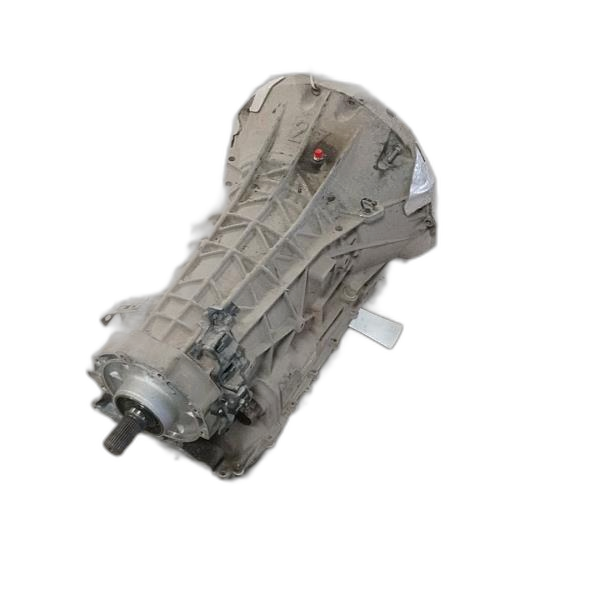

The information in this article is provided for general reference and educational purposes only. Vehicle specifications, procedures, and part compatibility can vary by production date, trim level, and region. Always consult your vehicle's factory service manual and verify part numbers before purchasing or performing repairs. Safety-critical components such as airbags, seat belts, and braking systems should be installed by a qualified professional.
- 🧭 Diagnostic Flowchart
- 🎬 Helpful Videos
- 🛍️ Shop This Part
- What Does P2812 Mean?
- Can I Drive With P2812?
- Common Causes
- Symptoms
- Common Fixes & Costs
- DIY vs Professional
- Used vs. New Parts: Buying Guide
- What Happens If You Wait — Timeline
- Cost of Not Fixing It
- Diagnosis Steps
- When This Code Triggers (Freeze-Frame Conditions)
- Related Codes
- Climate & Environmental Factors
- How to Talk to a Mechanic About This Code
- Where to Take It: Dealer vs Independent vs Chain
- When to Walk Away From the Repair
- What Scan Tool You Need for This Code
- How to Clear the Code After You Fix It
- Will This Fail Emissions / State Inspection?
- Most Commonly Affected Vehicles
- Manufacturer-Specific Notes
- Real Owner Stories
- 2019 GMC Sierra 1500 at 75K miles
- 2020 Chevy Silverado 1500 at 40K miles
- 2019 Ford F-150 at 95K miles
- 2021 GMC Sierra with 3.0L Diesel at 60K miles
- How to Prevent This Code From Triggering
- Frequently Asked Questions
- What's the most common mistake when diagnosing P2812?
- Can I just replace the 'G' solenoid?
- What is the real-world cost to fix P2812?
- Can resetting transmission adaptations fix P2812?
- Is it safe to keep driving with code P2812?
- Can a bad battery cause a P2812 code?
- What is the difference between P2812 (Open Circuit) and P2813 (Performance)?
- Key Takeaways
- 🎟️ Get 5% Off