

OBD-II Code P2813: Pressure Control Solenoid 'G' Performance/Stuck Off
The Ultimate 2026 Guide: What P2813 means, why it triggers, and how to fix it for good.
- OBD-II code P2813 indicates a critical performance failure in Pressure Control Solenoid 'G', causing harsh shifts, delayed engagement, and transmission slipping.
- On 2013-2020 Nissan vehicles with CVTs, P2813 almost always requires a complete $1,200-$2,800 valve body replacement covered by TSB NTB16-110P.
- Before replacing expensive internal parts, test the solenoid 'G' circuit resistance (e.g., 2.4-3.4 Ω on Nissan) and inspect the main transmission harness for corrosion.
- Driving with an active P2813 code accelerates internal clutch wear, turning a $1,200 valve body repair into a $4,000+ full transmission replacement within months.
What Does P2813 Mean?
P2813 means the Transmission Control Module (TCM) detects a performance problem with the 'G' pressure control solenoid. This precise electronic valve regulates transmission fluid flow and pressure to enable smooth gear changes. When it fails to respond to TCM commands correctly, it disrupts shifting, causing harsh engagement, delayed acceleration, and transmission slipping.
Technical definition: The SAE/OBD-II definition is "Pressure Control Solenoid 'G' Control Circuit Range/Performance". The TCM detects that electrical signals in the solenoid 'G' control circuit are operating outside manufacturer specifications. This indicates the solenoid is partially functional but fails to achieve commanded hydraulic pressure, creating a mismatch between expected and actual transmission behavior.
🎬 Watch: A quick overview of fixing the P2813 error code.Can I Drive With P2813?
No, recommended Driving is strongly discouraged. You can physically drive short distances at low speeds, but doing so risks catastrophic transmission damage. Harsh shifting puts extreme stress on internal components. Ignoring this code quickly turns a $1,200 valve body repair into a $4,000+ full transmission replacement. The vehicle also enters 'limp mode' unpredictably, severely limiting speed and creating a major safety hazard on highways.
Common Causes
- Faulty Transmission Valve Body (Very Common) — In modern transmissions, particularly Nissan CVTs, solenoids are integrated into the valve body. A failure here requires replacing the entire valve body assembly 🎬 See this full diagnosis and repair for Nissan CVT issues. due to warped passages or internal leaks affecting the solenoid's hydraulic pressure.
- Faulty Pressure Control Solenoid 'G' (Very Common) — The solenoid's internal coil degrades, develops a short, or the mechanical valve becomes clogged with debris. This alters electrical resistance and prevents the valve from opening or closing fully.
- Low or Contaminated Transmission Fluid (Common) — Old, dirty, or low transmission fluid lacks proper hydraulic properties, causing the solenoid to stick. Metallic debris suspended in the fluid clogs valve body passages, directly blocking solenoid function.
- Damaged or Corroded Wiring Harness (Common) — Wiring and connectors between the TCM and transmission are prone to heat damage, chafing, and corrosion. The main harness connector on the transmission case frequently corrodes, creating high resistance that distorts the voltage signals reaching the solenoid.
- Low System Voltage (Less Common) — A weak battery or failing alternator provides unstable voltage to the transmission control system. The TCM interprets the resulting erratic solenoid operation as a performance fault.
- Internal Transmission Pump Failure (Rare) — A failing transmission oil pump causes low line pressure throughout the system. While this usually triggers specific low-pressure codes, it sometimes manifests as a solenoid performance issue.
- Software/Calibration Errors (Rare) — Outdated software in the TCM misinterprets normal solenoid behavior as a fault. A manufacturer software update (re-flash) resolves this.
- Faulty Transmission Control Module (TCM) (Rare) — The driver circuit within the TCM that controls solenoid 'G' fails. This is the absolute last item to suspect after exhausting all electrical and hydraulic tests.
Symptoms
- Harsh or jerky gear shifts — A noticeable bang or jolt occurs when the transmission shifts, especially during the 1-2 upshift or when engaging Drive or Reverse from Park.
- Delayed gear engagement — A significant hesitation of 1-3 seconds occurs when shifting from Park into Drive or Reverse before the transmission actually engages the gear.
- Transmission slipping — Engine RPMs flare up without a corresponding increase in vehicle speed, indicating the internal clutches or CVT belt are not holding pressure.
- Vehicle enters 'limp mode' — The transmission locks into a single gear (usually 2nd or 3rd) to prevent further damage, severely limiting vehicle speed and acceleration.
- Inability to shift into certain gears — The transmission refuses to shift into or out of a specific gear, or the shifter becomes physically stuck in Park.
- Burning transmission fluid smell — Incorrect hydraulic pressure causes clutches to slip and overheat the fluid, producing a distinct burning smell that indicates severe internal damage.
- Decreased fuel economy — Inefficient shifting, slipping, and failure of the torque converter to lock up cause a noticeable drop in gas mileage.
- Check Engine Light illuminated (also visible on scanner) — The Malfunction Indicator Lamp (MIL) or a dedicated transmission warning light turns on.
Diagnostic Flowchart
Tap your situation to follow the diagnostic path that matches what you're seeing on this code.
Common Fixes & Costs
- Replace Transmission Valve Body — Parts: $800-$1500, Labor: $400-$800, ~4 hr book time (Professional)
- Replace Pressure Control Solenoid 'G' — Parts: $80-$250, Labor: $300-$550, ~2.5 hr book time (Intermediate)
- Repair or Clean Wiring and Connectors — Parts: $5-$20, Labor: $100-$300, ~1.5 hr book time (DIY)
- Change Transmission Fluid and Filter — Parts: $70-$180, Labor: $100-$200, ~1 hr book time (DIY)
- Replace or Reprogram TCM — Parts: $600-$1200, Labor: $200-$400, ~2 hr book time (Professional)
DIY vs Professional
- Replace Transmission Valve Body 🟢 Beginner
Tools: Transmission jack, extensive socket set, torque wrench, high-pressure gauge, advanced scan tool for reprogramming. - Replace Pressure Control Solenoid 'G' 🟢 Beginner
Tools: Socket set, torque wrench, multimeter, service manual, fluid pump. - Repair or Clean Wiring and Connectors 🟢 Beginner
Tools: Multimeter, electrical contact cleaner, wire strippers, crimpers, heat shrink tubing. - Change transmission fluid and filter 🟢 Beginner
Tools: Basic hand tools, drain pan, fluid pump or funnel, torque wrench. - Replace or Reprogram TCM 🟢 Beginner
Tools: Advanced scan tool with programming capabilities, battery maintainer.
Used vs. New Parts: Buying Guide
When a used part is worth it: A used valve body from a low-mileage, accident-damaged vehicle is cost-effective for older vehicles where a new part exceeds the car's value. It remains a gamble on the donor's maintenance history.
Donor-vehicle mileage cap: roughly under 60000 miles for the part to have meaningful remaining life.
Donor quality checklist:
- Verify the donor vehicle was not scrapped due to transmission failure.
- Match part numbers exactly; manufacturers update valve bodies frequently.
- Purchase from a salvage yard providing the donor VIN and mileage.
- Avoid parts with external corrosion or from rust-belt regions.
Decision logic:
- If Vehicle is under a known warranty extension (e.g., Nissan/Subaru CVT) → Always use a new OEM part installed by a dealer to ensure coverage.
- If Vehicle is older (>120K miles) and repair budget is strict → A used part is a reasonable risk, but prepare for potential failure.
- If The part is a remanufactured valve body from a reputable specialist → This is the best compromise, offering reliability and a warranty at a lower cost than new OEM.
Warranty tradeoff: Used parts carry a 30-90 day warranty covering only the part, not labor. Remanufactured parts offer 1-year warranties. Dealer-installed OEM parts usually carry a 12-month/12,000-mile warranty.
Worst-case if a used part fails: $800-$1500 if a used valve body fails, requiring repeat labor and another replacement part.
What Happens If You Wait — Timeline
- 0-2 weeks: Code P2813 sets, MIL illuminates. Shifting is intermittently harsh when engaging Drive. No other major symptoms are perceived. (MPG impact: 0-3%% · Added cost: $0)
- 2 weeks - 3 months: Harsh shifting becomes frequent. Delayed engagement from Park to Drive is regular. Incorrect hydraulic pressure accelerates wear on clutch packs. (MPG impact: 5-10%% · Added cost: $50-150 in wasted fuel)
- 3-6 months: Sustained incorrect pressure overheats the fluid, turning it dark and burnt. Degraded fluid damages other solenoids and the valve body. Limp mode occurs frequently. (MPG impact: 10-15%% · Added cost: $500 - $1,500 as damage spreads to the entire valve body.)
- 6+ months: Catastrophic failure. Burnt fluid and slipping destroy clutch packs or the CVT belt. Metal debris contaminates the system. Full transmission replacement is required. (MPG impact: 15-25%% · Added cost: $4,000 - $8,000+ for a complete transmission replacement.)
Cost of Not Fixing It
- 0-1 Month: Noticeable harsh shifting, delayed engagement, and a 5-10% drop in fuel economy. The vehicle enters limp mode intermittently. Internal wear on clutches accelerates due to incorrect hydraulic pressures. (Added cost: Negligible, but risk of getting stranded increases.)
- 1-6 Months: Sustained incorrect pressure overheats the fluid, causing it to burn. This creates sludge and damages other solenoids and the valve body. A simple solenoid fix is no longer possible. (Added cost: $500 - $1,500 as damage spreads to the entire valve body assembly.)
- 6+ Months: Catastrophic internal transmission failure. The CVT belt or conventional clutch packs are destroyed. Metal debris contaminates the entire system. A full transmission replacement is mandatory. (Added cost: $4,000 - $8,000+ for a complete transmission replacement.)
Diagnosis Steps
- Scan Codes & Check TSBs
Use an advanced OBD-II scanner to read all Engine and Transmission codes. Immediately check for manufacturer Technical Service Bulletins (TSBs) for your specific year and model. Manufacturers like Nissan provide mandatory diagnostic flowcharts for P2813 that supersede standard testing.
Tools: Advanced OBD-II Scanner, Access to TSB Database (Beginner) - Inspect Fluid Level & Condition
Check the transmission fluid. Low, dark, or burnt-smelling fluid indicates a problem. If the fluid contains metallic flakes, stop diagnosis immediately; the transmission has suffered severe internal mechanical failure and requires replacement.
Tools: Gloves, Rag, Transmission fluid dipstick (if equipped) (Beginner) - Inspect External Wiring & Connectors
Visually inspect the wiring harness routing to the transmission. Disconnect the main harness connector on the transmission case and check for green corrosion, pushed-out pins, or fluid intrusion. Clean with contact cleaner if necessary.
Tools: Flashlight, Gloves, Electrical Contact Cleaner (Intermediate) - Test Solenoid 'G' Resistance
Disconnect the transmission harness. Use a multimeter to measure resistance across the specific pins for Solenoid 'G' (refer to a wiring diagram). Compare to manufacturer specs (e.g., Nissan CVTs require a strict 2.4 - 3.4 Ω). An open circuit or out-of-spec reading condemns the solenoid or valve body.
Tools: Digital Multimeter, Vehicle-specific wiring diagram (Advanced) - Perform Harness 'Wiggle' Test
With the engine running and a scan tool graphing solenoid 'G' voltage, carefully wiggle the wiring harness at the connector and along its path. If the live graph drops out or spikes, you have located an intermittent short or open wire.
Tools: Advanced Scan Tool (Live Data Graphing) (Intermediate) - Test Circuit Voltage and Ground
Check for proper power supply voltage at the solenoid connector with the key on (KOEO). Measure resistance between the ground pin and chassis ground; it must be less than 1 Ω. A poor ground is a frequent, overlooked cause of performance codes.
Tools: Digital Multimeter, Vehicle-specific wiring diagram (Advanced) - Perform Line Pressure Test
Connect a high-pressure gauge to the transmission's line pressure test port. Compare idle and stall-test pressures against service manual specifications. Inability to reach specified pressures points to a failing oil pump or a major internal valve body leak.
Tools: High-Pressure Gauge Kit (1000+ PSI), Service Manual (Professional) - Analyze Solenoid Waveform
Connect an oscilloscope to the solenoid's control wire. The TCM commands the solenoid using a Pulse Width Modulated (PWM) signal. A distorted, missing, or flat-lined square wave pattern confirms a wiring issue or a failed TCM driver.
Tools: Oscilloscope, Back-probe connectors (Professional) - Test the TCM
If the solenoid, wiring, and hydraulic pressures test perfectly, back-probe the TCM connector to confirm it outputs the correct signals. If it does not, the module itself has failed and requires replacement and reprogramming.
Tools: Advanced scan tool, Digital Multimeter, Back-probe kit (Professional)
When This Code Triggers (Freeze-Frame Conditions)
- Engine Coolant Temp: 180-210°F (82-99°C) (The fault is most often detected when the vehicle reaches full operating temperature and fluid viscosity drops.)
- RPM: 500-800 RPM (The code sets during or immediately after a gear selection, such as shifting from Neutral to Drive at idle.)
- Engine Load: 15-30% (Typically occurs under low-load conditions during initial acceleration or gear engagement.)
- Vehicle Speed: 0-5 mph (0-8 km/h) (The performance fault logs at very low speeds or when stationary as the TCM commands initial line pressure.)
Related Codes
- P0776 — Pressure Control Solenoid 'B' Performance. When seen with P2813 on Nissan vehicles, it strongly suggests a systemic failure in the valve body or low line pressure, rather than two individual solenoids failing simultaneously.
- P17F0 / P17F1 — Manufacturer-specific codes for CVT Judder. Presence with P2813 is a definitive indicator of internal CVT damage or a failing valve body, requiring hardware replacement per Nissan TSBs.
- P0744 — Torque Converter Clutch Circuit Intermittent. Points to an electrical issue with the lock-up system. Presence with P2813 indicates a widespread electrical problem or a contaminated valve body.
- P0841 — Transmission Fluid Pressure Sensor 'A' Performance. The sensor may be correctly reporting a pressure problem caused by the P2813 fault. Nissan TSBs group this code with P2813 to justify valve body replacement.
Climate & Environmental Factors
- Extreme Heat: High ambient temperatures increase transmission fluid temperature, accelerating breakdown. Degraded fluid loses lubricity, causing solenoids to stick. An auxiliary transmission cooler prevents these issues in hot climates.
- Extreme Cold: In very cold weather, transmission fluid thickens significantly. High viscosity causes delayed engagement and strains the transmission pump and solenoids, triggering performance codes on borderline components.
How to Talk to a Mechanic About This Code
Say this: "I have an OBD-II code P2813 for the 'G' pressure control solenoid and I'm experiencing harsh shifting. I'd like to schedule a diagnostic. Can you please check the solenoid circuit's resistance and inspect the main transmission harness connector for corrosion before recommending a major component replacement?"
This signals you understand the cause is often electrical rather than an expensive internal part. It directs the technician to perform simple tests first, preventing them from immediately quoting a costly valve body or transmission replacement.
Avoid saying:
- 'My car is shifting weird'
- 'My check engine light is on, can you just fix it?'
- 'I think I need a new transmission'
Questions to ask before authorizing the repair:
- What was the resistance reading on the solenoid 'G' circuit, and was it within spec?
- Did you find any corrosion or damage on the wiring harness or connectors?
- If recommending a valve body replacement, why isn't a single solenoid or wiring repair sufficient?
- Will this repair require TCM reprogramming, and is that included in the quote?
- What is the warranty on the parts and labor for this specific repair?
Where to Take It: Dealer vs Independent vs Chain
- Dealer:
Recommended if your vehicle is under a CVT warranty extension, or if a valve body/TCM replacement is confirmed, as they possess proprietary reprogramming tools.
Best for: Vehicles under a known warranty extension (especially Nissan or Subaru CVTs), Repairs requiring manufacturer-specific software for reprogramming the TCM after a valve body replacement
Downsides: Significantly higher labor rates, May default to replacing full transmissions instead of repairing components (Typical cost: +50% vs. baseline) - Independent Shop:
Excellent for initial diagnosis and electrical repairs. Ensure they are ATRA members. Ask how they handle necessary reprogramming if they recommend a valve body replacement.
Best for: Out-of-warranty vehicles where the cause is likely electrical or a single solenoid replacement, Getting a second opinion on a dealer's expensive diagnosis
Downsides: Expertise varies greatly, May lack brand-specific tools to reprogram a new valve body or TCM (Typical cost: +0% vs. baseline) - Chain Shop:
AVOID for diagnosing P2813. This code requires specialized knowledge beyond the scope of chain repair shops.
Best for: Basic maintenance like a transmission fluid and filter change
Downsides: Technicians lack specialized training for in-depth transmission diagnostics, High pressure to upsell services (Typical cost: -10% vs. baseline)
When to Walk Away From the Repair
If the total estimated repair cost exceeds 50% of your car's private-party market value, seriously consider selling the vehicle as-is or trading it in.
- Car worth $8000, fix is $2800: Fix it. The repair cost is 35% of the vehicle's value, making it a reasonable investment.
- Car worth $5000, fix is $2800: Borderline. At 56% of the car's value, get a second opinion. Weigh the cost against buying a replacement vehicle.
- Car worth $4000, fix is $4500: Walk away. The repair cost exceeds the vehicle's value. Do not invest in this repair.
What Scan Tool You Need for This Code
Minimum: A scanner that reads manufacturer-specific transmission codes and views live transmission data (fluid temperature, solenoid command status).
A basic $20 code reader only shows the P2813 code. It cannot access the TCM data needed to see if the module is commanding the solenoid correctly, leading to guesswork and unnecessary part replacement.
Budget: FOXWELL NT604 Elite (~$99) — Reads manufacturer-specific transmission codes beyond generic OBD-II and allows viewing of live data streams to monitor solenoid performance.
Mid-range: Autel MaxiCOM MK808S (~$350) — Offers bidirectional control, allowing you to actively command the solenoid on and off to test its mechanical function, confirming if the solenoid itself has failed.
Professional: LAUNCH CRP919E BT (~$600) — Provides OE-level diagnostics and performs transmission-specific functions like valve body relearn procedures, required after replacing a valve body or TCM.
Rent vs buy: Auto parts stores offer free loaner tools that read transmission codes, but they lack live data or bidirectional features. Buying a mid-range scanner is a worthwhile investment for accurate diagnosis.
How to Clear the Code After You Fix It
- Use a compatible OBD-II scan tool to clear the P2813 code from the TCM memory.
- Do not disconnect the battery to clear codes; this resets all readiness monitors without clearing permanent TCM codes.
- Perform a complete transmission drive cycle to allow the TCM to relearn shift points.
Drive cycle (~20 minutes): 1) Cold start and idle for 3 minutes. 2) Drive in stop-and-go traffic, shifting through all gears up to 35 mph. 3) Drive at a steady 55-60 mph for 10 minutes. 4) Safely stop and idle in Drive for 30 seconds. 5) Cool down.
Readiness monitors affected: Comprehensive Component Monitor (CCM), Transmission Component Monitor
Before emissions retest: drive at least 50 miles to fully set monitors.
Watch out for:
- Clearing the code without performing a drive cycle causes the code to return immediately under load.
- Failing to complete the drive cycle leaves monitors 'Not Ready', causing an automatic emissions test failure.
- If the root cause (e.g., bad wiring) wasn't fixed, the code reappears during the drive cycle.
Will This Fail Emissions / State Inspection?
Yes — this code typically fails an OBD-II emissions inspection.
- California: An active P2813 code causes an automatic smog check failure. All OBD-II readiness monitors must be 'Ready' to pass, requiring a proper drive cycle after repair.
- New York: An illuminated Check Engine Light automatically fails the NYS emissions inspection. A full drive cycle is required post-repair before re-inspection.
- Texas: In emissions-testing counties, an active P2813 fails the vehicle. If codes are cleared, the vehicle fails if more than one readiness monitor is 'Not Ready'.
Most Commonly Affected Vehicles
- Nissan Altima (2013-2020) — Extremely common. P2813 is a hallmark indicator of CVT valve body failure. TSBs recommend replacing the entire valve body assembly if this code is present with P0776 or P17F0.
- Nissan Rogue (2014-2020) — Highly susceptible Jatco CVT. TSB NTB16-110P covers these models, requiring valve body replacement. Diagnostic procedure is identical to the Altima.
- Nissan NV200 (2013-2019) — Frequently logs P2813 alongside P0744, pointing to internal CVT issues and valve body failure.
- Ford Focus, Fusion, Escape (6F35 Transmission) (2010-2018) — Code points to a faulty individual solenoid or issues with the internal lead frame connector, rather than a complete valve body failure.
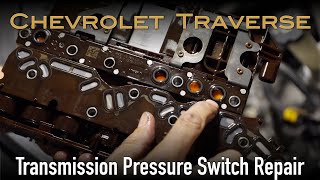
- Chevrolet/GMC Equinox, Traverse, Acadia (6T70/6T75 Transmission) (2008-2017) — P2813 is commonly associated with a broken 3-5-R wave plate. The plate breaks, sending metal debris that destroys the solenoids.
- Subaru Outback, Forester, Crosstrek (TR580/TR690 CVT) (2015-2022) — Less common as a standalone code. Subaru TSBs recommend checking for software updates or addressing torque converter issues before replacing the valve body.
- Mitsubishi Outlander, Lancer (2008-2016) — Uses a Jatco CVT similar to Nissan and suffers from identical valve body and solenoid failures.
- Honda Accord, CR-V (CVT) (2014-2020) — Honda diagnostics use specific codes like P281D (low voltage) or P281E (high voltage) for this solenoid family, pointing directly to electrical faults.
Manufacturer-Specific Notes
- Nissan: For 2013+ CVT models, P2813 is a near-certain condemnation of the valve body. TSB NTB16-110P directs technicians to replace the valve body assembly and check for metal debris. Nissan extended the CVT warranty on many models to 84 months/84,000 miles. Always check VIN eligibility before paying.
- Ford: In 6F35 transmissions, P2813 is rarely a full valve body issue. It traces to a single faulty solenoid or a cracked internal lead frame housing the connections. Diagnosis must isolate the specific solenoid circuit before condemning larger components.
- General Motors (GM): On 6T70/6T75 platforms, P2813 is an early warning of 3-5-R wave plate failure. The plate disintegrates, sending metal through the valve body. Slipping in 3rd or 5th gear alongside P2813 confirms this catastrophic issue.
- Subaru: Subaru prioritizes software fixes. If P2813 appears, check for a TCM software update first. Subaru extended the CVT powertrain warranty to 10 years/100,000 miles for many 2010-2022 models, covering these failures.
Real Owner Stories
2016 Nissan Rogue at 70K miles with P2813 & P17F1
Vehicle entered 'limp mode' with low power. After parking, it would not shift into gear. The next day, it shifted but would not move.
What they tried:
- The owner suspected a failed CVT and prepared for a $5,000 replacement.
Outcome: This code combination is a classic sign of valve body failure. The repair was a complete valve body replacement costing $1,800, saving the transmission.
Lesson: On a Nissan CVT, P2813 paired with a judder code (P17F1) points to a failed valve body per TSBs. Do not clear codes; hardware replacement is necessary, but it may not require a full transmission.
2014 Nissan Pathfinder at 100K miles
Vehicle moved in Reverse but not Drive. After cooling overnight, it temporarily moved in Drive before failing again. Code P2813 was active.
What they tried:
- A mechanic quoted $6,000 for a new transmission.
Outcome: Faced with a repair near the vehicle's value, the owner sought a second opinion and discovered the valve body was the culprit, reducing the bill to $2,200.
Lesson: Always get a second opinion if quoted a full transmission replacement for P2813. Investigate if a valve body replacement is the correct fix per manufacturer TSBs.
General Misdiagnosis Story
A driver experienced harsh shifting and pulled a P2813 code.
What they tried:
- Assuming the solenoid was bad, they paid $450 to replace it without electrical testing.
Outcome: The code returned immediately. The actual problem was a corroded wire in the harness. The owner wasted money on an unnecessary part.
Lesson: Always inspect and test the full electrical circuit with a multimeter before replacing parts. A simple wire repair solves the problem for a fraction of the cost.
How to Prevent This Code From Triggering
- Change transmission fluid and filter regularly (Every 30,000-60,000 miles) — Clean fluid with proper viscosity is essential for hydraulic control. Degraded fluid causes solenoids to stick and passages to clog.
- Use exact manufacturer-specified transmission fluid (Every fluid change) — Modern CVTs require specific formulations (e.g., Nissan NS-3). Generic fluids damage seals and cause solenoid malfunction.
- Maintain the vehicle's cooling system (Coolant flush every 5 years) — Overheating breaks down transmission fluid and damages electronic solenoids. Keeping engine temps stable protects the transmission.
- Inspect wiring and connectors (During oil changes) — Checking the transmission harness connector for corrosion catches electrical issues before they trigger performance codes.
Frequently Asked Questions
Can I fix P2813 myself?
A DIY fix is only viable for external wiring repairs or fluid changes. Replacing an internal solenoid, valve body, or TCM requires advanced mechanical skills, specialized tools, and computer reprogramming. Stop DIY and consult a transmission specialist if the issue requires opening the transmission pan.
Will a transmission fluid change fix P2813?
It rarely fixes the root cause unless severely degraded fluid is making the solenoid stick. If the fluid is burnt or contains metal shavings, a fluid change will not reverse the internal mechanical damage.
What are common mistakes when diagnosing P2813?
The biggest mistake is replacing the solenoid without testing the electrical circuit, as corroded wiring is a frequent culprit. Conversely, on Nissan CVTs, technicians mistakenly replace just the solenoid when TSBs mandate a complete valve body replacement. Always follow manufacturer-specific diagnostic flowcharts.
Can a weak battery or bad alternator cause a P2813 code?
Yes. The transmission control system requires a stable voltage supply to operate solenoids accurately. A failing battery or alternator causes voltage drops, leading to erratic solenoid operation that triggers performance codes.
What do metal shavings in the transmission pan mean with a P2813 code?
Significant metal shavings or flakes indicate catastrophic internal failure of gears, clutches, or CVT belts. Replacing the valve body or solenoid will not fix this. The vehicle requires a complete transmission rebuild or replacement.
My car has P2813 but seems to shift fine. What should I do?
Do not ignore it. The TCM detected a pressure anomaly that will worsen over time. Have the vehicle diagnosed promptly to catch the electrical or hydraulic issue before it destroys internal clutch packs.
What does the 'G' in Pressure Control Solenoid 'G' mean?
Automatic transmissions use a bank of solenoids to control various hydraulic circuits. Manufacturers designate them with letters (A, B, C, G) to identify their specific location and function within the valve body.
Key Takeaways
- OBD-II code P2813 indicates a critical performance failure in Pressure Control Solenoid 'G', causing harsh shifts, delayed engagement, and transmission slipping.
- On 2013-2020 Nissan vehicles with CVTs, P2813 almost always requires a complete $1,200-$2,800 valve body replacement covered by TSB NTB16-110P.
- Before replacing expensive internal parts, test the solenoid 'G' circuit resistance (e.g., 2.4-3.4 Ω on Nissan) and inspect the main transmission harness for corrosion.
- Driving with an active P2813 code accelerates internal clutch wear, turning a $1,200 valve body repair into a $4,000+ full transmission replacement within months.
Helpful Videos

Shop the Parts Behind P2813
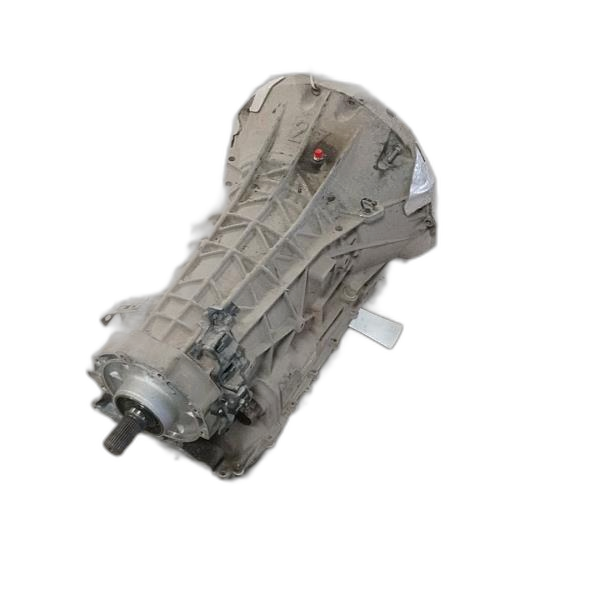
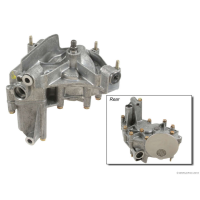
Below are the parts most often responsible for code P2813, ranked by how frequently each one is the actual culprit (per the diagnosis above). Tap any to see what we have for your vehicle.




The information in this article is provided for general reference and educational purposes only. Vehicle specifications, procedures, and part compatibility can vary by production date, trim level, and region. Always consult your vehicle's factory service manual and verify part numbers before purchasing or performing repairs. Safety-critical components such as airbags, seat belts, and braking systems should be installed by a qualified professional.
- 🧭 Diagnostic Flowchart
- 🎬 Helpful Videos
- 🛍️ Shop This Part
- What Does P2813 Mean?
- Can I Drive With P2813?
- Common Causes
- Symptoms
- Common Fixes & Costs
- DIY vs Professional
- Used vs. New Parts: Buying Guide
- What Happens If You Wait — Timeline
- Cost of Not Fixing It
- Diagnosis Steps
- When This Code Triggers (Freeze-Frame Conditions)
- Related Codes
- Climate & Environmental Factors
- How to Talk to a Mechanic About This Code
- Where to Take It: Dealer vs Independent vs Chain
- When to Walk Away From the Repair
- What Scan Tool You Need for This Code
- How to Clear the Code After You Fix It
- Will This Fail Emissions / State Inspection?
- Most Commonly Affected Vehicles
- Manufacturer-Specific Notes
- Real Owner Stories
- 2016 Nissan Rogue at 70K miles with P2813 & P17F1
- 2014 Nissan Pathfinder at 100K miles
- General Misdiagnosis Story
- How to Prevent This Code From Triggering
- Frequently Asked Questions
- Can I fix P2813 myself?
- Will a transmission fluid change fix P2813?
- What are common mistakes when diagnosing P2813?
- Can a weak battery or bad alternator cause a P2813 code?
- What do metal shavings in the transmission pan mean with a P2813 code?
- My car has P2813 but seems to shift fine. What should I do?
- What does the 'G' in Pressure Control Solenoid 'G' mean?
- Key Takeaways
- 🎟️ Get 5% Off