

OBD-II Code P2814: Pressure Control Solenoid 'G' Control Circuit Low
What P2814 means, why it triggers, and how to fix it
- Code P2814 indicates a low voltage fault in the 'G' pressure control solenoid circuit, directly causing harsh shifts and delayed gear engagement.
- Driving with this code active risks catastrophic transmission failure; stop driving immediately if the vehicle enters limp mode or locks into 2nd gear.
- On 2019-2021 GM 10-speed trucks, a faulty valve body is the primary culprit, requiring a $2,000+ replacement guided by TSB #PIP5799.
- Always test the solenoid's electrical resistance (typically 4-8 Ohms) and verify battery voltage at the connector before replacing internal transmission parts.
What Does P2814 Mean?
P2814 means the Transmission Control Module (TCM) detects low voltage in the 'G' pressure control solenoid circuit. This solenoid regulates hydraulic fluid flow to ensure smooth gear shifts. When voltage drops below the specified range, the solenoid fails to manage pressure correctly, causing erratic shifting and triggering the Check Engine Light.
Technical definition: Pressure Control Solenoid 'G' Control Circuit Low. The Transmission Control Module (TCM) registers that voltage in the 'G' solenoid control circuit is below the expected threshold. This indicates an electrical fault, such as a short to ground, excessive wiring resistance, or a failed solenoid coil.
Can I Drive With P2814?
Yes, But With Caution. You can drive, but do not exceed 10-15 miles. Harsh shifting and slipping put extreme stress on internal clutch packs and bands. Continuing to drive quickly escalates a $1,500 valve body repair into a $5,000+ full transmission rebuild. The risk of being stranded is high if the transmission enters limp mode.
Common Causes
- Faulty Transmission Valve Body (Very Common) — This is the primary cause on 2019-2021 GM 10-speed vehicles. Internal wear in the valve body bores prevents solenoids from controlling pressure, even if the solenoid is electrically sound. GM TSB #PIP5799 mandates a full valve body replacement for this code.
- Damaged Wiring or Corroded Grounds (Common) — The transmission wiring harness faces extreme heat and vibration. A frayed wire, loose connector pin, or corroded chassis ground strap (like GM frame grounds G110/G114) creates high resistance, causing the low voltage condition that triggers P2814.
- Low or Contaminated Transmission Fluid (Common) — Burnt fluid or low fluid levels starve the transmission of hydraulic pressure. Metallic debris in dirty fluid clogs the intricate channels within the valve body, mechanically sticking the solenoid and mimicking an electrical failure.
- Failed Pressure Control Solenoid 'G' (Less Common) — The solenoid itself fails electrically (an internal short) or mechanically (a stuck valve). While possible, it is frequently a symptom of a larger valve body failure rather than an isolated root cause.
- Faulty Transmission Control Module (TCM) (Rare) — TCM hardware failure is rare. However, corrupted firmware causes false codes. A dealer software update (reflash) sometimes resolves the issue without replacing hard parts.
- Internal Transmission Pump Failure (Rare) — A failing pump drops overall line pressure. The system cannot compensate, leading to erratic solenoid performance and triggering P2814 alongside specific pump or pressure codes.
Symptoms
- Harsh, Abrupt, or 'Clunking' Shifts — Gear changes feel like a sudden jerk or bang, often resembling the feeling of being rear-ended.
- Delayed Gear Engagement — Shifting from Park into Drive or Reverse results in a noticeable 1-2 second lag before the gear engages.
- Transmission Slipping — Engine RPMs spike during acceleration, but vehicle speed does not increase proportionally, indicating a loss of power transfer.
- Vehicle Enters 'Limp Mode' — The transmission locks into a single gear (usually 2nd or 3rd) to prevent catastrophic internal damage, severely limiting speed.
- Check Engine Light On — The TCM detects the voltage fault and illuminates the dashboard warning light.
- Transmission Overheating (also visible on scanner) — Poor pressure control causes clutch friction and slipping, generating excessive heat and triggering a temperature warning.
Diagnostic Flowchart
Tap your situation to follow the diagnostic path that matches what you're seeing on this code.
Common Fixes & Costs
- Replace Transmission Valve Body Assembly — Parts: $900-$1600, Labor: $800-$1500, ~5.5 hr book time (Professional)
- Repair Damaged Wiring or Clean Connectors — Parts: $10-$50, Labor: $150-$400, ~2 hr book time (Intermediate)
- Replace Pressure Control Solenoid 'G' — Parts: $120-$200, Labor: $250-$500, ~3 hr book time (Professional)
- Replace Transmission Fluid and Filter — Parts: $50-$120, Labor: $80-$150, ~0.8 hr book time (DIY)
- Update or Reprogram Transmission Control Module (TCM) — Parts: $0, Labor: $100-$250, ~1 hr book time (Professional)
Used vs. New Parts: Buying Guide
When a used part is worth it: A used valve body from a low-mileage donor vehicle is a budget-friendly option for older cars where a new OEM part exceeds the vehicle's value.
Donor-vehicle mileage cap: roughly under 60000 miles for the part to have meaningful remaining life.
Donor quality checklist:
- Verify the donor vehicle's VIN to ensure it was not scrapped for transmission failure.
- Match the part number exactly; superseded parts require different TCM programming.
- Purchase from a salvage yard offering a 30-90 day warranty.
Decision logic:
- If Vehicle is under warranty or covered by a TSB (like GM 10-speeds) → Use new OEM parts exclusively to ensure coverage and proper function.
- If The part is known for high wear (like the GM 10L80 valve body) → Favor a new or remanufactured part; a used unit likely has identical wear.
- If Vehicle is over 150,000 miles and budget is the primary concern → A used part is a viable risk, but expect a significantly shorter lifespan.
Warranty tradeoff: Used parts offer a 30-90 day functional warranty that excludes labor costs. New aftermarket or remanufactured parts include a 1-3 year warranty.
Worst-case if a used part fails: $1500-$3000 if a used valve body fails, requiring you to pay for the expensive labor a second time.
What Happens If You Wait — Timeline
- 0-1 month: Check Engine Light illuminates. Intermittent harsh shifts or delayed engagement occur, especially when warm. (MPG impact: 0-5%% · Added cost: $0)
- 1-3 months: Shifting problems become severe. Slipping causes engine RPM flares, accelerating wear on clutch packs and generating metallic debris in the fluid. (MPG impact: 5-10%% · Added cost: $50-$150 in wasted fuel, plus initial internal clutch wear.)
- 3-6 months: Contaminated fluid clogs the filter and valve body passages. The transmission overheats under load, degrading seals. (MPG impact: 10-15%% · Added cost: $300-$800. The original issue has caused enough clutch wear to require a more involved repair beyond a simple valve body swap.)
- 6+ months: Catastrophic failure. Clutch packs burn out, leading to a no-drive condition. Debris destroys the transmission pump and torque converter. (MPG impact: 15-25%+% · Added cost: $3,500-$8,000+ for a complete transmission rebuild or replacement.)
Cost of Not Fixing It
- 0-1 month: Harsh shifting and slipping cause accelerated wear on clutch packs and bands. Fuel economy decreases by 5-10% due to inefficient shifting. (Added cost: Negligible financial cost, but irreversible internal wear begins.)
- 1-6 months: Severe clutch wear generates metallic debris, contaminating fluid and clogging valve body passages. The transmission begins overheating under load. (Added cost: $250-$500 for fluid flushes that fail to solve the escalating mechanical damage.)
- 6+ months: Catastrophic internal failure. Slipping clutches burn out completely, destroying the torque converter and transmission pump. The vehicle becomes undrivable. (Added cost: $3,500-$8,000+ for a complete transmission rebuild or replacement.)
Diagnosis Steps
- Verify Code and Check Fluid
Confirm P2814 is active and note any accompanying codes. Check the transmission fluid level and condition. Fluid must be pinkish-red and smell sweet. Dark, burnt, or metallic fluid requires immediate attention.
Tools: OBD-II Scanner, Rag, Dipstick (if equipped) (Beginner) - Check for TSBs and Software Updates
Search Technical Service Bulletins (TSBs) for your VIN. Manufacturers frequently release TCM software updates to resolve false codes. Perform any available updates before replacing hardware.
Tools: Professional Scan Tool, TSB Database Access (Intermediate) - Inspect External Wiring and Grounds
Visually inspect the transmission wiring harness for chafed wires, melted plastic, or corroded pins. Ensure the main TCM connector is fully seated and locked (crucial for GM TSB #19-NA-228). Clean and tighten main engine and chassis ground straps.
Tools: Flashlight, Electrical Contact Cleaner, Wire Brush, Socket Set (Intermediate) - Monitor and Command Solenoid via Scan Tool [PRO TIP]
Use a bidirectional scan tool to monitor Transmission Fluid Temperature (TFT) and solenoid duty cycle. Command the 'G' solenoid on and off. If the scanner commands the solenoid and voltage changes accordingly, the wiring and TCM are good, isolating the fault to the valve body or solenoid mechanics.
Tools: Professional Bidirectional Scan Tool (Advanced) - Test Solenoid Circuit (Voltage & Resistance) [PRO TIP]
Access the solenoid connector. With ignition ON, test the power feed wire; it must read battery voltage (12V ± 0.5V). Readings below 9V confirm a wiring fault. Next, measure resistance across the disconnected solenoid pins. GM 10-speeds expect ~5.4 Ohms; others range from 4-8 Ohms. Infinite resistance means an open circuit; zero means a short.
Tools: Multimeter, Vehicle-Specific Wiring Diagram (Advanced) - Check Transmission Line Pressure [PRO TIP]
Attach a fluid pressure gauge to the line pressure test port. At idle in Drive, pressure typically reads 55-70 PSI. At wide-open throttle (stall test), it rises to 170-190 PSI. Low base pressure indicates a failing pump or major internal leak, not just a solenoid fault.
Tools: Transmission Pressure Gauge Kit, Service Manual (Advanced) - Analyze Solenoid Waveform [PRO TIP]
Use an oscilloscope to view the electrical signal sent to the solenoid. A healthy Pulse Width Modulated (PWM) signal shows a clean square wave. Distorted, clipped, or noisy waves indicate a failing TCM driver or a shorted solenoid coil drawing excessive current.
Tools: Oscilloscope, Service Manual (Professional)
When This Code Triggers (Freeze-Frame Conditions)
- Transmission Fluid Temp: 175-220°F (Code often sets when the transmission reaches full operating temperature.)
- Engine RPM: 1200-2500 RPM (Occurs during light to moderate acceleration or when shifting under load.)
- Vehicle Speed: 25-55 mph (Typically registers during upshifts or downshifts in city or highway driving.)
- Gear Commanded: 3rd, 4th, or 5th gear (The fault is registered during a specific shift event between gears.)
Related Codes
- P2815 — The direct counterpart: 'Pressure Control Solenoid G Control Circuit High'. P2814 indicates a short to ground (low voltage), while P2815 indicates a short to power.
- P2812 — Pressure Control Solenoid 'G' Control Circuit/Open. Seeing P2812 and P2814 together strongly suggests a systemic failure (valve body, TCM, or main harness) rather than an isolated solenoid issue.
- U0073 — Control Module Communication Bus 'A' Off. If present with P2814, fix U0073 first. A loose TCM connector or bad ground causes both the communication loss and the low voltage code.
- P0747 — Clutch Pressure Control Solenoid 'A' Stuck On. Appearing alongside P2814 on GM 10-speeds, this confirms widespread internal hydraulic failure requiring a new valve body. Covered under GM Special Coverage N242454441 for some models.
Climate & Environmental Factors
- Cold Weather: Extremely cold temperatures thicken transmission fluid, causing slower shifts on startup. This exacerbates borderline pressure regulation issues and triggers P2814, though it is not the root electrical cause.
- High Humidity / Water Intrusion: Driving through deep water or living in humid climates forces moisture into the main transmission harness plug. This corrosion directly causes the voltage drop that triggers a 'Circuit Low' code.
How to Talk to a Mechanic About This Code
Say this: "I have a P2814 code on my [Year, Make, Model] causing harsh shifts. I know this code links to wiring issues, but also to TSBs for valve body failure on my model. Please perform a full electrical diagnosis of the solenoid 'G' circuit and check for relevant TSBs before quoting major parts."
This signals you are an informed customer. It directs the shop to perform proper electrical diagnosis first, preventing them from immediately quoting a $5,000 transmission replacement. Mentioning TSBs ensures they follow manufacturer-recommended procedures.
Avoid saying:
- 'My transmission is acting weird, can you fix it?' (Invites expensive guesses)
- 'Just replace the solenoid.' (You might order the wrong, expensive repair)
- 'Do whatever you think is best.' (Opens the door to upsells)
Questions to ask before authorizing the repair:
- What were the exact voltage and resistance readings on the solenoid circuit?
- Did you find any Technical Service Bulletins (TSBs) for this code on my vehicle?
- If recommending a valve body, how did you rule out a wiring or ground issue?
- Does your shop rebuild transmissions in-house or send them out?
- What is the warranty on parts and labor for this specific repair?
Where to Take It: Dealer vs Independent vs Chain
- Dealer:
Best for: Vehicles under warranty or covered by special policies (e.g., GM 10-speeds)., Complex jobs requiring manufacturer-specific software for TCM programming (Nissan, BMW)., Diagnosing issues clearly covered by a known TSB.
Downsides: Highest labor rates, often 50-100% more than independent shops., Defaults to replacing large assemblies rather than repairing smaller components. (Typical cost: +75% vs. baseline) - Independent Shop:
Recommended, provided you use a dedicated transmission specialist. A general mechanic lacks the tools and experience for internal valve body replacement and TCM programming.
Best for: Out-of-warranty vehicles where cost is a major factor., Finding a transmission specialist who offers rebuild options rather than just replacement., Vehicles where the problem is a common electrical or wiring fault.
Downsides: Quality varies widely; general mechanics lack transmission expertise., May lack access to the latest manufacturer programming tools. (Typical cost: +0% vs. baseline) - Chain Shop:
AVOID. The risk of misdiagnosis and improper repair is extremely high for an internal electronic transmission code like P2814.
Best for: Simple fluid and filter changes., Basic external maintenance.
Downsides: Technicians are not transmission specialists and frequently misdiagnose internal faults., Lack specialized tools for valve body replacement or programming., High pressure to upsell transmission flushes, which do not fix this code. (Typical cost: -10% vs. baseline)
When to Walk Away From the Repair
If the estimated repair cost exceeds 50% of the car's current private-party value, seriously consider selling or trading in the vehicle.
- Car worth $8000, fix is $3500: Borderline. The repair is 44% of the car's value. Get a second opinion and weigh the vehicle's overall condition before proceeding.
- Car worth $25000, fix is $3800: Fix it. The repair cost is 15% of the vehicle's value, a sound investment if the vehicle is otherwise reliable.
- Car worth $5000, fix is $3000: Walk away. The repair cost is 60% of the car's value. Do not invest this much into an older, low-value vehicle.
What Scan Tool You Need for This Code
Minimum: A scanner that reads manufacturer-specific transmission codes and views live data streams like Transmission Fluid Temperature (TFT) and solenoid commanded states.
A basic $20 code reader only displays the P2814 code. It cannot show live data or perform the active tests required to confirm if the TCM is commanding the solenoid.
Budget: Foxwell NT301 / Ancel BD310 (~$70) — Reads and clears transmission codes. Displays basic live data streams to confirm fluid temperature.
Mid-range: BlueDriver Pro / Innova 5610 (~$120-350) — Offers full transmission diagnostics, live data graphing, and crucial bidirectional controls. Commanding the 'G' solenoid on/off determines if the fault is in the wiring or the solenoid itself.
Professional: Autel MaxiCOM MK808S / Launch X431 (~$500-1200) — Provides OE-level diagnostics, full bidirectional control, and special functions like TCM relearn procedures required after a valve body replacement.
Rent vs buy: For a one-time diagnosis, rent a tool from an auto parts store. If you perform regular DIY maintenance, a mid-range bidirectional scanner is a mandatory investment.
How to Clear the Code After You Fix It
- Use an OBD-II scan tool to clear the diagnostic trouble codes (DTCs).
- Perform a complete OBD-II drive cycle to allow the vehicle's readiness monitors to run.
- Perform any required TCM relearn procedures using a bidirectional scan tool.
Drive cycle (~20 minutes): A generic drive cycle includes a cold start, 3 minutes of idling, mixed stop-and-go city driving, and 10 minutes of steady highway speed (55 mph) before coming to a stop.
Readiness monitors affected: Comprehensive Component Monitor, Catalyst Monitor, Oxygen Sensor Monitor
Before emissions retest: drive at least 100 miles to fully set monitors.
Watch out for:
- Clearing the code without performing a drive cycle results in a 'Not Ready' status, causing an automatic emissions inspection failure.
- The code returns immediately if the root cause of the low voltage condition (like a bad ground) is ignored.
Will This Fail Emissions / State Inspection?
Yes — this code typically fails an OBD-II emissions inspection.
- California: An illuminated Check Engine Light triggers an automatic Smog Check failure. A complete drive cycle must set all readiness monitors before a retest.
- New York: Active Check Engine Lights fail the emissions inspection. Clearing the code right before the test fails the vehicle for 'Not Ready' monitors.
- Texas: An illuminated MIL is an automatic failure. For 2001+ vehicles, only one readiness monitor is allowed to be 'Not Ready' to pass.
Most Commonly Affected Vehicles
- GMC Sierra 1500 (2019-2021) — Highly prone to this code due to internal valve body failures in the 10L80 10-speed transmission, documented in GM TSB #PIP5799.
- Chevrolet Silverado 1500 (2019-2021) — Shares the 10L80 transmission and valve body issues with the GMC Sierra, requiring full valve body replacement per TSB #PIP5799.
- Nissan Pathfinder (2013-2014) — Subject to Voluntary Service Campaign #PC500. Replacing the valve body requires special programming from a supplied CD to prevent further shifting failures.
- Ford F-150, Mustang (10R80 Transmission) (2017-2023) — Co-developed with GM, Ford's 10-speed experiences similar valve body and solenoid issues. Diagnosis often isolates the fault to a frayed wire or failed solenoid.
- Hyundai Sonata, Tucson (DCT) (2015-2019) — On Dual-Clutch Transmissions (DCT), P2814 diagnosis involves checking for TCM software updates known to fix shifting irregularities before replacing hard parts.
- Subaru Outback, Forester (CVT) (2014-2020) — Diagnosis starts with checking fluid condition and the external valve body wiring harness for corrosion before suspecting internal CVT failure.
- BMW X5, X7, 5 Series (2024) — A delivery stop was issued for early 2024 models due to improperly torqued bolts on the mechatronics unit (valve body/TCM assembly), causing P2814 and transmission malfunction.
Manufacturer-Specific Notes
- General Motors (GM): TSB #PIP5799 explicitly advises that if P2814 is present on 2019-2021 10-speeds and wiring checks pass, replace the entire valve body assembly, not just the individual solenoid.
- General Motors (GM): TSB #19-NA-228 notes a main TCM connector that is not fully seated causes P2814. Ensure the connector is secure and locked before ordering parts.
- Nissan: Replacing the valve body on 2013-2014 CVT models requires programming the TCM using a characterization CD specific to the new part. Skipping this causes immediate shifting failures.
- BMW: The valve body and TCM are a single, VIN-coded assembly called the 'Mechatronics' unit. Improperly torqued factory bolts on 2024 models trigger this code.
Real Owner Stories
2019 Chevy Silverado 1500 (10L80) at 75K miles
Check Engine Light illuminated with harsh 1-2 shifts and a 'clunk' when shifting into Drive. Symptoms worsened when warm.
What they tried:
- A local shop performed a fluid change. The code returned in 50 miles.
- The shop quoted $700 to replace the 'G' solenoid.
- The owner researched and found GM TSB #PIP5799.
Outcome: The owner took the truck to a GM dealer. Following the TSB, the dealer diagnosed a failed valve body and replaced the entire assembly for $3,200. The issue was permanently resolved.
Lesson: On 2019+ GM 10-speeds, P2814 strongly indicates valve body failure. Replacing just the solenoid wastes money, as GM mandates full valve body replacement.
2014 Nissan Pathfinder at 110K miles
Vehicle entered limp mode on the highway. Scanner showed P2814. The owner experienced severely delayed engagement from Park to Drive.
What they tried:
- Checked fluid level (full but dark).
- Inspected external wiring (no damage found).
Outcome: A transmission specialist replaced the failed CVT valve body with a remanufactured unit and performed the required TCM reprogramming using the characterization CD. The $1,900 repair restored normal shifting.
Lesson: Nissan CVT valve body replacement requires specialized TCM programming. Ensure your independent shop possesses the equipment and characterization data to avoid post-repair failures.
2017 Ford F-150 (10R80) at 95K miles
Intermittent harsh downshifts and a P2814 code that appeared and disappeared randomly.
What they tried:
- Cleaned the main transmission harness connector with electrical cleaner.
- Dropped the transmission pan to inspect internal wiring.
Outcome: The owner found brittle insulation on a wire leading to the 'G' solenoid, causing an intermittent short to ground against the casing. They spliced the wire and applied heat shrink tubing for under $20. The code never returned.
Lesson: Do not assume the most expensive part failed. A thorough visual inspection of the wiring harness is a critical, low-cost diagnostic step that often reveals simple electrical faults.
How to Prevent This Code From Triggering
- Perform regular transmission fluid and filter changes. (Every 45,000-60,000 miles.) — Clean fluid prevents abrasive particles from wearing out valve body bores and clogging solenoid passages. Ignore 'lifetime fluid' claims if you want the transmission to last.
- Install an auxiliary transmission cooler. (One-time installation for towing or hot climates.) — Heat destroys automatic transmissions. An external cooler keeps fluid in the optimal 175-200°F range, preventing fluid breakdown and solenoid degradation.
- Check and clean vehicle ground connections. (Every 30,000 miles or during battery service.) — The TCM relies on a solid ground path. Corrosion on chassis grounds increases resistance, causing voltage drops that trigger P2814.
Frequently Asked Questions
What is the most common misdiagnosis for P2814?
The most costly mistake is replacing only the 'G' solenoid when the fault lies within the transmission valve body. On modern transmissions like the GM 10-speed, the solenoid functions correctly but fails due to internal wear in the valve body housing. Always follow manufacturer TSBs, which usually mandate full valve body replacement.
Can a bad battery cause a P2814 code?
Yes. A weak battery or failing alternator drops system voltage across the entire vehicle. This low power causes the TCM to register a low voltage condition on the solenoid circuit, triggering P2814.
What exactly does a pressure control solenoid do?
It is an electronically controlled valve that acts like a precise faucet for hydraulic fluid. The TCM sends it an electrical signal to open or close, directing high-pressure fluid to engage the clutches that change your gears.
Can I just replace the single 'G' solenoid instead of the whole valve body?
While technically possible, it rarely provides a lasting fix on modern transmissions. The failure usually stems from wear inside the valve body itself, meaning a new solenoid still cannot function correctly in a worn housing.
Will a simple transmission fluid change fix a P2814 code?
No, a fluid change alone will not fix a hard electrical or mechanical fault. However, it is a mandatory first step if the fluid is burnt or full of metallic debris, as contaminated fluid mechanically jams the solenoid.
Is it safe to keep driving with code P2814?
No. Harsh shifting and slipping put extreme stress on internal components. Continued driving turns a localized valve body repair into a catastrophic failure requiring a full transmission rebuild.
What is the difference between P2814 and P2815?
Both refer to Pressure Control Solenoid 'G' but indicate opposite electrical faults. P2814 is 'Circuit Low' (a short to ground or high resistance), while P2815 is 'Circuit High' (a short to power).
Key Takeaways
- Code P2814 indicates a low voltage fault in the 'G' pressure control solenoid circuit, directly causing harsh shifts and delayed gear engagement.
- Driving with this code active risks catastrophic transmission failure; stop driving immediately if the vehicle enters limp mode or locks into 2nd gear.
- On 2019-2021 GM 10-speed trucks, a faulty valve body is the primary culprit, requiring a $2,000+ replacement guided by TSB #PIP5799.
- Always test the solenoid's electrical resistance (typically 4-8 Ohms) and verify battery voltage at the connector before replacing internal transmission parts.
Shop the Parts Behind P2814
Below are the parts most often responsible for code P2814, ranked by how frequently each one is the actual culprit (per the diagnosis above). Tap any to see what we have for your vehicle.


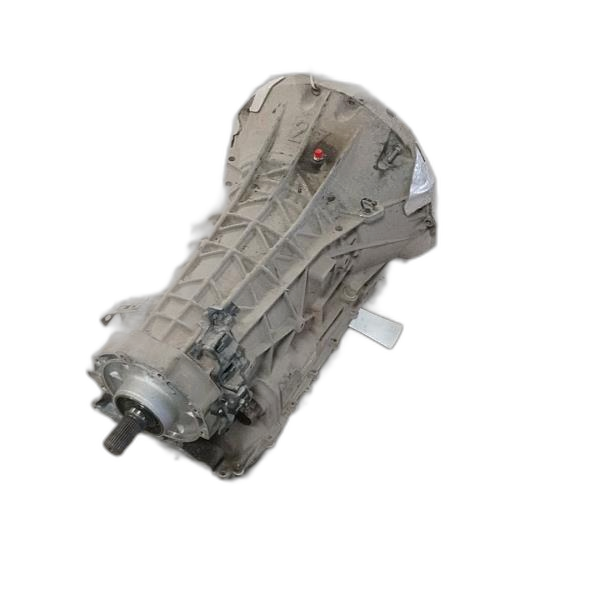

The information in this article is provided for general reference and educational purposes only. Vehicle specifications, procedures, and part compatibility can vary by production date, trim level, and region. Always consult your vehicle's factory service manual and verify part numbers before purchasing or performing repairs. Safety-critical components such as airbags, seat belts, and braking systems should be installed by a qualified professional.
- 🧭 Diagnostic Flowchart
- 🛍️ Shop This Part
- What Does P2814 Mean?
- Can I Drive With P2814?
- Common Causes
- Symptoms
- Common Fixes & Costs
- Used vs. New Parts: Buying Guide
- What Happens If You Wait — Timeline
- Cost of Not Fixing It
- Diagnosis Steps
- When This Code Triggers (Freeze-Frame Conditions)
- Related Codes
- Climate & Environmental Factors
- How to Talk to a Mechanic About This Code
- Where to Take It: Dealer vs Independent vs Chain
- When to Walk Away From the Repair
- What Scan Tool You Need for This Code
- How to Clear the Code After You Fix It
- Will This Fail Emissions / State Inspection?
- Most Commonly Affected Vehicles
- Manufacturer-Specific Notes
- Real Owner Stories
- 2019 Chevy Silverado 1500 (10L80) at 75K miles
- 2014 Nissan Pathfinder at 110K miles
- 2017 Ford F-150 (10R80) at 95K miles
- How to Prevent This Code From Triggering
- Frequently Asked Questions
- What is the most common misdiagnosis for P2814?
- Can a bad battery cause a P2814 code?
- What exactly does a pressure control solenoid do?
- Can I just replace the single 'G' solenoid instead of the whole valve body?
- Will a simple transmission fluid change fix a P2814 code?
- Is it safe to keep driving with code P2814?
- What is the difference between P2814 and P2815?
- Key Takeaways
- 🎟️ Get 5% Off