

OBD-II Code P2818: Pressure Control Solenoid 'H' Stuck On
The Ultimate Guide to P2818: Meaning, Pro-Level Diagnosis, and Fixes
- Code P2818 indicates the 'H' pressure control solenoid is stuck open, forcing maximum hydraulic pressure and causing violent, slamming gear shifts.
- Dirty transmission fluid and failed solenoids cause 80% of P2818 codes, though 2015-2022 GM and Honda models frequently require a simple TCM software update.
- Driving with a P2818 code burns internal transmission clutches within 1 to 3 months, escalating a $300 repair into a $4,000 complete rebuild.
- Always check your vehicle's VIN for Technical Service Bulletins (TSBs) and extended warranties before replacing parts, as Nissan and Honda offer free 7-year/84,000-mile CVT replacements for this exact failure.
- If your scanner shows P2818 alongside other solenoid codes like P0777, the root cause is a systemic electrical failure or low fluid, not multiple simultaneously broken solenoids.
What Does P2818 Mean?
Your car's Transmission Control Module (TCM) has detected that the 'H' pressure control solenoid is stuck in the 'on' position. This electromechanical valve precisely manages the flow and pressure of transmission fluid to enable smooth gear shifts. When stuck on, it causes excessive hydraulic pressure, leading to violent shifting, getting stuck in gear, and severe internal transmission damage.
Technical definition: The official SAE/OBD-II definition is 'Pressure Control Solenoid 'H' Stuck On'. This indicates the Transmission Control Module (TCM) detects the pressure control solenoid 'H' remains energized electrically or mechanically stuck open, preventing it from closing as commanded.
Can I Drive With P2818?
Yes, But With Caution. You can drive, but it is highly destructive to your vehicle. The transmission shifts harshly, locks into a low gear (limp mode), or slips. Continuing to drive rapidly escalates a minor solenoid issue into catastrophic transmission failure by overheating fluid and burning internal clutches. This turns a $400 repair into a $4,000+ transmission replacement. Maximum speed is limited to around 30 mph in limp mode.
Common Causes
- Low, dirty, or contaminated transmission fluid (Very Common) — Old fluid becomes abrasive and causes the solenoid's small mechanical parts to stick. Debris from internal clutch wear physically jams the solenoid valve, preventing it from closing.
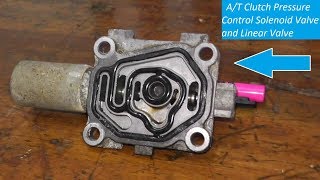
- Failed Pressure Control Solenoid 'H' (Common) — The solenoid itself fails electrically (internal short/open circuit) or mechanically (internal plunger or spring breaks), causing it to lock in the open position.
- Faulty Transmission Control Module (TCM) or software (Common) — The TCM is the transmission's brain. A software glitch or an internal driver failure forces the TCM to send a continuous voltage signal to the solenoid, keeping it on. A manufacturer software update often fixes this.
- Transmission valve body failure (Less Common) — The solenoid is housed within the valve body. If the hydraulic passages become clogged with sludge, it traps fluid pressure and prevents the solenoid from operating correctly, even if the solenoid itself is functional.
- Wiring or connector issues (Less Common) — A short circuit in the wiring harness connecting the TCM to the solenoid provides constant power, forcing the solenoid to stay on. Corrosion on the connector pins also causes this electrical fault.
- Incorrect transmission fluid type (Less Common) — Using non-OEM fluid alters the viscosity and friction characteristics, causing solenoids to stick or improperly regulate hydraulic pressure as temperatures change.
- Weak battery or charging system issues (Rare) — Low or unstable system voltage from a failing alternator or a poor ground connection causes unpredictable behavior in the TCM, leading to erroneous solenoid commands.
- Failing transmission pump (Rare) — A failing transmission pump creates inconsistent fluid pressure and sends metallic debris through the system, jamming the solenoid.
Symptoms
- Check Engine Light or Transmission Warning Light is on — The vehicle's computer system illuminates a warning light on the dashboard to alert the driver of the fault.
- Harsh, erratic, or slamming shifts — With the solenoid stuck on, hydraulic pressure is too high, causing the transmission to violently slam into gear or hesitate before shifting.
- Vehicle enters 'limp mode' — The TCM forces the transmission to stay in a single gear (like 2nd or 3rd) to prevent further damage, resulting in poor acceleration and high engine RPMs at moderate speeds.
- Decreased fuel economy — When the transmission is stuck in a low gear or shifts inefficiently, the engine works harder, consuming significantly more fuel.
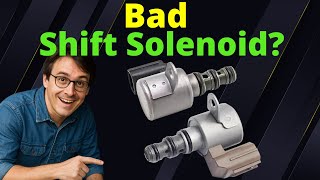
- Transmission slipping or overheating — Incorrect fluid pressure causes the internal clutches to slip, generating excessive heat and a distinct burning smell from the transmission fluid. 🎬 Watch: 11 signs your transmission shift solenoid is failing.
- Misfire-like symptoms or engine hesitation — Unexpected load changes from the malfunctioning transmission are misinterpreted by the engine control module, leading to a sensation of engine hesitation.
Diagnostic Flowchart
Tap your situation to follow the diagnostic path that matches what you're seeing on this code.
Common Fixes & Costs
- Transmission Fluid and Filter Change — Parts: $75-$200, Labor: $150-$250, ~1.5 hr book time (Intermediate)
- Reprogram or Update Transmission Control Module (TCM) — Parts: $0, Labor: $150-$250, ~1.0 hr book time (Professional)
- Replace Pressure Control Solenoid 'H'
— Parts: $50-$150, Labor: $300-$550, ~3.0 hr book time
(Advanced)
: OEM 28400-P6H-013, 28250-R97-004 (Alt: ATP HE-10, Standard Motor Products TCS247) - Replace Transmission Valve Body
— Parts: $500-$1000, Labor: $350-$600, ~4.5 hr book time
(Professional)
: OEM Varies by specific Jatco model (e.g., RE0F10A/JF011E) (Alt: Rostra, Sonnax) - Replace Transmission Control Module (TCM)
— Parts: $800-$1500, Labor: $200-$350, ~2.0 hr book time
(Professional)
: OEM Varies by model and year, programming required. (Alt: Flagship One (FS1), Cardone)
Used vs. New Parts: Buying Guide
When a used part is worth it: For a high-mileage vehicle (>150k miles) where the goal is just to keep it running for another 1-2 years, a used valve body or solenoid from a low-mileage, accident-damaged donor vehicle is a cost-effective choice.
Donor-vehicle mileage cap: roughly under 80000 miles for the part to have meaningful remaining life.
Donor quality checklist:
- Verify the donor vehicle was not scrapped due to transmission or engine failure.
- Match the part number exactly; visually identical parts have different internal calibrations.
- Ask for the donor vehicle's VIN to check for compatibility and relevant TSBs.
Decision logic:
- If The fix is a single, externally accessible solenoid on a vehicle with under 100k miles. → Buy a new OEM or high-quality aftermarket solenoid. The cost savings for used are minimal and not worth the risk.
- If The valve body needs replacement and the vehicle is a key asset. → Favor a new or remanufactured valve body. Used valve bodies carry a high risk of containing the same sludge that caused your original part to fail.
- If The vehicle is older, has high mileage, and you have a tight budget. → A used valve body from a reputable seller with a warranty is a reasonable gamble, but understand it has a shorter expected lifespan.
Warranty tradeoff: Used parts typically come with a 30-90 day warranty covering the part only, not labor. New aftermarket parts offer 1-year to limited lifetime warranties. Remanufactured valve bodies carry 1 to 3-year warranties.
Worst-case if a used part fails: $500-1200 if a used valve body or solenoid fails after installation, requiring you to pay for labor a second time plus another part.
What Happens If You Wait — Timeline
- 0-1 month: Check Engine Light is on. Intermittent harsh shifts occur, especially when cold or hot. Vehicle occasionally enters and exits limp mode. (MPG impact: 0-5%% · Added cost: $0-75 in wasted fuel.)
- 1-3 months: Harsh shifting becomes frequent and pronounced. Vehicle is consistently in limp mode, limiting speed to ~30-40 mph. Transmission fluid overheats, accelerating its breakdown. (MPG impact: 10-20%% · Added cost: $100-250 in wasted fuel and increased stress on engine/transmission mounts.)
- 3-6 months: Constant high pressure and overheated fluid cause internal clutch packs to slip and burn. A distinct burning smell is present. The fluid is dark and full of abrasive clutch material. (MPG impact: 15-25%% · Added cost: $2,000-$4,000 (The transmission now requires a rebuild due to burned clutches, in addition to fixing the original solenoid issue).)
- 6+ months: Catastrophic failure. The transmission refuses to engage any gear. Widespread contamination from debris destroys the valve body, torque converter, and hard parts. The vehicle is undriveable. (MPG impact: N/A (undriveable)% · Added cost: $4,000-$7,000+ (A complete transmission replacement is the only viable option).)
Cost of Not Fixing It
- 0-1 month: Consistently harsh shifting causes driver discomfort and increased wear on drivetrain components like engine and transmission mounts. Fuel economy drops by 5-15% due to inefficient shifting or limp mode. (Added cost: $50-$150 in wasted fuel.)
- 1-6 months: Constant high hydraulic pressure leads to accelerated wear and overheating of internal clutch packs. The transmission fluid degrades rapidly, losing its lubricating properties and causing clutch slippage. (Added cost: $2000-$4000 for a transmission rebuild if clutches are burned.)
- 6+ months: Catastrophic internal transmission failure occurs. Worn clutch material and metal debris contaminate the entire hydraulic system, destroying the valve body and torque converter. (Added cost: $3500-$7000+ for a complete transmission replacement.)
Diagnosis Steps
- Scan for All Trouble Codes
Use a professional-grade OBD-II scanner capable of reading transmission codes. Record P2818 and any other codes. Codes like P0700 indicate a general transmission fault, while multiple solenoid codes (e.g., P0777, P2714) point to a systemic issue like bad fluid or a failing TCM.
Tools: OBD-II Scanner (TCM capable) (Beginner) - Check Transmission Fluid Level and Condition
Ensure the engine is warm and the vehicle is on a level surface. The fluid must be bright red and not smell burnt. Dark, brown, or metallic-flecked fluid indicates severe contamination and internal wear, which is the primary cause of sticking solenoids.
Tools: Gloves, Rag (Beginner) - Check for Manufacturer Technical Service Bulletins (TSBs)
Manufacturers release TSBs for known issues. A known software glitch causes P2818, which is fixed with a TCM re-program instead of replacing parts. Search your vehicle's year, make, and model plus 'P2818 TSB' to save significant time and money.
Tools: Internet access or dealership inquiry (Beginner) - Analyze Live Scan Tool Data
[PRO TIP] Using a scanner with live data capabilities, monitor 'Commanded Gear' and 'Solenoid H Status'. If the scanner shows the TCM commanding Solenoid 'H' to be 'Off' but you experience harsh shifts, it strongly suggests the solenoid is mechanically stuck or the TCM driver has failed.
Tools: Advanced OBD-II Scanner with Live Data (Advanced) - Inspect Wiring and Connectors
Visually inspect the wiring harness going to the transmission main connector and the TCM. Look for frayed wires, melting near the exhaust, or corrosion on the connector pins. A short-to-power causes the solenoid to receive a constant 'on' signal.
Tools: Flashlight, Mirror (Intermediate) - Test the Solenoid Circuit for Constant Voltage
[PRO TIP] Disconnect the main transmission harness connector. With the ignition on (engine off), measure the voltage at the pin for the 'H' solenoid's power wire. It must read 0 volts when commanded 'off'. Reading battery voltage (12V) confirms a constant power supply is keeping the solenoid on, pointing to a faulty TCM or wiring short.
Tools: Multimeter, Vehicle-specific wiring diagram (Advanced) - Test the Solenoid's Internal Resistance
Remove the transmission pan to access the solenoid. Disconnect it and measure resistance with a multimeter. Most modern solenoids read between 5 and 30 ohms. A reading of infinity (OL) indicates an open circuit, while near zero indicates a short. Both require replacement.
Tools: Multimeter, Socket set, Vehicle service manual (Advanced) - Perform a Solenoid Activation 'Click' Test
[PRO TIP] Briefly apply a 12V power source and a ground to the exposed solenoid's terminals using fused jumper wires. You must hear a distinct 'click' as the internal plunger moves. No click indicates the solenoid is mechanically stuck.
Tools: 12V power source, Fused jumper wires (Advanced) - Analyze Solenoid Waveform with an Oscilloscope
[PRO TIP] Connect a lab scope to the solenoid's command wire. When commanded, you must see a clear square wave or PWM signal. A flat line at battery voltage means the TCM driver is shorted on. A correct signal with persistent symptoms confirms a mechanically stuck solenoid.
Tools: Oscilloscope, Back-probe pins (Professional) - Perform Manufacturer-Specific Diagnostic Procedures
Follow specific OEM test plans. For example, GM requires a specific drive cycle within a narrow temperature range (0°C-40°C) for their 8L90 transmission. Failing this specific test dictates replacing the entire transmission.
Tools: Professional scan tool, Service information (Professional)
When This Code Triggers (Freeze-Frame Conditions)
- Transmission Fluid Temperature: 170-220°F (The fault often sets when the transmission reaches full operating temperature, as fluid viscosity thins and mechanical parts expand.)
- Engine RPM: 1500-3000 RPM (The code frequently triggers during or immediately after a gear shift command under moderate acceleration.)
- Vehicle Speed: 25-55 mph (Occurs during city or highway driving when the transmission actively shifts gears.)
- Commanded Gear: Shows a specific gear (e.g., 3rd) (Captures the exact moment the TCM commanded a shift that failed to occur due to the stuck solenoid.)
Related Codes
- P0700 — This is a general transmission fault code. The TCM sets P0700 to tell the main engine computer (ECM) that a transmission-specific code, like P2818, has been stored. You MUST scan the TCM to find the specific cause.
- P2817 — This code means 'Pressure Control Solenoid 'H' Performance/Stuck Off'. It is the direct opposite of P2818. While P2818 indicates excessive hydraulic pressure, P2817 indicates insufficient pressure.
- P0777 — This code is for 'Pressure Control Solenoid 'B' Stuck On'. It is functionally identical to P2818 but points to a different solenoid. Multiple solenoid 'stuck on' codes indicate a systemic issue like contaminated fluid or a failing TCM.
- P2819 — This code is for 'Pressure Control Solenoid 'H' Electrical'. It indicates a specific electrical fault in the solenoid's circuit, such as an open or short. P2818 is the mechanical result, while P2819 points directly to the electrical cause.
- P281A — This code means 'Pressure Control Solenoid 'H' Intermittent'. It sets when the TCM detects an erratic fault in the circuit. This indicates a loose connection or a solenoid in the initial stages of failing.
Climate & Environmental Factors
- Extreme Cold: Transmission fluid viscosity increases significantly in cold weather. Old fluid causes delayed solenoid movement and harsh engagements until the transmission warms up.
- Extreme Heat: High ambient temperatures or heavy towing increase transmission fluid temperature above 220°F. This accelerates fluid degradation, breaks down lubricating properties, and leads to solenoid sticking.
- High Humidity / Water Exposure: High humidity accelerates corrosion on external wiring harness connectors. Moisture penetrating a connector causes a short-to-power, leading to a 'stuck on' fault.
How to Talk to a Mechanic About This Code
Say this: "I'm getting a P2818 transmission code and experiencing harsh shifting. I'd like to schedule a diagnostic. Please start by checking for TSBs, inspecting the fluid condition and level, and checking the wiring harness before recommending a solenoid or valve body replacement."
This signals you are an informed consumer. It directs the shop to perform a complete diagnosis rather than jumping to the most expensive conclusion, potentially saving you from an unnecessary major repair.
Avoid saying:
- 'My transmission is acting weird.'
- 'Just fix whatever is wrong with it.'
- 'My check engine light is on, can you look at it?'
Questions to ask before authorizing the repair:
- What was the result of the fluid, wiring, and TSB checks?
- What specific tests did you perform to confirm the solenoid or valve body is the root cause, rather than the TCM or wiring?
- Is a full rebuild or replacement necessary, or can a smaller component be repaired?
- Will I get a written, itemized estimate before work begins?
- What is the warranty on the parts and labor, and is it honored nationwide?
Where to Take It: Dealer vs Independent vs Chain
- Dealer:
Recommended if the issue is a known TSB or the vehicle is under warranty. Otherwise, a specialist is more cost-effective.
Best for: Vehicles under warranty., Vehicles with known TSBs that require proprietary software updates (common with GM, Honda).
Downsides: Typically highest labor rates., Defaults to replacing larger, more expensive assemblies (e.g., entire valve body) rather than individual components. (Typical cost: +40% vs. baseline) - Independent Shop:
Best fit for most out-of-warranty vehicles, especially if you find a well-regarded transmission specialist.
Best for: Out-of-warranty vehicles., Accessing a transmission specialist who has deep experience with these specific failures., Cost-effective diagnosis and repair.
Downsides: Quality and expertise vary widely; vetting is crucial., Lacks access to the very latest manufacturer software updates. (Typical cost: +0% vs. baseline) - Chain Shop:
High Risk. Avoid for diagnosing a P2818 code. Their business model is not aligned with nuanced, electronic-mechanical diagnostics.
Best for: Simple fluid changes on transmissions without known issues.
Downsides: Technician skill and diagnostic capability are inconsistent., High potential for upselling a full transmission rebuild when a smaller repair is needed., Outsources complex jobs to other shops while adding a markup. (Typical cost: -10% vs. baseline)
When to Walk Away From the Repair
If the estimated repair cost exceeds 50% of the car's current private-party value (e.g., from Kelley Blue Book), you should strongly consider selling or trading in the vehicle instead of repairing it.
- Car worth $15000, fix is $1800: Fix it. The repair cost is only 12% of the vehicle's value, well below the threshold.
- Car worth $5000, fix is $2200: Borderline. The cost is 44% of the car's value. Get a second opinion before authorizing, and consider if other major repairs are looming.
- Car worth $3000, fix is $2500: Walk away. The repair cost is over 80% of the car's value. It is not economically sensible to proceed.
What Scan Tool You Need for This Code
Minimum: A scanner that reads manufacturer-specific transmission codes (TCM) and displays live transmission data, such as solenoid command status and fluid temperature.
A basic $20 scanner only shows the generic P-code and cannot access the transmission control module. It cannot show if the computer is commanding the solenoid on or off, which is essential for determining if the fault is electrical or mechanical.
Budget: BlueDriver Pro (~$100) — Reads and clears transmission-specific trouble codes on many makes/models. It displays some live data, but lacks access to enhanced OEM-specific parameters like solenoid command status on some vehicles.
Mid-range: Autel MaxiCOM MK808 / Foxwell NT510 Elite (~$350) — Provides full transmission system diagnostics, including reading/clearing codes, viewing live data streams for solenoid commands, and crucially, offers bi-directional control to perform an 'active test' (a 'click test') of the solenoid without removing it from the transmission.
Professional: Autel MaxiSys MS906 MAX / LAUNCH X431 Series (~$1200+) — Offers full OE-level diagnostics, including all bi-directional controls, advanced ECU coding and programming for TCM replacement, and built-in guided diagnostics to walk a technician through the test plan.
Rent vs buy: For a one-time code read, use a free rental scanner from a parts store like AutoZone. However, to properly diagnose P2818, which requires monitoring live data and running active tests, buying a mid-range scanner is a worthwhile investment for a serious DIYer.
How to Clear the Code After You Fix It
- Reconnect the battery if it was disconnected for the repair.
- Use an OBD-II scan tool to formally clear all diagnostic trouble codes from the ECM and TCM.
- Perform a complete drive cycle to allow the vehicle's readiness monitors to run and confirm the fix.
Drive cycle (~20 minutes): A generic drive cycle includes a cold start (engine off for 8+ hours), 2-3 minutes of idling, 10-15 minutes of mixed city/highway driving (including steady speeds around 40-55 mph), and several stop-and-go situations.
Readiness monitors affected: Comprehensive Component Monitor, Catalyst Monitor, Evaporative System Monitor
Before emissions retest: drive at least 50 miles to fully set monitors.
Watch out for:
- Disconnecting the battery clears the code but resets all readiness monitors to 'Not Ready', causing an automatic emissions test failure.
- The code returns quickly if the underlying mechanical or electrical fault was not properly repaired.
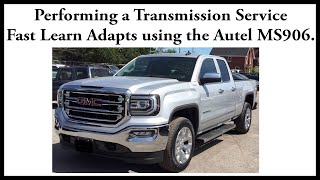
- GM models require a specific 'Transmission Service Fast Learn' procedure with a professional scan tool after the repair to relearn shift points.
Will This Fail Emissions / State Inspection?
Yes — this code typically fails an OBD-II emissions inspection.
- California: An active P2818 code causes an automatic failure of the smog check. All OBD-II readiness monitors must be set to 'Ready'; after repair, a full drive cycle is required before re-testing.
- New York: The NYS DMV inspection includes an OBD-II scan. An illuminated Check Engine Light and a stored P2818 code result in an immediate inspection failure.
- Texas: In the 17 counties requiring emissions testing, an active P2818 code is an automatic failure. After clearing the code, you can have at most one readiness monitor 'Not Ready' to pass.
Most Commonly Affected Vehicles
- Chevrolet Silverado, Camaro, Corvette, Blazer, Equinox (2015-2022) — Vehicles with the 8L90 (RPO M5U) and 9TXX 9-speed automatic transmissions have known issues with solenoids and the valve body. TSB 16-NA-019 addresses related harsh shift conditions.
- GMC Sierra, Yukon, Acadia, Terrain (2015-2022) — These models share the 8L90 and 9-speed transmissions with Chevrolet and are susceptible to the same solenoid and software-related issues. TSB 16-NA-019 applies.
- Cadillac Escalade, ATS, CTS (2015-2019) — Equipped with the GM 8L90 transmission, these vehicles experience P2818 due to known software or internal hydraulic control problems identified in GM service bulletins.
- Honda Civic, Accord, CR-V, HR-V (2016-2022) — Models equipped with a Continuously Variable Transmission (CVT) log this code, defined as 'Shift Solenoid Valve O/P Stuck On'. Honda has issued warranty extensions for some CVT components.
- Nissan Altima, Sentra, Rogue, Murano, Maxima (2013-2019) — Nissan vehicles with Jatco CVTs are prone to valve body and solenoid failures. These issues are subject to class-action lawsuit settlements that extend the transmission warranty.
- Ford Focus, Fiesta, Fusion, Escape (2012-2018) — Models with the DPS6 dual-clutch 'PowerShift' automatic log P2818 due to TCM faults or internal clutch fork actuator issues, which mimic solenoid problems.
- Hyundai Elantra, Sonata, Tucson (2011-2019) — This code appears on Hyundai models, pointing to an internal failure of the pressure control solenoid or a problem within the valve body requiring inspection.
- Volkswagen/Audi Jetta, Golf, A3, A4 (2010-2018) — On models with a DSG (Direct-Shift Gearbox), P2818 indicates a problem with the Mechatronics unit (the integrated TCM and valve body). Repair involves replacing the entire unit.
Manufacturer-Specific Notes
- General Motors (GM): On vehicles with the 8L45/8L90 transmission, TSB 16-NA-019 describes how low-mileage harsh shifts are corrected with a 'Transmission Service Fast Learn' procedure and specific driving cycles. This resolves P2818-like symptoms with software before parts replacement.
- Honda: In Honda CVTs, P2818 is defined as 'Shift Solenoid Valve O/P Stuck On'. Due to CVT belt durability issues, Honda extended the warranty on the transmission for many models to 7 years or 150,000 miles. Always check warranty coverage first.
- Nissan: Nissan faced multiple class-action lawsuits over Jatco CVT failures. Settlements extended the powertrain warranty for affected models to 84 months or 84,000 miles, covering the transmission assembly and valve body.
- Volkswagen/Audi: For vehicles equipped with a DSG transmission, P2818 points to an internal failure of the Mechatronics unit. Diagnosis requires brand-specific tools (like VCDS) and repair involves replacing the entire costly Mechatronics unit.
Real Owner Stories
2017 Chevy Silverado 1500 (8L90) at 75K miles
Owner experienced intermittent, violent slamming into gear when accelerating from a stop and harsh 1-2 shifts. The Check Engine Light came on with code P2818.
What they tried:
- A local shop quoted $2,200 to replace the valve body and solenoid.
- Owner researched and found GM TSB 16-NA-019 regarding harsh shifts.
- Took the truck to a dealership for a second opinion.
Outcome: The dealership performed a 'Transmission Service Fast Learn' procedure and a fluid flush as prescribed by the TSB. Total cost was $450. The harsh shifting was resolved, and the code did not return.
Lesson: Always check for Technical Service Bulletins (TSBs) before approving expensive part replacements. A software update or relearn procedure fixes issues for a fraction of the cost.
2015 Nissan Rogue (Jatco CVT) at 92K miles
Vehicle suddenly started hesitating, with RPMs flaring up without acceleration, and the transmission warning light came on. Codes P2818 and P0700 were stored.
What they tried:
- An independent mechanic diagnosed a failed pressure control solenoid.
- The mechanic replaced the single solenoid for $600.
- The code and symptoms returned within 50 miles.
Outcome: The owner went to a transmission specialist who explained that on these CVTs, debris from wear contaminates the entire valve body. Replacing one solenoid is a temporary fix. The entire valve body assembly was replaced for $1,800, permanently fixing the issue.
Lesson: On transmissions known for widespread contamination issues, replacing the entire valve body is a more reliable and cost-effective long-term repair than replacing a single solenoid.
2018 Honda CR-V (CVT) at 60K miles
The 'D' shift position indicator started blinking, and the car felt sluggish, triggering code P2818.
What they tried:
- Owner cleared the code, but it returned immediately.
- Checked the transmission fluid, which was clean and at the correct level.
- Took the vehicle to the Honda dealership, concerned about a major repair.
Outcome: The dealership found the solenoid failed electrically. They replaced the specific shift solenoid. The repair was covered under Honda's extended CVT warranty (7 years / 150,000 miles). There was no cost to the owner.
Lesson: Before paying for transmission repairs on a modern Honda or Nissan, always check for class-action lawsuit settlements or warranty extensions. This saves thousands of dollars.
How to Prevent This Code From Triggering
- Perform regular transmission fluid and filter changes. (Every 30,000 to 60,000 miles, or as per your owner's manual.) — Clean fluid maintains its lubricating and cooling properties, preventing the buildup of sludge and debris that causes solenoids to stick and valve bodies to clog.
- Use only the manufacturer-specified (OEM) or OEM-equivalent fluid. (Every fluid change.) — OEM fluids contain a specific additive package and have the exact friction properties the transmission requires. Using a 'universal' fluid leads to incorrect solenoid operation and accelerated wear.
- Avoid aggressive driving and excessive heat. (Daily habit.) — Hard acceleration and frequent stop-and-go driving generate excessive heat, which is the primary cause of transmission fluid breakdown and premature failure of electronic solenoids.
- Install an auxiliary transmission cooler. (One-time upgrade, especially if you tow or live in a hot climate.) — An auxiliary cooler provides extra cooling capacity, keeping fluid temperatures stable under heavy loads. This dramatically extends the life of the fluid and all transmission components.
- Opt for a fluid 'drain and fill' over a high-pressure 'flush' on high-mileage vehicles. (During fluid service on vehicles over 100k miles.) — A high-pressure flush dislodges large deposits of sludge in an older transmission, which then get stuck in narrow passages and jam solenoids. A drain and fill is a gentler, safer method.
Frequently Asked Questions
Can I just clear the P2818 code and keep driving?
You can clear the code, but it returns almost immediately. Ignoring it causes permanent, cascading damage to your transmission's clutches and hard parts. This turns a relatively minor repair into a complete transmission rebuild.
What's the difference between a 'Stuck On' (P2818) and 'Stuck Off' (P2817) code?
'Stuck On' (P2818) means the solenoid allows too much hydraulic pressure, causing harsh, slamming shifts. 'Stuck Off' (P2817) means the solenoid provides too little pressure, resulting in soft, slipping shifts or a failure to engage a gear.
The shop says I need a new valve body. Why not just the solenoid?
The solenoid sits inside the valve body, a complex maze of hydraulic passages. The same contaminated fluid that caused one solenoid to fail usually wears or clogs the entire valve body. Replacing the whole assembly ensures a reliable, long-term repair.
My car has P2818 but seems to drive fine sometimes. What's going on?
The solenoid is sticking intermittently. It functions correctly when the transmission fluid is cold, but sticks as the fluid heats up, thins out, and debris circulates. This is a clear sign of a developing failure that requires immediate attention.
What is the most common misdiagnosis for P2818?
A common mistake is immediately replacing the pressure control solenoid without testing the electrical circuit. The code indicates a problem anywhere in the circuit, including the wiring and the TCM. A good technician tests the entire circuit and checks for software updates before replacing parts.
Could a recent transmission fluid change or flush have caused this code?
Yes, particularly if a high-pressure flush was performed on an older transmission. Flushes dislodge built-up sludge and debris, which then circulates and clogs sensitive solenoids. This is why specialists prefer a simple gravity 'drain and fill' over a pressurized flush.
What does the 'H' in 'Pressure Control Solenoid H' mean?
The letter 'H' is the manufacturer's designation for a specific solenoid and its corresponding hydraulic circuit. Transmissions use multiple solenoids (A, B, C, etc.) to control different clutches and achieve various gear ratios. P2818 points specifically to the circuit designated as 'H'.
How much does it cost to fix a P2818 code?
Costs range from $150 for a TCM software update to $450 for a fluid service. Replacing the solenoid costs $350 to $700, depending on transmission pan accessibility. If the entire valve body or TCM requires replacement, expect bills between $1,000 and $2,500.
Key Takeaways
- Code P2818 indicates the 'H' pressure control solenoid is stuck open, forcing maximum hydraulic pressure and causing violent, slamming gear shifts.
- Dirty transmission fluid and failed solenoids cause 80% of P2818 codes, though 2015-2022 GM and Honda models frequently require a simple TCM software update.
- Driving with a P2818 code burns internal transmission clutches within 1 to 3 months, escalating a $300 repair into a $4,000 complete rebuild.
- Always check your vehicle's VIN for Technical Service Bulletins (TSBs) and extended warranties before replacing parts, as Nissan and Honda offer free 7-year/84,000-mile CVT replacements for this exact failure.
- If your scanner shows P2818 alongside other solenoid codes like P0777, the root cause is a systemic electrical failure or low fluid, not multiple simultaneously broken solenoids.
Helpful Videos
Shop the Parts Behind P2818
Below are the parts most often responsible for code P2818, ranked by how frequently each one is the actual culprit (per the diagnosis above). Tap any to see what we have for your vehicle.



The information in this article is provided for general reference and educational purposes only. Vehicle specifications, procedures, and part compatibility can vary by production date, trim level, and region. Always consult your vehicle's factory service manual and verify part numbers before purchasing or performing repairs. Safety-critical components such as airbags, seat belts, and braking systems should be installed by a qualified professional.
- 🧭 Diagnostic Flowchart
- 🎬 Helpful Videos
- 🛍️ Shop This Part
- What Does P2818 Mean?
- Can I Drive With P2818?
- Common Causes
- Symptoms
- Common Fixes & Costs
- Used vs. New Parts: Buying Guide
- What Happens If You Wait — Timeline
- Cost of Not Fixing It
- Diagnosis Steps
- When This Code Triggers (Freeze-Frame Conditions)
- Related Codes
- Climate & Environmental Factors
- How to Talk to a Mechanic About This Code
- Where to Take It: Dealer vs Independent vs Chain
- When to Walk Away From the Repair
- What Scan Tool You Need for This Code
- How to Clear the Code After You Fix It
- Will This Fail Emissions / State Inspection?
- Most Commonly Affected Vehicles
- Manufacturer-Specific Notes
- Real Owner Stories
- 2017 Chevy Silverado 1500 (8L90) at 75K miles
- 2015 Nissan Rogue (Jatco CVT) at 92K miles
- 2018 Honda CR-V (CVT) at 60K miles
- How to Prevent This Code From Triggering
- Frequently Asked Questions
- Can I just clear the P2818 code and keep driving?
- What's the difference between a 'Stuck On' (P2818) and 'Stuck Off' (P2817) code?
- The shop says I need a new valve body. Why not just the solenoid?
- My car has P2818 but seems to drive fine sometimes. What's going on?
- What is the most common misdiagnosis for P2818?
- Could a recent transmission fluid change or flush have caused this code?
- What does the 'H' in 'Pressure Control Solenoid H' mean?
- How much does it cost to fix a P2818 code?
- Key Takeaways
- 🎟️ Get 5% Off