

OBD-II Code P2835: Shift Fork 'B' Position Sensor Circuit Intermittent
What P2835 means, why it triggers, and how to fix it
- A faulty Transmission Control Module (TCM) causes the majority of P2835 codes, but always test the 12V battery and ground connections before replacing it.
- Ford Focus (2012-2018) and Fiesta (2011-2019) owners must check their VIN against Customer Satisfaction Program 14M02 for a free TCM replacement.
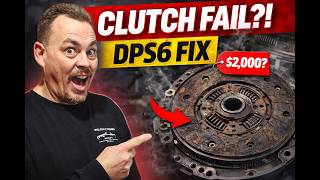
- A broken internal shift drum tab on Ford DPS6 transmissions perfectly mimics this electrical code and requires a $2,000+ transmission case replacement.
- Driving with a P2835 code forces the vehicle into limp mode, locking it in 2nd or 3rd gear and creating a severe safety hazard at highway speeds.
What Does P2835 Mean?
The Transmission Control Module (TCM) is receiving an inconsistent signal from the sensor tracking shift fork 'B'. This fork engages even-numbered gears (2, 4, 6) and Reverse. When the signal drops, the TCM loses track of the current gear, causing severe shifting problems and triggering limp mode.
Technical definition: P2835 indicates the electrical circuit for the 'B' shift fork position sensor is failing to provide a steady signal to the Transmission Control Module (TCM). The signal drops out or spikes sporadically.
Can I Drive With P2835?
No — Do Not Drive. Do not drive. The transmission will shift erratically, get stuck in gear, or suddenly lose power, creating a severe safety hazard in traffic. Continuing to drive causes irreversible internal damage, turning a potential sensor repair into a $3,000-$7,000 transmission replacement.
Common Causes
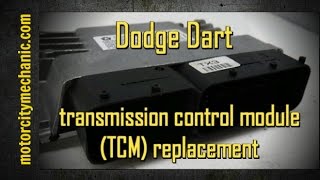
- Faulty Transmission Control Module (TCM) (Very Common) — The TCM is the transmission's brain. Internal circuit board failures, software glitches, or heat damage are the most frequent causes, especially in Ford, Nissan, and Dodge models. 🎬 Watch: Dodge Dart transmission control module removal and replacement
- Outdated TCM Software (Common) — Manufacturers frequently release software updates to fix transmission logic bugs. Running outdated software triggers false intermittent codes.
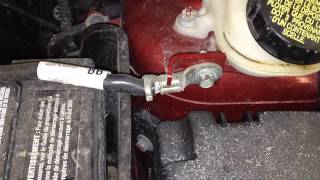
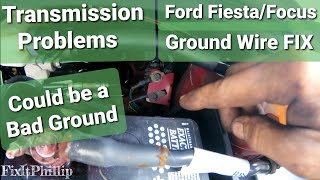
- Damaged Wiring or Poor Grounds (Common) — Wires connecting the position sensor to the TCM corrode, fray, or disconnect. A corroded ground strap creates a floating ground, compromising the sensor's reference voltage and causing intermittent dropouts. 🎬 See how to fix common Ford ground connection issues
- Low or Unstable Battery Voltage (Common) — A weak battery starves the TCM of stable voltage, causing erratic behavior, communication loss, and false codes.
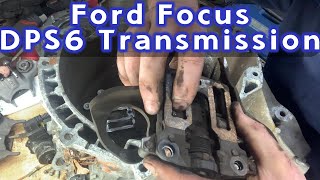
- Internal Mechanical Failure (Less Common) — On Ford DPS6 transmissions, the shift drum locating tab shears off inside the case, allowing the drum to over-rotate. This purely mechanical failure presents as an electrical sensor code. Bent shift forks or broken synchronizers also trigger this fault.
- Failed Shift Fork Position Sensor (Rare) — The sensor itself, often integrated into the TCM or actuator assembly, wears out and sends erratic voltage signals.
Symptoms
- Transmission Stuck in Gear (Limp Mode) — The transmission locks into a single gear (often 2nd or 3rd) to prevent damage, resulting in poor acceleration and high RPMs at high speeds.
- Harsh, Delayed, or Erratic Shifting — The vehicle jerks when shifting, hesitates before changing gears, or shifts at the wrong times.
- Sudden, Unexpected Downshifts — The transmission drops to a lower gear without warning, causing the engine to rev high and the vehicle to jolt.
- Check Engine or Transmission Warning Light — The dashboard illuminates a powertrain or transmission warning light.
Diagnostic Flowchart
Tap your situation to follow the diagnostic path that matches what you're seeing on this code.
Common Fixes & Costs
- Reprogramming the Transmission Control Module (TCM) — Parts: $0, Labor: $150 - $250, ~1.0 hr book time (Professional)
- Replacing the Transmission Control Module (TCM)
— Parts: $300 - $650, Labor: $150 - $300, ~2.0 hr book time
(Intermediate)
Ford Focus/Fiesta (DPS6): OEM AE8Z-7Z369-F (Alt: Dorman 609-030)
Dodge Dart (C635): OEM 68210293AA (Alt: N/A) - Repairing Damaged Wiring or Grounds — Parts: $10 - $50, Labor: $150 - $350, ~2.0 hr book time (Intermediate)
- Replacing Internal Transmission Components
— Parts: $200 - $600, Labor: $1200 - $2500, ~9.5 hr book time
(Professional)
Ford Focus/Fiesta (DPS6): OEM CA6Z-7515-K (Fork for 2-4-6-R) (Alt: LUK 514002110)
Used vs. New Parts: Buying Guide
When a used part is worth it: A used TCM is rarely recommended due to high failure rates and programming challenges. It only makes sense as a last resort on a low-value vehicle where a new part is cost-prohibitive.
Donor-vehicle mileage cap: roughly under 60000 miles for the part to have meaningful remaining life.
Donor quality checklist:
- Verify the donor vehicle's VIN for exact compatibility.
- Avoid modules from vehicles scrapped due to transmission failure.
- Inspect connector pins for corrosion.
Decision logic:
- If Vehicle is a Ford Focus/Fiesta under the 14M02 warranty extension → Get a new OEM part installed and programmed for free at a Ford dealership.
- If Vehicle is a daily driver and reliability is important → Buy a new OEM or quality remanufactured TCM.
- If Budget is extremely tight → A used part is an option, but factor in programming costs and repeat labor if it fails.
Warranty tradeoff: Used parts offer a 30-90 day warranty. Remanufactured parts offer 1-year to lifetime warranties. New OEM parts carry a 1-2 year warranty.
Worst-case if a used part fails: $500-800 if a used part fails, covering repeat labor and programming.
What Happens If You Wait — Timeline
- 0-1 month: Intermittent Check Engine Light. Occasional harsh shifts or hesitation, especially when hot. Symptoms may disappear after restarting. (MPG impact: 0-2%% · Added cost: $0)
- 1-3 months: Symptoms become frequent. The transmission enters limp mode more often. Shifting is noticeably erratic, and fuel economy declines. (MPG impact: 5-10%% · Added cost: $50-150 in wasted fuel)
- 3-6 months: Constant erratic shifting causes excessive heat and wear on clutches and forks. Fluid becomes contaminated. Secondary mechanical damage occurs. (MPG impact: 10-15%% · Added cost: $1,500 - $2,500)
- 6+ months: Catastrophic failure. Clutches burn out, shift forks break, and the vehicle loses power completely. A full transmission replacement is required. (MPG impact: 15-25%% · Added cost: $3,000 - $7,000)
Cost of Not Fixing It
- 0-1 month: Erratic shifting, poor fuel economy, and frequent limp mode. The vehicle is unsafe in traffic. (Added cost: $50 - $150 in wasted fuel)
- 1-6 months: Harsh shifting causes excessive wear on clutch friction material and shift forks. Fluid becomes contaminated with debris. (Added cost: $1,500 - $2,500 for a clutch and fork assembly replacement.)
- 6+ months: Catastrophic internal failure. Burnt clutches, damaged gears, and metal debris destroy the transmission. (Added cost: $3,000 - $7,000 for a remanufactured transmission.)
Diagnosis Steps
- Read the Trouble Codes
Use an OBD-II scanner to confirm P2835 is present and check for related codes (e.g., P2831, P2836, P287A). Multiple codes point to a central TCM or power issue.
Tools: OBD-II Scanner (Beginner) - Check for Technical Service Bulletins (TSBs) and Recalls
Search your VIN online for TSBs or warranty extensions. Manufacturers frequently issue free repair programs for this specific code.
Tools: Internet Access, VIN (Beginner) - Check Battery and Ground Connections
Test the battery to ensure it holds above 12.4V with the engine off. Clean terminal corrosion. Locate the main transmission ground strap and ensure a voltage drop test reads less than 0.2V.
Tools: Multimeter, Battery Terminal Cleaner, Wire Brush (Intermediate) - Live Data Scan Tool Analysis
Use a professional scan tool to monitor live data PIDs for the shift fork 'B' position sensor (e.g., 'TFP_B_V'). Graph the voltage during a test drive to capture sudden dropouts to 0V or erratic spikes.
Tools: Advanced Scan Tool (Advanced) - Inspect the Wiring and Connectors
Visually inspect the wiring harness running to the transmission and TCM. Look for corrosion, loose pins, or frayed wires at the main connector.
Tools: Flashlight, Safety Glasses (Intermediate) - Advanced Circuit Integrity Test
Back-probe the shift fork 'B' position sensor signal wire at the TCM connector. Wiggle the wiring harness while observing the voltage; dropouts confirm an intermittent connection.
Tools: Multimeter, Vehicle-Specific Wiring Diagram, Back-Probe Kit (Advanced) - Ford DPS6 Mechanical Actuator Check
For Ford Focus/Fiesta models, remove the TCM. Insert a tool into the upper hole (Fork B) and rotate the gear. It must hit a firm stop in both directions. If it spins endlessly, the internal shift drum tab is broken.
Tools: Mechanic's Tool Set, Screwdriver (Professional) - Sensor Resistance Test
Disconnect the sensor and measure internal resistance with a multimeter. Compare readings to the service manual. Infinite resistance indicates an open circuit; near-zero indicates a short.
Tools: Multimeter, Vehicle Service Manual (Advanced) - Inspect Internal Transmission Components
If electronics and actuators pass, remove the transmission to inspect shift forks, synchronizers, and related parts for physical damage.
Tools: Mechanic's Tool Set, Transmission-Specific Tools (Professional)
When This Code Triggers (Freeze-Frame Conditions)
- Engine Coolant Temp: 180-205°F (The engine is at full operating temperature.)
- RPM: 1500-2500 (The fault logs during steady-state cruise or light acceleration.)
- Vehicle Speed: 35-55 mph (Occurs at city or highway speeds when the transmission is in an even gear (4th or 6th).)
- Transmission Fluid Temperature: 170-200°F (The transmission is fully warmed up, as heat exacerbates intermittent electrical issues.)
Related Codes
- P2836 — Indicates 'Shift Fork 'B' Position Circuit Range/Performance'. P2835 means the signal drops out, while P2836 means the signal is present but consistently incorrect.
- P2831 — The identical intermittent code for 'Shift Fork 'A''. Seeing P2831 and P2835 together strongly suggests a failing TCM or bad ground, not two simultaneous sensor failures.
- P287A — Indicates 'Clutch 'B' Stuck Engaged'. The TCM fails to command the clutch correctly because it cannot determine the fork's position. P2835 is the cause; P287A is the effect.
- P0902 — Indicates 'Clutch Actuator Circuit Low'. Seeing this with P2835 points heavily to a failing TCM, as it houses the driver circuits for both sensors and motors.
Climate & Environmental Factors
- Cold Weather: Thicker fluid at low temperatures exacerbates sticking clutch actuators, leading to intermittent shifting problems.
- High Humidity / Moisture: Moisture accelerates corrosion on wiring harness connectors and ground points, increasing electrical resistance and causing signal dropouts.
How to Talk to a Mechanic About This Code
Say this: "I have a P2835 code with erratic shifting. I'd like to confirm the wiring, grounds, and software are checked before assuming it's the TCM. If it's a Ford, please check my VIN for warranty extensions like 14M02."
This signals you are an informed customer who wants a thorough diagnosis. It directs the technician to check for free warranty repairs and logical electrical faults first.
Avoid saying:
- 'My car is shifting weird, can you fix it?'
- 'The internet said to replace the TCM.'
- 'Just do whatever you think is best.'
Questions to ask before authorizing the repair:
- Did you check my VIN for the Ford 14M02 TCM warranty extension?
- What were the results of the wiring harness and ground connection tests?
- Does your quote include the mandatory TCM programming and adaptive learning procedure?
- What specific tests ruled out a cheaper wiring or mechanical issue?
- What is the warranty on parts and labor?
Where to Take It: Dealer vs Independent vs Chain
- Dealer:
Best first stop for Ford owners to check for warranty coverage. A good second opinion if an independent shop is stumped.
Best for: Ford Focus/Fiesta owners qualifying for the 14M02 extended warranty., Vehicles under original powertrain warranty., Complex software reprogramming issues.
Downsides: Highest labor rates., May default to expensive module replacement over deeper diagnosis. (Typical cost: +50% vs. baseline) - Independent Shop:
Excellent choice if you find a trusted transmission specialist. They provide better value and thorough diagnosis for out-of-warranty repairs.
Best for: Out-of-warranty vehicles where cost is a major factor., Shops specializing in transmissions with advanced diagnostic tools., Getting a thorough diagnosis that checks wiring before condemning the TCM.
Downsides: Expertise varies widely; must find a reputable transmission specialist., May lack access to the latest manufacturer software updates. (Typical cost: +0% vs. baseline) - Chain Shop:
AVOID. This code requires specialized diagnostic capabilities far beyond a typical chain repair shop. Misdiagnosis is highly likely.
Best for: Simple maintenance like oil changes or tire rotations.
Downsides: Technicians lack specialized training for complex transmission codes., Lack bidirectional scan tools for programming and relearn procedures., High pressure to upsell unnecessary services. (Typical cost: -10% vs. baseline)
When to Walk Away From the Repair
If the estimated repair cost exceeds 50% of the car's private-party value, consider selling the car as-is rather than repairing it.
- Car worth $5000, fix is $1200: Fix it. The repair cost is well below the 50% threshold and restores significant value.
- Car worth $4000, fix is $2500: Walk away. The repair cost is over 60% of the car's value. You are unlikely to recoup this cost.
- Car worth $8000, fix is $3500: Borderline. Get a second opinion. Consider the car's overall condition before proceeding.
What Scan Tool You Need for This Code
Minimum: A scanner that reads manufacturer-specific transmission codes, graphs live sensor data, and performs 'Transmission Adaptive Learning' procedures.
A basic $20 reader only shows the P-code. It cannot display live voltage to confirm intermittent drop-outs or perform the critical transmission relearn procedure required after repairs.
Budget: OBDLink EX with FORScan (for Ford) (~$70) — Provides dealer-level diagnostics for Ford models. Reads all modules, graphs live data, and performs the TCM adaptive learning procedure.
Mid-range: Foxwell NT680 Pro or Autel MaxiCOM MK808 (~$350-500) — Offers all-system diagnostics for most brands. Reads enhanced codes, graphs live data PIDs, and initiates transmission relearn service functions.
Professional: Autel MaxiSys MS906 or Launch X431 Series (~$900-1500) — Provides full bidirectional control, comprehensive live data graphing, and advanced ECU programming functions.
How to Clear the Code After You Fix It
- Reconnect battery if disconnected.
- Use an OBD-II scan tool to clear P2835 and related codes.
- Perform the transmission adaptive learning procedure with a capable scan tool (mandatory for Ford/Dodge DCTs).
- Complete a full drive cycle to ensure the code does not return.
Drive cycle (~30 minutes): Idle for 2-3 minutes from a cold start. Drive in stop-and-go traffic for 10-15 minutes, shifting through all gears. Drive for 10 minutes at a steady 50-60 mph. Allow the vehicle to cool completely.
Readiness monitors affected: Comprehensive Component Monitor (CCM), Catalyst (CAT) Monitor, Evaporative System (EVAP) Monitor
Before emissions retest: drive at least 50 miles to fully set monitors.
Watch out for:
- Disconnecting the battery will not clear the code from the TCM's permanent memory.
- The code returns immediately if the underlying fault remains.
- Skipping the adaptive learning relearn results in poor shifting even after replacing the TCM.
Will This Fail Emissions / State Inspection?
Yes — this code typically fails an OBD-II emissions inspection.
- California: An active P2835 results in an automatic failure. All OBD readiness monitors must be 'Ready' before a retest.
- New York: The presence of a Check Engine Light and a powertrain fault code is an automatic failure.
- Texas: Vehicles fail the OBD portion of the inspection. The Check Engine Light must be off and monitors set.
Most Commonly Affected Vehicles
- Ford Focus (2012-2018) — The DPS6 PowerShift transmission is notoriously prone to TCM failures and broken shift drum stops. Ford issued extended warranties for the TCM.
- Ford Fiesta (2011-2019) — Uses the same problematic DPS6 transmission as the Focus and suffers identical TCM and internal mechanical faults.
- Dodge Dart (2013-2016) — Models with the C635 dual-dry clutch transmission experience frequent TCM and internal clutch component failures.
- Hyundai Veloster, Tucson, Elantra (2016-2021) — The 7-speed dry dual-clutch transmission experiences actuator and control logic issues. Software updates are common.
- Kia Forte, Soul, Seltos (2017-2021) — Shares the 7-speed DCT with Hyundai and suffers similar shifting problems. Check for TSBs related to DCT logic.
- Nissan Sentra, Juke, Versa (2012-2019) — TCM failure is a known issue that produces similar symptoms and triggers related transmission codes.
- Volkswagen Jetta, Golf, Passat (2005-2016) — DSG transmissions suffer from Mechatronics unit failures, causing identical codes.
- Chevrolet Cruze, Sonic (2011-2016) — Models with dual-clutch or automatic transmissions report sensor and module issues leading to this code family.
Manufacturer-Specific Notes
- Ford: Ford extended the TCM warranty for many 2012-2018 Focus and 2011-2019 Fiesta models under program 14M02 (10 years/150,000 miles). Always check with a dealer first.
- Ford: Customer Satisfaction Program 14M01 extends the warranty on clutch and input shaft seals for certain 2011-2016 models to 7 years/100,000 miles due to shudder issues.
- Hyundai/Kia: Multiple service campaigns (e.g., 21-AT-013H) exist for 7-speed DCTs to improve shift logic. A TCU software update is a critical first diagnostic step.
- Volkswagen: The Mechatronics unit is a known failure point on DSG transmissions. Symptoms mimic P2835, and replacement is a common, expensive repair.
Real Owner Stories
2012 Ford Focus with multiple transmission codes
Car failed to start, then started with a Check Engine Light. Codes P087A, P2831, P2832, P2836, P0805 appeared.
Outcome: Tightening the loose ground connection at G-104 resolved all intermittent codes without replacing parts.
Lesson: Multiple transmission circuit codes appearing at once point to a single electrical root cause, like a bad ground or battery. Check grounds first.
2014 Ford Focus with transmission failure after a rebuild
Transmission was rebuilt for $3,000. A month later, the car wouldn't accelerate, showing codes P285E, P287B, and P2832.
Outcome: The symptoms pointed to a TCM failure missed during the mechanical rebuild. The problem was electronic from the start.
Lesson: A mechanical repair will not fix an electronic problem. Ensure mechanics diagnose both systems before committing to a rebuild.
2015 Ford Focus SE with cascading failures
After an 8-month wait for a warranty TCM, the dealer claimed it couldn't be programmed due to internal damage. Codes P0606, P219, P287A, P07A5 were present.
Outcome: Driving with a faulty TCM caused severe mechanical wear. The mechanical parts failed, requiring a complex repair.
Lesson: Do not delay repairs. An electronic TCM issue causes progressive mechanical damage, eventually requiring a full transmission replacement.
How to Prevent This Code From Triggering
- Change dual-clutch transmission fluid every 30,000-50,000 miles. (Every 30,000-50,000 miles.) — Degraded fluid loses lubricating properties, causing accelerated wear on seals and mechanical parts, leading to leaks and overheating.
- Avoid 'inching' or 'creeping' in heavy traffic. (Daily driving habit.) — Slow creeping causes dry clutches to slip constantly, generating excessive heat and premature wear. Wait for a gap, then move decisively.
- Do not hold the car on a hill using the accelerator. (Daily driving habit.) — This forces the clutches to slip under load, generating extreme heat. Use the foot brake to hold the vehicle.
- Ensure battery health and clean ground connections. (Every 6 months.) — The TCM requires stable voltage. A weak battery or corroded ground causes unpredictable electronic behavior and false codes.
Frequently Asked Questions
Can I fix P2835 myself?
Experienced DIYers can fix external issues like a bad battery or accessible wiring. However, the most common fixes—replacing the TCM or internal transmission work—require professional tools and software. Stop DIY and go to a shop if you need module programming.
What are the most common misdiagnoses for P2835?
The most common pitfall is replacing the TCM without testing the battery or grounds. A weak battery or a hidden mechanical failure (like a broken shift drum on Ford's DPS6) perfectly mimics a failed TCM. Always test voltage and mechanical actuators first.
My mechanic blames the TCM, but I've read it could be mechanical. How can I know?
An advanced scan tool checks TCM communication, but a physical test is definitive for Ford DPS6 transmissions. A technician removes the TCM and manually rotates the shift drum actuator. If it spins freely without hitting a hard stop, the internal mechanical stop is broken.
Will clearing the code make it go away?
No. Clearing the code turns off the check engine light temporarily, but it returns immediately once the computer detects the intermittent signal again. It does not fix the underlying electrical or mechanical failure.
How much does it cost to diagnose this code?
Most repair shops charge a diagnostic fee of $100 to $200. This fee covers 1-2 hours of testing and often applies toward the final repair cost if you authorize the work.
Is a P2835 repair covered by warranty?
For 2011-2019 Ford Focus and Fiesta owners, Ford issued extended warranty program 14M02 for the TCM. This covers the repair for 10 years or 150,000 miles. Always call a dealer with your VIN to check for active coverage.
What's the difference between Shift Fork 'A' and Shift Fork 'B'?
In a dual-clutch transmission, Fork 'A' handles odd gears (1, 3, 5) and Fork 'B' handles even gears (2, 4, 6) and reverse. P2835 specifically indicates a sensor failure on the even-gear fork.
Can a bad battery cause P2835?
Yes. A weak battery provides unstable voltage to the TCM. This electrical instability causes the module to behave erratically and generate false intermittent codes like P2835.
Key Takeaways
- A faulty Transmission Control Module (TCM) causes the majority of P2835 codes, but always test the 12V battery and ground connections before replacing it.
- Ford Focus (2012-2018) and Fiesta (2011-2019) owners must check their VIN against Customer Satisfaction Program 14M02 for a free TCM replacement.
- A broken internal shift drum tab on Ford DPS6 transmissions perfectly mimics this electrical code and requires a $2,000+ transmission case replacement.
- Driving with a P2835 code forces the vehicle into limp mode, locking it in 2nd or 3rd gear and creating a severe safety hazard at highway speeds.
Helpful Videos



Shop the Parts Behind P2835
Below are the parts most often responsible for code P2835, ranked by how frequently each one is the actual culprit (per the diagnosis above). Tap any to see what we have for your vehicle.

The information in this article is provided for general reference and educational purposes only. Vehicle specifications, procedures, and part compatibility can vary by production date, trim level, and region. Always consult your vehicle's factory service manual and verify part numbers before purchasing or performing repairs. Safety-critical components such as airbags, seat belts, and braking systems should be installed by a qualified professional.
- 🧭 Diagnostic Flowchart
- 🎬 Helpful Videos
- 🛍️ Shop This Part
- What Does P2835 Mean?
- Can I Drive With P2835?
- Common Causes
- Symptoms
- Common Fixes & Costs
- Used vs. New Parts: Buying Guide
- What Happens If You Wait — Timeline
- Cost of Not Fixing It
- Diagnosis Steps
- When This Code Triggers (Freeze-Frame Conditions)
- Related Codes
- Climate & Environmental Factors
- How to Talk to a Mechanic About This Code
- Where to Take It: Dealer vs Independent vs Chain
- When to Walk Away From the Repair
- What Scan Tool You Need for This Code
- How to Clear the Code After You Fix It
- Will This Fail Emissions / State Inspection?
- Most Commonly Affected Vehicles
- Manufacturer-Specific Notes
- Real Owner Stories
- 2012 Ford Focus with multiple transmission codes
- 2014 Ford Focus with transmission failure after a rebuild
- 2015 Ford Focus SE with cascading failures
- How to Prevent This Code From Triggering
- Frequently Asked Questions
- Can I fix P2835 myself?
- What are the most common misdiagnoses for P2835?
- My mechanic blames the TCM, but I've read it could be mechanical. How can I know?
- Will clearing the code make it go away?
- How much does it cost to diagnose this code?
- Is a P2835 repair covered by warranty?
- What's the difference between Shift Fork 'A' and Shift Fork 'B'?
- Can a bad battery cause P2835?
- Key Takeaways
- 🎟️ Get 5% Off