

P2857 on 2020-2021 Nissan Versa: Clutch 'A' Pressure Fault Explained
This code indicates a serious internal pressure problem within the Continuously Variable Transmission (CVT). It is a known issue documented in Nissan Technical Service Bulletins (TSBs). The TSB diagnostic flow for this specific code often leads to a full CVT assembly replacement, rather than a valve body repair. It is a costly, non-DIY repair that should be addressed immediately to avoid being stranded.
- P2857 on a 2020-2021 Versa is a serious transmission code indicating a known CVT issue.
- Symptoms include hesitation, reduced power, and a Check Engine Light.
- This is not a DIY repair. Diagnosis and repair should be performed by a qualified technician familiar with Nissan CVTs.
- The most common fix is replacing the CVT control valve body, but a full transmission replacement may be necessary.
- Always refer to the latest Nissan Technical Service Bulletins for the correct diagnostic procedure.
What's Unique About the 2020-2021 Nissan VERSA

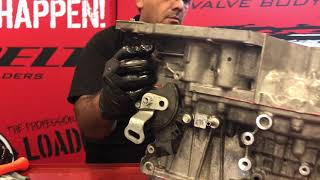
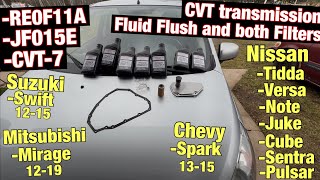
The 2020-2021 Versa uses a Jatco CVT (likely the RE0F11A/JF015E or a variant), which is common across many Nissan models like the Kicks and Sentra. This particular code, P2857, is part of a pattern of known issues that Nissan has addressed through a series of frequently updated Technical Service Bulletins. Crucially, the diagnostic flowcharts in these bulletins (like NTB19-040E and NTB22-021) specify that if P2857 is present, the technician's path often leads directly to replacing the entire CVT assembly, 🎬 Watch: A complete walkthrough of the CVT replacement process bypassing valve body replacement which is reserved for other codes.
Diagnostic Flowchart

Tap your situation to follow the diagnostic path that matches what you're seeing on this vehicle.
Symptoms You May Notice
- Check Engine Light (Malfunction Indicator Lamp) is on
- Vehicle hesitation, especially on acceleration.
- Reduced engine power or 'limp mode', sometimes limiting speed to under 55 mph.
- Transmission juddering, shaking, or vibrating.
- Sluggish or delayed gear engagement from a stop.
- Erratic or incorrect shifting, including RPM flares into the 5k region.
- Car lurches unexpectedly or accelerates extremely slowly from a stop.
- Vehicle may fail to move at all after stopping, requiring a restart or shifting to Park and back to Drive.
- Replacing individual pressure sensors or solenoids. Nissan's TSBs for this code on this vehicle generally direct technicians to replace the entire valve body assembly or the transmission itself, not individual components on the valve body.
- Replacing the CVT control valve body. Per TSBs NTB19-040E and NTB22-021, if DTC P2857 is present, the diagnostic path leads to a full CVT assembly replacement, not just the valve body.
Most Likely Causes

- Internal CVT Mechanical Failure 🔴 High Probability Nissan TSBs NTB19-040H and NTB22-021 specifically address code P2857. The diagnostic flowchart in these bulletins for this DTC directs the technician to inspect for belt slippage and often concludes with 'Replace the CVT assembly' as the sole remedy, indicating a systemic, non-repairable internal fault.
How to confirm: A technician follows the diagnostic procedure in the TSB. For P2857, this involves removing the control valve body to inspect the CVT belt for damage (scoring, delamination) with a borescope. Finding evidence of belt slip or excessive metal debris in the transmission pan confirms the need for a full replacement.
Typical fix: Complete replacement of the CVT assembly with a new or remanufactured unit, followed by programming.
Est. part cost: $3500-$5500+ - Faulty CVT Control Valve Body ⚪ Low Probability → Shop Transmission Valve Body While the valve body is a common failure point on many CVTs, Nissan's own TSBs for the 2020-2021 Versa explicitly rule this out as a primary fix *if* code P2857 is present. A valve body replacement is only indicated for a different set of DTCs when P2857 is absent.
How to confirm: This is confirmed by exclusion based on the TSB diagnostic tree. If a technician scans the vehicle and finds P2857, the flowchart directs them away from a valve body replacement and towards a full CVT inspection and likely replacement.
Typical fix: Replacement of the CVT control valve assembly. This is an incorrect repair for P2857 on this vehicle according to TSBs, but may be attempted by shops unfamiliar with the bulletins.
Est. part cost: $400-$1800 - Low or Contaminated CVT Fluid ⚪ Low Probability Unlikely on newer vehicles unless there is a leak or improper service, but possible. Degraded fluid can cause hydraulic pressure shortfalls. However, the prevalence of TSBs pointing to mechanical failure makes this a less common root cause for this specific code.
How to confirm: Check the level and condition of the Nissan NS-3 CVT fluid. The fluid should be at the correct level and not appear dark, burnt, or contain excessive metal particles. Finding significant debris is a strong indicator of a larger internal failure.
Typical fix: Perform a CVT fluid drain and fill using only Nissan NS-3 CVT Fluid. This is unlikely to resolve P2857 if it's already stored.
Est. part cost: $100-$200
Rare But Worth Checking
- Wiring or Connector Issues: Damaged wiring or a loose connection to the transmission can mimic internal faults. A visual inspection of the harness going to the CVT is a worthwhile preliminary check, though the TSBs for P2857 point towards a mechanical issue.
- Faulty Transmission Control Module (TCM): → Shop Transmission Assembly In rare cases, the TCM itself can fail or have software glitches, causing it to misinterpret sensor data and set false codes. Some TSBs mention reprogramming the TCM as a step for other codes, but for P2857, the focus remains on mechanical replacement.
Diagnosis Steps
- Verify the code with a professional OBD-II scanner that can read transmission-specific codes.
- Check for any accompanying trouble codes. The presence of P2857, especially with codes like P17F2 or P17F4, will determine the diagnostic path according to Nissan TSBs.
- Consult the relevant Nissan Technical Service Bulletins (NTB22-021, NTB19-040 series) for the specific diagnostic flowchart.
- Per the TSB, if P2857 is present, the next step is to remove the oil pan and control valve body.
- With the valve body removed, a technician will inspect the CVT belt for slippage or damage using a borescope. The TSB provides specific visual examples of what constitutes failure.
- If evidence of belt slippage is found, the TSB directs the replacement of the entire CVT assembly.
- If the belt appears okay (unlikely with P2857), the TSB directs replacement of the control valve. However, the presence of P2857 almost always points to the former outcome.
- After replacement of either the valve body or the full CVT, additional service procedures including TCM reprogramming are required.
Parts You'll Likely Need

- CVT Assembly (Transmission)
(OEM #RE0F11A (base model, verify with VIN))— This is the required fix for P2857 according to Nissan's service bulletins when internal damage is found, which is the most likely scenario.
Trusted brands: Nissan (OEM or Remanufactured)
OEM price range: $3500-$5500 - CVT Control Valve Body Assembly
(OEM #31705-X4A0C (verify with VIN, may supersede older numbers like 31705-3JX8A))— This is only replaced if the TSB diagnostic procedure specifically calls for it, which is unlikely when P2857 is present.
Trusted brands: Nissan (OEM), Hitachi
OEM price range: $1300-$1800
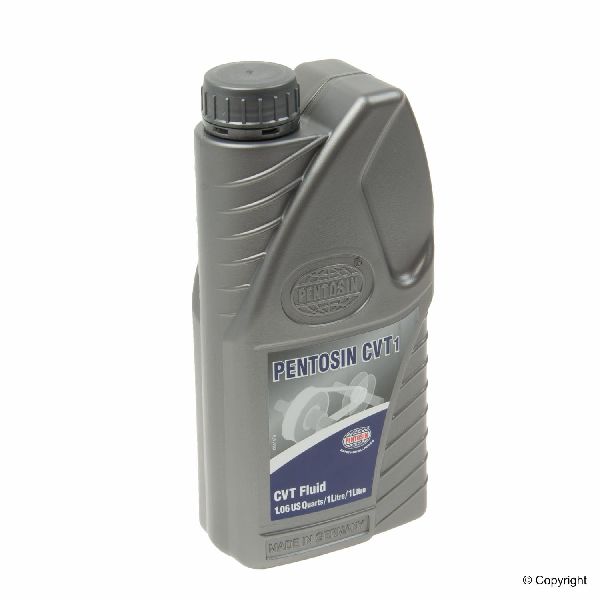
Aftermarket price range: $400-$800 - Nissan NS-3 CVT Fluid
(OEM #999MP-NS300P)— This specific fluid is required for any service involving draining or replacing CVT components. Using non-specified fluid can cause damage.
Trusted brands: Nissan
OEM price range: $20-$25 per quart
Related Codes That Often Appear With This One
- P17F0, P17F1, P17F2, P17F4 — These codes relate to CVT judder and are often stored alongside P2857, indicating a comprehensive transmission problem as outlined in Nissan TSBs NTB19-040 and NTB22-021.
- P2858, P2859, P285A — These are companion codes for Clutch 'B' pressure and other Clutch 'A' pressure faults, pointing to a systemic issue within the CVT's hydraulic control system. Their presence alongside P2857 reinforces the TSB directive to inspect for major internal failure.
- P0741, P0744, P0746, P0776, P0841, P0965 — These codes are also listed in the same TSBs and relate to torque converter clutch performance and pressure control solenoids, indicating a widespread fault condition within the CVT. The specific combination of codes determines the exact repair path in the TSB flowchart.
Technical Service Bulletins (TSBs) & Recalls
- NTB22-021: Lists P2857 as 'CLUTCH A PRESSURE' and groups it with other CVT judder and pressure codes, providing a detailed repair overview that differentiates between valve body and full assembly replacement based on the specific codes found.
- NTB19-040H, NTB19-040F, NTB19-040E, NTB19-040c: A series of bulletins that group P2857 with numerous other CVT codes. NTB19-040E provides a detailed diagnostic flowchart for the 2020-2021 Versa that directs CVT assembly replacement if P2857 is stored and belt slippage is confirmed.
Platform-Specific Known Issues
- Nissan has released a series of Technical Service Bulletins, including NTB19-040 (which was superseded multiple times, ending with NTB19-040H) and NTB22-021, to address this specific code along with a host of other CVT-related DTCs. This indicates a known issue with the CVT in these vehicles. The bulletins provide a specific diagnostic tree for technicians to follow. For DTC P2857, the flowchart explicitly directs the technician to inspect the CVT belt via borescope, and if damage is found (which is the expected outcome), the only approved repair is a full CVT assembly replacement.
Mechanic-Grade Diagnostic Values
- Pressure Control Solenoid 'A' (Line Pressure) Resistance — expected: ~5.3 Ω at 68°F (20°C). Failure: A significantly higher reading, such as 12.6 Ω, indicates a faulty solenoid.
- Other Valve Body Solenoid Resistance (Solenoids B, C, D) — expected: 3 to 9 Ω. Failure: Readings outside of this range indicate a faulty solenoid.
- CVT Fluid Temperature for Level Check — expected: 95°F to 113°F (35°C to 45°C). Failure: Checking the fluid level when it is too hot or too cold will result in an inaccurate reading.
Scan Tool Commands That Help
- Nissan CONSULT-III plus: Erase Calibration Data — This function is required after replacing the CVT assembly or the control valve body. It erases old calibration data from the TCM before new data is written.
- Nissan CONSULT-III plus: Clutch Point Learning — This procedure is required after replacing the valve body to allow the TCM to learn the engagement points of the new components.
- Nissan CONSULT-III plus: Select Learning — This procedure is required after replacing the CVT assembly or valve body to calibrate the transmission's shift strategy.
- Nissan CONSULT-III plus: Data Monitor for FLUID TEMP — Used to verify the CVT fluid is within the correct temperature range (35°C to 45°C) before performing a fluid level check.
Wiring & Ground Locations
- CVT Assembly Connector — Main electrical connector on the exterior of the CVT housing.. This is the primary interface between the TCM and the transmission's internal components, including the valve body solenoids and pressure sensors. A visual inspection for corrosion or damage is a key first step.
- Engine/Transmission Ground Straps — Typically located between the engine block/transmission case and the vehicle's chassis/frame.. Poor grounding can cause erratic sensor readings and incorrect solenoid operation, potentially mimicking an internal transmission fault. A visual inspection for corrosion or looseness is recommended.
Real Owner Repair Stories
- YouTube video comment (2021 Nissan Versa, 120,000 miles (used for Uber)) — CVT transmission was 'gone'.
❌ Tried (didn't work) The video focuses on the replacement process, implying prior diagnostics led to this conclusion.
✅ What actually fixed it The entire engine and transmission assembly were dropped from the subframe for a complete CVT replacement. The video notes this is easier than trying to remove the transmission by itself due to space constraints.
OEM Part Supersession History
31728-3XX0B→31728-3XX0C— Standard part revision/update.
Heads up: The newer part number should be backward compatible, but always verify with VIN. This is the valve body filter/strainer.
Model Year Variations Within This Range
- 2020-2021: There are no significant mechanical differences between the 2020 and 2021 Nissan Versa models concerning the engine or CVT transmission that would affect the diagnosis or repair of code P2857. Both use the same 1.6L engine and are subject to the same TSBs.
Helpful Videos


We Have This Part in Stock

The information in this article is provided for general reference and educational purposes only. Vehicle specifications, procedures, and part compatibility can vary by production date, trim level, and region. Always consult your vehicle's factory service manual and verify part numbers before purchasing or performing repairs. Safety-critical components such as airbags, seat belts, and braking systems should be installed by a qualified professional.
- Nissan VERSA:
- 🧭 Diagnostic Flowchart
- 🎬 Helpful Videos
- 🛍️ Shop This Part
- What's Unique About the 2020-2021 Nissan VERSA
- Symptoms You May Notice
- Most Likely Causes
- Rare But Worth Checking
- Diagnosis Steps
- Parts You'll Likely Need
- Related Codes That Often Appear With This One
- Technical Service Bulletins (TSBs) & Recalls
- Platform-Specific Known Issues
- Mechanic-Grade Diagnostic Values
- Scan Tool Commands That Help
- Wiring & Ground Locations
- Real Owner Repair Stories
- OEM Part Supersession History
- Model Year Variations Within This Range
- 🎟️ Get 5% Off