

P2858 on 2020-2021 Nissan Versa: Clutch B Pressure Fault Causes and Fixes
P2858 on a 2020-2021 Versa indicates a serious 'Clutch B Pressure' fault in the CVT transmission. This is a known issue covered by Nissan Technical Service Bulletins (TSBs). The fix almost always requires replacing the CVT valve body or the entire transmission assembly, a costly repair best left to professionals.
- P2858 on a 2020-2021 Versa is a serious code indicating an internal CVT pressure failure, not a simple sensor issue.
- This is a known problem covered by Nissan TSBs. Diagnosis MUST follow the official flowchart to avoid unnecessary, expensive repairs.
- The most common fixes are replacing the CVT valve body (if the internal belt is okay) or the entire transmission (if the belt is damaged).
- This is not a DIY-friendly repair. It requires professional-level tools and knowledge of Nissan-specific procedures.
- Always use Nissan NS-3 fluid for any CVT service on this vehicle.
What's Unique About the 2020-2021 Nissan VERSA
The 2020-2021 Versa uses a Jatco RE0F11A (also known as CVT7) transmission, common in many compact Nissan models. For this specific vehicle and code, Nissan has issued multiple Technical Service Bulletins (TSBs), such as NTB19-040H and NTB22-021, that detail a very specific diagnostic flowchart. Unlike other cars where a pressure code might point to a simple sensor, on this Versa, the TSBs direct technicians to inspect internal components like the CVT belt with a borescope. The result of this inspection determines whether to replace the valve body or the entire CVT unit itself.
Diagnostic Flowchart
Tap your situation to follow the diagnostic path that matches what you're seeing on this vehicle.
Symptoms You May Notice
- Check Engine Light (Malfunction Indicator Lamp) is on
- Hesitation or lack of power during acceleration.
- Vehicle may enter a reduced power "limp mode"
- Shuddering or 'juddering' from the transmission, especially during low-speed acceleration.
- Harsh or jerky shifting.
- Engine RPM may be higher than usual for a given speed
- Delayed gear engagement when shifting from Park or Neutral.
- Replacing an individual pressure solenoid. Nissan's repair procedure for this platform typically involves replacing the entire valve body assembly as a unit.
- Changing the transmission fluid and expecting it to fix a mechanical or hydraulic failure. If the valve body is bad or the belt is slipping, a fluid change will not solve the problem.
- Replacing the TCM without first ruling out the valve body and internal CVT components.
Most Likely Causes
- Faulty CVT Control Valve Body 🔴 High Probability → Shop Transmission Valve Body This is a widely documented failure point on Nissan CVTs of this era, and it is the primary repair path identified in Nissan TSBs NTB19-040H and NTB22-021 if the internal CVT belt is undamaged. Internal solenoids or the valve body itself can fail or become clogged with metallic debris from normal wear, leading to incorrect pressure regulation.
How to confirm: A technician must follow the diagnostic flowchart in the relevant TSB. This involves checking for specific code combinations and removing the oil pan to inspect the CVT belt with a borescope. If the belt is okay, the valve body is the presumed cause.
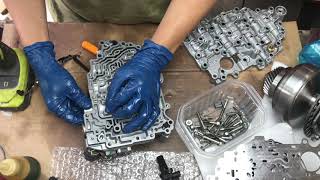
Typical fix: Replace the entire CVT control valve body assembly. 🎬 See a detailed walkthrough of the CVT valve body reassembly. This part contains the solenoids that control fluid pressure. After replacement, a TCM reprogram and fluid counter reset is required.
Est. part cost: $600-$1300 - Internal CVT Assembly Failure 🟡 Medium Probability If the vehicle is operated for too long with a pressure fault, or if the initial failure is severe, the internal steel push belt that CVTs use can slip and become damaged.
How to confirm: During the TSB-guided diagnosis, a borescope inspection of the CVT belt will reveal evidence of slippage, flaking, or scoring on the side of the belt. The presence of significant metal debris in the transmission fluid pan is also a strong indicator.
Typical fix: Replace the entire CVT assembly. This is the most expensive repair.
Est. part cost: $3500-$5000 - Low or Degraded CVT Fluid ⚪ Low Probability CVTs are highly sensitive to fluid level and condition. While less common as the root cause for this specific code, low or contaminated fluid can cause a variety of pressure and performance issues. Using any fluid other than genuine Nissan NS-3 can accelerate wear.
How to confirm: Check the CVT fluid level and condition according to the factory service manual procedure. This is a complex process that requires the vehicle to be at a specific temperature. The fluid must be the correct type (Nissan NS-3).
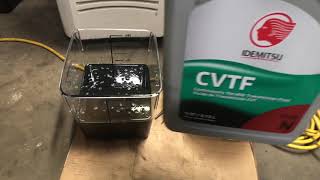
Typical fix: Perform a CVT fluid drain-and-fill or exchange using only genuine Nissan NS-3 CVT fluid. This is often done as a first step before more expensive repairs but will not fix an existing mechanical fault. 🎬 Watch: How to properly flush fluid and change CVT filters.
Est. part cost: $150-$300
Rare But Worth Checking
- Faulty Transmission Control Module (TCM): → Shop Transmission Assembly While possible, it's much more likely that the mechanical parts (valve body, CVT assembly) have failed rather than the electronic control unit itself. The TSB diagnostic flow does not prioritize the TCM as a failure point for this code. This is typically the last item to be considered after all other possibilities are exhausted.
Diagnosis Steps
- Verify the Check Engine Light is on and scan the TCM for all stored Diagnostic Trouble Codes (DTCs) using a professional scan tool like CONSULT-III plus.
- Note the specific combination of codes present, as this will determine the diagnostic path according to Nissan TSBs.
- Consult the appropriate Nissan TSB (NTB22-021, which supersedes NTB19-040H) for the specific 'Repair Flow Chart'.
- Check the CVT fluid level and condition. The fluid must be Nissan NS-3, and the level must be checked at the correct operating temperature.
- If directed by the TSB (based on the combination of DTCs), drain the CVT fluid and remove the oil pan. Inspect the pan for excessive metallic debris.
- Perform a borescope inspection of the internal CVT belt to check for damage like scoring, delamination, or flaking.
- If the belt inspection is OK and debris is minimal, the TSB indicates the next step is to replace the control valve (valve body) assembly.
- If the belt is damaged or excessive debris is found, the entire CVT assembly must be replaced.
- After any repair, install a new CVT oil filter, fill with genuine Nissan NS-3 fluid, perform the mandatory CVT fluid counter reset, and execute any required calibration procedures using a compatible scan tool.
Parts You'll Likely Need
- CVT Control Valve Body Assembly
(OEM #31705-50X5B (superseded by 31705-50X5C))— This is the most common fix according to Nissan's TSBs when the internal CVT belt is not damaged. It contains the solenoids responsible for controlling hydraulic pressure.
Trusted brands: Nissan (OEM), Hitachi
OEM price range: $600-$900
Aftermarket price range: $400-$800 - CVT Assembly (Transmission)
(OEM #31020-X427E (or similar, verify by VIN))— Required if a borescope inspection reveals damage to the internal CVT belt, indicating a catastrophic failure.
Trusted brands: Nissan (OEM), Moveras (Remanufactured), LKQ Online (Used)
OEM price range: $3500-$4500
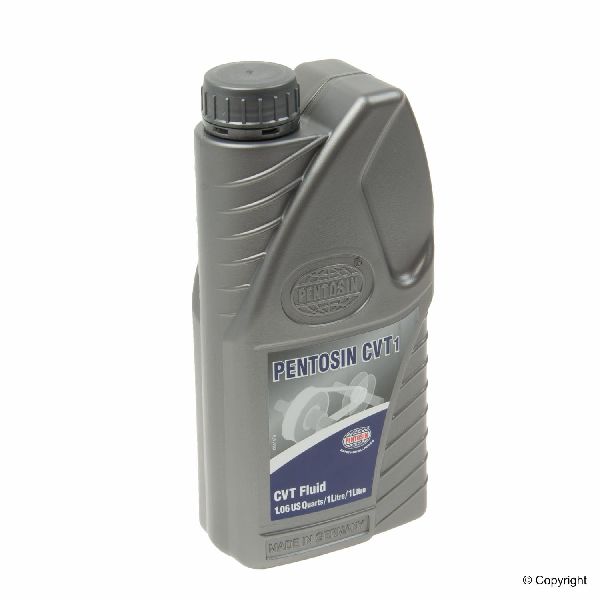
Aftermarket price range: $2500-$3500 - Nissan NS-3 CVT Fluid
(OEM #999MP-NS300P)— This specific fluid is required for any service involving the CVT. Using the wrong fluid can cause severe damage.
Trusted brands: Nissan (OEM), Valvoline (NS-3 compatible)
OEM price range: $20-$25 per quart
Aftermarket price range: $15-$20 per quart
Related Codes That Often Appear With This One
- P2857 — This is the corresponding code for 'Clutch A Pressure'. When seen with P2858, it strongly suggests a systemic issue with the valve body or fluid supply.
- P2859 — Another code for 'Clutch A Pressure', also listed in the same TSBs as P2858.
- P285A — Another code for 'Clutch B Pressure', also listed in the same TSBs as P2858.
- P0741, P0744 — These are Torque Converter Clutch codes. The TSBs group these with the clutch pressure codes, indicating a comprehensive internal CVT fault.
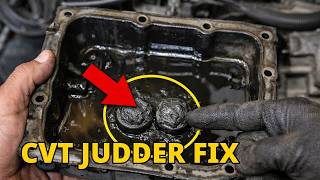
- P17F0, P17F1, P17F2 — These codes relate to 'CVT Judder' and are frequently listed alongside P2858 in Nissan TSBs, pointing to a related mechanical or hydraulic issue. 🎬 Watch: What CVT judder codes really mean for your Nissan.
Technical Service Bulletins (TSBs) & Recalls
- NTB22-021: This is the most current bulletin that supersedes previous versions. It lists P2858 among a group of codes that trigger a specific diagnostic flowchart. It instructs technicians to check for other DTCs and then proceed to an internal inspection to decide between valve body or full CVT replacement.
- NTB19-040H: An earlier version of the bulletin that also addresses MIL on with various CVT codes including P2858. It provides the same detailed repair flowchart based on which codes are present.
Platform-Specific Known Issues
- The 2020-2021 Nissan Versa is subject to several Technical Service Bulletins (TSBs), including NTB19-040H and the superseding NTB22-021, which directly address code P2858.
- These bulletins provide a specific diagnostic procedure that differs from generic troubleshooting. The repair path (valve body vs. full CVT replacement) is determined by the combination of DTCs stored and the physical condition of the internal CVT belt.
- The Jatco RE0F11A (CVT7) transmission in this vehicle has a known history of failures related to the valve body and internal belt across multiple Nissan models.
Mechanic-Grade Diagnostic Values
- Resistance of Clutch 'B' Pressure Control Solenoid (Primary Pressure Solenoid 'B') — expected: Approximately 5.3 Ω at 20°C (68°F), 6.0 Ω at 50°C (122°F), or 6.7 Ω at 80°C (176°F).. Failure: A resistance reading that is significantly higher, lower, or an open/infinite circuit.
Scan Tool Commands That Help
- Nissan CONSULT-III plus: WRITE IP CHARA - REPLACEMENT AT/CVT — Required when replacing the entire CVT assembly or the valve body. This function writes the unique calibration data from a CD (included with the new part) to the TCM.
- Nissan CONSULT-III plus: CLUTCH POINT LEARNING — Required after replacing the CVT valve body to relearn the clutch engagement points. Failure to perform this can result in a no-move condition.
- Nissan CONSULT-III plus: CONFORM CVTF DETERIORTN — This function resets the CVT fluid life monitor. It must be performed any time the CVT fluid is drained and refilled, such as during a valve body or transmission replacement.
- Nissan CONSULT-III plus: Select Learning (Drive / Reverse Learning) — A relearn procedure required after replacing the valve body, TCM, or entire CVT assembly to ensure smooth engagement into drive and reverse.
Wiring & Ground Locations
- Transmission Case Connector (RE0F11A) — The main round electrical connector on the outside of the CVT case.. Pin 3 on this connector is the control circuit for the Primary Pressure Solenoid 'B'. A technician can test the solenoid's resistance by measuring between Pin 3 and the metal transmission case itself, as the solenoid is internally grounded. This allows for electrical testing without removing the transmission pan.
Real Owner Repair Stories
- Go-Parts.com (2020-2021 Nissan Versa (or similar model with same CVT)) — Hesitation, shuddering, and a P2857/P2858 trouble code.
❌ Tried (didn't work) Performing a CVT fluid change.
✅ What actually fixed it Replacing the entire CVT valve body assembly resolved all symptoms and the trouble code.
When the Usual Fixes Don't Work
- In some cases, the failure may be more severe than just the valve body. One owner of a Nissan Sentra with a similar CVT and code replaced the valve body with a new OEM part, but the issue persisted. The next diagnostic step recommended by a transmission specialist was the replacement of the entire CVT assembly, indicating the initial failure had likely caused catastrophic internal damage beyond what a valve body could fix.
OEM Part Supersession History
31705-50X5A, 31705-50X5B→31705-50X5C— Standard part revision and improvement by the manufacturer.
Heads up: The newest part number (31705-50X5C) is the correct replacement for the earlier versions and should be used for all repairs.
Model Year Variations Within This Range
- 2020-2021: There are no significant mechanical changes to the engine or CVT transmission between the 2020 and 2021 Nissan Versa models. The diagnosis and repair procedures for code P2858 are identical for both years.
Helpful Videos


We Have This Part in Stock

The information in this article is provided for general reference and educational purposes only. Vehicle specifications, procedures, and part compatibility can vary by production date, trim level, and region. Always consult your vehicle's factory service manual and verify part numbers before purchasing or performing repairs. Safety-critical components such as airbags, seat belts, and braking systems should be installed by a qualified professional.
- Nissan VERSA:
- 🧭 Diagnostic Flowchart
- 🎬 Helpful Videos
- 🛍️ Shop This Part
- What's Unique About the 2020-2021 Nissan VERSA
- Symptoms You May Notice
- Most Likely Causes
- Rare But Worth Checking
- Diagnosis Steps
- Parts You'll Likely Need
- Related Codes That Often Appear With This One
- Technical Service Bulletins (TSBs) & Recalls
- Platform-Specific Known Issues
- Mechanic-Grade Diagnostic Values
- Scan Tool Commands That Help
- Wiring & Ground Locations
- Real Owner Repair Stories
- When the Usual Fixes Don't Work
- OEM Part Supersession History
- Model Year Variations Within This Range
- 🎟️ Get 5% Off