

OBD-II Code P2884: Engine Disconnect Clutch Stuck Open
The Ultimate 2026 Guide to Meaning, Diagnosis, and Repair
- Code P2884 indicates the engine disconnect clutch is stuck open, causing a complete loss of gasoline-powered propulsion.
- On 2015-2022 Volkswagen and Audi hybrids, this is most frequently caused by a shattered internal mechatronic filter screen clogging the N218 control solenoid.
- Independent specialists can repair the internal mechatronic solenoid for $1,200-$2,000, saving up to $10,000 compared to a dealer's full transmission replacement.
- Never replace the TCM or mechatronic unit without performing a mandatory post-repair clutch adaptation using a professional bidirectional scan tool.
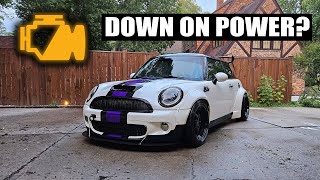
- On 2007-2015 MINI vehicles, P2884 is a turbocharger boost deviation code, requiring smoke testing for boost leaks rather than transmission diagnostics.
What Does P2884 Mean?

P2884 means the Transmission Control Module (TCM) commanded the engine disconnect clutch to engage, but it remains stuck open. Consequently, the engine cannot transfer power to the wheels, causing a complete loss of gasoline propulsion.
Technical definition: The SAE/OBD-II definition is "Engine Disconnect Clutch Stuck Open". The TCM detects via sensor feedback that the engine disconnect clutch (often the K0 clutch in dual-clutch transmissions) failed to close. This code is highly prevalent in Volkswagen Auto Group (VAG) hybrid models equipped with the DQ400 transmission.
Can I Drive With P2884?
No — Do Not Drive. Do not drive. Hybrid models operate on battery power briefly, but lose all propulsion once the battery depletes or under high load, leaving you stranded in traffic. Continuing to drive causes severe secondary transmission damage. Non-hybrid models will not move at all.
Common Causes

- Internal Mechatronic Unit Failure (Filter & Solenoid) (Very Common) — The primary cause on VW/Audi hybrid models (DQ400 transmission). A small gauze filter screen inside the mechatronic unit breaks apart. Debris travels through the hydraulic fluid and permanently clogs the N218 pressure-regulating solenoid, preventing clutch engagement.
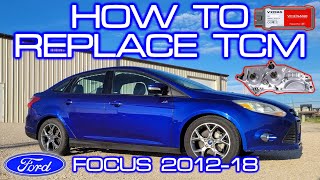
- Faulty Transmission Control Module (TCM) (Common) — The TCM itself fails due to an internal short circuit, corrupted software, or a burned-out internal driver circuit (MOSFET) that powers the clutch solenoid. This is the leading cause for Ford Focus and Fiesta models. 🎬 See how to replace and program a Ford Focus TCM.
- Low or Contaminated Transmission Fluid (Common) — Dirty, debris-filled, or low transmission fluid prevents the hydraulic pressure required to operate the clutch. Extremely dark or burnt-smelling fluid indicates worn-out clutch packs.
- Wiring Harness or Connector Issues (Less Common) — Corrosion on connector pins, a broken wire, or a loose connection interrupts the signal between the TCM and the clutch solenoid. Bent or pushed-back pins inside the main mechatronic connector are frequent culprits.
- Incorrect Software or Failed Post-Repair Adaptation (Uncommon) — Replacing a mechatronic unit or TCM requires coding the new module with the vehicle's VIN and running a basic settings adaptation. Skipping this mandatory step immediately triggers P2884, even with brand-new parts.
- Internal Hydraulic Pressure Leak (K0 Clutch Circuit) (Rare) — The K0 clutch or its internal seals leak hydraulic pressure. Even with a functioning mechatronic unit, the pressure cannot hold at the clutch pack, preventing engagement and requiring a full transmission replacement.
- Failed Clutch Actuator or Mechanical Clutch Assembly (Rare) — The mechanical parts of the clutch system, such as the actuator motor or the clutch plates, seize or fail mechanically, requiring complete transmission disassembly.
- Faulty Clutch Position Sensor (Rare) — The TCM relies on a position sensor to confirm clutch status. If this sensor fails, the TCM falsely registers the clutch as stuck open.
Symptoms

- Check Engine Light / 'Gearbox Malfunction' Warning — The dashboard illuminates the Check Engine Light alongside specific warnings like 'Gearbox Malfunction', 'Hybrid system error', or 'Drivetrain Failure'.
- Loss of Power / No Acceleration from Engine — The engine revs when pressing the gas pedal, but the vehicle does not accelerate because the engine is physically disconnected from the wheels.
- Car Only Drives in Electric Mode (Hybrids) — Affected hybrid models (VW GTE, Audi e-tron) drive normally using the electric motor but lose all propulsion when the gasoline engine attempts to engage.
- Vehicle Enters 'Limp Mode' — The vehicle enters a self-protection mode, severely limiting engine power and locking the transmission in a single gear to prevent further damage.
- Engine Fails to Start (Hybrids) — In VAG hybrids, the electric motor starts the internal combustion engine. If the disconnect clutch fails to engage, the electric motor cannot crank the engine.
Diagnostic Flowchart

Tap your situation to follow the diagnostic path that matches what you're seeing on this code.
Common Fixes & Costs
- Replace Mechatronic Gasket/Filter and Solenoid (VAG) — Parts: $150-$300, Labor: $1000-$1800 (Independent Specialist), ~8.5 hr book time (Professional)
- Replace Mechatronic Unit / TCM — Parts: $400-$2500, Labor: $300-$1000, ~3.5 hr book time (Professional)
- Repair Wiring Harness or Connector — Parts: $20-$100, Labor: $150-$400, ~2.5 hr book time (Intermediate)
- Transmission Fluid and Filter Service — Parts: $150-$250, Labor: $150-$300, ~1.5 hr book time (DIY)
- Replace Entire Transmission Assembly — Parts: $4000-$8000, Labor: $1500-$3000, ~10 hr book time (Professional)
DIY vs Professional
- Replace Mechatronic Gasket/Filter and Solenoid (VAG) 🟢 Beginner
Tools: Vehicle lift, full mechanic's tool set, transmission fluid fill tools, diagnostic scan tool for adaptation. - Replace Mechatronic Unit / TCM 🟢 Beginner
Tools: Socket set, professional-level scan tool capable of module programming (e.g., FORScan for Ford). - Repair Wiring Harness or Connector 🟢 Beginner
Tools: Multimeter, wire strippers, crimpers, soldering iron, heat shrink tubing, wiring diagrams. - Transmission Fluid and Filter Service 🟢 Beginner
Tools: Vehicle-specific fluid, filter, fluid pump, diagnostic tool for temperature monitoring.
Used vs. New Parts: Buying Guide
When a used part is worth it: For the Ford DPS6 TCM, a remanufactured module is a viable repair. For the VAG DQ400 mechatronic, a used unit is a high-risk, cost-effective alternative only if cloned correctly.
Donor-vehicle mileage cap: roughly under 60000 miles for the part to have meaningful remaining life.
Donor quality checklist:
- Match the part number exactly; incompatible hardware/software versions will not work.
- Source VAG mechatronics from vehicles scrapped for non-transmission reasons (e.g., rear-end collision).
- Verify warranty periods; remanufactured units should offer at least 1 year.
Decision logic:
- If The vehicle is a Ford Focus/Fiesta and a remanufactured TCM with an updated design is available → Favor the remanufactured unit for improved reliability over a used original-design part.
- If The part is a VAG mechatronic unit and your budget is extremely tight → A used part is a high-risk option requiring a specialist to clone the software from your old unit.
- If The vehicle is under an extended warranty (Audi U49 or Ford 14M02) → Always use a new OEM part supplied by the dealer to ensure coverage.
Warranty tradeoff: Used parts offer 30-90 day warranties. Remanufactured parts offer 1-year to lifetime warranties. New OEM parts carry standard 1-2 year warranties.
Worst-case if a used part fails: $800-$2000 if a used mechatronic/TCM fails, requiring repeat labor and a new part.
What Happens If You Wait — Timeline
- First Occurrence: A 'Gearbox Malfunction' warning appears. The car enters limp mode. Restarting the engine temporarily clears the fault. (MPG impact: 0-5%% · Added cost: $0)
- Days to 1 Week: The fault occurs frequently. The vehicle risks losing propulsion at any time, especially when gasoline engine power is requested. (MPG impact: N/A (Vehicle operation is compromised)% · Added cost: $100-$300 (High risk of needing a tow).)
- 1-2 Weeks (Hard Failure): The engine disconnect clutch is permanently stuck open. The engine revs, but no power transfers to the wheels. Hybrid models are stranded once the battery depletes. (MPG impact: 100% (Vehicle is undrivable under engine power)% · Added cost: $100-$300 (Towing is mandatory).)
- 2+ Weeks (Ignored Failure): Repeated attempts to force engagement by revving the engine cause secondary damage to the hydraulic pump and TCM from electrical stress. (MPG impact: 100% (Vehicle is non-functional)% · Added cost: $500-$2500 (Damage to other transmission components).)
Cost of Not Fixing It
- Immediate: Vehicle is undrivable or will become stranded. Hybrid models lose all propulsion once the battery depletes. (Added cost: $100-$300 for towing service.)
- Short Term (days to weeks): Repeated attempts to force the vehicle to drive stresses the transmission's electric motor and hydraulic pump, overheating stuck clutch components. (Added cost: $500-$2500 in secondary transmission damage.)
- Long Term (months): The vehicle remains inoperable. This is a hard failure that prevents the vehicle from functioning under engine power. (Added cost: N/A (Vehicle is already non-functional))
Diagnosis Steps
- Read Trouble Codes and Verify Battery Voltage
Use an OBD-II scanner to confirm P2884. Check for accompanying codes like U0100 or P0884, which indicate electrical supply issues. Verify the battery provides a stable 12V+; voltage below 11V causes erratic TCM behavior and false codes.
Tools: OBD-II Scanner, Multimeter (Beginner) - Check Transmission Fluid Level and Condition
Inspect the transmission fluid. Dark, dirty, or metallic-flecked fluid indicates internal failure. On VAG models, black fluid strongly suggests internal filter failure or burned clutch packs.
Tools: Gloves, Rag, Vehicle-specific fluid level tools (Beginner) - Inspect Wiring and Connectors
Visually inspect the wiring harness routing to the transmission and TCM. Look for damage, corrosion, or loose connections. Check for bent or pushed-back pins inside the main connector.
Tools: Flashlight (Intermediate) - Live Data Analysis: Commanded vs. Actual Position
Use a professional scan tool to monitor 'Commanded Clutch Position' and 'Actual Clutch Position'. If the commanded value changes (0% to 100%) but the actual value remains static, it confirms a physical hydraulic or mechanical failure.
Tools: Professional Bi-Directional Scan Tool (Advanced) - Test the K0 Clutch Solenoid Circuit Resistance
Disconnect the TCM and locate the pins for the K0 clutch control solenoid (N218 on VAG). Measure resistance with a multimeter (typically 5-15 ohms). Infinite or near-zero resistance condemns the solenoid or internal wiring.
Tools: Multimeter, Wiring Diagram (Advanced) - Scope the Solenoid Command Signal
Back-probe the command wire at the TCM for the K0 solenoid using an oscilloscope. A missing Pulse-Width Modulated (PWM) square wave signal during a scan tool command confirms a failed driver circuit inside the TCM.
Tools: Oscilloscope, Wiring Diagram (Advanced) - Inspect Internal Mechatronic Unit (VAG Specific)
Remove the mechatronic unit from the transmission to inspect the gasket's filter screen and the N218 solenoid. A missing screen and debris inside the valve confirm the most common failure point.
Tools: Full mechanic's tool set, vehicle-specific service manual, fluid catch pan (Professional)
When This Code Triggers (Freeze-Frame Conditions)
- Engine Coolant Temp: 180-210°F (82-99°C) (Occurs when the engine reaches full operating temperature.)
- RPM: 1200-2500 RPM (Triggers during a command for the gasoline engine to take over from the electric motor under moderate acceleration.)
- Engine Load: 20-50% (Occurs under normal driving load, not typically during wide-open throttle.)
- Vehicle Speed: 25-55 mph (40-88 km/h) (Triggers as the vehicle transitions from all-electric city driving to hybrid operation at higher speeds.)
Related Codes
- P0754 — Indicates 'Shift Solenoid A Intermittent'. If this appears after a repair for P2884, it strongly suggests a hardware/software mismatch with the newly installed mechatronic unit.
- U0100 — Means 'Lost Communication With ECM/PCM'. If present with P2884, the root cause is a major TCM failure or wiring issue cutting off communication, preventing live data access.
- P0884 — Indicates 'TCM Power Input Signal Intermittent'. Fix this power supply issue first, as an unstable TCM sets false output codes like P2884.
- P0867 — Indicates 'Transmission Fluid Pressure' loss. If present with P2884, it suggests a widespread hydraulic system failure (like a failing pump) beyond just the K0 solenoid circuit.
Climate & Environmental Factors
- Cold Temperatures: Cold weather thickens transmission fluid, making it difficult to achieve the specific temperature range (e.g., 20-40°C) required for accurate fluid level checks during diagnostics.
- Humidity / Moisture: High humidity or water ingress causes corrosion on external wiring harness connectors, interrupting TCM signals.
How to Talk to a Mechanic About This Code
Say this: "I have a P2884 code on my [Make/Model]. Based on my research, this is often a [VAG: mechatronic solenoid/filter issue] / [Ford: TCM failure]. Please confirm the diagnosis before quoting a full component replacement."
Signals you are an informed customer. It directs the technician to the most probable cause, preventing them from defaulting to the most expensive 'replace everything' solution.
Avoid saying:
- 'My car is acting weird and won't go.'
- 'The check engine light is on, can you just fix it?'
- 'The dealer quoted me $10,000, can you beat it?' (Let them diagnose it first.)
Questions to ask before authorizing the repair:
- For VAG: Did you inspect the mechatronic filter screen and solenoid? Can you show me a picture of the failed part?
- For Ford: Have you confirmed the TCM is faulty and checked for open warranty extensions?
- What is the exact, all-in cost for this repair, including required programming or adaptation procedures?
- What is the warranty on this specific repair, covering both parts and labor?
Where to Take It: Dealer vs Independent vs Chain
- Dealer:
Use only if the repair is covered by warranty. Otherwise, they are the most expensive and least cost-effective option.
Best for: Vehicles under warranty or covered by a specific extended warranty/recall (e.g., Audi U49, Ford's TCM programs).
Downsides: Highest labor rates., Routinely recommend full mechatronic or transmission replacements, costing thousands more than necessary. (Typical cost: +100% vs. baseline) - Independent Shop:
Best fit for most owners. An independent specialist will perform the targeted solenoid repair that dealers refuse to do.
Best for: Out-of-warranty VAG (VW/Audi) and Ford models., Shops specializing in VAG or transmissions.
Downsides: Quality varies. You must find a shop with specific experience with these complex dual-clutch transmissions. (Typical cost: +0% vs. baseline) - Chain Shop:
AVOID. They are not equipped to handle internal mechatronic repairs or TCM programming.
Best for: Simple jobs like oil changes and brakes.
Downsides: Technicians lack specialized training and equipment for complex transmission diagnostics and module programming. (Typical cost: -10% vs. baseline)
When to Walk Away From the Repair
If the total repair cost exceeds 50-60% of your car's current private-party market value, consider walking away.
- Car worth $15000, fix is $2500: Fix it. This cost is well within a reasonable range for a vehicle of this value.
- Car worth $8000, fix is $4500: Borderline. Get a second opinion from an independent specialist before proceeding.
- Car worth $6000, fix is $9000: Walk away. The repair cost exceeds the car's value. Do not authorize this repair.
What Scan Tool You Need for This Code
Minimum: A scanner that reads manufacturer-specific transmission codes and performs post-repair clutch adaptations.
A basic $20 code reader cannot access TCM live data or perform the mandatory clutch relearn procedure, causing the repair to fail.
Budget: BlueDriver Pro (~$119) — Reads enhanced transmission codes and live data. It CANNOT perform the essential post-repair clutch adaptation. Good for initial diagnosis only.
Mid-range: Foxwell NT510 Elite (~$180) — Excellent choice. Provides full system diagnostics and has the bidirectional capability to perform the mandatory 'Basic Settings' clutch relearn.
Professional: VCDS (VAG-COM) / FORScan (Ford) (~$500-1200) — The gold standards for their respective brands. They offer full bidirectional control, module coding, and access to all OEM-level functions.
Rent vs buy: You cannot rent a scanner with bidirectional capabilities. If attempting a TCM swap yourself, you must buy a capable scanner like the Foxwell NT510 Elite.
How to Clear the Code After You Fix It
- Reconnect battery (if disconnected).
- Use a compatible OBD-II scan tool to clear all DTCs from the TCM and ECM.
- Perform a mandatory clutch adaptation/relearn procedure using a professional bidirectional scan tool.
- Perform a complete drive cycle to allow readiness monitors to run.
Drive cycle (~30 minutes): Start with a cold engine. Idle for 3 minutes. Drive in stop-and-go traffic for 15 minutes, shifting through lower gears. Accelerate to highway speeds (55 mph) and maintain steady speed for 5 minutes. Stop and idle.
Readiness monitors affected: Comprehensive Component Monitor, Catalyst Monitor
Before emissions retest: drive at least 50 miles to fully set monitors.
Watch out for:
- Clearing the code without fixing the root cause results in immediate code return.
- Failing to perform the mandatory clutch adaptation after replacing the TCM or mechatronic unit causes the repair to fail.
- Disconnecting the battery resets readiness monitors, causing an automatic emissions test failure if a drive cycle isn't completed.
Will This Fail Emissions / State Inspection?
Yes — this code typically fails an OBD-II emissions inspection.
- California: An illuminated Check Engine Light is an automatic failure. A full drive cycle must be completed post-repair to set readiness monitors.
- New York: An active P2884 code causes an automatic failure during the OBD-II scan.
- Texas: In emissions-testing counties, P2884 is an automatic failure. Readiness monitors must read 'Ready' to pass re-inspection.
Most Commonly Affected Vehicles
- Volkswagen Golf GTE (2015-2018) — Highly prone due to the DQ400 (0DD) transmission's mechatronic filter screen design.
- Volkswagen Passat GTE (2015-2018) — Shares the problematic DQ400 (0DD) hybrid transmission.
- Audi A3 e-tron (2016-2018) — Uses the DQ400 mechatronic unit. 2017-2018 models may be covered by the U49 extended warranty.
- Audi Q3 e-tron (2019-2022) — Equipped with the DQ400 family of transmissions, making it susceptible to the filter fault.
- Skoda Octavia iV / Superb iV (2020-2022) — Uses VAG group DQ400 transmission technology.
- Ford Focus (2012-2018) — Caused by a failing TCM or clutch fork actuator motor in the DSP6 PowerShift transmission. Covered by a major class-action settlement.
- Hyundai Veloster, Elantra, Tucson (2016-2020) — Points to a failing electric clutch actuator assembly in the dry dual-clutch transmission.
- MINI Cooper S / JCW (R55, R56, F56) (2007-2015) — CRITICAL: On MINI models, P2884 means 'Boost Pressure Control Deviation'. It is a turbocharger code, not a transmission code.
Manufacturer-Specific Notes
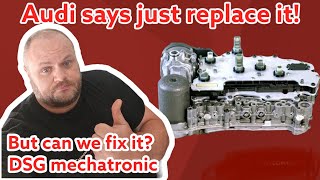
- Volkswagen Auto Group (VW, Audi, Skoda): TSB TPI 2048712/1 dictates replacing the entire mechatronic unit. However, independent specialists routinely fix the actual failure (a small internal filter and solenoid) for a fraction of the cost.
- MINI / BMW: Code P2884 relates to turbocharger boost deviation, not the transmission. Generic OBD-II definitions will lead to severe misdiagnosis.
- Ford: P2884 is linked to the failing TCM on DSP6 PowerShift transmissions. Owners should check the 'Ford PowerShift Transmission Settlement' for extended warranty coverage and reimbursement.
- Hyundai / Kia: P2884 is caused by a failing electric clutch actuator. Check with a dealer for open service campaigns or warranty extensions before repairing.
Real Owner Stories
2016 VW Golf GTE - Misdiagnosis and Final Fix
Owner experienced intermittent 'Gearbox Malfunction' warnings. The car eventually lost all propulsion after the hybrid battery depleted.
What they tried:
- A VW dealer performed a software update, which failed within 10 minutes.
- The dealer then quoted a full gearbox replacement for over $20,000.
Outcome: The owner purchased a mechatronic repair kit. An independent shop performed the internal solenoid repair for $1,500, permanently fixing the vehicle.
Lesson: Dealers default to full transmission replacements. An internal solenoid repair by an independent specialist saves tens of thousands of dollars.
2016 Audi A3 e-tron - Dealer vs. Warranty
The vehicle became inoperable with code P2884 displayed shortly after purchase.
What they tried:
- The Audi dealer quoted $4,500 to replace the mechatronics unit.
Outcome: The repair was fully covered under Audi's 'Mechatronic Extended Warranty (Key U49)', which extends coverage to 15 years/150,000 miles.
Lesson: Always check for manufacturer extended warranties before paying out-of-pocket for mechatronic replacements.
2020 VW Passat GTE - The Unusual Case
The car only drove in electric mode. P2884 was the only fault code.
What they tried:
- The owner replaced the solenoid and filter kit, but the original filter was intact. The repair failed.
- The transmission fluid was extremely dark and burnt.
- Swapping in a used mechatronic unit caused a new code (P0754) due to software incompatibility.
Outcome: The burnt fluid indicated severe internal clutch pack failure, requiring a full transmission replacement. The incompatible used mechatronic complicated the diagnosis.
Lesson: Extremely dark or burnt fluid is a red flag for deeper mechanical failure. Used mechatronic units require exact part number matches to function.
2009 MINI Cooper S - The Wrong Definition
Vehicle intermittently entered limp mode with half-power. Scanning revealed code 2884.
What they tried:
- The owner researched transmission clutch issues based on generic OBD-II definitions.
- Using MINI-specific software revealed the true definition: 'Boost Pressure Control Deviation'.
Outcome: The owner shifted focus to the turbocharger system, investigating boost leaks and the wastegate actuator.
Lesson: Generic code definitions are misleading. On MINIs, P2884 is a turbo problem, not a transmission problem.
How to Prevent This Code From Triggering
- Perform DSG/DCT fluid and filter changes at scheduled intervals. (Every 40,000 miles for VAG DQ400; every 30,000-40,000 miles for Ford DPS6.) — Clean fluid prevents solenoid sticking and overheating, which are precursors to mechatronic failure.
- Avoid 'creeping' in traffic with light brake pressure. (Daily driving habit.) — Light brake pressure causes DCT clutches to partially engage, generating excessive heat. Use a firm foot on the brake when stopped.
- Use the parking brake correctly when parking on an incline. (Every time you park on a hill.) — Engaging the parking brake before shifting into Park reduces long-term stress on the transmission's internal components.
- Ensure the vehicle's battery and charging system are healthy. (Annual battery test.) — The TCM is highly sensitive to voltage drops. A weak battery causes erratic TCM behavior and triggers related fault codes.
Frequently Asked Questions
Can I just clear the P2884 code and keep driving?
No. Restarting the car temporarily clears the warning on hybrids, but the mechanical fault remains. The code will return, risking a sudden, complete loss of propulsion while driving.
What are common misdiagnoses for P2884?
The most costly misdiagnosis is replacing the entire transmission when only the mechatronic unit is faulty. Another is replacing the full mechatronic unit instead of just the clogged internal solenoid. Technicians also mistakenly replace TCMs when the true cause is a corroded wire.
Why did the dealer quote me $10,000 or more to fix this?
Dealership policy often dictates replacing the entire transmission assembly or mechatronic unit rather than performing internal component repairs. This approach is extremely expensive and usually unnecessary for this specific code.
Is a used mechatronic unit a good idea?
It is a gamble. A used unit must be the exact same hardware and software version, or it will trigger new fault codes. Cloning the software from the old unit to the new one is mandatory and requires a specialist.
Is a software update or coding required after the repair?
Yes. When a mechatronic unit or TCM is replaced, it must be programmed with the vehicle's VIN. Afterward, a clutch adaptation procedure must be run using a professional scan tool, or the code will return immediately.
Can I fix the P2884 code myself?
For most, this is not a DIY job. VAG repairs require removing the complex mechatronic unit from inside the transmission. Ford TCM replacements are mechanically easier but require expensive bidirectional programming tools to finish the job.
Will changing the transmission fluid fix P2884?
No. If the code is active, the solenoid is already clogged or failed. While a fluid change is required after replacing faulty components, it will not fix the existing mechanical blockage.
Key Takeaways
- Code P2884 indicates the engine disconnect clutch is stuck open, causing a complete loss of gasoline-powered propulsion.
- On 2015-2022 Volkswagen and Audi hybrids, this is most frequently caused by a shattered internal mechatronic filter screen clogging the N218 control solenoid.
- Independent specialists can repair the internal mechatronic solenoid for $1,200-$2,000, saving up to $10,000 compared to a dealer's full transmission replacement.
- Never replace the TCM or mechatronic unit without performing a mandatory post-repair clutch adaptation using a professional bidirectional scan tool.
- On 2007-2015 MINI vehicles, P2884 is a turbocharger boost deviation code, requiring smoke testing for boost leaks rather than transmission diagnostics.
Helpful Videos


Shop the Parts Behind P2884
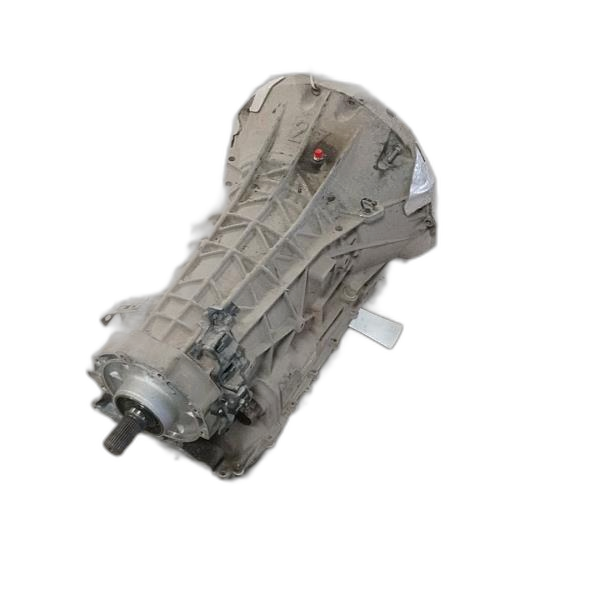
Below are the parts most often responsible for code P2884, ranked by how frequently each one is the actual culprit (per the diagnosis above). Tap any to see what we have for your vehicle.


The information in this article is provided for general reference and educational purposes only. Vehicle specifications, procedures, and part compatibility can vary by production date, trim level, and region. Always consult your vehicle's factory service manual and verify part numbers before purchasing or performing repairs. Safety-critical components such as airbags, seat belts, and braking systems should be installed by a qualified professional.
- 🧭 Diagnostic Flowchart
- 🎬 Helpful Videos
- 🛍️ Shop This Part
- What Does P2884 Mean?
- Can I Drive With P2884?
- Common Causes
- Symptoms
- Common Fixes & Costs
- DIY vs Professional
- Used vs. New Parts: Buying Guide
- What Happens If You Wait — Timeline
- Cost of Not Fixing It
- Diagnosis Steps
- When This Code Triggers (Freeze-Frame Conditions)
- Related Codes
- Climate & Environmental Factors
- How to Talk to a Mechanic About This Code
- Where to Take It: Dealer vs Independent vs Chain
- When to Walk Away From the Repair
- What Scan Tool You Need for This Code
- How to Clear the Code After You Fix It
- Will This Fail Emissions / State Inspection?
- Most Commonly Affected Vehicles
- Manufacturer-Specific Notes
- Real Owner Stories
- 2016 VW Golf GTE - Misdiagnosis and Final Fix
- 2016 Audi A3 e-tron - Dealer vs. Warranty
- 2020 VW Passat GTE - The Unusual Case
- 2009 MINI Cooper S - The Wrong Definition
- How to Prevent This Code From Triggering
- Frequently Asked Questions
- Can I just clear the P2884 code and keep driving?
- What are common misdiagnoses for P2884?
- Why did the dealer quote me $10,000 or more to fix this?
- Is a used mechatronic unit a good idea?
- Is a software update or coding required after the repair?
- Can I fix the P2884 code myself?
- Will changing the transmission fluid fix P2884?
- Key Takeaways
- 🎟️ Get 5% Off