

OBD-II Code P2885: A Comprehensive Guide for Clutch and Turbocharger Faults
What P2885 means, why it triggers, and how to fix it for good
- P2885 indicates a transmission clutch fault on domestic brands like Jeep and Dodge, but means a turbocharger boost deviation on European cars like MINI and BMW.
- Before replacing a $2,000 turbocharger on European models, perform a smoke test to rule out a $30 cracked vacuum hose or a failed PCV valve.
- For Jeep Wrangler 4xe and Dodge Dart models, immediately check for Technical Service Bulletins (TSBs) as the fix is almost always a 1-hour dealer software update.
- Ignoring a turbo-related P2885 code forces the turbo to over-spin, which destroys the internal bearings and adds up to $2,500 in catalytic converter damage.
What Does P2885 Mean?

P2885 is a dual-meaning code that depends entirely on your vehicle's manufacturer. For North American brands like Jeep, Dodge, and Chrysler, it signifies a problem with the automatic transmission's 'Engine Disconnect Clutch', which engages and disengages the engine from the drivetrain. For European brands, most notably MINI, BMW, and Volkswagen, the code means 'Boost Pressure Control Deviation'. This indicates the turbocharger system is producing a boost level significantly different from what the engine computer (ECU/DME) requested.
Technical definition: The official SAE J2012 definition for P2885 is "Clutch B Friction Element Apply Time/Stroke - Range/Performance", referring to the engagement time of a specific automatic transmission clutch pack. However, manufacturers like BMW/MINI use a proprietary definition: "Boost Pressure Control Deviation, Plausibility", meaning the measured boost pressure from the T-MAP sensor does not match the target boost pressure calculated by the engine computer.
Can I Drive With P2885?
Yes, But With Caution. Driving is possible but not recommended. For transmission faults, you risk sudden power loss or erratic shifting, creating an immediate safety hazard. For turbo faults, ignoring the code forces the turbo to over-spin to compensate for a leak. This leads to catastrophic failure, sending metal fragments into your engine and potentially destroying the catalytic converter, adding $800-$2500 to the repair bill.
Common Causes

- Vacuum and PCV System Leaks (European Models) (Very Common) — In turbocharged engines, the boost control system relies on vacuum hoses. Brittle, collapsed lines or a torn diaphragm in the Positive Crankcase Ventilation (PCV) valve cover create unmetered air leaks. This is the number one cause of P2885 on MINIs and BMWs.
- Transmission Control Module (TCM) Software Bug (Domestic Models) (Very Common) — For vehicles where P2885 indicates a clutch fault (like the Jeep Wrangler 4xe or Dodge Dart), the issue is almost always a software glitch within the TCM or Hybrid Control Module requiring a dealer update.
- Failing Turbocharger Diverter Valve (BOV) (Common) — This valve releases excess boost pressure when the throttle closes. The internal rubber diaphragm tears or the electronic solenoid fails, creating a massive boost leak that prevents the turbo from reaching target pressure.
- Worn or Sticking Turbocharger Wastegate (Common) — The wastegate controls boost by diverting exhaust gas. The mechanical linkage develops excessive play, the flapper valve fails to seal, or the actuator diaphragm tears, causing boost to fall out of the acceptable range.
- Faulty Boost Pressure Converter (Solenoid) (Less Common) — This electronic solenoid modulates the vacuum sent to the wastegate actuator. When it fails, it cannot accurately control the wastegate, leading to incorrect boost levels.
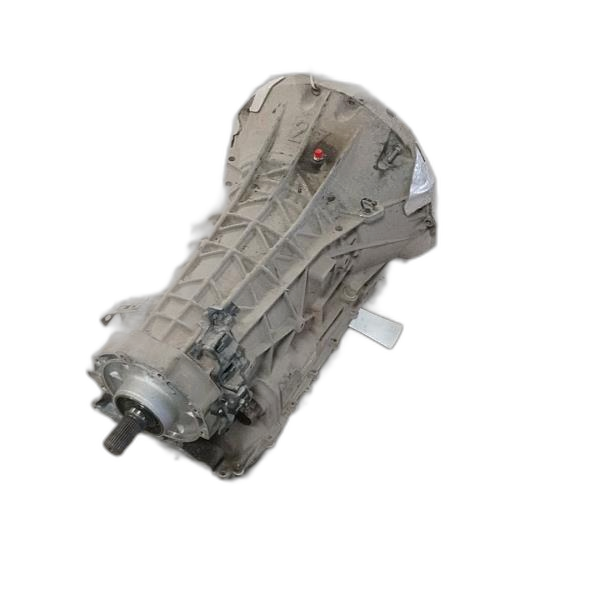
- Low Transmission Fluid or Internal Clutch Failure (Less Common) — For transmission-related faults, low or burnt fluid impedes the hydraulic pressure needed for clutch engagement. In high-mileage cases, the clutch friction elements mechanically wear out.
- Damaged Wiring or Connectors (Less Common) — Wires leading to the transmission solenoids, boost control solenoid, or pressure sensors fray, corrode, or melt against hot engine components, causing intermittent signal loss.
- Faulty Boost Pressure Sensor (T-MAP) (Uncommon) — The sensor measuring boost pressure fails and provides inaccurate readings. If the sensor tells the ECU the boost is out of range, it triggers the code even if actual mechanical boost is fine.
Symptoms

- Drastic Loss of Power (Limp Mode) — The vehicle's computer intentionally limits engine power to prevent turbo or engine damage. This is the most noticeable symptom for turbo-related faults.
- Jerky or Harsh Shifting — In vehicles with the transmission fault, shifts are rough, delayed, or clunk heavily, especially when shifting from Park into Drive.
- Audible Hissing or Whistling Noises — A loud hissing sound from the engine bay under acceleration indicates a pressurized boost leak. A grinding noise signals severe mechanical turbo failure.
- Check Engine Light and 'Half-Power' Warning (also visible on scanner) — The primary indicator. On MINIs and BMWs, a 'half-power' engine symbol appears on the dash, immediately signaling reduced performance.
Diagnostic Flowchart
Tap your situation to follow the diagnostic path that matches what you're seeing on this code.
Common Fixes & Costs
- Replace Cracked Vacuum Hoses or PCV Valve Cover
— Parts: $30-$350, Labor: $100-$300, ~2 hr book time
(Intermediate)
MINI Cooper S (R56): OEM
Universal: OEM - Update TCM/PCM Software (TSB Fix) — Parts: $0, Labor: $150-$250, ~1 hr book time (Professional)
- Replace Turbocharger Diverter Valve
— Parts: $80-$250, Labor: $100-$250, ~0.8 hr book time
(DIY)
MINI / VW / Audi: OEM - Replace Boost Pressure Converter (Solenoid)
— Parts: $50-$120, Labor: $75-$150, ~1.5 hr book time
(DIY)
BMW 335i (N54 Engine): OEM - Replace Turbocharger Assembly — Parts: $900-$2500, Labor: $800-$1500, ~14 hr book time (Professional)
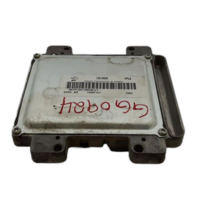
- Replace Transmission Control Module (TCM) — Parts: $600-$1200, Labor: $200-$400, ~2 hr book time (Professional)
Used vs. New Parts: Buying Guide
When a used part is worth it: For a high-cost component like a turbocharger, a used OEM unit from a low-mileage vehicle scrapped due to a rear-end collision is a cost-effective option for an older car.
Donor-vehicle mileage cap: roughly under 80000 miles for the part to have meaningful remaining life.
Donor quality checklist:
- Verify the donor vehicle's VIN to confirm it wasn't scrapped for engine or emissions issues.
- Physically inspect the used turbo for excessive shaft play, damaged turbine fins, or cracks in the housing.
- Match the part number exactly, as superseded numbers have different electronic controls.
Decision logic:
- If The part is electronic, like a TCM or boost solenoid. → Buy new. Used electronics carry a high risk of failure and require expensive reprogramming.
- If The part is a known wear item (e.g., PCV valve cover, diverter valve). → Buy a new OEM or upgraded aftermarket part. A used part is already near the end of its life.
Warranty tradeoff: Used parts from salvage yards offer a 30-90 day functional warranty. New OEM parts carry a 1-2 year warranty.
Worst-case if a used part fails: $800-$1500 if a used turbo fails after installation, representing the wasted labor cost.
What Happens If You Wait — Timeline
- 0-1 month: Intermittent Check Engine Light appears under hard acceleration and clears on its own. Slight hesitation is felt. For transmission faults, occasional clunky shifts occur. (MPG impact: 0-5%% · Added cost: $0-$50 in wasted fuel.)
- 1-3 months: Check Engine Light remains illuminated. The vehicle frequently enters 'limp mode' with a drastic loss of power. The turbocharger over-spins to compensate for the leak, accelerating bearing wear. (MPG impact: 5-15%% · Added cost: $50-$200 in wasted fuel and premature turbo wear.)
- 3-6 months: Constant over-speeding and heat destroy the turbo's internal seals. The car emits blue smoke from burning oil. A rich fuel mixture overheats and damages the catalytic converter. (MPG impact: 15-25%% · Added cost: $1200-$2800 for catalytic converter replacement.)
- 6+ months: Catastrophic turbocharger failure. The compressor wheel shatters, sending metal fragments into the intercooler and engine cylinders, causing severe internal engine damage. The car is undrivable. (MPG impact: N/A% · Added cost: $3000-$8000+ for a new turbocharger, intercooler, and engine replacement.)
Cost of Not Fixing It
- 0-1 Month: Noticeable loss of power ('limp mode') and a drop in fuel economy. The vehicle is sluggish and unsafe to drive in highway traffic. (Added cost: Negligible, other than increased fuel consumption.)
- 1-6 Months: The turbocharger over-spins to compensate for a boost leak, leading to excessive bearing wear. A rich fuel mixture overheats and damages the catalytic converter. (Added cost: $1200-$2800 for catalytic converter replacement.)
- 6+ Months: Catastrophic turbocharger failure. The compressor wheel shatters, sending metal fragments into the intercooler and engine, requiring a full engine replacement. (Added cost: $3000-$8000+ for turbocharger and engine repair.)
Diagnosis Steps
- Scan for Codes and Check TSBs
Use an OBD-II scanner to check for companion codes (like P0299 or P1497). Search for Technical Service Bulletins (TSBs) for your specific VIN. For Jeep/Dodge/Chrysler, a TSB software update is the definitive fix.
Tools: OBD-II Scanner, Internet Access (Beginner) - Perform a Smoke Test on the Intake and Vacuum System
This is the single most effective diagnostic step for European cars. Feed low-pressure smoke into the intake system. Smoke will pour out of hidden cracks in vacuum hoses, the PCV valve cover, or the intercooler, pinpointing the exact leak causing the boost deviation.
Tools: Automotive Smoke Machine, Flashlight (Intermediate) - Test the Diverter Valve and Boost Solenoid
Remove the electronic diverter valve and inspect the rubber diaphragm for tears. Apply 12V DC to the solenoid pins; you must hear a sharp click. Test the boost control solenoid (pressure converter) for resistance with a multimeter (typically 10-20 Ohms).
Tools: Socket Set, Torx Bits, Multimeter, 12V Power Source (Advanced) - Test the Turbocharger Wastegate Actuator
Connect a hand vacuum pump to the wastegate actuator's vacuum port. Apply 15-20 inHg of vacuum. The rod must move smoothly, and the gauge must hold steady for 60 seconds. If vacuum drops, the internal diaphragm is torn and requires replacement.
Tools: Hand Vacuum Pump with Gauge (Advanced) - Analyze Live Boost Data
Monitor live data streams while driving. Graph 'Target Boost Pressure' vs. 'Actual Boost Pressure'. The code triggers if actual pressure deviates from the target by more than 3-4 PSI under load. At idle, verify a strong engine vacuum of -10 to -12 PSI.
Tools: Advanced Bidirectional Scan Tool (Professional) - Check Transmission Fluid and TCM Communication
For transmission-related codes (Domestic brands), verify the transmission fluid level and condition. Use an advanced scan tool to confirm the TCM is powered, grounded, and communicating properly on the CAN bus network without dropping signals.
Tools: Advanced Scan Tool, Vehicle Lift (Professional)
When This Code Triggers (Freeze-Frame Conditions)
- Engine Coolant Temp: 180-220°F (82-104°C) (The fault sets when the engine is fully warmed up and operating in closed-loop fuel control.)
- Engine RPM: 2500-4500 RPM (Triggers during moderate to hard acceleration, such as merging onto a highway, when high boost is requested.)
- Engine Load: 40-80% (Occurs under significant engine load when the turbo is expected to produce boost but fails to meet the target.)
- Vehicle Speed: 30-70 mph (50-110 km/h) (Happens while accelerating through gears or at a steady cruise where boost pressure is actively managed.)
Related Codes
- P0299 — Means 'Turbo Underboost'. P2885 is more specific, meaning boost deviates from the commanded target. Seeing both confirms a massive physical leak or a stuck-open wastegate.
- P1497 — A MINI-specific code for 'Down-stream Air Leak'. It points to a leak between the throttle body and the engine. If you have both codes, a smoke test is mandatory.
- P115C — MINI code for 'Mass Air Flow Plausibility'. Caused by an unmetered air leak downstream of the MAF sensor, which is the exact same root cause that triggers P2885.
- U0401 — Means 'Implausible Data Received From ECM/PCM'. If seen with P2885 on a Jeep/Dodge, it confirms a control module communication problem. Diagnose the U0401 first.
Climate & Environmental Factors
- Cold Weather: Low temperatures cause rubber vacuum lines and PCV diaphragms to become brittle and crack. This is the leading cause of new vacuum leaks triggering P2885 during winter.
- High Altitude: Lower ambient air pressure forces the turbocharger to spin faster to achieve target boost. A minor leak or worn wastegate that goes unnoticed at sea level triggers the code at altitude.
- High Ambient Heat: Extreme under-hood temperatures accelerate rubber degradation, making hoses soft and prone to collapse under vacuum. Heat expands hairline cracks in plastic components, creating leaks.
How to Talk to a Mechanic About This Code
Say this: "For a MINI/BMW/VW, say: 'I have a P2885 boost deviation code. Please start with a smoke test for leaks and inspect the diverter valve before quoting a new turbo.' For a Jeep/Dodge/Chrysler, say: 'I have a P2885 clutch fault code. Can you confirm if a TSB software update applies to my VIN before running diagnostics?'"
This language proves you've done your research. It directs the shop to the most cost-effective solutions first (leaks/software) and prevents them from immediately quoting a $2,500 turbocharger or transmission module.
Avoid saying:
- 'Just fix whatever's wrong'
- 'My check engine light is on, can you look at it?'
- 'Whatever you recommend'
Questions to ask before authorizing the repair:
- Did the smoke test show a leak? If not, did you test the wastegate actuator and diverter valve?
- Does my vehicle's VIN fall under a TSB for a software update?
- Can you show me the torn diaphragm or failed part before you replace it?
- What is the warranty on this specific repair, covering both parts and labor?
Where to Take It: Dealer vs Independent vs Chain
- Dealer:
Best for: Jeep/Dodge/Chrysler vehicles requiring a software update (TSB fix)., Vehicles still under powertrain or emissions warranty.
Downsides: Highest labor rate., Routinely recommends replacing a full turbo assembly when a smaller $150 part is the actual cause. (Typical cost: +50% vs. baseline) - Independent Shop:
Best fit for most scenarios. A qualified European independent shop is the top choice for out-of-warranty boost issues. The dealer is mandatory for Jeep/Dodge/Chrysler software TSBs.
Best for: Out-of-warranty MINI, BMW, or VW with the turbo-related fault., Finding a shop that specializes exclusively in European cars.
Downsides: A general mechanic lacks experience with specific turbo systems and dealer-level software tools. (Typical cost: +0% vs. baseline) - Chain Shop:
AVOID. The dual-meaning and complexity of P2885 make it highly prone to expensive misdiagnosis at a non-specialist chain shop.
Best for: Simple maintenance like oil changes or tires.
Downsides: High risk of misdiagnosis due to lack of specialized tools (smoke machine) and experience with European boost codes. (Typical cost: -10% vs. baseline)
When to Walk Away From the Repair
If the estimated repair cost exceeds 40-50% of the car's private-party value, seriously consider selling the car as-is or trading it in.
- Car worth $4000, fix is $3500: Walk away. The repair cost is nearly the entire value of the car.
- Car worth $15000, fix is $450: Fix it. The repair is a small fraction of the car's value and restores its function.
- Car worth $3000, fix is $1800: Borderline. Get a second opinion before proceeding, as a cheaper fix (like a $30 vacuum hose) likely exists.
What Scan Tool You Need for This Code
Minimum: A scanner that graphs live data, specifically 'Target Boost Pressure' vs 'Actual Boost Pressure'.
A basic $20 code reader only shows the P2885 code. It cannot display the live data needed to see the boost deviation as it happens, which is essential for diagnosing the turbo fault.
Budget: BlueDriver Pro Scan Tool (~$100) — Connects to your smartphone to read fault codes, view freeze-frame data, and graph live data streams like boost pressure.
Mid-range: Foxwell NT510 Elite (~$180) — Reads manufacturer-specific codes for brands like BMW/MINI that generic scanners miss. Offers deeper system access and detailed live data PIDs.
Professional: Autel MaxiCOM MK808 (~$450) — Offers full bidirectional control. This allows you to actively command the wastegate solenoid or diverter valve to test their function directly from the scanner.
Rent vs buy: For P2885, which requires live data analysis and multiple drive tests, buying a budget-friendly scanner like the BlueDriver is a mandatory investment.
How to Clear the Code After You Fix It
- Use an OBD-II scan tool to clear the diagnostic trouble codes.
- Ensure the fuel tank is between 15% and 85% full.
- Perform a complete OBD-II drive cycle to allow readiness monitors to run.
Drive cycle (~30 minutes): A typical drive cycle includes: a cold start (engine off for 8+ hours), a 2-5 minute idle, 10-15 minutes of mixed city driving, followed by 5-10 minutes of steady highway speed (55-60 mph) without using cruise control.
Readiness monitors affected: Catalyst Monitor, Oxygen (O2) Sensor Monitor, EVAP System Monitor
Before emissions retest: drive at least 100 miles to fully set monitors.
Watch out for:
- Clearing codes resets all readiness monitors to 'Incomplete'. Going for an emissions test before they are 'Ready' results in an automatic failure.
- The code returns immediately under heavy acceleration if the root cause (like a torn vacuum line) was not fixed.
Will This Fail Emissions / State Inspection?
Yes — this code typically fails an OBD-II emissions inspection.
- California: An active Check Engine Light is an automatic failure. After repair, all readiness monitors must be 'Complete'. Driving 100+ miles is required to set monitors before a retest.
- New York: The NYS DMV inspection includes an OBD-II scan. An illuminated Malfunction Indicator Lamp for P2885 is an automatic failure.
- Texas: In the 17 counties requiring emissions testing, an active Check Engine Light causes an automatic inspection failure.
Most Commonly Affected Vehicles
- MINI Cooper S / JCW (R56, R55, R57) (2007-2013) — Extremely common. Always caused by a boost pressure deviation. Top culprits are cracked vacuum lines, a torn diverter valve, a worn wastegate, or a cracked PCV valve cover.
- Jeep Wrangler 4xe (2021-2024) — P2885 points to the engine disconnect clutch. TSB #18-026-25 REV. A addresses this with a mandatory software update for the PCM, HCP, and TCM.
- BMW 135i, 335i, 535i (N54/N55 engines) (2007-2015) — Means 'Charge-air pressure control too low'. Causes are boost leaks, faulty pressure converters (solenoids), or wastegate rattle/wear.
- Dodge Dart (2013-2016) — On 2.4L models with the dual-clutch transmission, this code is due to TCM software problems. TSB #18-023-16 REV. C provides the software update.
- Chrysler 200 (2015-2017) — Shares a platform with the Dodge Dart. TSB #18-023-16 REV. C and Customer Satisfaction Notification V51 address the required software updates.
- Volkswagen GTI, Jetta, Tiguan (2.0T TSI) (2008-2018) — Commonly caused by a failed diverter valve diaphragm or a massive leak in the PCV system. Upgrade to the piston-style 'Rev D' diverter valve.
Manufacturer-Specific Notes
- MINI / BMW: P2885 is never a transmission clutch issue on these cars. It is always 'Boost Pressure Control Deviation'. Start diagnosis with a smoke test for vacuum leaks and test the diverter valve.
- Jeep / Chrysler / Dodge: On modern FCA vehicles, P2885 is related to the 'Engine Disconnect Clutch'. The first step is checking for TSBs, as a dealer software update is the most common fix.
- Volkswagen / Audi: The diverter valve and PCV system are notorious failure points leading to boost deviation. Always update older diaphragm-style diverter valves to the newer piston-style (Rev D or aftermarket).
Real Owner Stories
2011 MINI Cooper JCW at 90K miles with recurring P2885
The check engine light with a half-power warning appeared only during wide-open throttle pulls. The owner had already replaced the diverter valve, vacuum lines, and valve cover.
What they tried:
- Replaced diverter valve, vacuum lines, vacuum canister, valve cover gaskets, and timing chain components.
- Performed a walnut blasting service on the intake valves.
Outcome: A mechanic diagnosed excessive play in the turbocharger's wastegate linkage. The owner replaced the entire turbocharger with an upgraded unit, permanently resolving the code.
Lesson: If common culprits like vacuum lines and the diverter valve are new, P2885 points to mechanical wear on the turbo itself. Inspect the wastegate for excessive movement before throwing more parts at the engine.
2009 MINI Cooper S quoted $10,000 for a turbo replacement
A dealership quoted $10,000 to fix a persistent P2885 boost deviation code by replacing the turbo and related systems. The owner decided to diagnose it himself.
What they tried:
- Inspected the vacuum lines and found a section of hose near the front of the engine had collapsed and gone soft.
Outcome: The owner cut off the bad section of the vacuum hose and spliced in a new $5 piece. This simple repair completely solved the code.
Lesson: Always start with the simplest failures. A thorough physical inspection of all vacuum lines for soft, oily, or collapsed sections saves thousands in diagnostic fees and unnecessary parts.
2024 Jeep Wrangler 4xe with P2885 and loss of power
The vehicle triggered a check engine light for P2885, indicating an 'Engine Disconnect Clutch Engagement Fault', causing harsh transitions from electric to gasoline power.
What they tried:
- Researched the code and found a specific Technical Service Bulletin (TSB) related to the issue.
Outcome: The dealership performed a software update specified in TSB #18-026-25 REV. A, updating the Powertrain, Hybrid, and Transmission Control Modules. The issue was resolved under warranty.
Lesson: For modern, software-heavy vehicles, the first step for a powertrain code is searching for TSBs. The problem is often a known software bug requiring a dealer-only flash.
How to Prevent This Code From Triggering
- Perform regular engine oil and filter changes with high-quality synthetic oil. (Every 5,000 miles.) — Clean oil is critical for turbocharger bearing longevity. Oil starvation or sludge is a primary cause of catastrophic turbo failure and wastegate binding.
- Proactively replace known failure-prone rubber vacuum lines and the PCV valve cover. (Every 60,000-80,000 miles.) — These parts degrade with extreme under-hood heat. Replacing them before they crack prevents the vacuum leaks that trigger P2885 and leave you in limp mode.
- Allow a 30-60 second cool-down period after hard driving. (After spirited driving or long highway runs.) — Idling allows oil to circulate and carry heat away from the turbocharger. This prevents oil from burning (coking) inside the bearings, which causes blockages and failure.
Frequently Asked Questions
What is the number one misdiagnosis for P2885 on a MINI or BMW?
The most expensive mistake is replacing the entire turbocharger without performing a thorough diagnosis first. The actual cause is usually a $30 vacuum hose, a failed $150 diverter valve, or a PCV system leak. Always perform a smoke test before condemning a turbo that costs thousands to replace.
I replaced the turbo and the P2885 code came back. What now?
If a new turbo didn't fix it, the problem is an elusive leak in the intake system, a faulty boost pressure sensor, or a bad boost control solenoid. Go back to basics and perform a comprehensive smoke test. Verify the control solenoids are functioning to spec.
Can an aftermarket engine tune cause code P2885?
Yes. Engine tunes demand higher-than-stock boost levels, making the system highly sensitive. A tiny vacuum leak or weak diverter valve spring that goes unnoticed on a stock car triggers a plausibility error when the ECU commands higher boost.
My car has P2885 but doesn't go into limp mode. What does that mean?
The fault is intermittent or hovering on the edge of the ECU's threshold. You get the check engine light under hard acceleration without entering full limp mode. This is an early warning that a component is failing and will eventually cause consistent limp mode.
Can I fix P2885 myself?
Replacing a cracked vacuum line or a bolt-on diverter valve is a manageable DIY job. However, if the cause is a faulty control module requiring programming or an internal turbo failure, take the vehicle to a specialized European auto shop or dealer.
Will clearing the P2885 code fix the problem?
No. Clearing the code only turns the check engine light off temporarily. The code returns as soon as the car's computer runs its diagnostic checks and detects the boost deviation or clutch fault again.
Why does this one code have two completely different meanings?
The SAE provides a standard list of generic trouble codes, but manufacturers use 'P2' codes for proprietary definitions. The generic definition relates to a transmission clutch, but BMW and MINI assigned it to describe a deviation in their turbocharger control systems.
Key Takeaways
- P2885 indicates a transmission clutch fault on domestic brands like Jeep and Dodge, but means a turbocharger boost deviation on European cars like MINI and BMW.
- Before replacing a $2,000 turbocharger on European models, perform a smoke test to rule out a $30 cracked vacuum hose or a failed PCV valve.
- For Jeep Wrangler 4xe and Dodge Dart models, immediately check for Technical Service Bulletins (TSBs) as the fix is almost always a 1-hour dealer software update.
- Ignoring a turbo-related P2885 code forces the turbo to over-spin, which destroys the internal bearings and adds up to $2,500 in catalytic converter damage.
Shop the Parts Behind P2885
Below are the parts most often responsible for code P2885, ranked by how frequently each one is the actual culprit (per the diagnosis above). Tap any to see what we have for your vehicle.





The information in this article is provided for general reference and educational purposes only. Vehicle specifications, procedures, and part compatibility can vary by production date, trim level, and region. Always consult your vehicle's factory service manual and verify part numbers before purchasing or performing repairs. Safety-critical components such as airbags, seat belts, and braking systems should be installed by a qualified professional.
- 🧭 Diagnostic Flowchart
- 🛍️ Shop This Part
- What Does P2885 Mean?
- Can I Drive With P2885?
- Common Causes
- Symptoms
- Common Fixes & Costs
- Used vs. New Parts: Buying Guide
- What Happens If You Wait — Timeline
- Cost of Not Fixing It
- Diagnosis Steps
- When This Code Triggers (Freeze-Frame Conditions)
- Related Codes
- Climate & Environmental Factors
- How to Talk to a Mechanic About This Code
- Where to Take It: Dealer vs Independent vs Chain
- When to Walk Away From the Repair
- What Scan Tool You Need for This Code
- How to Clear the Code After You Fix It
- Will This Fail Emissions / State Inspection?
- Most Commonly Affected Vehicles
- Manufacturer-Specific Notes
- Real Owner Stories
- 2011 MINI Cooper JCW at 90K miles with recurring P2885
- 2009 MINI Cooper S quoted $10,000 for a turbo replacement
- 2024 Jeep Wrangler 4xe with P2885 and loss of power
- How to Prevent This Code From Triggering
- Frequently Asked Questions
- What is the number one misdiagnosis for P2885 on a MINI or BMW?
- I replaced the turbo and the P2885 code came back. What now?
- Can an aftermarket engine tune cause code P2885?
- My car has P2885 but doesn't go into limp mode. What does that mean?
- Can I fix P2885 myself?
- Will clearing the P2885 code fix the problem?
- Why does this one code have two completely different meanings?
- Key Takeaways
- 🎟️ Get 5% Off