

OBD-II Code P2959: EGR Control System Fault
What P2959 means, why it triggers, and how to fix it
- Code P2959 is a General Motors-specific fault indicating an EGR bypass valve control issue on 2024 and newer 6.6L and 3.0L Duramax diesel trucks.
- A software glitch in the Engine Control Module (ECM) is the #1 cause, requiring a dealer reflash that is fully covered under the 8-year/80,000-mile emissions warranty.
- Freezing condensation inside the EGR valve triggers this code in cold weather; GM TSB PIP5976 explicitly warns against replacing the valve and prescribes a software update instead.
- Do not replace the EGR bypass valve without first verifying your VIN against open GM Technical Service Bulletins, as a new $400 valve will not fix the underlying software logic.
- Diagnose the vehicle within 100-200 miles to prevent excessive soot buildup from destroying the Diesel Particulate Filter (DPF)—a repair costing upwards of $3,000.
What Does P2959 Mean?
P2959 is a manufacturer-specific code used by General Motors (GM) for Exhaust Gas Recirculation (EGR) system faults. It signals the Engine Control Module (ECM) detected a performance issue with the EGR bypass valve or its control software, preventing the valve from operating as commanded.
Technical definition: On 2024+ General Motors vehicles, P2959 indicates a fault in the EGR bypass valve control circuit. GM Technical Service Bulletins confirm the code triggers due to an ECM software anomaly or physical freezing of the EGR bypass valve, which prevents it from achieving its commanded position.
Can I Drive With P2959?
Yes, But With Caution. Yes, but address it within 100-200 miles. Ignoring it causes reduced engine performance, poor fuel economy, and failed emissions tests. Over time, a faulty EGR system causes excessive soot buildup, clogging the Diesel Particulate Filter (DPF)—a repair costing between $2,000 and $5,000.
Common Causes
- Engine Control Module (ECM) Software Anomaly (Very Common) — For 2024+ GM trucks, a software glitch is the primary cause. GM issued Technical Service Bulletins (TSBs) requiring an updated ECM calibration to fix the logic triggering the code.
- Condensation Freezing in EGR Bypass Valve (Common) — In cold climates, moisture builds up inside the EGR bypass valve and freezes. This immobilizes the valve, prompting the ECM to log P2959. GM TSB PIP5976 specifically addresses this.
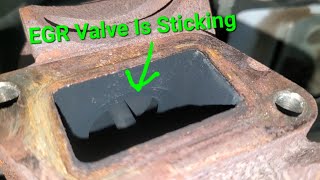
- Clogged EGR Passages or Sticking Valve (Less Common) — Soot and carbon from the exhaust build up over time, clogging the EGR valve or cooler passages. This physical restriction causes the valve to stick intermittently, deviating from the ECM's commanded position.
- Faulty EGR Bypass Valve (Less Common) — The EGR bypass valve fails mechanically or electronically. The internal motor burns out or the gears strip, preventing it from responding to ECM commands.
- Wiring or Connector Issues (Rare) — The wiring harness or electrical connector for the EGR bypass valve suffers damage, corrosion, or a loose connection. This severs the signal between the ECM and the valve.
- Faulty EGR Temperature Sensor (Rare) — An inaccurate EGR temperature sensor forces the ECM to command the EGR valve incorrectly, logging a performance fault even if the valve itself works perfectly.
- Upstream Sensor Failure (Rare) — The ECM relies on the Manifold Absolute Pressure (MAP) and Mass Airflow (MAF) sensors to determine EGR position. Faulty data from these sensors causes the ECM to command inappropriate EGR operation, flagging a P2959 fault.
Symptoms
- Check Engine Light On — The ECM illuminates the light immediately upon detecting the fault. On 2024+ GM trucks, this is often the only noticeable symptom.
- Reduced Engine Power (Limp Mode) — A malfunctioning EGR system triggers 'limp mode' to prevent engine damage, resulting in a severe loss of acceleration and limited top speed.
- Decreased Fuel Economy — An inefficient EGR system prevents the engine from running at optimal temperatures, causing a 5-10% drop in fuel mileage.
- Rough Idle or Stalling — An EGR valve stuck open floods the intake with exhaust gases at idle, choking the engine and causing it to run rough or stall completely.
- Excessive Black Smoke from Exhaust — Incorrect EGR flow skews the air-fuel ratio, causing incomplete combustion and thick black smoke from the tailpipe under heavy acceleration.
- Engine Knocking or Pinging — An EGR valve stuck closed spikes combustion chamber temperatures, causing the fuel to detonate prematurely (knocking) under load.
Common Fixes & Costs
- Engine Control Module (ECM) Reflash — Parts: $0, Labor: $100 - $250, ~1.0 hr book time (Professional)
- Replace EGR Bypass Valve — Parts: $200 - $350, Labor: $150 - $300, ~1.5 hr book time (Intermediate)
- Clean EGR Valve and Passages 🎬 See this walkthrough on how to clean a Duramax EGR valve. — Parts: $15 - $30, Labor: $150 - $300, ~2.0 hr book time (DIY)
- Repair Damaged Wiring or Connector — Parts: $10 - $50, Labor: $100 - $200, ~1.2 hr book time (Intermediate)
- Replace EGR Temperature Sensor — Parts: $40 - $120, Labor: $50 - $100, ~0.8 hr book time (DIY)
DIY vs Professional
- Engine Control Module (ECM) Reflash 🟢 Beginner
Tools: GM SPS2 Programming Software, MDI/VCI Interface Tool - Replace EGR Bypass Valve 🟢 Beginner
Tools: Socket Set (8mm, 10mm, 13mm), Torx Bits (T20/T30), Torque Wrench, Gasket Scraper. - Clean EGR Valve and Passages 🟢 Beginner
Tools: Socket Set, EGR cleaner spray, soft brass brushes, gasket scraper, new gaskets. - Repair Damaged Wiring or Connector 🟢 Beginner
Tools: Digital Multimeter, Wire Strippers, Crimpers, Heat Shrink Tubing, Replacement Pigtail.
Used vs. New Parts: Buying Guide
When a used part is worth it: Never buy a used EGR valve for a 2024+ GM truck. The fix is almost always a free software update. If the valve is truly broken, buy new to ensure updated internal electronics.
Donor-vehicle mileage cap: roughly under 20000 miles for the part to have meaningful remaining life.
Donor quality checklist:
- Verify the exact part number matches; superseded parts carry different software compatibility.
- Inspect the electrical connector pins for green corrosion or heat melting.
- Reject parts from vehicles scrapped due to engine fires or front-end collisions.
Decision logic:
- If Vehicle is under the 8-year/80,000-mile federal emissions warranty → Visit a dealer immediately. The repair is covered at zero cost.
- If A TSB indicates a software update is the primary fix → Do not buy any parts. Schedule a dealer appointment for the ECM reflash.
- If Vehicle is out of warranty and the valve motor is confirmed dead via multimeter → Purchase a new OEM (ACDelco) part to guarantee correct ECM communication.
Warranty tradeoff: Used parts offer a 30-day warranty. New OEM parts include a 1-year warranty. Dealer-installed warranty repairs guarantee the fix for the life of the emissions warranty.
Worst-case if a used part fails: $400 if a used part fails, requiring a second replacement part and double the labor charges.
Cost of Not Fixing It
- 0-1 month: Failed emissions test and a 5-10% drop in fuel economy due to inefficient combustion. (Added cost: $20-$50 per month in wasted fuel.)
- 1-6 months: Increased soot production clogs the Diesel Particulate Filter (DPF), forcing constant, fuel-heavy regeneration cycles. (Added cost: $100-$300 in wasted fuel and a required professional DPF cleaning service ($250-$500).)
- 6+ months: The DPF saturates with ash and melts internally from excessive regeneration heat, requiring full replacement. (Added cost: $2,000-$5,000 for a new DPF assembly and labor.)
Diagnosis Steps
- Check for Technical Service Bulletins (TSBs)
Before opening the hood, verify your VIN against open GM TSBs (PIP5976, PIP6004, 24-NA-094). A dealer software update is the definitive fix for most 2024+ models.
Tools: Phone or Computer (Beginner) - Scan for Other Codes
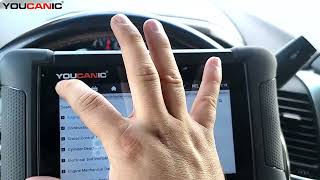
Use an OBD-II scanner to pull all DTCs. 🎬 Watch: How to use a scanner to troubleshoot and clear codes. Codes related to EGR sensors (P0405) or the DPF (P2463) isolate whether the issue is electrical, flow-related, or causing downstream exhaust blockages.
Tools: OBD-II Scanner (Beginner) - Monitor EGR Valve Operation with a Scan Tool
Use a bi-directional scan tool to view live data for 'EGR Commanded Position' vs. 'Actual Position'. Command the valve open and closed. A lack of response or significant lag confirms a physical or electrical failure.
Tools: Advanced Bi-Directional Scan Tool (Intermediate) - Inspect the EGR Bypass Valve and Connectors
Visually inspect the EGR bypass valve, electrical connector, and wiring harness for melted wires, corrosion, or loose pins. In freezing temperatures, check for visible ice buildup on the linkage.
Tools: Flashlight (Beginner) - Monitor EGR Airflow PID (Pro Tip)
Monitor the 'EGR Airflow Ratio' PID. At warm idle with EGR commanded to 0%, the value sits between 0.8 and 1.2. Command the valve to 30%; the value must drop significantly. If it remains low when commanded back to 0%, the valve is physically stuck open.
Tools: Advanced Bi-Directional Scan Tool (Advanced) - Check EGR Position Sensor Voltage (Pro Tip)
Back-probe the EGR position sensor connector with the ignition ON. The signal wire reads 0.7V-1.5V when closed and increases smoothly as the valve opens. A static 0V or 5V reading dictates a dead sensor or severed wire.
Tools: Digital Multimeter, Back-probe Kit (Advanced) - Test EGR Motor/Solenoid Resistance (Pro Tip)
Disconnect the EGR valve. Measure resistance across the two motor terminals. A healthy modern Duramax EGR valve reads 3-5 Ohms. Readings over 20 Ohms or 'OL' (open circuit) confirm a burned-out internal motor.
Tools: Digital Multimeter (Advanced) - Perform a Harness Wiggle Test (Pro Tip)
While monitoring the EGR position sensor signal voltage, aggressively wiggle the wiring harness near the EGR connector. Erratic voltage drops pinpoint an intermittent short or broken wire inside the insulation.
Tools: Digital Multimeter or Advanced Scan Tool (Advanced) - Remove and Inspect the EGR Valve
Remove the EGR bypass valve. Inspect the valve pintle and cooler passages for heavy carbon buildup. Even if the motor works, rock-hard carbon prevents the valve from seating, triggering the code.
Tools: Socket Set, Gasket Scraper, Pry Tools (Intermediate)
When This Code Triggers (Freeze-Frame Conditions)
- Engine Coolant Temp: 185-205°F (85-96°C) (The engine must reach full operating temperature before the ECM runs the EGR performance monitor.)
- RPM: 1200-2800 RPM (The EGR system activates during steady-state cruising, remaining closed at idle or wide-open throttle.)
- Engine Load: 25-70% (The diagnostic monitor runs under moderate load, such as maintaining speed on a flat highway.)
- Vehicle Speed: 45-65 mph (72-105 kph) (Steady highway driving provides the stable airflow required for the ECM to test EGR valve response.)
Related Codes
- P0401 — Indicates 'EGR Flow Insufficient.' P0401 points to a lack of physical exhaust flow volume, usually a clogged cooler. P2959 points to a control performance issue with the valve mechanism itself.
- P0404 — Indicates 'EGR Control Circuit Range/Performance.' P0404 is the generic OBD-II code for a valve position mismatch. P2959 is GM's highly specific version of this code, tied directly to software glitches and freezing events.
- P2459 — Indicates 'Diesel Particulate Filter Regeneration Frequency.' P2459 is a symptom code caused by P2959. A faulty EGR system creates excess soot, forcing the DPF to clean itself constantly. Fixing P2959 resolves P2459.
- P0405 — Indicates 'EGR Sensor 'A' Circuit Low.' P0405 isolates the problem to a dead electrical circuit or sensor. P2959 is a broader mechanical/software code that triggers even if the electrical circuit is perfectly intact.
Climate & Environmental Factors
- Freezing Temperatures: This is the primary trigger for P2959 on 2024+ GM HD trucks. Condensation forms inside the EGR bypass valve and freezes, immobilizing the mechanism. GM TSB PIP5976 explicitly addresses this, requiring a software update rather than parts replacement.
- High Humidity: High ambient humidity increases condensation inside the intake tract. When temperatures drop below freezing, this excess moisture turns to ice inside the EGR valve, accelerating the failure condition.
How to Clear the Code After You Fix It
- Use an OBD-II scan tool to clear the Diagnostic Trouble Codes (DTCs).
- Ensure the fuel tank is between 15% and 85% full.
- Perform a complete drive cycle to force the readiness monitors to run.
Drive cycle (~20 minutes): Start the engine cold (coolant below 122°F). Idle for 3 minutes with the A/C on. Accelerate to 55 mph and hold steady for 5 minutes. Coast down to 20 mph without touching the brakes. Accelerate back to 60 mph for 5 minutes. Coast down again.
Readiness monitors affected: EGR System, Catalyst Monitor, Oxygen Sensor
Before emissions retest: drive at least 50 miles to fully set monitors.
Watch out for:
- Clearing codes with a scanner resets all readiness monitors to 'Not Ready', guaranteeing an automatic emissions test failure.
- The code returns immediately on the next drive cycle if the required ECM software update was ignored.
- The Catalyst monitor requires precise steady-state driving and fails to set in stop-and-go city traffic.
Will This Fail Emissions / State Inspection?
Yes — this code typically fails an OBD-II emissions inspection.
- California: An illuminated Check Engine Light is an automatic failure. All readiness monitors must read 'Ready.' Clearing the code requires a 50-100 mile drive cycle before re-testing.
- New York: A Check Engine Light triggers an automatic failure. The vehicle must complete a full drive cycle after repairs, as 'Not Ready' monitors block the inspection machine.
- Texas: In the 17 emissions-testing counties, an active P2959 fails the vehicle instantly. You cannot pass by clearing the code in the parking lot.
Most Commonly Affected Vehicles
- Chevrolet Silverado 2500/3500 HD (2024-2025) — Models with the 6.6L L5P Duramax engine are subject to TSBs PIP5976 and 24-NA-214, requiring an ECM update for freezing conditions or software anomalies.
- GMC Sierra 2500/3500 HD (2024-2025) — Shares the 6.6L L5P Duramax engine and ECM software with the Silverado, making it equally prone to TSBs PIP5976 and 24-NA-214.
- Chevrolet Silverado MD (4500/5500/6500) (2024-2025) — Medium-duty trucks with the 6.6L L5D engine are specifically targeted in GM bulletin PIP6004 for P2959 ECM calibration issues.
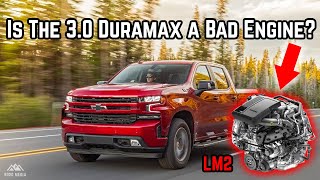
- Chevrolet Silverado 1500 (2024-2025) — Models with the 3.0L LZ0 Duramax engine experience this code 🎬 Watch: Expert breakdown of common issues with the 3.0 Duramax. due to software anomalies outlined in TSB #24-NA-094.
- GMC Sierra 1500 (2024-2025) — Models with the 3.0L LZ0 Duramax engine require the ECM update outlined in TSB #24-NA-094 to resolve P2959.
Manufacturer-Specific Notes
- General Motors: GM relies heavily on software updates to fix P2959. TSB PIP5976 addresses the code setting in freezing conditions on 2024 HD trucks and explicitly advises against parts replacement. TSB 24-NA-214 and 24-NA-094 mandate ECM calibration updates across the 1500, 2500, and Medium Duty truck lines to resolve overly sensitive EGR logic.
Frequently Asked Questions
Can I fix a P2959 code myself?
If the cause is a software glitch, you must visit a dealership or a shop with GM's SPS2 programming software. If the EGR valve is physically frozen or clogged with carbon, an advanced DIYer can clean or replace it.
How much does it cost to fix P2959?
A dealer software update costs $100-$250 but is completely free under the 8-year/80,000-mile emissions warranty. Replacing a mechanically failed EGR bypass valve costs $350-$650 for parts and labor.
Is P2959 covered under warranty?
Yes, the EGR valve and ECM are major emissions components covered by the Federal Emissions Warranty for 8 years or 80,000 miles. The Duramax engine also carries a 5-year/100,000-mile powertrain warranty.
What is the most common misdiagnosis for P2959?
The most common misdiagnosis is unnecessarily replacing the EGR bypass valve. GM TSB PIP5976 explicitly warns that if the code triggers during freezing weather, the valve is functioning normally. The correct fix is a software update to adjust the system's cold-weather logic.
Can an 'EGR delete' fix code P2959?
Removing the EGR system and reprogramming the ECM eliminates the code, but it is highly illegal under the Clean Air Act. It guarantees an emissions test failure and instantly voids your powertrain warranty.
What happens if I ignore code P2959?
Ignoring the code causes a 10% drop in fuel economy and forces the engine into limp mode. Within a few months, the excess soot permanently destroys the Diesel Particulate Filter (DPF), resulting in a $3,000+ repair bill.
Does cold weather cause code P2959?
Yes, condensation freezes inside the EGR bypass valve in sub-zero temperatures, immobilizing the mechanism. GM issued a specific software update to prevent the ECM from throwing a code during these temporary freezing events.
Will unplugging my EGR valve fix this?
No. Unplugging the valve forces it closed, but the ECM immediately logs hard circuit codes like P0403 or P0405. The Check Engine Light remains on, and the vehicle fails emissions testing.
Key Takeaways
- Code P2959 is a General Motors-specific fault indicating an EGR bypass valve control issue on 2024 and newer 6.6L and 3.0L Duramax diesel trucks.
- A software glitch in the Engine Control Module (ECM) is the #1 cause, requiring a dealer reflash that is fully covered under the 8-year/80,000-mile emissions warranty.
- Freezing condensation inside the EGR valve triggers this code in cold weather; GM TSB PIP5976 explicitly warns against replacing the valve and prescribes a software update instead.
- Do not replace the EGR bypass valve without first verifying your VIN against open GM Technical Service Bulletins, as a new $400 valve will not fix the underlying software logic.
- Diagnose the vehicle within 100-200 miles to prevent excessive soot buildup from destroying the Diesel Particulate Filter (DPF)—a repair costing upwards of $3,000.
Helpful Videos
Shop the Parts Behind P2959
Below are the parts most often responsible for code P2959, ranked by how frequently each one is the actual culprit (per the diagnosis above). Tap any to see what we have for your vehicle.


The information in this article is provided for general reference and educational purposes only. Vehicle specifications, procedures, and part compatibility can vary by production date, trim level, and region. Always consult your vehicle's factory service manual and verify part numbers before purchasing or performing repairs. Safety-critical components such as airbags, seat belts, and braking systems should be installed by a qualified professional.
- 🎬 Helpful Videos
- 🛍️ Shop This Part
- What Does P2959 Mean?
- Can I Drive With P2959?
- Common Causes
- Symptoms
- Common Fixes & Costs
- DIY vs Professional
- Used vs. New Parts: Buying Guide
- Cost of Not Fixing It
- Diagnosis Steps
- When This Code Triggers (Freeze-Frame Conditions)
- Related Codes
- Climate & Environmental Factors
- How to Clear the Code After You Fix It
- Will This Fail Emissions / State Inspection?
- Most Commonly Affected Vehicles
- Manufacturer-Specific Notes
- Frequently Asked Questions
- Can I fix a P2959 code myself?
- How much does it cost to fix P2959?
- Is P2959 covered under warranty?
- What is the most common misdiagnosis for P2959?
- Can an 'EGR delete' fix code P2959?
- What happens if I ignore code P2959?
- Does cold weather cause code P2959?
- Will unplugging my EGR valve fix this?
- Key Takeaways
- 🎟️ Get 5% Off