

P3000 on 2009-2015 Audi Q7 TDI: Glow Plug Warning Lamp Fault Causes and Fixes
On the Audi Q7 3.0L TDI, code P3000 indicates a fault in the glow plug warning lamp control system. The most common causes are a failed glow plug control module or one or more bad glow plugs. One glow plug is a special pressure-sensing type and is more expensive. Expect to spend $150-$250 for a new module and $20-$150 per glow plug, depending on type.
- P3000 on your Audi Q7 TDI is not a misfire code; it points specifically to a fault in the glow plug warning system.
- The most likely causes are a bad glow plug control module or one or more failed glow plugs.
- Be aware that one of your glow plugs is a special, expensive pressure-sensing type.
- You can likely continue to drive, but expect difficult cold starts until the issue is repaired.
- Replacing glow plugs is a high-risk DIY job due to the potential for them to break off in the cylinder head. Proceed with caution.
- If you are replacing one glow plug, it's best practice to replace all of them at the same time.
What's Unique About the 2009-2015 Audi Q7
Unlike many other manufacturers that use P3000 for hybrid battery issues or other generic faults, Audi designates this code specifically for a glow plug system communication error on its TDI diesel models. The engine's computer (ECU) uses the glow plug system to warm the combustion chambers for reliable cold starts. On this specific 3.0L TDI engine, one of the glow plugs (typically in cylinder #2) is a more complex and expensive unit with an integrated cylinder pressure sensor. A failure in this specific plug, the other standard plugs, or the control module can trigger the P3000 code.
Symptoms You May Notice
- Glow plug warning light on the dashboard may flash or stay illuminated
- Check Engine Light is on
- Difficulty starting the engine, especially in cold weather
- Rough engine idle immediately after a cold start
- Excessive white or grey smoke from the exhaust for a few minutes after starting
- Replacing the battery, as the hard starting might be mistaken for a weak battery.
- Diagnosing it as a random engine misfire (P0300), which is incorrect for this diesel engine and specific P3xxx code.
- Confusing a flashing glow plug light caused by an EGR or boost issue with a primary glow plug system fault.
Most Likely Causes
- Failed Glow Plug Control Module 🔴 High Probability The control module (or relay), often designated J179, is an electronic component managing high current to the glow plugs. It's located in the plenum chamber (the area under the windshield wipers), often underneath the main Engine Control Unit (ECU), exposing it to moisture and thermal stress. Failures are common due to age and its location.
How to confirm: After confirming the glow plugs and wiring are good, the module is the likely culprit. A VAG-specific scan tool (like VCDS) may show codes like P0684 or a specific fault for the module itself. Technicians can also perform an output test with a capable scan tool to see if the module is sending voltage to the plugs. A forum post on AudiWorld describes identifying the relay in the ECM box by its position (A1) and large 80A fuse.
Typical fix: Replace the glow plug control module.
Est. part cost: $100-$200 - One or More Failed Glow Plugs 🔴 High Probability Glow plugs are wear items. Due to the high heat and pressure, they have a finite lifespan. A significant challenge on the 3.0L TDI is that glow plugs can seize in the cylinder head, making removal difficult and risky. There is a high chance of the plug breaking, requiring specialized tools to extract. It is highly recommended to warm the engine and use penetrating oil overnight before attempting removal.
How to confirm: Test the electrical resistance of each glow plug. A healthy glow plug should have a very low resistance (typically under 1.0 ohm). A reading of infinity indicates a failed plug. This is often accompanied by a specific code like P0671, P0672, etc., indicating which cylinder's glow plug is faulty. Note that cylinder 2 often has a pressure-sensing glow plug which tests differently and is much more expensive.
Typical fix: Replace the failed glow plug(s). It is often recommended to replace all six at the same time. Use a torque wrench and adhere to the low torque specs (e.g., 15 Nm tightening, max 20 Nm for removal) to avoid breakage.
Est. part cost: $20-$40 per standard plug, $100-$150 for the pressure sensor plug - Damaged Wiring Harness or Connectors 🟡 Medium Probability The wiring harness and individual glow plug connectors are exposed to high engine bay temperatures. Over time, the plastic and insulation become brittle and crack, leading to poor connections or short circuits.
How to confirm: Visually inspect the wiring for any signs of cracking, melting, or corrosion at the connectors. Pay close attention to the plastic boots on the glow plug connectors themselves, which are known to break apart. Perform a continuity test on the wires between the control module and the glow plugs.
Typical fix: Repair the damaged section of the wire or replace the faulty connector. Wiring harness repair kits are available.
Est. part cost: $10-$50 for repair materials
Rare But Worth Checking
- EGR System Fault:
Diagnosis Steps
- Connect a VAG-specific OBD-II scanner (like VCDS or OBDeleven) and check for any other stored fault codes, particularly P0671-P0676 or P0683/P0684.
- Observe the glow plug indicator light on the dashboard when turning the ignition on (without starting) in a cold vehicle. Note if it illuminates, for how long, and if it flashes.
- If a specific cylinder code is present (e.g., P0673 for cylinder 3), focus your testing there. If only P3000 is present, test all plugs.
- CRITICAL: Before attempting removal, get the engine fully warm and apply a high-quality penetrating oil to the base of each glow plug. Let it soak, preferably overnight, to reduce the risk of breakage.
- Turn off the vehicle and disconnect the electrical connectors from all six glow plugs. Be gentle as the connectors can be brittle.
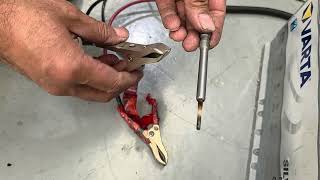
- Set a multimeter to the resistance (Ohms) setting. Test each glow plug by placing one probe on the plug's terminal and the other on the engine block (ground). A good plug will read very low, typically less than 1 ohm. A bad plug will read as an open circuit (infinite resistance).
- If all glow plugs test good, visually inspect the wiring harness to the glow plugs and the main connector at the glow plug control module for damage, corrosion, or loose pins. The module is located in the plenum chamber near the ECU.
- If the wiring and plugs are verified as functional, the fault is most likely with the glow plug control module itself. Replacing the module is the next logical step.
Parts You'll Likely Need
- Glow Plug Control Module
(OEM #059963319S (or newer revisions))— This module is the electronic brain of the glow plug system and is a common failure point that triggers the P3000 code. It is located in a heat-prone area.
Trusted brands: Bosch, Beru, Hella
OEM price range: $150-$220
Aftermarket price range: $80-$150 - Glow Plug (Standard)
(OEM #N10591609 (or equivalent like 059963319J))— Glow plugs are essential for cold starts and are a common wear item. A single failed plug can disrupt the system. Five are required.
Trusted brands: Bosch, NGK, Beru
OEM price range: $30-$50
Aftermarket price range: $15-$30 - Glow Plug with Cylinder Pressure Sensor
(OEM #03L905061F (or supersessions like 03L905061L))— Used in one cylinder (typically #2) for more precise engine management. It is a more complex and expensive part. Failure is less common but possible.
Trusted brands: Beru (PSG007), Bosch
OEM price range: $120-$180
Aftermarket price range: $90-$140
Related Codes That Often Appear With This One
- P0671-P0676 — These codes correspond to a circuit fault for a specific glow plug (Cylinder 1 through 6). Their presence is a definitive pointer to which glow plug has failed.
- P0683 / P0684 — These codes indicate a communication problem or implausible signal from the Glow Plug Control Module (GPCM) itself, strengthening the diagnosis of a faulty module.
Technical Service Bulletins (TSBs) & Recalls
- V281302 / 2032116 - While for a different 2.0L TDI engine, this VW TSB discusses how low system volt
Platform-Specific Known Issues
- Glow Plug Seizing: A well-documented issue on the 3.0L TDI is glow plugs seizing in the aluminum cylinder head. Attempts to remove them without proper care (warming engine, using penetrating oil, correct torque) can cause them to snap off, necessitating a much more complex and expensive extraction procedure.
- Glow Plug Control Module Location: The control module is located in the engine plenum's electronics box, under the ECU. This requires removing the plastic rain tray and ECU to access, adding labor time to the replacement.
- Pressure Sensor Glow Plug: Unlike many other diesels, this engine uses one specialized, expensive glow plug with an integrated pressure sensor. When diagnosing, it's important to identify which plug has failed, as replacing the pressure plug is significantly more costly.
Mechanic-Grade Diagnostic Values
- Standard Glow Plug Resistance — expected: Less than 1.0 ohm. Failure: A high resistance reading (e.g., 42 ohms) or an open circuit (infinite ohms) indicates a failed plug.
- Glow Plug Control Module (J179) Electronics Power — expected: System voltage (typically 12V+) with ignition on.. Failure: Low or no voltage between pin 6 (12V from fuse S7) and pin 7 (ground) on the module's 11-pin connector indicates a power supply issue to the module itself.
- Standard Glow Plug Operating Specs — expected: 4.4 Volts, drawing approximately 25 Amps.. Failure: These are design specifications. Direct measurement is difficult, but they inform why the system is sensitive to voltage and resistance changes.
Hidden / Shadow Codes Worth Checking
- Flashing Glow Plug Light (as a 'shadow' warning): On this platform, a flashing glow plug light, especially while driving and often accompanied by limp mode, frequently indicates a fault completely outside the glow plug system. It serves as a generic but urgent engine management warning for issues like a faulty turbo actuator, fuel pressure sensor, EGR problem, or even a clogged DPF. (see via Visible on the instrument cluster. A VAG-specific scanner is required to read the underlying fault code causing the light to flash.)
- P052F: A more specific code for 'Glow Plug Control Module System Voltage'. This may be logged in the ECU when a more generic scanner might only show a general P3000 communication code. It points directly to a power supply or internal fault in the J179 module. (see via VAG-specific diagnostic tool like VCDS or OBDeleven.)
Scan Tool Commands That Help
- VCDS (VAG-COM): Engine -> Output Tests — To command the Glow Plug Control Module (J179) to cycle the glow plugs. This allows a technician to verify if the module is receiving the command and sending voltage down the harness. Note: A 60-second waiting period between repeated tests is required to prevent overheating and damaging the glow plugs.
- VCDS (VAG-COM): Engine -> Measuring Blocks — To view live data related to the glow system, such as the status reported by the control module, pre-glow time, and coolant temperature, which is a key input for glow plug operation.
- VCDS (VAG-COM) or other advanced scanner: Module Coding/Adaptation — After replacing the Glow Plug Control Module (J179), the new module may need to be coded to the vehicle for the system to recognize it and function correctly, clearing CELs.
Wiring & Ground Locations
- Main Engine Ground Strap — One primary ground cable is located to the left of the alternator, running down and connecting to the underside of the chassis frame rail.. A corroded or loose main engine ground can cause a host of electrical issues, including insufficient voltage for the high-current glow plug system, leading to slow starting and potential control module faults.
- Glow Plug Control Module (J179) — Located in the plenum chamber's electronics box (under the plastic rain tray at the base of the windshield), positioned at relay spot A1, often marked with the number 643. It is powered by an 80A fuse (S2) in the same box.. This is the central component for the fault. Knowing its precise location is critical for testing and replacement. Its location makes it prone to moisture if the plenum drains are clogged.
- Battery Tray Ground Point — Under the battery tray. The battery is located under the driver's seat on the Q7.. A forum member reported that random electrical issues and stalling were fixed by cleaning this corroded ground point. Poor grounding can cause unpredictable behavior in various control modules, including the glow plug system.
- Ground Connection Point 609 — In the plenum chamber, on the right side.. This is a key ground point in the same vicinity as the Glow Plug Control Module (J179) and ECU. Corrosion here can directly impact the control module's function.
Real Owner Repair Stories
- Audi Q7 Club forum user (2007 Audi Q7 3.0 TDI) — Slow engine cranking and hard starting, especially when hot.
❌ Tried (didn't work) Initial diagnosis pointed towards battery or starter.
✅ What actually fixed it Adding a new, supplemental earth cable from the under-hood jump start terminal directly to the engine manifold. The user noted this is a common fix for corroded factory ground straps on the VAG platform. - YouTube video by user 'mark_b6s4' (2013 Audi Q7 TDI) — Check Engine Light with a fault code for cylinder 3 glow plug.
❌ Tried (didn't work) The user went straight to diagnosis and replacement.
✅ What actually fixed it The owner replaced all six glow plugs (5 standard Beru GE133, 1 pressure sensor Beru PSG007). He demonstrated testing the old plugs, showing the bad one had a resistance of 42 ohms while good ones were under 1 ohm. After replacement, the fault code was cleared and did not return. - Audi-Sport.net forum user (2008 Audi A8 3.0 TDI (similar platform)) — Flashing glow plug light and vehicle in limp mode.
❌ Tried (didn't work) Scanning for codes pointed to a turbo-related issue.
✅ What actually fixed it The user found the electrical connector on the turbo actuator was broken and loose, with melted plastic around the clips. After clearing the melted plastic and securing the connector with a cable tie, the flashing glow plug light went away and the car was no longer in limp mode. - Reddit r/tdi user (TDI vehicle (unspecified model)) — Flashing glow plug light and limp mode.
❌ Tried (didn't work) Initial diagnosis was uncertain.
✅ What actually fixed it The cause was a single frayed wire on the plug for the fuel metering valve. Splicing the wire fixed the issue. This highlights how the flashing glow plug light can be triggered by seemingly unrelated component wiring.
"I Checked Everything" — The Actual Cause
- While not a smoke test issue, a common pattern is a flashing glow plug light with no glow-plug-specific fault codes. Technicians may test the glow plugs and module and find them to be working perfectly. In these cases, the actual cause is often a fault in an entirely different system that uses the flashing glow plug light as its warning indicator. Documented causes include a faulty turbocharger actuator connector, a failing fuel pressure sensor, or a frayed wire on the fuel metering valve.
When the Usual Fixes Don't Work
- While the most common causes for a steady glow plug light and hard starting are indeed failed glow plugs or the control module, a significant number of real-world cases show that a FLASHING glow plug light is often NOT caused by the glow system. Owners and technicians report chasing this issue by replacing the entire glow system only to find the problem persists. The actual fix frequently involves diagnosing and repairing unrelated components, most commonly a corroded main engine ground strap causing system-wide voltage issues, or a fault in the turbocharger or fuel delivery systems, which use the flashing light as a generic warning.
OEM Part Supersession History
059963319S (and earlier revisions like F, J, M)→059963319AB— Standard revision and improvement process for the standard (non-sensor) steel glow plug.
Heads up: Revisions are generally backwards-compatible. It is recommended to use the latest available part number.03L905061F / 03L905061G→03L905061L (or K)— Revision and improvement for the glow plug with integrated cylinder pressure sensor.
Heads up: These parts are functionally specific and cannot be replaced with a standard glow plug. Using a non-sensor plug in its place will cause a constant check engine light and poor running.
Model Year Variations Within This Range
- 2009-2012 (approx.): Some earlier 3.0L TDI engines, such as the CATA engine code, may have used a configuration of 4 standard glow plugs and 2 with pressure sensors.
- 2013-2015 (approx.): Later 3.0L TDI engines, such as the CNRB engine code, use a configuration of 5 standard glow plugs and only 1 with a pressure sensor (typically in cylinder #2). This is the most common setup for the specified vehicle range.
Diagnostic Flowchart
Other Known Issues on This Vehicle
Issues unrelated to this code that are worth knowing about as an owner of this generation:
- Oil Cooler & Valley Leaks 🔴 High — Very common, especially on vehicles over 80,000 miles. Seals for the oil cooler, EGR cooler, and associated brackets degrade, causing oil and/or coolant to pool in the engine 'V' valley.
- Timing Chain Tensioner Wear 🔴 High — A distinct chain rattle on cold starts is a sign of worn tensioners. More common on pre-2013 models with weaker tensioners. If ignored, it can lead to timing jump and catastrophic engine damage. Some sources recommend preventative replacement around 100k-150k miles.
- AdBlue / SCR System Failures 🟠 Medium — Failures of the AdBlue heater, pump, or level sensors are common. This can lead to 'No Start in XXX miles' warnings. TSB 2038295/1 addresses a faulty transfer pump causing premature refill warnings. (Ref: TSB 26 14 24 / 2038295/1)
- High-Pressure Fuel Pump (HPFP) Failure 🔴 High — The Bosch CP4 HPFP is known to fail, sending metal fragments throughout the entire fuel system. This is a catastrophic and extremely expensive repair, often totaling the vehicle. The risk is present throughout the vehicle's life.
- Intake Manifold Flap Motor/Linkage Failure 🟠 Medium — The swirl flap motors or their plastic connecting rods can fail, causing a check engine light and performance issues. Fault codes like P3135 are common indicators.
- Leaking Sunroof Drains 🟠 Medium — The panoramic sunroof drains are prone to clogging, causing water to leak into the cabin, potentially damaging sensitive electronics located in the floor and dashboard areas.
Used vs. New Parts: Buying Guide for This Vehicle
When a used part is the smart pick: A used Glow Plug Control Module (J179) from a reputable salvage yard with a known low-mileage donor vehicle can be a cost-effective alternative to a new OEM part. Wiring harness connectors or pigtails are also excellent candidates for used parts if the original becomes brittle or damaged.
Donor-vehicle mileage cap: roughly under 80000 miles for the part to have meaningful remaining life.
What to inspect on the donor part:
- For a control module, ensure the connector pins are clean, straight, and free of corrosion.
- Check the plastic housing for any signs of melting or heat stress.
- For wiring, look for flexible insulation without cracks and ensure locking tabs on connectors are intact.
OEM-only on this vehicle (don't cheap out):
- Glow Plug with Cylinder Pressure Sensor: Due to its critical function in providing feedback to the ECU, using a genuine OEM or OEM-supplier (Beru) part is highly recommended to avoid performance issues and repeat repairs.
Aftermarket brands forum-validated for this vehicle:
- Beru (often the OEM supplier for both standard and pressure sensor plugs)
- Bosch
- NGK
Brands owners have reported issues with on this vehicle:
- Unbranded, no-name glow plugs from online marketplaces. The risk of premature failure, incorrect resistance, or swelling and breaking off in the cylinder head is too high.
Real Owner Stories
Aggregated from forums and TSBs cited above. Mileages and costs reflect what owners reported in those sources.
2014 Audi Q7 3.0L TDI
Symptoms: Owner observed a P0052F code related to control module voltage and needed to locate the J179 relay.
What fixed it: Identified the relay in the ECM box in the plenum, which is powered by a large 80A fuse.
Source hint: AudiWorld: 2014 Q7 Glow plug control module location
2010 Audi Q7 3.0L TDI
Symptoms: Owner was confused about which replacement parts to buy for a glow plug service.
What fixed it: Confirmed that cylinder #2 requires a combined glow plug and pressure sensor (P/N 03L905061F) while the other five cylinders use standard plugs.
Source hint: Reddit (r/tdi): Glow plugs for a Audi TDI
Audi Q7 3.0L TDI (CAPA engine code)
Symptoms: During a DIY glow plug change, one of the plugs stripped the threads in the cylinder head.
What fixed it: The owner emphasized the necessity of getting the engine fully hot before removal to prevent such seizing and thread damage.
Source hint: Audi-Sport.net: 3.0 TDI (CAPA) Glowplug DIY?
2013-2016 Porsche Cayenne Diesel (Platform Mate)
Symptoms: Flashing glow plug light on the dashboard.
What fixed it: In some cases, the issue was not the glow plugs but was related to the DPF or a boost leak from an intercooler pipe.
Source hint: Rennlist: How serious is flashing glow plug light?
Related OBD-II Codes
Frequently Asked Questions
Where is the glow plug control module located on my 2014 Q7 TDI?
Are all six glow plugs the same on the 3.0L V6 TDI engine?
What are the torque specifications for replacing glow plugs on this Audi engine?
My glow plug light is flashing on my Q7; does this always mean the glow plugs are bad?
How can I prevent a glow plug from snapping off during removal?
Does TSB V281302 apply to my 3.0L Q7 TDI?
Helpful Videos
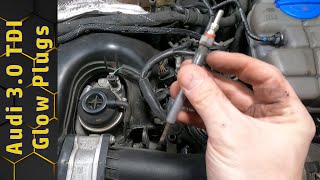

The information in this article is provided for general reference and educational purposes only. Vehicle specifications, procedures, and part compatibility can vary by production date, trim level, and region. Always consult your vehicle's factory service manual and verify part numbers before purchasing or performing repairs. Safety-critical components such as airbags, seat belts, and braking systems should be installed by a qualified professional.
- Audi Q7:
- 🧭 Diagnostic Flowchart
- 🎬 Helpful Videos
- What's Unique About the 2009-2015 Audi Q7
- Symptoms You May Notice
- Most Likely Causes
- Rare But Worth Checking
- Diagnosis Steps
- Parts You'll Likely Need
- Related Codes That Often Appear With This One
- Technical Service Bulletins (TSBs) & Recalls
- Platform-Specific Known Issues
- Mechanic-Grade Diagnostic Values
- Hidden / Shadow Codes Worth Checking
- Scan Tool Commands That Help
- Wiring & Ground Locations
- Real Owner Repair Stories
- "I Checked Everything" — The Actual Cause
- When the Usual Fixes Don't Work
- OEM Part Supersession History
- Model Year Variations Within This Range
- Other Known Issues on This Vehicle
- Used vs. New Parts: Buying Guide for This Vehicle
- Real Owner Stories
- 2014 Audi Q7 3.0L TDI
- 2010 Audi Q7 3.0L TDI
- Audi Q7 3.0L TDI (CAPA engine code)
- 2013-2016 Porsche Cayenne Diesel (Platform Mate)
- Related OBD-II Codes
- Frequently Asked Questions
- 🎟️ Get 5% Off