

P3000 on 1999-2007 Chevrolet Silverado: Hybrid Battery Fault Explained
This code is ONLY for Silverado Hybrid models (2005-2007) and indicates a serious fault in the high-voltage battery system. It's often a sign the main hybrid battery is failing. This is not a DIY repair and requires a specialist.
- P3000 is exclusive to 2005-2007 Chevrolet Silverado HYBRID models. If you have a standard gas engine, your code is almost certainly P0300 (Random Misfire).
- The code indicates a serious fault in the high-voltage battery system, most commonly a failed battery pack.
- This is not a DIY repair. High-voltage systems are dangerous and require a qualified technician with specialized tools.
- Before replacing the expensive battery, ensure the vehicle has fuel and that a hybrid-specific scan tool has been used to check for less severe sub-codes.
What's Unique About the 1999-2007 Chevrolet Silverado
Crucially, this code applies ONLY to the rare Silverado Hybrid models produced from 2005 through the 2007 'Classic' model year. The vast majority of 1999-2007 Silverados are not hybrids and cannot generate this code. If you see P3000 on a standard V8 or V6 Silverado, it is almost certainly a misread or mistyped code for P0300 (Random/Multiple Cylinder Misfire). P0300 is an extremely common issue on these trucks with entirely different causes and solutions, often related to ignition system components or, on later models, 🎬 Watch: How to diagnose and fix a P0300 misfire the Active Fuel Management (AFM) system.
Generation note: This code applies specifically to the Silverado Hybrid models, which were part of the first generation (GMT800) platform, produced from 2005 through the 2007 'Classic' model year. It does not apply to non-hybrid GMT800 trucks or the new body style (GMT900) trucks introduced in 2007.
Symptoms You May Notice
- "Service Hybrid System" warning light on the dash 🎬 See how to reset a hybrid system warning lightboard
- Noticeably reduced fuel economy
- Gasoline engine running more frequently than usual
- Vehicle may not start or may stall
- Decreased acceleration or overall performance
- Erratic engine behavior
- Diagnosing a P3000 on a non-hybrid Silverado. The code is almost certainly a misread P0300 (Random Misfire). P0300 is extremely common on standard 1999-2007 Silverados and points to issues like bad spark plugs, ignition coils, or failing Active Fuel Management (AFM) lifters, none of which are related to a hybrid system.
Most Likely Causes
- Degraded or Failing High-Voltage (HV) Battery Pack 🔴 High Probability → Shop Vehicle Battery The nickel-metal hydride (NiMH) battery packs used in this era have a finite lifespan of roughly 8-15 years and degrade with age and use, eventually losing the capacity to hold a sufficient charge. Individual cell failures within the pack can cause a voltage imbalance, triggering the master P3000 code.
How to confirm: A technician will use a specialized scan tool to read the state of health (SOH) and check for individual cell block voltage imbalances within the pack. A load test can also confirm diminished capacity.
Typical fix: Replacement of the entire high-voltage battery assembly with a new or remanufactured unit. Remanufactured units from companies like Dorman often feature upgraded components like nickel-plated bus bars to prevent corrosion, a common failure point on original batteries.
Est. part cost: $1500-$3000+ - Faulty Battery Control Module (BCM) 🟡 Medium Probability → Shop Vehicle Battery Like any computer, the module that monitors and manages the hybrid battery can fail due to internal component degradation from heat and vibration over time. A malfunctioning BCM can mismanage battery performance and trigger false codes.
How to confirm: Requires a GM-specific scan tool to check for communication errors with the BCM and run internal self-tests. The module may fail to communicate entirely or provide erratic data.
Typical fix: Replacement and reprogramming of the Battery Control Module.
Est. part cost: $400-$800 - Poor High-Voltage Battery Connections ⚪ Low Probability → Shop Vehicle Battery Over many years, the main high-voltage connections and bus bars at the battery pack can develop corrosion or become loose, causing high resistance, improper signal transmission, and communication faults.
How to confirm: A visual inspection of the main battery cables and connectors (with the system safely de-energized) for signs of corrosion, arcing, or looseness. Aftermarket replacement batteries often use superior nickel-plated bus bars to mitigate this issue.
Typical fix: Cleaning, tightening, or replacing the affected cables and connectors.
Est. part cost: $50-$200 - Vehicle Out of Fuel ⚪ Low Probability The hybrid system relies on the gasoline engine to help charge the high-voltage battery. If the truck runs out of fuel, the engine cannot start, and the HV battery can become depleted to a point where it triggers a system fault.
How to confirm: Check the fuel gauge and add gasoline to the vehicle.
Typical fix: Refuel the vehicle. In some cases, the 12V battery may also need to be charged before the system will re-initialize.
Est. part cost: $0
Diagnosis Steps
- Confirm the vehicle is a Silverado Hybrid model. If it is not, re-scan the vehicle, as the code is likely P0300.
- If the vehicle is a Hybrid, ensure it has an adequate level of fuel.
- Connect a hybrid-capable, advanced scan tool to the OBD-II port. A standard scanner will not be able to read the necessary sub-codes from the Battery ECU.
- Read the manufacturer-specific trouble codes from the Battery Control Module to find the sub-codes accompanying P3000. 🎬 Watch: Guide to diagnosing P3000 hybrid battery codes
- Analyze the freeze-frame data to see the conditions under which the code was set.
- Using the scan tool, monitor live data from the battery pack, observing individual cell block voltages for any significant deviations, which would indicate an imbalanced or failing pack.
- Perform a visual inspection of the battery pack connections for any signs of corrosion or damage, after properly de-energizing the high-voltage system.
- If codes and data point to a battery failure, the pack will need to be tested and likely replaced.
- If no specific battery codes are present, diagnose the Battery Control Module for communication and software issues.
Parts You'll Likely Need
- High-Voltage Hybrid Battery Assembly — This is the most common cause of a P3000 code, as the battery pack degrades over time and eventually fails.
Trusted brands: ACDelco (Remanufactured), Dorman (e.g., Part # 587-001), Green Bean Battery
OEM price range: $2000-$3000+
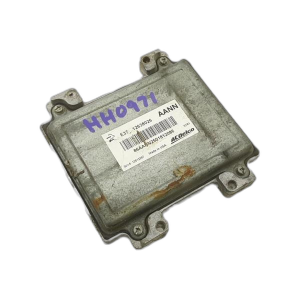
Aftermarket price range: $1500-$2500 - Battery Energy Control Module (BECM) — This control module can fail, leading to a loss of battery management and triggering a P3000 fault.
Trusted brands: ACDelco
OEM price range: $400-$800
Aftermarket price range: $300-$600
Related Codes That Often Appear With This One
- P0A80 — P0A80 ('Replace Hybrid Battery Pack') is a common and more specific sub-code that frequently accompanies the general P3000 fault, confirming that the battery pack itself has failed.
- P0A85 — Indicates a fault in the Hybrid Battery Pack Cooling Fan circuit. A non-functional fan can cause the battery to overheat, leading to degradation and triggering the master P3000 code. This is a crucial check before condemning the entire battery pack.
Platform-Specific Known Issues
- The early GM 'mild hybrid' system in the 2005-2007 Silverado was a low-volume option. Finding independent repair shops with specific experience and the correct diagnostic tools for this system can be challenging.
- The original hybrid battery bus bars are prone to corrosion, which can lead to electrical failure. Upgraded replacement batteries often use nickel-plated bus bars to prevent this.
Mechanic-Grade Diagnostic Values
- Individual NiMH Battery Module (Cell) Static Voltage — expected: 7.9V - 8.3V+ for a healthy, fully charged module. Nominal voltage under load is 7.2V.. Failure: A module reading significantly lower than others in the pack, especially after a full charge cycle, indicates it is weak or has failed. A difference of more than 0.5V between modules often points to a problem.
- Overall Hybrid Battery Internal Resistance — expected: Typically 5 to 20 ohms for a healthy hybrid battery pack, though this varies with temperature and state of charge.. Failure: A significantly higher resistance reading indicates aging and degradation of the battery cells, reducing their ability to deliver current efficiently.
Hidden / Shadow Codes Worth Checking
- P3000-123: Indicates an abnormal signal input from the battery ECU, pointing to a malfunction in the HV battery system or the battery ECU itself. (see via Requires a professional, dealer-level scan tool like the GM Tech2 or GDS2, or a high-end aftermarket scanner capable of reading manufacturer-specific sub-codes.)
Scan Tool Commands That Help
- GM Tech2 / GDS2: Hybrid/EV Battery Pack Capacity Relearn — After replacing or reconditioning the high-voltage battery pack. This function forces the Battery Energy Control Module (BECM) to erase its old learned capacity data and initiate a new learning cycle to accurately gauge the health of the new/repaired pack.
- GM TIS (Technical Information System): SPS Sequential Programming (SEQ) — After replacing the Drive Motor Generator Battery Control Module (BECM). This procedure is required to program the new module and ensure all other related hybrid control modules have the latest calibrations and can communicate correctly.
Wiring & Ground Locations
- G110 — In the chassis harness, on the frame to the rear of the left front tire.. This is a major chassis ground. A loose or corroded connection at G110 can cause a host of electrical issues, including communication failures between the various control modules in the hybrid system, potentially triggering a P3000 code.
Real Owner Repair Stories
- Electric Vehicle Forums user (2009 Chevrolet Silverado Hybrid (a newer but similar 2-mode hybrid system)) — Vehicle was non-running after sitting for 1-2 years. Owner intended to recondition the 300V battery pack.
❌ Tried (didn't work) The owner noted that initial discharge capacity of the modules was low (1800-2000mAh) after sitting for months.
✅ What actually fixed it The owner individually cycled and tested all 40 battery modules. One module was identified as completely bad (discharging only 75mAh). After replacing the single bad module and performing 3+ charge/discharge cycles on the rest, the other 39 modules came back to a healthy capacity of 4500-5100mAh, restoring the pack.
Model Year Variations Within This Range
- 2005-2007: These models use a 'mild hybrid' or Flywheel Alternator Starter (FAS) system with a 42-volt architecture. Unlike later, more complex GM hybrids, this system cannot propel the truck on electric power alone. Its primary function is to enable the gasoline engine to shut off at a stop and restart quickly, conserving fuel. Diagnostics and components are unique to this specific, low-volume system.
Diagnostic Flowchart
Other Known Issues on This Vehicle
Issues unrelated to this code that are worth knowing about as an owner of this generation:
- Instrument Cluster Stepper Motor Failure 🟠 Medium — Extremely common across the entire GMT800 lineup, typically occurring after 70,000 miles. Causes gauges (speedometer, tachometer, etc.) to become erratic, get stuck, or stop working entirely. (Ref: While no recall was issued, the problem was widespread enough to spawn a class-action lawsuit. Many owners opt to replace the faulty stepper motors themselves.)
- Intermediate Steering Shaft (ISS) Clunk/Rattle 🟡 Low — A very common issue where the ISS develops play, causing a noticeable clunk or rattle in the steering column, especially at low speeds or over bumps. GM released updated parts to address this. (Ref: GM released an updated part (P/N 19153614) with a new greaseless design to fix the issue.)
- Rusted / Corroded Brake Lines 🔴 High — Prevalent in regions that use road salt ('Rust Belt'). The factory steel brake lines are prone to severe corrosion, which can lead to a sudden loss of braking ability when a line bursts. (Ref: NHTSA opened investigations (e.g., EA11001) into this issue affecting millions of GM trucks, but no full recall was issued.)
- 4L60-E Automatic Transmission Failures 🟠 Medium — Common failure points include the 3-4 clutch pack, which can cause loss of 3rd and 4th gears, and a broken reaction sun shell, which can result in loss of 2nd, 4th, and reverse.
- Cracked Dashboard 🟡 Low — The plastic dashboard, particularly around the passenger airbag and defroster vents, is known to become brittle and crack over time due to sun exposure and temperature changes.
- HVAC Blend Door Actuator Failure 🟡 Low — A common annoyance where the plastic gears in the blend door actuator strip, causing a persistent clicking sound from behind the dash and an inability to control air temperature or direction.
Used vs. New Parts: Buying Guide for This Vehicle
When a used part is the smart pick: For a vehicle of this age, a professionally remanufactured/reconditioned battery pack is the most common and cost-effective solution. Buying a used, non-reconditioned battery from a junkyard is extremely risky, as all original batteries are well past their intended service life and likely suffer from significant degradation.
Donor-vehicle mileage cap: roughly under 120000 miles for the part to have meaningful remaining life.
What to inspect on the donor part:
- Focus on the warranty and reputation of the remanufacturer rather than the donor vehicle.
- Ask the remanufacturer if they use upgraded components, such as nickel-plated bus bars, to prevent common corrosion issues.
- Ensure the remanufacturing process includes testing and balancing all individual cells, not just replacing the failed ones.
OEM-only on this vehicle (don't cheap out):
- Battery Energy Control Module (BECM) - Due to specific software and programming requirements, using an OEM or a professionally remanufactured OEM unit is highly recommended to ensure compatibility with the rest of the hybrid system.
Aftermarket brands forum-validated for this vehicle:
- Dorman (Offers remanufactured packs often with upgraded components like nickel-plated bus bars)
- Green Bean Battery
- Best Hybrid Batteries
Real Owner Stories
Aggregated from forums and TSBs cited above. Mileages and costs reflect what owners reported in those sources.
2015 GMC Sierra 2500
Symptoms: The owner observed P3000 and U0410 codes and initially experienced confusion, attempting to diagnose a misfire when the codes actually pointed to a control module issue.
What fixed it: Correct code interpretation pointing to a control module issue rather than mechanical engine misfires.
Source hint: Reddit thread on r/MechanicAdvice titled 'P3000 and U0410 codes on 2015 GMC Sierra 2500'
Related OBD-II Codes
Frequently Asked Questions
My 2005 Silverado Hybrid is clunking in the steering column; is this related to the P3000 code?
Can I use a standard OBD-II scanner to diagnose the P3000 code on my 2006 Silverado Hybrid?
Is there a specific part I should look for if I need to replace my hybrid battery to prevent future P3000 codes?
My fuel gauge is empty and my truck won't start, showing a P3000 code. Is my hybrid battery dead?
Why is it so hard to find a shop to fix the P3000 code on my 2007 Silverado?
Could a problem with my dashboard gauges be causing the P3000 hybrid system warning?
Helpful Videos
Used OEM Parts in Stock
New Aftermarket Parts Available

The information in this article is provided for general reference and educational purposes only. Vehicle specifications, procedures, and part compatibility can vary by production date, trim level, and region. Always consult your vehicle's factory service manual and verify part numbers before purchasing or performing repairs. Safety-critical components such as airbags, seat belts, and braking systems should be installed by a qualified professional.
- Chevrolet Silverado:
- 🧭 Diagnostic Flowchart
- 🎬 Helpful Videos
- 🛍️ Shop This Part
- What's Unique About the 1999-2007 Chevrolet Silverado
- Symptoms You May Notice
- Most Likely Causes
- Diagnosis Steps
- Parts You'll Likely Need
- Related Codes That Often Appear With This One
- Platform-Specific Known Issues
- Mechanic-Grade Diagnostic Values
- Hidden / Shadow Codes Worth Checking
- Scan Tool Commands That Help
- Wiring & Ground Locations
- Real Owner Repair Stories
- Model Year Variations Within This Range
- Other Known Issues on This Vehicle
- Used vs. New Parts: Buying Guide for This Vehicle
- Real Owner Stories
- 2015 GMC Sierra 2500
- Related OBD-II Codes
- Frequently Asked Questions
- 🎟️ Get 5% Off