

P3000 on 2011-2015 Chevrolet Volt: High Voltage System Fault Causes and Fixes
On a first-generation (2011-2015) Volt, code P3000 is a general high-voltage battery system fault, most often caused by a low battery coolant level or a failed battery coolant level sensor. The fix is often as simple as topping off the specific coolant or replacing the sensor, which is a relatively inexpensive part. It is critical to distinguish this from the Gen 2 Volt, where P3000 almost always means a major internal module failure.
- P3000 on a Gen 1 Volt is a general HV battery fault, not a death sentence for the battery pack.
- Before any other diagnosis, check the coolant level in the high-voltage battery reservoir on the DRIVER'S side of the engine bay.
- The most common fixes are inexpensive: topping off the coolant (GM P/N 12378390) or replacing the coolant level sensor (GM P/N 22922224).
- This code has a completely different, and much more serious, meaning on the 2016+ Volt, so ensure you are looking at information for the correct generation.
- Always use pre-mixed Dex-Cool coolant to avoid introducing minerals from tap water into the sensitive system.
What's Unique About the 2011-2015 Chevrolet Volt
The first-generation Volt has three separate cooling loops: one for the gas engine, one for the power electronics, and one for the high-voltage battery. The battery cooling loop was prone to having low coolant from the factory, leading to a service campaign for 2012-2013 models. This is a distinct issue from the second-generation (2016+) Volt, where P3000 almost always points to a major internal failure of the Battery Energy Control Module (BECM).
Symptoms You May Notice
- Check Engine Light is on
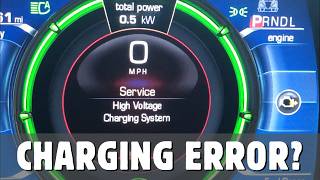
- "Service High Voltage Charging System" message displayed on the dashboard
- Inability to charge the high-voltage battery from an external charger
- Vehicle enters a reduced power mode
- Gasoline engine runs more frequently than usual
- Vehicle may not start or 'power on'
- Assuming the main engine cooling system is the cause. The Volt has a separate, dedicated cooling system for the high-voltage battery that must be inspected. The battery coolant reservoir is on the driver's side.
- Replacing the entire high-voltage battery. P3000 on this generation is most often a fault with a support system (cooling), not the battery cells themselves.
- Immediately replacing the sensor without checking the coolant level first. Always start with the simplest and most common fix: checking the fluid level.
Most Likely Causes
- Low High-Voltage Battery Coolant Level 🔴 High Probability → Shop Vehicle Battery A known issue on 2012-2013 models where air in the battery cooling system from the factory would eventually get purged, leaving the coolant level too low. Leaks can also develop over time.
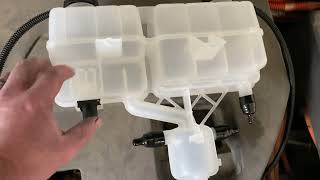
How to confirm: Visually inspect the coolant level in the dedicated high-voltage battery coolant reservoir. This is the translucent white tank on the driver's side of the engine bay. The level should be at the seam or the indicated mark on the label.
Typical fix: Top off the coolant using the correct fluid (pre-mixed Dex-Cool, GM P/N 12378390). If the level drops again, a pressure test is needed to find the leak. Note that simply topping off the fluid may not clear the code; a dealer-level tool may be needed to reset the module.
Est. part cost: $20-$30 for coolant - Failed Drive Motor Battery Coolant Level Sensor 🟡 Medium Probability → Shop Vehicle Battery The sensor can fail or 'burn out', causing it to send a false 'low level' signal to the control module even when the coolant is full. This is a very common failure point discussed extensively by owners.
How to confirm: If the coolant level is correct but the code and symptoms persist, the sensor is the next likely failure point. A technician can test the sensor's circuit and signal. Many owners diagnose this by exclusion after confirming the coolant level is full.
Typical fix: Replace the sensor. It is located on the bottom of the battery coolant reservoir and can be replaced by unclipping it and swapping in the new one. Some coolant will be lost, so have a catch pan ready. The OEM part number is 22922224. 🎬 Watch: Step-by-step coolant sensor replacement guide
Est. part cost: $40-$80 - Failed Battery Coolant Pump ⚪ Low Probability → Shop Vehicle Battery
How to confirm: With the vehicle on and the system active (e.g., charging), the pump should be audible or you should be able to feel a slight vibration from it. A scan tool can also command the pump on to verify its operation.
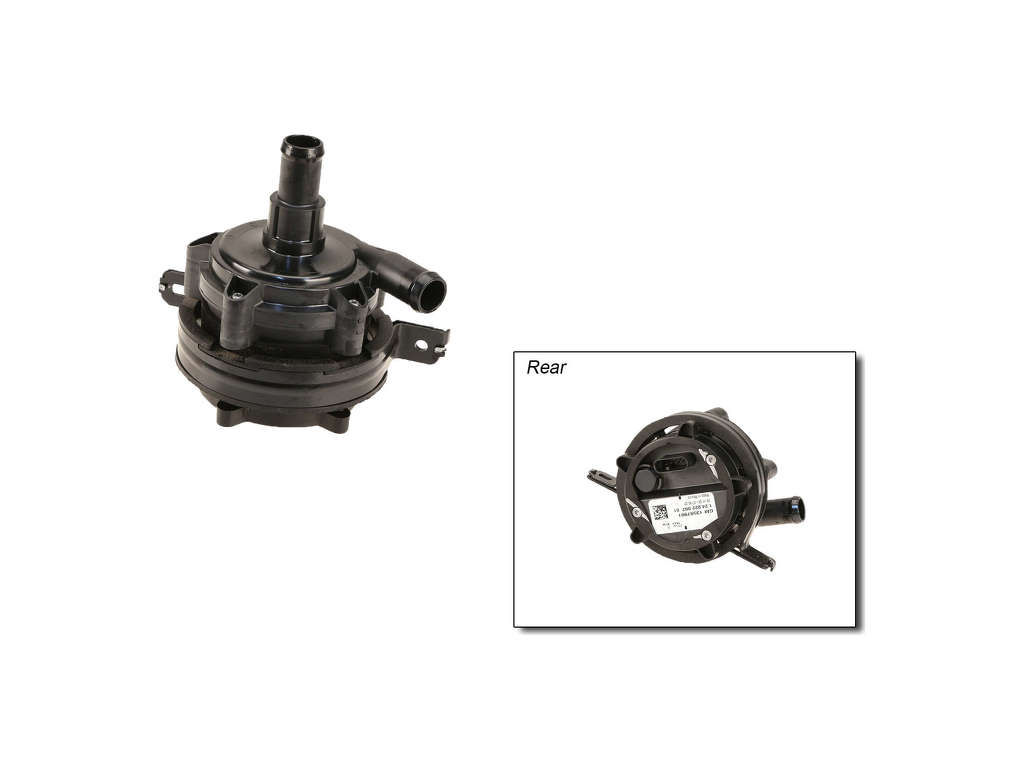
Typical fix: Replace the faulty electric coolant pump for the battery circuit.
Est. part cost: $150-$250
Rare But Worth Checking
- Damaged Wiring Harness to Coolant Level Sensor:
Diagnosis Steps
- Read all stored codes from the powertrain and hybrid control modules using a capable OBD-II scanner.
- Locate the high-voltage battery coolant reservoir (translucent white tank on the driver's side of the engine bay, NOT the engine coolant reservoir on the passenger side) and check the coolant level. Do not open when hot.
- If the level is low, top off with a 50/50 mixture of Dex-Cool (GM P/N 12378390) and deionized water. Mark the level and check again after a drive cycle to see if it drops, indicating a leak.
- If a leak is suspected, have the battery cooling system pressure tested.
- If the coolant level is full but the code persists, diagnose the battery coolant level sensor (P/N 22922224). Check for a proper signal and inspect the wiring harness for damage.
- If the sensor is functioning, check the operation of the battery coolant pump. Verify it is receiving power and running when commanded by the control module.
- After repairs, the code may need to be cleared with a high-level scan tool. Some owners report that simply topping off coolant is not enough to clear the 'Service High Voltage Charging System' message without a software reset. 🎬 See how to clear this error without reprogramming
Parts You'll Likely Need
- Drive Motor Battery Coolant Level Sensor
(OEM #22922224)— This sensor is a very common failure point that incorrectly tells the car the coolant is low, disabling charging.
Trusted brands: ACDelco, GM Genuine
OEM price range: $50-$80
Aftermarket price range: $30-$60 - GM Dex-Cool Antifreeze/Coolant (Pre-mixed 50/50)
(OEM #12378390)— This is the required coolant for all three cooling loops on the Volt. Low battery coolant is a primary cause of this code. Using pre-mixed is critical to avoid introducing minerals into the system.
Trusted brands: ACDelco
OEM price range: $20-$30 per gallon
Aftermarket price range: $18-$25 per gallon
Related Codes That Often Appear With This One
- P1FFE — This is a specific GM code for 'Drive Motor Battery Coolant Level Low', which directly points to the most common cause of P3000 on this vehicle.
- P1F0E — Another GM-specific code related to the high-voltage charging system that can be triggered by the coolant sensor fault.
- P0AA6 — This code indicates a 'Hybrid Battery Voltage System Isolation Fault' and can sometimes appear alongside charging system issues, though it points to a more serious electrical problem.
Technical Service Bulletins (TSBs) & Recalls
- Service Campaign 14114: RESS (Rechargeable Energy Storage System) Battery Coolant level low. This bulletin details the procedure for dealers to inspect and top off the battery coolant on affected 2012-2013 models.
- GM Preliminary Information Bulletin PIP5103A: This document (and its revisions) provides diagnostic steps for the P1FFE and P3000 codes, specifically pointing to checking the coolant level and then testing or replacing the level sensor (P/N 22922224).
Platform-Specific Known Issues
- GM issued service campaign #14114 for some 2012-2013 Volts to address low battery coolant levels caused by improper filling at the factory. The procedure involved inspecting the level, pressure testing for leaks, and topping off with Dex-Cool P/N 12378390.
Mechanic-Grade Diagnostic Values
- Battery Coolant Level Sensor 5V Reference Circuit — expected: 4.8 - 5.2 Volts. Failure: Voltage outside of this range indicates a problem with the HPCM2 or wiring.
- Battery Coolant Level Sensor Low Reference to Ground Resistance — expected: Less than 1.0 Ohm (e.g., 0.7 Ohms). Failure: High resistance indicates a poor ground connection.
- DIY Sensor Bypass Resistance — expected: ~24.7 kOhms. Failure: This resistance value can be used to trick the system into thinking the sensor is present and the coolant level is full, confirming the sensor itself is faulty if the code clears.
- Coolant Level Threshold for DTC P1FFE — expected: Level at or near the reservoir seam.. Failure: A coolant level 1.5 inches (38 mm) or more below the seam will trigger DTC P1FFE.
Hidden / Shadow Codes Worth Checking
- P1FFB: Hybrid/EV Battery Pack Coolant Level Sensor Circuit (see via A professional-level scan tool like the GM GDS2.)
- P1FFC: Hybrid/EV Battery Pack Coolant Level Sensor Circuit Low Voltage (see via A professional-level scan tool like the GM GDS2.)
- P1FFD: Hybrid/EV Battery Pack Coolant Level Sensor Circuit High Voltage (see via A professional-level scan tool like the GM GDS2.)
- P1FFF: System Isolation / Coolant Level Sensor Fault - Hybrid/EV Battery Charging System Disabled. This is a critical code that often accompanies the others and explicitly disables charging. (see via A professional-level scan tool like the GM GDS2.)
Scan Tool Commands That Help
- GDS2: Hybrid/EV Battery Pack Coolant Pump Bleed Procedure — This is a mandatory procedure after any repair that involves draining or opening the battery cooling system, such as replacing a coolant pump or performing a full flush. It runs for about an hour to purge all air from the system.
- SPS (Service Programming System): Reprogram K114B Hybrid Powertrain Control Module 2 — This is used to clear stubborn 'permanent' DTCs like P1FFF that do not clear with a standard scan tool after the physical repair is complete. This requires a subscription to ACDelco TIS2Web.
- GDS2: Clear All DTCs — Used after a repair to clear codes. However, this may not clear 'permanent' DTCs, which require either a specific drive cycle or an SPS reprogram.
Wiring & Ground Locations
- Drive Motor Battery Coolant Level Sensor Jumper Harness — Connects the coolant level sensor on the bottom of the reservoir to the main engine harness.. This short harness (P/N 13586114) is a known failure point. Internal wire breaks can cause intermittent sensor signals, triggering P3000 and related codes even if the sensor itself is good. Technicians are advised to manipulate this harness while testing for intermittent conditions.
Real Owner Repair Stories
- Reddit r/volt user (2014 Chevrolet Volt) — "Service High Voltage Charging System" message, inability to charge.
❌ Tried (didn't work) Dealer reprogrammed HPCM2 and BECM under warranty, but the message remained.
✅ What actually fixed it The owner diagnosed an intermittent open in the original coolant level sensor. They temporarily bypassed it with a 24.7k Ohm resistor to confirm the diagnosis, which allowed charging. The final fix was replacing the sensor (P/N 22922224) which they did themselves without tools. The permanent codes cleared after a drive cycle of over 40 KPH for more than five minutes. - VXDIAG Blog User (2012 Chevrolet Volt) — SHVCS warning, charging would start and then stop after five seconds.
❌ Tried (didn't work) Confirmed their DIY 24.7kΩ resistor bypass plug was still working., Attempting to clear codes P0AA6 and P1FFF with a Launch diagnostic tool; codes would reappear immediately.
✅ What actually fixed it The owner concluded the fault was either in the wiring or a permanent DTC was stored in the K114B module. They used a VXDIAG VCX Nano and GM's SPS software (with a paid 1-hour subscription) to reprogram the K114B Hybrid Powertrain Control Module 2. This successfully cleared the permanent fault and restored charging.
OEM Part Supersession History
95281145→22922224— Standard part update/revision.
Model Year Variations Within This Range
- 2011-2012: Following a NHTSA investigation into post-crash fire risk, GM initiated a customer satisfaction campaign in early 2012 for all existing Volts. This campaign added structural reinforcements to protect the battery, a tamper-resistant bracket on the coolant reservoir, and, most relevant to P3000, added the battery coolant level sensor. Very early 2011 models would have had this sensor retrofitted, while later 2012+ models had it from the factory.
Diagnostic Flowchart
Other Known Issues on This Vehicle
Issues unrelated to this code that are worth knowing about as an owner of this generation:
- Stator Bearing Failure 🔴 High — Becomes common around 80,000 miles. Results in a loud whining or 'buzz saw' noise, especially during regenerative braking. (Ref: TSB PIP5081H)
- 'Shift to Park' Message 🟠 Medium — A common annoyance where the car doesn't recognize it's in Park, preventing it from shutting off. Caused by a faulty microswitch in the shifter assembly. (Ref: TSB 19-NA-206 (for later models, but same issue))
- Charge Port Door Sticking/Breaking 🟡 Low — The pin and actuator for the charge port door can fail, causing the door to get stuck closed or not latch properly. The plastic components can become brittle over time.
Used vs. New Parts: Buying Guide for This Vehicle
When a used part is the smart pick: For this specific P3000 fault, using used parts is generally not recommended. The most common failure, the coolant level sensor, is an inexpensive electronic part that fails internally, making a used one a significant gamble. A used coolant reservoir (the plastic tank itself) is acceptable if the original is physically cracked. A used coolant pump could be considered if on a tight budget, but its criticality to battery health makes a new part a much safer investment.
Donor-vehicle mileage cap: roughly under 80000 miles for the part to have meaningful remaining life.
What to inspect on the donor part:
- For a coolant reservoir, check for any hairline cracks, especially around the hose fittings and mounting tabs.
- For a coolant pump, ensure the electrical connector is free of corrosion and the housing is not cracked.
OEM-only on this vehicle (don't cheap out):
- Drive Motor Battery Coolant Level Sensor: The OEM/ACDelco part is not expensive and is a known quantity; aftermarket quality is uncertain for this critical sensor.
- Dex-Cool Coolant: Using the specified GM pre-mixed coolant is essential to protect the battery and electronics cooling loops from corrosion and mineral buildup.
Aftermarket brands forum-validated for this vehicle:
- For this specific repair, owner forums predominantly recommend sticking with GM Genuine or ACDelco parts.
Brands owners have reported issues with on this vehicle:
- No specific brands are consistently cited as problematic, but owners often warn against generic, no-name electronic sensors from online marketplaces.
Real Owner Stories
Aggregated from forums and TSBs cited above. Mileages and costs reflect what owners reported in those sources.
2013 Chevrolet Volt 1.4L LUU
Symptoms: Recurring P3000 and P1FFE codes; 'Service High Voltage Charging System' message appeared even though the coolant level was confirmed to be correct.
What fixed it: Replaced the battery coolant level sensor (P/N 22922224).
Source hint: gm-volt.com/threads/service-high-voltage-charging-system-again.318385/
2013 Chevrolet Volt 1.4L LUU
Symptoms: The car displayed a 'Service High Voltage Charging System' message and required a sensor replacement, but the code remained in the module's permanent memory.
What fixed it: Replaced the coolant sensor and used a dealer-level scan tool to perform a software reset to clear the code.
Source hint: Reddit (r/volt) thread 'Replace coolant sensor 2013 Volt'
2012 Chevrolet Volt 1.4L LUU
Symptoms: Low battery coolant levels caused by air in the system being purged over time, leading to charging issues.
What fixed it: Inspected the level, performed a pressure test for leaks, and topped off with Dex-Cool P/N 12378390 per service guidelines.
Source hint: Service Campaign 14114
Related OBD-II Codes
Frequently Asked Questions
My 2012 Volt has a low battery coolant level; is there a specific service campaign for this?
Can I use any coolant to top off my high-voltage battery reservoir?
I topped off the coolant in my 2013 Volt, but the 'Service High Voltage Charging System' message won't go away. Why?
Where is the battery coolant reservoir located on the 1.4L Voltec engine bay?
Does the Cadillac ELR suffer from the same P3000 issues as the Chevy Volt?
What part number do I need if my battery coolant level sensor has failed?
Is there a TSB that helps diagnose P3000 alongside other codes?
Helpful Videos

We Have This Part in Stock


The information in this article is provided for general reference and educational purposes only. Vehicle specifications, procedures, and part compatibility can vary by production date, trim level, and region. Always consult your vehicle's factory service manual and verify part numbers before purchasing or performing repairs. Safety-critical components such as airbags, seat belts, and braking systems should be installed by a qualified professional.
- Chevrolet Volt:
- 🧭 Diagnostic Flowchart
- 🎬 Helpful Videos
- 🛍️ Shop This Part
- What's Unique About the 2011-2015 Chevrolet Volt
- Symptoms You May Notice
- Most Likely Causes
- Rare But Worth Checking
- Diagnosis Steps
- Parts You'll Likely Need
- Related Codes That Often Appear With This One
- Technical Service Bulletins (TSBs) & Recalls
- Platform-Specific Known Issues
- Mechanic-Grade Diagnostic Values
- Hidden / Shadow Codes Worth Checking
- Scan Tool Commands That Help
- Wiring & Ground Locations
- Real Owner Repair Stories
- OEM Part Supersession History
- Model Year Variations Within This Range
- Other Known Issues on This Vehicle
- Used vs. New Parts: Buying Guide for This Vehicle
- Real Owner Stories
- 2013 Chevrolet Volt 1.4L LUU
- 2013 Chevrolet Volt 1.4L LUU
- 2012 Chevrolet Volt 1.4L LUU
- Related OBD-II Codes
- Frequently Asked Questions
- 🎟️ Get 5% Off