

P3000 on 2012-2018 Ford Focus Electric: High-Voltage Battery Fault Causes and Fixes
P3000 is a generic but critical code on a Ford Focus Electric, signaling a major fault in the high-voltage battery system. It often precedes a 'Stop Safely Now' warning and complete vehicle shutdown. The most common cause is a catastrophic failure of the high-voltage battery pack due to internal coolant leaks or cell degradation, an extremely expensive repair that often costs more than the car's value. Owners report dealer quotes ranging from $14,000 to over $30,000 for a replacement.
- P3000 is a generic but critical warning for the high-voltage system. Do not drive the vehicle.
- The most common cause is a complete failure of the HV battery, which is often not economically viable to repair.
- Diagnosis MUST be done with a Ford-specific scan tool (like FORScan) to read sub-codes from the Battery Energy Control Module (BECM).
- Always check the health of the 12V auxiliary battery first, as it can cause misleading electronic faults.
- If you receive a high quote for a full battery replacement, seek a second opinion from an independent EV repair specialist who may be able to diagnose and repair cheaper internal components like contactors.
What's Unique About the 2012-2018 Ford Focus
The Ford Focus Electric was one of Ford's early mass-market EVs, and its primary weakness is the high-voltage battery pack. Unlike more modern EVs, these batteries have shown a significant tendency to fail completely, often due to internal coolant leaks or cell degradation, shortly after the 8-year/100,000-mile warranty expires. As a result, a P3000 code on a Focus Electric is often the precursor to the vehicle becoming inoperable and requiring a repair so expensive ($14,000 - $30,000+) that it effectively totals the car. Multiple owner stories document being quoted more for the battery replacement than the purchase price of the used vehicle.
Symptoms You May Notice
- 'Stop Safely Now' message on the instrument cluster.
- Complete loss of motive power, potentially while driving.
- Vehicle will not start or enter 'Ready to Drive' mode.
- Vehicle fails to charge or stops charging unexpectedly.
- Illuminated Malfunction Indicator Lamp (Check Engine Light) or yellow wrench light.
- Incorrect or fluctuating driving range displayed.
- Red triangle warning light illuminated.
- Flashing or flickering exterior lights when attempting to start.
- Replacing the 12V battery without checking for a parasitic drain. A module that isn't shutting down (often the TCU) will drain the new battery as well.
- Assuming the entire HV battery pack is bad when only an internal component, like a contactor, has failed. Dealers are known to recommend a full battery replacement when a much cheaper internal repair is possible, as one owner proved by fixing it for $140 instead of the quoted $14,000.
Most Likely Causes
- High-Voltage (HV) Battery Pack Failure 🔴 High Probability → Shop Vehicle Battery Widespread owner reports indicate a high failure rate, often due to either age-related cell degradation or an internal coolant leak that destroys the battery cells. This is a known, catastrophic issue in the Focus Electric community. One owner on Reddit reported a $30,000 dealer quote for a battery replacement caused by a coolant leak on a 2014 model.
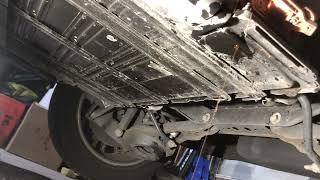
How to confirm: A Ford-specific scan tool (like FORScan) is needed to read cell voltage data (PID: DEL_MOD_V) and specific DTCs from the BECM. A dealer can run a full battery health diagnostic. A DTC like P0AA6 (Isolation Fault) often points to an internal coolant leak. The dealer may also perform a coolant leak inspection on the battery pack, as outlined in TSB 20-2140. 🎬 Watch: Diagnosing a P0AA6 isolation fault and coolant leak
Typical fix: Complete replacement of the high-voltage battery assembly (upper and lower sections). This repair is exceptionally expensive. Some independent shops or advanced DIYers have successfully repaired packs by removing modules, cleaning coolant, and bypassing the cooling plates, but this is a highly advanced and dangerous repair. Refurbished lower battery sections are sometimes available from third-party suppliers like ener-Z for around $1,800 plus shipping.
Est. part cost: $14,000 - $30,000+ - Battery Energy Control Module (BECM) Failure 🟡 Medium Probability → Shop Vehicle Battery The control module for the HV battery can fail electronically, causing communication loss or incorrect commands. This can mimic a battery failure. TSB SSM 48243 notes that for 2012-2016 models, the BECM self-test may abort due to a software limitation and is not, by itself, a reason to condemn the module.
How to confirm: Diagnose with a scan tool looking for communication-related DTCs like U1030 or U0111. A dealer may need to perform a self-test on the module, though software issues can complicate this. Analyzing the As-Built data with FORScan can also reveal configuration issues.
Typical fix: Replacement and reprogramming of the BECM. This must be done at a dealership or specialized shop with Ford's IDS software using the Programmable Module Installation (PMI) function.
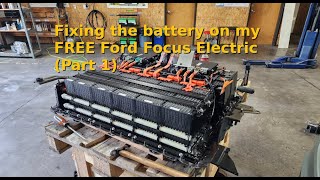
Est. part cost: $400 - $1000 - HV Battery Contactor Failure 🟡 Medium Probability → Shop Vehicle Battery The high-voltage relays (contactors) inside the battery pack can become stuck open or closed, preventing power flow. Dealers often misdiagnose this as a full battery failure. One owner reported a dealer quote of $14,000 for a new battery when the actual fix was a $140 contactor bought on eBay. 🎬 See how to disassemble the battery and replace a contactor
How to confirm: Advanced diagnostics with a tool like FORScan can reveal specific codes for contactor circuit faults, such as P0AA0. A qualified EV technician can test the contactors directly after de-energizing the pack.
Typical fix: Replacement of the faulty contactor(s) inside the battery pack. This is a complex repair requiring battery disassembly but is far cheaper than a full battery replacement. The specific part is often a Tyco/Kilovac EV200A1ANA contactor.
Est. part cost: $100 - $300 (for used/salvage parts) - Weak or Faulty 12V Auxiliary Battery ⚪ Low Probability → Shop Vehicle Battery The Focus Electric is known for issues where control modules, particularly the Telematics Control Unit (TCU), fail to go to 'sleep', causing a parasitic drain that quickly kills the 12V battery. A low 12V battery can cause a cascade of communication errors and prevent the high-voltage system from engaging properly, sometimes triggering a 'Stop Safely Now' message.
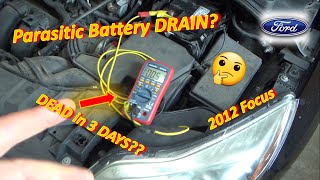
How to confirm: Test the 12V battery with a digital multimeter or electronic battery tester. A healthy, fully charged battery should read approximately 12.6V. If it's below 12.2V, it is discharged and may be failing. To check for parasitic drain, a common DIY diagnostic is to pull fuse F1 in the trunk fuse panel (which powers the TCU) and see if the drain stops. 🎬 Watch: How to find and fix a parasitic battery drain
Typical fix: Replace the 12V auxiliary battery. If a parasitic drain is confirmed from the TCU, either pull fuse F1 permanently (disabling telematics) or investigate a 4G TCU upgrade, as the original 3G units are obsolete. Resetting the 'Battery Age' parameter using FORScan or a manual procedure after replacement is also recommended.
Est. part cost: $150 - $250
Rare But Worth Checking
- Onboard Charger Failure: If the vehicle runs but will not charge and displays a charging-related fault, the onboard charger module (SOBDM) could be the cause.
- High-Voltage Wiring Harness Issue: Damage to the high-voltage cables, particularly the wiring to the charge port or between battery sections, can cause faults. One owner reported a $4,500 quote to replace the HV wiring assembly from the charge port to the battery. TSB 17-0045 points to a specific interlock shunt issue on 2012-2014 models that can cause a P0A0A code and a no-start condition.
- Steering System Faults: In some instances, steering component failures can trigger this code. NHTSA ODI #11653593 describes a case where the P3000 code was retrieved after a dealer determined the steering wheel gear required replacement.
Diagnosis Steps
- SAFETY WARNING: Do not proceed without proper training and equipment. The high-voltage system can cause fatal injury.
- Check the 12V Battery First: Ensure the 12V auxiliary battery is fully charged and healthy. A weak 12V battery is a known cause of many electrical faults on this vehicle. Consider checking for a parasitic drain by pulling fuse F1 for the TCU.
- Scan for Codes with a Capable Tool: Use a Ford-specific scan tool (like FORScan with an appropriate adapter) to read DTCs from ALL modules, especially the BECM, SOBDM, and PCM. A generic OBD-II reader will only show the P3000 from the PCM and will miss the critical sub-codes.
- Analyze BECM Sub-Codes: The specific codes from the BECM are key. P0AA6 points to an isolation/coolant leak. P0AA0 points to a contactor. U1030 points to a module or communication failure.
- Check HV Interlocks: If you have a P0A0A code, carefully inspect all high-voltage connectors, including the service disconnects and the main data connector, to ensure they are fully seated and the locking tabs are not broken.
- Inspect for Coolant Leaks: Following the procedure in TSB 20-2140, inspect the upper and lower battery packs for any signs of coolant residue, which is a strong indicator of internal failure.
Parts You'll Likely Need
- High-Voltage Battery Assembly
(OEM #CM5Z-10B759-K (23 kWh pack))— This is the most common point of failure, often requiring complete replacement due to internal cell degradation or coolant leaks.
Trusted brands: Motorcraft (OEM)
OEM price range: $14,000 - $30,000+
Aftermarket price range: $1,800+ (for refurbished lower section) - Battery Energy Control Module (BECM) — The module itself can fail, causing communication loss and mimicking a full battery failure.
Trusted brands: Motorcraft (OEM)
OEM price range: $400 - $1000
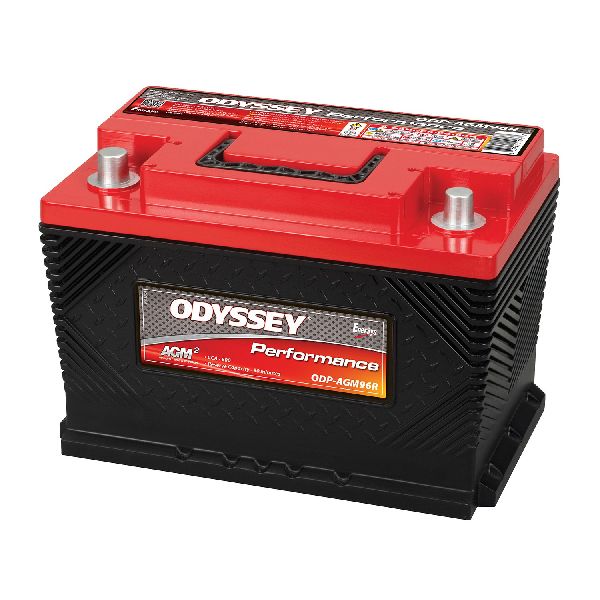
Aftermarket price range: N/A - 12V Auxiliary Battery — Frequently fails due to parasitic drain issues inherent to the platform, causing a host of electrical problems.
Trusted brands: Motorcraft, Various aftermarket AGM batteries
OEM price range: $170 - $250
Aftermarket price range: $150 - $220 - HV Battery Contactor — A relatively inexpensive relay inside the battery pack that can fail and is often misdiagnosed as a total battery failure.
Trusted brands: Tyco Electronics (often the original supplier)
OEM price range: Not typically sold separately by Ford.
Aftermarket price range: $100 - $300 (used/salvage from sources like eBay)
Related Codes That Often Appear With This One
- P0A0A — This code for the 'High Voltage System Interlock Circuit' often appears with the 'Stop Safely Now' message and can be caused by a specific wiring shunt issue addressed in TSB 17-0045 or a poorly seated/damaged HV connector.
- U1030 — This code means 'Lost Communication With Battery Energy Control Module (BECM)', pointing directly to a failure of the BECM or its wiring harness as the root cause.
- P0AA6 — This indicates a 'Hybrid/EV Battery Voltage System Isolation Fault', meaning there is a loss of electrical isolation between the high-voltage and low-voltage systems. This is a very dangerous condition often caused by internal battery coolant leaks.
- U0198 — Lost Communication with Telematics Control Module. This code often appears when the 12V battery is draining, pointing to the TCU as the source of the parasitic draw.
Technical Service Bulletins (TSBs) & Recalls
- TSB 17-0045: Addresses a no-start condition with DTC P0A0A on 2012-2014 models, pointing to a high voltage interlock shunt.
- TSB SSM 48243: Warns that the BECM on-demand self-test may abort on 2012-2016 models due to a software limitation and is not, by itself, a reason to condemn the module.
Platform-Specific Known Issues
- Widespread reports of catastrophic high-voltage battery failure occurring shortly after the 8-year/100,000-mile warranty period ends.
- A known failure mode where coolant leaks internally within the battery pack, causing an isolation fault and destroying the battery. Forum members reference TSB 20-2140 for this issue.
- The replacement cost for the high-voltage battery from a Ford dealer frequently exceeds the market value of the car, leading many owners to scrap their vehicles.
- Parasitic drain on the 12V battery caused by the Telematics Control Unit (TCU) or other modules failing to enter a low-power sleep state.
Mechanic-Grade Diagnostic Values
- Individual Lithium-Ion Cell Voltage (FORScan PID: DEL_MOD_V) — expected: Nominal: 3.7V. Operating range is typically between 3.0V (fully discharged) and 4.2V (fully charged). All cells in the pack should be within a very tight tolerance of each other (ideally < 0.05V difference).. Failure: One or more cells reading significantly lower than the others, or a cell that will not charge above a certain voltage, indicates degradation or failure.
Hidden / Shadow Codes Worth Checking
- P1A0A: This code is a secondary fault, set as a direct result of P0AA6 (Isolation Fault). It is the code that commands the vehicle to shut down ('Stop Safely Now') when the BECM detects the dangerous isolation fault condition. (see via Ford-specific scan tool like FORScan when reading codes from the BECM.)
- U3000:46: A Ford-specific DTC for 'Control Module: Calibration/Parameter Memory Failure'. This often appears in the BECM after a battery or module replacement and indicates a configuration or programming error that must be resolved. (see via Ford-specific scan tool like FORScan.)
Scan Tool Commands That Help
- Ford IDS / FORScan: Programmable Module Installation (PMI) — This function is mandatory when replacing the Battery Energy Control Module (BECM). It reads configuration data from the old module (if possible) or downloads As-Built data from Ford's servers to correctly initialize the new part. Failure to perform a PMI is a primary cause of communication codes after replacement.
- Ford IDS / FORScan: BECM On-Demand Self-Test — Used as an initial step to check the health and communication status of the BECM. Note that TSB SSM 48243 states that on 2012-2016 models, this test may abort due to a software bug and should not be the sole reason for condemning the module.
- FORScan: BECM 'As-Built' Flashing — When upgrading from the original 23 kWh battery to the larger 33.5 kWh pack from a 2017+ model, the BECM must be flashed with the As-Built data from a donor vehicle that originally had the 33.5 kWh pack. This updates the module with the correct capacity and charging parameters.
Wiring & Ground Locations
- Battery Energy Control Module (BECM) — Inside the top of the upper high-voltage battery pack, which is located behind the rear seatback.. The BECM is the source of the fault codes. Knowing its location confirms that accessing it requires removing and opening the upper HV battery, a complex and dangerous procedure.
- Upper HV Service Disconnect — Behind a small cover in the rear seatback area, accessible after folding the seats down.. This is the primary safety disconnect for the upper battery pack and must be removed before any service. It contains an interlock circuit that can trigger a P0A0A if not fully seated.
- Lower HV Service Disconnect — Underneath the vehicle, near the passenger-side rear tire.. This is the safety disconnect for the lower battery pack. It is exposed to road grime and moisture, and its interlock circuit can be a source of faults.
- Lower Battery Data Connector — Underneath the vehicle, at the front of the lower battery pack. It is a large multi-pin connector held in by a single 10mm bolt.. This connector carries all communication and sensor data from the lower battery pack to the BECM. A loose or corroded connection here can cause a wide range of faults and communication codes.
Real Owner Repair Stories
- myfocuselectric.com forum user (2012 Ford Focus Electric) — 'Stop Safely Now' message, vehicle would not start, DTCs P0AA6 and P1A0A.
❌ Tried (didn't work) Towing to the dealer was the next step, but owner diagnosed further.
✅ What actually fixed it The owner discovered the HV connector at the driver's side rear wheel had been damaged during a previous service. The clamping latch and the tabs on the battery pack side were broken. Pushing the connector on firmly would allow the car to start, but it wasn't secure. The final fix was repairing the connector to ensure the interlock circuit was reliably closed. - myfocuselectric.com forum user (Ford Focus Electric (year not specified)) — After having the upper HV battery refurbished (coolant leak cleaned, bad modules replaced), the car still showed 'Stop Safely Now' and would not enter 'Ready to Drive' mode. It would also not charge.
❌ Tried (didn't work) Replacing the 12V battery.
✅ What actually fixed it The issue was traced to poorly seated high-voltage interlock (HVIL) circuits. The owner was advised to check all HV connectors, specifically the service disconnects and the cover over the HV terminals on the upper pack. Ensuring all interlocks were properly engaged resolved the no-start condition. - myfocuselectric.com forum user (Ford Focus Electric (year not specified)) — Vehicle was dead, throwing code P0AA0, indicating a stuck positive contactor.
❌ Tried (didn't work) A dealership would have replaced the entire battery pack for thousands of dollars.
✅ What actually fixed it The owner opened the upper battery pack and replaced the faulty contactor. The specific part used was a Kilovac EV200A1ANA, purchased new on eBay for around $130. This single component replacement fixed the issue and saved thousands. - NHTSA ODI #11653593 — An owner reported that their vehicle was taken to a local dealer for diagnosis, where they were informed the steering wheel gear needed to be replaced. During this diagnostic process, DTC P3000 was retrieved.
"I Checked Everything" — The Actual Cause
- The EV equivalent of this pattern is when a dealer or shop diagnoses a catastrophic failure of the entire high-voltage battery pack (a $14,000+ repair) based on the P3000 code, when the actual root cause is a single, replaceable component inside the pack. The most common example is a stuck high-voltage contactor (relay), which can be replaced for under $300 by a knowledgeable technician, resolving the fault completely.
OEM Part Supersession History
CM5Z-10B759-K (for 23 kWh pack)→CM5Z-10B759-TARM (remanufactured assembly)— Original new parts became unavailable. Ford shifted to a remanufacturing/repair process for warranty claims.
Heads up: The 23 kWh pack (2012-2016) and 33.5 kWh pack (2017-2018) are physically different and require BECM reprogramming to swap.Kilovac EV200A1ANA (or similar)→N/A— This is the OEM contactor (high-voltage relay) used inside the battery pack.
Heads up: While this is a common contactor, it's crucial to verify the exact model number and coil voltage before ordering a replacement, as different revisions may exist.EM58-10B689-AD (example BECM)→Varies by year and VIN.— Part numbers for the BECM (base P/N 10B687) are highly specific to the vehicle's original configuration and battery type.
Heads up: A replacement BECM must be programmed to the vehicle using Ford's IDS software (PMI procedure). A used module from another car will not work without being reprogrammed.
Model Year Variations Within This Range
- 2012-2016 vs 2017-2018: The most significant change was the high-voltage battery capacity. 2012-2016 models used a 23 kWh (usable) liquid-cooled battery pack. For the 2017 model year, this was upgraded to a 33.5 kWh pack, increasing the vehicle's range significantly. The packs are not directly interchangeable without reprogramming the BECM.
- 2012-2016: TSB 20-2140, which addresses the 'Stop Safely Now' message due to internal coolant leaks or lower connector corrosion, is specifically for vehicles built through December 9, 2015. This suggests later models may have had design changes to mitigate these issues.
Diagnostic Flowchart
Other Known Issues on This Vehicle
Issues unrelated to this code that are worth knowing about as an owner of this generation:
- Electric Power Steering (EPAS) Failure 🔴 High — Common enough to trigger NHTSA investigations and recalls (e.g., 14S05). Can occur without warning, resulting in a sudden loss of steering assist. (Ref: Recall 14S05, 15N01)
- Parasitic 12V Battery Drain 🟠 Medium → Shop Vehicle Battery — Very common. Often caused by the Telematics Control Unit (TCU) not entering sleep mode, especially after the 3G cellular network shutdown. Drains the 12V battery in 1-2 days.
- Shifter Cable Bushing Failure 🔴 High — Widespread across many Ford models of this era, including the Focus. The bushing degrades, causing a mismatch between the shifter position and the actual transmission gear, leading to a rollaway risk. (Ref: NHTSA Recall 22V-413)
- PowerShift Automatic Transmission Failure (Gasoline Models) 🔴 High — This is the most infamous problem with the 3rd generation gasoline-powered Focus. The DPS6 dual-clutch transmission suffers from severe shuddering, hesitation, and premature failure. It does not affect the Focus Electric. (Ref: Multiple warranty extensions and lawsuits (e.g., 14M01, 14M02))
Used vs. New Parts: Buying Guide for This Vehicle
When a used part is the smart pick: For this vehicle, due to the extreme cost of new parts, used components are a primary repair strategy. Used parts make sense for: 1) High-voltage contactors, which can be sourced from salvage vehicles or eBay for a fraction of a new battery cost. 2) The Battery Energy Control Module (BECM), provided you have access to a shop with Ford's IDS software to perform the mandatory reprogramming (PMI). 3) Individual battery modules for advanced DIYers attempting to rebuild a failed pack.
Donor-vehicle mileage cap: roughly under 80000 miles for the part to have meaningful remaining life.
What to inspect on the donor part:
- For a complete used HV battery: Ask for a recent FORScan report showing cell voltage deviation (DEL_MOD_V). Avoid any pack with significant deviation.
- Visually inspect the battery casing for any white or colored residue, especially around seams and connectors, which indicates a past or present coolant leak.
- For electronic modules like the BECM, purchase from a reputable dismantler that offers a short-term warranty to protect against receiving a dead-on-arrival part.
OEM-only on this vehicle (don't cheap out):
- Complete High-Voltage Battery Assembly: There are no reputable, full aftermarket battery pack replacements. Repairs involve using OEM modules or a complete used OEM assembly.
Aftermarket brands forum-validated for this vehicle:
- Tyco Electronics / Kilovac: This is the OEM supplier for the internal HV contactors (relays). Buying this brand (e.g., model EV200A1ANA) is equivalent to getting the Ford part.
Brands owners have reported issues with on this vehicle:
- Unbranded Chinese contactors: Forum members have expressed hesitation about using cheap, unbranded contactors from generic online marketplaces due to the critical safety role they play.
Real Owner Stories
Aggregated from forums and TSBs cited above. Mileages and costs reflect what owners reported in those sources.
2014 Ford Focus Electric
Symptoms: Messed up high voltage battery due to a coolant leak.
What fixed it: The owner was quoted for a full battery replacement, though the cost was prohibitive.
Cost: $30,000
Source hint: Reddit thread detailing a $30k quote for a coolant-damaged battery.
2012-2018 Ford Focus Electric
Symptoms: Stuck positive contactor causing the vehicle to be inoperable; dealer misdiagnosed as needing a full battery replacement.
What fixed it: Replacement of the faulty contactor inside the battery pack using a part sourced from eBay.
Cost: $140
Source hint: My Focus Electric Forum - 'Failed High Voltage Battery' Thread
2012-2018 Ford Focus Electric — ~105000 miles
Symptoms: Catastrophic high-voltage battery failure occurring shortly after the 8-year/100,000-mile warranty expired.
What fixed it: Complete replacement of the high-voltage battery assembly (upper and lower sections).
Cost: $14,000-$30,000
Source hint: My Focus Electric Forum - 'Failed High Voltage Battery' Thread
Ford Focus Electric
Symptoms: Vehicle was taken to a dealer for diagnosis, and the owner was informed that the steering wheel gear needed to be replaced. DTC P3000 was retrieved during the inspection.
What fixed it: The vehicle was not repaired at the time of the report; the manufacturer was contacted but provided no additional assistance.
Source hint: NHTSA ODI #11653593
Related OBD-II Codes
Frequently Asked Questions
My 2014 Focus Electric is showing a 'Stop Safely Now' message and the dealer quoted $30,000 for a battery. Is this common?
Does TSB 20-2140 apply to my Focus Electric's battery issues?
Can a weak 12V battery cause the P3000 code and 'Stop Safely Now' message?
My dealer says I need a new battery, but I suspect a contactor. Is there a cheaper fix?
I'm getting a P0A0A code along with P3000 on my 2013 model. What should I check?
The dealer's BECM self-test failed on my 2015 Focus Electric. Does the module need to be replaced?
Helpful Videos
Used OEM Parts in Stock
New Aftermarket Parts Available


The information in this article is provided for general reference and educational purposes only. Vehicle specifications, procedures, and part compatibility can vary by production date, trim level, and region. Always consult your vehicle's factory service manual and verify part numbers before purchasing or performing repairs. Safety-critical components such as airbags, seat belts, and braking systems should be installed by a qualified professional.
- Ford Focus:
- 🧭 Diagnostic Flowchart
- 🎬 Helpful Videos
- 🛍️ Shop This Part
- What's Unique About the 2012-2018 Ford Focus
- Symptoms You May Notice
- Most Likely Causes
- Rare But Worth Checking
- Diagnosis Steps
- Parts You'll Likely Need
- Related Codes That Often Appear With This One
- Technical Service Bulletins (TSBs) & Recalls
- Platform-Specific Known Issues
- Mechanic-Grade Diagnostic Values
- Hidden / Shadow Codes Worth Checking
- Scan Tool Commands That Help
- Wiring & Ground Locations
- Real Owner Repair Stories
- "I Checked Everything" — The Actual Cause
- OEM Part Supersession History
- Model Year Variations Within This Range
- Other Known Issues on This Vehicle
- Used vs. New Parts: Buying Guide for This Vehicle
- Real Owner Stories
- 2014 Ford Focus Electric
- 2012-2018 Ford Focus Electric
- 2012-2018 Ford Focus Electric — ~105000 miles
- Ford Focus Electric
- Related OBD-II Codes
- Frequently Asked Questions
- 🎟️ Get 5% Off