

P3000 on 2000-2006 Honda Insight: IMA Battery Failure Causes and Fixes
On a first-generation Honda Insight, code P3000 almost always means the main high-voltage IMA battery pack is failing due to age-related degradation. This is an extremely common and expected issue for these vehicles. The only permanent fix is to replace the battery pack, which costs $1,500-$3,000 for an aftermarket unit. DIY reconditioning ('grid charging') is a popular but temporary solution, while bypassing the IMA system is a complex alternative.
- P3000 on a 2000-2006 Insight is a near-certain indicator of a failed high-voltage IMA battery.
- Driving with the code is risky, as the system that charges your 12V starter battery can fail, leaving you stranded.
- The only permanent fix is to replace the IMA battery pack, which is a costly repair.
- Due to the 144V system, this is not a DIY-friendly repair for beginners. Professional service is strongly recommended.
- Workarounds like 'grid charging' or 'bypassing' the IMA system exist but are temporary or have significant trade-offs.
What's Unique About the 2000-2006 Honda Insight
The first-generation Honda Insight (ZE1) was a pioneering hybrid with a unique Integrated Motor Assist (IMA) system. Unlike modern full hybrids, its small electric motor primarily assists the 1.0L 3-cylinder gasoline engine. The Nickel-Metal Hydride (NiMH) battery packs used in these cars are now well past their intended 10-15 year service life, and age-related degradation is the primary, almost exclusive, reason for seeing a P3000 code. The entire enthusiast community and aftermarket for this car revolves around managing, reconditioning, or replacing these failing IMA batteries 🎬 Watch: 5 most common ways to resolve IMA failure, which consist of 120 individual D-sized NiMH cells arranged into 20 'sticks' of 6 cells each.
Symptoms You May Notice
- Check Engine Light and IMA (Integrated Motor Assist) light are on
- Noticeable loss of electric assist during acceleration, making the car feel sluggish
- Auto Stop feature no longer works
- Significantly decreased fuel economy
- Erratic behavior of the dashboard battery charge gauge (sudden drops from full to empty, or vice-versa, known as 'recalibrations')
- The 12V battery under the hood may die, preventing the car from starting
- In manual transmission models, revving the engine over ~4200 RPM may cause the 12V battery and brake warning lights to illuminate, indicating the DC-DC converter has shut off.
- Replacing the 12V under-hood battery. While a failing IMA system can cause the 12V battery to die, a new 12V battery will not fix the underlying P3000 code and will likely be drained again.
Most Likely Causes
- High-Voltage (IMA) Battery Pack Failure 🔴 High Probability → Shop Vehicle Battery The original NiMH battery packs have a finite lifespan. After 20+ years, the 120 individual cells naturally degrade, lose capacity, and can no longer hold a balanced charge. When the voltage difference between cell sticks becomes too great, the BCM flags the deviation and sets the code.
How to confirm: Use a Honda-specific scan tool (like a Honda HDS) to check for IMA sub-codes like P1449 ('Battery Module Deterioration') or P1447. A specialized hybrid technician can perform a capacity test and check for voltage imbalances between the individual cell 'sticks' inside the pack. A deviation of approximately 2 volts between cell sticks is a common trigger for the P1449 code.
Typical fix: Replace the IMA battery pack with a new or reconditioned unit. This is the most common and permanent solution. 🎬 See this step-by-step IMA battery installation walkthrough
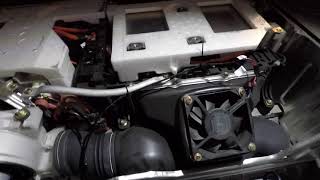
Est. part cost: $1500-$3000 - IMA Battery Cooling Fan Failure ⚪ Low Probability → Shop Engine Cooling Fan Blade The fan is located behind the seats and can ingest dust and debris over time, leading to motor failure or blockage of the air vents. Overheating accelerates battery degradation.
How to confirm: Listen for the fan running behind the driver's seat during operation. Check for blockages in the intake vents. Using a professional scan tool, you can perform an 'Active Test' to command the fan to run at low, medium, and high speeds to verify its function. A failure may also set a specific fan-related code, such as P1448, and can cause the IMA2 fuse (Fuse 53 in the under-dash fuse box) to blow.
Typical fix: Clean the fan and vents, or replace the fan motor assembly. The fan is located in the IPU (Intelligent Power Unit) behind the rear panel.
Est. part cost: $50-$150 - Failed Battery Control Module (BCM) or Motor Control Module (MCM) ⚪ Low Probability → Shop Vehicle Battery
How to confirm: This is a diagnosis of exclusion. If a known-good, balanced battery pack is installed and the code persists, the control modules are the next suspect. This requires advanced diagnostics by a hybrid specialist, often involving checking specific pin voltages and continuity at the module connectors. It is very rarely the root cause.
Typical fix: Replace the faulty control module. Used units from a salvage yard or eBay are the most common source.
Est. part cost: $100-$300 (used)
Rare But Worth Checking
- Corroded High-Voltage Connections: Water intrusion or damage to the battery case can lead to corrosion on the high-voltage bus bars or connectors, causing high resistance and triggering faults. Aftermarket batteries from Dorman often feature nickel-plated bus bars to mitigate this. This should be inspected any time the battery case is opened.
- Faulty IMA Junction Board: The junction board, which sits atop the battery pack, contains relays, fuses, and the main system switch. A failure in a relay or a fault on the board itself can interrupt power and trigger IMA codes. When replacing the battery, this board is sometimes transferred from the old pack to the new one, per Honda Service Bulletin 12-048.
- Non-Powertrain P3000 References: While P3000 is a powertrain code for the Insight, it is worth noting that the identifier "P3000" also appears in other automotive contexts. For example, NHTSA ODI #10371903 describes a manufacturer's defect involving Pirelli P3000 tires on a different Honda model, which required the replacement of all four tires.
Diagnosis Steps
- Confirm the P3000 code is present using a standard OBD-II scanner.
- CRITICAL: Use a professional, Honda-compatible scan tool (e.g., Honda HDS) to access the IMA system's control module and check for more specific sub-codes (e.g., P1449, P1447, P0A7F). This is the most important diagnostic step.
- Check the 12V battery's health and state of charge. A weak 12V battery can cause various electrical issues, though it won't be the root cause of P3000.
- Inspect the IMA battery cooling fan intake vents (located near the driver's side rear speaker) for blockages.
- Listen for the cooling fan running. If it never turns on, use a scan tool to perform an active test to confirm if the fan motor is faulty.
- If you are a trained professional with high-voltage safety gear, turn off the main IMA breaker behind the seats, wait for capacitors to discharge (at least 5 minutes), and access the IMA battery pack.
- Visually inspect for signs of corrosion on bus bars, damage, or loose connections inside the battery case.
- Perform a battery capacity and balance test using specialized equipment to measure the voltage and health of each individual cell stick. A significant deviation between sticks (e.g., more than 0.1-0.2V at rest) confirms battery failure.
Parts You'll Likely Need
- IMA High-Voltage Battery Pack
(OEM #1D010-PHM-A11RM (supersedes 1D010-PHM-A01RM, 1D010-PHM-999RM))— This is the component that fails due to age and causes the P3000 code. Replacing it is the only long-term, reliable fix.
Trusted brands: Honda (OEM Remanufactured), Bumblebee Batteries (Aftermarket - well-regarded in forums), GreenTec Auto (Aftermarket), Dorman (Aftermarket, Part #587-005)
OEM price range: $2500-$3500+
Aftermarket price range: $1500-$2500
Related Codes That Often Appear With This One
- P1449 — This is a more specific Honda code for 'Battery Module Deterioration'. P3000 is the general alert, and P1449 often confirms the battery pack itself is the problem due to cell imbalance.
- P1447 — Another specific Honda code for 'Battery Module Deterioration', similar in meaning to P1449, indicating an aging pack.
- P1600 — This is a general code for an IMA system fault. It often appears alongside P3000 as a confirmation that the issue lies within the hybrid powertrain control.
- P0A7F — This generic OBD-II code for 'Hybrid Battery Pack Deterioration' is another common companion, directly pointing to the aging battery as the root cause.
Technical Service Bulletins (TSBs) & Recalls
- Honda TSB 12-048: Notes that when replacing an IMA battery, the junction board must be transferred from the old battery to the new one, a procedure that exposes the technician to high voltage.
Platform-Specific Known Issues
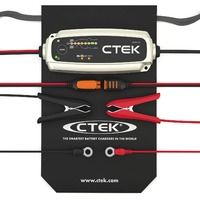
- DIY 'Grid Charging' & Rebalancing: A popular but temporary fix in the enthusiast community involves using a low-current charger (a 'grid charger') to slowly charge and rebalance the cells in the IMA pack. This can clear the IMA light and restore function for weeks or months but does not permanently fix the degraded cells. The process often includes a 'deep discharge' using light bulbs to fully cycle the pack. Eventually, the interval between required charges becomes shorter until the pack no longer responds.
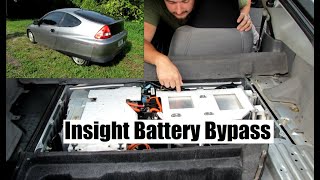
- IMA Bypass (Gas-Only Mode): Many owners choose to disable the IMA system entirely to avoid the cost of battery replacement. A simple bypass involves flipping the main breaker and unplugging the BCM connectors behind the rear panel. However, this disables the DC-DC converter above ~4200 RPM, risking a dead 12V battery. A more robust solution involves installing an 'IMA emulator' (like the Arduino-based 'IMAC&C' device) which spoofs signals to the car's computer, keeping the Check Engine Light off and ensuring the 12V charging system works correctly under all conditions.
- Owner Repair Story: A Failing Pack Decision: One owner on mariolurig.com shared their experience with a 2002 Insight where a 7-year-old replacement pack began failing with codes P1447 and P1449. They initially attempted the simple IMA bypass by disconnecting the BCM, but found their later-model BCM did not respond as expected, leading to starting and 12V charging issues. Faced with a non-functional car, they opted to have the pack replaced by a third-party specialist for around $2,500, which restored full functionality.
Mechanic-Grade Diagnostic Values
- Voltage between BCM module connector terminals C9 and C10 — expected: Approximately 140V or more. Failure: If voltage is present, but the code persists, it may indicate a faulty MPI, voltage converter, or BCM module. If voltage is not present, it points toward a problem with the battery pack itself or the high voltage contactor relay.
- Voltage between MCM connector terminal D15 and B20 — expected: Approximately 5V. Failure: If 5V is not present, the next step is to check for 5V at MCM terminals A3 and A24. Lack of voltage there points to a faulty MCM; if voltage is present there but not at the ECM, it indicates an open in the wire between the modules.
- Internal Resistance (IR) of a single 6-cell NiMH battery 'stick' — expected: Approximately 6.5 mΩ for a new OEM stick, ~7.5 mΩ for a good aftermarket stick.. Failure: Significantly higher internal resistance indicates a degraded stick that cannot efficiently accept or deliver current.
Scan Tool Commands That Help
- Honda HDS (Honda Diagnostic System): Active Test: IPU Fan (Low, Medium, High) — Used to verify the functionality of the IMA battery cooling fan without having to physically access it. If the fan does not respond to the command, it confirms a fault in the fan motor or its circuit. This is a key step when diagnosing P3000 accompanied by overheating-related sub-codes like P1449 or a specific fan code like P1448.
- Honda HDS (Honda Diagnostic System): Reset the MCM — This is a standard first step in many diagnostic procedures after a repair has been made. It clears learned values and stored faults from the Motor Control Module's memory.
- Honda HDS / i-HDS: ECU Reprogramming / Software Update — When replacing IMA system components, particularly the BCM or MCM, it is critical to ensure the vehicle's software is updated and matches the newly installed hardware. A mismatch can cause persistent codes or non-function.
Wiring & Ground Locations
- IPU (Intelligent Power Unit) — In the cargo area, behind the seats. Houses the IMA battery, BCM, MCM, DC-DC converter, and junction board.. This is the central hub for the entire IMA system. All diagnostic work for P3000 and related codes will center on components within the IPU.
- BCM Connector C (20-Pin) — On the Battery Control Module (BCM) inside the IPU.. This connector is used for critical voltage checks during diagnosis. For example, checking for 140V+ between pins C9 and C10 is a key step in the official service manual troubleshooting procedure.
- MCM Connectors (A, B, C, D, E) — On the Motor Control Module (MCM) inside the IPU.. These connectors carry signals between the MCM, BCM, and the main Engine Control Module (ECM). Checking for continuity and specific voltages (e.g., 5V reference) at these connectors is required to diagnose communication faults (like DTC P1648) or module failures.
- Fuse 53 (IMA 2, 10A) — In the under-dash fuse box.. This fuse provides power to the IMA battery cooling fan circuit. A shorted cooling fan motor will often blow this fuse, leading to an overheating battery, which in turn triggers P1449 and the master P3000 code.
Real Owner Repair Stories
- InsightCentral.net user (2003 Honda Insight, Manual Transmission) — IMA light and Check Engine Light on with codes P3000 and P1449. Car experienced forced recalibrations of the battery gauge.
❌ Tried (didn't work) The owner initially assumed the main IMA battery pack had failed, as is common.
✅ What actually fixed it The owner discovered the IMA battery cooling fan was not operating. Upon inspection, the fan motor itself was found to be seized. Replacing only the IMA cooling fan assembly cleared all codes and restored normal IMA operation. The battery pack itself was not faulty. - EcoModder.com user 'PeterPerkins' (Gen 1 Honda Insight) — Owner wanted to bypass the IMA system and gain manual control over assist/regen.
❌ Tried (didn't work) A simple bypass (disconnecting the BCM) was insufficient as it disables the DC-DC converter at high RPM and offers no control.
✅ What actually fixed it The user developed and installed a custom device called 'IMAC&C'. This Arduino-based controller plugs into the OBD-II port and intercepts signals for the throttle, brake, and clutch. It allows the driver to manually command specific levels of electric assist or regenerative braking using a joystick, overriding the car's standard logic. This provides a high degree of control for hypermiling or performance driving in a bypassed vehicle.
OEM Part Supersession History
1D010-PHM-A01RM→1D010-PHM-A11RM— Revisions to the remanufactured IMA battery pack by Honda over the years. Later versions may have included minor improvements to cell consistency or construction.
Heads up: When replacing the IMA battery, Honda also specifies that for 2000-2001 models, both the BCM and MCM should be replaced. For 2002-2004 models, only the BCM needs to be replaced. This is to ensure software compatibility with the replacement battery pack.
Model Year Variations Within This Range
- 2000-2001 vs 2002-2006: When replacing the IMA battery pack with a genuine Honda unit, the procedure for control module replacement differs. 2000-2001 models require replacement of both the Battery Control Module (BCM) and the Motor Control Module (MCM). Later 2002-2004 models only require the BCM to be replaced along with the battery. This is crucial for ensuring software compatibility.
- Manual vs. CVT Transmission: The behavior of the DC-to-DC converter when the IMA system is disabled or bypassed is different. On manual transmission cars, exceeding ~4200 RPM will cause the DC-DC converter to shut off, stopping the 12V battery from charging. The behavior on CVT models can be less predictable, but 12V charging problems are still a major concern with a disabled IMA system.
Diagnostic Flowchart
Used vs. New Parts: Buying Guide for This Vehicle
When a used part is the smart pick: Used parts are a viable option for the control modules (BCM, MCM) and the cooling fan assembly, as these are robust components with lower failure rates than the battery. A used IMA battery is an extremely high-risk purchase and generally not recommended unless you can personally verify its health with a capacity and balance test, or if it's sold as a 'box of sticks' for DIY rebuilding with the understanding that many will be bad.
Donor-vehicle mileage cap: roughly under 50000 miles for the part to have meaningful remaining life.
What to inspect on the donor part:
- For control modules (BCM/MCM): Check for any signs of water intrusion or corrosion on the case and connectors.
- For a cooling fan: Spin the fan by hand to ensure it moves freely and doesn't have grinding or seized bearings.
- For a complete IMA battery: Ask for a dated photo of a voltage test showing all 20 cell stick voltages. They should be very close to each other (within 0.1V). Without this data, assume the pack is bad.
Aftermarket brands forum-validated for this vehicle:
- Bumblebee Batteries: Historically a highly-regarded source for new and remanufactured NiMH packs, though ownership changes have been noted by the community.
- GreenTec Auto: Another popular and well-regarded aftermarket supplier for complete battery packs.
- Linsight: A niche supplier for advanced DIY Lithium-ion (Li-ion) conversion kits, which offer better performance but require significant technical skill to install.
Brands owners have reported issues with on this vehicle:
- Dorman (#587-005): While Dorman packs feature upgrades like nickel-plated bus bars, their remanufactured hybrid batteries have a mixed reputation in online forums, with some owners reporting premature failures across various vehicle makes.
Real Owner Stories
Aggregated from forums and TSBs cited above. Mileages and costs reflect what owners reported in those sources.
2002 Honda Insight ECA1 1.0L Hybrid
Symptoms: A 7-year-old replacement IMA pack began failing, setting codes P1447 and P1449. An attempt to bypass the system by disconnecting the BCM resulted in starting and 12V charging issues.
What fixed it: The owner had the IMA battery pack replaced by a third-party specialist, which restored full functionality to the vehicle.
Cost: $2500-$2500
Source hint: vehicle_specific_issues: Owner Repair Story: A Failing Pack Decision
2000-2006 Honda Insight ECA1 1.0L Hybrid
Symptoms: The owner reported getting the 'dreaded codes' P1600 and P1449, indicating an IMA system fault and specific battery cell deviation.
What fixed it: The community discussed rebalancing the battery pack as a potential fix for the cell deviation indicated by the P1449 code.
Source hint: InsightCentral.net - P1600 & P1449 Discussion (2010)
2000-2006 Honda Insight ECA1 1.0L Hybrid
Symptoms: A new owner purchased the car knowing it had a 'Bad IMA Battery' and needed to drive it home.
What fixed it: The community advised on the immediate, temporary procedure to disable the IMA system for the drive (flip the main breaker, unplug the BCM) and discussed long-term options like using a grid charger or replacing the pack.
Source hint: Reddit (r/hondainsight) - 'Bought my 1st Insight With Bad IMA Battery' (2023)
Documented NHTSA Reports
Honda Civic (Cross-Model Reference)
Symptoms: While not a powertrain fault, an owner reported that all four Pirelli P3000 Cinturato tires on their vehicle had to be replaced due to a manufacturer's defect.
What fixed it: The tires were replaced after inspection at a tire store.
Source hint: NHTSA ODI #10371903
Related OBD-II Codes
Frequently Asked Questions
My manual transmission Insight just flashed the 12V battery and brake lights when I revved the engine high. Is this related to the P3000 code?
I've heard about 'grid charging' my IMA battery. Is this a permanent fix for the P3000 code?
Can I just disable the IMA system to avoid the expensive battery replacement?
My mechanic only used a basic OBD-II scanner. Is that sufficient to diagnose the P3000 code on my Insight?
Could a bad cooling fan cause my IMA battery to fail and trigger a P3000 code?
Is it possible that the Battery Control Module (BCM) is the cause of my P3000, not the battery itself?
Helpful Videos

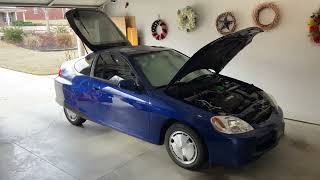
We Have This Part in Stock

The information in this article is provided for general reference and educational purposes only. Vehicle specifications, procedures, and part compatibility can vary by production date, trim level, and region. Always consult your vehicle's factory service manual and verify part numbers before purchasing or performing repairs. Safety-critical components such as airbags, seat belts, and braking systems should be installed by a qualified professional.
- Honda Insight:
- 🧭 Diagnostic Flowchart
- 🎬 Helpful Videos
- 🛍️ Shop This Part
- What's Unique About the 2000-2006 Honda Insight
- Symptoms You May Notice
- Most Likely Causes
- Rare But Worth Checking
- Diagnosis Steps
- Parts You'll Likely Need
- Related Codes That Often Appear With This One
- Technical Service Bulletins (TSBs) & Recalls
- Platform-Specific Known Issues
- Mechanic-Grade Diagnostic Values
- Scan Tool Commands That Help
- Wiring & Ground Locations
- Real Owner Repair Stories
- OEM Part Supersession History
- Model Year Variations Within This Range
- Used vs. New Parts: Buying Guide for This Vehicle
- Real Owner Stories
- 2002 Honda Insight ECA1 1.0L Hybrid
- 2000-2006 Honda Insight ECA1 1.0L Hybrid
- 2000-2006 Honda Insight ECA1 1.0L Hybrid
- Documented NHTSA Reports
- Honda Civic (Cross-Model Reference)
- Related OBD-II Codes
- Frequently Asked Questions
- 🎟️ Get 5% Off