

P3000 on 2008-2011 Mazda Tribute Hybrid: Battery Control Module Failure Causes and Fixes
On a 2008-2011 Mazda Tribute Hybrid, code P3000 indicates a serious fault in the high-voltage battery system, most commonly a failed battery pack or a bad Battery Energy Control Module (BECM). This is a critical, high-cost repair that is not DIY-friendly due to lethal voltage risks. The vehicle may shut down while driving, displaying a 'Stop Safely Now' message.
- P3000 is a critical fault code on your Tribute Hybrid indicating a serious problem with the high-voltage battery system.
- Do not drive the vehicle, as it can shut down unexpectedly at any time.
- This is not a DIY repair. The high voltages are extremely dangerous and require a qualified professional.
- The most likely cause is a failed high-voltage battery pack, which is an expensive repair. A faulty control module (BECM) is the second most likely cause.
- A professional diagnosis is required to read the sub-codes that will pinpoint the exact failing component.
What's Unique About the 2008-2011 Mazda Tribute
The 2008-2011 Mazda Tribute Hybrid is mechanically identical to the Ford Escape Hybrid and Mercury Mariner Hybrid. Therefore, issues, parts, and diagnostic procedures are shared between them. The P3000 code on this platform is a serious indicator of a fault within the high-voltage battery system, which was a complex and expensive component for its time. Failures are common as these vehicles age, and the primary causes are almost always either the degradation of the battery cells themselves or the failure of the electronics that manage them.
Symptoms You May Notice
- Check Engine Light or other malfunction indicators are illuminated
- Red triangle warning light is on
- Vehicle fails to start
- Vehicle enters 'Stop Safely Now' mode and loses all motive power
- Engine starts, runs erratically for a moment, and then stalls
- Noticeable decrease in fuel economy and overall performance
- Replacing the 12V auxiliary battery. While a weak 12V battery can cause many electrical issues, it is not the direct cause of a P3000 code, which specifically points to a fault in the high-voltage system. However, a healthy 12V battery is critical for proper diagnosis, as a failing one can sometimes trigger a cascade of confusing codes.
Most Likely Causes
- High-Voltage (HV) Battery Pack Failure 🔴 High Probability → Shop Vehicle Battery The nickel-metal hydride (NiMH) battery packs in this generation of hybrids have a finite lifespan and degrade after years of charge/discharge cycles, leading to cell imbalances that trigger this code. This is the most common failure point for a P3000 code as the vehicles exceed 10 years or 150,000 miles.
How to confirm: A professional technician will use a specialized scan tool (like FORScan) to read the voltage of individual battery blocks. A significant voltage difference (e.g., >0.3V) between blocks confirms a failing battery. This is often accompanied by code P0A80 🎬 Watch this diagnostic guide for code P0A80 (Replace Hybrid Battery Pack) or P0A7F (Hybrid Battery Pack Deterioration).
Typical fix: Replace the entire high-voltage battery assembly with a new or remanufactured unit.
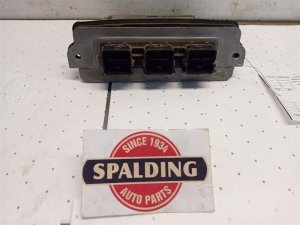
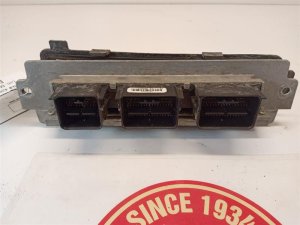
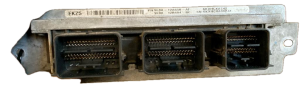
Est. part cost: $1800-$5000+ - Battery Energy Control Module (BECM) Failure 🟡 Medium Probability → Shop Vehicle Battery The control module itself can fail due to electronic component failure over time, leading to a P3000 code even if the battery cells are still functional. This is a known issue on the Ford/Mazda/Mercury hybrid platform.
How to confirm: If code P0A1F (Battery Energy Control Module) is present alongside P3000, the BECM is the primary suspect. Diagnosis involves testing communication and power/ground circuits to the module. A technician may also inspect the module's circuit board for signs of corrosion or damage.
Typical fix: Replace the Battery Energy Control Module. This often requires programming the new module to the vehicle, although some owner experiences suggest that swapping a BECM from a failed pack to a new one can work without reprogramming.
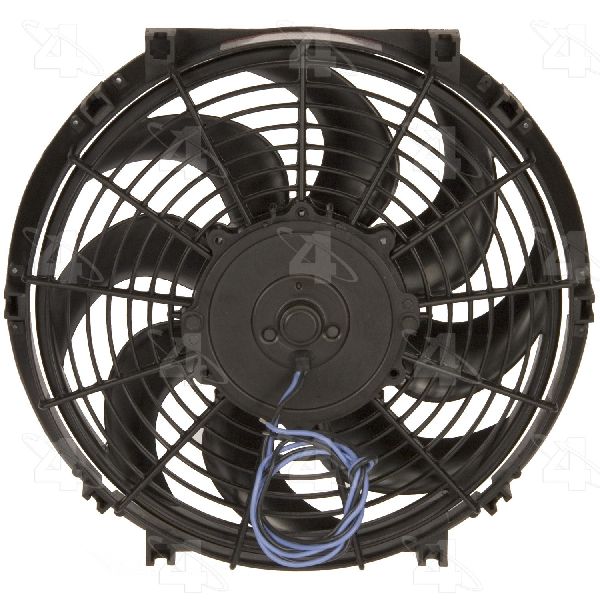
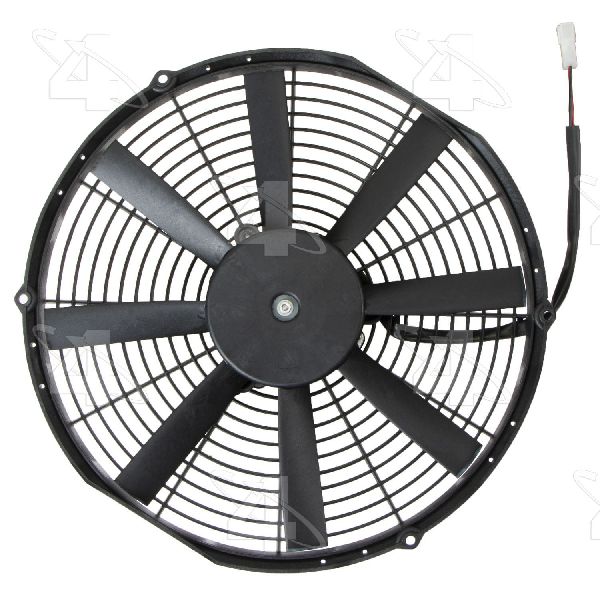
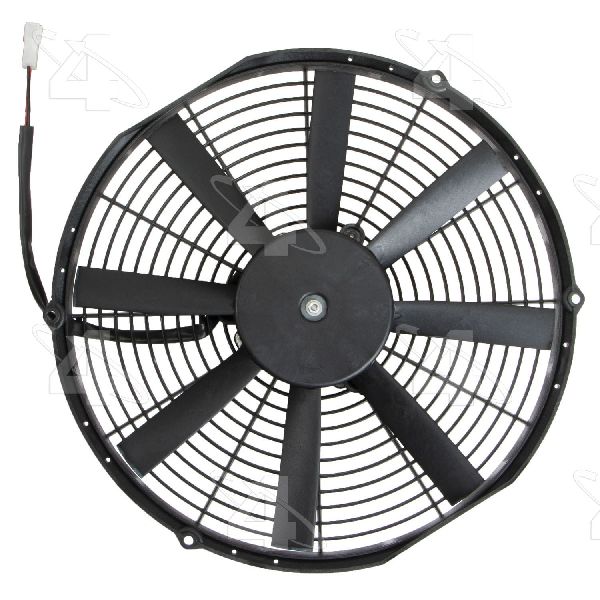
Est. part cost: $400-$1000 - HV Battery Cooling Fan Failure ⚪ Low Probability → Shop Engine Cooling Fan Blade The battery cooling fans are located in the rear cargo area and can become clogged with dust, pet hair, or debris, causing them to fail. Fan failure leads to battery overheating, which damages the cells and can trigger a P3000.
How to confirm: Using a bidirectional scan tool, command the cooling fans to turn on. If they don't operate, inspect the fans, wiring, and fuses. Codes P0A81 (Hybrid Battery Pack Cooling Fan 1 Control Circuit) or P0A96 (Hybrid Battery Pack Cooling Fan 2 Control Circuit) are strong indicators of this issue.
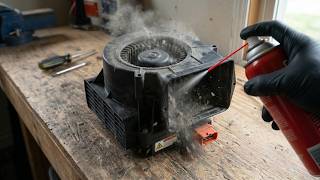
Typical fix: Replace the HV battery cooling fan 🎬 See how to replace the hybrid battery fans assembly and clear any blockages from the intake vents.
Est. part cost: $100-$450
Rare But Worth Checking
- Corroded Wiring or Connectors: Water intrusion in the rear of the vehicle can lead to corrosion on connectors for the battery control system, causing communication errors that can trigger a P3000 code. This can affect the main ECU connector or the individual cell voltage sensing wires.
- Motor Electronics Coolant Pump (MECP) Failure: A known issue and recall (NHTSA #14V526000, Ford #14S19) for 2008 models involves the coolant pump for the hybrid electronics. If this pump fails, the system can overheat, potentially leading to various hybrid system fault codes and a 'Stop Safely Now' event, which is often associated with P3000.
Diagnosis Steps
- SAFETY WARNING: Do not attempt to diagnose the high-voltage system without proper training and personal protective equipment (PPE). Lethal voltage is present.
- Check 12V Battery Health: Before diving into the HV system, ensure the 12V auxiliary battery is fully charged and healthy. A weak 12V battery can cause communication errors with various modules, including the BECM.
- Scan for Codes: Use a professional-grade scan tool capable of reading manufacturer-specific codes from all modules, including the Battery Energy Control Module (BECM). Document all codes and sub-codes. FORScan is a commonly recommended tool for Ford/Mazda platforms.
- Analyze HV Battery Data: In the live data stream for the BECM, monitor the voltages of all individual battery blocks. A healthy pack will have voltages within 0.1-0.2V of each other. A failing pack will show one or more blocks with significantly lower voltage (a difference >0.3V is a red flag).
- Check Cooling System: Command the HV battery cooling fans on with the scan tool to verify their operation. Visually inspect the fan intake vents (typically in the rear cargo/seat area) for blockages.
- Inspect Wiring: Visually inspect the wiring harnesses and connectors at the HV battery and BECM for any signs of damage, corrosion, or loose connections. Pay close attention to the BECM connector pins.
- Consult TSBs: Check for any Technical Service Bulletins (TSBs) related to P3000 or the hybrid battery system for this specific vehicle. For example, Ford TSB 09-18-04 addresses no-start conditions related to the BECM on the Escape Hybrid.
- Confirm Diagnosis: Based on the specific codes found with P3000 (e.g., P0A80 vs. P0A1F), the final diagnosis can be made to pinpoint the failing component.
Parts You'll Likely Need
- High-Voltage Traction Battery
(OEM #8M6Z-10B759-B (2008), AM6Z-10B759-A (2009-2011))— This is the most common failure due to age-related degradation of the battery cells, leading to imbalances that trigger the P3000 code.
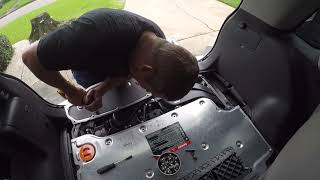
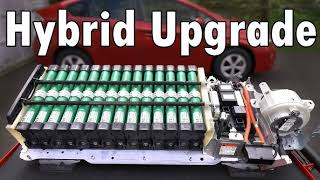
Trusted brands: Motorcraft, Dorman (Remanufactured), GreenTec Auto (Remanufactured) 🎬 Watch this step-by-step hybrid battery replacement walkthrough, NuVant (Remanufactured)
OEM price range: $3000-$5000+
Aftermarket price range: $1800-$3500 (Remanufactured) - Battery Energy Control Module (BECM)
(OEM #8M6Z-12A650-BGRM)— The control module for the HV battery can fail electronically, causing a P3000 code even if the battery cells are still functional.
Trusted brands: Motorcraft
OEM price range: $400-$1000
Aftermarket price range: $200-$500 (Used/Remanufactured) - HV Battery Cooling Fan Kit
(OEM #5M6Z-10C659-B)— Fan failure leads to battery overheating, which can cause permanent battery damage and trigger fault codes.
Trusted brands: Motorcraft
OEM price range: $250-$450
Aftermarket price range: $100-$200
Related Codes That Often Appear With This One
- P0A80 — This code specifically means 'Replace Hybrid Battery Pack' and is the most common underlying cause that triggers the general P3000 alert.
- P0A1F — This code points directly to a fault within the 'Battery Energy Control Module,' indicating the control unit itself is likely the problem, not the battery cells.
- P0A7F — Means 'Hybrid Battery Pack Deterioration,' which strongly suggests the high-voltage battery has reached the end of its service life.
- P1A10 — A Ford/Mazda-specific code for 'Hybrid Powertrain Control Module - Battery Disabled,' which is set when the system disables the HV battery due to a detected fault. This code may appear if the vehicle has been sitting for a long time and the HV battery is deeply discharged.
Technical Service Bulletins (TSBs) & Recalls
- Ford TSB 09-18-04: Addresses a no-start or 'Stop Safely Now' message on 2005-2008 Escape Hybrids, which may be caused by a software issue in the BECM.
Platform-Specific Known Issues
- Recall for 2008 models: A recall was issued for a failing Motor Electronics Coolant (MEC) pump (NHTSA #14V526000). This pump cools the hybrid system's electronics, and its failure can cause the system to overheat and shut down, increasing crash risk.
- Owner Experience - Stop Safely Now: Numerous owners on forums like ElectricVehicleForums.com describe the classic failure mode: the vehicle suddenly loses power, displays the red triangle of death, and shows the 'Stop Safely Now' message. This is the hallmark symptom of the P3000 code on this platform.
Mechanic-Grade Diagnostic Values
- Individual HV Battery Block Voltage Deviation (DEL_MOD_V) — expected: < 0.3V between the highest and lowest block. Failure: A deviation greater than 0.3V between any of the 20 battery blocks is a strong indicator of a failing or imbalanced battery pack.
- HV Battery State of Charge (SOC) Normal Operating Range — expected: 45% - 55%. Failure: The system will use the gas engine to charge the battery if SOC drops below ~41% and stop charging around 51% during normal operation. A battery that cannot maintain this range or drops rapidly indicates degradation.
Hidden / Shadow Codes Worth Checking
- P0AFA: Hybrid Battery System Voltage Low. This code is often a direct symptom of the widespread cell degradation within the battery pack that ultimately triggers the general P3000. (see via Professional scan tools like FORScan or Ford's IDS can retrieve this from the BECM.)
- P3011-P3029: These codes (e.g., P3011, P3012) can sometimes be present, indicating a weak battery block corresponding to the last two digits (e.g., P3011 points to block 1). This provides a more specific location of the failure within the pack. (see via Advanced scan tools capable of reading manufacturer-specific codes from the Battery Control Module.)
Scan Tool Commands That Help
- FORScan: RMODE_BALANCE (Battery Pack Rebalance) — This is a service function used to force the vehicle to charge the high-voltage battery to a very high state of charge (around 85%) and then discharge it, attempting to balance the voltage across all cells. It can sometimes temporarily improve a marginally imbalanced battery but is not a permanent fix for a degraded pack. It is a useful diagnostic step to see if the cells respond to a forced deep charge cycle.
Wiring & Ground Locations
- High-Voltage Wiring — All high-voltage wiring is insulated in a bright orange-colored covering. Key harnesses run from the rear battery pack, underneath the vehicle, to the engine compartment components like the eCVT and DC/DC converter.. Physical damage to this orange-cased wiring from road debris or improper service can cause shorts or open circuits, triggering a catastrophic system failure and a P3000 code.
- G301 — Under the driver's seat.. This is a primary body ground. While not directly in the high-voltage circuit, poor grounding here can cause communication issues between the various control modules, including the PCM and BECM, potentially leading to false codes or erratic behavior.
- BECM Connectors — The BECM is located on the side of the high-voltage battery pack in the rear cargo area. It has a 40-circuit control connector (C4227A on some diagrams).. Corrosion or backed-out pins on this specific connector can interrupt communication or power to the module, directly causing codes P0A1F and P3000.
Real Owner Repair Stories
- Hybrid-specific repair shop diagnosis (2008 Ford Escape Hybrid 2.3L) — Vehicle would start, rev lightly, and then stall, displaying the red triangle and 'Stop Safely Now' message.
❌ Tried (didn't work) Jump-starting the 12V battery, Attempting to use the built-in HV battery jump-start feature
✅ What actually fixed it Diagnosis with a professional scan tool revealed codes P0A1F and P1A10, indicating the Battery Energy Control Module (BECM) was not communicating. The BECM was faulty and required replacement and programming by a dealer to resolve the issue.
Model Year Variations Within This Range
- 2008: The 2008 model uses a 2.3L engine and has a built-in 12V-to-HV battery jump-start feature, which was often ineffective and later removed. The BECM and service disconnect plug are also physically different from the 2009-2011 models.
- 2009-2011: These models feature an updated 2.5L engine with different PCM programming. The high-voltage battery pack was revised with a different BECM shape, a black service disconnect plug (vs. blue on the 2008), and different internal wiring harnesses. A battery pack from a 2008 is not directly compatible with a 2009-2011 vehicle without significant modification.
- 2010-2011: For the 2010 model year, Ford changed the battery cooling system to use cabin air instead of a dedicated rear window vent and ducting system seen on the 2008-2009 models.
Diagnostic Flowchart
Other Known Issues on This Vehicle
Issues unrelated to this code that are worth knowing about as an owner of this generation:
- Electric Power Steering Failure 🔴 High — Common enough to warrant a major recall (NHTSA #14V284 / Mazda Recall #7914F). Can occur at various mileages. (Ref: Recall 14S05 / 7914F)
- Cracked ABS Tone Ring 🟠 Medium — A very common issue, especially in regions with road salt. Corrosion builds up under the ring on the CV axle, causing it to crack and trigger the ABS light.
- HVAC Blend Door Actuator Failure 🟡 Low — Common failure leading to inability to control cabin temperature on one or both sides. Often makes a clicking noise behind the dash.
- Motor Electronics Coolant Pump (MECP) Failure 🔴 High — Common on earlier models (2005-2008), leading to a recall. Failure causes the hybrid electronics to overheat, resulting in a 'Stop Safely Now' warning and loss of power. (Ref: Recall 14S19 / 14V526000)
- Rear Wheel Well Rust 🟠 Medium — Common in the rust belt. The sheet metal around the rear wheel arches is prone to significant corrosion.
Used vs. New Parts: Buying Guide for This Vehicle
When a used part is the smart pick: For the high-voltage battery, a professionally remanufactured unit from a reputable specialist (like GreenTec Auto) is often a smarter choice than a used junkyard part. A used battery carries a high risk of having the same age-related degradation as the one being replaced. For the BECM or cooling fans, a tested used part from a low-mileage donor vehicle can be a cost-effective option.
Donor-vehicle mileage cap: roughly under 100000 miles for the part to have meaningful remaining life.
What to inspect on the donor part:
- Verify the donor vehicle's year to ensure compatibility (2008 vs. 2009+ are different).
- Ask for the donor vehicle's mileage; lower is always better for battery components.
- Inspect the battery case for any signs of physical damage or water intrusion.
- If possible, get a photo of the service disconnect plug to confirm the version (blue for 2008, black for 2009+).
OEM-only on this vehicle (don't cheap out):
- Battery Energy Control Module (BECM) - While used units can work, a new OEM part is the safest bet to avoid compatibility and programming issues, especially if a dealer is performing the work.
Aftermarket brands forum-validated for this vehicle:
- GreenTec Auto (Remanufactured HV Battery)
- Dorman (Remanufactured HV Battery)
Brands owners have reported issues with on this vehicle:
- Generic, unbranded remanufactured batteries from unknown sellers. The quality of the remanufacturing process, especially cell balancing and testing, is critical to the lifespan of the replacement pack.
Real Owner Stories
Aggregated from forums and TSBs cited above. Mileages and costs reflect what owners reported in those sources.
2008 Mazda Tribute Hybrid 2.3L
Symptoms: The vehicle suddenly loses power, displays the red triangle of death, and shows the 'Stop Safely Now' message.
What fixed it: Replacement of the high-voltage battery assembly with a remanufactured unit.
Source hint: ElectricVehicleForums.com discussion on 'Stop Safely Now' and P3000 code
2008 Ford Escape Hybrid 2.3L — ~165000 miles
Symptoms: Vehicle fails to start; 'Stop Safely Now' message displayed on the dash.
What fixed it: Addressed via TSB 09-18-04 regarding a software issue in the Battery Energy Control Module (BECM).
Source hint: Ford TSB 09-18-04
2008 Ford Escape Hybrid 2.3L — ~150000 miles
Symptoms: Noticeable decrease in fuel economy and overall performance; P3000 and P0A80 codes present.
What fixed it: Replacement of the high-voltage battery pack.
Cost: $1800-$5000
Source hint: Car Talk Community discussion on high-mileage hybrid battery replacement costs
Related OBD-II Codes
Frequently Asked Questions
My 2008 Mazda Tribute Hybrid won't start and shows a 'Stop Safely Now' message. Does Ford TSB 09-18-04 apply to my vehicle?
I have a P3000 code and a red triangle light. Could this be related to the MEC pump recall?
Is it better to buy a used HV battery from a junkyard or a remanufactured one for my Tribute?
Can a bad 12V battery cause a P3000 code on a 2010 Mazda Tribute Hybrid?
How can a technician confirm if my HV battery pack is actually failing?
Are the battery cooling fans a common failure point for the P3000 code?
Helpful Videos
Used OEM Parts in Stock
New Aftermarket Parts Available

The information in this article is provided for general reference and educational purposes only. Vehicle specifications, procedures, and part compatibility can vary by production date, trim level, and region. Always consult your vehicle's factory service manual and verify part numbers before purchasing or performing repairs. Safety-critical components such as airbags, seat belts, and braking systems should be installed by a qualified professional.
- Mazda Tribute:
- 🧭 Diagnostic Flowchart
- 🎬 Helpful Videos
- 🛍️ Shop This Part
- What's Unique About the 2008-2011 Mazda Tribute
- Symptoms You May Notice
- Most Likely Causes
- Rare But Worth Checking
- Diagnosis Steps
- Parts You'll Likely Need
- Related Codes That Often Appear With This One
- Technical Service Bulletins (TSBs) & Recalls
- Platform-Specific Known Issues
- Mechanic-Grade Diagnostic Values
- Hidden / Shadow Codes Worth Checking
- Scan Tool Commands That Help
- Wiring & Ground Locations
- Real Owner Repair Stories
- Model Year Variations Within This Range
- Other Known Issues on This Vehicle
- Used vs. New Parts: Buying Guide for This Vehicle
- Real Owner Stories
- 2008 Mazda Tribute Hybrid 2.3L
- 2008 Ford Escape Hybrid 2.3L — ~165000 miles
- 2008 Ford Escape Hybrid 2.3L — ~150000 miles
- Related OBD-II Codes
- Frequently Asked Questions
- 🎟️ Get 5% Off