

P3000 on 2012-2017 Toyota Camry Hybrid: Battery Control System Malfunction Causes and Fixes
P3000 on a 2012-2017 Camry Hybrid means there's a fault in the high-voltage battery system. It's often caused by an aging battery pack (throwing a P0A80 code) or a deeply discharged battery from sitting too long. A full battery replacement can cost $3,000-$5,000, while a special 'rescue charge' for a dead battery may cost $450-$950. Always check for a clogged battery cooling fan first, as it's a cheap and preventable cause of failure.
- P3000 is a general warning; you MUST get the sub-codes read with a professional scanner for an accurate diagnosis.
- If the car has been sitting for 2+ months and won't start, the HV battery is likely just deeply discharged and may be saved by a 'rescue charge' at a dealer or hybrid specialist.
- If the code appears with P0A80 during normal use, the HV battery pack is likely failing and will need to be replaced or rebuilt.
- Working on the hybrid battery system is extremely dangerous due to high voltage and should only be done by trained professionals.
- Regularly check and clean the hybrid battery cooling vent in the rear seat area to prevent overheating and extend battery life.
What's Unique About the 2012-2017 Toyota Camry Hybrid
For the XV50 generation Camry Hybrid, the P3000 code is a very common indicator of one of two distinct issues: either the Ni-MH high-voltage battery is naturally degrading with age, or it has been deeply discharged from sitting unused for a long period (e.g., over a winter or a long vacation). Toyota has a specific service procedure for the deep discharge scenario, which requires a special dealer-level 'rescue charge' using a GRX-5100 diagnostic station. Distinguishing between these two scenarios is the key to avoiding an unnecessary and expensive battery replacement. This deep discharge issue is common across many Toyota hybrids of the era, including the Prius, Avalon Hybrid, and RAV4 Hybrid.
Symptoms You May Notice
- "Check Hybrid System" message on the dashboard.
- Master warning light (red triangle) illuminated.
- Vehicle will not enter 'Ready' mode (won't start).
- Reduced power and acceleration, or vehicle enters 'limp mode'.
- Decreased fuel economy.
- The internal combustion engine runs constantly and does not shut off.
- Whining or buzzing sounds from the hybrid components.
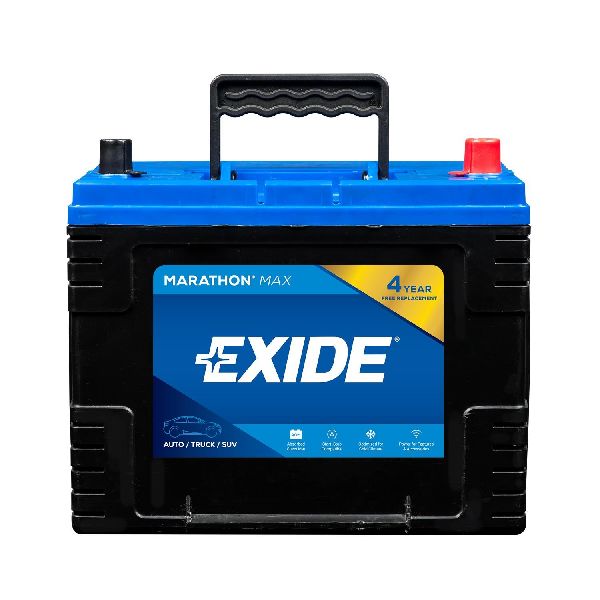
- Replacing the 12V auxiliary battery. While a weak 12V battery can cause various electrical issues, it will not directly cause a P3000 code. A no-start condition might lead you to suspect the 12V battery, but if 'Check Hybrid System' is displayed, the problem lies in the high-voltage system.
Most Likely Causes
- Degraded or Failing High-Voltage (HV) Battery Pack 🔴 High Probability → Shop Vehicle Battery The Ni-MH battery packs in this generation have a finite lifespan and will eventually lose capacity and develop imbalanced cells after many years and miles.
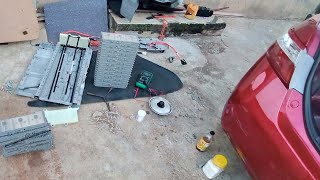
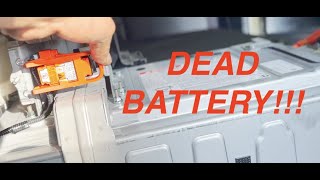
How to confirm: An advanced scan tool (like Toyota Techstream) will show a companion code, most commonly P0A80 ('Replace Hybrid Battery Pack'). Live data will show a significant voltage difference 🎬 Watch: Full diagnosis and repair of the Camry hybrid battery between individual battery blocks (typically more than 0.3V, with some failing modules dropping below 7.0V while others are near 8.0V).
Typical fix: The official repair is to replace the entire HV battery assembly. Some independent shops or DIYers may rebuild the pack by replacing only the weak modules and cleaning the bus bars.
Est. part cost: $2,500-$4,500 - Deeply Discharged High-Voltage (HV) Battery 🟡 Medium Probability → Shop Vehicle Battery If the vehicle is parked and not driven for an extended period (typically 2-3 months or more), the HV battery's natural self-discharge can drop its voltage below a minimum threshold, causing the system to lock out to prevent cell damage.
How to confirm: The vehicle will not go into 'Ready' mode, especially after being stored for a long time. A scan tool may show P3000 with an information code like 388 ('Discharge Inhibition Control Malfunction'). A standard 12V jump start will not work.
Typical fix: The vehicle needs a special 'rescue charge' using a dealer-specific diagnostic station (e.g., GRX-5100) to safely restore voltage to the HV battery. This is a labor-only procedure outlined in Toyota service bulletins.
Est. part cost: $0 - Clogged HV Battery Cooling Fan or Intake Filter 🟡 Medium Probability → Shop Engine Cooling Fan Blade The battery cooling fan intake is located in the rear passenger area (driver's side, next to the seat cushion) and can easily become blocked by dust, pet hair, or debris, causing the battery to overheat and degrade prematurely.
How to confirm: Visually inspect the battery cooling fan intake vent. Removal of the rear seat bottom cushion and side trim provides access to the fan assembly for thorough inspection and cleaning. 🎬 See how to access and clean the battery cooling fan
Typical fix: Clean the intake vent, filter, and fan blades thoroughly. If the fan motor has failed, it must be replaced.
Est. part cost: $0-$200 - Corroded Battery Module Bus Bars or Voltage Sensing Wires ⚪ Low Probability → Shop Vehicle Battery Over time, moisture can lead to corrosion on the copper bus bars that connect the 34 individual battery modules, or on the pins of the voltage sensing harness. This creates high resistance, leading to voltage imbalances and triggering P3000.
How to confirm: This requires disassembly of the HV battery pack to visually inspect the bus bars and the multi-pin connector for the voltage sensing harness. This is a high-voltage procedure for professionals only.
Typical fix: A well-documented DIY fix involves removing the bus bars, cleaning them thoroughly, and reinstalling. Applying dielectric grease upon reassembly can prevent future corrosion. 🎬 Watch: Step-by-step guide to cleaning hybrid battery bus bars
Est. part cost: $10-$300
Rare But Worth Checking
- Failed HV Battery ECU: → Shop Vehicle Battery While the battery pack itself is the most common point of failure, the computer that monitors it (the Battery ECU) can also fail. This is usually diagnosed after all other possibilities, like the battery pack and wiring, have been ruled out. Manufacturer TSB Bulletin #T-TT-0303-14 notes that when a DTC is detected by the HV Battery ECU, the HV Control ECU will automatically store a P3000 with Information Code 123 to capture the state of the Hybrid Control System.
- Failed Hybrid Inverter/Converter Assembly: The inverter, which has its own cooling system, can fail due to overheating or internal electrical faults. A failed inverter can prevent the HV battery from charging correctly and may trigger a P3000 code, often accompanied by other warnings and a loss of power.
Diagnosis Steps
- SAFETY FIRST: This is a high-voltage system. Do not proceed without proper training and safety equipment. Professional service is strongly recommended.
- Scan for Codes: Use a Toyota-specific scan tool (like Techstream) to read all codes from the Hybrid Control and Battery ECUs. Note the primary code (P3000) and any sub-codes (INFs) or companion codes (P0A80, P30xx).
- Analyze Freeze Frame Data: Review the freeze-frame data for P0A80, which shows the state of the battery blocks at the moment the fault was triggered. A large voltage deviation points to failing cells.
- Check Vehicle History: Determine if the vehicle has been sitting unused for more than a month. If so, a deeply discharged battery (INF 388) is a high probability.
- Inspect Battery Cooling Intake: Visually inspect the HV battery cooling intake vent in the rear cabin for any blockages from dust or debris. This is a simple but critical check.
- Perform Live Data Analysis: If possible, monitor the live voltage of all 17 battery blocks. Healthy blocks should have very similar voltages (typically within 0.2-0.3V of each other). A block with a significantly lower voltage is the source of the problem.
- Diagnose Based on Findings: If P0A80 is present with a clear cell imbalance, the HV battery pack needs service (replacement or rebuilding). If only P3000 with INF 388 is present and the car was stored, a 'rescue charge' is the likely solution. If the fan intake is clogged, clean it and re-evaluate. If corrosion is suspected, professional disassembly is required.
Parts You'll Likely Need
- High Voltage (HV) Battery Assembly
(OEM #G9510-33050 (supersedes G9510-33040, G9510-33041, G9510-33100, G9510-33090))— This is the most common cause of P3000 when accompanied by P0A80, indicating the battery pack has reached the end of its service life.
Trusted brands: Toyota (OEM New or Remanufactured), Dorman (Remanufactured), Green Bean Battery (Remanufactured), Greentec Auto (Remanufactured or New Cells)
OEM price range: $3000-$4400
Aftermarket price range: $1500-$2500 - HV Battery Bus Bar Kit — In cases of corrosion, simply cleaning or replacing the bus bars and nuts can restore proper voltage sensing and current flow, resolving the fault without needing a full battery replacement. New nickel-coated copper bus bars are recommended.
Trusted brands: Toyota (OEM), Aftermarket kits on Amazon/eBay, BattMech
OEM price range: $50-$150
Aftermarket price range: $20-$50 - HV Battery Cooling Fan
(OEM #G9230-33020)— If the fan is seized or not operating at the correct speed due to blockage or motor failure, it will cause the battery to overheat, leading to premature degradation and P3000/P0A80 codes.
Trusted brands: Toyota (OEM), AISIN
OEM price range: $150-$250
Aftermarket price range: $100-$180
Related Codes That Often Appear With This One
- P0A80 — P3000 is the general alert from the battery system, while P0A80 is the specific code meaning the battery pack has degraded or failed due to cell imbalance.
- P3011 - P3027 — These codes point to a specific weak 'block' within the hybrid battery pack (e.g., P3017 for Block 7). They help a technician pinpoint which modules are failing.
- P3000 (INF 388) — This specific information code indicates 'Discharge Inhibition Control Malfunction', strongly suggesting the HV battery is deeply discharged from being stored for a long period or running out of fuel.
- P3000 (INF 389) — This information code indicates a drastic voltage drop was detected in one of the battery blocks, pointing towards an internal failure, severe corrosion, or a deeply depleted battery.
Technical Service Bulletins (TSBs) & Recalls
- T-SB-0095-20: While this TSB primarily addresses DCM (telematics) issues that can drain the 12V battery on 2020-2021 models, the 'rescue charge' procedure for a deeply discharged HV battery mentioned in general hybrid repair information is a related service concept. The original Pass 1 reference was slightly misleading; this TSB is not directly for the P3000 deep discharge issue on a 2012-2017 model, but the dealer procedure it discusses is conceptually similar to what's required.
- TSB Bulletin #T-TT-0303-14: This manufacturer service bulletin clarifies that the purpose of the P3000/123 code combination is to capture the state of the Hybrid Control System when a malfunction is detected by the HV Battery ECU.
Platform-Specific Known Issues
- Deep discharge lockout: This platform is known to trigger a P3000 and enter a no-start 'lockout' state if left to sit for several weeks or months, requiring a special dealer procedure to recover.
- Clogged battery cooling fan filter: The placement of the cooling intake in the cabin makes it susceptible to clogging, which is a leading preventable cause of premature battery degradation.
- Bus Bar Corrosion: A significant number of P3000/P0A80 faults on high-mileage vehicles are caused not by failed cells, but by simple corrosion on the copper connectors between cells, which can be fixed very cheaply.
Mechanic-Grade Diagnostic Values
- Individual HV Battery Module Voltage — expected: Approx. 7.6V - 7.8V per module at rest. The voltage difference between the highest and lowest module should be less than 0.3V, with professionally balanced packs showing less than 0.05V difference.. Failure: A failing module will show a significantly lower voltage, sometimes dropping to 6.5V or even as low as 1.5V in a catastrophic failure. A block voltage below 10V in the freeze frame data can prevent the car from starting.
- HV Battery Block Voltage (as seen in Techstream) — expected: All 17 blocks should show similar voltages, typically around 15-16V each. The difference between the highest and lowest block should be minimal.. Failure: Freeze frame data for P0A80 often shows one block with a significantly lower voltage than the others. For example, 16 blocks may be at ~15V while the failing block is at 8.6V.
Hidden / Shadow Codes Worth Checking
- P3000 (INF 388): Discharge Inhibition Control Malfunction. This is triggered when the HV battery state of charge drops too low, often from the vehicle sitting unused for a long time, being left in Neutral, or running out of fuel. (see via Toyota Techstream software or a compatible high-end scan tool under the Hybrid Control ECU's DTC information.)
- P3000 (INF 389): Drastic voltage drop detected. This indicates the Battery ECU saw a sudden, significant voltage drop in a battery block, which can be caused by a deeply depleted battery or an internal failure like a bad cell or severe corrosion. (see via Toyota Techstream software or a compatible high-end scan tool under the Hybrid Control ECU's DTC information.)
- P3000 (INF 123): Abnormal signal response from the Battery ECU. As noted in TSB Bulletin #T-TT-0303-14, this code is automatically stored by the HV Control ECU when a DTC is detected by the HV Battery ECU to capture the system state. (see via Toyota Techstream software or a compatible high-end scan tool under the Hybrid Control ECU's DTC information.)
Scan Tool Commands That Help
- Toyota GRX-5100 HEV Battery Service Tool: → Shop Vehicle Battery Rescue Charge — This function is used specifically when the HV battery is too discharged to start the car (often showing P3000 INF 388). It performs a controlled, slow charge (typically in 10-minute cycles) to bring the voltage back to a level where the vehicle can enter 'Ready' mode and start its own charging cycle.
Wiring & Ground Locations
- Battery ECU (Battery Smart Unit) — Located on the side of the main HV battery assembly itself, inside the metal case. It is visible after removing the main battery cover.. This is the computer that monitors all the battery cells and sends the distress signal to the main Hybrid ECU that triggers P3000. A fault in this ECU or its connections can cause the code.
- Battery Voltage Sensor Connector — This is the large, multi-pin white connector that plugs into the Battery ECU, with wires leading to each battery module to sense individual voltages.. Corrosion on the pins of this connector can cause incorrect voltage readings, leading to false P3000 codes and misdiagnosis of battery failure. It is a critical inspection point during a battery rebuild.
- Hybrid System Ground Points — Key ground points for the hybrid system are located on the cylinder block and the instrument panel brace on the left-hand side. A faulty ground can cause a range of electrical issues, including erratic ECU behavior that could potentially impact battery monitoring.. While not a common cause, a poor ground connection for the hybrid control modules can lead to unpredictable errors, including a P3000 code.
Real Owner Repair Stories
- YouTube channel 'FASTEC AUTO' (Toyota Camry Hybrid (specific year not mentioned, but consistent with XV50 generation)) — Check Hybrid System and VSC lights on, P0A80 and P3000 codes stored. Live data showed battery blocks 12 and 13 were failing.
❌ Tried (didn't work) Initial diagnosis pointed directly to the battery pack.
✅ What actually fixed it The technician disassembled the battery pack and found one module in block 13 reading 6.5V and another reading 7.3V, while healthy modules were 7.8V. He also noted significant corrosion on the copper bus bars. The fix involved replacing three failing modules and thoroughly cleaning the corroded bus bars. After reassembly and cleaning the battery fan, the codes were cleared and live data showed all block voltages were balanced. - YouTube channel 'schrodingersboxquantummeka2008' (Toyota Camry Hybrid (specific year not mentioned, but consistent with XV50 generation)) — Check Hybrid System light, P3000 with INF 389. Vehicle would not enter 'Ready' mode after being parked for 3 months.
❌ Tried (didn't work) Attempting to start the car normally.
✅ What actually fixed it The technician diagnosed a deeply discharged battery. Freeze frame data showed multiple battery blocks with voltage below 10V. The entire HV battery pack was replaced with a known-good unit, which resolved the no-start condition and cleared the codes. The video notes that to prevent this, the 12V battery and HV service plug should be disconnected during long-term storage. - NHTSA ODI #11525645 — An owner reported that their vehicle was diagnosed by a dealer with a severely drained hybrid battery, where the mechanic retrieved DTC codes P3000 and P0A80 for the hybrid battery pack.
OEM Part Supersession History
G9510-33040, G9510-33041, G9510-33090, G9510-33100→G9510-33050— Standard part revisions and updates by Toyota for improved performance or manufacturing efficiency.
Model Year Variations Within This Range
- 2012-2017: While the fundamental battery design (34 Ni-MH modules) remained the same for this generation, there was a significant facelift for the 2015 model year. However, search results do not indicate any specific changes to the battery pack, cooling system, or ECU that would alter the diagnosis of a P3000 code between a 2012 and a 2017 model. The causes and fixes are consistent across the entire generation.
Diagnostic Flowchart
Other Known Issues on This Vehicle
Issues unrelated to this code that are worth knowing about as an owner of this generation:
- Torque Converter Shudder/Judder 🟠 Medium — More common on earlier 2012-2014 models. Can occur between 25-50 mph under light acceleration. (Ref: T-SB-0041-13 (for 2AR-FE, but issue is reported on hybrids as well), and a warranty extension was offered for some models.)
- Sticky/Melting Dashboard 🟡 Low — This was a major issue on the prior generation (2007-2011), but is not a widespread problem for the 2012-2017 models. The issue was largely resolved for this generation. (Ref: Warranty Enhancement Program ZE6 covered 2007-2011 models, but not this generation.)
- Minor Oil Consumption 🟡 Low — The 2AR-FXE engine can begin to consume some oil at very high mileage (200k+ miles), often due to low-tension piston rings. It is much less severe than the oil consumption issues on older Toyota 4-cylinder engines.
- Musty Smell from A/C System 🟡 Low — Common across many Toyota models. Bacteria can grow on the evaporator core, causing a foul smell when the A/C is first turned on.
- Inverter/Converter Assembly Failure 🔴 High — While not extremely common, failure of the main hybrid inverter is a known potential issue that can disable the vehicle. It has its own dedicated cooling system which can also fail. (Ref: Warranty extensions were issued for other Toyota hybrid models (like Prius) for this component, but not specifically for the Camry Hybrid of this generation.)
Used vs. New Parts: Buying Guide for This Vehicle
When a used part is the smart pick: A used OEM battery from a reputable salvage yard can be a cost-effective option, especially if the vehicle is older. It makes the most sense when sourced from a low-mileage, rear-end collision donor vehicle, which ensures the battery itself was likely healthy before the accident.
Donor-vehicle mileage cap: roughly under 80000 miles for the part to have meaningful remaining life.
What to inspect on the donor part:
- Verify the donor vehicle's mileage. Aim for under 80,000 miles.
- Ask for the VIN of the donor car to check its history.
- Inspect the battery case for any signs of physical damage or water intrusion.
- If possible, request a photo of the bus bars to check for pre-existing corrosion.
OEM-only on this vehicle (don't cheap out):
- HV Battery ECU (Battery Smart Unit). Due to sensitive programming and integration with the vehicle's systems, using a used or aftermarket ECU is risky and may not function correctly.
Aftermarket brands forum-validated for this vehicle:
- Green Bean Battery: Offers reconditioned batteries with mobile installation and a lifetime warranty option.
- Greentec Auto: Sells both remanufactured batteries and batteries with brand new cells, offering warranties up to 48 months.
- Dorman: A widely available remanufactured option, though owner reviews can be mixed compared to specialized hybrid shops.
- Best Hybrid Batteries: Offers remanufactured batteries with various warranty options.
Brands owners have reported issues with on this vehicle:
- Unbranded, individual cell modules from eBay or Amazon. While cheap, these are often untested, unbalanced, and can cause a repeat failure within a short period. Replacing single cells is generally considered a short-term fix.
Real Owner Stories
Aggregated from forums and TSBs cited above. Mileages and costs reflect what owners reported in those sources.
2012 Toyota Camry Hybrid 2.5L
Symptoms: The owner faced a $4,400 dealer repair bill for a hybrid battery failure indicated by the P3000 code.
What fixed it: The owner removed the battery pack and cleaned the corroded copper bus bars, resolving the issue for approximately seven dollars.
Cost: $0-$10
Source hint: CleanMPG.com - 'Seven-dollar fix for Camry hybrid battery'
2012-2017 Toyota Camry Hybrid 2.5L
Symptoms: The vehicle's hybrid battery fan was dirty, potentially leading to overheating and battery codes.
What fixed it: A former technician demonstrated how to access and clean the battery fan thoroughly to prevent premature battery degradation and avoid high dealer service quotes.
Source hint: YouTube - 'Cleaning a 2012-2017 Toyota Camry Hybrid battery fan. Exposing the dealership lies part 1 of 4'
2012-2017 Toyota Camry Hybrid 2.5L — ~250000 miles
Symptoms: Discussion regarding long-term reliability and potential for the 2AR engine to burn oil at high mileage while the battery remains functional.
What fixed it: Regular maintenance and monitoring of oil consumption for the 2AR-FXE engine at high mileages.
Source hint: Reddit r/Toyota - 'Is a Toyota Camry Hybrid (2012–2017) a good choice for reliability...?'
Related OBD-II Codes
Frequently Asked Questions
Can I jump start my 2012-2017 Camry Hybrid if it won't enter 'Ready' mode due to a P3000 code?
Is there a cheaper alternative to the $4,400 dealer quote for a hybrid battery replacement on my Camry?
Where is the battery cooling fan intake located on the 2012-2017 Camry Hybrid?
Does TSB-0095-20 apply to the P3000 deep discharge issue on my 2014 Camry Hybrid?
How can I tell if my P3000 code is caused by a failed battery or just a long period of storage?
Helpful Videos

We Have This Part in Stock


The information in this article is provided for general reference and educational purposes only. Vehicle specifications, procedures, and part compatibility can vary by production date, trim level, and region. Always consult your vehicle's factory service manual and verify part numbers before purchasing or performing repairs. Safety-critical components such as airbags, seat belts, and braking systems should be installed by a qualified professional.
- Toyota Camry Hybrid:
- 🧭 Diagnostic Flowchart
- 🎬 Helpful Videos
- 🛍️ Shop This Part
- What's Unique About the 2012-2017 Toyota Camry Hybrid
- Symptoms You May Notice
- Most Likely Causes
- Rare But Worth Checking
- Diagnosis Steps
- Parts You'll Likely Need
- Related Codes That Often Appear With This One
- Technical Service Bulletins (TSBs) & Recalls
- Platform-Specific Known Issues
- Mechanic-Grade Diagnostic Values
- Hidden / Shadow Codes Worth Checking
- Scan Tool Commands That Help
- Wiring & Ground Locations
- Real Owner Repair Stories
- OEM Part Supersession History
- Model Year Variations Within This Range
- Other Known Issues on This Vehicle
- Used vs. New Parts: Buying Guide for This Vehicle
- Real Owner Stories
- 2012 Toyota Camry Hybrid 2.5L
- 2012-2017 Toyota Camry Hybrid 2.5L
- 2012-2017 Toyota Camry Hybrid 2.5L — ~250000 miles
- Related OBD-II Codes
- Frequently Asked Questions
- 🎟️ Get 5% Off