

P3000 on 2018-2026 Toyota Camry Hybrid: Battery Control System Fault Explained
P3000 on your Camry Hybrid indicates a fault in the high-voltage battery system. The most common causes are a deeply discharged battery from being parked for too long (a ~$650 dealer 'rescue charge') or a failing battery pack ($2,500+). A professional scan tool is required for an accurate diagnosis, as P3000 is a general code that is always accompanied by more specific sub-codes.
- P3000 is a general warning for the high-voltage battery system; you MUST have a professional read the specific sub-codes (INFs) to know the real problem.
- If your car won't start after being parked for a month or more, the battery is likely just deeply discharged. Ask your dealer specifically about a 'Rescue Charge' (per TSB T-SB-0095-20) before agreeing to a full battery replacement.
- Always check the HV battery cooling fan and its intake vent for blockages. This is a simple, cheap check that can prevent a multi-thousand dollar battery failure.
- Due to the extreme danger of high-voltage shock, all diagnosis and repair of the P3000 code and the hybrid battery system should be left to a qualified professional.
What's Unique About the 2018-2026 Toyota Camry Hybrid
Like most Toyota hybrids, the 2018-2026 Camry Hybrid is susceptible to the high-voltage battery becoming too deeply discharged if the vehicle is parked for several weeks or months. This common scenario triggers a P3000 code, often with information code 389, and prevents the car from starting. Owners often mistakenly assume the entire expensive battery pack has failed, but Toyota has a specific dealer procedure, often called a 'Rescue Charge', to safely restore the battery's state of charge, avoiding a costly replacement.
Symptoms You May Notice
- "Check Hybrid System" message on the dashboard.
- Vehicle will not start or enter 'READY' mode.
- Illuminated Check Engine Light, Master Warning Light (red triangle), and/or VSC light.
- Reduced engine power and decreased fuel economy if the vehicle is drivable.
- Loud continuous running of the HV battery cooling fan, even shortly after startup.
- Replacing the 12V auxiliary battery. A weak 12V battery can cause many strange electrical problems, but it will not directly cause a P3000 code. The car's lights and accessories may still work even when P3000 is present and the car won't start because the fault lies in the separate high-voltage system.
Most Likely Causes
- Deeply Discharged High-Voltage (HV) Battery 🔴 High Probability → Shop Vehicle Battery The Ni-MH HV battery naturally self-discharges over time. If the vehicle is not driven for several weeks or months, the state of charge can drop below a critical threshold (e.g., some blocks falling below 10V), causing the control module to lock out the system to prevent damage.
How to confirm: A professional scan tool will show P3000 with information code 388 or 389 ('Discharge Inhibition Control Malfunction'). The HV battery data list will show a very low state of charge (SOC) and one or more battery blocks with critically low voltage. The vehicle will not enter 'READY' mode after being parked for a long time.
Typical fix: The battery requires a special, slow 'rescue charge' using a dealer-specific tool like the GRX-5100 High-Voltage Battery Diagnostic Station. This is a dealership or specialized hybrid shop service. In some severe cases, the battery may not be recoverable and will require replacement.
Est. part cost: $0 - Degraded or Failing High-Voltage (HV) Battery Pack 🔴 High Probability → Shop Vehicle Battery Over time and with high mileage (typically over 100,000 miles), the individual cells within the battery pack degrade and can no longer hold a proper charge, creating an imbalance that the Battery ECU detects as a fault.
How to confirm: An advanced scan tool will show P3000 along with companion codes like P0A80 ('Replace Hybrid Battery Pack') or P3011-P3027, which point to a specific weak battery block (e.g., P3021 for block 11). Live data will show a significant voltage difference between battery blocks, often with one block reading much lower than the others (e.g., 8.6V while others are at 15V). A block-to-block voltage difference greater than 0.3V to 0.5V under load is a strong indicator of failure.
Typical fix: The entire high-voltage battery assembly is typically replaced. Some specialized shops may offer cell or module replacement and balancing, but this can be less reliable long-term. A dealer replacement for a similar model was quoted at $3,974.12.
Est. part cost: $2000-$4000 - Clogged or Failed HV Battery Cooling Fan 🟡 Medium Probability → Shop Engine Cooling Fan Blade The battery cooling fan, located in the rear seat area, pulls cabin air over the battery cells to regulate temperature. The fan's intake vent and filter can become clogged with dust, pet hair, or debris, causing the battery to overheat, which accelerates degradation and can trigger a fault.
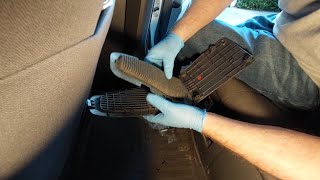
How to confirm: Visually inspect the battery cooling fan intake vent (often a small grille by the rear passenger seat) for blockages. The filter itself can be inspected. A scan tool may show codes related to the fan circuit or battery temperature. A technician can command the fan on with a scan tool to verify its operation.
Typical fix: Clean the fan and intake vent. The filter (OEM Part G92DH-33050 🎬 See this quick walkthrough on replacing the battery filter.) can be cleaned with compressed air or replaced. If the fan motor has failed, the fan assembly (OEM Part G9230-33050) must be replaced.
Est. part cost: $15-$400 - Wiring Harness or Bus Bar Corrosion ⚪ Low Probability Corrosion can develop on the copper bus bars and connectors inside the battery pack, creating high resistance and voltage drops that mimic a failed cell. This is more common on older vehicles or those in humid climates.
How to confirm: This requires disassembly of the high-voltage battery pack, which is a high-risk procedure for professionals only. A visual inspection inside the pack will reveal green and white corrosion on the copper plates and nuts connecting the modules. A scan tool may show a high internal resistance value for the pack.
Typical fix: Disassemble the pack, remove all bus bars, clean them thoroughly with a wire brush and a mild acid like vinegar 🎬 Watch: How to clean corroded bus bars for better performance., and replace any corroded nuts. This restores proper electrical flow.
Est. part cost: $10-$100
Rare But Worth Checking
- Battery ECU Failure: → Shop Vehicle Battery While uncommon, the computer module responsible for monitoring and controlling the HV battery (part of the battery pack assembly) can fail, causing a P3000 code without any actual battery defect. This is typically diagnosed after all other possibilities have been ruled out.
Diagnosis Steps
- PROFESSIONAL DIAGNOSIS IS STRONGLY RECOMMENDED DUE TO HIGH-VOLTAGE DANGER.
- Connect a Toyota-compatible scan tool (like Techstream) to the DLC3 port.
- Read all trouble codes from the Hybrid Control ECU. Note the primary P3000 code and, more importantly, any accompanying Information Codes (INFs) or other DTCs (e.g., P0A80).
- If other DTCs are present, troubleshoot them first.
- Access the HV ECU data list and check the battery's State of Charge (SOC) and the voltage of all individual battery blocks.
- If the SOC is extremely low and block voltages are uniformly low after prolonged storage (especially if INF 388/389 is present), a 'Rescue Charge' is the likely solution.
- If one or more battery blocks show significantly lower voltage than the others (e.g., a difference greater than 0.3V), it indicates a failing battery pack that needs replacement. Toyota's official test specifies a maximum difference of 1.2V, but a much smaller difference can indicate a problem.
- Inspect the HV battery cooling fan intake vents (usually located near the rear seats) for any obstructions like dust, paper, or pet hair. Remove the filter (G92DH-33050) and clean or replace it.
- If no obvious cause is found, a technician will need to follow the specific diagnostic procedures in the factory service manual based on the INF code stored, which may involve checking wiring harnesses and the battery ECU.
Parts You'll Likely Need
- High-Voltage Battery Assembly
(OEM #G9510-33112)— This is the most common fix when the code is caused by cell degradation (often accompanied by P0A80), which is a frequent failure mode on aging hybrids.
Trusted brands: Toyota (OEM)
OEM price range: $2600-$4500
Aftermarket price range: $1800-$3000 (Remanufactured) - Hybrid Battery Cooling Fan Assembly
(OEM #G9230-33050)— If the fan fails or becomes clogged, it can cause the battery to overheat, triggering a P3000. Replacing a failed fan or cleaning a clogged one is a critical and comparatively inexpensive repair that can prevent catastrophic battery failure.
Trusted brands: Toyota (OEM), Aisin
OEM price range: $250-$400
Aftermarket price range: $150-$250 - Hybrid Battery Cooling Filter
(OEM #G92DH-33050)— This filter prevents debris from clogging the cooling fan. It is often neglected and can become completely blocked, leading to battery overheating. It's a cheap, preventative maintenance part.
Trusted brands: Toyota (OEM)
OEM price range: $15-$30
Related Codes That Often Appear With This One
- P0A80 — This code specifically means 'Replace Hybrid Battery Pack'. P3000 is the general alert, and P0A80 is often the specific diagnosis confirming the battery has reached the end of its service life due to cell degradation.
- P3011 - P3027 — Each of these codes corresponds to a specific battery block becoming weak (e.g., P3021 for block 11). They are definitive proof of an internal battery pack failure and help technicians pinpoint the issue using a scan tool.
- P3000-388 / P3000-389 — This is an information code for 'Discharge Inhibition Control Malfunction'. It's commonly set when the HV battery is too deeply discharged to allow the vehicle to start, often after being stored for a long time.
Technical Service Bulletins (TSBs) & Recalls
- T-SB-0089-21: Supersedes T-SB-0095-20. Addresses a DCM firmware update to fix 12V battery drain and connectivity issues.
- 20TA02: The recall number for the widespread low-pressure fuel pump failure.
- TSB Bulletin #T-TT-0303-14: A manufacturer service bulletin notes that when a DTC is detected by the HV Battery ECU, the HV Control ECU will automatically store a P3000 with Information Code 123 to capture the state of the Hybrid Control System.
Platform-Specific Known Issues
- Deep Discharge / No-Start: As detailed in Toyota Technical Service Bulletin T-SB-0095-20, these vehicles can enter a no-start state with a P3000 code if left parked for extended periods. The fix is a dealer-performed 'rescue charge', not a battery replacement.
- 2025-2026 Inverter Recall: For the newest models in this range, Toyota issued a recall for an improperly torqued bolt inside the power inverter assembly. This can lead to a loss of motive power or, in rare cases, a fire. While this may not directly cause a P3000 code, it is a critical safety issue for these model years.
Mechanic-Grade Diagnostic Values
- HV Battery Block Voltage Difference (under load) — expected: Less than 0.2V - 0.3V between the highest and lowest block.. Failure: A difference greater than 0.5V indicates a significant imbalance. A difference approaching or exceeding 1.2V indicates a severe failure and will set a fault code.
- HV Battery Block Voltage (static, healthy) — expected: Each block should read approximately 14.4V - 16.4V depending on state of charge.. Failure: A block reading significantly lower than others, for example 6.5V or 7.3V when others are at 7.8V, points to a failed module within that block.
- HV Battery Pack Internal Resistance (whole pack) — expected: Around 0.46 - 0.5 ohms for a healthy pack.. Failure: Resistance rising significantly above 0.55 ohms indicates aging and degradation of the cells.
- Delta SOC (State of Charge) — expected: Should be near 0% on a healthy battery.. Failure: Exceeding 20% may set a fault code and indicates a significant imbalance between battery blocks, requiring pack replacement.
Hidden / Shadow Codes Worth Checking
- P3000-123: Abnormal signal input from battery ECU (HV Battery System Malfunction). This often points toward a communication issue or a fault within the battery ECU itself. (see via Toyota Techstream or equivalent advanced scan tool with access to Information Codes (INFs).)
- P3000-388: Discharge Inhibition Control Malfunction. This is set when the HV battery state of charge is too low, often from the vehicle being parked for a long time or running out of fuel. (see via Toyota Techstream or equivalent advanced scan tool with access to Information Codes (INFs).)
- P3000-389: Discharge Inhibition Control Malfunction. Similar to INF 388, this indicates the battery's state of charge is too low to allow the system to become 'READY'. (see via Toyota Techstream or equivalent advanced scan tool with access to Information Codes (INFs).)
- P3000-526: Abnormal signal response from the battery ECU, sometimes associated with a blown fuse in the battery monitoring circuits. (see via Toyota Techstream or equivalent advanced scan tool with access to Information Codes (INFs).)
Scan Tool Commands That Help
- Toyota Techstream: Health Check — This is the primary function to scan all vehicle ECUs, including the Hybrid Control and HV Battery ECUs, to retrieve the P3000 code and any associated INF sub-codes or other DTCs like P0A80.
- Toyota Techstream: Data List (under HV Battery ECU) — Used to view live data parameters, most importantly the individual voltages of all 14-17 battery blocks, the State of Charge (SOC), Delta SOC, and battery temperatures. This is critical for identifying an imbalanced or failing pack.
- Toyota Techstream: Active Test (under HV Battery ECU) — This menu allows the technician to command components to operate, such as the 'Blower Motor' for the HV battery cooling fan. This is used to verify if the fan motor is functional when diagnosing overheating-related faults or a P0A85 code.
Wiring & Ground Locations
- Battery ECU / Battery Smart Unit (BSU) — The Battery ECU is integrated into the main HV battery assembly itself. It is not a separate, remotely located module. To access it, the main battery cover must be removed.. This ECU is the 'brain' of the battery. It monitors all cell blocks and temperatures and reports faults to the main Hybrid Control ECU, which then sets the P3000 code. A failure of this ECU can cause a P3000 even with a healthy battery.
- HV Battery Cooling Fan Connector — The connector is located on the HV battery cooling fan assembly, which is attached to the main battery pack, typically accessible from the trunk or by removing the rear seat.. Corrosion on this connector due to water intrusion in the trunk area is a known issue that can cause a P0A85 (Fan Circuit Malfunction) and subsequently trigger a general P3000 code. Checking this connector is a key diagnostic step before condemning the battery or fan.
- Service Plug Grip (Interlock) — A large, typically orange, plug located on the HV battery assembly, accessible from the trunk or under the rear seat.. This plug disconnects the high voltage circuit for safety during service. It contains an interlock circuit. If the plug is not fully seated or if the interlock circuit itself is faulty, it can trigger a P3000 or other hybrid system codes. A resistance check can be performed on the interlock pins.
Real Owner Repair Stories
- Torque News article on a 'garage find' Toyota Prius (2004 Toyota Prius (similar hybrid system logic)) — P3000-123 (Abnormal signal from battery ECU) and P0A85 (Hybrid Battery Pack Cooling Fan 1 Control Circuit High).
❌ Tried (didn't work) Initially suspected the HV battery or the Battery ECU itself, as suggested by the code definition.
✅ What actually fixed it The root cause was a corroded wiring connector for the battery cooling fan, likely due to a water leak in the rear hatch area. The corrosion created high resistance in the fan circuit, triggering the P0A85 and the master P3000 code. Repairing the corroded connector resolved all codes without replacing the battery or ECU. - YouTube channel FASTEC AUTO (Toyota Camry Hybrid (year not specified, but similar generation)) — P0A80 and P3000 codes, with the live data stream showing battery block 13 was significantly lower than the others (14.9V vs ~16V in freeze frame).
❌ Tried (didn't work) The diagnosis immediately pointed to an internal battery fault, so no other parts were tried.
✅ What actually fixed it Disassembly of the HV battery pack revealed a failed module within block 13. One cell measured only 1.5V and another 2.9V, while healthy cells were ~7.7V. Replacing the two failed cells (modules) and reassembling the pack cleared the codes and restored normal operation. - NHTSA ODI #11525645: An owner reported that a dealer diagnosed a severely drained hybrid battery and retrieved DTC codes P3000 and P0A80 for the hybrid battery pack.
OEM Part Supersession History
G9510-33110, G9510-33111→G9510-33112— Standard part revision and update by the manufacturer.
Heads up: The newer part number G9510-33112 is backward compatible with vehicles that used the older numbers.
Model Year Variations Within This Range
- 2018-2026: While the A25A-FXS engine and general hybrid system are consistent across the XV70 generation, Toyota may have issued software updates for the Hybrid Control ECU or Battery ECU to refine battery management logic. A dealer can check for and apply any available updates, which could potentially alter the conditions under which a P3000 is set, though this is not a common fix for an existing hard fault.
Diagnostic Flowchart
Other Known Issues on This Vehicle
Issues unrelated to this code that are worth knowing about as an owner of this generation:
- Low-Pressure Fuel Pump Failure 🔴 High — Common enough to trigger a massive recall (20TA02). Affects 2018-2020 models primarily. (Ref: Recall: 20TA02 / NHTSA 20V-012. The recall involves replacing the faulty Denso fuel pump assembly.)
- Transmission Shudder at Low Speeds 🟡 Low — Some owners report a shudder or vibration under 8 mph when the gas engine engages. More common on related platforms but has been noted on Camry. (Ref: T-SB-0013-22 (related platform), T-SB-0023-15 (older model, similar issue). Fixes often involve updated transmission software or torque converter replacement.)
- DCM Firmware Glitch Causing 12V Battery Drain 🟠 Medium → Shop Vehicle Battery — Affects some 2020-2021 models. The Data Communication Module (DCM) can fail to sleep, draining the 12V battery and causing various connectivity issues. (Ref: TSB T-SB-0089-21 (supersedes T-SB-0095-20). Requires a dealer to perform a DCM reset and firmware update.)
- Excessive Wind Noise from Door/Mirror Area 🟡 Low — A common complaint on the XV70 platform. Some owners report a noticeable whistling or rushing air sound from the driver or passenger side window area at highway speeds.
Used vs. New Parts: Buying Guide for This Vehicle
When a used part is the smart pick: For a high-mileage vehicle outside of warranty, a used or remanufactured HV battery assembly is a very common and cost-effective repair. Given that a new OEM battery can be a significant percentage of the car's value, a quality-tested used unit with a warranty offers a practical balance of cost and reliability. A used battery cooling fan is also a perfectly acceptable repair.
Donor-vehicle mileage cap: roughly under 100000 miles for the part to have meaningful remaining life.
What to inspect on the donor part:
- Check the date of manufacture on the donor battery; newer is always better.
- Ask for a recent scan tool report showing the block voltages from the donor car before it was dismantled. The blocks should be balanced with minimal voltage difference.
- Inspect the bus bars and wiring connectors for any signs of white or green corrosion.
- Buy from a reputable hybrid specialist dismantler who offers a warranty (e.g., 6-12 months) on the battery's performance.
OEM-only on this vehicle (don't cheap out):
- Battery ECU (Battery Smart Unit). If this specific component fails, it is best replaced with a new OEM part, as used electronics carry a higher risk of failure.
Aftermarket brands forum-validated for this vehicle:
- Green Bean Battery
- Dorman (offers remanufactured options)
- Electron Hybrid Batteries
- Exclusively Hybrid
Brands owners have reported issues with on this vehicle:
- Avoid sellers on platforms like eBay or Craigslist who cannot provide detailed testing data (block voltages, capacity test) or offer a warranty. A cheap, untested battery is very likely to fail again quickly.
Real Owner Stories
Aggregated from forums and TSBs cited above. Mileages and costs reflect what owners reported in those sources.
2018 Toyota Camry Hybrid — ~115000 miles
Symptoms: Check Hybrid System message and Master Warning Light (red triangle) appeared. A dealership diagnostic showed weak battery blocks (P3020, P3021) with a quote for a full battery replacement.
What fixed it: Replacement of the entire high-voltage battery assembly.
Cost: $3,974.12
Source hint: Electric Vehicle Forums - 'P0A80 - Replace Hybrid Battery Pack - 2007 TCH'
2018-2024 Toyota Camry Hybrid — ~120000 miles
Symptoms: Live data showed Block 13 at 8.6V while others were at 15V. Physical inspection revealed green and white corrosion on the copper plates and nuts inside the battery pack.
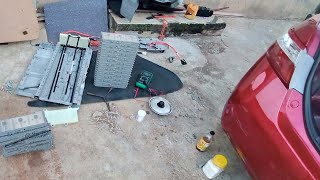
What fixed it: Disassembled the pack, removed all bus bars, and cleaned them thoroughly with a wire brush and mild acid (vinegar) to restore electrical flow.
Source hint: YouTube - 'P0A80,P3000 FULL DETAILED DIAGNOSIS & REPAIR OF HYBRID BATTERY PACK FOR TOYOTA CAMRY.'
2018-2024 Toyota Camry Hybrid
Symptoms: Vehicle was dead and would not enter 'READY' mode after being stored for 3 months. Scan tool showed code P3000-389 and battery block voltages were below 10V.
What fixed it: The technician recommended battery replacement due to the severity of the deep discharge.
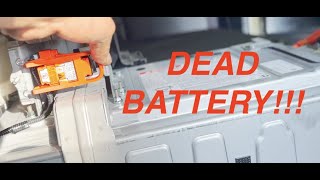
Source hint: YouTube - 'Toyota Camry Hybrid (Dead) Battery | Code #P3000-389'
Related OBD-II Codes
Frequently Asked Questions
My 2018 Camry Hybrid won't start after sitting for three months. Does TSB-0095-20 apply to me?
What is the specific part number for the HV battery cooling fan filter on my Camry Hybrid?
I have a 2025 Camry Hybrid; is there a specific safety issue I should know about related to the hybrid system?
My scan tool shows P3000 with information code 389. Does this mean I need a new battery?
Is there a recall for the fuel pump on the 2018-2026 Camry Hybrid models?
If my HV battery cooling fan fails, what part number do I need for the assembly?
Helpful Videos


The information in this article is provided for general reference and educational purposes only. Vehicle specifications, procedures, and part compatibility can vary by production date, trim level, and region. Always consult your vehicle's factory service manual and verify part numbers before purchasing or performing repairs. Safety-critical components such as airbags, seat belts, and braking systems should be installed by a qualified professional.
- Toyota Camry Hybrid:
- 🧭 Diagnostic Flowchart
- 🎬 Helpful Videos
- What's Unique About the 2018-2026 Toyota Camry Hybrid
- Symptoms You May Notice
- Most Likely Causes
- Rare But Worth Checking
- Diagnosis Steps
- Parts You'll Likely Need
- Related Codes That Often Appear With This One
- Technical Service Bulletins (TSBs) & Recalls
- Platform-Specific Known Issues
- Mechanic-Grade Diagnostic Values
- Hidden / Shadow Codes Worth Checking
- Scan Tool Commands That Help
- Wiring & Ground Locations
- Real Owner Repair Stories
- OEM Part Supersession History
- Model Year Variations Within This Range
- Other Known Issues on This Vehicle
- Used vs. New Parts: Buying Guide for This Vehicle
- Real Owner Stories
- 2018 Toyota Camry Hybrid — ~115000 miles
- 2018-2024 Toyota Camry Hybrid — ~120000 miles
- 2018-2024 Toyota Camry Hybrid
- Related OBD-II Codes
- Frequently Asked Questions
- 🎟️ Get 5% Off