

P3000 on 2008-2013 Toyota Highlander Hybrid: Battery Control System Causes and Fixes
On a 2008-2013 Highlander Hybrid, P3000 almost always points to a problem with the high-voltage (HV) battery system. The most common causes are a deeply discharged HV battery from sitting too long, or failing individual cells within the battery pack. This is not a DIY fix due to high-voltage risks and the need for specialized equipment.
- P3000 is a general warning for the hybrid battery system; the real problem is found in the sub-codes.
- Do not let your Highlander Hybrid sit unused for more than a few weeks, as the HV battery may discharge and prevent the car from starting.
- A standard 12V jump-start will NOT fix a no-start condition caused by a discharged HV battery.
- This is not a DIY-friendly repair. Working on the high-voltage battery system is dangerous and requires professional training and tools.
- If you see P3000, get the vehicle to a qualified hybrid technician to scan for all codes before approving any repairs.
What's Unique About the 2008-2013 Toyota Highlander Hybrid
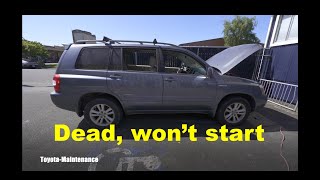
The Highlander Hybrid of this era, like other Toyota hybrids, uses its high-voltage battery to start the gasoline engine via a motor-generator. There is no conventional 12-volt starter motor. This design means that if the HV battery's charge drops too low, the vehicle cannot start at all, a common trigger for the P3000 code. This often happens if the vehicle is stored for several weeks or months, leading to a no-start condition that a standard 12-volt jump-start cannot fix 🎬 Watch: Why a P3000 code prevents your Highlander from starting. because the 12V system is not the root cause.
Symptoms You May Notice
- "Check Hybrid System" warning light illuminated on the dashboard.
- Vehicle will not start or enter 'READY' mode.
- 12-volt accessories (lights, radio) may work, but the engine won't turn over.
- Noticeably poor fuel economy.
- The high-voltage battery gauge on the dashboard shows a very low or empty state of charge, often in the purple zone.
- Engine seems to run more often than usual to charge the battery.
- Hybrid battery cooling fan (located near the rear seats) runs constantly or at high speed.
- Replacing the 12-volt auxiliary battery. While a weak 12V battery can cause various electrical issues and prevent starting, it will not typically cause a P3000 code on its own. A P3000 points specifically to the high-voltage system.
Most Likely Causes
- Deeply Discharged High-Voltage (HV) Battery 🔴 High Probability → Shop Vehicle Battery The NiMH HV battery naturally self-discharges over time. If the vehicle is not driven for several weeks or months, the state of charge can fall below the minimum threshold (around 20% SOC) required to start the engine, triggering a P3000, often with sub-code 388 or DTC P0AFA.
How to confirm: Confirm the vehicle has been sitting unused for an extended period (3+ weeks). A professional scan tool can read the HV battery state of charge (SOC), which will be critically low. The vehicle will not enter 'READY' mode. This scenario is common across many Toyota hybrid models of the era.
Typical fix: This requires a specialized 'Rescue Charge' using a dealer-specific tool (like the GRX-5100 Hybrid/EV Service Station) to safely restore voltage to the HV pack. This is detailed in Toyota TSB T-SB-0095-20. This is not a DIY procedure due to the high-voltage risks. An independent hybrid specialist with the correct equipment can also perform this service.
Est. part cost: $0 - Failing High-Voltage (HV) Battery Assembly 🔴 High Probability → Shop Vehicle Battery After many years and miles (typically over 100,000-150,000), the individual NiMH battery modules (30 modules arranged in 15 blocks in the Highlander) can degrade, fail, or become imbalanced. This leads to a voltage deviation between blocks that the Battery ECU flags as a fault.
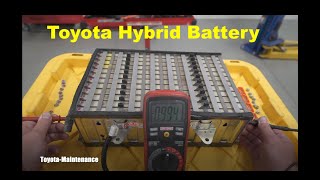
How to confirm: A hybrid-capable scan tool (like Toyota Techstream) is needed to view live data for all 15 battery block voltages. A failing battery will show one or more blocks with a significantly lower voltage (a difference of >0.3V from the oth 🎬 See how a pro tests Toyota hybrid battery block voltages.ers) under load. This is often accompanied by code P0A80 ('Replace Hybrid Battery Pack').
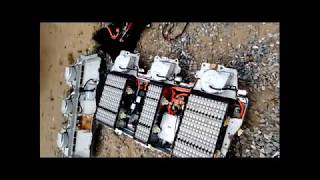
Typical fix: The official Toyota repair is to replace the entire HV battery assembly with a new or remanufactured unit. Specialized independent shops may offer to replace only the failed modules and re-balance the pack, or install a refurbished battery with a warranty, which is a more cost-effective solution. 🎬 Watch this step-by-step Highlander hybrid battery replacement walkthrough.
Est. part cost: $2000-$5000 - Running Out of Fuel or Leaving in Neutral ⚪ Low Probability The gasoline engine is the primary means of charging the HV battery. If the vehicle runs out of fuel, the battery will discharge to power accessories and eventually become too low to restart the car. Similarly, if the vehicle is left in Neutral (N) for an extended period, the HV battery does not charge, which can lead to depletion and a P3000-388 code.
How to confirm: Check the fuel gauge. Question the driver about recent events before the code appeared, specifically if the car ran out of gas or was left in Neutral for a long time.
Typical fix: Refuel the vehicle. For a vehicle left in Neutral, place it in Park and attempt to start. If the battery is too low from either scenario, it may still require a professional 'Rescue Charge' to recover.
Est. part cost: $0
Rare But Worth Checking
- Faulty Battery ECU (Battery Smart Unit): → Shop Vehicle Battery While less common than the battery pack itself, the computer that monitors the battery can fail, causing it to report false errors. Diagnosis involves checking for communication with the ECU and ruling out all other battery-related issues. Manufacturer service bulletin TSB Bulletin #T-TT-0303-14 notes that when a DTC is detected by the HV Battery ECU, the HV Control ECU will automatically store a P3000 with Information Code 123 to capture the state of the Hybrid Control System.
- HV Battery Cooling Fan Malfunction: → Shop Engine Cooling Fan Blade The battery cooling fan is located near the rear seats. If the fan or its intake vents become clogged with debris, the battery can overheat, which may trigger a P3000. This is usually accompanied by other specific fan-related codes like P0A85. T-SB-0062-20 Rev1 addresses cleaning the filter.
- Corroded Wiring or Connections: Corrosion on the battery module bus bars, connectors, or the battery ECU harness can cause incorrect voltage readings and trigger the code. A visual inspection of the battery pack (by a professional) is necessary. This can sometimes be caused by water leaks in the rear hatch area.
- Failed Hybrid Inverter/Converter: Though it typically sets other specific codes (like P0A78 or P0A94), a catastrophic failure in the inverter, which manages power flow between the battery and motors, can sometimes trigger a general P3000 code as a secondary fault.
Diagnosis Steps
- Connect a hybrid-capable OBD-II scanner (e.g., Toyota Techstream) to the DLC3 port.
- Read all trouble codes from all control modules, not just the engine ECU. Pay close attention to codes and information codes from the HV ECU.
- Prioritize diagnosis of any other codes found alongside P3000 (e.g., P0A80, P30xx, P0AFA).
- If the vehicle was stored for a long time and P0AFA or P3000-388 is present, suspect a deeply discharged battery. Do not attempt to jump-start the high-voltage system. A 'Rescue Charge' is the required procedure.
- If P0A80 or P3011-P3025 are present, navigate to the HV ECU live data to monitor the voltage of all 15 battery blocks. Look for any block with a voltage reading that deviates more than 0.3V from the others. A video on YouTube by user 'The Car Care Nut' demonstrates this process on a similar Toyota hybrid.
- Check the fuel level to rule out a simple 'out of gas' scenario.
- Visually inspect the HV battery cooling fan intake (usually under or beside the rear seat) for blockages like pet hair or debris.
- Due to the extreme danger of the high-voltage system, any further diagnosis, such as checking connections, testing the battery ECU, or replacing parts, should be left to a qualified professional with proper safety equipment.
Parts You'll Likely Need
- High-Voltage Hybrid Battery Assembly
(OEM #G9510-48031 (This is one possible number, always verify with VIN))— This is the most common cause of P3000 when the issue is not simply a discharged battery. Age and use lead to internal failure of the battery modules.
Trusted brands: Toyota (OEM New), Dorman (Remanufactured), GreenTec Auto (Remanufactured), Hybrid2Go (Refurbished)
OEM price range: $5000-$6200.
Aftermarket price range: $1500-$3500 (Remanufactured/Refurbished).
Related Codes That Often Appear With This One
- P0A80 — This code means 'Replace Hybrid Battery Pack' and is very commonly seen with P3000 when one or more battery modules have failed. P3000 is the general alert, and P0A80 is the specific diagnosis.
- P0AFA — This code means 'Hybrid Battery System Voltage Low' and often appears with P3000 when the battery has been deeply discharged from sitting for a long time.
- P3011 - P3025 — These codes correspond to specific battery blocks (1 through 15) that are weak or failing, providing a more precise location of the fault within the HV battery pack. For example, a mechanic seeing P3000 and P3017 would know to investigate battery block 7.
- P3000-388 — This is an information code, readable with advanced scan tools, that specifically points to the HV battery state of charge (SOC) being critically low. It strongly suggests a deep discharge event rather than a component failure.
Technical Service Bulletins (TSBs) & Recalls
- T-SB-0095-20 - This Toyota Service Bulletin describes the 'Rescue Charge' procedure for vehicles with a deeply discharged high-voltage battery, a common cause of P3000. Note: This TSB number has been revised and superseded over time (e.g., by T-SB-0089-21), and its content may also relate to DCM/telematics issues on newer models, but the 'Rescue Charge' principle remains relevant.
- T-SB-0062-20 Rev1 - While not directly for P3000, this TSB addresses cleaning the HV battery cooling intake filter. A clogged filter can cause overheating, which is a potential cause of a P3000 fault.
- TSB Bulletin #T-TT-0303-14 - This bulletin explains that the HV Control ECU stores P3000 with Information Code 123 (HV Battery Control System Malfunction) to capture the state of the Hybrid Control System whenever a DTC is detected by the HV Battery ECU.
Platform-Specific Known Issues
- The vehicle's design makes it susceptible to a no-start P3000 condition if left to sit for extended periods (over a month), requiring a dealer-level 'Rescue Charge' to resolve. This affects a wide range of Toyota hybrids from 2004-2024.
- A Reddit user with a 2011 Highlander Hybrid at 190k miles was quoted $7000
Mechanic-Grade Diagnostic Values
- HV Battery Block Voltage Deviation — expected: Difference between the highest and lowest block voltage should be less than 0.3V.. Failure: A difference greater than 0.3V between any two blocks will trigger a fault code like P0A80. Some forum users report a threshold as high as 1.5V before a code is tripped.
- HV Battery Module Internal Resistance — expected: A healthy, balanced pack will have very low and consistent internal resistance values across all modules, often around 0.0029 ohms as read by Techstream after a repair.. Failure: A module with significantly higher internal resistance will overheat and its voltage will drop abnormally under load, contributing to block imbalance.
- Nominal HV Battery Block Voltage — expected: Each of the 15 blocks (composed of 2 modules) should show a voltage of around 19-22V depending on the state of charge.. Failure: A block showing a drastically lower voltage (e.g., 4V or 1.2V) indicates a complete failure of one or more modules within that block.
Hidden / Shadow Codes Worth Checking
- P3000-123: An information code (INF code) meaning 'Abnormal signal input from battery ECU (HV system malfunction)'. This points towards a communication issue or a fault within the Battery ECU itself. (see via Toyota Techstream software is required to view these detailed sub-codes.) As noted in TSB Bulletin #T-TT-0303-14, the purpose of this specific code combination is to capture the state of the Hybrid Control System.
- P3000-388: An information code (INF code) indicating the HV battery State of Charge (SOC) is critically low (often below 20%). This strongly suggests a deep discharge event, not necessarily a component failure. (see via Toyota Techstream software. The service manual notes that this code may be stored if SOC drops to 20% or lower and is not considered a malfunction on its own.)
Scan Tool Commands That Help
- Toyota Techstream: Health Check — This is the first step in any diagnosis. It scans all vehicle ECUs for current, pending, and history codes, providing a complete picture of system health beyond just the P3000 code.
- Toyota Techstream: Data List (for HV Battery) — This is critical for diagnosing P3000/P0A80. It allows the technician to view the real-time voltage of all 15 individual battery blocks simultaneously to identify an imbalanced or failed block.
- Toyota Techstream: Utility -> All Readiness — Used after a repair (like a battery replacement) to run the system through its internal checks and confirm that the fault has been cleared and all monitors are ready.
Wiring & Ground Locations
- Battery ECU — The Battery ECU (or Battery Smart Unit) is located on or inside the main HV battery case assembly, under the second-row seats.. This is the computer that monitors all battery parameters. A failure of this unit or its connections can cause a false P3000 code.
- HV Battery Ground Points — For the 2009 model, ground points O1 (left 'B' pillar), O2 (behind left side of rear bumper), and O3/O4 (behind right side of rear bumper) are associated with various rear-body and hybrid components. For the 2006 model, ground point Bc is at the left side of the rear crossmember, near the battery.. Corrosion or looseness at these critical ground points can cause erratic behavior in the hybrid monitoring systems, potentially leading to false codes.
- Service Plug Grip — Located on the HV battery assembly, accessible after removing a trim panel near the rear seats.. This is the main high-voltage disconnect. It must be removed before any service is performed on the HV battery or related components to ensure safety. It also contains a high-voltage fuse.
- Battery Bus Bars — These are the copper or nickel-plated connectors that link the 30 individual battery modules together inside the battery case.. Over time, these bars can corrode due to electrolyte venting, creating high resistance. This resistance causes voltage drops that the Battery ECU interprets as a failing module, triggering P0A80 and P3000. Cleaning or replacing these is a common refurbishment step.
Real Owner Repair Stories
- PriusChat user 'Mr. Electric' (Toyota Prius (similar hybrid logic)) — P3000, P0A80, fails to start.
❌ Tried (didn't work) Initial diagnosis pointed towards a failed HV battery pack.
✅ What actually fixed it The actual root cause was an engine oil overfill from a recent oil change. The excess oil fouled the Mass Air Flow (MAF) sensor. Repeated start attempts with the fouled MAF sensor then drained the HV battery, triggering the P3000/P0A80 codes. The fix was to unplug the MAF to get the engine to run roughly, charge the HV pack, then clean the MAF sensor, correct the oil level, and clear the codes. - Torque News article by Peter Neilson (2004 Toyota Prius (similar hybrid logic)) — P3000-123 (Battery Control System Malfunction) and P0A85 (Hybrid Battery Pack Cooling Fan 1 Control Circuit High).
❌ Tried (didn't work) The initial codes suggested a bad HV battery or a faulty Battery ECU.
✅ What actually fixed it The problem was a corroded electrical connector for the battery cooling fan, likely caused by a water leak in the rear hatch area. The corrosion created high resistance in the fan circuit, triggering the P0A85, which in turn caused the main hybrid system to log the general P3000 fault. The fix was to replace the corroded connector. - NHTSA ODI #11525645 — An owner reported that their vehicle was diagnosed with a severely drained hybrid battery, with a mechanic retrieving DTC codes P3000 and P0A80 for the hybrid battery pack.
OEM Part Supersession History
G9510-48030→G9510-48031, G9510-48033— Standard part revision and improvement by the manufacturer.
Heads up: Part G9510-48033 is listed for 2008-2010 models. G9510-48031 is often cited for 2010-2013 models. VIN verification is critical when ordering, as there may be subtle differences between the 3.3L and 3.5L applications.
Model Year Variations Within This Range
- 2008-2010: These models use the 3.3L 3MZ-FE V6 engine. The 12V auxiliary battery is located in the engine compartment. The HV battery part number is often listed as G9510-48033.
- 2011-2013: These models received a facelift and use the more powerful 3.5L 2GR-FXE V6 engine. A key change was the relocation of the 12V auxiliary battery from the engine bay to the rear cargo area. The HV battery part number is often listed as G9510-48031.
Diagnostic Flowchart
Other Known Issues on This Vehicle
Issues unrelated to this code that are worth knowing about as an owner of this generation:
- Brake Actuator / ABS Pump Failure 🔴 High — Common on 2008-2010 models, typically appearing at higher mileage (100k+ miles). Can cost over $3,000 to repair at a dealer. (Ref: Toyota issued Customer Support Program ZKC to extend warranty coverage for this specific issue on 2008-2010 models.)
- Rubber VVT-i Oil Cooler Line Rupture (V6 models) 🔴 High — Affects early V6 models (2008-2011) which used a rubber section in the oil line that can burst, causing rapid and catastrophic oil loss. (Ref: Toyota issued TSB T-SB-02011-11 and a Warranty Enhancement Program (ZE2) to replace the rubber line with an all-metal part.)
- Hybrid Inverter Failure 🔴 High — More common on the preceding generation (2006-2007), but failures of the Intelligent Power Module (IPM) within the inverter can still occur on 2008+ models, causing a stall or no-start. (Ref: A safety recall was issued for 2006-2010 Highlander Hybrids to address faulty transistors in the inverter's IPM.)
- Water Pump Leak (2GR-FE/FXE V6) 🟠 Medium — The water pump on the V6 engines is a known wear item and can start to leak coolant, often noticeable after 60,000-100,000 miles.
- Timing Cover Oil Leak (2GR-FE/FXE V6) 🟠 Medium — A persistent oil seep or leak from the front timing cover is a well-documented issue on the 3.5L V6. It is a very labor-intensive and expensive repair due to the need to remove the engine.
Used vs. New Parts: Buying Guide for This Vehicle
When a used part is the smart pick: For the High-Voltage Battery Assembly, a used or professionally refurbished unit is a very common and sensible repair strategy. Given the high cost of a new OEM battery ($5,000+), a quality-tested refurbished battery from a reputable specialist can save thousands of dollars and provide several more years of service life.
Donor-vehicle mileage cap: roughly under 120000 miles for the part to have meaningful remaining life.
What to inspect on the donor part:
- Ask for a detailed test report showing capacity, internal resistance, and voltage for each module.
- Ensure the seller offers a warranty (12 months is a common standard for reputable rebuilders).
- Check that the reconditioning process includes cleaning or replacing bus bars and balancing all modules.
- Verify the battery is a 'plug and play' unit that does not require special programming after installation.
OEM-only on this vehicle (don't cheap out):
- Battery ECU (Battery Smart Unit) - Due to its critical role in monitoring and safety, and the potential for programming/compatibility issues, using a new OEM part is strongly advised if the ECU itself is diagnosed as faulty.
Aftermarket brands forum-validated for this vehicle:
- For refurbished batteries, brands like GreenTec Auto, Dorman, and various regional specialists have established reputations. It is crucial to research reviews for the specific vendor.
- For bus bars, some owners prefer to use new OEM copper bars if cleaning the old ones is not sufficient.
Brands owners have reported issues with on this vehicle:
- Be cautious of individual sellers on platforms like eBay offering 'rebuilt' batteries without a comprehensive test report or a meaningful warranty. Avoid sellers who only replace one or two bad modules without balancing the entire pack, as this is a short-term fix.
Real Owner Stories
Aggregated from forums and TSBs cited above. Mileages and costs reflect what owners reported in those sources.
2011 Highlander Hybrid — 190000 miles
Symptoms: Owner faced a P3000 and failing battery diagnosis. The dealer quoted a high price for replacement.
What fixed it: The owner decided to install a refurbished battery unit from Hybrid2go.
Cost: $2500-$7000
Source hint: Reddit - r/ToyotaHighlander - 'Should I replace my hybrid battery?'
2006 Highlander Hybrid (3.3L V6) — ~150000 miles
Symptoms: Vehicle would not start; scan tool revealed P3000, C1259, and C1310. Live data showed two battery blocks were dead (4V and 1.2V).
What fixed it: Replacement of the failed HV battery pack.
Source hint: YouTube - 'Toyota Highlander Hybrid no start, codes P3000 C1259 C1310'
2008-2013 Highlander Hybrid
Symptoms: Low battery indicator on the dashboard and 'Check Hybrid System' light illuminated.
What fixed it: Physical replacement of the HV battery pack located under the rear seats.
Source hint: YouTube - 'P0A80 ,p3000 HYBRID TOYOTA HIGHLANDER BATTERY REPLACEMENT.'
Lexus RX 450h (Platform Mate)
Symptoms: No-start condition after the vehicle was moved around a body shop multiple times for short durations without the engine running.
What fixed it: Diagnosis identified a deeply discharged HV battery requiring a recovery of the state of charge.
Source hint: ClubLexus Forum - 'Ошибка P3000 Lexus RX 450h'
Related OBD-II Codes
Frequently Asked Questions
My 2008-2013 Highlander Hybrid won't start after sitting for a month. Does TSB T-SB-0095-20 apply to me?
Can I jump-start the high-voltage system myself if I have code P3000-388?
I'm seeing a P3000 code and my battery gauge is in the purple zone. Is my battery failing?
How can I tell if my Highlander's HV battery needs a full replacement or just a 'Rescue Charge'?
Does leaving my Highlander Hybrid in Neutral cause the P3000 code?
Is there a TSB for the hybrid battery cooling fan running constantly?
Helpful Videos
We Have This Part in Stock


The information in this article is provided for general reference and educational purposes only. Vehicle specifications, procedures, and part compatibility can vary by production date, trim level, and region. Always consult your vehicle's factory service manual and verify part numbers before purchasing or performing repairs. Safety-critical components such as airbags, seat belts, and braking systems should be installed by a qualified professional.
- Toyota Highlander Hybrid:
- 🧭 Diagnostic Flowchart
- 🎬 Helpful Videos
- 🛍️ Shop This Part
- What's Unique About the 2008-2013 Toyota Highlander Hybrid
- Symptoms You May Notice
- Most Likely Causes
- Rare But Worth Checking
- Diagnosis Steps
- Parts You'll Likely Need
- Related Codes That Often Appear With This One
- Technical Service Bulletins (TSBs) & Recalls
- Platform-Specific Known Issues
- Mechanic-Grade Diagnostic Values
- Hidden / Shadow Codes Worth Checking
- Scan Tool Commands That Help
- Wiring & Ground Locations
- Real Owner Repair Stories
- OEM Part Supersession History
- Model Year Variations Within This Range
- Other Known Issues on This Vehicle
- Used vs. New Parts: Buying Guide for This Vehicle
- Real Owner Stories
- 2011 Highlander Hybrid — 190000 miles
- 2006 Highlander Hybrid (3.3L V6) — ~150000 miles
- 2008-2013 Highlander Hybrid
- Lexus RX 450h (Platform Mate)
- Related OBD-II Codes
- Frequently Asked Questions
- 🎟️ Get 5% Off