

P3000 on 2004-2009 Toyota Prius: Battery Control System Malfunction Explained
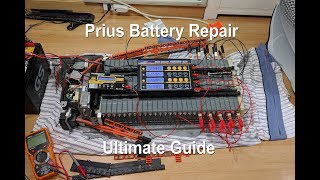
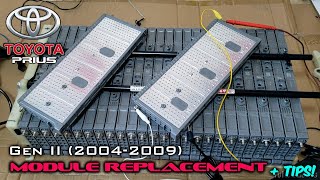
P3000 on a Gen 2 Prius is an informational code indicating a fault in the hybrid battery system. It almost always appears with another code, most commonly P0A80, which points to a failing high-voltage (HV) battery. The fix is typically a replacement or reconditioning of the HV battery pack, costing between $1,500 and $3,600. A capable scanner is needed to read the essential sub-codes.
- P3000 is not the root problem; it's a flag from the main hybrid computer that the battery computer has found a fault.
- You MUST use a scan tool that can read Toyota-specific hybrid codes (from the Battery ECU) to find the real issue, which is most commonly P0A80.
- The most likely cause on these aging Priuses is a failed high-voltage battery pack that needs replacement or reconditioning.
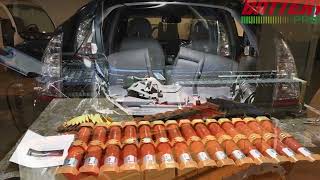
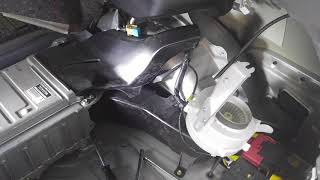
- Before replacing the battery, check the HV battery cooling fan and its vents in the rear of the car, as blockages can cause the battery to overheat and fail.
- Working on the HV battery is extremely dangerous due to high voltage. This repair is best left to qualified professionals.
What's Unique About the 2004-2009 Toyota PRIUS

The 2004-2009 Prius (Gen 2) uses a Nickel-Metal Hydride (NiMH) high-voltage battery that has a finite service life. As these vehicles age, battery degradation is the single most common major failure. The P3000 code is the primary flag for this event, acting as a master code that is almost always triggered by a more specific battery fault code like P0A80 ("Replace Hybrid Battery Pack"). Therefore, on this specific vehicle, P3000 is a very strong indicator of an aging HV battery that has developed imbalanced or weak cells.
Diagnostic Flowchart

Tap your situation to follow the diagnostic path that matches what you're seeing on this vehicle.
Symptoms You May Notice

- Red "Triangle of Death" master warning light on the dashboard.
- "Check Hybrid System" message on the multi-function display.
- Vehicle enters limp mode or "turtle mode" with significantly reduced acceleration.
- Engine may run constantly and fail to shut off as it tries to charge the failing HV battery.
- Drastically reduced fuel economy.
- Hybrid battery cooling fan (in the rear passenger area) runs constantly at high speed.
- Vehicle may fail to start if the HV battery is too depleted.
- Power flow display on the MFD may stop showing energy flowing to the battery.
- Replacing the 12V auxiliary battery. While a weak 12V battery can cause various electrical issues, it does not directly cause a P3000 code. The P3000 is specific to the high-voltage system. However, a failed 12V battery can lead to situations where the HV battery gets deeply discharged, indirectly causing HV codes.
Most Likely Causes

- Degraded or Failing High-Voltage (HV) Battery Pack 🔴 High Probability → Shop Vehicle Battery The NiMH battery cells have a finite lifespan of 10-15 years or 150,000+ miles. Over time, individual cells lose capacity and become imbalanced, causing the voltage difference between battery blocks to exceed the ECU's threshold, triggering P0A80 and in turn, P3000.
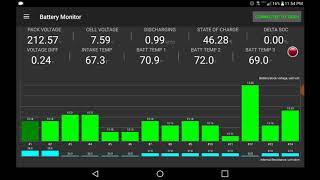
How to confirm: Use a Toyota-specific scan tool (like Techstream) or a capable app (like Dr. Prius) to read the sub-codes. A P0A80 code will almost certainly be present. Live data will show one or more battery blocks with a voltage significantly lower (more than 0.3V) than the others, especially under load. The internal resistance of the weak block will also be significantly higher.
Typical fix: Replace the entire high-voltage battery pack with a new or remanufactured unit. Reconditioning by replacing individual weak modules is a cheaper, but often temporary, solution referred to as 'whack-a-mole' on forums.
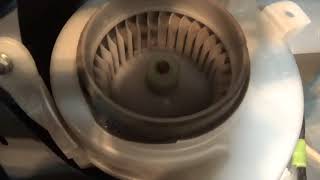
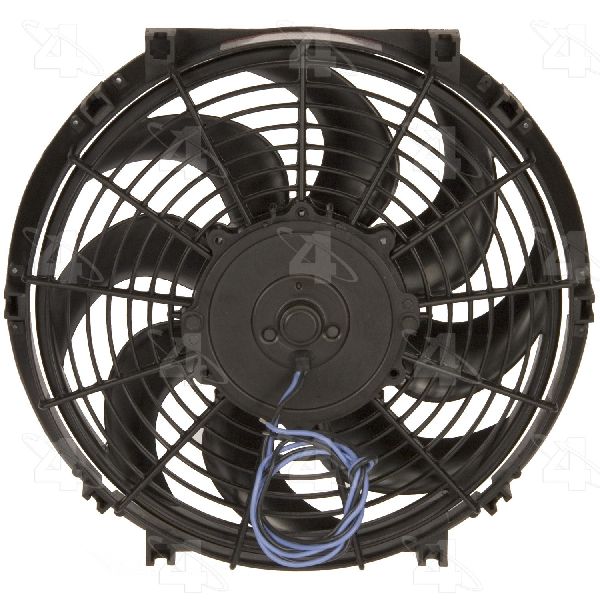
Est. part cost: $1000-$2600 - Clogged or Failed Hybrid Battery Cooling Fan 🟡 Medium Probability → Shop Engine Cooling Fan Blade The battery cooling fan intake vent is located in the rear passenger area and can easily get clogged with pet hair, dust, and debris, causing the battery to overheat. Overheating accelerates battery degradation and can trigger faults like P0A85, which then triggers P3000.
How to confirm: Inspect the fan intake vent (on the side of the rear passenger seat) for blockage. Remove the rear seat side panel to access and inspect the fan itself. If the fan is clogged, it needs cleaning. If it doesn't spin when the battery is hot, check for power at the connector. A P0A85 code is a strong indicator of a fan circuit issue.
Typical fix: Clean the fan and intake vent thoroughly. A guide on HubPages shows the step-by-step process. If the fan 🎬 Watch: How to clean your hybrid battery cooling fan. motor has failed, it must be replaced.
Est. part cost: $0-$150 - Corroded Battery ECU Connector or Wiring ⚪ Low Probability → Shop Vehicle Battery Gen 2 Priuses are known for water leaks in the rear hatch area, often from cracked body seam sealer near the hinges. This water can drip down into the 12V battery compartment and onto the nearby HV Battery ECU, its connectors, or the battery fan wiring, causing corrosion and erratic signals.
How to confirm: Inspect the area around the 12V battery and the HV Battery ECU for signs of water damage, rust, or green/white corrosion on connectors and wiring harnesses. A Torque News article details a case where a corroded fan connector caused a P3000. PriusChat forums have extensive threads on tracing these leaks.
Typical fix: Clean the corroded connectors with an electrical contact cleaner. If the corrosion is severe, the connector or wiring harness section may need to be replaced. The source of the water leak must also be found and sealed with automotive seam sealer.
Est. part cost: $5-$100
Rare But Worth Checking
- Failed HV Battery ECU: → Shop Vehicle Battery While less common than the battery pack itself, the computer that manages the battery can fail. This is usually diagnosed after confirming the battery pack, fan, and wiring are all in good condition. A P3000 with INF code 123 can point to the Battery ECU itself as a trouble area.
- Fouled Mass Air Flow (MAF) Sensor: In a unique case documented on PriusChat, an engine that failed to start due to a fouled MAF sensor (caused by an oil overfill) led to repeated start attempts. These attempts drained the HV battery to a critically low level, which in turn triggered the P3000 and P0A80 codes, falsely indicating a bad battery. Cleaning the MAF allowed the engine to start and recharge the battery, clearing the codes.
Diagnosis Steps
- Connect a Toyota-specific OBD-II scanner (e.g., Techstream, or a Bluetooth scanner with an app like Dr. Prius or Car Scanner) to the port under the driver's side dashboard.
- Read codes from ALL control units, not just the engine ECU. Specifically check the 'Hybrid Control' and 'HV Battery' ECUs.
- Confirm the presence of P3000 in the Hybrid Control ECU. Note any accompanying codes, which will be the root cause (most likely P0A80 in the HV Battery ECU). Note the INF sub-code for P3000 if available.
- If P0A80 is present, navigate to the live data for the HV Battery. Using an app like Dr. Prius, monitor the voltage of all 14 battery blocks (2 modules per block). Look for any block that is more than 0.3V lower than the others 🎬 Watch: How to use the Dr. Prius app to check battery health., especially during acceleration or deceleration. This indicates a weak or failed block.
- Inspect the HV battery cooling fan intake vent next to the rear passenger seat for blockages. Listen for fan operation when the car is in 'Ready' mode and the battery is warm.
- If water intrusion is suspected, pull back the trunk lining on the right (passenger) side. Inspect the wiring and connectors for the Battery ECU and battery cooling fan for any signs of green/white corrosion. Trace the leak source, which is often cracked body seam sealer in the hatch opening.
- Follow the specific diagnostic procedure for the companion code (e.g., P0A80, P0A85) to pinpoint the final repair.
Parts You'll Likely Need
- High-Voltage Hybrid Battery Pack
(OEM #G9510-47031 (or G951047031), cross-references G9280-47110, G9510-47030, G9280-47100.)— This is the most common failure item on an aging Gen 2 Prius that triggers the P3000/P0A80 codes.
Trusted brands: Toyota (New OEM), Greentec Auto (Remanufactured), Dorman (Remanufactured), Best Hybrid Batteries (Remanufactured)
OEM price range: $2000-$3000
Aftermarket price range: $1000-$2100 - Hybrid Battery Cooling Fan Assembly
(OEM #G9230-47010 (This is the fan motor itself, often sold as an assembly))— A clogged or failed fan leads to battery overheating, accelerated degradation, and fault codes. Cleaning is often suff
Related Codes That Often Appear With This One
- P0A80 — P0A80 ('Replace Hybrid Battery Pack') is the most common specific fault that causes the general P3000 code to be stored. P3000 is the flag from the Hybrid Control ECU, and P0A80 is the reason from the Battery ECU.
- P0A85 — This code indicates a fault in the 'Hybrid Battery Pack Cooling Fan 1 Control Circuit'. It often appears if the cooling fan is clogged, seized, or has a wiring issue (like corrosion from a water leak), which can lead to battery overheating and trigger the P3000.
- P3000 with INF 123, 388, or 389 — These are sub-codes read by advanced scanners. 123 indicates a general HV battery system malfunction. 388 indicates the battery is preventing discharge (e.g., due to low fuel or another fault). 389 indicates a severe voltage drop has been detected.
Technical Service Bulletins (TSBs) & Recalls
- T-TT-0303-14: Explains that P3000 is an informational code set by the HV Control ECU when the HV Battery ECU detects a fault. It exists to capture a snapshot of the hybrid system's status at the moment of the fault.
Platform-Specific Known Issues
- Authoritative TSB Reference: Toyota Technical Service Bulletin #T-TT-0303-14 explicitly states that the HV Control ECU will store a P3000 code whenever a DTC is detected by the HV Battery ECU, confirming its role as an informational master code.
- Owner Complaint Evidence: NHTSA ODI #11525645 documents a real-world case where a 2007 Prius displayed codes P3000 and P0A80, leading to a diagnosis of a failed hybrid battery pack.
- The 'Whack-A-Mole' Problem: A common experience shared on PriusChat is that replacing only the one or two weakest modules in the battery pack is a temporary fix. Soon after, another old module fails, and the process repeats. This is why most experienced owners recommend a full pack replacement with balanced, reconditioned cells or a new OEM pack.
Mechanic-Grade Diagnostic Values
- HV Battery Block Voltage Delta (Difference) — expected: Less than 0.3V difference between the highest and lowest block voltage reading under load.. Failure: A difference greater than 0.3V indicates an imbalance. A difference approaching or exceeding 1.0V points to a failed module within a block.
- HV Battery Module Internal Resistance (Ri) — expected: Healthy modules typically measure between 0.018 and 0.022 ohms (18-22 mΩ) on Techstream or Dr. Prius.. Failure: A module with significantly higher internal resistance (e.g., over 0.030 ohms or 30 mΩ) is weak and failing.
- HV Battery Block Voltage (Static) — expected: Each of the 14 blocks should show a voltage between 14.4V and 17V depending on the state of charge. A fully charged block can be over 17V, while a resting block is closer to 15.2V (7.6V per module).. Failure: A block reading significantly lower than others, especially below 14.4V, indicates deep discharge or a failed module.
- Interlock Switch Circuit Voltage (at HV ECU) — expected: Below 1.0V when the service plug is correctly installed.. Failure: 9V to 14V when the service plug is removed or making poor contact, indicating an open circuit.
Hidden / Shadow Codes Worth Checking
- INF 123: HV Battery System Malfunction. This is the most common sub-code for P3000 and generally accompanies a P0A80 code, pointing directly to a battery pack issue. (see via Toyota Techstream or advanced OBD-II apps like Dr. Prius.)
- INF 526: HV Battery ECU Malfunction. This code can be triggered along with P0A80 and suggests a potential issue with the battery computer itself, though it's often a symptom of the main pack failing. (see via Toyota Techstream)
- INF 351 / 613 / 614: Relates to an open or short in the HV Interlock Switch circuit. This is triggered if the main orange safety plug (service plug) is not fully seated or if its internal switch has failed. (see via Toyota Techstream)
- INF 388: Discharge Inhibition Control Malfunction. The ECU is preventing the battery from discharging, often due to running out of fuel or leaving the car in Neutral for an extended period, causing the HV battery to deplete. (see via Toyota Techstream or advanced OBD-II apps.)
- INF 389: Drop of High Voltage. The battery voltage has dropped to a critical level, either from self-discharge while sitting or a system malfunction. (see via Toyota Techstream or advanced OBD-II apps.)
Scan Tool Commands That Help
- Toyota Techstream: Data List (HV Battery) — This is the primary diagnostic screen. It allows for real-time monitoring of all 14 battery block voltages (VB01-VB14), internal resistance, and temperatures. Graphing the block voltages during a short drive is the definitive way to identify a weak block that drops voltage under load.
- Toyota Techstream: Active Test > Control the Injection Volume for A/F Sensor — This is not for the P3000 directly, but for ruling out related issues. For example, if a P0420 (Catalyst Efficiency) is also present, this test helps determine if an A/F sensor is faulty, which could affect engine performance and hybrid system charging.
- Dr. Prius / Hybrid Assistant (App): Life Expectancy Test — This automated test performs a series of controlled charge/discharge cycles while the car is stationary to analyze the battery's overall health, identify weak blocks, and estimate remaining life. It provides a more comprehensive view than just watching live data.
Wiring & Ground Locations
- HV Battery ECU (Battery Smart Unit) — Located in the trunk area, on the passenger side, mounted to the HV battery assembly itself.. This ECU is the source of the fault signal. Its connectors are a common point for corrosion due to water leaks in the trunk, which can cause P3000.
- Ground Point 'BI' — Located on the body in the left rear (driver's side) quarter panel area of the trunk.. This is a key ground point for several rear components, including the HV Battery ECU. A loose or corroded ground here can cause erratic behavior and communication faults that could potentially trigger a P3000.
- HV Service Plug (Interlock Switch) — The large orange plug/handle on the HV battery pack, typically accessed from the trunk or by removing the rear seat floor panel.. This plug contains a safety interlock switch. If it is not fully seated and latched, the interlock circuit will be open, preventing the high voltage system from engaging and triggering a P3000 with an INF code like 351 or 613.
- Battery ECU Connector (Voltage Sense Harness) — The large multi-pin orange connector that plugs into the front-facing side of the HV Battery ECU.. This connector carries the individual voltage readings from each battery block. Corrosion on these pins (from water intrusion) is a known cause of P0A80 and P3000, as it disrupts the voltage signals the ECU relies on.
Real Owner Repair Stories
- Torque News article (2004 Toyota Prius) — P3000-123 code present even after installing a known-good hybrid battery.
❌ Tried (didn't work) Replacing the HV battery pack.
✅ What actually fixed it The technician found severe corrosion on a wiring connector for the battery cooling fan circuit, caused by a water leak in the rear hatch. Repairing the corroded connector by splicing in a new one from a salvage yard resolved all codes. - PriusChat forum user (2005 Toyota Prius, 160,000 miles) — Warning lights, engine revving and not shutting off at stops, P3000 and P0A80 codes.
❌ Tried (didn't work) Dealer suggested replacing the hybrid computer first for $900, which the owner questioned.
✅ What actually fixed it The consensus from other forum members was that the HV battery was the actual failure, not the ECU. The recommended fix was to replace the battery pack first (with a used or remanufactured unit to save money) and only replace the ECU if the problem persisted, which it likely would not. - YouTube video by a technician (Toyota Prius (Gen 2)) — No-start condition, P3000 code, followed by P0A0D (High voltage interlock circuit high) after battery replacement.
❌ Tried (didn't work) Replacing the HV Battery ECU with a secondhand unit., Replacing the HV battery pack.
✅ What actually fixed it The technician discovered the HV service plug (safety interlock) was not fully seated after the battery was reinstalled. This created an open circuit in the interlock system, setting the P0A0D code and preventing the car from becoming 'Ready'. Firmly seating the service plug resolved the final issue.
OEM Part Supersession History
G9510-47030→G9510-47031— Standard part revision and update by the manufacturer.
Heads up: G9510-47031 is the correct and current replacement for the entire 2004-2009 model year range and is fully compatible.
Model Year Variations Within This Range
- 2004-2009: There are no significant variations within the Gen 2 platform (2004-2009) that affect the diagnosis or common causes of a P3000 code. A minor facelift occurred in 2006, but the HV battery, ECU, and related systems remained fundamentally the same.
Helpful Videos
We Have This Part in Stock


The information in this article is provided for general reference and educational purposes only. Vehicle specifications, procedures, and part compatibility can vary by production date, trim level, and region. Always consult your vehicle's factory service manual and verify part numbers before purchasing or performing repairs. Safety-critical components such as airbags, seat belts, and braking systems should be installed by a qualified professional.
- Toyota PRIUS:
- 🧭 Diagnostic Flowchart
- 🎬 Helpful Videos
- 🛍️ Shop This Part
- What's Unique About the 2004-2009 Toyota PRIUS
- Symptoms You May Notice
- Most Likely Causes
- Rare But Worth Checking
- Diagnosis Steps
- Parts You'll Likely Need
- Related Codes That Often Appear With This One
- Technical Service Bulletins (TSBs) & Recalls
- Platform-Specific Known Issues
- Mechanic-Grade Diagnostic Values
- Hidden / Shadow Codes Worth Checking
- Scan Tool Commands That Help
- Wiring & Ground Locations
- Real Owner Repair Stories
- OEM Part Supersession History
- Model Year Variations Within This Range
- 🎟️ Get 5% Off