

P3000 on 2012-2017 Toyota Prius v: HV Battery Malfunction Causes and Fixes
P3000 on a Prius v indicates a general fault in the high-voltage battery system. Before condemning the expensive battery, the most common and affordable fixes are cleaning the clogged HV battery cooling fan or inspecting for corroded wiring near the battery due to water leaks. A full diagnosis requires a scanner that can read Toyota-specific sub-codes (Information Codes or INFs) to pinpoint the actual problem.
- P3000 is a general alarm for the hybrid battery system; the true cause is found in more specific sub-codes that require an advanced scanner to read.
- DO NOT immediately assume you need a new hybrid battery. ALWAYS inspect and clean the HV battery cooling fan and check for corroded wiring in the rear of the vehicle first.
- A weak 12V auxiliary battery can cause this code; have it professionally tested before proceeding with more expensive repairs.
- This is NOT a beginner-friendly DIY repair. The high voltage in the hybrid system is extremely dangerous. If you are not trained in hybrid vehicle service, seek professional help.
What's Unique About the 2012-2017 Toyota Prius v
The Prius v, like other Toyota hybrids of its era, uses a sophisticated but aging Nickel-Metal Hydride (NiMH) battery pack. Code P3000 is the gateway to diagnosing this system. While the code itself is vague, it's the first alert that something is wrong in a system known for its general reliability but also for specific, predictable failure points. Owner and technician experiences consistently show that external factors like a clogged cooling fan or a simple corroded wire are common culprits and should be checked before assuming the multi-thousand-dollar battery pack has failed. Water leaks in the rear hatch area are a known issue that can lead to corrosion on critical wiring connectors, triggering this code.
Symptoms You May Notice
- Master Warning Light (Red Triangle) is on
- Check Engine Light is on
- "Check Hybrid System" message on the multi-information display
- Vehicle will not go into 'Ready' mode (no-start condition)
- Vehicle stalls while driving
- Reduced fuel economy
- Decreased power and performance
- EV mode may be unavailable
- Immediately replacing the expensive high-voltage battery without first checking for cheaper and common causes like a clogged cooling fan, corroded wiring from a water leak, or a weak 12V auxiliary battery.
Most Likely Causes
- Failing High-Voltage (HV) Battery Pack 🔴 High Probability → Shop Vehicle Battery The NiMH battery pack has a finite lifespan and degrades over time and with mileage. Individual cells or modules fail, causing voltage imbalances across the pack that the Battery ECU detects.
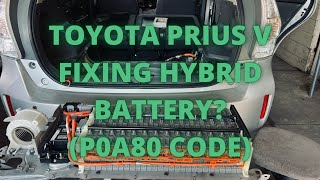
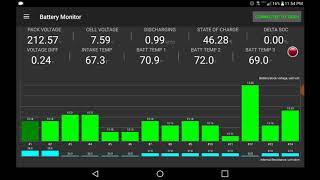
How to confirm: Scan for companion code P0A80 ('Replace Hybrid Battery Pack'). Use a tool like the Dr. Prius app to monitor 🎬 Watch: How to use the Dr. Prius app to test your battery the voltage of all 14 battery blocks; a difference of more than 0.3V between the highest and lowest block under load indicates a failing module. Healthy modules should read around 7.2V each.
Typical fix: Replace the entire HV battery assembly with a new or remanufactured unit. Reconditioning by replacing individual modules is possible but often leads to recurring failures if not done by a specialist with proper balancing equipment.
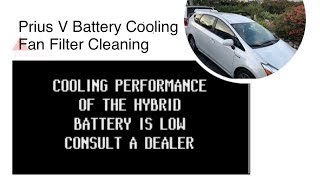
Est. part cost: $1500-$3500 - Clogged or Failed HV Battery Cooling Fan 🟡 Medium Probability → Shop Engine Cooling Fan Blade The fan pulls cabin air from an intake vent near the rear passenger-side seat to cool the battery. This vent is prone to getting clogged with dust, pet hair, and debris, causing the battery to overheat and trigger faults.
How to confirm: Visually inspect the fan intake vent for blockages. Listen for the fan running (it's usually quiet but audible in a silent cabin). A companion code like P0A82 or P0A85 may be present, indicating a cooling performance or fan circuit fault. Accessing the fan requires removing the rear seat and trim panels. 🎬 See this step-by-step guide to cleaning the cooling fan
Typical fix: Remove the rear interior trim to access and thoroughly clean the fan blades and ducting with a vacuum, soft brush, and compressed air. If the fan motor has failed, it will need to be replaced.
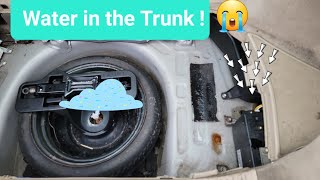
Est. part cost: $0 (for cleaning) - $200 - Corroded Wiring or Connectors due to Water Leaks 🟡 Medium Probability Water leaks in the rear hatch area are a well-documented issue on this platform. Body seam sealant can crack over time, allowing water to drip into the trunk area, often near the 12V battery or into the quarter panel wells. This moisture causes corrosion on critical connectors for the Battery ECU, cooling fan, or other systems, leading to communication errors and fault codes.
How to confirm: Pull back the trunk carpeting and trim panels, especially on the left and right sides and in the spare tire well. Look for signs of water intrusion, rust, or green/white corrosion on wiring harnesses and connectors. A PriusChat forum thread details a case where a leak on the left side corroded a parking assist connector, causing a P3000 code.
Typical fix: Dry the area completely. Clean the corroded terminals with electrical contact cleaner and a small brush. If corrosion is severe, the connector or a section of the wiring harness may need to be replaced. The source of the water leak (often cracked body seams near the hatch hinges) must be sealed with automotive silicone sealant. 🎬 Watch: How to find and seal trunk water leaks
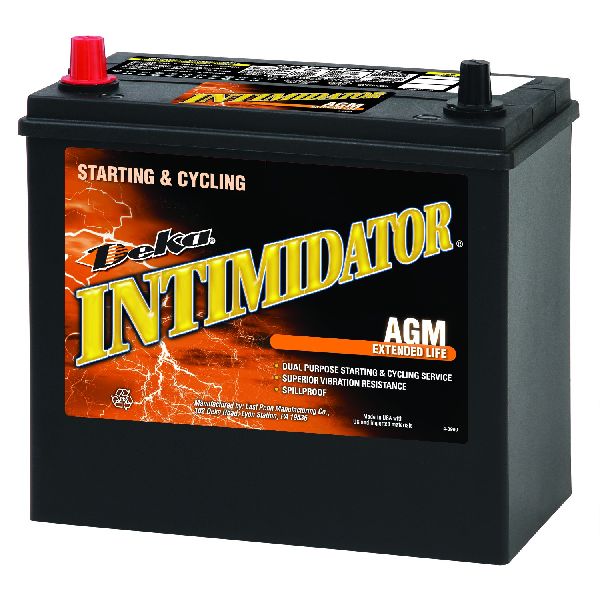
Est. part cost: $10-$200 - Weak 12V Auxiliary Battery ⚪ Low Probability → Shop Vehicle Battery The 12V battery powers the vehicle's computers (ECUs) before the hybrid system engages. A weak or failing 12V battery can cause low voltage conditions for the ECUs, leading to a wide range of erroneous fault codes, including P3000, as the computers fail to initialize correctly.
How to confirm: Test the 12V battery with a digital multimeter or a professional battery tester. A healthy battery should read approximately 12.6V with the car off and above 13.5V with the car in 'Ready' mode. These batteries are often AGM type and require a specific testing procedure.
Typical fix: Replace the 12V auxiliary battery, which is located in the rear cargo area.
Est. part cost: $150-$250
Rare But Worth Checking
- Failing HV Battery ECU: → Shop Vehicle Battery While less common than the battery pack itself, the computer that monitors and controls the battery can fail. This is typically diagnosed after all other possibilities (battery, wiring, cooling) have been ruled out. An INF code 526 specifically points to an internal ECU malfunction, sometimes from corrosion on internal pins.
- Running Out of Fuel: If the vehicle runs out of gasoline, the engine cannot run to charge the HV battery. If the battery's state of charge drops to a critical level, it can trigger P3000 with sub-code 388 (Discharge Inhibition Control Malfunction).
- Failed Intelligent Power Module (IPM) in Inverter: A failure within the hybrid system's inverter, specifically the IPM, can cause the vehicle to stall or enter a fail-safe mode, potentially logging a P3000 code along with inverter-specific codes like P0A94. Toyota issued a recall and a Customer Support Program (20TA10 / 20TE10) for this issue on 2014-2017 models.
Diagnosis Steps
- Read all stored Diagnostic Trouble Codes (DTCs) with a scanner capable of accessing the Hybrid Control and HV Battery ECUs (e.g., Toyota Techstream, Dr. Prius app).
- Document any INF sub-codes (e.g., P3000-123, P3000-388) and companion codes (e.g., P0A80, P0A85). Prioritize diagnosis based on these specific codes. Per Toyota TSB T-TT-0303-14, diagnose the HV Battery ECU DTCs first, not the P3000/123 itself.
- Visually inspect the HV battery cooling fan intake vent (rear passenger side) for any blockages. Clean as necessary.
- Test the 12V auxiliary battery for proper voltage and health. A weak 12V battery is a known cause of spurious electronic faults. Charge or replace if necessary.
- Inspect the trunk area for water intrusion. Remove the floor covers and side trim to check the 12V battery well and the opposite side well for moisture or corrosion on wiring connectors.
- If codes P0A80 or P3011-P3024 are present, use the scanner's live data function to monitor individual battery block voltages under load. Look for a block with significantly lower voltage (more than 0.3V difference) than the others.
- If a cooling fan code like P0A85 is present, remove the rear seat and trim to access the fan. Test the fan motor and its circuit for power, ground, and signal from the ECU.
- If P0A94 is present, investigate the hybrid inverter, checking if the vehicle is covered under recall 20TA10 or Customer Support Program 20TE10.
- If all other components test good, the fault may lie with the HV Battery ECU itself.
Parts You'll Likely Need
- High-Voltage Hybrid Battery Pack
(OEM #G9510-76012 (Superseded by G9510-47121), G9510-47080, G9510-47070)— This is the most common major failure that causes P3000, usually confirmed by a companion P0A80 code.
Trusted brands: Toyota (OEM), Dorman (Remanufactured), Green Bean Battery (Remanufactured)
OEM price range: $2100-$2800
Aftermarket price range: $1500-$2200 - Hybrid Battery Cooling Fan
(OEM #G9230-47010)— A clogged or failed fan is a frequent cause of battery overheating, which triggers this fault code.
Trusted brands: Toyota (OEM), Aisin, Dorman (P/N 601-029)
OEM price range: $120-$180
Aftermarket price range: $70-$110 - 12V Auxiliary Battery
(OEM #28800-21171 (or Toyota TrueStart P/N 00544-21171-325))— A weak 12V battery can cause numerous false electronic codes on a hybrid vehicle.
Trusted brands: Toyota TrueStart, Optima (YellowTop), Bosch
OEM price range: $200-$280
Aftermarket price range: $150-$220
Related Codes That Often Appear With This One
- P0A80 — This is the specific code for 'Replace Hybrid Battery Pack'. P3000 is the general alert from the main hybrid ECU, and P0A80 is often the specific fault reported by the Battery ECU that triggered the P3000.
- P0A85 / P0A82 — These codes relate to the 'Hybrid Battery Pack Cooling Fan Control Circuit' and 'Cooling Fan Performance' respectively. They often appear with P3000 when the root cause is a faulty fan, clogged intake, or corroded wiring in the fan's circuit.
- P3011-P3024 — These codes pinpoint which of the 14 battery 'blocks' is weak or has a voltage problem. For example, P3012 indicates an issue with block 2. Seeing one of these is a strong indicator of internal battery failure.
- P0A94 — This code points to a malfunction in the Inverter/Converter assembly. It may be seen with P3000 if the Intelligent Power Module (IPM) fails, an issue covered by recall 20TA10 for 2014-2017 models.
Technical Service Bulletins (TSBs) & Recalls
- T-TT-0303-14: Advises technicians to diagnose the underlying HV Battery ECU codes rather than the general P3000/123 code itself.
- 20TA10 / 20TE10: Safety Recall and Customer Support Program for failing Intelligent Power Module (IPM) in the inverter on 2014-2017 models, which can cause stalling and trigger P3000.
- T-SB-0095-20: Outlines the 'Rescue Charge' procedure for deeply discharged HV batteries that can cause a no-start and P3000 code after long-term storage.
Platform-Specific Known Issues
- The 2014-2017 Prius v was subject to recall 20TA10 and Customer Support Program 20TE10 for an issue with the Intelligent Power Module (IPM) inside the inverter. A failure can cause the hybrid system to shut down, triggering warning lights and putting the car into a low-power 'fail-safe' mode. This can be accompanied by codes P0A94, P324E, P3004, and/or P0A1A, and may also trigger the general P3000 fault.
Mechanic-Grade Diagnostic Values
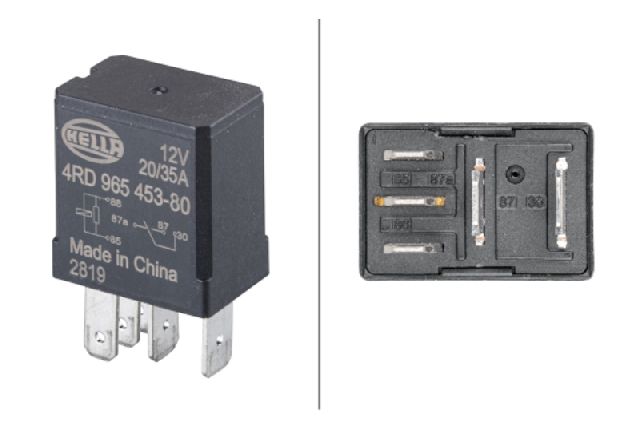
- HV Battery Cooling Fan Relay — expected: < 0.5 Ω across switched terminals when 12V is applied to the coil.. Failure: Resistance is higher than 0.5 Ω, indicating a faulty relay.
- BATT FAN Fuse Continuity — expected: < 1 Ω. Failure: An open circuit (infinite resistance) indicates a blown fuse.
- Voltage at HV Battery Fan Fuse (car in 'Ready' mode) — expected: ~13.8V (equal to charging system voltage). Failure: Significantly lower voltage (e.g., 10.3V) indicates high resistance somewhere in the fan power circuit, likely a corroded connector or wire.
Hidden / Shadow Codes Worth Checking
- INF 123: Abnormal signal input from the Battery ECU. This is a general communication or internal ECU fault indicator that often accompanies a P3000. (see via Toyota Techstream or equivalent advanced scanner.)
- INF 388: Discharge Inhibition Control Malfunction. Set when the HV battery state of charge is critically low, often from running out of fuel or leaving the car in Neutral for too long. (see via Toyota Techstream or equivalent advanced scanner.)
- INF 389: Drastic drop of HV battery voltage detected. Can be caused by a depleted HV battery or a malfunction in the battery control system. (see via Toyota Techstream or equivalent advanced scanner.)
- INF 526: Indicates an internal malfunction of the Battery ECU itself. This can be caused by micro-corrosion on the voltage sensing harness pins where they connect inside the ECU. (see via Toyota Techstream or equivalent advanced scanner.)
- INF 611, 612, 613, 614: These are isolation fault (high voltage leak) codes that can be associated with a P3000, though they are more commonly seen with a P0AA6. (see via Toyota Techstream or equivalent advanced scanner.)
Scan Tool Commands That Help
- Toyota Techstream: Active Test: 'Control the HV Bat Fan Speed' — This command is used to manually turn on the HV battery cooling fan to verify if the fan motor, relay, and basic circuit are functional. If the fan does not run when commanded, it points to a problem in the fan circuit itself.
Wiring & Ground Locations
- HV Battery ECU — Inside the main HV battery case, located on the driver's side (left side when viewing from the open hatch). Access requires removing the battery cover.. This is the computer that sets the fault. Water leaks can cause corrosion on its connectors, or it can fail internally (INF 526).
- HV Battery Cooling Fan Connector — Located near the cooling fan assembly after removing rear passenger-side interior trim.. This connector is a common failure point due to corrosion from water intrusion, causing high resistance and triggering fan performance codes (P0A85) and a general P3000 fault.
- Rear Hatch Body Seams — In the roof channels under the black plastic trim strips, and around the hatch hinges.. The factory seam sealer in these areas cracks over time, creating a primary entry point for water leaks that drip down onto hybrid system electronics in the trunk area.
Real Owner Repair Stories
- Torque News article / The Hybrid Guy on YouTube (Toyota Prius (analogous model)) — P3000-123 (Battery Control System Malfunction) and P0A85 (Hybrid Battery Pack Cooling Fan 1 Control Circuit High).
❌ Tried (didn't work) Initial assumption was a failed battery or ECU.
✅ What actually fixed it The technician found high resistance in the fan control circuit by measuring voltage at the fuse (10.3V instead of 13.8V). The root cause was a corroded electrical connector at the cooling fan due to a water leak. The connector was replaced with one from a salvage yard. - PriusChat user 'Ken Knobloch' (2008 Prius (Gen 2, analogous repair)) — P0A85 (Hybrid Battery Pack Cooling Fan 1) and Red Triangle warning.
❌ Tried (didn't work) Considered checking the Battery ECU, but found the problem first.
✅ What actually fixed it Found two wires at the cooling fan connector that were completely corroded. The user snipped the wires before the connector and jumped them using insulated spade connectors, which resolved the fault. - PriusChat user 'Prius-Experience' (2008 Prius (Gen 2, analogous repair), 125k miles) — VSC, Brake System, Red Triangle warning lights. P3000 with no sub-codes, plus other codes related to Park Assist.
❌ Tried (didn't work) Checked inverter water pump (was working). Cleaned HV battery fan (was already clean). Tested fan and relay (both good).
✅ What actually fixed it Found evidence of a significant water leak in the trunk. Traced the source to cracked body seam sealer in the tailgate/hatch opening. After sealing the cracks with silicone, the electrical faults disappeared. The moisture had been causing intermittent shorts and communication errors.
Model Year Variations Within This Range
- 2015-2017: These are facelift models with a different front bumper design and a higher-resolution Multi-Function Display (MFD) that does not use the failure-prone Harman expansion box found in 2012-2014 models.
- 2014-2017: These model years were subject to a recall and extended warranty program (20TA10 / 20TE10) for failing Intelligent Power Modules (IPMs) within the hybrid inverter, which can cause stalling and may be associated with a P3000 code.
- Late 2014-2017: The 2ZR-FXE engine received updated piston rings to address oil consumption issues that were more prevalent in earlier models.
Diagnostic Flowchart
Other Known Issues on This Vehicle
Issues unrelated to this code that are worth knowing about as an owner of this generation:
- Clogged EGR System (Cooler, Valve, Pipe) 🔴 High — Very common, often starting around 80,000-120,000 miles. Leads to engine knocking, rough idle, and misfire codes (e.g., P0301). A clogged EGR is also believed to increase combustion temperatures, contributing to head gasket failure. (Ref: T-SB-0116-15 Rev1)
- Excessive Oil Consumption 🟠 Medium — Common on 2012-2014 models, often appearing after 100,000 miles. Caused by issues with piston ring design. Can lead to engine damage if the oil level is not monitored closely.
- Head Gasket Failure 🔴 High — A significant issue for this engine, often occurring after 150,000 miles. Symptoms include a rough 'shaking' or rattling on cold startup, and coolant loss. Often linked to a clogged EGR system.
- Brake Actuator / Booster Pump Failure 🔴 High — The brake booster assembly can fail, leading to a loss of braking assist, numerous warning lights, and a loud buzzing noise from the actuator. It's an expensive repair.
- Hybrid Inverter Failure (IPM) 🔴 High — Affects 2014-2017 models. The Intelligent Power Module (IPM) inside the inverter can fail, causing the vehicle to stall or enter a low-power limp mode. (Ref: Recall 20TA10 / CSP 20TE10)
Used vs. New Parts: Buying Guide for This Vehicle
When a used part is the smart pick: For related component failures, used parts are a smart choice. A used HV battery cooling fan assembly or a wiring connector pigtail from a salvage yard is an excellent, cost-effective fix for a failed motor or a corroded connector.
Donor-vehicle mileage cap: roughly under 150000 miles for the part to have meaningful remaining life.
What to inspect on the donor part:
- For electrical connectors, inspect for any signs of corrosion (green/white powder), melted plastic, or backed-out pins.
- For a used cooling fan, check that the fan spins freely by hand and that the blades are not caked with debris.
- When buying a complete used HV battery, request a recent health check printout (e.g., from Dr. Prius) showing block voltages are balanced (within 0.2V of each other). Avoid batteries from vehicles that have sat for many months.
OEM-only on this vehicle (don't cheap out):
- High-Voltage Battery Pack: For long-term reliability (8+ years), a new OEM battery is the most recommended, albeit most expensive, option.
Aftermarket brands forum-validated for this vehicle:
- New (not reconditioned) aftermarket battery packs from specialists like 'Exclusively Hybrid' are reported as a viable alternative to OEM, offering new cells and long warranties.
Brands owners have reported issues with on this vehicle:
- Reconditioned Batteries (General Caution): Brands like Dorman and Green Bean Battery have a significant number of user complaints regarding premature failure (sometimes within months), repeat replacements, and difficult warranty processes. While cheaper, they are a gamble as they are built from used, partially-worn cells.
Real Owner Stories
Aggregated from forums and TSBs cited above. Mileages and costs reflect what owners reported in those sources.
2012-2015 Toyota Prius v 2ZR-FXE
Symptoms: Water leaking into the trunk area, specifically the left and right side wells near the 12V battery, causing a P3000 code and electrical communication issues.
What fixed it: Dried the trunk area, cleaned green/white corrosion from the wiring connectors with electrical contact cleaner, and sealed cracked body seams near the hatch hinges with automotive silicone.
Cost: $10-$200
Source hint: PriusChat.com thread titled 'Fixed: Rear hatch leak and related problems - a journey'
2014-2017 Toyota Prius v 2ZR-FXE
Symptoms: Vehicle stalled while driving and entered a low-power 'fail-safe' mode with the Master Warning Light and 'Check Hybrid System' message.
What fixed it: Replacement of the Intelligent Power Module (IPM) inside the inverter under Safety Recall 20TA10 / Customer Support Program 20TE10.
Source hint: Safety Recall 20TA10 and Customer Support Program 20TE10
Toyota Prius v (Prius Plus) 2ZR-FXE
Symptoms: P3000 code appearing alongside signs of a bad hybrid battery.
What fixed it: Replacement of the high-voltage hybrid battery pack.
Source hint: Reddit r/prius thread 'How the recognize a bad hybrid battery p3000'
Related OBD-II Codes
Frequently Asked Questions
My 2014 Prius v stalled and the Master Warning Light came on. Is there a recall for this?
Should I replace my HV battery immediately if I see code P3000?
Can a water leak in the trunk of my Prius v cause the P3000 code?
How can I check if my hybrid battery is actually failing on my Prius v?
My Prius v has been sitting for several months and now won't start with a P3000 code. What should I do?
Is the HV battery cooling fan a common failure point on the 2012-2017 Prius v?
Helpful Videos
We Have This Part in Stock


The information in this article is provided for general reference and educational purposes only. Vehicle specifications, procedures, and part compatibility can vary by production date, trim level, and region. Always consult your vehicle's factory service manual and verify part numbers before purchasing or performing repairs. Safety-critical components such as airbags, seat belts, and braking systems should be installed by a qualified professional.
- Toyota Prius v:
- 🧭 Diagnostic Flowchart
- 🎬 Helpful Videos
- 🛍️ Shop This Part
- What's Unique About the 2012-2017 Toyota Prius v
- Symptoms You May Notice
- Most Likely Causes
- Rare But Worth Checking
- Diagnosis Steps
- Parts You'll Likely Need
- Related Codes That Often Appear With This One
- Technical Service Bulletins (TSBs) & Recalls
- Platform-Specific Known Issues
- Mechanic-Grade Diagnostic Values
- Hidden / Shadow Codes Worth Checking
- Scan Tool Commands That Help
- Wiring & Ground Locations
- Real Owner Repair Stories
- Model Year Variations Within This Range
- Other Known Issues on This Vehicle
- Used vs. New Parts: Buying Guide for This Vehicle
- Real Owner Stories
- 2012-2015 Toyota Prius v 2ZR-FXE
- 2014-2017 Toyota Prius v 2ZR-FXE
- Toyota Prius v (Prius Plus) 2ZR-FXE
- Related OBD-II Codes
- Frequently Asked Questions
- 🎟️ Get 5% Off