

OBD-II Code P3004: High Voltage Power Problem
What P3004 means, why it triggers, and how to fix it
- Stop driving immediately if P3004 triggers, as the vehicle enters limp mode or shuts down completely, creating a severe safety hazard.
- Call a Toyota or Lexus dealership with your VIN before paying for repairs to check if your vehicle qualifies for the free 20-year/unlimited-mileage inverter warranty extension (Program 23TE03).
- Scan for specific 3-digit info codes (like -131 for an open circuit or -800 for a short circuit) to differentiate between a $400 relay fix and a $3,000 inverter replacement.
- Never attempt a DIY repair on the inverter or high-voltage battery junction block, as the system contains lethal voltages requiring specialized training and Class 0 insulated gloves.
What Does P3004 Mean?
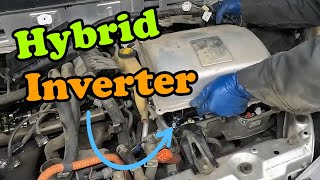
P3004 indicates the Hybrid Vehicle Control ECU detected a critical failure in the high-voltage power supply between the hybrid battery and the inverter. The inverter converts the battery's DC power to AC power for the electric motors. This code flags a catastrophic power delivery failure, preventing the car from starting or driving.
Technical definition: The SAE/ISO definition for P3004 is manufacturer-specific. For Toyota and Lexus, it means 'High Voltage Power Resource Malfunction.' It triggers when the hybrid vehicle control ECU fails to detect the expected voltage at the inverter during the startup pre-charge sequence. On Nissan models, it indicates a CAN communication bus issue, and on BMWs, it flags excessive fuel rail pressure.
Can I Drive With P3004?
No — Do Not Drive. Do not drive. The vehicle enters a low-power 'limp mode' or shuts down completely without warning, creating a major safety risk. The car also locks in Park and refuses to enter 'Ready' mode. Continuing to operate the vehicle causes further damage to the hybrid battery.
Common Causes
- Failed Intelligent Power Module (IPM) in the Inverter (Very Common) — The IPM is a set of transistors inside the inverter that fails from thermal stress. This well-known factory defect triggers info code P3004-800 (short circuit).
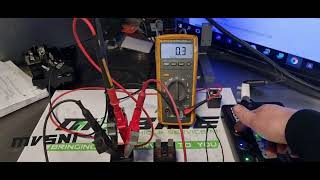
- Failed HV Battery Contactor (Relay) (Common) — The high-voltage battery pack uses contactor relays to connect power to the vehicle. A stuck or failed relay blocks power to the inverter, triggering info code P3004-131 (open circuit). 🎬 Watch: Step-by-step diagnosis for the P3004-131 open circuit code.
- Failed Inverter Coolant Pump (Less Common) — The inverter relies on a dedicated cooling system. A failed electric water pump causes the inverter to overheat, destroying the Intelligent Power Module (IPM) and triggering P3004.
- Failed Pre-charge Resistor (Less Common) — The hybrid system uses a pre-charge resistor to slowly energize the inverter's capacitors, preventing current surges. An open (failed) resistor disrupts the voltage ramp-up, setting info code P3004-132.
- Corroded Hybrid Battery ECU Connector (Rare) — Moisture in the trunk corrodes the connector plugging into the hybrid battery ECU. This disrupts communication and power delivery, mimicking a failed inverter.
- Damaged High-Voltage Wiring (Rare) — Corrosion, road debris, or improper repairs damage the thick orange high-voltage cables connecting the battery to the inverter, causing an open or short circuit (info code P3004-803).
- Shorted Hybrid A/C Compressor (Rare) — The air conditioning compressor runs on the high-voltage circuit. An internal short disrupts the entire high-voltage system, setting a P3004-800 code during startup.
- Improper Service or Reassembly (Rare) — Triggered immediately after a DIY or professional hybrid battery service if components are installed incorrectly. A trapped ground lug prevents proper connection, causing a power delivery fault.
Symptoms
- “Check Hybrid System” Warning Light — This message dominates the dashboard, accompanied by the master warning light (red triangle) and check engine light.
- Vehicle Will Not Start or Enter 'Ready' Mode — The car refuses to power on completely, and the 'Ready' light indicating an active hybrid system does not illuminate.
- Sudden Loss of Power or Stalling — The car enters a low-power 'limp mode' or shuts down entirely while driving, creating a serious safety hazard.
- Vehicle is Stuck in Park — The transmission locks, preventing you from shifting out of Park into Drive or Reverse. 🎬 See how to troubleshoot a Prius stuck in Park with this code.
- Clicking Sound From Rear of Vehicle — During startup, a clicking noise emits from the hybrid battery area as the contactor relays attempt to engage but fail.
- 12V Auxiliary Battery Not Charging (also visible on scanner) — The DC-DC converter inside the inverter fails to operate, leading to a dead 12V battery within days.
Diagnostic Flowchart
Tap your situation to follow the diagnostic path that matches what you're seeing on this code.
Common Fixes & Costs
- Inverter with Converter Assembly Replacement — Parts: $1500-$3500, Labor: $400-$1000, ~2.8 hr book time (Professional)
- HV Battery Contactor (Relay) Replacement — Parts: $35-$150, Labor: $300-$600, ~2.5 hr book time (Professional)
- Inverter Coolant Pump Replacement — Parts: $100-$250, Labor: $150-$300, ~1.5 hr book time (Intermediate)
- Intelligent Power Module (IPM) Transistor Kit Replacement — Parts: $500-$800, Labor: $800-$1500, ~3 hr book time (Professional)
- Full Hybrid Battery Pack Replacement — Parts: $2000-$4000, Labor: $300-$800, ~4 hr book time (Professional)
Used vs. New Parts: Buying Guide
When a used part is worth it: A remanufactured inverter is a viable option when the vehicle is out of warranty and budget is tight, offering significant savings over a new OEM unit.
Donor-vehicle mileage cap: roughly under 100000 miles for the part to have meaningful remaining life.
Donor quality checklist:
- Match the part number exactly; inverters from different Prius models are not compatible.
- Purchase from a reputable hybrid parts specialist offering a warranty.
- Avoid parts from flood-damaged cars.
Decision logic:
- If Vehicle is covered by Toyota's 20-year/unlimited-mileage warranty (23TE03) → Use a new OEM part installed by the dealer for free.
- If Vehicle is high mileage (>150k miles) and budget is the primary concern → A remanufactured inverter with a 1+ year warranty is a sensible choice.
- If You plan to keep the vehicle for many more years and want maximum reliability → A new OEM inverter is the best, albeit most expensive, option.
Warranty tradeoff: Used parts offer a 30-90 day warranty. Remanufactured units offer a 1-year warranty. New OEM parts installed by a dealer carry a 12-month/12,000-mile warranty.
Worst-case if a used part fails: $800-$1500 if a used part fails prematurely, requiring repeat labor costs.
What Happens If You Wait — Timeline
- Immediate: Code P3004 sets. The car refuses to enter 'Ready' mode or locks in Park. (MPG impact: 100% (Vehicle is undrivable)% · Added cost: $100-$300 (Towing cost))
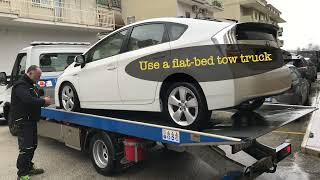
- If driving is attempted (Limp Mode): The malfunctioning inverter fails to charge the 12V auxiliary battery, draining it completely within days. (MPG impact: N/A% · Added cost: $150-$300 (Cost of a new 12V battery))
- Weeks (If ignored or repeatedly reset): Repeated startup attempts with a short circuit overheat the System Main Resistor. An open circuit causes arcing that destroys relay contacts. (MPG impact: 100% (Vehicle remains undrivable)% · Added cost: $300-$800 (Damage to the HV battery junction block))
- Months (Highly Unlikely): Intermittent driving disrupts HV battery charging, causing cell imbalance and premature failure of the entire pack. (MPG impact: N/A% · Added cost: $2,000-$4,000 (Cost of a replacement hybrid battery pack))
Cost of Not Fixing It
- Immediate: Vehicle is undrivable, stuck in Park, or shuts down without warning, creating a major safety hazard. (Added cost: Towing costs ($100-$300+))
- Short-Term (Days to Weeks): A malfunctioning inverter prevents the 12V auxiliary battery from charging, destroying the 12V battery. (Added cost: $150-$300 for a new 12V battery)
- Long-Term (Weeks to Months): An ongoing inverter fault places severe stress on the high-voltage hybrid battery, causing premature failure of the entire pack. (Added cost: $2000-$4000 for a replacement hybrid battery pack)
Diagnosis Steps
- STOP! Check Warranty Coverage
Call a Toyota or Lexus dealership with your Vehicle Identification Number (VIN). Ask them to check for coverage under Customer Confidence Program 23TE03. This specific problem is so common that the warranty was extended to 20 years with unlimited mileage for many vehicles. If covered, diagnosis and repair are free.
Tools: Phone, Vehicle Identification Number (VIN) (Beginner) - Read All Fault Codes & Freeze Frame Data
Use an advanced OBD-II scanner to read hybrid system codes. Look for P3004 and accompanying 'info codes' (-131, -132, or -800) to pinpoint the failure. Analyze freeze frame data for 'Power Resource IB' (current) and 'Power Resource VB' (voltage). A high 'IB' value with P3004-800 confirms an overcurrent event.
Tools: Advanced OBD-II Scanner (e.g., Toyota Techstream or Foxwell NT510) (Intermediate) - Check the Inverter Coolant Pump Operation
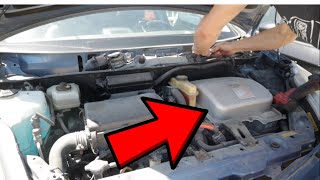
Locate the clear plastic reservoir for the inverter cooling system under the hood. With the car in 'IG-ON' mode (not 'Ready'), look for turbulence in the reservoir. A lack of movement confirms a failed pump, which causes the inverter to overheat and fail.
Tools: Flashlight (optional) (Beginner) - Inspect the 12V Auxiliary Battery
Ensure the 12V battery is fully charged (12.6V+ with car off). A bad 12V battery causes erratic electrical issues and must be eliminated as a contributing factor, though it rarely fixes a hard P3004 code.
Tools: Multimeter or Battery Tester (Beginner) - Professional Diagnosis: Active Test of HV Relays
Using a bi-directional scan tool, a technician performs an 'Active Test' to command the high-voltage relays (contactors SMRB, SMRP, SMRG) to open and close. A silent relay confirms a mechanical failure, directly causing info code P3004-131.
Tools: Advanced Scan Tool (Advanced) - Professional Diagnosis: Pre-charge Resistor Check
DANGER: High voltage is lethal. After de-powering the system, a technician measures resistance at the HV battery junction block. The pre-charge resistor must read around 31 Ω. An open circuit (infinite resistance) confirms a failed component triggering P3004-132.
Tools: Multimeter, Class 0 Insulated Gloves, Safety Equipment (Advanced) - Professional Diagnosis: Insulation Resistance (Megger) Test
DANGER: High voltage is lethal. To check for a short to ground, a technician uses a megohmmeter to test insulation resistance between the high-voltage terminals and the vehicle chassis. A reading below 10 MΩ confirms a dangerous short circuit causing P3004-800.
Tools: Megohmmeter, Class 0 Insulated Gloves, Safety Equipment (Advanced) - Professional Diagnosis: A/C Compressor Resistance Check
DANGER: High voltage is lethal. If a short is suspected (P3004-800), the technician disconnects the A/C compressor harness and measures resistance between terminals. A reading below 100 kΩ confirms an internal short bringing down the HV system.
Tools: Multimeter, Class 0 Insulated Gloves, Safety Equipment (Advanced) - Professional Inspection of HV Wiring
DANGER: High voltage is lethal. A technician de-powers the HV system, waits 10 minutes for capacitor discharge, and visually inspects the orange high-voltage cables for damage, corrosion, or loose connections between the battery and inverter.
Tools: Multimeter, Class 0 Insulated Gloves, Safety Equipment (Advanced)
When This Code Triggers (Freeze-Frame Conditions)
- Power Resource IB (Current): High/Abnormal (During startup pre-charge sequence, a high current reading (with P3004-800) confirms a short circuit.)
- Power Resource VB (Voltage): Low/Mismatched (During startup, voltage at the inverter failing to match battery voltage confirms an open circuit (P3004-131).)
- Vehicle State: Not 'Ready' (Fault is detected during the transition from 'IG-ON' to 'Ready' as the high-voltage contactors engage.)
- Ambient Temperature: High (e.g., >90°F) (Failure is precipitated by high ambient heat stressing the inverter and its cooling system.)
Related Codes
- P0A94 — DC/DC Converter Performance. Appears with P3004 because the DC/DC converter is housed inside the failing inverter assembly. Seeing both codes confirms the inverter assembly requires replacement.
- P3000 — HV Battery Malfunction. A general code for the battery control system indicating a fault in the high-voltage system.
- P3004-131 — Power Cable Malfunction (Open Circuit). The inverter did not detect voltage from the battery during the pre-charge startup sequence.
- P3004-800 — High Voltage Power Resource (Short Circuit). The system detected a severe overcurrent when energizing the high-voltage system.
- P3004-803 — Power Cable Malfunction (Abnormal Voltage Drop). The system detected an abnormal voltage drop after entering 'Ready' mode.
Climate & Environmental Factors
- High Heat and Humidity: Sustained high ambient temperatures stress the inverter's cooling system. This thermal stress accelerates the degradation of the Intelligent Power Module (IPM), causing premature failure. High humidity introduces moisture that corrodes electrical connections.
- Cold Weather: Extreme cold stresses electronic components during startup, though the primary failure mode for the IPM remains thermal stress from heat generated during operation.
Where to Take It: Dealer vs Independent vs Chain
- Dealer:
The absolute first place to call due to the 20-year warranty extension. If not under warranty, they remain a reliable, albeit expensive, choice.
Best for: First point of contact to check for warranty coverage (Program 23TE03)., Vehicles still under factory or extended warranty., Complex diagnostics requiring manufacturer-specific tools.
Downsides: Highest labor rates., Defaults to replacing entire expensive assemblies instead of smaller failed components. (Typical cost: +30% vs. baseline) - Independent Shop:
Excellent choice for out-of-warranty repairs, provided they are a certified hybrid specialist.
Best for: Out-of-warranty vehicles where cost is a major factor., Accessing remanufactured or used parts.
Downsides: MUST be a hybrid specialist; general mechanics lack high-voltage training. (Typical cost: +0% vs. baseline) - Chain Shop:
AVOID COMPLETELY. Chain shops are not equipped for dangerous, high-voltage repairs.
Best for: Simple, non-hybrid related services like tires or oil changes.
Downsides: Technicians lack required training and equipment for high-voltage diagnostics., High risk of dangerous mistakes and misdiagnosis. (Typical cost: -10% vs. baseline)
When to Walk Away From the Repair
If the estimated out-of-warranty repair cost exceeds 50% of the car's current private-party market value, seriously consider selling the vehicle as-is.
- Car worth $6000, fix is $3500: Walk away. The repair cost exceeds 50% of the car's value.
- Car worth $8000, fix is $1800: Fix it. The repair cost is well under the 50% threshold.
- Car worth $4500, fix is $600: Fix it immediately. This represents a cheap relay fix for a major problem.
What Scan Tool You Need for This Code
Minimum: A scanner capable of reading manufacturer-specific codes and info codes from the Hybrid Control ECU.
A basic reader only shows a generic P3004 code. It cannot read critical 'info codes' (-131 or -800) necessary to differentiate between a cheap relay failure and an expensive inverter failure.
Budget: BlueDriver Pro Scan Tool (~$100) — Reads and clears codes from hybrid modules for initial diagnosis, but lacks active test capabilities.
Mid-range: Foxwell NT510 Elite for Toyota (~$170) — Provides full system access to read info codes and offers bi-directional control to perform the 'Active Test' on HV relays.
Professional: Autel MaxiCOM MK808 (~$400-600) — Offers OE-level diagnostics, full bi-directional control, ECU coding, and comprehensive live data graphing.
Rent vs buy: Buying a mid-range scanner like the Foxwell NT510 Elite is more cost-effective than paying for a single diagnostic session at a dealer.
How to Clear the Code After You Fix It
- Ensure HV service plug and 12V battery are reconnected
- Use a compatible OBD-II scan tool to clear the P3004 code from the Hybrid Control ECU
- Perform a complete drive cycle to allow the vehicle's readiness monitors to run
Drive cycle (~30 minutes): After a cold soak (engine off overnight), start the engine and idle for 5-10 minutes. Drive for 15-20 minutes with a mix of city (25-35 mph with stops) and steady highway speeds (55-60 mph). Idle for a few minutes before shutting down.
Readiness monitors affected: Hybrid System, Catalyst monitor, EVAP monitor, O2 sensor monitor
Before emissions retest: drive at least 100 miles to fully set monitors.
Watch out for:
- Clearing the code without fixing the hardware failure causes the code to return immediately upon the next startup attempt.
- Failing to complete a full drive cycle leaves emissions readiness monitors incomplete, causing a failed smog test.
Will This Fail Emissions / State Inspection?
Yes — this code typically fails an OBD-II emissions inspection.
- California: A P3004 code is an automatic failure. After repair, a full drive cycle must be completed to set all readiness monitors before a re-test.
- New York: An active P3004 code results in an immediate inspection failure during the OBD-II scan.
- Texas: An active P3004 code and illuminated Check Engine Light causes the vehicle to fail the OBD portion of the annual inspection.
- New Jersey: The Check Engine Light must be off and readiness monitors set to 'Ready'. P3004 causes an automatic failure.
Most Commonly Affected Vehicles
- Toyota Prius (Third Generation) (2010-2015) — The most common vehicle for this code due to a known defect in the Intelligent Power Module (IPM). Warranty extended under program 23TE03.
- Toyota Prius V (2012-2017) — Shares the faulty inverter design with the standard Prius. Covered by the 20-year unlimited mileage warranty extension (23TE03).
- Lexus CT 200h (2011-2017) — Built on the 3rd Gen Prius platform using the same failure-prone inverter. Covered by the warranty extension.
- Toyota Camry Hybrid (2007-2011) — Experiences inverter failures triggering P3004, though less frequently than the Prius.
- Toyota Highlander Hybrid (2008-2013) — P3004 triggers from failures in the inverter, HV wiring, or A/C compressor.
- Lexus GS 450h (2006-2008) — Logs this code due to failures in the System Main Relays (contactors) or the inverter assembly (subject to NHTSA recall 13V396).
- Nissan Hybrid/EV Models (Altima, Leaf) (2007-2023) — P3004 defines a 'High Speed CAN Communication Bus' error. This points to a communication network problem, not a high-voltage power failure.
- BMW Various Models (2008-2023) — P3004 indicates 'Fuel Rail Pressure, Maximum Pressure Exceeded', completely unrelated to hybrid electrical systems.
Manufacturer-Specific Notes
- Toyota/Lexus: Toyota acknowledges the failing IPM is a factory defect. Customer Confidence Program 23TE03 extends the warranty for this part to 20 years with unlimited mileage, including provisions for towing and a loaner vehicle.
- Nissan: P3004 defines a 'High Speed CAN Communication Bus' error. This requires a diagnostic approach focused on wiring harnesses and communication modules, not high-voltage power.
- BMW: P3004 indicates 'Fuel Rail Pressure, Maximum Pressure Exceeded'. This highlights the critical importance of verifying manufacturer-specific code definitions.
- Honda: Honda's Integrated Motor Assist (IMA) system uses different codes (P1437 or P15A5) for pre-charge or bypass contactor faults.
Real Owner Stories
2010 Toyota Prius with 135,000 miles, P3004-131 after stopping on a hot day.
After a normal drive, the car would not restart. The dashboard displayed 'Check Hybrid System' and code P3004-131.
Outcome: A technician performed an 'Active Test' and found a silent, failed contactor relay. Replacing the single faulty contactor resolved the code, saving the owner from an expensive inverter replacement.
Lesson: An open-circuit info code (P3004-131) points to a less expensive relay failure. An 'Active Test' is mandatory to avoid misdiagnosis.
2011 Toyota Prius with P3004-800, car won't start.
The car failed to start, displaying code P3004-800. Freeze-frame data showed a 6.84 Amp current draw during pre-charge.
Outcome: Sourced a used, newer-generation inverter (G9200-47190) and successfully installed it. The car ran perfectly, confirming the failed inverter was the sole cause.
Lesson: P3004-800 strongly indicates a shorted inverter IPM. A simple resistance check confirms the failure.
2005 Prius at 155k miles, P3004 after DIY battery module replacement.
After replacing a bad module block in the HV battery pack, the car refused to enter 'Ready' mode, clicked, and set code P3004.
Outcome: Discovered a ground lug trapped under a plate during reassembly, preventing a proper ground connection. Freeing the lug cleared the code.
Lesson: If P3004 appears immediately after a DIY repair, double-check every connection and ground before assuming a new component failed.
Gen 2 Prius with P0AC0, P3000, and P3004 after inverter replacement.
A dealership replaced the inverter for $4,000. Two days later, the exact same codes returned.
Outcome: Cleaned corrosion on the pins of the hybrid battery ECU connector. The communication errors ceased, proving the $4,000 inverter replacement was a misdiagnosis.
Lesson: Connector corrosion mimics catastrophic failures. Always inspect wiring and connectors for moisture before authorizing major component replacements.
How to Prevent This Code From Triggering
- Replace the inverter coolant (Every 100,000 - 120,000 miles) — Coolant degrades over time. Replacing it ensures the Intelligent Power Module (IPM) stays cool, preventing thermal stress failures.
- Regularly check the inverter coolant pump (During every oil change) — Visually inspect the reservoir for turbulence while the car is in 'IG-ON'. Catching a dead pump early prevents a $2,000+ inverter replacement.
- Keep inverter cooling fins and vents clean (Annually) — Dust and debris block cooling fins, increasing thermal stress on internal electronics. Wipe down or use compressed air to maintain airflow.
Frequently Asked Questions
What are the most common misdiagnosis mistakes for P3004?
The most expensive mistake is replacing the main hybrid battery pack, as P3004 points to the inverter or power delivery. Another error is assuming a $4,000 dealer quote is the only option when the issue might be a corroded ECU connector. Finally, replacing the 12V battery will not fix this code.
I got a quote for over $3,500 to fix P3004. Is that fair?
It is a standard dealer quote for a new inverter, but it may be unnecessary. Call a dealer with your VIN to check for free coverage under the 20-year warranty extension (Program 23TE03). If not covered, an independent hybrid shop can install a remanufactured inverter for around $1,800.
What is the clicking sound I hear when trying to start my car with a P3004 code?
The clicking sound is the high-voltage relays in the hybrid battery junction block attempting to close. The system detects a fault and immediately disengages them, resulting in clicks but no 'Ready' light.
Can a bad inverter from a P3004 code damage my hybrid battery?
Yes. A malfunctioning inverter prevents correct charging and discharging, leading to erratic cycles, overheating, and premature failure of the battery pack.
Is it safe to drive with code P3004?
No. The vehicle enters a low-power limp mode or shuts down completely without warning, creating a severe safety hazard.
Will replacing the 12V battery fix a P3004 code?
No. While a weak 12V battery causes electrical gremlins, it does not cause the specific high-voltage failure indicated by P3004.
Can I fix P3004 myself?
No. The hybrid system contains lethal high voltage requiring specialized training, Class 0 insulated gloves, and strict de-powering procedures.
Does P3004 mean I need a new hybrid battery?
No. P3004 points to a problem with the inverter or the relays sending power from the battery, not the battery cells themselves.
Key Takeaways
- Stop driving immediately if P3004 triggers, as the vehicle enters limp mode or shuts down completely, creating a severe safety hazard.
- Call a Toyota or Lexus dealership with your VIN before paying for repairs to check if your vehicle qualifies for the free 20-year/unlimited-mileage inverter warranty extension (Program 23TE03).
- Scan for specific 3-digit info codes (like -131 for an open circuit or -800 for a short circuit) to differentiate between a $400 relay fix and a $3,000 inverter replacement.
- Never attempt a DIY repair on the inverter or high-voltage battery junction block, as the system contains lethal voltages requiring specialized training and Class 0 insulated gloves.
Helpful Videos
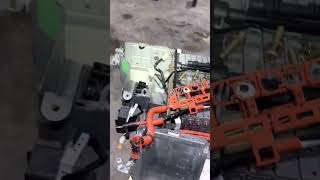
Shop the Parts Behind P3004
Below are the parts most often responsible for code P3004, ranked by how frequently each one is the actual culprit (per the diagnosis above). Tap any to see what we have for your vehicle.



The information in this article is provided for general reference and educational purposes only. Vehicle specifications, procedures, and part compatibility can vary by production date, trim level, and region. Always consult your vehicle's factory service manual and verify part numbers before purchasing or performing repairs. Safety-critical components such as airbags, seat belts, and braking systems should be installed by a qualified professional.
- 🧭 Diagnostic Flowchart
- 🎬 Helpful Videos
- 🛍️ Shop This Part
- What Does P3004 Mean?
- Can I Drive With P3004?
- Common Causes
- Symptoms
- Common Fixes & Costs
- Used vs. New Parts: Buying Guide
- What Happens If You Wait — Timeline
- Cost of Not Fixing It
- Diagnosis Steps
- When This Code Triggers (Freeze-Frame Conditions)
- Related Codes
- Climate & Environmental Factors
- Where to Take It: Dealer vs Independent vs Chain
- When to Walk Away From the Repair
- What Scan Tool You Need for This Code
- How to Clear the Code After You Fix It
- Will This Fail Emissions / State Inspection?
- Most Commonly Affected Vehicles
- Manufacturer-Specific Notes
- Real Owner Stories
- 2010 Toyota Prius with 135,000 miles, P3004-131 after stopping on a hot day.
- 2011 Toyota Prius with P3004-800, car won't start.
- 2005 Prius at 155k miles, P3004 after DIY battery module replacement.
- Gen 2 Prius with P0AC0, P3000, and P3004 after inverter replacement.
- How to Prevent This Code From Triggering
- Frequently Asked Questions
- What are the most common misdiagnosis mistakes for P3004?
- I got a quote for over $3,500 to fix P3004. Is that fair?
- What is the clicking sound I hear when trying to start my car with a P3004 code?
- Can a bad inverter from a P3004 code damage my hybrid battery?
- Is it safe to drive with code P3004?
- Will replacing the 12V battery fix a P3004 code?
- Can I fix P3004 myself?
- Does P3004 mean I need a new hybrid battery?
- Key Takeaways
- 🎟️ Get 5% Off