

P3004 on 2012-2018 Ford Focus Electric: High Voltage System Failure Causes and Fixes
P3004 on a Ford Focus Electric indicates a critical high-voltage system failure, often triggering the 'Stop Safely Now' warning and a no-start condition. The most common cause is a catastrophic failure of the high-voltage battery pack due to an internal coolant leak, a repair that can exceed the car's value. A faulty contactor is a less expensive, but still complex, possibility.
- P3004 means your car is unsafe to drive and may shut down at any moment. Pull over immediately and have it towed.
- The first and cheapest thing to check is the 12V auxiliary battery. A weak 12V battery can cause these exact symptoms.
- The most likely cause is a catastrophic failure of the high-voltage battery, which is often too expensive to be worth repairing.
- Before approving a multi-thousand dollar battery replacement, get a second opinion from an independent EV repair specialist. The fault could be a much cheaper component like a contactor.
- DO NOT attempt to diagnose or repair the orange high-voltage components yourself. This system carries lethal voltage.
What's Unique About the 2012-2018 Ford Focus
The 2012-2018 Ford Focus Electric was an early mass-market EV, and its Achilles' heel is the high-voltage battery. These liquid-cooled packs are known for a high rate of failure, most commonly from internal coolant leaks that destroy the battery cells and electronics. A P3004 code is often the harbinger of this failure, which frequently requires a full battery replacement costing between $14,000 and $30,000—a price that effectively totals the vehicle. Unlike some other EVs, component-level repair by dealerships is not supported; they will only replace the entire battery assembly. Independent EV repair specialists are often the only option for a more affordable component-level fix, such as replacing a contactor.
🎬 Watch: A DIY guide to replacing a contactorSymptoms You May Notice
- 'Stop Safely Now' message on the instrument cluster
- Complete and sudden loss of motive power
- Vehicle will not start or enter 'Ready to Drive' mode
- Red triangle warning light illuminated
- Malfunction Indicator Lamp (Check Engine Light) is on
- Vehicle fails to charge or stops charging unexpectedly
- 12V battery goes dead, as it is not being charged by the high-voltage system
- Assuming the entire high-voltage battery has failed when only a single contactor is bad. Dealers often quote a full battery replacement when a much cheaper component-level repair by a specialist is possible.
- Replacing the high-voltage battery when the root cause is a weak 12V auxiliary battery causing control module errors.
Most Likely Causes
- Internal High-Voltage Battery Coolant Leak 🔴 High Probability → Shop Vehicle Battery This is a well-documented design flaw. The seals within the upper or lower battery pack fail, allowing coolant to leak internally, causing short circuits, corrosion, and an isolation fault (often code P0AA6). TSB 20-2140 was issued specifically to address this failure mode. Owners often first notice a slowly dropping coolant level in the reservoir with no visible external leaks.
How to confirm: A technician can follow the procedure in TSB 20-2140, which involves depowering the HV system and removing rubber grommet plugs from the bottom of both the upper and lower battery cases to inspect for coolant residue. A Ford-specific scan tool (like FORScan) may also show isolation fault codes like P0AA6.
Typical fix: Complete replacement of the upper and lower high-voltage battery assemblies. This repair is extremely expensive. One owner on the MyFordFocusElectric forum documented getting this covered under warranty just one week before the 8-year warranty expired after noticing the coolant level was low.
Est. part cost: $13845-$25000 - Failed High-Voltage Battery Contactor 🟡 Medium Probability → Shop Vehicle Battery The electromechanical relays (contactors) that connect the HV battery to the powertrain cycle with every startup and can fail, typically by getting stuck open or closed. This is a common failure point in many EVs. A Ford service technician on a forum noted that a 'contactor stuck open' code is often misleading and actually caused by a blown high-voltage fuse on the contactor board inside the battery.
How to confirm: Diagnosis requires a scan tool like FORScan to read specific sub-codes from the Battery Energy Control Module (BECM). A code like P0AA0 or P0AA1 may point to a contactor circuit failure. A tell-tale sign of a failing contactor can be browning/discoloration on the top of the component due to heat from increased internal resistance. A technician can also test the contactor coil resistance, which should be between 11-13 ohms for a typical automotive contactor.
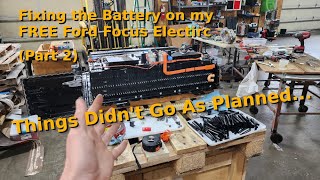
Typical fix: Replacement of the faulty contactor(s) inside the battery pack. Ford dealers will not do this; they will only replace the whole battery. This repair must be done by an independent EV specialist or a highly skilled DIYer with proper safety knowledge. A detailed owner write-up on the Ford Focus Electric Forum documents the process, which cost under $250 in parts. 🎬 See this step-by-step battery repair walkthrough
Est. part cost: $100-$300 - Weak or Failing 12V Auxiliary Battery 🟡 Medium Probability → Shop Vehicle Battery The Focus Electric can develop a parasitic drain that prematurely kills the 12V battery. A common culprit is the Telematics Control Unit (TCU) failing to enter its sleep mode, especially in areas with poor cellular reception. A weak 12V battery lacks the power to properly operate the vehicle's computers and engage the high-voltage contactors, mimicking a major HV system failure and triggering a 'Stop Safely Now' message.
How to confirm: Test the 12V battery with a digital multimeter or a battery load tester. A resting voltage below 12.4V indicates a weak battery that needs charging and testing. This should always be the first diagnostic step for any electronic gremlins on this car. If the battery is good, a parasitic draw test should be performed; some owners have traced the drain to the TCU by pulling its fuse (F1 in the under-hood fuse box).
Typical fix: Replace the 12V battery. If a parasitic drain is confirmed from the TCU, a firmware update may help, but some owners resort to permanently pulling the fuse.
Est. part cost: $150-$250 - Battery Energy Control Module (BECM) Failure ⚪ Low Probability → Shop Vehicle Battery The BECM can be damaged by voltage irregularities or suffer from internal software or hardware faults. This can lead to a no-start condition or a 'Stop Safely Now' warning.
How to confirm: A scan tool will be unable to communicate with the BECM (related code U1030), or it will report specific internal fault codes. TSB SSM 48243 notes that for 2012-2016 models, a failed self-test alone is not enough to condemn the module due to a software limitation, complicating diagnosis.
Typical fix: Replacement and reprogramming of the BECM. This must be done by a dealer or a specialist with the correct Ford diagnostic tools. In some cases, only a software re-flash is needed.
Est. part cost: $800-$1500
Rare But Worth Checking
- Corroded High-Voltage Connector: TSB 20-2140 also mentions that water ingress can cause corrosion on the lower high-voltage battery connector, leading to a 'Stop Safely Now' message. The fix involves cleaning or replacing the connector and applying a corrosion protection shield (Part No. CM5Z-9916A315-A).
- Damaged High-Voltage Wiring Harness: Though uncommon, physical damage to the orange high-voltage cables from road debris or improper service can cause an isolation fault or open circuit, triggering this code. One owner on YouTube documented a month-long diagnostic saga that ended with a wiring harness replacement after a battery swap failed to fix the issue.
- Poorly Seated HV Interlock Connector: Forum users report that the main high-voltage interlock connectors, including the service disconnects, can feel latched when they are not fully seated. This creates an open in the safety loop and triggers a 'Stop Safely Now' warning. Reseating these connectors firmly has resolved the issue for some owners.
Diagnosis Steps
- CRITICAL SAFETY WARNING: Do not proceed without proper training and safety equipment for high-voltage systems. Lethal voltages are present.
- Check and verify the health of the 12V auxiliary battery. Charge or replace as necessary. This is the most common and easiest thing to check first.
- Connect a Ford-specific scan tool (like FORScan) to read DTCs from all modules, especially the PCM and BECM. Document all codes and sub-codes. Look for specific codes like P0AA6 (isolation fault) or P0AA0/P0AA1 (contactor fault) to narrow the diagnosis.
- If no specific codes are present, check all HV interlock connectors for a secure fit. A loose connector can cause a P0A0A and trigger the 'Stop Safely Now' message.
- Following TSB 20-2140, carefully inspect the HV battery case for signs of internal coolant leakage by checking the inspection ports under the rubber grommet plugs.
- Inspect all high-voltage cable connections for looseness, damage, or corrosion, especially the main co
Parts You'll Likely Need
- High-Voltage Battery Assembly
(OEM #CM5Z-10B759-TARM)— This is the most common, though most expensive, fix, required when the battery suffers from an internal coolant leak or widespread cell failure. This is a remanufactured part from Ford.
Trusted brands: Motorcraft
OEM price range: $13800-$15000
Aftermarket price range: N/A - High-Voltage Battery Contactor
(OEM #Tyco Kilovac LEV200-400 (example, not official Ford part))— A stuck or failed contactor is a common cause of power delivery failure. Ford does not sell this part individually. Owners source them from electronics suppliers for DIY or specialist repair.
Trusted brands: Tyco / TE Connectivity
OEM price range: N/A
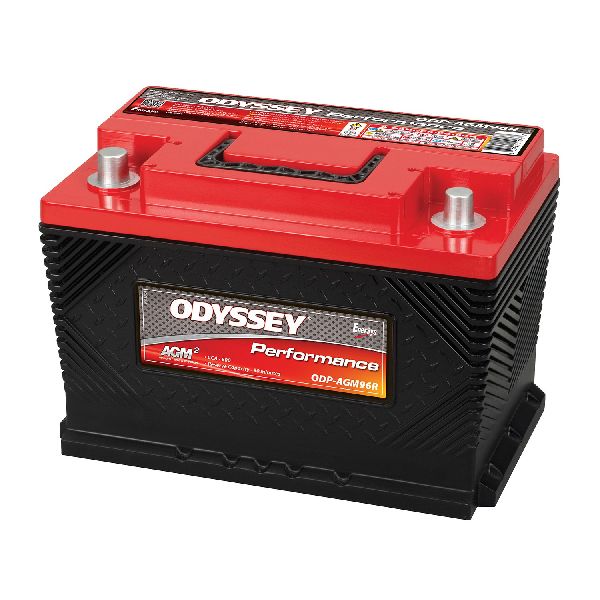
Aftermarket price range: $100-$300 - 12V AGM Auxiliary Battery
(OEM #BAGM-47H5-760)— The original 12V battery is prone to premature failure due to parasitic drains. A weak 12V battery is a primary cause of myriad electronic faults, including the 'Stop Safely Now' warning.
Trusted brands: Motorcraft, Duralast, DieHard
OEM price range: $200-$250
Aftermarket price range: $150-$220
Related Codes That Often Appear With This One
- P3000 — P3000 is a more general 'Battery Control System Malfunction' code. P3004 is likely a more specific version of this fault, and they often appear together to indicate a serious HV battery issue.
- P0A0A — This code indicates a 'High Voltage System Interlock Circuit' fault. It can be triggered along with P3004 if a high-voltage connector is not fully seated or a service disconnect is loose, as noted in TSB 17-0045.
- P0AA6 — This code stands for 'Hybrid/EV Battery Voltage System Isolation Fault' and is a strong indicator that the P3004 is caused by an internal HV battery coolant leak.
Technical Service Bulletins (TSBs) & Recalls
- TSB 20-2140: Addresses 'Stop Safely Now' message due to internal HV battery coolant leak or corroded lower HV battery connector.
- SSM 48243: Notes that a failed BECM self-test on 2012-2016 models is not sufficient on its own to condemn the module.
- TSB 17-0045: Relates to HV system interlock circuit faults (P0A0A).
- Recall 13S09 / TSB 13-9-19: An early recall to reprogram the Powertrain Control Module to address various issues including 'Stop Safely Now' warnings and 12V battery drain.
Platform-Specific Known Issues
- TSB 20-2140: Addresses the 'Stop Safely Now' message caused by internal HV battery coolant leaks or connector corrosion for 2012-2016 models.
- Recall 13S09: Ford issued a recall for early models (2012-2014) to reprogram the powertrain control module to address software flaws that could cause the 'Stop Safely Now' warning and loss of power.
Mechanic-Grade Diagnostic Values
- Individual Lithium-Ion Cell Voltage (FORScan PID: DEL_MOD_V) — expected: Nominal: 3.7V. Operating range is typically between 3.0V (discharged) and 4.2V (charged). All cells should be within < 0.05V of each other.. Failure: One or more cells reading significantly lower than others, or a cell that will not hold a charge, indicates failure or imbalance.
- High-Voltage Contactor Coil Resistance — expected: Approximately 11-13 Ohms.. Failure: An open circuit (infinite resistance) or a short (near zero resistance) indicates a failed coil.
- High-Voltage Contactor Closed-Contact Resistance — expected: Near-zero Ohms (typically less than 0.5 Ohms).. Failure: Higher resistance indicates pitted or oxidized contacts, which will generate heat and cause voltage drop under load.
Scan Tool Commands That Help
- FORScan: BECM Self Test — After clearing DTCs, run the BECM self-test to see if codes like P0AA1 (Contactor Stuck Closed) or P0AA0 (Contactor Circuit Failure) return immediately. This helps confirm if the fault is hard-set or intermittent.
- FORScan: Clear DTCs - BECM — Required to clear faults from the Battery Energy Control Module. After clearing, the ignition must be cycled OFF and then ON before the BECM will attempt to close the contactors again.
- FORScan: BECM Check Voltage Tests — A user on a forum reported using this function after a battery replacement to verify cell voltages were within the normal range, which helped diagnose a 'Battery Depleted' message.
Wiring & Ground Locations
- BECM Connector C4237a — The low-voltage connector on the Battery Energy Control Module, which is located inside the upper high-voltage battery assembly.. This is the primary connector for testing CAN bus communication (Pins 11 & 22) and power/ground signals directly at the module when diagnosing a potential BECM failure or communication code like U1030.
- High Voltage Service Disconnect (Behind Rear Seat) — Located behind the rear seat back, typically on the passenger side. It's a large, often orange, lever-actuated plug.. This is the main interlock for safely depowering the HV system. A poorly seated connector here will cause a P0A0A code and prevent the vehicle from starting, mimicking a major battery fault.
- High Voltage Service Disconnect (By Rear Tire) — A secondary HV disconnect is located near the passenger side rear tire.. This is another point in the high-voltage interlock loop. Corrosion or a poor connection here can also trigger a P0A0A and a no-start condition.
- G303 — Below the front driver's side scuff plate.. This is a major body ground point. While not directly part of the HV system, poor grounds can cause a wide range of unpredictable electronic issues in control modules that could potentially mimic other faults.
Real Owner Repair Stories
- Ford Focus Electric Forum user (2012 Ford Focus Electric) — Stop Safely Now message, P0AA6 (Isolation Fault), internal coolant leak in the lower HV pack.
❌ Tried (didn't work) Initial diagnosis confirmed a failed original 23 kWh battery.
✅ What actually fixed it The owner sourced a used 33.5 kWh battery set (from a 2017+ model) and performed the replacement themselves. The critical step was using FORScan to reprogram the BECM and PCM to be compatible with the larger capacity battery pack.
OEM Part Supersession History
H1FZ-10B759-G→CM5Z-10B759-TARM— The original part number was superseded by a remanufactured battery assembly.
Heads up: CM5Z-10B759-TARM is the official remanufactured replacement for the HV battery assembly.
Model Year Variations Within This Range
- 2012-2016 vs 2017-2018: The high-voltage battery capacity was increased for the 2017 model year. 2012-2016 models used a 23 kWh pack, while 2017-2018 models used a 33.5 kWh pack. While a physical swap is possible, it requires reprogramming the BECM and PCM to recognize the different capacity.
- 2012-2015: TSB 20-2140, addressing the internal coolant leak and lower connector corrosion, specifically covers vehicles built from September 15, 2011, through December 9, 2015, suggesting this manufacturing period is most prone to this specific failure mode.
Diagnostic Flowchart
Other Known Issues on This Vehicle
Issues unrelated to this code that are worth knowing about as an owner of this generation:
- Parasitic 12V Battery Drain 🔴 High → Shop Vehicle Battery — Very common across all model years. The Telematics Control Unit (TCU) is a frequent cause, as it fails to enter sleep mode. (Ref: TSB 13-9-19)
- Charging Port/Harness Failures 🟠 Medium — Moderately common. Issues include a faulty charge port locking pin actuator preventing DC fast charging, or corrosion/failure of the wiring harness between the port and the onboard charger, leading to a no-charge condition.
- Single-Speed Gearbox/Transmission Issues 🟡 Low — Uncommon, but notable. A recall (16V479000) was issued for some 2015-2016 models for a transmission differential pinion shaft that could fracture, causing a loss of power. Other owners note developing drivetrain 'lash' or clunking sounds over time. (Ref: 16V479000)
- HV Battery Degradation 🟠 Medium → Shop Vehicle Battery — Common, especially on earlier 23 kWh models. Beyond the catastrophic coolant leak failure, the batteries experience typical capacity loss with age and use, which can be monitored with tools like FORScan.
Used vs. New Parts: Buying Guide for This Vehicle
When a used part is the smart pick: For the P3004 code, a used part is often the ONLY economically viable option. A new OEM High-Voltage Battery from Ford can cost over $20,000, exceeding the car's value. A used battery from a salvage yard or a refurbished unit from a specialist is a common repair path. Likewise, if the fault is a single contactor, a used or new aftermarket contactor is a smart, component-level repair that avoids replacing the entire battery.
Donor-vehicle mileage cap: roughly under 80000 miles for the part to have meaningful remaining life.
What to inspect on the donor part:
- For a used HV battery, prioritize donors from vehicles with front-end collision damage, which implies the battery was functional at the time of the accident.
- Avoid buying a used battery from a vehicle that looks intact, as it may have been junked due to the very same internal coolant leak you are trying to fix.
- Before purchase, if possible, use FORScan to check the 'State of Health' (SoH) and individual cell voltages of the donor battery.
- Visually inspect the battery pack for any signs of external damage, corrosion, or leaking coolant around seams and connectors.
- Check the date code on the battery. A newer battery is generally preferable.
OEM-only on this vehicle (don't cheap out):
- Battery Energy Control Module (BECM) - Due to the need for specific programming and integration with the Ford ecosystem, using a new or dealer-programmed OEM module is highly recommended to avoid communication issues.
Aftermarket brands forum-validated for this vehicle:
- Greentec Auto: Mentioned in forums as a provider of remanufactured/upgraded 33.5 kWh battery packs with a warranty.
- TE Connectivity / Kilovac: The EV200 series contactors (e.g., EV200AAANA) are high-quality, commonly used replacements for failed OEM contactors inside the battery pack.
Brands owners have reported issues with on this vehicle:
- Unbranded/generic contactors: Given the high-current, safety-critical nature of the component, using unverified, no-name contactors is extremely risky.
- Ener-Z: A forum user had a mixed experience, stating that while the cells were balanced, they would not necessarily recommend them and noted packs may be built on-demand rather than stocked.
Real Owner Stories
Aggregated from forums and TSBs cited above. Mileages and costs reflect what owners reported in those sources.
2012-2018 Ford Focus Electric
Symptoms: The owner noticed the coolant level in the reservoir was slowly dropping with no visible external leaks; the vehicle was later diagnosed with an internal battery leak.
What fixed it: Complete replacement of the upper and lower high-voltage battery assemblies under warranty.
Source hint: https://www.myfocuselectric.com/threads/battery-capacity-after-replacement-due-to-coolant-leak.5668/
2012-2018 Ford Focus Electric
Symptoms: High-voltage contactor failure; a 'contactor stuck open' code was present, which may actually indicate a blown high-voltage fuse on the internal contactor board.
What fixed it: DIY replacement of the internal HV battery contactors.
Cost: $100-$250
Source hint: https://www.myfocuselectric.com/threads/upper-battery-pack-contactor-replacement.5947/
2012-2018 Ford Focus Electric
Symptoms: 12V battery discharging problems and parasitic drain issues.
What fixed it: Traced the drain to the Telematics Control Unit (TCU); some owners resolve this by pulling the TCU fuse (F1).
Source hint: https://the-paul-story.com/2018/04/28/12v-discharging-problems-on-the-ford-focus-electric/
Related OBD-II Codes
Frequently Asked Questions
Does TSB 20-2140 apply to my 2014 Ford Focus Electric?
My 2013 Focus Electric keeps losing power; is there a recall for this?
Can I replace just the high-voltage contactors if they fail, or do I need a whole battery?
Why is my 12V battery dying even though I drive the car daily?
How can I check for the common internal coolant leak mentioned in TSB 20-2140?
Is a failed BECM self-test enough to prove the module is bad on a 2015 model?
Helpful Videos
We Have This Part in Stock


The information in this article is provided for general reference and educational purposes only. Vehicle specifications, procedures, and part compatibility can vary by production date, trim level, and region. Always consult your vehicle's factory service manual and verify part numbers before purchasing or performing repairs. Safety-critical components such as airbags, seat belts, and braking systems should be installed by a qualified professional.
- Ford Focus:
- 🧭 Diagnostic Flowchart
- 🎬 Helpful Videos
- 🛍️ Shop This Part
- What's Unique About the 2012-2018 Ford Focus
- Symptoms You May Notice
- Most Likely Causes
- Rare But Worth Checking
- Diagnosis Steps
- Parts You'll Likely Need
- Related Codes That Often Appear With This One
- Technical Service Bulletins (TSBs) & Recalls
- Platform-Specific Known Issues
- Mechanic-Grade Diagnostic Values
- Scan Tool Commands That Help
- Wiring & Ground Locations
- Real Owner Repair Stories
- OEM Part Supersession History
- Model Year Variations Within This Range
- Other Known Issues on This Vehicle
- Used vs. New Parts: Buying Guide for This Vehicle
- Real Owner Stories
- 2012-2018 Ford Focus Electric
- 2012-2018 Ford Focus Electric
- 2012-2018 Ford Focus Electric
- Related OBD-II Codes
- Frequently Asked Questions
- 🎟️ Get 5% Off