

OBD-II Code P3014: Manufacturer-Specific Fault
What P3014 means, why it triggers, and how to fix it on your specific vehicle
- Verify your vehicle's exact P3014 definition before buying parts; it means 'Cylinder 4 Injector Circuit Open' on VW/Audi, 'Battery Block 4 Weak' on Toyota/Lexus, and 'DC Charge Port Stuck' on Chevy EVs.
- For Toyota and Lexus hybrids, fix P3014 by cleaning or replacing the high-voltage battery's copper bus bars, a $50 DIY repair that often prevents a $3,000 battery replacement.
- For VW and Audi vehicles, test the cylinder 4 fuel injector resistance with a multimeter; a reading of 'OL' (infinite resistance) confirms a dead internal coil requiring a $350-$700 injector replacement.
- Do not drive a VW or Audi with an active P3014 code, as the resulting cylinder 4 misfire dumps raw fuel into the exhaust, destroying the catalytic converter within 50 miles and adding $2,000 to your repair bill.
What Does P3014 Mean?
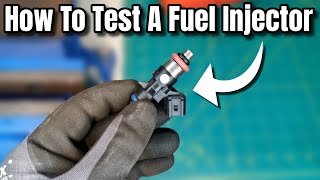
P3014 is a manufacturer-specific code, meaning its definition changes entirely depending on your vehicle. For Volkswagen and Audi models, it indicates an electrical problem with the fuel injector for cylinder #4, where the Engine Control Unit (ECU) detects an open circuit. For Toyota and Lexus hybrids, it signifies a weak battery block 🎬 Watch: Diagnosing a weak battery block 4 on a Prius in the high-voltage system. For Chevrolet EVs, it points to a stuck DC charging port lock. You must identify the correct definition for your exact vehicle before attempting a diagnosis.
Technical definition: The SAE/ISO definition varies by manufacturer. For Volkswagen/Audi, it is 'Cylinder 4 Fuel Injector Circuit Open'. For Toyota/Lexus hybrids, it is 'Battery Block 4 Becomes Weak'. For Chevrolet EVs, it is 'Hybrid/EV Battery DC Charging Port Lock Stuck Closed'. This guide covers these three primary variations.
Can I Drive With P3014?
No — Do Not Drive. Do not drive. If the cause is a fuel injector misfire, the engine runs rough and dumps raw fuel into the exhaust, destroying the expensive catalytic converter (a $1,000-$4,000 repair) within 50 miles. If it is a hybrid battery issue, you risk sudden power loss or stalling in traffic, creating a major safety hazard. For an EV charging issue, driving is unaffected but you cannot DC fast charge.
Common Causes
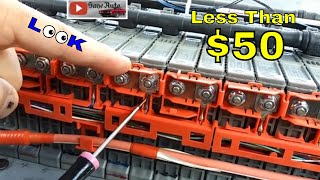
- Corroded Hybrid Battery Bus Bars or Terminals (Toyota/Lexus) (Very Common) — Corrosion on the copper bus bars connecting the battery modules creates high resistance, fooling the Battery ECU into thinking block 4 is weak. This is the most frequent and cheapest failure point 🎬 See how to fix a weak hybrid block for under $50 on aging hybrids.
- Faulty Cylinder 4 Fuel Injector (VW/Audi) (Very Common) — The internal electronic coil inside the fuel injector fails, creating an open circuit. This is the definitive reason for this code on non-hybrid VW and Audi vehicles.
- Degraded or Failed Hybrid Battery Module(s) (Toyota/Lexus) (Common) — After years of heat and cycling, one or both of the modules in Block 4 genuinely fail and can no longer hold a proper charge, triggering the P3014 code.
- Damaged Wiring Harness or Connectors (Common) — The electrical wiring going to the injector, or the plastic connector itself, is broken, corroded, or has a loose pin. This interrupts the electrical signal from the ECU.
- Faulty EV Charge Port Lock Actuator (Chevy EV) (Less Common) — The actuator that locks the DC fast charger in place gets stuck, triggering this code and physically preventing the insertion of a charging cable.
- Failed ECU Injector Driver (Rare) — The specific circuit inside the Engine Control Unit (ECU) that sends the ground signal to the cylinder 4 injector burns out. This requires ECU replacement or specialized repair.
Symptoms
- Check Engine Light or Check Hybrid System Warning — The ECU immediately triggers the Malfunction Indicator Lamp (MIL). On hybrids, this is accompanied by a 'Check Hybrid System' message and the master warning triangle.
- Rough Idle and Engine Vibration — With cylinder 4 not firing due to an injector fault, the engine is unbalanced and shakes noticeably, especially when stopped.
- Loss of Power and Engine Stalling — The vehicle feels sluggish. An injector fault forces the engine to run on fewer cylinders. A hybrid battery fault forces the ECU to limit power to protect the system, occasionally leading to a complete stall.
- Unable to DC Fast Charge — For affected Chevrolet EV models, the charge port will not accept or release a DC fast charger plug.
- Reduced Fuel Economy — The engine or hybrid system runs inefficiently, causing gas mileage to drop by 10% to 25%.
- Louder Engine Noise and Hybrid Fan Operation — On hybrids, a failing battery forces the gas engine to run constantly at higher RPMs. The battery cooling fan also runs continuously at maximum speed.
Diagnostic Flowchart
Tap your situation to follow the diagnostic path that matches what you're seeing on this code.
Common Fixes & Costs
- Clean or replace hybrid battery bus bars — Parts: $20-$50, Labor: $200-$500, ~3 hr book time (Advanced)
- Replace the faulty fuel injector — Parts: $100-$250, Labor: $250-$450, ~2.5 hr book time (Intermediate)
- Replace individual hybrid battery modules — Parts: $40-$80 per module, Labor: $300-$600, ~4 hr book time (Professional)
- Reset or Replace EV Charge Port Lock Actuator — Parts: $150-$450, Labor: $200-$400, ~2.5 hr book time (Intermediate)
- Repair damaged wiring or replace the connector — Parts: $10-$50, Labor: $150-$300, ~2 hr book time (Intermediate)
- Replace the Engine Control Unit (ECU) — Parts: $800-$1,500, Labor: $150-$300, ~1.5 hr book time (Professional)
Used vs. New Parts: Buying Guide
When a used part is worth it: For fuel injectors, a quality remanufactured part from a reputable supplier (like Bosch) offers new performance at a lower cost. For hybrid battery modules, tested, refurbished modules are the standard repair method.
Donor-vehicle mileage cap: roughly under 75000 miles for the part to have meaningful remaining life.
Donor quality checklist:
- For injectors, avoid cheap 'refurbished' parts which are just cleaned. Favor 'remanufactured' parts where internal wear components are replaced.
- For hybrid modules, buy from a specialist who performs capacity testing and balancing. Ask for proof of testing.
- Verify part numbers exactly. For hybrid modules, ensure they are from a compatible generation (e.g., Gen 2 vs Gen 3 Prius).
Decision logic:
- If The part is a high-pressure direct fuel injector (VW/Audi) → Favor new OEM or new from the OEM supplier (Bosch). The risk of a faulty used part causing engine damage is high.
- If The part is a hybrid battery module and budget is tight → A professionally refurbished and balanced module is an acceptable and common repair strategy.
- If The part has a known wear-out failure mode (e.g., injector coil, battery chemistry) → New is always the lowest-risk option if the budget allows.
Warranty tradeoff: Used/refurbished parts often have a 30-90 day warranty. Remanufactured parts typically offer a 1-year warranty. New OEM parts carry a 1-2 year warranty.
Worst-case if a used part fails: $400-$800 if a used part fails shortly after installation, primarily due to repeated labor costs.
What Happens If You Wait — Timeline
- 0-2 weeks: Injector Fault: Check Engine Light appears with P3014/P0304. Noticeable rough idle and vibration. Hybrid Fault: 'Check Hybrid System' light appears. Fuel economy dips. (MPG impact: 5-10%% · Added cost: $0-25 in wasted fuel)
- 2 weeks - 1 month: Injector Fault: Unburnt fuel overheats the catalytic converter. Smell of gasoline from exhaust is present. Hybrid Fault: Sluggish acceleration becomes frequent. Battery cooling fan runs constantly at high speeds. Vehicle enters 'limp mode' during heavy acceleration. (MPG impact: 10-25%% · Added cost: $50-200 in wasted fuel. High risk of catalytic converter damage begins.)
- 1-3 months: Injector Fault: Irreversible damage to the catalytic converter occurs. The internal substrate melts from extreme temperatures, causing an exhaust blockage. Hybrid Fault: The weak block (Block 4) is severely degraded, putting strain on adjacent blocks and accelerating their demise. Sudden loss of power is imminent. (MPG impact: 25-50%% · Added cost: $1,200-$4,200. Catalytic converter replacement is required. For hybrids, adjacent modules are now damaged, increasing repair complexity.)
- 3+ months: Injector Fault: Complete catalytic converter failure. Engine damage occurs as excess fuel washes lubricating oil from cylinder walls. Hybrid Fault: Catastrophic failure of the entire battery pack. The vehicle refuses to start or move. (MPG impact: >50% or vehicle is undrivable% · Added cost: $2,000-$5,000+. Engine repairs or a full hybrid battery replacement are necessary.)
Cost of Not Fixing It
- 0-1 month: For an injector fault: noticeable drop in fuel economy, rough engine performance, and failed emissions tests. For a hybrid fault: reduced MPG and intermittent 'Check Hybrid System' warnings. (Added cost: $50-$150 in wasted fuel.)
- 1-6 months: For an injector fault: Destruction of the catalytic converter due to raw fuel overheating it. For a hybrid fault: Progressive degradation of other battery modules, leading to frequent limp mode events. (Added cost: $1,200-$4,200 for catalytic converter replacement.)
- 6+ months: For an injector fault: Engine damage from fuel washing oil off cylinder walls. For a hybrid fault: Catastrophic failure of the entire high-voltage battery pack. (Added cost: $2,500+ for engine repairs or $2,000-$4,000 for a full hybrid battery replacement.)
Diagnosis Steps
- Confirm the Code and Vehicle-Specific Definition
Use an OBD-II scanner to read the trouble codes. Confirm P3014 is present. Critically, research the exact definition of P3014 for your vehicle's make and model before proceeding. Check for related codes like P0304 (Misfire) or P0A80 (Replace Hybrid Battery).
Tools: OBD-II Scanner, Vehicle Service Information (Beginner) - Check HV Battery Block Voltages (Toyota/Lexus)
Using an advanced scan tool or a dedicated hybrid app (like Dr. Prius), view live data for all battery block voltages. Block 4 will show a significantly lower voltage than the others under load. A difference greater than 0.5V between the highest and lowest block confirms a failing block or connection.
Tools: Advanced OBD-II Scanner or App (e.g., Dr. Prius) (Advanced) - Check Injector Resistance (VW/Audi)
With the engine off and injector disconnected, use a multimeter set to Ohms (Ω) to measure resistance across the two pins on the injector. A high-pressure GDI injector reads 1.5-3.5 Ohms. An infinite reading (OL) means the injector coil is open and the injector is dead.
Tools: Multimeter (Intermediate) - Visually Inspect the Relevant Area
For an injector fault, locate injector #4 and inspect its wiring and connector for breaks or melted plastic. For a hybrid battery fault, remove the safety covers and inspect the copper bus bars for green/white corrosion.
Tools: Flashlight, Basic hand tools, Insulated gloves (for hybrids) (Intermediate) - Test the Circuit with a Noid Light (VW/Audi)
Disconnect the harness from the injector and plug in a 'noid light'. Crank the engine. A flashing light indicates the ECU is sending a signal, confirming the wiring is good and the injector is the problem. No light means the problem is in the wiring or ECU.
Tools: Noid Light Set (Intermediate) - Load Test Individual Hybrid Battery Modules (Toyota/Lexus)
After identifying Block 4 as weak, disassemble the pack to access its two modules. Use a 12V 55W halogen headlight bulb to apply a load to each module for 2 minutes. A healthy module's voltage drops minimally, while a dead module's voltage plummets below 7.0V.
Tools: Basic hand tools, Multimeter, 12V 55W halogen bulb with wires (Professional) - Swap the Fuel Injector (VW/Audi)
Swap the fuel injector from cylinder 4 with cylinder 3. Clear the codes and run the engine. If the code changes to P3013 (cylinder 3), the fuel injector is confirmed faulty.
Tools: Basic hand tools (socket set, pliers) (Intermediate) - Check for Power and Ground (Wiring/Actuator Fault)
If a noid light didn't flash or an EV actuator isn't working, use a multimeter on the connector. One wire must have 12V power with the key on. If power is missing, trace the fuse or relay. If power is present but there is no ground pulse, the wiring to the ECU is broken.
Tools: Multimeter (Advanced) - PRO TIP: Perform an Injector Voltage Drop Test
Back-probe the ground (control) wire at the injector connector. Connect the positive lead to the battery positive. With the engine running, voltage should fluctuate rapidly. A steady 12V reading indicates the ECU is not grounding the circuit.
Tools: Multimeter with back-probe pins (Advanced) - Analyze Cumulative Delta Voltage (Toyota/Lexus)
Using the Dr. Prius app, monitor 'Cumulative Delta Voltage'. This tracks total voltage fluctuation for each block over time. A block with a consistently higher cumulative delta voltage is struggling to hold a charge, identifying failing blocks before they trigger a persistent code.
Tools: Dr. Prius App, compatible OBD-II adapter (Advanced)
When This Code Triggers (Freeze-Frame Conditions)
- Engine Coolant Temp: 170-220°F (Fully warmed up. The ECU runs injector circuit diagnostics once the engine reaches operating temperature.)
- RPM: 700-2500 (Idle or steady cruise. Injector faults often set at idle. Hybrid battery faults trigger during acceleration under load.)
- Engine Load: 20-60% (Light to moderate acceleration. This is when the demand on the fuel system or hybrid battery peaks.)
- Vehicle Speed: 0-60 mph (Varies widely. The fault is detected while stopped, during city driving, or at highway speeds depending on the specific failure.)
Related Codes
- P0304 — Means 'Cylinder 4 Misfire Detected'. It appears alongside an injector-related P3014 because an injector with an open circuit cannot deliver fuel. P0304 is the symptom, while P3014 is the cause. Diagnose P3014 first.
- P0204 — The generic OBD-II code for 'Cylinder 4 Injector Circuit Malfunction'. P3014 is the manufacturer-specific version. They point to the exact same electrical fault.
- P3000 — Means 'Battery Control System Malfunction'. A general code accompanied by specific codes like P3014 to pinpoint the problem area within the HV battery system.
- P0A80 — Means 'Replace Hybrid Battery Pack'. P3014 tells you which block is failing, while P0A80 indicates the overall pack health is compromised.
Climate & Environmental Factors
- High Humidity / Salty Air: Significantly accelerates corrosion of the copper bus bars in Toyota/Lexus hybrid batteries, making P3014 much more common in coastal climates. The copper oxidizes, creating high resistance.
- Extreme Cold: Exacerbates issues with aging hybrid battery modules. A weak module's voltage drops significantly in cold temperatures, pushing it below the threshold that triggers the P3014 fault code.
How to Talk to a Mechanic About This Code
Say this: "{'vw_audi': "I have a P3014 code on my [Year, Model], which I understand is for an 'injector circuit open' on cylinder 4. I'd like to book a diagnostic to confirm if the issue is the injector, the wiring, or the ECU driver. Please start with a resistance check on the injector and a noid light test on the harness.", 'toyota_lexus': "I have a P3014 code on my [Year, Model] hybrid, which I know means 'battery block 4 is weak'. I'd like to schedule a diagnostic, specifically to check the block voltages under load and visually inspect the battery bus bars for corrosion before we discuss replacing modules or the whole pack.", 'chevy_ev': "My Chevy Bolt is showing a P3014 and I can't DC fast charge. I believe this relates to the charge port lock actuator per TSB 22-NA-040. I'd like to schedule service to have the bulletin procedure performed."}"
This language shows you have done your research. It directs the technician to the correct diagnostic path for your vehicle, preventing them from wasting time on incorrect assumptions, like checking injectors on a Prius. It helps avoid unnecessary upsells.
Avoid saying:
- 'My check engine light is on, can you look at it?' (This is too vague and invites an expensive diagnostic process).
- 'I think I need a new fuel injector.' (Don't diagnose the part, describe the code and symptoms. It might be a simple wiring issue).
- 'Just fix whatever is wrong.' (This gives the shop a blank check to perform any repairs they see fit).
Questions to ask before authorizing the repair:
- For a VW/Audi: What was the resistance reading on the injector? Did the noid light flash?
- For a Toyota/Lexus: Can you show me the printout of the block voltage differences from the scan tool? Did you find corrosion on the bus bars?
- For any repair: Is this repair covered by any open warranty extensions or service campaigns?
- What is the warranty on the proposed parts and labor?
Where to Take It: Dealer vs Independent vs Chain
- Dealer:
Best for Chevy EV due to TSBs. A good, but expensive, option for VW/Audi. The worst choice for an out-of-warranty Toyota hybrid, as they will quote a full battery replacement for thousands.
Best for: Vehicles under warranty (powertrain, emissions, or EV component)., Complex, manufacturer-specific issues requiring proprietary software (like the Chevy Bolt charge port lock reset)., Checking for and performing TSBs and recalls.
Downsides: Highest labor rates., Dealers default to replacing large assemblies (e.g., entire hybrid battery) instead of smaller components (e.g., individual modules or bus bars). - Independent Shop:
Excellent choice if you find the right specialist. A German auto specialist is perfect for the VW/Audi injector issue. A dedicated hybrid specialist is the #1 choice for the Toyota/Lexus battery issue.
Best for: Out-of-warranty vehicles where cost is a major factor., Common repairs with known solutions.
Downsides: Quality and expertise vary dramatically. A general shop may misdiagnose P3014 on a hybrid., May lack expensive, dealer-level diagnostic software for the newest models. - Chain Shop:
AVOID. This code is too complex and manufacturer-specific for a typical chain shop. There is a high risk of misdiagnosis.
Best for: Simple, routine maintenance like oil changes, tires, and brakes.
Downsides: Technician skill and experience are highly variable., High pressure to upsell services leads to misdiagnosis or unnecessary repairs., Lack the specialized knowledge for hybrid battery or advanced electrical diagnostics.
When to Walk Away From the Repair
If the estimated repair cost exceeds 50% of the car's current private-party value, seriously consider whether the investment is worthwhile.
- Car worth $5000, fix is $3500: Walk Away. A $3,500 hybrid battery replacement on a $5,000 Prius is a poor investment. The repair is 70% of the car's value.
- Car worth $8000, fix is $600: Fix It. A $600 fuel injector repair on an $8,000 VW GTI is well below the threshold and restores full function.
- Car worth $4000, fix is $400: Fix It. A $400 bus bar cleaning service on a $4,000 older Prius is a smart investment to keep a reliable car on the road.
What Scan Tool You Need for This Code
Minimum: A tool that reads manufacturer-specific codes and live data. A basic $20 code reader that only pulls generic 'P0' codes is not sufficient for P3014.
A basic scanner might not show P3014 at all, or it shows it without the specific definition. For a Prius, it is useless without the ability to display live voltage for each individual battery block.
Budget: BlueDriver Pro / Panlong Bluetooth OBDII with Dr. Prius App (~$15-100) — For Toyota/Lexus, a compatible Bluetooth adapter ($15-$30) paired with the Dr. Prius app provides dealer-level insight into battery block voltages. For VW/Audi, the BlueDriver ($100) reads the specific code and views live data.
Mid-range: Foxwell NT510 Elite / Autel MaxiCheck MX808 (~$180-350) — These handheld scanners offer deep manufacturer-specific diagnostics. They read Toyota hybrid battery block voltages directly without a phone app. For VW/Audi, they access advanced data and perform basic functional tests.
How to Clear the Code After You Fix It
- Use an OBD-II scan tool to clear the fault codes.
- Perform a complete drive cycle to allow the vehicle's readiness monitors to run.
- Check the readiness monitor status with the scan tool to confirm they are 'Ready' before an emissions test.
Drive cycle (~30 minutes): A generic drive cycle includes a cold start, 2-5 minutes of idling, 10-15 minutes of mixed city/highway driving (including steady speeds between 40-60 mph), and allowing the vehicle to cool down.
Readiness monitors affected: Catalyst Monitor, Oxygen (O2) Sensor Monitor, Evaporative (EVAP) System Monitor
Before emissions retest: drive at least 100 miles to fully set monitors.
Watch out for:
- Clearing codes resets all emissions readiness monitors to 'Not Ready', causing an immediate smog test failure.
- The code returns immediately if the underlying problem (e.g., bad injector, corroded bus bar) is not correctly repaired.
- The EVAP monitor requires the fuel tank to be between 1/4 and 3/4 full to run.
Will This Fail Emissions / State Inspection?
Yes — this code typically fails an OBD-II emissions inspection.
- California: An active P3014 code causes an automatic failure. After the repair, all readiness monitors must be set to 'Ready', which requires driving 100+ miles.
- New York: The NYS DMV vehicle inspection includes an OBD-II scan. An illuminated Check Engine Light from a P3014 code is an automatic failure.
- Texas: In counties requiring emissions testing, a vehicle with an active P3014 code fails the OBD portion of the inspection.
Most Commonly Affected Vehicles
- Volkswagen Jetta, Golf, GTI (2005-2015) — Models with the 2.0T and 2.5L engines are noted for injector and wiring harness issues causing the 'Injector Circuit Open' fault.
- Audi A3, A4, TT (2006-2016) — Models equipped with the 2.0T FSI/TSI engines commonly report the 'Injector Circuit Open' fault.
- Toyota Prius (2004-2015) — On these hybrid models, P3014 indicates 'Battery Block 4 Becomes Weak', an issue related to the high-voltage battery, often caused by corroded bus bars.
- Chevrolet Bolt EV (2019-2022) — On these models, P3014 indicates 'Hybrid/EV Battery DC Charging Port Lock Stuck Closed'. Refer to GM service bulletin 22-NA-040.
- Chevrolet Spark EV (2014-2015) — These models set P3014 when the DC charge port lock gets stuck. Refer to GM TSB PI1271.
- Lexus GS 450h, RX 400h/450h, CT 200h (2006-2015) — Similar to the Prius, Lexus hybrids use P3014 to signify a fault with a specific block in the hybrid battery pack.
Manufacturer-Specific Notes
- Volkswagen/Audi: The 'Open Circuit' definition proves the problem is purely electrical (bad injector coil, broken wire) rather than mechanical (clogged injector). Some 2.0T engines had an extended warranty for fuel injectors up to 10 years/120,000 miles.
- Toyota/Lexus: For hybrids, P3014 means 'Battery Block 4 Becomes Weak'. Do not diagnose the fuel system. The most common cause is corrosion on the battery bus bars, not a failed battery module.
- Chevrolet: On the Bolt EV and Spark EV, P3014 means 'Hybrid/EV Battery DC Charging Port Lock Stuck Closed'. This is a charging system issue. See GM TSBs PI1271 and 22-NA-040 for diagnostic procedures.
Real Owner Stories
2010 Toyota Prius at 155K miles with P3014 & P0A80
The 'Check Hybrid System' light and red triangle illuminated. The car felt sluggish, and the battery level on the display dropped to one bar rapidly.
What they tried:
- Ignored the light initially, but it became persistent.
- A local shop quoted $3,500 for a new hybrid battery pack.
- Researched online forums and learned about bus bar corrosion.
Outcome: Following online guides, the owner removed the hybrid battery, disassembled the safety cover, and found heavy green and white corrosion on the copper bus bars for block 4. They cleaned all bus bars and terminals with a vinegar solution and a wire brush, applied dielectric grease, and reassembled. Total cost was under $50. The codes were cleared and did not return.
Lesson: For Toyota/Lexus hybrids, P3014 is frequently caused by corroded bus bar connections, not failed battery modules. This is an inexpensive DIY fix for those trained in high-voltage safety procedures.
2013 VW GTI (2.0T) at 80K miles with P3014 & P0304
Check Engine Light illuminated, engine idled roughly, and the car shook. Acceleration was severely limited.
What they tried:
- Swapped the coil pack from cylinder 4 to cylinder 3. The misfire code (P0304) did not move.
- Replaced the spark plug for cylinder 4. The problem remained.
- Took the vehicle to an independent VW specialist.
Outcome: The shop confirmed an 'open circuit' reading on the cylinder 4 fuel injector using a multimeter. They replaced the single faulty injector. The total repair cost was $450 ($120 for the part, $330 for labor and diagnosis). The rough idle and codes were resolved.
Lesson: The code P3014 'Injector Circuit Open' is a specific electrical fault. While misfire symptoms (P0304) mimic a bad plug or coil, P3014 points directly to the injector or its wiring. Diagnosing the specific code first saves money on unnecessary parts.
2019 Chevy Bolt EV at 40K miles with P3014
Arrived at a DC fast charging station and was unable to plug the charger into the car. The charge port was physically blocked. Level 2 charging at home worked fine.
What they tried:
- Tried multiple DC fast chargers, but the plug would not insert.
- Searched Bolt EV forums and found others with a 'stuck charge port lock'.
- Disconnected the 12V battery to reset the car, which temporarily worked before the problem reoccurred.
Outcome: The owner took the vehicle to a Chevrolet dealer. The technician found GM service bulletin 22-NA-040. They used a dealer scan tool to command the lock actuator to cycle, which unstuck it permanently. The repair was covered under warranty.
Lesson: On a Chevy Bolt, P3014 indicates a fault with the DC fast charge port lock, not a powertrain issue. Always check for Technical Service Bulletins (TSBs) as a software reset or specific dealer procedure often exists.
How to Prevent This Code From Triggering
- For Toyota/Lexus Hybrids: Proactively clean or replace battery bus bars (Once every 5 years or 60,000 miles) — Original copper bus bars corrode from humidity and electrolyte fumes, creating high resistance that triggers weak block codes like P3014. Replacing them with nickel-plated copper bars is a permanent preventative fix.
- For VW/Audi GDI Engines: Use a PEA-based fuel system cleaner and Top Tier gasoline (Every 5,000 miles) — Gasoline Direct Injection (GDI) injectors build up carbon deposits. Polyetheramine (PEA) detergents dissolve these deposits, maintaining a clean injector and proper spray pattern, which reduces mechanical strain on the injector coil.
- For Toyota/Lexus Hybrids: Keep the hybrid battery cooling fan and filter clean (Annually or every 15,000 miles) — A clogged battery cooling fan filter restricts airflow, causing battery modules to run hotter. Sustained high temperatures accelerate the chemical degradation of NiMH battery modules, leading to premature failure.
Frequently Asked Questions
What is the most common misdiagnosis for P3014?
Applying the definition from one brand to another. For example, a technician might test fuel injectors on a Toyota Prius, when the code actually points to the hybrid battery. Always verify the code's meaning for your specific make and model before replacing parts.
I have a Prius with P3014 and cleaned the bus bars, but the code came back. What's next?
If cleaning bus bars fails, either the modules in block 4 are dead or the entire pack is imbalanced. Replacing one module without professionally balancing the pack causes the new module to drain quickly, triggering the code again. Load test individual modules or recondition the full pack.
What does 'Block 4' mean on my Toyota/Lexus hybrid?
The high-voltage battery pack contains many individual modules grouped into 'blocks' for computer monitoring. P3014 specifically points to a voltage drop or high resistance detected in the 4th block in the series.
What does the 'Circuit Open' part of the definition mean?
It means there is a physical break in the electrical path between the engine computer and the fuel injector. No electricity can flow to activate the injector, usually due to a dead internal coil or a severed wire.
Can I just replace the one bad injector, or should I replace all of them?
You can replace only the single faulty injector to resolve the code. However, if your vehicle has over 100,000 miles, replacing all injectors simultaneously saves on future labor costs since the intake manifold is already removed.
Could a bad spark plug cause a P3014 code?
No. A bad spark plug causes a misfire code (P0304), but it will not trigger an injector circuit code like P3014, which is strictly an electrical fault.
Is it safe to drive with a P3014 code?
Do not drive. An injector fault dumps raw fuel into the exhaust, destroying the catalytic converter, while a hybrid battery fault causes sudden power loss in traffic.
Key Takeaways
- Verify your vehicle's exact P3014 definition before buying parts; it means 'Cylinder 4 Injector Circuit Open' on VW/Audi, 'Battery Block 4 Weak' on Toyota/Lexus, and 'DC Charge Port Stuck' on Chevy EVs.
- For Toyota and Lexus hybrids, fix P3014 by cleaning or replacing the high-voltage battery's copper bus bars, a $50 DIY repair that often prevents a $3,000 battery replacement.
- For VW and Audi vehicles, test the cylinder 4 fuel injector resistance with a multimeter; a reading of 'OL' (infinite resistance) confirms a dead internal coil requiring a $350-$700 injector replacement.
- Do not drive a VW or Audi with an active P3014 code, as the resulting cylinder 4 misfire dumps raw fuel into the exhaust, destroying the catalytic converter within 50 miles and adding $2,000 to your repair bill.
Helpful Videos

Shop the Parts Behind P3014
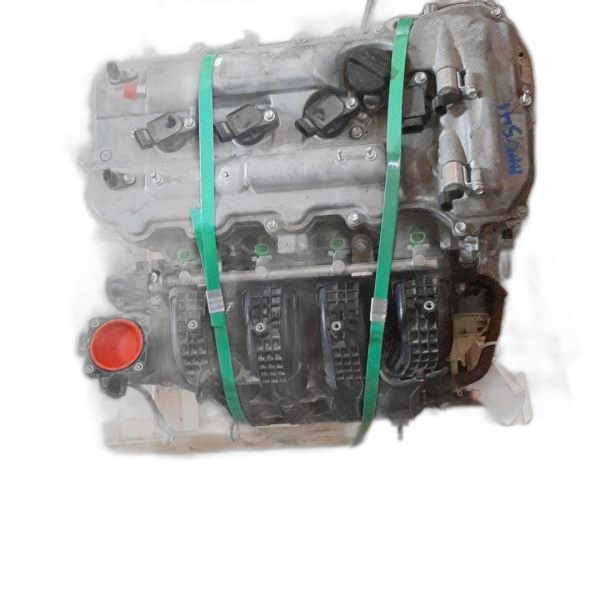
Below are the parts most often responsible for code P3014, ranked by how frequently each one is the actual culprit (per the diagnosis above). Tap any to see what we have for your vehicle.



The information in this article is provided for general reference and educational purposes only. Vehicle specifications, procedures, and part compatibility can vary by production date, trim level, and region. Always consult your vehicle's factory service manual and verify part numbers before purchasing or performing repairs. Safety-critical components such as airbags, seat belts, and braking systems should be installed by a qualified professional.
- 🧭 Diagnostic Flowchart
- 🎬 Helpful Videos
- 🛍️ Shop This Part
- What Does P3014 Mean?
- Can I Drive With P3014?
- Common Causes
- Symptoms
- Common Fixes & Costs
- Used vs. New Parts: Buying Guide
- What Happens If You Wait — Timeline
- Cost of Not Fixing It
- Diagnosis Steps
- When This Code Triggers (Freeze-Frame Conditions)
- Related Codes
- Climate & Environmental Factors
- How to Talk to a Mechanic About This Code
- Where to Take It: Dealer vs Independent vs Chain
- When to Walk Away From the Repair
- What Scan Tool You Need for This Code
- How to Clear the Code After You Fix It
- Will This Fail Emissions / State Inspection?
- Most Commonly Affected Vehicles
- Manufacturer-Specific Notes
- Real Owner Stories
- 2010 Toyota Prius at 155K miles with P3014 & P0A80
- 2013 VW GTI (2.0T) at 80K miles with P3014 & P0304
- 2019 Chevy Bolt EV at 40K miles with P3014
- How to Prevent This Code From Triggering
- Frequently Asked Questions
- What is the most common misdiagnosis for P3014?
- I have a Prius with P3014 and cleaned the bus bars, but the code came back. What's next?
- What does 'Block 4' mean on my Toyota/Lexus hybrid?
- What does the 'Circuit Open' part of the definition mean?
- Can I just replace the one bad injector, or should I replace all of them?
- Could a bad spark plug cause a P3014 code?
- Is it safe to drive with a P3014 code?
- Key Takeaways
- 🎟️ Get 5% Off