

OBD-II Code P3032: A Manufacturer-Specific Fault Guide
What P3032 means for Ford, Jeep, VW, and others, why it triggers, and how to fix it for good
- P3032 is a manufacturer-specific code: on Ford vehicles it indicates a failed Fuel Pump Driver Module (FPDM), while on Jeep and Chrysler vehicles it points to an internal PCM software or hardware fault.
- For Ford trucks and SUVs, visually inspect the FPDM located above the spare tire; severe galvanic corrosion causes 90% of these failures and requires a $50-$120 aftermarket replacement.
- If you own a 2012-2021 Jeep, Dodge, or Chrysler, do not replace any sensors; check for TSB #18-084-20 REV. A, as the fix is almost always a $150-$250 dealership PCM software update.
- Never buy a used Ford FPDM; always install a new aftermarket 'OE FIX' module that includes rubber standoffs to create an air gap, permanently preventing future corrosion against the steel frame.
What Does P3032 Mean?
P3032 is a manufacturer-specific code. For most Ford, Lincoln, and Mercury vehicles, it means the Powertrain Control Module (PCM) detects a problem with the Fuel Pump Driver Module (FPDM). This module controls fuel pump speed; when it fails, the engine starves for fuel. For Jeep, Dodge, and Chrysler, it indicates an internal PCM barometric pressure fault. For Volkswagen, it points to a throttle body adaptation issue.
Technical definition: Because P3032 lacks a universal SAE definition, its meaning is brand-dependent. For Ford, it is "Fuel Pump Driver Module (FPDM) circuit malfunction." For Jeep, Dodge, and Chrysler, it is "Barometric Pressure Sensor Performance," indicating the PCM's internal pressure reading is illogical. For Volkswagen, it translates to "Idle Speed Control Throttle Position 2 Adaptation Malfunction."
Can I Drive With P3032?
No — Do Not Drive. This fault causes the engine to stall without warning or prevents it from starting entirely. Stalling at highway speeds leads to a complete loss of vehicle control. Do not drive the vehicle until the issue is resolved.
Common Causes
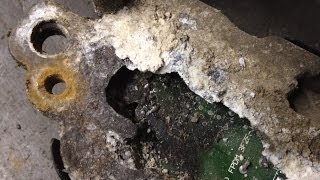
- Failed Fuel Pump Driver Module (FPDM) (Ford) (Very Common) — The module is the most common failure point on Ford vehicles. Bolted directly to the steel frame, galvanic corrosion occurs between the module's bare aluminum housing and the steel. This traps moisture and road salt, eating through the housing and destroying the internal electronics.
- Faulty PCM or Software (Jeep/Chrysler) (Very Common) — For Jeep, Dodge, and Chrysler vehicles, the barometric pressure sensor is integrated inside the PCM. A P3032 code indicates an internal PCM hardware fault or a software glitch requiring a dealership reflash.
- Corroded Wiring or Poor Ground Connection (Common) — Electrical connectors and wires leading to the FPDM are exposed to harsh under-vehicle environments. Corrosion on pins, chafed wires, or a loose ground connection causes a complete loss of signal or power to the module.
- Blown FPDM or Fuel Pump Fuse (Less Common) — A short circuit in the module or wiring blows the corresponding fuse, cutting all power to the fuel pump control system. A shorted FPDM is usually the root cause of the blown fuse.
- Short in the 5-Volt Reference Circuit (Jeep/Chrysler) (Less Common) — Chrysler products share a 5-volt reference circuit across multiple sensors. If one sensor (like oil pressure or accelerator pedal) shorts internally, it pulls the entire circuit's voltage down, causing the PCM's internal barometric sensor to generate a P3032 code.
- Faulty Inertia Switch (Ford) (Less Common) — The inertia switch cuts power to the fuel pump in a collision. If partially tripped by a severe pothole or failing internally, it intermittently cuts power, perfectly mimicking a bad FPDM.
- Failing In-Tank Fuel Pump (Rare) — A failing fuel pump draws excessive current, which damages the FPDM over time. The symptoms of fuel starvation from a bad pump are identical to a bad module.
Symptoms
- Engine cranks but will not start — The starter turns the engine over, but it never fires because the fuel pump delivers zero fuel pressure.
- Engine stalls while driving — The engine shuts off unexpectedly, often after hitting a bump that jostles a failing module or corroded wiring.
- Hesitation, sputtering, or reduced power — When accelerating or climbing hills, the engine sputters and feels sluggish because the FPDM fails to command the extra fuel required under load.
- Reduced fuel economy (also visible on scanner) — An improperly controlled fuel pump or a faulty PCM barometric reading causes inefficient fuel delivery, forcing the engine to run too rich or too lean.
Diagnostic Flowchart
Tap your situation to follow the diagnostic path that matches what you're seeing on this code.
Common Fixes & Costs
- Replace Fuel Pump Driver Module (FPDM) — Parts: $50-$120, Labor: $60-$150, ~0.5 hr book time (DIY)
- Perform PCM Software Update (Reflash) — Parts: $0, Labor: $150-$250, ~1.0 hr book time (Professional)
- Replace Powertrain Control Module (PCM) — Parts: $400-$1000, Labor: $150-$300, ~1.0 hr book time (Professional)
- Repair Wiring or Replace Connector — Parts: $15-$50, Labor: $100-$200, ~1.5 hr book time (Intermediate)
- Replace Electronic Throttle Body (VW) — Parts: $150-$400, Labor: $100-$200, ~1.0 hr book time (Intermediate)
- Replace In-Tank Fuel Pump Assembly — Parts: $150-$350, Labor: $325-$500, ~3.2 hr book time (Professional)
DIY vs Professional
- Replace Fuel Pump Driver Module (FPDM) — Beginner: Yes
Tools: Socket set (8mm and 10mm), wrench, spare tire removal tool. - Perform PCM Software Update (Reflash) — Beginner: No
Tools: Manufacturer-specific diagnostic tool (wiTECH), stable battery power supply. - Replace Powertrain Control Module (PCM) — Beginner: No
Tools: Basic hand tools, manufacturer-specific scan tool for programming. - Repair Wiring or Replace Connector — Beginner: No
Tools: Wire strippers, crimpers, heat shrink tubing, soldering iron, multimeter. - Replace In-Tank Fuel Pump Assembly — Beginner: No
Tools: Floor jack, jack stands, fuel line disconnect tools, socket set.
Used vs. New Parts: Buying Guide
When a used part is worth it: Buying a used Ford FPDM never makes sense. The original design is flawed, and a used part is likely near failure from corrosion. Always buy a new aftermarket part with an improved design.
Donor-vehicle mileage cap: roughly under 20000 miles for the part to have meaningful remaining life.
Donor quality checklist:
- Avoid used FPDMs entirely.
- If buying a used PCM, match part numbers exactly and ensure no flood damage.
- Verify the seller offers at least a 90-day warranty.
Decision logic:
- If The part is a Ford FPDM → Buy a new aftermarket 'OE FIX' style part with standoffs for $50-$80 to prevent future corrosion.
- If The part is a PCM and budget is extremely tight → Buy a used PCM from a reputable recycler, but factor in the cost of dealership programming.
- If The part is electronic and critical for vehicle operation → Favor new or professionally remanufactured parts with a 1-year warranty.
Warranty tradeoff: Used parts carry 30-90 day warranties. New aftermarket parts offer 1-year to lifetime warranties. OEM parts carry 1-2 year warranties but cost significantly more.
Worst-case if a used part fails: $300-$600 if a used PCM fails, requiring repeat labor for removal, installation, and programming.
What Happens If You Wait — Timeline
- 0-1 month: Ford: Occasional hesitation or a single stall. Jeep: Check Engine Light appears with P3032, but no noticeable symptoms. (MPG impact: 0-5%% · Added cost: $0-$50 in wasted fuel.)
- 1-4 months: Ford: Stalling becomes frequent, especially when warm. Jeep: Fuel economy drops noticeably and vehicle feels sluggish. (MPG impact: 5-10%% · Added cost: $150-$400 for towing and emergency diagnostics.)
- 4-8 months: Ford: Frequent crank-no-start conditions. Jeep: Incorrect air/fuel mixtures stress the catalytic converter and fail emissions tests. (MPG impact: 10-15%% · Added cost: $200-$500 in wasted fuel and failed test fees.)
- 8+ months: Ford: Complete FPDM failure; truck will not start. Jeep: Sustained incorrect mixtures destroy the catalytic converter. Severe PCM failure causes erratic transmission shifting. (MPG impact: 15-25%% · Added cost: $1200-$3000 for catalytic converter or transmission repairs.)
Cost of Not Fixing It
- Immediate: Sudden engine stalling at any speed or a complete no-start condition, leaving you stranded. (Added cost: $150-$400 (Towing and emergency diagnostic fees))
- 0-3 months: For Jeep/Chrysler, a faulty PCM BARO sensor causes incorrect air/fuel mixtures, dropping fuel economy by 5-15% and failing emissions tests. (Added cost: $50-$200 (Wasted fuel, failed test fees))
- 6+ months: Consistently running with an incorrect air/fuel mixture overheats and destroys the catalytic converter. A bad PCM also causes transmission damage from erratic shifting. (Added cost: $1200-$3000 (Catalytic converter replacement, transmission repair))
Diagnosis Steps
- Check for TSBs and Recalls (Jeep/Chrysler)
Before any diagnosis on a Jeep, Dodge, or Chrysler, check for Technical Service Bulletins. TSB #18-084-20 REV. A indicates a PCM software update is the required fix. Also check for Safety Recall U87 (NHTSA 18V-524), which addresses PCM failures causing stalling in 2018-2019 models.
Tools: Internet access, VIN (Beginner) - Visually Inspect the FPDM (Ford)
On Ford trucks and SUVs, the FPDM sits on a frame crossmember above the spare tire. Lower the spare tire and look for obvious corrosion, cracks in the aluminum housing, or a white powdery substance indicating water intrusion.
Tools: Spare tire removal tools, flashlight (Beginner) - Check the FPDM/Fuel Pump Fuse
Locate the fuse box and inspect the fuel pump/FPDM fuse. If blown, replace it. If it blows immediately, a short circuit exists, likely inside the FPDM. For 2009-2014 F-150s, inspect fuse #27 specifically for melting.
Tools: Owner's manual, fuse puller (Beginner) - Inspect FPDM Wiring and Ground
Unplug the FPDM electrical connector. Inspect pins on both the module and harness for green corrosion or moisture. Check wires for chafing against the frame. Verify the ground wire attachment point is tight and rust-free.
Tools: Flashlight (Beginner) - Test for Power and Ground at FPDM (Ford)
With the key ON, use a multimeter to verify battery voltage at the power supply wire (typically pin 5) and a solid ground connection (typically pin 3). Without power and ground, the module cannot operate.
Tools: Multimeter, vehicle-specific wiring diagram (Intermediate) - [PRO TIP] Compare MAP vs. BARO PIDs (Jeep/Chrysler)
Using a scan tool, view live data for Manifold Absolute Pressure (MAP) and Barometric Pressure (BARO) with the Key On, Engine Off (KOEO). Values must be nearly identical (within 1-2 kPa). A BARO reading that differs significantly indicates an internal PCM fault.
Tools: OBD-II Scan Tool with Live Data (Advanced) - [PRO TIP] Test the PCM Command Signal (Ford)
Set a multimeter to Duty Cycle (%). Back-probe the Fuel Pump Control signal wire at the FPDM connector (often pin 6). Crank the engine. A 50% reading is normal. A 75% reading means the FPDM detects a pump-side fault. A 100% or 0% reading indicates a wiring or PCM issue.
Tools: Multimeter with Duty Cycle, back-probe pins (Advanced) - [PRO TIP] Test the 5-Volt Reference Circuit (Jeep/Chrysler)
Back-probe a 5V reference wire on an accessible sensor (like the MAP sensor). With the key ON, it should read 4.8V to 5.2V. If voltage is low (0-3V), unplug other sensors sharing the circuit one by one. When voltage returns to 5V, the last unplugged sensor is shorted.
Tools: Multimeter, wiring diagram, back-probe pins (Advanced) - [PRO TIP] Check Fuel Pressure (Ford)
Connect a fuel pressure gauge to the fuel rail schrader valve. Modern returnless systems (2004+ F-150) should read 35-45 PSI at idle. Zero pressure, after confirming the FPDM has power and ground, points to a failed in-tank fuel pump.
Tools: Fuel pressure gauge kit (Advanced) - Test the Inertia Switch (Ford)
Locate the fuel pump inertia switch in the passenger footwell or trunk. Ensure the button is pressed down. Perform a voltage drop test across the switch with the fuel pump running; a drop exceeding 0.2V indicates internal resistance.
Tools: Multimeter (Intermediate)
When This Code Triggers (Freeze-Frame Conditions)
- Engine Coolant Temp: 170-210°F (The fault is most often detected when the engine is fully warmed up, a prerequisite for many PCM self-tests.)
- RPM: 700-2500 (Triggers at 0 RPM for a hard failure (no start), or during steady cruising when the PCM actively commands fuel pressure changes.)
- Engine Load: 20-60% (Sets under normal driving conditions rather than wide-open throttle. Intermittent FPDM issues appear under light to moderate load.)
- Vehicle Speed: 0 mph or 40-65 mph (A hard FPDM failure sets the code at 0 mph. An intermittent circuit fault or a Jeep BARO plausibility fault is caught during steady highway driving.)
Related Codes
- U0109 — Means 'Lost Communication With Fuel Pump Control Module.' Confirms the problem is the FPDM, its connector, or wiring.
- P1233 — A Ford-specific code for 'Fuel Pump Driver Module Offline.' A strong indicator of a module or wiring failure.
- P0607 — Means 'Control Module Performance.' On Jeep/Chrysler, this code alongside P3032 reinforces the diagnosis of an internal PCM failure.
- P2227 — Means 'Barometric Pressure Circuit Performance.' Seeing this with P3032 on Chrysler products strongly suggests the fault lies with the PCM's internal BARO sensor.
- P0171 / P0174 — These 'System Too Lean' codes are consequences. An intermittently failing FPDM causes low fuel pressure, leading to a lean air-fuel mixture.
Climate & Environmental Factors
- Road Salt and High Humidity: The primary driver for P3032 on Ford vehicles. Salt spray traps moisture between the FPDM's aluminum housing and the steel frame, causing severe galvanic corrosion.
- Altitude Changes: For Jeep/Chrysler vehicles, a faulty internal PCM barometric sensor triggers P3032 during altitude changes. The PCM expects the reading to change; if static, it sets a fault.
- Extreme Cold: Increases electrical resistance in weak wiring or corroded connections, causing voltage drops sufficient to trigger faults. Cold also stresses failing fuel pumps.
How to Talk to a Mechanic About This Code
Say this: "My vehicle has a P3032 code. If it's a Ford, please start by visually inspecting the Fuel Pump Driver Module (FPDM) above the spare tire for corrosion. If it's a Jeep or Chrysler, please check for TSBs related to a PCM software update before quoting hardware replacement."
Directs the technician to the most common, vehicle-specific failure. For Fords, it prevents an immediate, expensive fuel pump misdiagnosis. For Jeeps, it prioritizes a software fix over an unnecessary PCM replacement.
Avoid saying:
- "My car is stalling, just fix it."
- "The check engine light is on, can you look at it?"
- "I read online it's the fuel pump, please replace it."
Questions to ask before authorizing the repair:
- For Ford: Did you find corrosion on the FPDM or damage to its connector? Can you show me a photo?
- For Jeep/Chrysler: Did you check for TSBs? Is a PCM software update available, and what is the cost?
- If recommending a PCM replacement: What specific tests did you run to condemn the module?
- What is the warranty on the recommended parts and labor?
Where to Take It: Dealer vs Independent vs Chain
- Dealer:
The only choice for a Jeep/Chrysler due to proprietary software requirements. Safe but expensive for a Ford FPDM swap.
Best for: Jeep, Dodge, or Chrysler vehicles requiring a PCM software update or programmed replacement., Vehicles under powertrain or emissions warranty.
Downsides: Highest labor rates., May recommend a complete PCM replacement when a reflash suffices. (Typical cost: +50% vs. baseline) - Independent Shop:
The best fit for a Ford F-150. A poor fit for a Jeep/Chrysler unless they prove they have OEM-level programming tools.
Best for: Out-of-warranty Ford vehicles needing an FPDM replacement., VW throttle body cleaning and replacement.
Downsides: Most lack the OEM tools required for a Jeep/Chrysler PCM reflash. (Typical cost: +0% vs. baseline) - Chain Shop:
Avoid. The diagnosis is too nuanced, leading to high risks of misdiagnosis and unnecessary parts replacement.
Best for: Routine maintenance like oil changes and tires.
Downsides: High pressure to upsell., Lacks in-depth diagnostic skill for manufacturer-specific electronic faults. (Typical cost: -10% vs. baseline)
When to Walk Away From the Repair
If the estimated repair cost exceeds 40% of the car's private-party market value, sell or trade in the vehicle.
- Car worth $4000, fix is $1800: Walk away. A $1,800 PCM replacement on a vehicle worth $4,000 is a poor investment.
- Car worth $15000, fix is $1500: Fix it. The repair cost is 10% of the vehicle's value and necessary for safe operation.
- Car worth $3500, fix is $150: Fix it. A $150 DIY FPDM replacement on a Ford truck is a fraction of the value and restores reliability.
What Scan Tool You Need for This Code
Minimum: A code reader capable of displaying manufacturer-specific codes and viewing live sensor data (PIDs).
A $20 reader only shows the code. Diagnosing P3032 requires comparing live MAP/BARO data on a Jeep, monitoring fuel pressure on a Ford, or performing a throttle body alignment on a VW.
Budget: BlueDriver Pro (~$100) — Connects to a smartphone to read manufacturer codes and graph live data, allowing comparison of MAP vs. BARO PIDs or fuel rail pressure.
Mid-range: Foxwell NT510 Elite (~$150) — A handheld unit offering bidirectional control to perform VW throttle body alignments and deep system access for specific makes.
Professional: Autel MaxiCOM MK808S (~$400) — Provides full bidirectional control to command fuel pumps directly and offers OEM-level diagnostics for complex electronic issues.
Rent vs buy: Rent a scanner from an auto parts store for a one-time diagnosis. Buy only if you perform regular vehicle maintenance.
How to Clear the Code After You Fix It
- Use an OBD-II scan tool to formally clear the diagnostic trouble codes.
- Do not rely on disconnecting the battery to clear codes.
- Perform a complete drive cycle to run all readiness monitors.
Drive cycle (~30 minutes): A generic drive cycle includes a cold start, 3 minutes of idling, 20 minutes of mixed city/highway driving with steady-speed cruises, and four 30-second idle periods.
Readiness monitors affected: Comprehensive Component Monitor (CCM), Evaporative System (EVAP) Monitor, Catalyst Monitor, O2 Sensor Monitor
Before emissions retest: drive at least 100 miles to fully set monitors.
Watch out for:
- Clearing the code without performing a drive cycle results in a 'Not Ready' status, causing an automatic emissions failure.
- The EVAP monitor requires the fuel tank to be between 1/2 and 3/4 full to run.
Will This Fail Emissions / State Inspection?
Yes — this code typically fails an OBD-II emissions inspection.
- California: An illuminated Check Engine Light is an automatic failure. A complete drive cycle must be performed after repair to set monitors to 'Ready'.
- New York: The NYVIP3 inspection includes an OBD-II scan. An active P3032 code causes an immediate failure.
- Texas: In emissions-testing counties, an illuminated Check Engine Light is an automatic failure. The repair must be made and codes cleared.
Most Commonly Affected Vehicles
- Ford F-150 (2004-2015) — Extremely common failure due to the FPDM's mounting location on the rear frame, leading to severe galvanic corrosion.
- Ford F-250 / F-350 Super Duty (2005-2022) — Heavy-duty trucks suffer from the same FPDM corrosion, with the module located above the spare tire.
- Ford Expedition (2005-2015) — Shares a similar chassis and FPDM design with the F-150, making it equally prone to failure.
- Lincoln Navigator (2005-2015) — The luxury counterpart to the Expedition suffers from the exact same FPDM failure mode.
- Ford Explorer (2006-2010) — Experiences FPDM failures, though less famously than the F-150 platform.
- Jeep / Dodge / Chrysler Cherokee, Grand Caravan, Charger (2012-2021) — P3032 indicates an internal PCM barometric sensor fault. TSBs frequently point to a required PCM software update or replacement.
- Volkswagen Jetta, Golf, Passat (2004-2014) — P3032 points to an issue with the electronic throttle body's learning process or a fault within the unit itself.
- Ford Mustang (2005-2010) — The FPDM is located inside the trunk, protecting it from corrosion, but it still fails electronically in modified vehicles.
Manufacturer-Specific Notes
- Ford / Lincoln / Mercury: P3032 almost always means a failure of the Fuel Pump Driver Module (FPDM) due to galvanic corrosion. The replacement part is plug-and-play and requires no programming.
- Jeep / Dodge / Chrysler: The code indicates a 'Barometric Pressure Sensor Performance' fault. Because the sensor is inside the PCM, the fix is a dealership software update or a complete PCM replacement.
- General Motors: GM uses a similar Fuel Pump Flow Control Module (FPCM). Unlike Ford, a replacement GM module MUST be programmed to the vehicle with a dealer-level scan tool.
- Volkswagen / Audi: The code relates to the electronic throttle body. The fix involves cleaning the unit, performing a scan tool alignment, or replacing the throttle body.
Real Owner Stories
2008 Ford F-150 at 117K miles - Intermittent Bucking
During a road trip, the truck bucked severely upon acceleration. The problem vanished after cooling overnight but returned when warm.
What they tried:
- Suspected a bad coil, but symptoms were too severe.
- Viewed live data on a scanner and saw wildly fluctuating fuel rail pressure.
- Heard the fuel pump audibly cycling on and off at idle.
Outcome: Diagnosed a failing FPDM. Purchased a Dorman replacement for $98 and installed it in 30 minutes. The old module was heavily corroded, and the fix resolved all symptoms.
Lesson: A failing FPDM doesn't always cause an immediate no-start. Intermittent bucking and fluctuating fuel pressure are classic symptoms. Always inspect the FPDM before assuming the fuel pump is bad.
2019 Jeep Cherokee 3.2L V6 - Stalling and Multiple Codes
The vehicle stalled intermittently, throwing P3032 and P0607 (Control Module Performance).
What they tried:
- Researched external sensors but found TSB #18-084-20 REV. A linking both codes to an internal PCM issue.
- Discovered Safety Recall U87 for PCM failures causing stalling.
Outcome: Took the vehicle to the dealership. The fix required a PCM software update. If the reflash failed, a full PCM replacement under recall was necessary.
Lesson: On modern Jeeps, P3032 rarely points to an external sensor. It indicates a PCM problem. Always check TSBs and recalls; the fix is often a software update.
1996 Jeep Grand Cherokee 4.0L - Chronic Stalling Misdiagnosed
The engine cut out randomly. The dealer replaced the ASD relay for $200, but the stalling returned the next day.
What they tried:
- Wiggled the PCM connectors and found moving the gray connector temporarily fixed the stall.
- Tightened the pin crimps, but the problem persisted.
Outcome: Removed the PCM and found a cover screw was slightly too long, shorting out the internal circuit board. Using a shorter screw permanently fixed the stalling.
Lesson: Unusual root causes mimic common failures. Wiggle tests on harnesses are valuable, and physical shorts within module housings can cause intermittent electrical loss.
How to Prevent This Code From Triggering
- Proactively replace the Ford FPDM with an OE FIX part. (Once, especially in the Rust Belt.) — The original design guarantees failure from galvanic corrosion. Installing a Dorman OE FIX kit creates an air gap, permanently stopping the corrosion process.
- Relocate the Ford F-150 Fuse #27. (Once for any 2009-2014 F-150.) — The original 20A fuse is undersized and melts the fuse box. A relocation kit moves the circuit to a larger slot, preventing a common no-start condition.
- Ensure a healthy vehicle electrical system. (Ongoing.) — PCMs are sensitive to voltage irregularities. A weak battery or poor grounds stress internal components, leading to premature failure.
- Ask the dealer to check for PCM software updates. (Every 2-3 years.) — Manufacturers release updates to fix bugs causing false codes like P3032. Proactive reflashes prevent codes and improve operation.
Frequently Asked Questions
What does a Fuel Pump Driver Module (FPDM) do?
The FPDM is a computer that controls the fuel pump's speed and pressure based on commands from the engine computer. This replaces older systems where the pump ran at full speed constantly.
Where is the FPDM located on a Ford truck?
On most Ford trucks and SUVs, it bolts to a frame crossmember directly above the spare tire. You must lower the spare tire to access it.
Should I replace the MAP sensor on my Jeep for P3032?
No. On Chrysler products, P3032 indicates a fault with the barometric pressure sensor located inside the PCM. The fix is usually a dealership PCM software update or a full PCM replacement.
Can I replace the Ford FPDM myself?
Yes. It requires lowering the spare tire, unplugging one connector, and removing two bolts, taking less than 30 minutes with basic hand tools.
Does a new FPDM require programming?
Ford replacement modules are plug-and-play and require no programming. General Motors equivalents (FPCM) do require dealer-level programming.
Should I buy an OEM or aftermarket FPDM?
Buy an aftermarket 'OE FIX' module (like Dorman). These include rubber standoffs that create an air gap between the module and the steel frame, permanently preventing corrosion.
What is a PCM reflash?
A reflash is a software update for your vehicle's main computer. Dealerships use proprietary tools to install updated programming that fixes bugs and resolves false codes like P3032.
Can I bypass the FPDM to test it?
While technically possible by jumpering wires, it risks electrical damage. A visual inspection for corrosion and testing for power/ground with a multimeter are much safer diagnostic steps.
Key Takeaways
- P3032 is a manufacturer-specific code: on Ford vehicles it indicates a failed Fuel Pump Driver Module (FPDM), while on Jeep and Chrysler vehicles it points to an internal PCM software or hardware fault.
- For Ford trucks and SUVs, visually inspect the FPDM located above the spare tire; severe galvanic corrosion causes 90% of these failures and requires a $50-$120 aftermarket replacement.
- If you own a 2012-2021 Jeep, Dodge, or Chrysler, do not replace any sensors; check for TSB #18-084-20 REV. A, as the fix is almost always a $150-$250 dealership PCM software update.
- Never buy a used Ford FPDM; always install a new aftermarket 'OE FIX' module that includes rubber standoffs to create an air gap, permanently preventing future corrosion against the steel frame.
Helpful Videos
Shop the Parts Behind P3032
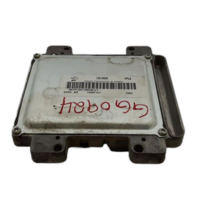
Below are the parts most often responsible for code P3032, ranked by how frequently each one is the actual culprit (per the diagnosis above). Tap any to see what we have for your vehicle.




The information in this article is provided for general reference and educational purposes only. Vehicle specifications, procedures, and part compatibility can vary by production date, trim level, and region. Always consult your vehicle's factory service manual and verify part numbers before purchasing or performing repairs. Safety-critical components such as airbags, seat belts, and braking systems should be installed by a qualified professional.
- 🧭 Diagnostic Flowchart
- 🎬 Helpful Videos
- 🛍️ Shop This Part
- What Does P3032 Mean?
- Can I Drive With P3032?
- Common Causes
- Symptoms
- Common Fixes & Costs
- DIY vs Professional
- Used vs. New Parts: Buying Guide
- What Happens If You Wait — Timeline
- Cost of Not Fixing It
- Diagnosis Steps
- When This Code Triggers (Freeze-Frame Conditions)
- Related Codes
- Climate & Environmental Factors
- How to Talk to a Mechanic About This Code
- Where to Take It: Dealer vs Independent vs Chain
- When to Walk Away From the Repair
- What Scan Tool You Need for This Code
- How to Clear the Code After You Fix It
- Will This Fail Emissions / State Inspection?
- Most Commonly Affected Vehicles
- Manufacturer-Specific Notes
- Real Owner Stories
- 2008 Ford F-150 at 117K miles - Intermittent Bucking
- 2019 Jeep Cherokee 3.2L V6 - Stalling and Multiple Codes
- 1996 Jeep Grand Cherokee 4.0L - Chronic Stalling Misdiagnosed
- How to Prevent This Code From Triggering
- Frequently Asked Questions
- What does a Fuel Pump Driver Module (FPDM) do?
- Where is the FPDM located on a Ford truck?
- Should I replace the MAP sensor on my Jeep for P3032?
- Can I replace the Ford FPDM myself?
- Does a new FPDM require programming?
- Should I buy an OEM or aftermarket FPDM?
- What is a PCM reflash?
- Can I bypass the FPDM to test it?
- Key Takeaways
- 🎟️ Get 5% Off