

OBD-II Code P3055: DC/DC Converter Performance
What P3055 means, why it triggers, and the ultimate guide to fixing it
- Code P3055 is a GM-specific fault indicating the DC/DC converter failed to maintain voltage during an auto start-stop event, permanently disabling the feature until repaired.
- Always load-test the 12V AGM battery and clean engine grounds G104, G107, and G108 before spending $200+ replacing the converter module.
- If you own a 2019-2021 Silverado or Sierra, check the passenger-side fuse block and remove any incorrectly installed factory fuses in slots F51DR and F52DR.
- Do not ignore this code; a completely failed DC/DC converter will lock your transmission in Park or cause a sudden, dangerous loss of power steering while driving.
What Does P3055 Mean?
P3055 means your Engine Control Module (ECM) detected a performance problem with the DC/DC converter. This component provides stable, low-voltage power to your car's electronics (infotainment, power steering, instrument cluster) when the engine shuts off during an auto start-stop event. The code signifies the converter is failing to supply the correct voltage, prompting the ECM to disable the start-stop system to protect the vehicle's electronics.
Technical definition: The official definition for code P3055, used almost exclusively by General Motors, is "DC/DC Converter Output Voltage 1 Performance." The ECM sets this code when voltage from the DC/DC converter (also known as the Multifunction Power Supply Converter) drops below expected thresholds during an auto start-stop cycle.
Can I Drive With P3055?
Yes, But With Caution. Yes, but do not drive for extended periods. The immediate issue is a disabled auto start-stop system. However, the DC/DC converter can fail completely at any time, causing a sudden loss of electric power steering or locking the transmission in Park, potentially stranding you.
Common Causes
- Faulty DC/DC Converter Module (Very Common) — The converter module fails internally and cannot provide the correct voltage boost. GM service bulletin 21-NA-139 outlines a diagnostic procedure that typically concludes with replacing this module. 🎬 Watch: 2019 Cadillac XT5 DC/DC converter replacement walkthrough.
- Weak or Failing 12V AGM Battery (Common) — The DC/DC converter depends on a healthy main battery. An aging AGM battery cannot hold a stable charge under load, causing voltage fluctuations that trigger this code.
- Poor Ground Connections (Common) — Corroded ground connections cause excessive electrical resistance. GM service bulletin 18-NA-247 identifies poor connections at grounds G104, G107, and G108 as a primary trigger for this code.
- Incorrect Fuse Installation (Specific Trucks) (Common) — On 2019-2021 Silverado and Sierra trucks, TSB 21-NA-121 warns that factory fuses incorrectly installed in empty slots F51DR and F52DR overload the DC/DC converter.
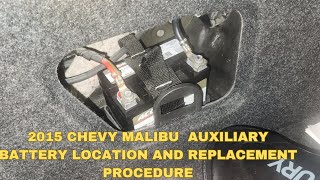
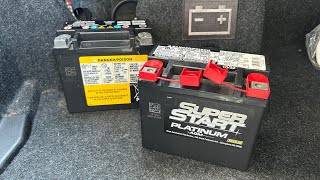
- Failing Auxiliary Battery (Less Common) — On dual-battery vehicles like the Chevrolet Malibu, a failing auxiliary battery disrupts the start-stop power supply, triggering P3055 and often P305F. 🎬 See how to replace the auxiliary battery on a Malibu.
- Water Intrusion (Rare) — On the Chevy Cruze or Buick LaCrosse, the DC/DC converter sits in areas prone to water leaks. Clogged drains or bad taillight seals allow water to destroy the module.
- Wiring Harness Issue (Rare) — Damaged wiring to the DC/DC converter causes shorts to ground or voltage, disrupting the ECM signal.
Symptoms
- Auto Start-Stop System Disabled — The engine no longer shuts off automatically when you come to a complete stop. The disable button becomes unresponsive.
- Check Engine Light is On — The Malfunction Indicator Lamp (MIL) illuminates immediately upon detecting the voltage variance.
- Loss of Power Steering or Shifting — Severe module failure electronically locks the transmission in Park or causes a sudden loss of power steering assist.
- Parasitic Battery Drain — An internally shorted DC/DC converter draws continuous power when the car is off, killing the battery overnight.
- Erratic Electronics and Warning Lights (also visible on scanner) — System-wide voltage instability causes the radio to reboot, dashboard lights to flicker, and triggers a cascade of warning lights (ABS, traction control).
Diagnostic Flowchart
Tap your situation to follow the diagnostic path that matches what you're seeing on this code.
Common Fixes & Costs
- Replace the DC/DC Converter Module — Parts: $130-$200, Labor: $150-$300, ~1.4 hr book time (Intermediate)
- Replace the 12V AGM Battery — Parts: $200-$300, Labor: $50-$100, ~0.5 hr book time (DIY)
- Clean and Secure Ground Connections — Parts: $0-$10, Labor: $100-$200, ~1 hr book time (DIY)
- Remove Incorrectly Installed Fuses — Parts: $0, Labor: $50-$100, ~0.5 hr book time (DIY)
- Repair Damaged Wiring Harness — Parts: $10-$50, Labor: $200-$500, ~3.5 hr book time (Professional)
DIY vs Professional
- Replace the DC/DC Converter Module 🟢 Beginner
Tools: Socket set, trim removal tools, flashlight. - Clean and Secure Ground Connections 🟢 Beginner
Tools: Socket set, wire brush/abrasive pad. - Replace the 12V AGM Battery 🟢 Beginner
Tools: Socket set or wrench. - Perform a Parasitic Draw Test 🟢 Beginner
Tools: Multimeter with a 10A DC amp setting. - Repair Damaged Wiring Harness 🟢 Beginner
Tools: Soldering iron, heat shrink tubing, wire strippers, multimeter.
Used vs. New Parts: Buying Guide
When a used part is worth it: For a high-cost, out-of-warranty repair on an older vehicle, a used DC/DC converter from a reputable salvage yard is a cost-effective option.
Donor-vehicle mileage cap: roughly under 100000 miles for the part to have meaningful remaining life.
Donor quality checklist:
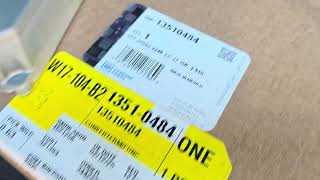
- Verify the exact part number (13510484) matches. Do not rely on visual similarity.
- Purchase from a seller offering a warranty (30-90 days) and a clear return policy.
- Avoid parts from vehicles with flood or fire damage.
Decision logic:
- If Vehicle is still under bumper-to-bumper or extended warranty → Use a new OEM part installed by a dealer to ensure coverage.
- If Vehicle is older, out of warranty, and budget is the main concern → A warrantied used part saves 50-70% on the part cost.
- If You prioritize reliability and peace of mind → Buy a new OEM part. Aftermarket options are not prevalent for this module.
Warranty tradeoff: Used parts typically come with a 30-90 day warranty covering the part but not labor. A new OEM part installed by a dealer carries a 12-month or longer warranty on both parts and labor.
Worst-case if a used part fails: $150-$300 (Cost of repeat labor to install a second part if the used one is defective)
What Happens If You Wait — Timeline
- 0-4 weeks: Check Engine Light illuminates with code P3055. The auto start-stop system is disabled, but there are no other noticeable driving symptoms. (MPG impact: 2-7%% · Added cost: $5-$15 in wasted fuel, as the start-stop system no longer provides its fuel economy benefit.)
- 1-3 months: The failing module causes minor electrical glitches. The radio reboots, lights flicker during an attempted auto-stop, or a parasitic drain weakens the battery. (MPG impact: 2-7%% · Added cost: $50 (Cost of wasted fuel plus increased strain on the 12V AGM battery).)
- 3-6 months: The module's failure becomes severe. The car stalls during a stop and fails to restart. A significant parasitic drain causes the battery to die overnight. (MPG impact: 2-7%% · Added cost: $150-$300 (Towing and diagnostic fee after being stranded).)
- 6+ months: Complete failure of the DC/DC converter. The vehicle is immobilized, refusing to shift out of Park, or suffers a sudden loss of power steering assist. (MPG impact: N/A (Vehicle may be undrivable)% · Added cost: $400-$850 (Cost of towing plus mandatory replacement of the DC/DC converter and a damaged AGM battery).)
Cost of Not Fixing It
- Immediate: Auto start-stop system is disabled. Check engine light is on. Potential for unpredictable electrical behavior like radio resetting. (Added cost: $0)
- Weeks to Months: Risk of being stranded. The faulty DC/DC converter fails completely, preventing the transmission from shifting out of Park or causing a sudden loss of power steering assist. (Added cost: $150-$300 (Towing and diagnostic fee))
- Long-Term: Continued voltage instability shortens the life of the main 12V AGM battery and stresses other electronic modules. (Added cost: $250-$450 (Premature battery replacement))
Diagnosis Steps
- Scan for All Trouble Codes
Use an OBD-II scanner to read codes from all vehicle modules. Note if P3056, P305F, or any U-series (communication) codes are present to provide critical diagnostic context.
Tools: OBD-II Scan Tool (Beginner) - Perform Model-Specific Preliminary Checks
For 2019-2021 Silverado/Sierra, remove any fuses from slots F51DR and F52DR per TSB 21-NA-121. For Chevy Malibu, test the auxiliary battery in the trunk if P305F is present. For Chevy Cruze/Buick LaCrosse, check for water intrusion near the converter module.
Tools: Flashlight, Fuse Puller, Battery Tester (Beginner) - Test the 12V AGM Battery Under Load
Have your main 12-volt AGM battery professionally load tested. A simple voltage check is insufficient; the battery's health must be determined under load.
Tools: Professional Battery Tester (Beginner) - Inspect, Clean, and Test Main Grounds (TSB 18-NA-247)
Locate grounds G104, G107, and G108 in the engine bay. Disconnect them and use a wire brush to clean all paint and corrosion until you have shiny, bare metal. Re-secure tightly. Verify the repair by performing a voltage drop test: with the engine running, a multimeter reading between the negative battery terminal and the ground stud must be under 0.1 volts.
Tools: Socket Set, Wire Brush, Multimeter (Intermediate) - [PRO TIP] Monitor DC/DC Converter Live Data
Using a professional scan tool, monitor the main vehicle system voltage during an auto-stop event. When the engine stops, the voltage must remain at or above 12.0V. A significant drop points towards a failing converter.
Tools: Professional OBD-II Scan Tool (Advanced) - [PRO TIP] Test the Converter Wiring for Shorts (TSB 21-NA-139)
Disconnect the DC/DC converter module harness. Test for a short to ground by measuring resistance between terminal 10 and a chassis ground; it must be infinite (OL). Next, connect a 12V test light between terminal 10 and ground; it must not illuminate.
Tools: Multimeter, 12V Test Light, Vehicle-Specific Wiring Diagram (Advanced) - Perform a Parasitic Draw Test
If the battery keeps dying, check for a parasitic draw. With the vehicle off and doors closed for 30 minutes, connect a multimeter in series with the negative battery cable. A draw over 50 milliamps (0.05A) indicates a fault. Pull fuses to identify the circuit.
Tools: Multimeter with 10A capability (Advanced) - Confirm DC/DC Converter Failure
If the battery is healthy, model-specific checks pass, grounds test good (<0.1V drop), and wiring is not shorted, the DC/DC Converter Module has failed internally and requires replacement.
Tools: None (Advanced)
When This Code Triggers (Freeze-Frame Conditions)
- Engine State: Auto-Stop or Cranking (The fault logs at the exact moment of an engine auto-stop or during the subsequent restart.)
- DC/DC Converter Output Voltage Variance: > 1.0 Volt (During an auto-stop, the voltage variance PID exceeds 1.0V, indicating severe instability.)
- Main Battery Voltage: 11.8V - 12.5V (The code sets when the main battery voltage is slightly low during high electrical load.)
- Vehicle Speed: 0 mph (The fault captures when the vehicle is stationary, the primary condition for auto start-stop engagement.)
Related Codes
- P3056 — The companion code for 'DC/DC Converter Output Voltage 2 Performance.' If both codes are present, it confirms the module itself has failed.
- U-Codes (e.g., U0100, U0140, U0420) — A failing DC/DC converter creates voltage instability, causing modules to lose communication. Resolving P3055 clears these secondary U-codes.
- C0800 — This code for 'Control Module Power Circuit Low' appears in the Power Steering Control Module as a direct result of the failing DC/DC converter.
- P305F — Specific to dual-battery vehicles like the Chevy Malibu. It appears with P3055 and points directly to a failing auxiliary battery.
Climate & Environmental Factors
- Cold Weather: Extreme cold significantly reduces the efficiency of the 12V AGM battery. A weak battery lacks the capacity in cold temperatures to support the electrical load during a start-stop event, triggering code P3055.
- Water Intrusion: On the Chevy Cruze, water leaks into the trunk from faulty taillight seals directly damage the DC/DC converter. On the Buick LaCrosse, clogged HVAC drains cause water to enter the cabin and destroy the module.
How to Talk to a Mechanic About This Code
Say this: "I have a check engine light with code P3055 and the auto start-stop system is not working. I'd like to schedule a diagnostic. Please start by load-testing the 12V AGM battery and inspecting the main engine grounds G104, G107, and G108 for corrosion, as outlined in GM's service bulletins."
This directs the shop to check the most common and cheapest potential fixes (battery, grounds) before assuming the expensive DC/DC converter has failed, saving diagnostic time.
Avoid saying:
- 'My check engine light is on, can you look at it?' (Too vague, invites a lengthy diagnostic process.)
- 'My car's start-stop isn't working.' (Describes a symptom, not the underlying fault code.)
- 'Just replace the DC/DC converter.' (Assumes the most expensive part is the cause without proper diagnosis.)
Questions to ask before authorizing the repair:
- Did the AGM battery pass a professional load test?
- Can you confirm you inspected and cleaned the G104, G107, and G108 grounds per TSB 18-NA-247?
- If recommending replacing the DC/DC converter, did you perform the wiring checks in TSB 21-NA-139 to rule out a short?
- What is the warranty on the recommended parts and labor?
Where to Take It: Dealer vs Independent vs Chain
- Dealer:
A strong choice if the vehicle is under warranty or if initial checks by an independent shop are inconclusive.
Best for: Vehicles still under bumper-to-bumper warranty., Complex electrical issues requiring GM's proprietary diagnostic tools.
Downsides: Highest labor rates, typically 1.5-2x more than an independent shop., May replace the DC/DC converter module without exhaustively checking cheaper alternatives. (Typical cost: +50% vs. baseline) - Independent Shop:
Best overall fit for out-of-warranty cases. An experienced mechanic efficiently checks the battery and grounds at a lower cost than a dealer.
Best for: Out-of-warranty vehicles where cost is a major factor., Shops specializing in GM vehicles familiar with common issues like P3055.
Downsides: Shop quality varies. Ensure they have access to a service like AllData to look up relevant TSBs., May lack the latest GM-specific scan tools for in-depth diagnostics. (Typical cost: +0% vs. baseline) - Chain Shop:
Acceptable ONLY for having the battery load-tested or replaced. AVOID for diagnosing the P3055 code itself.
Best for: Simple, clear-cut fixes like battery replacement.
Downsides: Technician skill varies dramatically; lacks expertise for TSB-guided diagnostics., High pressure to upsell services. (Typical cost: -10% vs. baseline)
When to Walk Away From the Repair
If the estimated repair cost for the P3055 fault exceeds 40-50% of the car's private-party value, seriously consider selling the vehicle as-is.
- Car worth $15000, fix is $500: Fix it. The repair cost is well below the 40% threshold and resolves a critical system issue.
- Car worth $4000, fix is $1800: Borderline. The repair cost is 45% of the car's value. Get a second opinion to confirm the diagnosis.
- Car worth $2500, fix is $1500: Walk away. The repair cost is 60% of the car's value and is not a sound financial decision.
What Scan Tool You Need for This Code
Minimum: A scanner that reads enhanced codes from all vehicle modules (ECM, BCM, etc.) and displays live data.
A basic $20 code reader only shows the P3055 code from the engine module. It cannot see related codes (like P305F) or display the live voltage data needed to observe the fault.
Budget: BlueDriver Pro (~$100) — Reads enhanced GM codes from modules like ABS and Transmission. It graphs live data, allowing you to monitor system voltage during a start-stop event.
Mid-range: Foxwell NT510 Elite for GM (~$180) — Offers GM-specific diagnostics and bi-directional control, allowing you to command specific components to test their function.
Professional: Autel MaxiCOM MK808S / MK808BT (~$400-550) — Provides full OE-level, bi-directional diagnostics for all systems. Its fast processor makes graphing and analyzing live data streams much easier.
Rent vs buy: For a one-time diagnosis, auto parts stores offer free loaner tools. If you plan to do your own maintenance, buying a scanner like the BlueDriver is a worthwhile investment.
How to Clear the Code After You Fix It
- Reconnect battery if disconnected for repair.
- Use an OBD-II scan tool to select the 'Clear All DTCs' or 'Erase Codes' function.
- Perform the GM-specific drive cycle to allow readiness monitors to run.
Drive cycle (~20 minutes): From a cold start (engine temp below 122°F), idle for 2-3 minutes with electrical loads ON (A/C, rear defrost). Turn loads OFF, accelerate to 55 mph, and hold for 3-5 minutes. Coast down to 20 mph without braking. Accelerate again to 55 mph and hold for 5 minutes. Coast down again.
Readiness monitors affected: Catalyst Monitor, EVAP System Monitor, Oxygen (O2) Sensor Monitor
Before emissions retest: drive at least 100 miles to fully set monitors.
Watch out for:
- Disconnecting the battery clears the code but resets all readiness monitors to 'Not Ready', guaranteeing an emissions test failure.
- The code returns immediately if the root cause (bad module, weak battery, poor ground) was not correctly repaired.
- The EVAP monitor requires specific fuel levels (15-85% full) and ambient temperatures to run its test.
Will This Fail Emissions / State Inspection?
Yes — this code typically fails an OBD-II emissions inspection.
- California: An illuminated check engine light results in an automatic smog check failure. A full drive cycle must be completed to set all readiness monitors before a retest.
- New York: A vehicle with an illuminated Malfunction Indicator Lamp fails the mandatory OBD-II inspection.
- Texas: An active P3055 code and illuminated check engine light is an automatic failure. Clearing the code is insufficient, as the vehicle fails if too many readiness monitors are 'Not Ready'.
Most Commonly Affected Vehicles
- Chevrolet Equinox (2018-2021) — Extremely common issue addressed by TSB 18-NA-247 (bad grounds) and TSB 21-NA-139 (failed converter). The converter module (part #13510484) is the most frequent fix.
- Chevrolet Silverado 1500 / GMC Sierra 1500 (2019-2021) — TSB 21-NA-121 points to incorrectly installed fuses (F51DR, F52DR) as a primary cause. Also check for corroded ground straps per Customer Satisfaction Program N252515590.
- Chevrolet Malibu (2017-2021) — Failures stem from the converter module, a weak main 12V battery, or a failed auxiliary battery in the trunk (often triggers P305F).
- GMC Acadia (2018-2021) — Shares the same platform and electrical issues as the Equinox. The DC/DC converter (part #13510484) is a common failure point.
- Cadillac XT5 (2018-2021) — Known for this code, which almost always points to a faulty DC/DC converter module after wiring is checked per TSB 21-NA-139.
- Chevrolet Traverse (2018-2021) — Failure of the converter module causes a wide array of electrical problems, including a no-shift condition and loss of power steering.
- Buick Enclave (2017-2021) — Frequently experiences this code due to a failed DC/DC converter, bad grounds, or wiring issues outlined in GM service bulletins.
- Cadillac CT6 (2017-2019) — Affected by the same DC/DC converter failures as other large GM sedans and SUVs. Covered under TSB 21-NA-139.
Manufacturer-Specific Notes
- General Motors (Chevrolet, GMC, Buick, Cadillac): This code is almost exclusively a GM-specific fault for vehicles with an auto start-stop system (RPO code KL9). GM has released multiple TSBs to address it, including 18-NA-247 and 21-NA-139.
- Chevrolet (Silverado) / GMC (Sierra): On 2019-2021 trucks, TSB 21-NA-121 identifies a factory assembly error where fuses installed in empty slots (F51DR, F52DR) overload the DC/DC converter. Removing them is the complete repair.
- Chevrolet (Silverado) / GMC (Sierra): Customer Satisfaction Program N252515590 covers 2019-2024 models for a corroded body-to-chassis ground strap that causes P3055.
- Chevrolet (Malibu): A failing auxiliary battery is a very common cause for P3055. It introduces a parasitic drain that kills the main battery overnight.
- Chevrolet (Cruze) / Buick (LaCrosse): The location of the DC/DC converter makes it vulnerable to water damage from faulty taillight seals (Cruze) or clogged HVAC drains (LaCrosse).
Real Owner Stories
2019 GMC Sierra 1500 with 45K miles - The Free Fix
Owner bought the truck used. The Check Engine Light for P3055 came on shortly after, disabling the auto start-stop feature.
What they tried:
- Researched the code and found GM TSB 21-NA-121.
Outcome: Following the TSB, the owner inspected the passenger-side fuse block and found fuses incorrectly installed in empty slots F51DR and F52DR. Removing these fuses immediately cleared the code and restored start-stop function.
Lesson: For 2019-2021 GM trucks, always perform the 5-minute fuse check described in TSB 21-NA-121 before attempting any other repairs.
2018 Chevy Malibu with 70K miles - Misdiagnosis & Parasitic Drain
Car displayed P3055 and P3056. During auto-stop events, the radio cut out. Eventually, the car stalled, required jumps, and the battery died overnight.
What they tried:
- Replaced the main 12V AGM battery, but the parasitic drain and stalling continued.
- Alternator tested normal.
Outcome: The root cause was a failing DC/DC converter module AND a bad auxiliary battery. Replacing both the DC/DC converter and the small auxiliary battery in the trunk resolved all symptoms.
Lesson: On dual-battery vehicles, P3055 links heavily to the auxiliary battery. A failing DC/DC converter causes a parasitic drain that kills a brand new main battery, leading to misdiagnosis.
2017 Chevy Cruze with 85K miles - The Water Leak
Check Engine Light came on with a flood of codes, including P3055. The dash and climate controls stopped working, accompanied by a burnt wire smell.
What they tried:
- Dealership quoted nearly $3,000 to replace multiple electronic modules.
- Owner investigated and found the trunk carpet soaked with water.
Outcome: A faulty taillight seal allowed the trunk to fill with water, shorting out the DC/DC converter. The owner dried the area, cleaned the corroded connectors, and replaced the destroyed DC/DC converter module for $150.
Lesson: On the Chevy Cruze, the DC/DC converter sits in the trunk and is highly vulnerable to water intrusion. Check for dampness before buying parts.
How to Prevent This Code From Triggering
- Maintain AGM Battery Health (Every 6 months) — A weak battery triggers P3055. Use a smart charger with an AGM-specific setting to ensure the battery remains fully charged, preventing sulfation.
- Inspect and Protect Key Ground Connections (Every year or during oil changes) — Corrosion on main grounds (G104, G107, G108) creates resistance. Clean these points and apply dielectric grease to seal out moisture.
- Check for and Clear Water Drains (Every year, especially before rainy seasons) — On the Cruze or LaCrosse, water intrusion kills the DC/DC converter. Ensure sunroof, cowl, and HVAC drains are clear of debris.
Frequently Asked Questions
What is the most common misdiagnosis for P3055?
The most common mistake is immediately replacing the expensive DC/DC converter module without performing basic checks. Always load-test the 12V AGM battery and clean the main engine grounds (G104, G107, G108) first. These are frequent, cheaper fixes.
I heard checking fuses can fix P3055. Is this true?
Yes, specifically for 2019-2021 Chevrolet Silverado and GMC Sierra 1500 trucks. GM TSB 21-NA-121 confirms factory fuses were incorrectly placed in slots F51DR and F52DR, overloading the converter. Removing these fuses is the first diagnostic step.
Does the new DC/DC converter need to be programmed?
No. The replacement DC/DC converter module (Part No. 13510484) is a plug-and-play component. It does not require dealer programming after installation.
Will disabling the auto start-stop feature make the code go away?
No. The code indicates a hard electrical fault detected by the ECM. Disabling the feature will not fix the underlying voltage issue, and the check engine light will remain on.
Can a bad alternator cause code P3055?
It is highly unlikely. P3055 specifically relates to the secondary DC/DC converter used during start-stop events, not the main alternator. However, a failing alternator can cause a parasitic drain that contributes to overall voltage instability.
Is this repair covered under warranty or recall?
There are no active safety recalls for P3055, but it is covered under the original bumper-to-bumper warranty. Some 2019-2024 GM trucks have a corroded ground strap covered under Customer Satisfaction Program N252515590. Otherwise, you pay out of pocket.
Can a bad auxiliary battery cause a parasitic drain?
Yes. If the auxiliary battery develops an internal short, it creates a parasitic draw on the main electrical system. This is a known issue on the Chevy Malibu where P3055 appears alongside a dead main battery.
Key Takeaways
- Code P3055 is a GM-specific fault indicating the DC/DC converter failed to maintain voltage during an auto start-stop event, permanently disabling the feature until repaired.
- Always load-test the 12V AGM battery and clean engine grounds G104, G107, and G108 before spending $200+ replacing the converter module.
- If you own a 2019-2021 Silverado or Sierra, check the passenger-side fuse block and remove any incorrectly installed factory fuses in slots F51DR and F52DR.
- Do not ignore this code; a completely failed DC/DC converter will lock your transmission in Park or cause a sudden, dangerous loss of power steering while driving.
Helpful Videos


Shop the Parts Behind P3055
Below are the parts most often responsible for code P3055, ranked by how frequently each one is the actual culprit (per the diagnosis above). Tap any to see what we have for your vehicle.



The information in this article is provided for general reference and educational purposes only. Vehicle specifications, procedures, and part compatibility can vary by production date, trim level, and region. Always consult your vehicle's factory service manual and verify part numbers before purchasing or performing repairs. Safety-critical components such as airbags, seat belts, and braking systems should be installed by a qualified professional.
- 🧭 Diagnostic Flowchart
- 🎬 Helpful Videos
- 🛍️ Shop This Part
- What Does P3055 Mean?
- Can I Drive With P3055?
- Common Causes
- Symptoms
- Common Fixes & Costs
- DIY vs Professional
- Used vs. New Parts: Buying Guide
- What Happens If You Wait — Timeline
- Cost of Not Fixing It
- Diagnosis Steps
- When This Code Triggers (Freeze-Frame Conditions)
- Related Codes
- Climate & Environmental Factors
- How to Talk to a Mechanic About This Code
- Where to Take It: Dealer vs Independent vs Chain
- When to Walk Away From the Repair
- What Scan Tool You Need for This Code
- How to Clear the Code After You Fix It
- Will This Fail Emissions / State Inspection?
- Most Commonly Affected Vehicles
- Manufacturer-Specific Notes
- Real Owner Stories
- 2019 GMC Sierra 1500 with 45K miles - The Free Fix
- 2018 Chevy Malibu with 70K miles - Misdiagnosis & Parasitic Drain
- 2017 Chevy Cruze with 85K miles - The Water Leak
- How to Prevent This Code From Triggering
- Frequently Asked Questions
- What is the most common misdiagnosis for P3055?
- I heard checking fuses can fix P3055. Is this true?
- Does the new DC/DC converter need to be programmed?
- Will disabling the auto start-stop feature make the code go away?
- Can a bad alternator cause code P3055?
- Is this repair covered under warranty or recall?
- Can a bad auxiliary battery cause a parasitic drain?
- Key Takeaways
- 🎟️ Get 5% Off