

OBD-II Code P3073: Fuel Pump Circuit Electrical Malfunction
The Ultimate 2026 Guide to Meaning, Diagnosis, and Repair
- Code P3073 indicates a critical electrical failure in the low-pressure fuel pump control circuit, not a mechanical low-pressure issue.
- Over 80% of P3073 codes stem from a failed Fuel Pump Control Module (FPCM) or a melted electrical connector.
- Do not drive the vehicle; the electrical fault will unpredictably shut off the fuel pump and stall the engine in traffic.
- Always inspect the FPCM connector for melted plastic or burnt pins before replacing the module, especially on VW and Audi models.
- Measure the fuel pump's amperage draw; a healthy pump draws 4-8 amps, while anything over 10 amps indicates a failing motor that will destroy a new FPCM.
What Does P3073 Mean?

P3073 means the Engine Control Module (ECM) detected a critical electrical failure in the low-pressure fuel pump control circuit. The ECM sends a duty cycle signal to the Fuel Pump Control Module (FPCM) to regulate pump speed. This code triggers when the pump fails to respond, indicating a broken wire, short circuit, or dead module.
Technical definition: The SAE/OBD-II definition for P3073 is "Fuel Pump Circuit Electrical Malfunction." The ECM sends a Pulse Width Modulated (PWM) command to the FPCM. If the ECM does not observe the expected response, circuit status, or voltage feedback, it sets this code.
Can I Drive With P3073?
No — Do Not Drive. Driving is strictly prohibited. The electrical fault shuts off the fuel pump unpredictably, stalling the engine instantly. This creates a severe safety risk in traffic and destroys the fuel pump control module if operation continues.
Common Causes

- Faulty Fuel Pump Control Module (FPCM) (Very Common) — The FPCM regulates voltage to the fuel pump. It fails from internal overheating, vibration, or corrosion on its housing and connectors, especially when mounted on the vehicle's frame where it absorbs moisture and road salt.
- Damaged Wiring or Melted Connectors (Common) — Wiring between the ECM, FPCM, and fuel pump corrodes or short-circuits. The connector pins at the FPCM or fuel pump assembly frequently melt or show green corrosion due to high current and moisture exposure.
- Failed In-Tank Fuel Pump Motor (Common) — The electric motor inside the fuel pump wears out, developing 'dead spots' on its commutator. As it degrades, it draws excessive electrical current, overloading the control module, melting connectors, or blowing fuses.
- Blown Fuse or Faulty Relay (Less Common) — A blown fuse or bad relay interrupts power and triggers this code. This is a symptom of a failing pump drawing too much current, which requires investigation even after replacing the fuse.
- Poor Ground Connection (Less Common) — The FPCM and fuel pump require a solid chassis ground. A corroded or loose ground wire creates high resistance, causing erratic module behavior, overheating, and the P3073 code.
- Software/Firmware Glitch (Rare) — The Fuel Pump Control Module sometimes experiences a software glitch causing it to stop communicating. Manufacturers issue software updates or recalls (like GM's 2021 recall) to resolve these specific logic errors.
- Faulty Engine Control Module (ECM) (Very Rare) — The ECM itself fails in extremely rare cases. Exhaustively test all wiring, fuses, the FPCM, and the pump before condemning the ECM.
Symptoms

- Engine will not start — The engine cranks but refuses to fire because no fuel reaches the injectors. You will not hear the typical 1-2 second priming 'hum' from the fuel tank when turning the key to 'ON'.
- Unexpected Stalling and Power Loss — The engine starts but stalls suddenly while driving as the FPCM overheats or the pump motor fails. Prior to stalling, the engine sputters, hesitates, or feels sluggish under acceleration.
- Check Engine Light is on — The ECM illuminates the Malfunction Indicator Lamp (MIL) immediately upon detecting the electrical fault in the fuel pump circuit.
- Engine Misfires or Rough Idle — Intermittent fuel delivery causes the engine to misfire or run roughly at idle or under load, often triggering accompanying P0300-series misfire codes.
Diagnostic Flowchart

Tap your situation to follow the diagnostic path that matches what you're seeing on this code.
Common Fixes & Costs
- Replace Fuel Pump Control Module (FPCM/FPDM) — Parts: $100-$400, Labor: $120-$250, ~0.8 hr book time (Intermediate)
- Repair or Replace Wiring/Connector — Parts: $25-$200, Labor: $200-$600, ~2.5 hr book time (Professional)
- Replace In-Tank Fuel Pump Assembly — Parts: $250-$1,300, Labor: $250-$650, ~3.2 hr book time (Professional)
- Replace Fuel Pump Fuse or Relay — Parts: $5-$40, Labor: $0-$60, ~0.1 hr book time (DIY)
- Ford F-150 Fuse 27 Relocation — Parts: $20-$50 (kit), Labor: $100-$200, ~0.6 hr book time (DIY)
DIY vs Professional
- Replace Fuel Pump Fuse or Relay 🟢 Beginner
Tools: Fuse puller or pliers. - Replace Fuel Pump Control Module (FPCM/FPDM) 🟢 Beginner
Tools: Socket set, flashlight. - Ford F-150 Fuse 27 Relocation 🟢 Beginner
Tools: Fuse relocation kit, wire crimpers, wire strippers, heat gun, basic hand tools. - Repair or Replace Wiring/Connector 🟢 Beginner
Tools: Soldering iron, heat shrink, wire strippers/crimpers, multimeter, wiring diagrams. - Replace In-Tank Fuel Pump Assembly 🟢 Beginner
Tools: Full socket set, fuel line disconnect tools, floor jack and jack stands, torque wrench, transmission jack.
Used vs. New Parts: Buying Guide
When a used part is worth it: A used Fuel Pump Control Module (FPCM) is rarely a good idea due to its high failure rate from heat and corrosion. Buy used only if the vehicle is very old and you accept the high risk of premature failure.
Donor-vehicle mileage cap: roughly under 50000 miles for the part to have meaningful remaining life.
Donor quality checklist:
- Verify the exact OEM part number matches; superseded parts have critical updates.
- Avoid modules from regions with heavy road salt use (rust belt).
- Inspect the connector pins on the used module for any signs of discoloration, heat, or corrosion.
Decision logic:
- If The part requires programming (common on VW, Audi, BMW) → Buy new from a source that can program it. A used module is often locked to the donor car's VIN.
- If The vehicle is a Ford/GM truck where the module is exposed to the elements → Buy a new OEM or quality aftermarket part. The original designs fail predictably from corrosion.
- If The cost of a new aftermarket module is under $150 → Buy new. The savings from a used part are not worth the risk of being stranded again.
Warranty tradeoff: Used parts typically have a 30-90 day warranty. Aftermarket new parts come with a 1-year to limited lifetime warranty. OEM parts carry a 1-2 year warranty from a dealer.
Worst-case if a used part fails: $300-$700 if a used module fails, including the cost of another tow, the replacement part, and repeat labor.
What Happens If You Wait — Timeline
- 0-1 week: Check Engine Light illuminates. The car exhibits a slightly longer crank time to start, but otherwise runs normally. The fault is intermittent. (MPG impact: 0-5%% · Added cost: $0)
- 1 week - 2 months: The engine stalls unpredictably, often after warming up, and restarts after cooling down. Hesitation under acceleration becomes noticeable. (MPG impact: 5-10%% · Added cost: $150-$400 for a tow when it fails to restart.)
- 2-4 months: Stalling becomes frequent and dangerous. The failing pump or bad connection draws excessive current, melting the FPCM connector or the fuse box slot. (MPG impact: 10-15%% · Added cost: $200-$800. A simple module replacement turns into an expensive wiring harness or fuse box repair.)
- 4+ months: The vehicle refuses to start. Prolonged operation with inconsistent fuel pressure causes lean conditions, increasing exhaust temperatures and destroying the catalytic converter. (MPG impact: 15-25%% · Added cost: $1200-$3000+. The initial problem cascades into damaging expensive emissions components.)
Cost of Not Fixing It
- Immediate: Sudden and unpredictable engine stalling, creating a severe safety hazard. The vehicle fails to start, leaving you stranded. (Added cost: $150-$400 for a tow.)
- 1-3 months: A failing fuel pump drawing excessive current overheats and melts its control module, the connector, or a fuse box slot, turning a single-part replacement into a complex wiring repair. (Added cost: $200-$800)
- 3-6+ months: Prolonged intermittent lean conditions caused by poor fuel delivery increase exhaust temperatures, destroying the catalytic converter. (Added cost: $1200-$2800)
Diagnosis Steps
- Scan for All DTCs
Use an OBD-II scanner to read codes from all modules. Codes like P310B or P0087 often accompany P3073. Note the freeze frame data for P3073 to see the engine's state when the fault occurred.
Tools: OBD-II Scanner (Beginner) - Check the Fuses
Locate the fuses for the 'Fuel Pump' and 'Fuel Pump Control Module'. Visually inspect them. If blown, replace with the exact same amperage. On 2009-2014 Ford F-150s, inspect Fuse 27 for signs of melting in the fuse box itself.
Tools: Fuse puller or small pliers (Beginner) - Listen for the Fuel Pump
Have a helper turn the ignition to 'ON' (without starting) while you listen at the fuel tank. You must hear a 1-2 second priming 'hum'. Hearing nothing confirms a lack of power to the pump or a dead pump.
Tools: A helper (Beginner) - Inspect the Fuel Pump Control Module (FPCM)
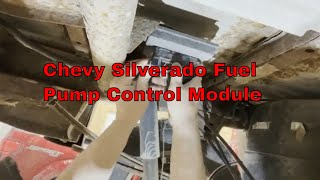
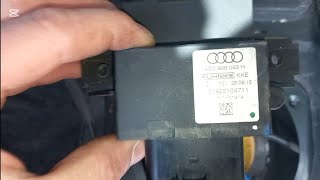
Locate the FPCM (under the rear seat on VW/Audi, or on a frame rail near the spare tire on trucks). Inspect the module and connector for green corrosion, melted plastic, or burnt pins. Check frame-mounted modules for cracked housings.
Tools: Flashlight, socket set (Beginner) - Test for Power and Ground at the FPCM
Unplug the FPCM. Check for battery voltage (12V+) on the main power wire and verify a solid ground (<0.1V or <5 ohms to chassis) on the ground wire. Missing power or ground indicates a wiring issue upstream of the module.
Tools: Multimeter, wiring diagram (Intermediate) - Test for Power at the Fuel Pump
Disconnect the electrical connector at the top of the fuel pump assembly. Have a helper turn the key to 'ON' while you test for voltage at the power pins. If you have variable voltage for 1-2 seconds but the pump doesn't run, the pump is dead.
Tools: Multimeter, socket/screwdriver set, wiring diagram (Intermediate) - Pro Tip: Check Fuel Pump Amperage Draw
Measure the current on the power wire going to the fuel pump. A healthy port-injected pump draws 4-8 amps. A draw over 10-12 amps proves the pump motor is failing and will destroy a new FPCM.
Tools: Low-amp current clamp, multimeter/oscilloscope (Advanced) - Pro Tip: Perform a Voltage Drop Test
Connect the positive multimeter lead to the battery positive post and the negative lead to the FPCM power input pin (key on, connected). Readings above 0.5V indicate excessive resistance. Repeat for the ground side; readings above 0.2V indicate a bad ground.
Tools: Multimeter, long test leads (Advanced) - Pro Tip: Check for a PWM Signal at the FPCM
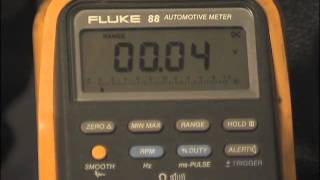
Set your multimeter to Duty Cycle (%). Back-probe the signal wire from the ECM to the FPCM. With the key on, you must see a specific duty cycle (often 50% during priming). A reading of 0% or 100% proves a wiring fault or dead ECM.
Tools: Multimeter with Duty Cycle/Hz, back-probe pins, wiring diagram (Advanced) - Bypass the FPCM (Advanced Diagnostic)
Use a fused jumper wire to supply direct battery power to the fuel pump, bypassing the FPCM. If the pump runs with direct power, it confirms the pump motor works and isolates the fault to the FPCM, its ground, or control wiring.
Tools: Jumper wires with in-line fuse, wiring diagram (Advanced) - Pro Tip: Analyze Scan Tool Live Data
Monitor the 'Fuel Rail Pressure' PID. Command the pump on with a bidirectional scanner; pressure must rise quickly and hold steady. Consistently high Long Term Fuel Trims (+10% or more) indicate the ECM is compensating for a weak fuel pump.
Tools: Advanced OBD-II Scanner with Live Data and Bidirectional Control (Advanced) - Pro Tip: Interpret Ford FPDM Diagnostic Signal
On Fords, the FPDM sends a diagnostic duty cycle back to the PCM. A 50% duty cycle is normal. 75% indicates a downstream fault (shorted pump). 25% indicates no valid command from the PCM. 0% or 100% means the module is offline.
Tools: Multimeter with Duty Cycle/Hz, wiring diagram (Advanced)
When This Code Triggers (Freeze-Frame Conditions)
- Engine Coolant Temp: 170-220°F (Fully warmed up, especially after a drive.)
- RPM: 1500-3000 (Cruise, light to moderate acceleration, or under load.)
- Engine Load: 25-70% (Indicates a moderate demand for fuel from the engine.)
- Vehicle Speed: 30-65 mph (Often occurs during steady-state highway driving or when accelerating.)
Related Codes
- P310B — 'Low-Pressure Fuel Regulation: Fuel Pressure Outside Specification.' P3073 points to the electrical cause, while P310B points to the resulting low-pressure effect. Diagnose the P3073 electrical fault first.
- P0087 — 'Fuel Rail/System Pressure - Too Low.' If both are present, the fault is in the low-pressure pump system (pump, FPCM, wiring), not the high-pressure fuel pump (HPFP).
- P069E — 'Fuel System Control Module Requested MIL Illumination.' This GM-specific code confirms the FPCM detected an internal fault and directly points to a failed FPCM.
- P0230 — 'Fuel Pump Primary Circuit Malfunction.' This generic OBD-II code is identical in meaning to P3073. The diagnostic process focuses on the relay, FPCM, and wiring.
Climate & Environmental Factors
- Road Salt / Cold Climates: Road salt accelerates corrosion on frame-mounted modules (Ford/GM). Galvanic corrosion between the aluminum module body and steel frame cracks the housing, allowing water to destroy the electronics.
- High Humidity / Moisture: Constant moisture exposure corrodes electrical connector pins and ground points. This increases electrical resistance, generating intense heat that melts the connector and destroys the module.
How to Talk to a Mechanic About This Code
Say this: "I have a P3073 code and my car is stalling or won't start. I'd like to book a diagnostic appointment. Please focus on testing the entire fuel pump control circuit, including the module, the wiring and connectors, and the pump's amperage draw, not just replacing parts."
This signals you understand that P3073 is an electrical circuit fault, not just a bad pump. It directs the technician to perform a proper diagnosis to find the root cause and prevents them from simply replacing the most expensive part first.
Avoid saying:
- 'My car won't start, just replace the fuel pump.'
- 'My check engine light is on, can you look at it?'
- 'Just fix whatever's wrong.'
Questions to ask before authorizing the repair:
- Did you test for power and ground at the fuel pump control module (FPCM)?
- Did you inspect the FPCM connector for any signs of melting or corrosion?
- What was the amperage draw of the fuel pump motor? Does it indicate the pump is failing?
- If a new module is needed, does it require programming for my vehicle?
- What is the warranty on the parts and labor for this repair?
Where to Take It: Dealer vs Independent vs Chain
- Dealer:
A safe, but expensive, choice. Recommended if your vehicle requires programming for a new module or is still under warranty.
Best for: Vehicles under warranty or with an active recall/service campaign., Complex German brands (Audi, VW, BMW) that require module programming., When you want a guaranteed OEM parts-only repair.
Downsides: Significantly higher labor rates and parts costs., Less flexible on repair options, preferring full assembly replacement over component repair. (Typical cost: +50% vs. baseline) - Independent Shop:
Best overall fit for most out-of-warranty vehicles, provided you choose a reputable shop with proven electrical diagnostic capabilities. Their flexibility saves money by pinpointing the exact failure.
Best for: Out-of-warranty vehicles where cost is a factor., Common failures on domestic brands (like the Ford F-150 FPDM) that are well-known in the industry., Building a long-term relationship with a trusted mechanic.
Downsides: Quality and expertise vary greatly; must find a shop with strong electrical diagnostic skills., May lack the latest OEM-specific tools for programming newer modules. (Typical cost: +0% vs. baseline) - Chain Shop:
AVOID for this code. P3073 requires advanced electrical testing beyond the scope of most chain repair shops. The risk of misdiagnosis and repeat repairs is very high.
Best for: Simple, routine maintenance like oil changes or tires.
Downsides: Technician skill is highly variable and rarely specialized in complex electrical diagnostics., Business model incentivizes quick parts replacement over thorough diagnosis, leading to misdiagnosis. (Typical cost: -10% vs. baseline)
When to Walk Away From the Repair
If the total estimated repair cost for the P3073 fault exceeds 40-50% of your car's current private-party market value, seriously consider alternatives.
- Car worth $4000, fix is $1800: Borderline. The repair is almost half the car's value. Get a second opinion before proceeding. If other major repairs are needed, walk away.
- Car worth $15000, fix is $1200: Fix it. The repair cost is well under the threshold and is necessary for the vehicle's operation.
- Car worth $2500, fix is $1500: Walk away. The repair cost is over 50% of the vehicle's value. Put the money towards a more reliable vehicle.
What Scan Tool You Need for This Code
Minimum: A scanner that reads live data, specifically Fuel Rail Pressure and system voltage. A basic code reader is insufficient for diagnosis.
A $20 code reader only confirms the P3073 code exists. It cannot show the live data needed to determine if the fault is with the pump, module, or wiring, leading you to guess at parts.
Budget: BlueDriver Pro Scan Tool (~$100) — Connects to your smartphone to read codes and displays live data for fuel pressure and other PIDs. This allows you to watch for pressure drops pointing to a fuel delivery problem.
Mid-range: Foxwell NT510 Elite (~$180) — Offers brand-specific diagnostics and bidirectional control, allowing you to actively command the fuel pump to turn on. This is a critical step in testing the control circuit and pump motor independently.
Professional: Autel MaxiCOM MK808S / Launch X431 CRP919XBT (~$450-650) — Provides full bidirectional control to command the fuel pump on/off. These professional tools access manufacturer-specific codes, perform module programming for a new FPCM, and offer advanced data graphing.
Rent vs buy: A free rental scanner from an auto parts store only confirms the P3073 code. For actual diagnosis, you need live data and bidirectional control. Buy a midrange tool like the Foxwell NT510 Elite if you are a serious DIYer. Otherwise, pay for a professional diagnosis.
How to Clear the Code After You Fix It
- Reconnect battery if it was disconnected for the repair.
- Use a quality OBD-II scan tool to clear the diagnostic trouble codes from all modules.
- Perform a complete OBD-II drive cycle to allow readiness monitors to run.
Drive cycle (~30 minutes): Start with a cold start (sit for 8+ hours). Idle for 2-3 minutes. Drive a mix of city (stop-and-go) and highway speeds. Include 15 minutes of steady driving at 50-60 mph. Allow the vehicle to cool completely to finish the EVAP monitor.
Readiness monitors affected: Catalyst Monitor, Evaporative (EVAP) System Monitor, Oxygen (O2) Sensor Monitor, Fuel System Monitor
Before emissions retest: drive at least 100 miles to fully set monitors.
Watch out for:
- Disconnecting the battery clears codes but resets all readiness monitors to 'Not Ready', guaranteeing an emissions test failure.
- The code returns immediately if the underlying electrical fault (bad module, wiring, pump) was not correctly fixed.
- The EVAP monitor requires the fuel level to be between 15% and 85% to run.
Will This Fail Emissions / State Inspection?
Yes — this code typically fails an OBD-II emissions inspection.
- California: An illuminated Check Engine Light is an automatic failure. After repairs, the vehicle must be driven through a complete drive cycle to set all required readiness monitors before re-testing.
- New York: An active P3073 code fails the OBD-II inspection. For 2001 and newer vehicles, only one readiness monitor can be 'Not Ready' to pass.
- Texas: In the 17 counties requiring emissions testing, an active P3073 code causes an automatic failure. The Check Engine Light must be off and readiness monitors set.
Most Commonly Affected Vehicles
- Audi A4, A5, Q5, Q7 (2008-2017) — The FPCM (J538) under the rear passenger seat is highly prone to failure. The connector pins overheat and melt, requiring replacement of both the module and the connector pigtail.
- Volkswagen Golf, GTI, Jetta, Passat, Tiguan (2006-2016) — The FPCM is a frequent failure point, leading to crank-no-start or stalling. TSBs exist for updated in-tank fuel pumps for 2006-2007 2.0T engines.
- Ford F-150, Expedition, Edge, Mustang (2004-2014) — The frame-mounted Fuel Pump Driver Module (FPDM) cracks from galvanic corrosion. 2009-2014 F-150s suffer from the melting Fuse 27 issue, requiring relocation kit EL3Z-14293-A.
- Chevrolet / GMC Silverado, Sierra, Tahoe, Suburban, Yukon (2007-2021) — The Fuel System Control Module (FSCM) above the spare tire fails from water and salt exposure. A recall (NHTSA #21V739000) covers 2021 models for module failure causing stalls.
- BMW 3-Series, 5-Series, X3, X5 (2006-2013) — The EKP/EKPS module overheats and fails, causing stalling and no-start symptoms. Replacement modules require VIN programming.
- Mazda 3, 6, CX-7 (2007-2013) — Sharing technology with Ford, these vehicles use a similar fuel pump driver module that fails and causes stalling or no-start issues.
- Porsche Macan (2015-2018) — Shares platform architecture with the Audi Q5 and suffers identical fuel pump control module failures. A recall (Campaign ALA2) covers cracked fuel pump flanges.
- Volvo S60, S80, XC70, XC90 (2005-2015) — The Fuel Pump Electronic Module (PEM) fails from overheating or water damage. Dealer service actions relocated the module from wet areas on some models.
Manufacturer-Specific Notes
- Volkswagen/Audi: The connector for the fuel pump control module (J538) under the rear seat melts frequently. You must replace both the module and the connector pigtail for a lasting repair.
- Ford: Galvanic corrosion cracks the aluminum FPDM housing mounted to the steel frame. Always use aftermarket kits with rubber spacers. Check TSB 15-0137 for 2009-2014 F-150s requiring the Fuse 27 relocation kit.
- General Motors: The FSCM mounted above the spare tire fails from water and salt exposure. Apply dielectric grease to the connector during replacement to seal out moisture.
- BMW: The EKP/EKPS module fails due to overheating, requiring a cool-down period before restarting. A replacement module must be programmed to the vehicle.
Real Owner Stories
2012 Audi Q5 2.0T at 116K miles
Car stalled on the highway. After replacing the battery and alternator, it would still only crank. Owner then replaced the in-tank fuel pump and the fuel pump control module. The car ran for a week and then stalled again in the middle of the road.
What they tried:
- Replaced battery and alternator.
- Replaced in-tank low-pressure fuel pump (LPFP).
- Replaced fuel pump control module (FPCM).
Outcome: The issue returned because the root cause was not fully addressed. The owner later scanned the car and found code P2293 (Fuel Pressure Regulator 2 Performance), indicating a failing High-Pressure Fuel Pump (HPFP) or a worn cam follower.
Lesson: Do not blindly replace parts. A code like P3073 is often a symptom of another component failing and drawing too much current. A full system diagnosis, including checking fuel pressure on both the low and high-pressure sides, is mandatory.
2013 Ford F-150 with Crank-No-Start
Truck cranked but refused to start. Owner heard the fuel pump prime, and Fuse 27 looked fine. The frame-mounted Fuel Pump Driver Module (FPDM) also appeared visually okay with no corrosion.
What they tried:
- Verified fuel pump priming sound.
- Visually inspected Fuse 27 and the FPDM.
- Cleaned gas-fouled spark plugs, which temporarily started the truck.
Outcome: Despite Fuse 27 looking visually perfect, the fuse terminal inside the fuse box lost tension, causing an unreliable connection. The owner performed the Fuse 27 relocation TSB (EL3Z-14293-A), permanently solving the no-start condition.
Lesson: Visual inspections fail on known issues like Ford's Fuse 27. The fuse slot looks perfect but fails to make a solid electrical connection under load. Always perform documented TSB fixes for your specific vehicle.
2013 Audi Q5 2.0T at 150K miles
Car experienced a shake/stumble and stalled with an EPC light. The next day it cranked but would not start, showing code P3073.
What they tried:
- Replaced the low-pressure fuel pump (LPFP).
- Replaced the fuel pump control module (FPCM).
- Checked fuses and relays.
- Verified power reached the control module.
Outcome: After replacing the pump and module, the car still refused to start. The P3073 code returned immediately. The actual failure was a melted connector at the pump module that the owner reused instead of replacing.
Lesson: If you replace the pump and module and P3073 returns instantly, the problem is the wiring between them. Always inspect connectors for melted plastic or corroded pins and replace damaged pigtails.
How to Prevent This Code From Triggering
- Keep the fuel tank above 1/4 full at all times. (Daily habit) — Fuel acts as a coolant for the in-tank electric fuel pump motor. Running the tank low causes the pump to run hotter, shortening its life and increasing amperage draw, which destroys the FPCM.
- Apply dielectric grease to the FPCM connector. (During module replacement or inspection) — Filling the connector with dielectric grease seals out moisture and road salt, preventing the corrosion that causes high resistance and melted connectors.
- On Ford trucks, add spacers to the FPDM. (Once, preventively) — Mounting the aluminum FPDM directly to the steel frame causes galvanic corrosion. Aftermarket kits include rubber standoffs to create an air gap, stopping this corrosion process.
- Use high-quality, Top Tier gasoline. (Every fill-up) — Lower quality fuels contain contaminants that clog the fuel filter and pump strainer. A clogged filter forces the pump to work harder, increasing current draw and straining the FPCM.
Frequently Asked Questions
Can I just replace the fuse if it's blown?
You can, but a blown fuse indicates a component like a failing fuel pump is drawing too much electrical current. If the new fuse blows again, you have a deeper problem requiring professional diagnosis. Repeatedly replacing a blowing fuse will melt the fuse box.
Why did the fuel pump module connector melt?
Connectors melt due to excessive heat caused by high electrical resistance. This happens when pins become loose or corroded, or when a failing fuel pump motor draws excessive amperage. The poor connection acts like a resistor, generating intense heat.
Do I need to program a new Fuel Pump Control Module?
It depends entirely on the vehicle manufacturer. Volkswagen, Audi, BMW, and newer GM models require the new module to be coded to the car's VIN. Most Ford models use plug-and-play replacements.
My car starts but stalls after a few minutes. Could this be P3073?
Yes, this is a classic symptom of a thermally failing fuel pump control module. The module works when cold, but internal faults cause it to shut down as it heats up during operation.
What is the difference between a fuel pump relay and a fuel pump control module?
A relay is a simple on/off switch. A Fuel Pump Control Module (FPCM) is a computer that receives a PWM signal from the ECM to vary the voltage and speed of the fuel pump based on engine demand. This provides precise fuel pressure control.
Can a bad battery cause a P3073 code?
A weak battery rarely causes P3073 directly, as this code points to a specific circuit malfunction. However, low system voltage causes unpredictable behavior in electronic modules like the FPCM. Test the battery if it is old, but focus diagnosis on the fuel pump circuit.
I replaced the pump and module, but the code is still there. What now?
First, ensure the new module doesn't require VIN programming. Second, replace the electrical connector if it shows any heat damage or corrosion. Finally, perform a voltage drop test on the power and ground wires; readings over 0.2V (ground) or 0.5V (power) indicate wiring faults.
Key Takeaways
- Code P3073 indicates a critical electrical failure in the low-pressure fuel pump control circuit, not a mechanical low-pressure issue.
- Over 80% of P3073 codes stem from a failed Fuel Pump Control Module (FPCM) or a melted electrical connector.
- Do not drive the vehicle; the electrical fault will unpredictably shut off the fuel pump and stall the engine in traffic.
- Always inspect the FPCM connector for melted plastic or burnt pins before replacing the module, especially on VW and Audi models.
- Measure the fuel pump's amperage draw; a healthy pump draws 4-8 amps, while anything over 10 amps indicates a failing motor that will destroy a new FPCM.
Helpful Videos
Shop the Parts Behind P3073
Below are the parts most often responsible for code P3073, ranked by how frequently each one is the actual culprit (per the diagnosis above). Tap any to see what we have for your vehicle.



The information in this article is provided for general reference and educational purposes only. Vehicle specifications, procedures, and part compatibility can vary by production date, trim level, and region. Always consult your vehicle's factory service manual and verify part numbers before purchasing or performing repairs. Safety-critical components such as airbags, seat belts, and braking systems should be installed by a qualified professional.
- 🧭 Diagnostic Flowchart
- 🎬 Helpful Videos
- 🛍️ Shop This Part
- What Does P3073 Mean?
- Can I Drive With P3073?
- Common Causes
- Symptoms
- Common Fixes & Costs
- DIY vs Professional
- Used vs. New Parts: Buying Guide
- What Happens If You Wait — Timeline
- Cost of Not Fixing It
- Diagnosis Steps
- When This Code Triggers (Freeze-Frame Conditions)
- Related Codes
- Climate & Environmental Factors
- How to Talk to a Mechanic About This Code
- Where to Take It: Dealer vs Independent vs Chain
- When to Walk Away From the Repair
- What Scan Tool You Need for This Code
- How to Clear the Code After You Fix It
- Will This Fail Emissions / State Inspection?
- Most Commonly Affected Vehicles
- Manufacturer-Specific Notes
- Real Owner Stories
- 2012 Audi Q5 2.0T at 116K miles
- 2013 Ford F-150 with Crank-No-Start
- 2013 Audi Q5 2.0T at 150K miles
- How to Prevent This Code From Triggering
- Frequently Asked Questions
- Can I just replace the fuse if it's blown?
- Why did the fuel pump module connector melt?
- Do I need to program a new Fuel Pump Control Module?
- My car starts but stalls after a few minutes. Could this be P3073?
- What is the difference between a fuel pump relay and a fuel pump control module?
- Can a bad battery cause a P3073 code?
- I replaced the pump and module, but the code is still there. What now?
- Key Takeaways
- 🎟️ Get 5% Off