

P3075 on 2020-2022 Cadillac CT4: Engine Coolant Flow Too Low Causes and Fixes
On a 2020-2022 Cadillac CT4, code P3075 almost always means there is air in the cooling system or the coolant level is low due to a leak. The fix is typically to pressure test for leaks, repair if needed, and then properly bleed the cooling system using a vacuum-fill tool. Do not replace the coolant pump unless this procedure fails and the code returns.
- P3075 on a CT4 means there is a coolant flow problem, detected by a sophisticated self-test of the electric water pump.
- The most common causes are simple: air in the system or a coolant leak.
- Follow GM's specific diagnostic procedure: pressure test and vacuum-bleed the system before considering replacing the coolant pump.
What's Unique About the 2020-2022 Cadillac CT4
The Cadillac CT4 uses a modern, electrically controlled coolant pump that is actively monitored by the ECM. This allows for precise detection of flow issues that might not be immediately obvious to the driver. General Motors has issued multiple, very specific service bulletins for this code across a wide range of vehicles using the LSY and L3B engines, emphasizing a diagnostic process of checking for leaks and air pockets before condemning the expensive coolant pump. The diagnostic test is sophisticated enough to detect low current draw when the pump is spinning freely in an air pocket or is starved of fluid.
Diagnostic Flowchart
Tap your situation to follow the diagnostic path that matches what you're seeing on this vehicle.
Symptoms You May Notice
- Check Engine Light (Malfunction Indicator Lamp) is on.
- Low coolant level in the overflow reservoir.
- Visible coolant leak under the vehicle, possibly pink or green fluid.
- Engine may overheat if the condition is severe.
- Gurgling sound from the dashboard area (heater core) after starting the engine, indicating air in the system.
- Radiator fan running at high speed immediately after startup.
- Dampened or reduced throttle response.
- Message in Driver Information Center: "reduced acceleration drive with care".
- Replacing the engine coolant pump without first checking for leaks, air in the system, or available software updates. This is an expensive and often unnecessary repair, as explicitly warned against in multiple service bulletins.
Most Likely Causes
- Air Trapped in Cooling System 🔴 High Probability This can occur after any service that involves draining the coolant if the system is not bled properly using the correct vacuum-fill procedure. GM bulletins note that the code may even reset once after a proper fill until all air is purged.
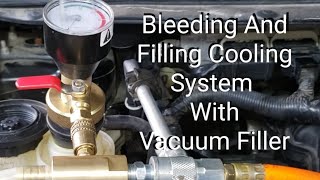
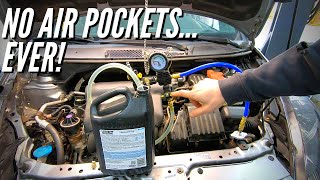
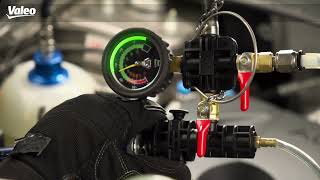
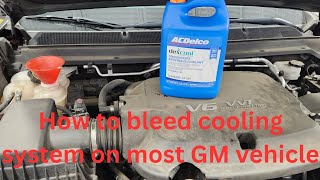
How to confirm: A technician will use a special vacuum-fill tool to bleed the cooling system 🎬 Watch: How to use a vacuum filler to bleed the system., removing any trapped air. The presence of gurgling sounds from the heater core is a strong indicator.
Typical fix: Perform a cooling system vacuum and fill procedure to properly bleed all air out. No parts are typically required for this specific fix.
Est. part cost: $0 - Low Engine Coolant Level (External Leak) 🔴 High Probability → Shop Engine Coolant / Antifreeze Leaks can develop from hoses, the radiator, or the water pump seals over time. Common leak points on modern GM vehicles include hose connections and the radiator itself. A TSB for the related Chevy Colorado/GMC Canyon notes a specific issue with a degraded seal on the upper radiator inlet hose quick-connect fitting.
How to confirm: Perform a cooling system pressure test to identify the source of any external leaks. 🎬 See how to perform a cooling system pressure test and vacuum fill.
Typical fix: Repair the source of the leak, which may involve replacing a hose, clamp, or the radiator. Then, refill and bleed the cooling system.
Est. part cost: $20-$400 - Software Anomaly 🟡 Medium Probability
How to confirm: A dealer or qualified shop will check the current ECM software calibration against the latest version available from GM using a GDS tool.
Typical fix: Reprogram the Engine Control Module (ECM) to the latest software version.
Est. part cost: $0
Rare But Worth Checking
- Faulty Engine Coolant Pump Assembly: → Shop Engine Water Pump GM service bulletins explicitly state to NOT replace the pump unless all other diagnostic steps (software check, leak test, bleeding) have been completed and the code returns a second time. If the pump is replaced, the old part may be requested back by the warranty center for analysis.
Diagnosis Steps
- Verify the Check Engine Light is on and code P3075 is stored in the ECM.
- For 2019 models with the 2.7L L3B engine, check for the latest ECM software calibration and update if necessary, per TSB 19-NA-149.
- Visually inspect the engine bay for any obvious signs of a coolant leak, paying attention to hose connections and the radiator.
- Check the coolant level in the reservoir. If low, proceed to the next step.
- Perform a cooling system pressure test to check for any leaks in hoses, the radiator, or the pump.
- If a leak is found, repair it. A known issue on some platforms is the upper radiator hose quick-connect seal.
- Perform a complete cooling system drain, fill, and bleed procedure using a vacuum-fill tool to ensure no air is trapped.
- Clear the DTCs and perform a road test under the conditions required to run the diagnostic monitor to confirm the fix. Note that the code might set once more after the procedure until all residual air is purged.
- If the code returns after all these steps have been meticulously followed, diagnosis and replacement of the coolant pump assembly is warranted.
Parts You'll Likely Need
- Engine Coolant / Antifreeze
(OEM #ACDelco 10-5027 (replaces 12378390))— Required to refill the system after a leak repair or bleeding procedure. Always use the GM-specified DEX-COOL 50/50 pre-mix.
Trusted brands: ACDelco
OEM price range: $25-$40
Aftermarket price range: $20-$35 - Radiator Hose — A common source of leaks that can lead to low coolant and trigger P3075. The upper radiator hose quick-connect seal has been noted as a specific failure point on some GM trucks with this issue.
Trusted brands: ACDelco, Gates
OEM price range: $50-$150
Aftermarket price range: $30-$100
Related Codes That Often Appear With This One
- P3076 — P3076 is a related diagnostic trouble code for coolant flow failures and may be set under similar conditions, as the same intrusive diagnostic test evaluates for both codes.
Technical Service Bulletins (TSBs) & Recalls
- 21-NA-257: The most current and comprehensive bulletin for this issue on the CT4. It defines the cause as 'low coolant or air trapped in the cooling system' and explicitly states 'Do not replace the coolant pump assembly at this time.'
- PIP5650B / PIP5650A: Earlier preliminary information bulletins with the same diagnostic advice - do not replace the pump first, pressure test and bleed the system.
- 19-NA-149: Specifically for 2019 2.7L L3B engines, this bulletin advises checking for and applying an ECM software update as a primary step before other diagnostics.
Platform-Specific Known Issues
- Technical Service Bulletin 21-NA-257 directly addresses this code on the 2020-2022 CT4, providing a clear diagnostic path that prioritizes checking for leaks and air in the system over part replacement.
- The diagnostic for P3075 involves the ECM running the electric coolant pump at high speed (around 4000 RPM) for a short duration and measuring the electrical current. Low current indicates the pump is spinning too freely, which happens with air pockets or low fluid.
Mechanic-Grade Diagnostic Values
- Engine Coolant Pump Intrusive Test — expected: The ECM commands the pump to ~4000 RPM for 15 seconds and expects the pump motor AC current to be within a specific, non-published range.. Failure: The AC current feedback is lower than the expected range, indicating the pump is cavitating from air or is starved of coolant.
Scan Tool Commands That Help
- GDS2: Cooling System Draining and Filling — This function in the GM Diagnostic Service (GDS) is required to properly bleed the cooling system after repairs. Failure to use the guided procedure is a primary cause of trapped air, leading to P3075.
- GDS2: Confirm P3075 has run and passed — After performing repairs, a technician must use the scan tool to verify that the P3075 intrusive diagnostic has successfully run and passed in the current drive cycle before returning the vehicle to the customer.
- GDS2: Engine Coolant Pump Learn / Reset — After replacing the coolant pump or related components, a learn/reset procedure may be required to prime the pump and ensure the system is free of air before starting the engine.
Wiring & Ground Locations
- G103 — Located at the left rear of the engine compartment on the cowl, above the brake booster.. This is a major ground point for the Engine Control Module (ECM) and Body Control Module (BCM). A poor connection here could cause erratic behavior or incorrect readings from various engine systems, including the electric coolant pump controls.
- G101 / G106 — Located on the frame cross rail under the crank pulley.. This ground serves the Engine Control Module and Transmission Control Module. Since the ECM directly controls and monitors the electric coolant pump, a solid ground connection is critical for proper operation and to prevent false codes.
- K61 Electric Engine Coolant Pump Control Module — The control module is integrated into the electric coolant pump assembly itself, typically located on the lower left side of the engine.. This is the component being tested by the ECM. All power, ground, and control wires terminate at its connector (e.g., X327 on some models). Poor connections at this specific connector are a known issue for related communication codes and could potentially affect current draw readings for P3075.
Real Owner Repair Stories
- Reddit r/MechanicAdvice (2024 GMC Acadia, 4500 miles) — Engine light on, "reduced acceleration drive with care" message, DTC P3075, low coolant level, brown and chunky coolant, and engine fan running after shutdown.
❌ Tried (didn't work) The user took the vehicle directly to the dealer. The initial technician was reportedly 'dumbfounded'.
✅ What actually fixed it The dealer ordered a large number of parts, including a new engine coolant pump, thermostat housing, various seals, hoses, and clamps, suggesting a significant cooling system failure or contamination that required replacement of multiple components rather than just a simple bleed or single leak repair.
Helpful Videos
We Have This Part in Stock

The information in this article is provided for general reference and educational purposes only. Vehicle specifications, procedures, and part compatibility can vary by production date, trim level, and region. Always consult your vehicle's factory service manual and verify part numbers before purchasing or performing repairs. Safety-critical components such as airbags, seat belts, and braking systems should be installed by a qualified professional.
- Cadillac CT4:
- 🧭 Diagnostic Flowchart
- 🎬 Helpful Videos
- 🛍️ Shop This Part
- What's Unique About the 2020-2022 Cadillac CT4
- Symptoms You May Notice
- Most Likely Causes
- Rare But Worth Checking
- Diagnosis Steps
- Parts You'll Likely Need
- Related Codes That Often Appear With This One
- Technical Service Bulletins (TSBs) & Recalls
- Platform-Specific Known Issues
- Mechanic-Grade Diagnostic Values
- Scan Tool Commands That Help
- Wiring & Ground Locations
- Real Owner Repair Stories
- 🎟️ Get 5% Off