

P3075 on 2020-2022 Cadillac CT5: Engine Coolant Flow Too Low Causes and Fixes
On a 2020-2022 Cadillac CT5, code P3075 almost always means there is a coolant leak or air trapped in the cooling system. The most common fix is finding and repairing the leak (often a hose or fitting) and properly bleeding the system, not replacing the water pump initially.
- P3075 means the coolant isn't flowing correctly, usually due to a leak or air in the system.
- Do not replace the coolant pump first; it's rarely the cause. A pressure test and proper bleeding are the first steps.
- This code is common across many modern GM vehicles with 2.0L LSY and 2.7L L3B engines, not just the CT5.
What's Unique About the 2020-2022 Cadillac CT5

The Cadillac CT5 with the 2.0L LSY engine uses a sophisticated, computer-controlled electric coolant pump. Unlike older belt-driven pumps, the ECM can actively monitor this pump's performance. This allows it to detect subtle issues like air pockets or minor leaks that would go unnoticed on older systems until the engine overheats. GM's official guidance in TSB 21-NA-257 strongly advises against replacing the pump as a first step, which is a common misdiagnosis.
Diagnostic Flowchart

Tap your situation to follow the diagnostic path that matches what you're seeing on this vehicle.
Symptoms You May Notice
- Check Engine Light (Malfunction Indicator Lamp) is on.
- Engine cooling fans running at high speed constantly.
- Reduced engine power or 'limp mode'.
- Warning messages in the driver information center, such as 'Engine Overheated, Idle Engine'.
- Air conditioning may be disabled by the system to reduce engine load.
- Visible coolant leak under the vehicle.
- Smell of sweet coolant from the engine bay.
- Replacing the engine coolant pump assembly without first pressure testing the system and checking for air pockets. The TSBs from GM repeatedly warn technicians not to do this, as the actual cause is far more likely to be a simple leak or air in the system.
Most Likely Causes

- Air Trapped in the Cooling System 🔴 High Probability The system is sensitive to air pockets, which can be introduced during improper coolant refills or if the coolant level drops due to a small leak. The ECM's diagnostic test is sensitive enough to detect the reduced load from the pump moving air instead of dense coolant.
How to confirm: After a pressure test confirms no leaks, perform a vacuum-fill and bleed procedure on the cooling system. If the code does not return after a drive cycle, air was the cause.
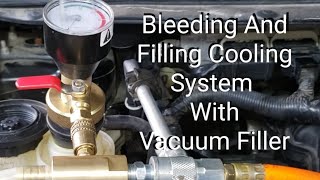
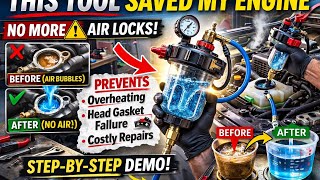
Typical fix: Properly bleed the cooling system using a vacuum lift tool to remove all trapped air. 🎬 Watch: How to bleed and fill your system using a vacuum tool. Clear codes and perform a road test to allow the ECM to confirm the fix.
Est. part cost: $0 (if DIY), $50-$100 (for a vacuum tool) - External Coolant Leak 🔴 High Probability → Shop Engine Coolant / Antifreeze GM has noted issues with degraded seals on radiator hose quick-connect fittings. Additionally, forum users have reported issues like improperly routed hoses from the factory rubbing against pulleys and wearing through over time. The complexity and packaging of modern engine bays increase the chances of such interference.
How to confirm: Perform a cooling system pressure test. Visually inspect all hoses, the radiator, water pump housing, and especially the quick-connect fittings for signs of leaks, residue, or coolant dye. Check for any hoses that are in close proximity to moving parts like belts and pulleys.
Typical fix: Repair the leak. This often involves replacing a leaking hose (like the upper radiator inlet hose), a faulty clamp, or a degraded seal. In cases of interference, the hose must be replaced and routed correctly. Then, refill and bleed the system using a vacuum tool.
Est. part cost: $30-$150 (for a hose assembly)
Rare But Worth Checking
- Faulty Engine Coolant Pump: → Shop Engine Water Pump GM explicitly states this is not the first part to replace. TSB 21-NA-257 directs technicians to only replace the coolant pump assembly if the vehicle returns for a *second time* with DTC P3075 after a proper leak repair and system bleed has already been performed.
- ECM Software Anomaly: An older TSB for similar platforms (19-NA-149) mentioned a software anomaly that could cause the code to set incorrectly. Checking if a software update is available is a valid, though less common, diagnostic step, especially on 2019 models of platform mates.
Diagnosis Steps
- Confirm the P3075 code is present using an OBD-II scanner.
- Visually inspect the coolant reservoir. If it is low, a leak is highly probable.
- DO NOT replace any parts yet. The first step, as outlined in TSB 21-NA-257, is to check for leaks.
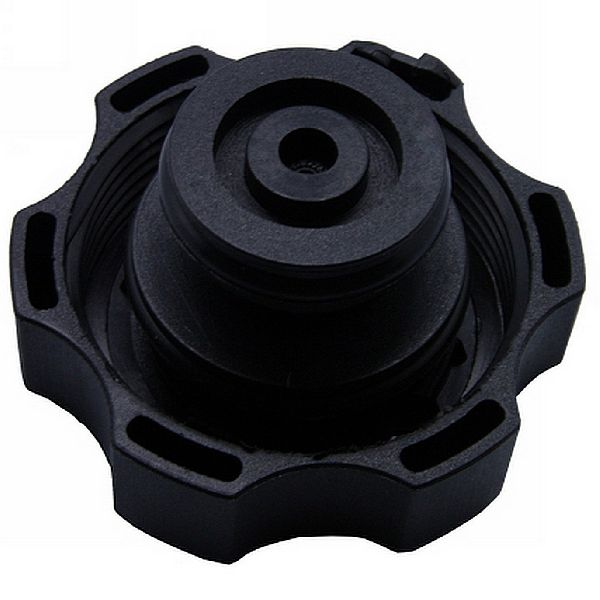
- Rent or buy a cooling system pressure tester. 🎬 Watch: How to pressure test and vacuum fill your cooling system. With the engine cold, pressurize the system to the specification listed on the reservoir cap (typically 15-16 PSI).
- Watch the pressure gauge. If it drops, there is a leak. Carefully inspect all hoses, the radiator, water pump housing, and hose connections for drips or residue. A TSB points to the upper radiator hose quick-connect fitting as a common failure point. Also check for hoses rubbing on pulleys.
- If a leak is found, replace the faulty component (e.g., hose, clamp, seal).
- If no leak is found, the issue is likely air trapped in the system.
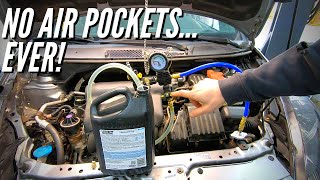
- Perform a cooling system drain and fill. Using a vacuum-fill tool is the GM-recommended method to prevent air pockets. 🎬 See this walkthrough on vacuum filling to avoid air pockets.
- Clear the DTC with the scanner.
- Start the engine and let it reach operating temperature, then perform a road test to ensure the code does not return. Note: TSBs mention that P3075 may reset once immediately after the service fill until all air is properly purged. If it does, clear it and test again.
- Use a professional scan tool (like GM's GDS) to confirm the P3075 diagnostic test has run and passed in the current drive cycle before returning the vehicle to service.
Parts You'll Likely Need
- Radiator Inlet Hose
(OEM #Varies by VIN, verify with dealer)— A documented failure point is the seal on the quick-connect fitting, leading to leaks that cause code P3075. The hose is often replaced as an assembly. Always verify the correct part number for your specific vehicle VIN.
Trusted brands: ACDelco, Gates
OEM price range: $80-$150
Aftermarket price range: $50-$100 - Engine Coolant / Antifreeze
(OEM #ACDelco 10-101 / GM 12346290 (DEX-COOL))— The system must be refilled with the correct type of coolant (typically DEX-COOL for GM vehicles) after any repairs.
Trusted brands: ACDelco DEX-COOL, Prestone DEX-COOL
OEM price range: $20-$30 per gallon
Aftermarket price range: $18-$25 per gallon
Technical Service Bulletins (TSBs) & Recalls

- 21-NA-257: Malfunction Indicator Lamp (MIL) Illuminated - DTC P3075 Set. This is the primary document defining the cause as 'low coolant or air trapped in the system'. It provides the diagnostic procedure, warns against replacing the pump initially, and specifies that the pump should only be replaced if the code returns a second time after a fix.
- 19-NA-149: Malfunction Indicator Lamp (MIL) Illuminated with DTC P3075 Set. An earlier bulletin that also points to low coolant/air but adds a 'software anomaly' as a potential cause, primarily for 2019 model year trucks.
Platform-Specific Known Issues
- GM has issued multiple service bulletins (including #21-NA-257) across a wide array of vehicles, indicating this is a known issue related to system sensitivity and potential leak points. The problem is not isolated to the CT5 and also affects the Cadillac CT4, XT4, XT5, XT6, Chevy Blazer, Chevy Malibu, and GMC Acadia with the 2.0L LSY engine, as well as trucks with the 2.7L L3B engine.
Mechanic-Grade Diagnostic Values
- ECM Intrusive Diagnostic Test — expected: The ECM commands the coolant pump to ~4000 RPM for 15 seconds and measures the AC current draw.. Failure: The measured AC current is lower than the expected range. This indicates the pump is moving less dense fluid (air) or is cavitating due to a leak.
- DTC Set Time — expected: A mismatch between the actual and desired coolant pump current must persist for more than 5.0 seconds for the code to be set.. Failure: Condition met for > 5.0s.
Scan Tool Commands That Help
- GDS2 (GM Global Diagnostic System): Cooling System Draining and Filling — This is the guided procedure in the factory service information (SI) for properly refilling and bleeding the system to prevent trapped air, which is a primary cause of P3075.
- GDS2 (GM Global Diagnostic System): Diagnostic Test Status Confirmation — After repairs, a technician must use GDS2 to 'confirm the P3075 has run and passed in the current drive cycle.' This ensures the ECM's self-test has completed successfully before returning the vehicle to the customer.
- GDS2 (GM Global Diagnostic System): Automated Bleed Procedure — On some GM platforms, a specific 'Coolant Pump Bleed Procedure' exists in GDS2 that automates the process of cycling the pump to purge air. This is crucial after any component replacement or draining of the system.
- GDS2 (GM Global Diagnostic System): Engine Coolant Control Valve Mode — For diagnosing related cooling system codes (like P1098/P26BB), this function allows a technician to command the coolant flow control valve to verify its operation, which can be helpful in a comprehensive cooling system check.
Wiring & Ground Locations
- G1xx Series Grounds — Grounds starting with 'G1' are located in the engine compartment, on or forward of the firewall.. The electric coolant pump (designated G59 Engine Coolant Pump in some service data) requires a solid ground to operate correctly. A poor ground connection at a location like G101 (often lower engine block) or G105 (often near cooling fans) could cause low current draw, mimicking the signature of air in the system and triggering P3075.
- Pump Electrical Connector — On the electric coolant pump housing itself.. The pump is typically controlled via a multi-pin connector. One pin will be for switched 12V+ power, one will be for ground, and others will be for LIN bus or PWM control signals from the ECM. A visual inspection for corrosion or damage at this connector is a critical, simple check.
Real Owner Repair Stories
- Reddit user on r/MechanicAdvice (2024 Chevy Colorado w/ L3B engine (platform mate)) — Check Engine Light with P3075, radiator fan runs fast and stays on, dampened throttle response, high oil pressure reading on gauge. All engine temps appeared normal.
❌ Tried (didn't work) The user was in the initial diagnostic phase, but restarting the truck or clearing the code would sometimes make the issue go away temporarily.
✅ What actually fixed it The thread did not have a final resolution from the original poster, but another user provided high-value diagnostic data from AllData, stating the code sets when 'Engine Coolant Pump Current — Actual & Desired = Do not match — For greater than 5.0 s.' The advice given was to check for wiring issues or have a dealer investigate, reinforcing the TSB guidance. - Reddit user on r/Vauxhall (2021 Vauxhall (Opel) Insignia (European GM platform)) — Initial 'low coolant' warning, followed by Check Engine Light with code P3075. After topping off coolant, the light returned without a low coolant warning.
❌ Tried (didn't work) Simply topping off the coolant without addressing the underlying leak.
✅ What actually fixed it The user concluded, 'it definitely has a coolant leak so I'm thinking this is likely the issue.' This real-world example strongly supports the TSBs' primary diagnosis that a leak is the root cause, not the pump itself.
Helpful Videos
We Have This Part in Stock

The information in this article is provided for general reference and educational purposes only. Vehicle specifications, procedures, and part compatibility can vary by production date, trim level, and region. Always consult your vehicle's factory service manual and verify part numbers before purchasing or performing repairs. Safety-critical components such as airbags, seat belts, and braking systems should be installed by a qualified professional.
- Cadillac CT5:
- 🧭 Diagnostic Flowchart
- 🎬 Helpful Videos
- 🛍️ Shop This Part
- What's Unique About the 2020-2022 Cadillac CT5
- Symptoms You May Notice
- Most Likely Causes
- Rare But Worth Checking
- Diagnosis Steps
- Parts You'll Likely Need
- Technical Service Bulletins (TSBs) & Recalls
- Platform-Specific Known Issues
- Mechanic-Grade Diagnostic Values
- Scan Tool Commands That Help
- Wiring & Ground Locations
- Real Owner Repair Stories
- 🎟️ Get 5% Off