

P3075 on 2020-2022 Cadillac XT6: Engine Coolant Flow Too Low Causes and Fixes
This code almost always means you have a coolant leak or air trapped in the cooling system. The most common fix is to find and repair the leak, then properly bleed the system. Do not replace the coolant pump unless all other steps have failed, as explicitly stated in GM service bulletins.
- P3075 means there is a lack of coolant flow, not necessarily a bad coolant pump.
- The first and most important step is to perform a cooling system pressure test to check for leaks, paying special attention to hose connections.
- If no leaks are found, the system likely has trapped air and needs to be properly bled using a vacuum-fill tool and the manufacturer's procedure.
- Only replace the engine coolant pump as a last resort if the code returns a second time after all other steps have been taken.
What's Unique About the 2020-2022 Cadillac XT6
Unlike traditional belt-driven water pumps, the 2.0L LSY engine in the XT6 uses a sophisticated, variable-speed electric coolant pump. The vehicle's computer actively monitors this pump's performance by checking its current draw. This allows it to detect problems not just with the pump itself, but with the cooling system as a whole. A low current draw is a clever way to infer that the pump isn't working hard enough, which usually points to a lack of coolant (from a leak) or air pockets, rather than an electrical failure of the pump motor. This diagnostic strategy is common across many modern GM vehicles with 1.3L, 2.0L, and 2.7L engines.
Diagnostic Flowchart
Tap your situation to follow the diagnostic path that matches what you're seeing on this vehicle.
Symptoms You May Notice
- Check Engine Light (Malfunction Indicator Lamp) is illuminated.
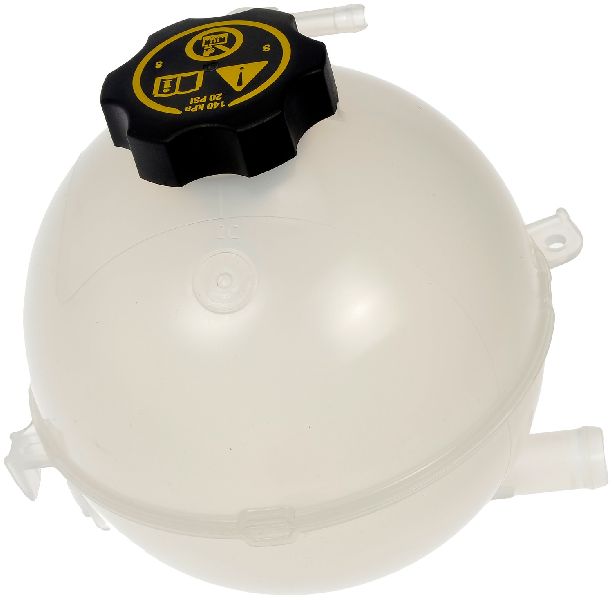
- Low coolant level in the reservoir.
- Visible coolant leaks under the vehicle, potentially pink or green fluid.
- Engine may run hotter than normal or overheat in severe cases.
- Engine fan runs continuously at high speed, even after shutting the engine off.
- Vehicle may enter a reduced power or 'reduced acceleration drive with care' mode.
- Coolant smell from the engine bay.
- Replacing the engine coolant pump immediately. TSBs 21-NA-257, PIP5650B, and 19-NA-149 all strongly advise against this, as the root cause is usually a leak or air in the system, not a faulty pump.
Most Likely Causes
- Low Engine Coolant Level (due to external leak) 🔴 High Probability → Shop Engine Coolant / Antifreeze General Motors has issued bulletins for similar platforms noting issues with radiator hose seals, specifically the upper radiator inlet hose quick-connect fitting, which can lead to slow leaks due to a degraded seal. Leaks from loose hose connections are a common issue on platform mates like the Chevy Blazer and GMC Acadia.
How to confirm: Visually inspect the coolant reservoir. Perform a cooling system pressure test to identify the source of any leaks. Check around hose connections, the radiator, and the water pump housing. A technician fixed a leak on a 2019 Chevy Blazer by replacing an O-ring on a coolant pipe to the thermostat housing.
Typical fix: Repair the source of the leak, which may involve replacing a hose, clamp, or seal. Then, refill and bleed the cooling system. TSB PIT6494A specifically addresses replacing the radiator inlet hose due to a degraded seal.
Est. part cost: $20-$150 - Air Trapped in the Cooling System 🟡 Medium Probability This often occurs after a coolant service (like a drain and fill) if the bleeding procedure is not performed correctly. It can also be a consequence of a coolant leak allowing air to enter the system. GM bulletins note that the P3075 code may reset after a coolant service until all air is purged.
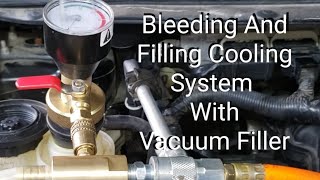
How to confirm: This is a diagnosis of exclusion. If there are no leaks but the code persists, improper bleeding is the likely cause. The code may set after a recent coolant service. A proper vacuum-fill tool is highly recommended for this procedure 🎬 See how to use a vacuum filler to properly bleed the system. to prevent introducing air.
Typical fix: Perform the GM-specific cooling system bleeding procedure. This requires a vacuum-fill tool and following specific steps to run the engine and purge all air. After refilling, the vehicle must be road-tested to ensure the diagnostic runs and passes.
Est. part cost: $0-$50 (for tools/coolant) - Failing Engine Coolant Pump ⚪ Low Probability → Shop Engine Water Pump While possible, GM Technical Service Bulletins explicitly state not to replace the pump until all other possibilities (leaks, air in system) have been ruled out. The diagnostic logic is designed to detect system issues, not just pump failure.
How to confirm: If the cooling system is full, has no leaks, has been properly bled using the correct procedure, and the code P3075 returns for a second time, the pump itself may be faulty. This is a last-resort diagnosis.
Typical fix: Replace the engine coolant pump assembly. The ACDelco OEM part is a common replacement.
Est. part cost: $250-$500
Rare But Worth Checking
- ECM Software Anomaly: An older TSB for the 2019 model year (19-NA-149) mentioned a software anomaly as a potential cause, requiring an ECM reprogram. It's worth checking if the vehicle has the latest ECM software, though this is less likely on a 2020-2022 model.
- Wiring/Connection Issue to Coolant Pump: → Shop Engine Coolant / Antifreeze TSB PIP5863B addresses a related code, U0672 (Lost Communication with Engine Coolant Pump), on the same platforms. It suggests checking for wiring contamination, terminal tension, or connection issues at the pump. While not directly for P3075, a poor connection could theoretically affect current readings.
Diagnosis Steps
- Verify the Check Engine Light is on and code P3075 is present in the ECM.
- Check the engine coolant level in the reservoir. If low, top it off with the correct type of coolant (ACDelco DEX-COOL).
- Perform a cooling system pressure test to check for external leaks. Pay close attention to radiator hoses (especially the upper inlet quick-connect), the radiator itself, and the coolant pump housing.
- If a leak is found, repair it. This may involve replacing a hose, clamp, or gasket. TSB PIT6494A points to a degraded radiator inlet hose seal as a specific known issue.
- Once any leaks are repaired, perform the manufacturer-specified cooling system draining and filling procedure. A vacuum-fill tool (like the GE-47716 Vac-N-Fill) is strongly recommended to ensure no air is trapped.
- Clear the DTCs with a scan tool.
- Start the engine and let it reach operating temperature. Use the GDS2 scan tool to run the automated 'Cooling System Bleed Procedure' if available, or follow the manual procedure.
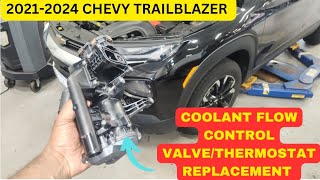
- Road test the vehicle to allow the P3075 diagnostic to run again. 🎬 Watch this walkthrough on related coolant flow control valve repairs. Note that the code may reset once after the service until all air is purged.
- Using a GDS scan tool, confirm the P3075 diagnostic has run and passed in the current drive cycle before returning the vehicle to the customer.
- If the code returns for a second time after confirming there are no leaks and the system is properly bled, the engine coolant pump may be faulty and require replacement.
Parts You'll Likely Need
- Engine Coolant
(OEM #12346290 (ACDelco DEX-COOL))— The system will need to be topped off or refilled after any repair.
Trusted brands: ACDelco
OEM price range: $25-$35 (per gallon)
Aftermarket price range: $20-$30 (per gallon) - Radiator Inlet Hose
(OEM #84863060)— Hoses and their seals are a common source of coolant leaks. TSB PIT6494A points to a degraded inlet hose seal as a potential cause on related platforms.
Trusted brands: ACDelco, Gates
OEM price range: $50-$100
Aftermarket price range: $30-$70 - Engine Coolant Pump
(OEM #12712243 (ACDelco))— This is the final part to replace if all other diagnostic steps fail to resolve the code. Several aftermarket versions are also available.
Trusted brands: ACDelco, TOPAZ
OEM price range: $300-$500
Aftermarket price range: $200-$400
Related Codes That Often Appear With This One
- P3076 — P3076 is 'Engine Coolant Pump High Current Performance.' While opposite in meaning, they are related to the same system and the same intrusive diagnostic test performed by the ECM.
- U0672 — U0672 is 'Lost Communication with Engine Coolant Pump'. A TSB for this code on the same vehicles points to potential wiring or connector issues with the pump, which could be a related underlying problem.
Technical Service Bulletins (TSBs) & Recalls
- 21-NA-257: Defines the code as 'Engine Coolant Flow Too Low' and provides the diagnostic procedure of checking for leaks and air in the system before considering pump replacement. It covers a wide range of GM vehicles with 1.3L, 2.0L, and 2.7L engines, including the XT6.
- PIP5650B: A preliminary information bulletin that reiterates the diagnostic advice of TSB 21-NA-257, emphasizing not to replace the pump unless the code returns a second time after repairs and bleeding.
- 19-NA-149: An earlier TSB focused on 2019 models that included a potential software anomaly as a cause in addition to low coolant/air.
- PIT6494A: Specifically identifies a coolant leak from the upper radiator inlet hose quick-connect fitting due to a degraded seal as a possible cause for low coolant levels that can trigger P3075.
Platform-Specific Known Issues
- GM has released multiple service bulletins related to DTC P3075 across various models sharing this engine platform, indicating a common pattern where leaks or air in the system are the primary cause, not a defective pump.
- A Reddit user with a 2024 GMC Acadia (a platform mate) reported code P3075 along with low, 'chunky looking' brown coolant at only 4,500 miles, indicating a potential contamination issue in the system that required extensive parts replacement by the dealer.
Mechanic-Grade Diagnostic Values
- ECM Intrusive Diagnostic Test — expected: The ECM commands the coolant pump to ~4000 RPM for 15 seconds and measures the AC current draw. The expected current value is not published, but the logic is based on a calibrated range.. Failure: A lower-than-expected AC current reading implies the pump is cavitating due to air or low coolant, which sets DTC P3075.
Scan Tool Commands That Help
- GDS2 (GM Global Diagnostic System 2): Cooling System Draining and Filling / Coolant Pump Bleed Procedure — This automated procedure must be used after any coolant service or repair that introduces air into the system. It activates the electric pump in a specific sequence to purge trapped air, which is critical for resolving P3075.
- GDS2 (GM Global Diagnostic System 2): Diagnostic Test Status Confirmation — After repairs and road testing, a technician must use the GDS2 to verify that the P3075 intrusive diagnostic has 'run and passed' during the current drive cycle. This confirms the fix is successful before returning the vehicle to the customer.
Wiring & Ground Locations
- G110 / G114 — On related GM trucks of the same era, G110 is located at the right rear of the engine, often on the back of the cylinder head. G114 is also a key engine ground.. GM issued an Engineering Information bulletin (PIE0548) to investigate issues caused by loose ground connections at G110 and G114. While not specific to P3075, a poor ground can cause a variety of electrical issues, including incorrect sensor readings or component performance. Checking the torque and cleanliness of these main engine grounds is a valid advanced diagnostic step if the cause is not an obvious leak.
Real Owner Repair Stories
- Reddit user on r/MechanicAdvice (2024 GMC Acadia (platform mate) with 4,500 miles) — Check engine light, 'reduced acceleration drive with care' message, P3075 code, engine fan running after shutoff, low coolant level.
✅ What actually fixed it The owner observed 'brown and chunky looking' coolant and took the vehicle to the dealer for diagnosis and repair. The outcome points towards a significant coolant contamination issue rather than a simple leak.
"I Checked Everything" — The Actual Cause
- According to GM TSBs, the code P3075 can reset one time after a coolant leak has been repaired and the system refilled. This is because residual air can remain trapped until it is fully purged through proper bleeding procedures and a road test. A technician may perform a pressure test (which passes), refill the system, and be confused when the code returns. The actual cause is incomplete air bleeding, which is resolved by running the GDS2 automated bleed procedure and/or road testing the vehicle until the diagnostic runs and passes.
Model Year Variations Within This Range
- 2019: TSB 19-NA-149 specifically addresses 2019 models (including those with the 2.7L L3B engine, a close relative) and mentions a potential 'software anomaly' as a cause for P3075. The first step in the diagnosis for these vehicles is to check if an ECM software update is available. This is less likely to be the primary cause on 2020-2022 models which should have later software versions.
Helpful Videos
Used OEM Parts in Stock
New Aftermarket Parts Available


The information in this article is provided for general reference and educational purposes only. Vehicle specifications, procedures, and part compatibility can vary by production date, trim level, and region. Always consult your vehicle's factory service manual and verify part numbers before purchasing or performing repairs. Safety-critical components such as airbags, seat belts, and braking systems should be installed by a qualified professional.
- Cadillac XT6:
- 🧭 Diagnostic Flowchart
- 🎬 Helpful Videos
- 🛍️ Shop This Part
- What's Unique About the 2020-2022 Cadillac XT6
- Symptoms You May Notice
- Most Likely Causes
- Rare But Worth Checking
- Diagnosis Steps
- Parts You'll Likely Need
- Related Codes That Often Appear With This One
- Technical Service Bulletins (TSBs) & Recalls
- Platform-Specific Known Issues
- Mechanic-Grade Diagnostic Values
- Scan Tool Commands That Help
- Wiring & Ground Locations
- Real Owner Repair Stories
- "I Checked Everything" — The Actual Cause
- Model Year Variations Within This Range
- 🎟️ Get 5% Off