

P3081 on 2018-2019 Volkswagen Golf: Engine Temperature Too Low Causes and Fixes
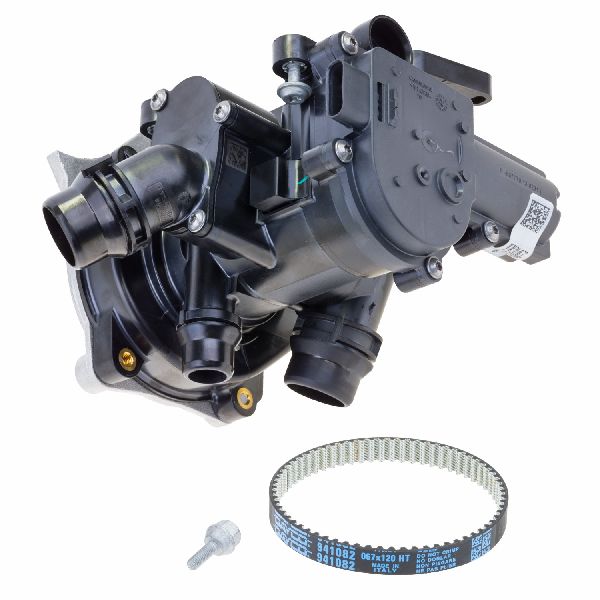
On a 2018-2019 VW Golf, code P3081 almost always means the thermostat is stuck open. Because the thermostat is integrated with the water pump into a single plastic housing on the EA888 engine, the entire assembly usually needs to be replaced. This is a common, complex job with shop costs ranging from $1,000 to $1,600.
- P3081 means your Golf's engine is not warming up properly, most likely due to a thermostat that is stuck open.
- On this specific vehicle, the thermostat is part of a larger, expensive water pump assembly that must be replaced as a single unit.
- The most reliable way to diagnose a stuck thermostat is to watch the live coolant temperature on a scan tool while driving at highway speeds; a significant temperature drop confirms the issue.
- This is not a simple or cheap repair for a DIY mechanic; professional service is highly recommended and can cost over $1000.
- Always use the correct VW-specific coolant (G12/G13/G12evo) when refilling the system to prevent damage.
What's Unique About the 2018-2019 Volkswagen GOLF
The 2018-2019 Golf (Mk7/7.5 generation) commonly uses the 1.8T or 2.0T EA888 Gen 3 engine. On these engines, Volkswagen integrated the thermostat and its electronic actuator with the water pump into a single, complex plastic housing. This entire assembly is a well-documented, high-failure part across many VW and Audi models. This design means a simple, cheap thermostat failure requires the replacement of the entire, expensive assembly, making P3081 a common and surprisingly costly code on this platform. Volkswagen has released multiple revisions of the part to improve durability.
Diagnostic Flowchart
Tap your situation to follow the diagnostic path that matches what you're seeing on this vehicle.
Symptoms You May Notice
- Check Engine Light is on
- Engine temperature gauge takes very long to reach the middle, or drops towards cold during highway driving or coasting downhill.
- Poor or no heat from the cabin vents, especially in cold weather.
- Decreased fuel economy.
- Engine cooling fans running constantly at high speed as a default fail-safe strategy.
- Replacing only the ECT sensor when the thermostat is the actual problem. Due to the diagnostic evidence (slow warmup, temp drop at speed), it's often possible to distinguish between the two failures before buying parts.
Most Likely Causes
- Thermostat Stuck Open 🔴 High Probability → Shop Integrated Thermostat Housing Assembly The thermostat is part of a large, plastic water pump and thermostat housing assembly that is a notorious weak point on the EA888 engine. The internal mechanism fails, causing it to stick open. The thermostat is not sold separately from the housing.
How to confirm: Use a scan tool to monitor live coolant temperature. If the temperature rises toward normal while idling but drops significantly (e.g., from 90°C down to 70°C) when driving at highway speeds, the thermostat is almost certainly stuck open.
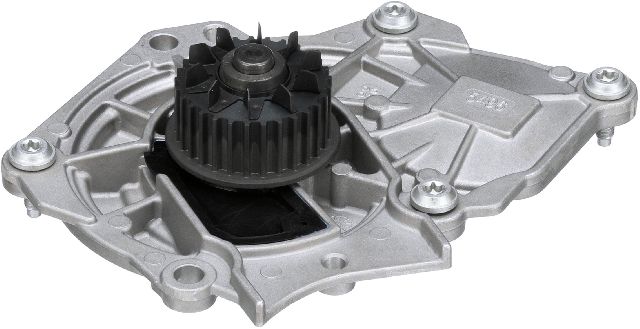
Typical fix: Replace the entire water pump and thermostat housing assembly. It is also highly recommended to replace the small belt that drives the water pump and the plastic union pipe to the oil cooler at the same time.
Est. part cost: $300-$550 - Faulty Engine Coolant Temperature (ECT) Sensor 🟡 Medium Probability → Shop Engine Coolant / Antifreeze ECT sensors can degrade over time and send inaccurate signals to the ECM. It's a common failure point on many VW models and can trigger P3081 if it falsely reports a low temperature.
How to confirm: Monitor live coolant temperature data on a scan tool. If the reading is erratic, jumps to extreme highs or lows (e.g., -40°C), or doesn't change as the engine warms up, the sensor is likely faulty.
Typical fix: Replace the Engine Coolant Temperature sensor (often referred to as G62). The system will lose a small amount of coolant during this process, so have some correct-spec coolant ready to top off. 🎬 See how to diagnose and replace the coolant temperature sensor.
Est. part cost: $20-$60 - Low Coolant Level or Air in System ⚪ Low Probability → Shop Engine Coolant / Antifreeze The complex cooling system can sometimes trap air, especially after being serviced. More commonly, slow leaks from the water pump housing itself cause the coolant level to drop over time, which can eventually lead to air pockets and erratic sensor readings.
How to confirm: Visually inspect the coolant expansion tank when the engine is cold. The level should be between the 'MIN' and 'MAX' marks. If low, the system has a leak that must be found. The water pump housing is the primary suspect for slow leaks.
Typical fix: Find and repair the source of the coolant leak. Then, properly bleed the cooling system using a vacuum tool to remove all air pockets and top off with VW-specific G12, G13, or G12evo coolant.
Est. part cost: $25-$50 for coolant
Rare But Worth Checking
- Wiring or Connector Issue: Damage to the wiring harness or corrosion in the connector for the ECT sensor can cause a loss of signal. Always inspect the connector and nearby wiring for damage before replacing the sensor itself.
- ECM Software Issue: In some cases, VW has issued software updates to correct logic errors that could falsely trigger coolant-related codes. TSB 01-22-02 was released for 2019-2021 Jetta/Golf models for low heat complaints and also proactively corrects other DTCs, though it's not a direct fix for P3081.
Diagnosis Steps
- Check the coolant level in the expansion tank (when the engine is cold). If it is low, top it off with the correct spec coolant and check for visible leaks, paying close attention to the water pump housing and its connections. Leaks often leave a white or pink crusty residue.
- Connect an OBD-II scanner and check for any other accompanying fault codes, such as P0116 or P0128.
- Use the scanner to monitor live data for the Engine Coolant Temperature.
- Start the engine from cold and watch the temperature reading. It should climb steadily.
- Drive the vehicle at highway speeds. If the temperature drops significantly (e.g., from 90°C down to 70°C), the thermostat is stuck open. This is the most definitive test.
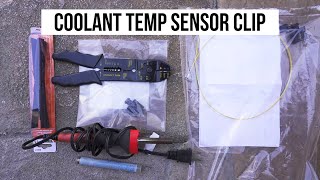
- If the temperature reading is erratic, does not rise, or shows an impossible value (e.g., -40°C), inspect the ECT sensor and its wiring connector 🎬 Watch: Tips for installing the coolant temperature sensor clip. for damage or corrosion.
- If the wiring appears intact, the ECT sensor is the likely culprit.
- If the temperature behaves as described in step 5, the water pump/thermostat assembly needs to be replaced.
Parts You'll Likely Need
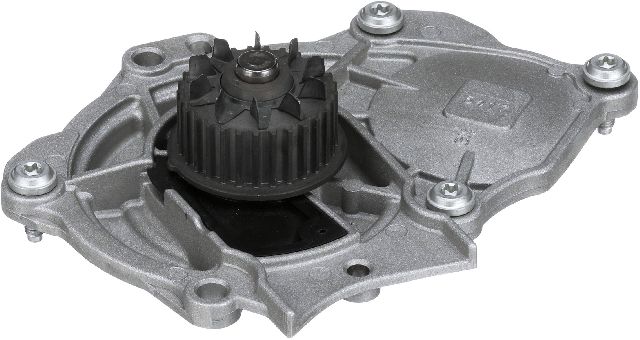
- Water Pump and Thermostat Housing Assembly
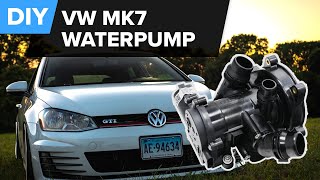
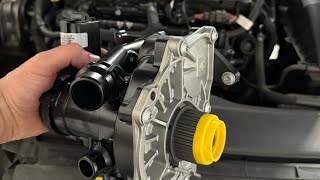
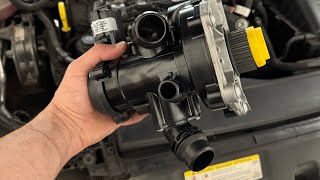
(OEM #06L121111P (supersedes H, J, K, L, M, N))— This is the most common cause of P3081 on this engine, as the internal thermostat fails in the open position and is not sold separately from the housing. Part has been revised multiple times; 'P' is the latest version.
Trusted brands: Volkswagen Genuine, INA, Continental
OEM price range: $450-$600
Aftermarket price range: $300-$450 - Engine Coolant / Antifreeze
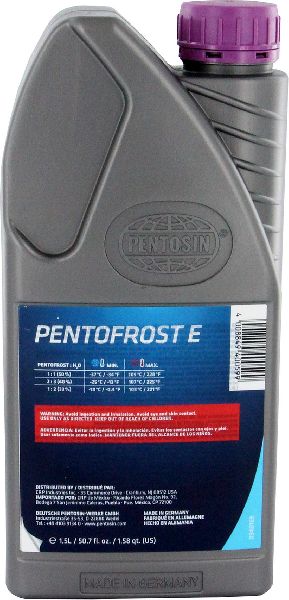
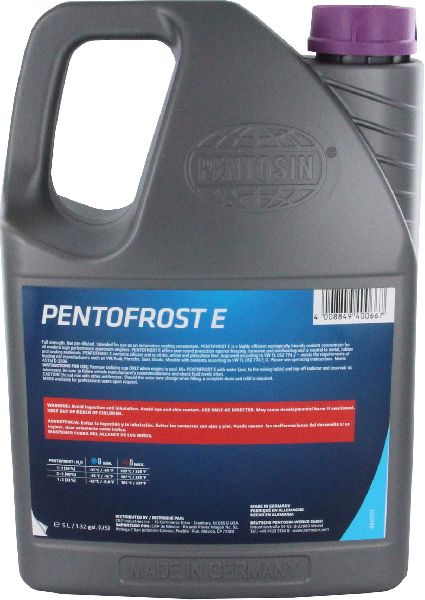
(OEM #G12E050A3 (G12evo))— The cooling system must be drained to replace the water pump/thermostat. It must be refilled with the correct VW-specific fluid (G13 or the newer G12evo).
Trusted brands: Volkswagen G12evo, Pentosin Pentofrost E
OEM price range: $30-$40 per gallon
Aftermarket price range: $25-$35 per gallon - Engine Coolant Temperature (ECT) Sensor
(OEM #05C919501 (supersedes 06A919501A))— This is the second most likely cause. It is a much cheaper part to replace and should be considered if diagnostic tests point to an electrical fault rather than a mechanical (stuck thermostat) one.
Trusted brands: Bosch, Febi, Volkswagen Genuine
OEM price range: $40-$60
Aftermarket price range: $20-$40
Related Codes That Often Appear With This One
- P0116 — This code indicates an 'Engine Coolant Temperature Sensor 1 Circuit Range/Performance' issue, which can be triggered by the same underlying problems as P3081, such as a stuck thermostat causing an implausible temperature reading. The NHTSA TSB VIN4APIN20220831 explicitly groups these codes together.
- P0128 — This is the generic OBD-II equivalent of P3081, meaning 'Coolant Thermostat (Coolant Temperature Below Thermostat Regulating Temperature)'. It points to the exact same failure.
- P0117 — This code for 'Engine Coolant Temperature Sensor 1 Circuit Low' points more directly to a sensor or wiring fault, but can appear with P3081 if the sensor fails by reading excessively low. [⭐ MANUFACTURER TSB — highest authority] Bulletin #VIN4APIN20220831
Technical Service Bulletins (TSBs) & Recalls
- [⭐ MANUFACTURER TSB — highest authority] Bulletin #VIN4APIN20220831: Mentions P3081 in a list of faults (along with P0116, P0117) related to customer complaints of a coolant light on or low coolant level, indicating a known pattern of cooling system faults.
- TSB 01-22-02: Issued for 2019-2021 Jetta/Golf models with the 1.4T engine for a 'low or no heat output' complaint. It involves an ECM software update that also proactively corrects other fault codes (P0441, P04F0, etc.). While not a direct fix for P3081, it addresses related cooling system logic.
Platform-Specific Known Issues
- Slow Coolant Loss Preceding Failure: → Shop Engine Coolant / Antifreeze Many owners report a slow, persistent drop in the coolant level for months before the P3081 code appears. This is often due to a hairline crack or failing seal in the plastic water pump/thermostat housing. The leak is often so slow that it evaporates before dripping on the ground, leaving only a faint pink/white crusty residue on the front of the engine block below the intake manifold.
Mechanic-Grade Diagnostic Values
- Engine Coolant Temperature (G62) Sensor Resistance — expected: Approx. 2500 Ohms at 20°C (68°F); 275-375 Ohms at 80°C (176°F).. Failure: Resistance is infinite (open circuit) or near zero (short circuit), or does not correspond to the temperature/resistance chart.
- Scan Tool Live Data - ECT Sensor Reading — expected: Should show ambient temperature when cold and climb steadily to ~90°C+ at idle.. Failure: A reading fixed at an extreme like -40°C or 140°C indicates an open or shorted circuit, respectively. Erratic jumps in temperature (e.g., 80°C to 105°C and back) also point to a failing sensor.
Scan Tool Commands That Help
- VCDS (VAG-COM): [01-Engine] -> [Output Tests - 03] — This function allows you to sequentially activate various components controlled by the engine module, including potentially the cooling fans and auxiliary pumps, to verify their operation. The exact tests available are determined by the control module.
- VCDS (VAG-COM): [08-Auto HVAC] -> [Output Tests - 03] — This can be used to test components related to the cabin heating circuit, such as the heater support pump (if equipped), which can help diagnose broader cooling system issues.
Wiring & Ground Locations
- G62 Sensor Connector — On the EA888 engine, the G62 sensor is typically located on the thermostat housing itself, under the intake manifold. The connector is a 4-pin style, often part number 4B0 973 712.. Corrosion or damage to this connector or its terminals can cause an open or shorted signal, leading to false P3081 codes. Service information notes that only gold-plated terminals should be used for repairs to ensure a reliable connection.
- Main Engine/Chassis Ground — A primary ground strap connects the engine block/transmission to the vehicle's chassis, typically near the engine mount. Its exact location can vary slightly but is critical for all engine sensor readings.. A poor ground connection can create voltage offsets and unstable readings for all sensors referenced to it, including the ECT sensor, potentially causing erratic behavior and fault codes. A visual inspection for corrosion and tightness is a key preliminary check.
Real Owner Repair Stories
- Rennlist Forum User (2014 Porsche Cayenne GTS (Uses a similar electronically controlled thermostat concept)) — P3081 code, engine temperature would not go above ~84°C. Monitoring live data showed the temperature spiking and dropping erratically during warmup.
❌ Tried (didn't work) The user first identified the symptoms via OBD scanner before proceeding to the fix.
✅ What actually fixed it The user identified a malfunctioning temperature sensor at the back of the engine block was causing the ECU to command the heated thermostat to stay open. Replacing the sensor resolved the issue. This highlights how a sensor failure can directly cause the thermostat to behave as if it were mechanically stuck.
OEM Part Supersession History
06L121111F, G, H, J, K, L→06L121111M, then 06L121111P— The plastic thermostat housing is a known high-failure part due to cracks and internal thermostat failures. Successive revisions were released to improve the durability of the plastic and the internal components. One specific improvement mentioned is changing the thermostat angle sensor from an inductive type to a more reliable Hall sensor.
Heads up: All listed part numbers (F through P) are generally interchangeable for the EA888 Gen 3, but installing the latest revision (06L121111P) is highly recommended to get the most durable version and prevent repeat failures.
Model Year Variations Within This Range
- 2018 vs 2019: For the base Golf, the 2019 model year saw a change from the 1.8T engine to a 1.4T engine, which has a different cooling system architecture (EA211 vs EA888). For the GTI/R models, the 2.0T EA888 engine remained, but 2019 models received a 7-speed DSG (DQ381) instead of the 6-speed, and some reports indicate a different camshaft. However, these changes do not fundamentally alter the cause or diagnosis of P3081, as the failure-prone water pump/thermostat assembly is a consistent feature of the EA888 Gen 3 engine in both years.
Helpful Videos

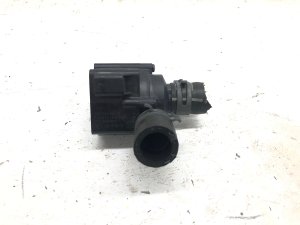
Used OEM Parts in Stock
New Aftermarket Parts Available


The information in this article is provided for general reference and educational purposes only. Vehicle specifications, procedures, and part compatibility can vary by production date, trim level, and region. Always consult your vehicle's factory service manual and verify part numbers before purchasing or performing repairs. Safety-critical components such as airbags, seat belts, and braking systems should be installed by a qualified professional.
- Volkswagen GOLF:
- 🧭 Diagnostic Flowchart
- 🎬 Helpful Videos
- 🛍️ Shop This Part
- What's Unique About the 2018-2019 Volkswagen GOLF
- Symptoms You May Notice
- Most Likely Causes
- Rare But Worth Checking
- Diagnosis Steps
- Parts You'll Likely Need
- Related Codes That Often Appear With This One
- Technical Service Bulletins (TSBs) & Recalls
- Platform-Specific Known Issues
- Mechanic-Grade Diagnostic Values
- Scan Tool Commands That Help
- Wiring & Ground Locations
- Real Owner Repair Stories
- OEM Part Supersession History
- Model Year Variations Within This Range
- 🎟️ Get 5% Off