

P3081 on 2021 Volkswagen ID.4: High-Voltage Coolant Low Causes and Fixes
On a 2021 VW ID.4, P3081 means the high-voltage battery coolant level is critically low. This is often just due to air in the system settling and requires a top-off with specific VW G12evo coolant. Stop driving immediately to prevent battery damage and seek professional service for proper system bleeding.
- P3081 on an ID.4 is a critical warning for low high-voltage battery coolant, not low engine temperature.
- Stop driving immediately to prevent expensive battery damage.
- The most common cause is a simple low coolant level from settled air pockets, which requires a top-off with VW G12evo coolant and a proper electronic bleeding procedure.
- If the coolant level is full, the level sensor (part of the expansion tank) has likely failed.
- Due to high-voltage risks, all repairs beyond a visual check and top-off should be performed by a professional.
What's Unique About the 2021-2021 Volkswagen ID.4
This code is a prime example of a manufacturer-specific definition. On gasoline-powered Volkswagens and Audis, P3081 means 'Engine Temperature Too Low,' usually pointing to a bad thermostat that is stuck open. On the ID.4 and other MEB platform EVs, the same code number is repurposed to mean 'High-Voltage Coolant Level Low'. The most common reason for this on a new or low-mileage ID.4 is not a major failure, but simply the settling of air pockets left in the complex cooling system from the factory fill, leading to a drop in the reservoir level.
Symptoms You May Notice
- Red or yellow 'Check Coolant' warning light on the dashboard.
- Warning message regarding the high-voltage system or thermal management.
- Reduced power or performance as the vehicle enters a protective 'limp mode'.
- Charging may be disabled or significantly slowed to prevent heat buildup.
- Assuming the code means 'Engine Temperature Too Low' as it does on gasoline VW models.
- Replacing the battery temperature sensor when the issue is the coolant level or level sensor.
- Simply topping off the coolant and not performing the required electronic bleeding procedure, leading to the fault returning.
Most Likely Causes
- Low High-Voltage Coolant Level 🔴 High Probability → Shop Engine Coolant / Antifreeze The complex cooling system for the battery and electronics can have air pockets from the initial factory fill. Over the first few thousand miles, these air pockets can work their way to the expansion tank, causing the level to drop below the sensor's threshold. This is a widely reported experience by new owners.
How to confirm: Visually inspect the coolant reservoir for the high-voltage system. On the ID.4, there are two reservoirs; the one for the HV system is typically the larger one. If the pink/purple fluid is below the 'MIN' line, the coolant is low.
Typical fix: Top off the coolant reservoir with the correct Volkswagen-specific G12evo coolant. The system must then be inspected for leaks and properly bled by a qualified technician using a specialized scan tool to remove any remaining air. Simply topping it off without bleeding may cause the light to return.
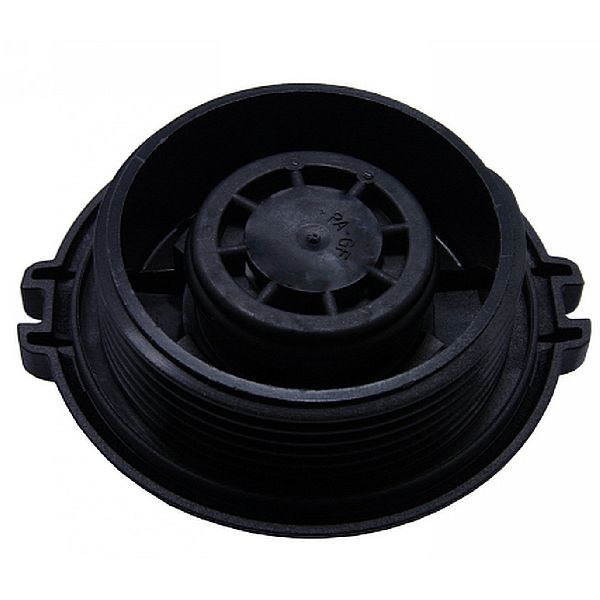
Est. part cost: $25-$50 for coolant - Faulty Coolant Level Sensor 🟡 Medium Probability → Shop Engine Coolant / Antifreeze If the coolant level is visibly full but the code and warning persist, the level sensor itself has likely failed. On the ID.4, this sensor (designated G32) is integrated into the coolant expansion tank and is not sold as a separate part.
How to confirm: Confirm the coolant reservoir is full. Use a VW-compatible scan tool to check the sensor's output. If the level is full but the sensor reports 'low,' the sensor is faulty. This is a common failure mode for this integrated sensor design across VW models.
Typical fix: Replace the entire coolant expansion tank assembly. The OEM part number is a variation of 1EA121407. The system must be drained, the tank replaced, and then the system must be refilled and properly bled.
Est. part cost: $65-$200 - Cooling System Leak ⚪ Low Probability While less common than air pockets on new cars, a physical leak from a hose, radiator, pump, or connection can cause a loss of coolant. Some early ID.4s had TSBs related to potential coolant leaks. On platform-mate Audi e-trons, leaks have been noted at the electric motor seals.
How to confirm: Perform a cooling system pressure test. This will reveal any drop in pressure, indicating a leak. Look for visible signs of pink/purple coolant residue on components under the vehicle, on the undertray, or around hose connections.
Typical fix: Identify the source of the leak and replace the faulty component (e.g., hose, clamp, radiator, water pump). Refill and bleed the cooling system. This requires professional service due to the location of components near high-voltage systems.
Est. part cost: $50-$800+ depending on the leaking part
Diagnosis Steps
- Safely pull over and turn off the vehicle.
- Visually inspect the coolant level in the high-voltage battery coolant reservoir. It should be between the 'MIN' and 'MAX' marks.
- If the level is low, carefully top it off with the correct VW G12evo coolant. Do not proceed with further DIY repair due to high-voltage risks.
- If the warning persists after topping off, the vehicle must be taken to a qualified technician.
- A technician will use a scan tool (ODIS) to confirm the P3081 code and check the live data from the coolant level sensor.
- If the reservoir is full but the sensor reads low, the expansion tank/sensor assembly is the likely fault and will be replaced.
- If the level was low, the technician will perform a pressure test on the cooling system to check for leaks.
- After any repair involving draining or significant top-off, the technician must use the specialized scan tool's 'Guided Functions' to properly bleed the cooling system to remove all air pockets.
Parts You'll Likely Need
- High-Voltage System Coolant (G12evo)
(OEM #G12E050A2)— This is required to top off the system, which is the most common fix due to settled air pockets from the factory.
Trusted brands: Volkswagen OE
OEM price range: $25-$40 per bottle - Coolant Expansion Tank
(OEM #1EA121407F / 1EA121407H)— This part is replaced when the integrated coolant level sensor fails, sending a false low-level signal. The sensor is not available separately.
Trusted brands: Volkswagen OE
OEM price range: $65-$200
Aftermarket price range: $50-$150
Technical Service Bulletins (TSBs) & Recalls
- Bulletin #VIN4APIN20220831 (August 31, 2022): This manufacturer bulletin notes that customers may report a coolant light on with the coolant level low, and specifically lists P3081 as a fault code that may be stored in the ECM memory.
- NHTSA ID #10214799 (June 21, 2022): A general TSB for service advisors that lists 'coolant leak' as a potential customer complaint to investigate, among other issues.
- Audi TSB (NHTSA ID #10247144): While for the Audi Q4 e-tron, it addresses the identical issue of 'Low coolant warning in cluster, coolant level is correct', pointing to a faulty sensor or pump issue on the same platform.
Platform-Specific Known Issues
- Air Pockets from Factory Fill: Many owners on forums like vwidtalk.com and Reddit's r/VWiD4Owners report getting the low coolant warning within the first few thousand miles of ownership. The dealer service typically involves a top-off and a system bleed, often covered under warranty, confirming that air purging from the system is the primary cause.
Scan Tool Commands That Help
- ODIS (or equivalent VW-compatible scan tool): Guided Functions: Cooling System Bleeding/Filling — This is a mandatory step after any repair that introduces air into the high-voltage cooling system, such as replacing the expansion tank or topping off a significant amount of fluid. The function electronically activates various pumps and valves in a specific sequence to purge all trapped air from the complex battery and electronics cooling circuits. Skipping this procedure is a primary reason for the P3081 warning to return even after the coolant level is corrected.
Wiring & Ground Locations
- Ground Point 928 — On electric drive motor 2.. While not directly tied to the level sensor, a poor ground for the electric drive motor or its control modules can cause erratic behavior in the vehicle's network, potentially affecting how various sensor data is interpreted by the main control units like the J840 Battery Regulation Control Module. Ensuring all major grounds for the HV system are clean and secure is a good practice during complex electrical diagnosis.
- Coolant Level/Shortage Indicator Sender (G32) — Integrated into the high-voltage coolant expansion tank.. This is the sensor that directly triggers the P3081 code. It is a simple switch-type sensor. Technicians will test the 2-pin connector at the expansion tank for continuity to verify sensor function before condemning the tank assembly.
Real Owner Repair Stories
- Reddit user jarjarbinx in r/VWiD4Owners (2022 VW ID.4 RWD Pro S) — A 'low coolant level' warning appeared on the dashboard.
✅ What actually fixed it The owner visually confirmed the coolant level was approximately two inches below the 'minimum' mark just six days after purchasing the vehicle. The implied fix was taking it to the dealership for a top-off and system check, which is the standard procedure for the common air pocket settling issue on new ID.4s.
"I Checked Everything" — The Actual Cause
- In the context of a cooling system, the equivalent is a 'pressure test holds steady, but the warning light persists'. If a technician pressure tests the ID.4's cooling system and finds no leaks, and the coolant level in the reservoir is visibly correct (between MIN/MAX), the most likely cause of a persistent P3081 is a faulty coolant level sensor (G32). On the ID.4, this sensor is integrated into the coolant expansion tank. It can fail internally and send a false 'low level' signal to the control module even when the tank is full. The fix is to replace the entire coolant expansion tank assembly.
OEM Part Supersession History
1EA121407F→1EA121407H— Part revisions are common to improve material quality, sensor reliability, or manufacturing processes. The 'H' revision is the later, and likely more reliable, version of the expansion tank.
Diagnostic Flowchart
Other Known Issues on This Vehicle
Issues unrelated to this code that are worth knowing about as an owner of this generation:
- Software & Infotainment Glitches 🟠 Medium — Very common on 2021-2023 models. Issues include slow/frozen/rebooting screens, failed OTA updates, and buggy app connectivity. (Ref: Multiple software update campaigns and recalls issued, such as NHTSA #24V344000 for display failures.)
- 12-Volt Battery Drain 🔴 High — Common problem, especially in cold weather. A weak or dead 12V battery can 'brick' the car, preventing it from starting or even being unlocked. (Ref: No specific recall, but it's a widely documented owner complaint. The issue is often related to software managing the charging of the 12V battery from the main HV battery.)
- Unexpected Door Opening 🔴 High — Affected a specific range of early-build 2021-2022 models. (Ref: NHTSA Recall #23V199000. Water can enter the door handles, causing a short circuit that can command the door to open unexpectedly at low speeds.)
- Charging Failures 🟠 Medium — Intermittently reported by owners. Charging sessions can fail to start or stop unexpectedly, particularly at some DC fast-charging stations. (Ref: Often addressed through software updates, but can also be related to faulty on-board charger hardware on some models.)
Used vs. New Parts: Buying Guide for This Vehicle
When a used part is the smart pick: A used coolant expansion tank can be a cost-effective option if the failure is a faulty integrated level sensor (G32), which is a common issue. Since the tank itself is just a plastic reservoir, a used part from a low-mileage, accident-damaged vehicle is a viable alternative to a new OEM part.
Donor-vehicle mileage cap: roughly under 40000 miles for the part to have meaningful remaining life.
What to inspect on the donor part:
- Check for any hairline cracks or signs of yellowing/brittleness in the plastic, especially around the hose connections and mounting points.
- Ensure the electrical connector pins for the integrated sensor are clean, straight, and free of any corrosion.
- Verify the part number on the used tank matches or is a known supersession of your vehicle's original part number (e.g., 1EA121407F, 1EA121407H).
OEM-only on this vehicle (don't cheap out):
- High-Voltage System Coolant (G12evo): Using anything other than VW-specified G12evo coolant (or an explicitly approved equivalent) is extremely risky. Incorrect coolant chemistry can lead to gelling, corrosion of sensitive components within the battery and power electronics, and damage to seals, causing catastrophic failure of the thermal management system.
Brands owners have reported issues with on this vehicle:
- For critical cooling system components on an EV, it is generally advised to avoid unproven, no-name aftermarket brands. While a reputable brand may eventually offer a quality replacement expansion tank, the risks associated with a part failure near the high-voltage battery warrant caution.
Real Owner Stories
Aggregated from forums and TSBs cited above. Mileages and costs reflect what owners reported in those sources.
2021 Volkswagen ID.4 EV — ~2500 miles
Symptoms: A low coolant warning appeared on the dashboard.
What fixed it: The dealer service performed a coolant top-off and a system bleed, which was covered under warranty. This confirmed the cause was air purging from the system after the factory fill.
Source hint: Vehicle-Specific Issues section citing vwidtalk.com and Reddit's r/VWiD4Owners
2022 Volkswagen ID.4 EV
Symptoms: A low coolant warning appeared just six days after purchase. The coolant was visibly two inches below the minimum mark in the reservoir.
What fixed it: The issue was identified as the common air pocket/settling problem. The fix involves topping off the system with G12evo coolant and having a dealer perform a proper system bleed.
Source hint: Reddit r/VWiD4Owners: Low Coolant Level
2022 Audi Q4 e-tron
Symptoms: Low coolant warning appeared in the instrument cluster, but the coolant level was visually confirmed to be correct.
What fixed it: The TSB for this issue points to a faulty coolant level sensor (requiring expansion tank replacement) or a pump issue that needs to be diagnosed by a technician.
Source hint: Audi TSB (NHTSA ID #10247144)
Frequently Asked Questions
My 2021 ID.4 is brand new and already has a 'Check Coolant' warning. Is this a serious problem?
The dealer says I need a new coolant expansion tank for a P3081 code, but my coolant level looks full. Why?
What specific coolant should I use to top off my ID.4's high-voltage system?
I added coolant myself, but the P3081 warning came back. What did I do wrong?
I saw an Audi TSB for a low coolant warning. Does that apply to my Volkswagen ID.4?
Is it safe for me to try and fix a coolant leak on my ID.4 myself?
Helpful Videos
We Have This Part in Stock


The information in this article is provided for general reference and educational purposes only. Vehicle specifications, procedures, and part compatibility can vary by production date, trim level, and region. Always consult your vehicle's factory service manual and verify part numbers before purchasing or performing repairs. Safety-critical components such as airbags, seat belts, and braking systems should be installed by a qualified professional.
- Volkswagen ID.4:
- 🧭 Diagnostic Flowchart
- 🎬 Helpful Videos
- 🛍️ Shop This Part
- What's Unique About the 2021-2021 Volkswagen ID.4
- Symptoms You May Notice
- Most Likely Causes
- Diagnosis Steps
- Parts You'll Likely Need
- Technical Service Bulletins (TSBs) & Recalls
- Platform-Specific Known Issues
- Scan Tool Commands That Help
- Wiring & Ground Locations
- Real Owner Repair Stories
- "I Checked Everything" — The Actual Cause
- OEM Part Supersession History
- Other Known Issues on This Vehicle
- Used vs. New Parts: Buying Guide for This Vehicle
- Real Owner Stories
- 2021 Volkswagen ID.4 EV — ~2500 miles
- 2022 Volkswagen ID.4 EV
- 2022 Audi Q4 e-tron
- Frequently Asked Questions
- 🎟️ Get 5% Off