

OBD-II Code P3093: Manufacturer-Specific Fault
What P3093 means, why it triggers, and how to fix it on your specific vehicle
- Code P3093 is manufacturer-specific; on 2019-2022 GM trucks, it almost always indicates a chafed engine wiring harness requiring a $150 to $400 spot repair.
- For Volkswagen and Audi vehicles, P3093 flags a fatal internal ECU memory error that requires a $1,000+ module replacement and professional programming.
- On hybrid vehicles, P3093 identifies a specific failing battery block and always appears alongside the P0A80 main battery failure code.
- Never replace a GM Fuel Pump Control Module (FPCM) for this code without first inspecting the harness near the ECM bracket per TSB #21-NA-149.
What Does P3093 Mean?
P3093 is a manufacturer-specific code with entirely different definitions based on your car brand. For 2019+ General Motors (GM) trucks and SUVs, it indicates a performance problem in the Fuel Pump Control Module circuit. For Volkswagen or Audi, it flags an internal memory error in the Engine Control Unit (ECU). For Hyundai and Kia hybrids, it identifies a high-voltage battery system failure. On BMW models, it relates to the low-pressure fuel system. You must identify your vehicle make to diagnose this code.
Technical definition: There is no universal SAE/ISO definition for P3093. Known manufacturer definitions include: General Motors (GM): 'Fuel Pump Control Module 2 Performance'. Volkswagen/Audi: 'Internal Control Module Memory Check Sum Error'. Hyundai/Kia: High-voltage battery control system fault. BMW: Electronic Fuel Pump Control Module (EKPS) or low-pressure fuel system fault.
Can I Drive With P3093?
Yes, But With Caution. Driving carries significant risk. On GM trucks, this code indicates a fuel circuit failure that causes sudden engine stalling at any speed, creating a serious safety hazard. Continuing to drive with an intermittent fuel supply causes misfires, which destroys the catalytic converters—a repair costing $2,000 to $3,200. For other makes, it results in a no-start condition or reduced power, leaving you stranded.
Common Causes
- Chafed Engine Wiring Harness (GM Trucks/SUVs) (Very Common) — On GM's T1 platform, the engine wiring harness rubs against the frame or ECM bracket, causing wires to short or break. This is the most frequent cause, detailed in GM TSB #21-NA-149.
- Faulty Engine Control Module (VW/Audi) (Common) — Indicates a 'checksum error,' an internal self-check failure within the ECM. This happens after improper software tuning or due to internal hardware failure.
- Failing Hybrid Battery Module (Hybrids) (Common) — Relates to individual battery block failures. Triggers when a specific battery module's voltage drops out of range, appearing alongside master code P0A80.
- Failed Fuel Pump Control Module (GM) (Less Common) — The FPCM regulates voltage to the fuel pump. Internal failure disrupts fuel pressure, though wiring is a far more likely culprit on modern GM trucks.
- Corroded Fuse Box or Ground Connection (GM) (Less Common) — Moisture intrusion causes corrosion on the FPCM fuse terminals or main ground connections, creating high resistance that triggers performance codes.
- Faulty Low-Pressure Fuel Sensor (BMW) (Rare) — Triggered by a failing low-pressure fuel sensor or EKPS module fault, accompanied by fuel plausibility codes like 29F3.
Symptoms
- Check Engine Light or Hybrid Warning Light On — The primary and most immediate indicator of the fault.
- Engine Stalls While Driving — On GM vehicles, intermittent loss of power to the fuel pump causes the engine to shut off unexpectedly at any speed.
- Engine Cranks But Will Not Start — Total loss of fuel pressure or a fatal ECU error prevents the engine from starting.
- Reduced Engine Power — Limp mode limits acceleration and speed to protect the engine and transmission.
- Unstable Gauges or Multiple Warnings — Shorting wires cause seemingly unrelated problems, like gauges sweeping or 'Service Parking Brake' warnings appearing simultaneously.
Diagnostic Flowchart
Tap your situation to follow the diagnostic path that matches what you're seeing on this code.
Common Fixes & Costs
- Repair Chafed Wiring Harness (GM) — Parts: $10-$50, Labor: $150-$400, ~2.0 hr book time (Intermediate)
- Replace Engine Control Module (VW/Audi) — Parts: $800-$1,500, Labor: $250-$500, ~1.5 hr book time (Professional)
- Replace Fuel Pump Control Module (GM) — Parts: $70-$150, Labor: $100-$200, ~0.8 hr book time (DIY)
- Recondition Hybrid Battery (Replace Modules) — Parts: $500-$1,500, Labor: $500-$1,000, ~5.5 hr book time (Professional)
- Replace Entire Hybrid Battery Pack — Parts: $2,200-$5,000, Labor: $500-$1,500, ~3.0 hr book time (Professional)
Used vs. New Parts: Buying Guide
When a used part is worth it: For electronic modules like an ECM, a used part makes sense on an older vehicle where a new OEM part's cost exceeds 20% of the car's value.
Donor-vehicle mileage cap: roughly under 100000 miles for the part to have meaningful remaining life.
Donor quality checklist:
- Verify the part number matches your original module exactly.
- Purchase from a seller offering a minimum 30-day warranty and clear return policy.
- Visually inspect the part for corrosion, water damage, or burnt connector pins.
- For ECUs, ensure the seller guarantees the unit is 'unlocked' for reprogramming.
Decision logic:
- If The part is an FPCM for a GM truck and a new part is under $150 → Buy new. The savings from a used part are minimal compared to the risk.
- If The part is an ECM for a VW/Audi and costs over $1,000 new → Buy a tested, warrantied used part, but factor in $200-$400 for professional programming.
- If The part is a wiring harness → Repair the existing harness. A used harness contains the same factory defects and brittle wiring.
Warranty tradeoff: Used parts offer a 30-90 day functional warranty. New aftermarket parts include a 1-year warranty. New OEM parts offer 12-24 months of coverage.
Worst-case if a used part fails: $400-$1000 if a used module fails after installation, accounting for repeat diagnostic and labor charges.
What Happens If You Wait — Timeline
- 0-1 month: Code P3093 appears. On a GM truck, you experience a single, random hesitation or stall. No other persistent symptoms. (MPG impact: 0%% · Added cost: $0)
- 1-3 months: Stalling events become frequent on GM trucks. The truck is difficult to restart. For VW/Audi, a no-start condition becomes intermittent. (MPG impact: 0-5%% · Added cost: $100-$250)
- 3-6 months: The GM truck stalls several times a week, posing a severe safety hazard. For a hybrid, the 'Check Hybrid System' light is permanently on. (MPG impact: 5-10%% · Added cost: $250-$500)
- 6+ months: Complete failure. The GM truck won't start. Sustained misfires destroy the catalytic converters. The VW/Audi ECU is permanently dead. (MPG impact: N/A% · Added cost: $2,000-$3,500+)
Cost of Not Fixing It
- 0-1 month: Intermittent stalling, no-start conditions, and reduced engine power. On GM trucks, this poses an immediate safety risk. (Added cost: Negligible, aside from $100-$200 in potential towing costs.)
- 1-6 months: Intermittent fuel supply causes engine misfires, dumping raw fuel into the exhaust and destroying the catalytic converter. (Added cost: $2,000-$3,200 for catalytic converter replacement.)
- 6+ months: Continued operation causes complete failure of the fuel pump or control module. In hybrids, ignoring a battery fault causes cascading failure to other modules. (Added cost: $500-$2,500+ for a new fuel pump, control module, or partial battery repair.)
Diagnosis Steps
- Confirm Vehicle Make and Code Definition
Use a search engine with your car's make, model, and 'P3093' to find the specific meaning. The entire diagnostic path depends on this.
Tools: Internet access, OBD-II Scanner (Beginner) - Read All Stored Fault Codes
Read all codes present. On a GM truck, P3093 with U0109 confirms a wiring harness issue. On a hybrid, P3093 with P0A80 confirms a battery failure.
Tools: OBD-II Scanner (Beginner) - For GM: Inspect Engine Wiring Harness
Visually inspect the engine wiring harness for chafing on the driver's side near the ECM bracket, upper control arm, and shock tower. Look for areas where the plastic loom is worn through to the wires per TSB #21-NA-149.
Tools: Flashlight, Jack and Jack Stands, Basic Hand Tools (Intermediate) - For VW/Audi: Check ECU Software History
Determine if the ECU was recently tuned, replaced, or 'cloned'. Improper programming corrupts the checksum. If there is no programming history, the module hardware has failed.
Tools: Service records, OBD-II Scanner (Intermediate) - For Hybrids: Analyze Battery Block Voltages
View the voltages of individual battery blocks using live data. A difference of more than 0.3 volts between the highest and lowest block confirms a failing module.
Tools: Advanced OBD-II Scanner with Live Data (Advanced) - For GM: Test FPCM Circuit and Voltage Drop
Check for 12.6V power and solid ground at the FPCM connector. Perform a voltage drop test: connect a multimeter from the battery positive to the FPCM power wire while under load. A drop greater than 0.5V confirms high resistance in the wiring.
Tools: Multimeter, Vehicle-specific wiring diagram (Advanced) - For BMW: Test Low-Pressure Fuel System
Monitor 'Low-Pressure Fuel Rail Pressure' via live data. Pressure should be 72 PSI with the key on, engine off. A reading of 0 PSI or a fixed high value indicates a failed low-pressure fuel sensor.
Tools: Advanced OBD-II Scanner with Live Data (Advanced) - Inspect Main Ground Connections
Locate and inspect the main battery-to-chassis and engine-to-chassis ground straps. Use a multimeter to verify resistance between the negative battery terminal and the chassis is less than 5 ohms.
Tools: Wire brush, Multimeter, Basic Hand Tools (DIY)
When This Code Triggers (Freeze-Frame Conditions)
- Engine Coolant Temp: 180-210°F (82-99°C) (The fault is detected when the engine reaches full operating temperature.)
- RPM: 1200-3000 RPM (The code sets during steady-state driving or light acceleration, when the fuel system is under a consistent load.)
- Engine Load: 25-70% (Moderate engine load requires consistent fuel pressure, exposing performance issues in the fuel pump circuit.)
- Vehicle Speed: 30-65 mph (48-105 kph) (The issue triggers during city or highway cruising speeds, rarely at idle or during wide-open throttle.)
Related Codes
- U0109 — Lost Communication With Fuel Pump Control Module. Seeing U0109 alongside P3093 on a GM truck confirms a wiring issue, as the damage severs both communication and performance circuits.
- P0A80 — Replace Hybrid Battery Pack. P3093 acts as a sub-code specifying which battery block failed. You will never see a P30xx hybrid code without P0A80.
- P069E — Fuel Pump Control Module Requested MIL Illumination. Sets alongside P3093 when the FPCM detects a fault and commands the Check Engine Light on.
- 29F3 — Fuel Pressure Sensor, Electric. On BMWs, this code makes the low-pressure fuel sensor the primary suspect when investigating a P30xx code.
- P3000 — Battery Control System fault. A general indicator that the HV Battery ECU detected a malfunction, preceding specific codes like P0A80.
Climate & Environmental Factors
- High Humidity and Road Salt: Accelerates corrosion on under-hood fuse box terminals and ground connections, creating high resistance that triggers P3093.
- Extreme Temperature Cycles: Causes wire insulation to become brittle, making the wiring highly susceptible to damage from vibration and chafing.
- Vibration and Mechanical Stress: Forces wiring harnesses to rub against sharp metal edges on the frame, wearing through insulation and causing short circuits.
How to Talk to a Mechanic About This Code
Say this: "For a GM truck: "I have a P3093 code, and I suspect it's the wiring harness issue from TSB 21-NA-149. I authorize one hour of diagnostic time to visually inspect the harness chafe points before replacing parts." For VW/Audi: "I have a P3093 checksum error. Do you have the factory tools to program a new ECU?""
This language directs the technician to the most likely cause and prevents them from starting with expensive, unnecessary part replacements.
Avoid saying:
- 'My check engine light is on, can you look at it?'
- 'Just fix whatever is wrong.'
- 'My truck is stalling, I think I need a new fuel pump.'
Questions to ask before authorizing the repair:
- Can you show me the damaged section of the wiring harness?
- For a VW/Audi ECU, is the replacement part new or remanufactured, and what is the programming cost?
- For a hybrid battery, what is the warranty on the replacement cells, and does it cover labor?
Where to Take It: Dealer vs Independent vs Chain
- Dealer:
Recommended for in-warranty repairs and complex module programming on German brands.
Best for: Vehicles under warranty., Complex programming for VW/Audi ECU or BMW EKPS module replacement., Recalls and TSBs where the dealer has specific training.
Downsides: Higher labor rates, often 1.5-2x more than independent shops., Defaults to expensive component replacement instead of targeted repair. (Typical cost: +50% vs. baseline) - Independent Shop:
Best overall fit for the most common cause of P3093 (GM wiring). A specialized independent shop is an excellent alternative to the dealer.
Best for: Out-of-warranty GM trucks with the known wiring harness issue., Diagnosing electrical faults., Out-of-warranty hybrid battery module replacement.
Downsides: Quality varies widely; vetting is crucial., Lacks expensive, manufacturer-specific programming tools for newer ECUs. (Typical cost: +0% vs. baseline) - Chain Shop:
AVOID for P3093 diagnosis. The complexity of this code guarantees misdiagnosis and unnecessary parts replacement.
Best for: Simple, high-volume jobs like oil changes and tires.
Downsides: Technicians lack the deep diagnostic experience required for complex electrical faults., Business model incentivizes replacing parts without a firm diagnosis. (Typical cost: -10% vs. baseline)
When to Walk Away From the Repair
If the estimated repair cost exceeds 50% of the car's private-party value, seriously consider selling or trading it in.
- Car worth $30000, fix is $400: Fix it. The repair cost for a GM wiring harness spot repair is a tiny fraction of the vehicle's value.
- Car worth $8000, fix is $2000: Borderline. The cost to replace a VW ECU is significant. Evaluate the car's overall health before proceeding.
- Car worth $5000, fix is $4500: Walk away. The cost for a new dealer-installed hybrid battery exceeds the car's value.
What Scan Tool You Need for This Code
Minimum: A scanner that reads manufacturer-specific codes and views live data PIDs for the relevant system.
A basic $20 code reader shows 'P3093' but lacks the live data needed to view individual hybrid battery cell voltages or BMW low-pressure fuel readings.
Budget: TOPDON TopScan Pro (~$90) — Pairs with your smartphone to offer full system access and live data streams for hybrid battery blocks or fuel system parameters.
Mid-range: Autel MaxiCOM MK808S (~$350) — Provides a dedicated tablet and bidirectional control. Allows you to command the GM fuel pump on/off to test the circuit.
Professional: LAUNCH X431 Series (~$500-1200) — Offers OE-level diagnostics, including advanced coding and programming functions necessary for replacing a VW/Audi ECU or BMW EKPS module.
Rent vs buy: Auto parts stores rent basic scanners, but they lack the live data needed for P3093. Buying a budget-tier scanner with live data is a mandatory investment.
How to Clear the Code After You Fix It
- Use an OBD-II scan tool to erase all fault codes.
- Disconnect the negative battery terminal for 15 minutes to clear codes and reset all vehicle memory.
- Perform a complete drive cycle to allow the vehicle's readiness monitors to run and confirm the fix.
Drive cycle (~20 minutes): 1) Cold start, idle for 3 minutes with A/C on. 2) Accelerate to 55 mph and hold for 3 minutes. 3) Coast down to 20 mph without braking. 4) Accelerate to 60 mph and hold for 5 minutes. 5) Coast down to a stop.
Readiness monitors affected: Catalyst Monitor, Oxygen (O2) Sensor Monitor, Evaporative System (EVAP) Monitor
Before emissions retest: drive at least 100 miles to fully set monitors.
Watch out for:
- Clearing the code resets readiness monitors to 'Not Ready.' Taking the car for an emissions test before completing a drive cycle results in an automatic failure.
- The code returns immediately if the root cause (like a chafed wire or faulty module) is not repaired.
Will This Fail Emissions / State Inspection?
Yes — this code typically fails an OBD-II emissions inspection.
- California: An active Check Engine Light results in an automatic smog check failure. A full drive cycle (50-100 miles) is required to set readiness monitors before a retest.
- New York: An illuminated Check Engine Light for P3093 causes an automatic failure during the OBD-II emissions inspection.
- Texas: In emissions-testing counties, an active code is an automatic failure. After clearing, you are allowed only one 'Not Ready' monitor to pass.
Most Commonly Affected Vehicles
- Chevrolet Silverado 1500 (2019-2022) — Prone to a chafed engine wiring harness that causes a P3093 fuel system code, detailed in GM TSB #21-NA-149.
- GMC Sierra 1500 (2019-2022) — Shares the T1 platform and wiring harness issue with the Silverado.
- Chevrolet Tahoe, Suburban (2021-2022) — Included in TSBs regarding engine harness chafing that triggers P3093.
- GMC Yukon, Yukon XL (2021-2022) — Shares the platform and wiring harness issues as its Chevrolet counterparts.
- Cadillac Escalade (2021-2022) — Susceptible to the same engine harness chafing problems.
- Volkswagen Golf, Jetta, Passat (2009-2018) — Logs P3093 as an 'Internal Control Module Memory Check Sum Error,' indicating a faulty ECU.
- BMW 3-Series (E90/E92) (2006-2013) — P30xx codes relate to the low-pressure fuel sensor or EKPS control module.
- Hyundai Sonata Hybrid (2011-2015) — P30xx codes indicate a failing battery cell or pack, usually alongside P0A80.
- Toyota Prius (2004-2015) — P30xx codes act as sub-codes to P0A80, indicating which specific battery block failed.
Manufacturer-Specific Notes
- General Motors: On 2019+ T1 platform trucks, P3093 almost always means a wiring problem, not a bad fuel pump module. Inspect the harness per TSB #21-NA-149 before replacing parts.
- Volkswagen / Audi: Points to an internal computer error ('Memory Check Sum Error'). The control module itself is bad, often caused by a bad software flash or improper 'clone'.
- Toyota / Lexus: P30xx codes rarely appear alone. They accompany the main hybrid battery failure code, P0A80, to pinpoint which of the 28 battery blocks failed.
- BMW: P30xx-range faults point to the low-pressure fuel system. Investigate the low-pressure sensor and EKPS module before suspecting the high-pressure fuel pump.
- Hyundai / Kia: The high-voltage hybrid battery is covered by a 10-year/100,000-mile warranty. If P3093 appears within this window, the dealer covers the repair.
Real Owner Stories
2020 Chevrolet Silverado 1500 at 45,000 miles
Truck randomly stalled at a stop light and while cruising at 40 mph. Codes P3093 and U0109 were stored.
What they tried:
- Owner initially suspected a bad Fuel Pump Control Module (FPCM).
- Researched TSB #21-NA-149 and inspected the engine wiring harness.
- Found the harness rubbed through against the ECM bracket.
Outcome: Repaired two broken wires using solder and heat shrink, wrapped in Tesa tape. Total cost was under $20. The codes cleared and did not return.
Lesson: On a modern GM truck, P3093 combined with U0109 is almost always the wiring harness chafing issue. Inspect the harness before buying modules.
2013 VW Passat at 110,000 miles
Car would not start after a shop replaced the ECU with a 'cloned' salvage unit. Logged P3093 'Internal Control Module Memory Check Sum Error'.
What they tried:
- The shop tried to clear the code, but it returned immediately.
- Contacted a VCDS expert who reviewed the scan data.
Outcome: The expert determined the cloning process corrupted the software checksum. The owner had to source another ECU and have it programmed by a dealer.
Lesson: For VW/Audi, P3093 points to a fatal ECU error. Ensure any replacement ECU is programmed by a reputable specialist with the right tools.
2014 Hyundai Sonata Hybrid at 125,000 miles
Car displayed 'Check Hybrid System' and entered limp mode. Codes P0A80 and P3093 were present. Dealer quoted $4,500 for a new battery pack.
What they tried:
- Used an advanced scan tool to view battery block voltages.
- Identified one block reading 0.5V lower than the others.
- Purchased a single used, tested battery module online for $60.
Outcome: Using high-voltage safety precautions, the owner replaced the single failed module and rebalanced the pack. The repair cost under $100 and fixed the issue.
Lesson: On a hybrid out of warranty, P30xx codes accompanying P0A80 can be fixed by replacing individual failed modules, but requires strict high-voltage safety training.
How to Prevent This Code From Triggering
- Proactively protect the GM engine harness (Once, during other maintenance) — Inspect the known chafe points on GM T1 trucks. Add protective split-loom conduit and use zip ties to secure the harness away from sharp edges.
- Maintain stable 12V system voltage (Every 2-3 years) — A weak 12V battery causes voltage spikes that corrupt ECU memory or damage sensitive control modules. Test and replace your 12V battery proactively.
- Keep hybrid battery cooling system clean (Every 30,000 miles) — Heat kills hybrid batteries. Cleaning the battery pack air filter ensures proper airflow and prevents premature cell degradation.
- Ensure chassis and engine grounds are clean and tight (Every 2-3 years) — Corroded ground straps cause unstable voltage that confuses modules. Periodically clean and tighten main ground connections.
Frequently Asked Questions
What is the most common misdiagnosis with P3093?
On GM trucks, the most common mistake is replacing the Fuel Pump Control Module (FPCM) before inspecting the engine wiring harness. A chafed wire is the actual cause 90% of the time. Always inspect the harness per TSB #21-NA-149 first.
Can a weak 12V battery cause a P3093 code?
Yes. Low system voltage during startup causes control modules to fail their internal self-checks, triggering a memory error code in VW/Audi vehicles. It also exacerbates high-resistance issues in GM fuel pump circuits.
Can a bad ground cause P3093?
Yes. A corroded engine or chassis ground strap increases electrical resistance, causing modules to report performance faults. On GM trucks, poor grounds at location G110 cause symptoms identical to harness chafing.
Can a bad tune or ECU flash cause P3093?
Yes, particularly on Volkswagen and Audi vehicles. Incorrect software flashes or imperfectly 'cloned' ECUs corrupt internal memory. This triggers a permanent 'Memory Check Sum Error'.
Will my car stall if I have code P3093?
If you drive a 2019+ GM truck or SUV, yes. The code indicates an intermittent open in the fuel pump circuit, causing sudden engine stalls at any speed. This is a severe safety hazard.
Key Takeaways
- Code P3093 is manufacturer-specific; on 2019-2022 GM trucks, it almost always indicates a chafed engine wiring harness requiring a $150 to $400 spot repair.
- For Volkswagen and Audi vehicles, P3093 flags a fatal internal ECU memory error that requires a $1,000+ module replacement and professional programming.
- On hybrid vehicles, P3093 identifies a specific failing battery block and always appears alongside the P0A80 main battery failure code.
- Never replace a GM Fuel Pump Control Module (FPCM) for this code without first inspecting the harness near the ECM bracket per TSB #21-NA-149.
Shop the Parts Behind P3093
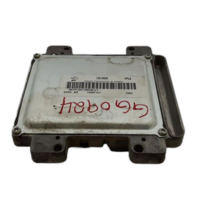
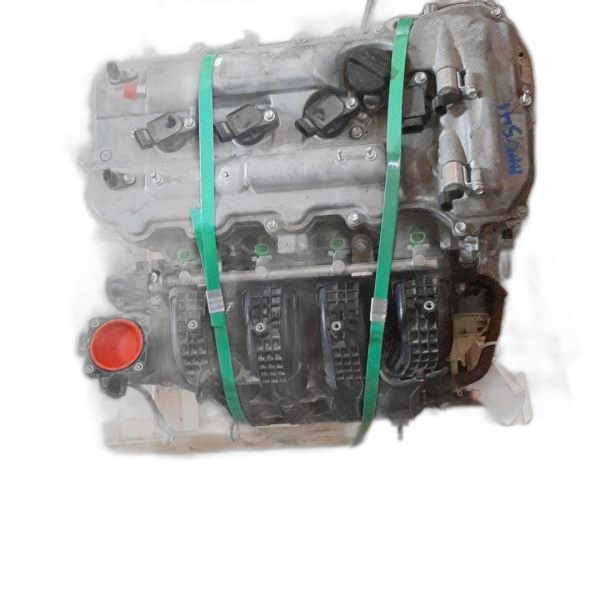
Below are the parts most often responsible for code P3093, ranked by how frequently each one is the actual culprit (per the diagnosis above). Tap any to see what we have for your vehicle.




The information in this article is provided for general reference and educational purposes only. Vehicle specifications, procedures, and part compatibility can vary by production date, trim level, and region. Always consult your vehicle's factory service manual and verify part numbers before purchasing or performing repairs. Safety-critical components such as airbags, seat belts, and braking systems should be installed by a qualified professional.
- 🧭 Diagnostic Flowchart
- 🛍️ Shop This Part
- What Does P3093 Mean?
- Can I Drive With P3093?
- Common Causes
- Symptoms
- Common Fixes & Costs
- Used vs. New Parts: Buying Guide
- What Happens If You Wait — Timeline
- Cost of Not Fixing It
- Diagnosis Steps
- When This Code Triggers (Freeze-Frame Conditions)
- Related Codes
- Climate & Environmental Factors
- How to Talk to a Mechanic About This Code
- Where to Take It: Dealer vs Independent vs Chain
- When to Walk Away From the Repair
- What Scan Tool You Need for This Code
- How to Clear the Code After You Fix It
- Will This Fail Emissions / State Inspection?
- Most Commonly Affected Vehicles
- Manufacturer-Specific Notes
- Real Owner Stories
- 2020 Chevrolet Silverado 1500 at 45,000 miles
- 2013 VW Passat at 110,000 miles
- 2014 Hyundai Sonata Hybrid at 125,000 miles
- How to Prevent This Code From Triggering
- Frequently Asked Questions
- What is the most common misdiagnosis with P3093?
- Can a weak 12V battery cause a P3093 code?
- Can a bad ground cause P3093?
- Can a bad tune or ECU flash cause P3093?
- Will my car stall if I have code P3093?
- Key Takeaways
- 🎟️ Get 5% Off