

OBD-II Code P3098: Engine Wiring Harness Fault
What P3098 means, why it triggers, and how to fix it
- Code P3098 on 2019-2022 GM trucks and SUVs indicates the main engine wiring harness has chafed against a sharp metal bracket, causing an electrical short.
- Stop driving immediately; the damaged wiring causes unpredictable engine stalling at highway speeds, creating a critical safety hazard.
- Do not replace the Engine Control Module (ECM); the definitive fix requires locating the chafed wire, soldering a repair, and applying protective tape per GM TSB 21-NA-149.
- Expect repair costs between $250 and $800 for a spot wire repair, which is only covered for free if your vehicle remains under its original 3-year/36,000-mile bumper-to-bumper warranty.
What Does P3098 Mean?
P3098 is a manufacturer-specific code for General Motors vehicles indicating the engine's computer (ECU) detected an electrical short or open circuit in the main engine wiring harness. This results directly from the harness physically rubbing against a sharp metal engine or chassis edge.
Technical definition: On 2019-2022+ GM vehicles, DTC P3098 indicates a hard fault within the engine wiring harness. It frequently appears alongside communication codes (U-codes), confirming harness chafing that causes intermittent or direct electrical shorts to ground, as detailed in GM Technical Service Bulletin (TSB) 21-NA-149.
Can I Drive With P3098?
No — Do Not Drive. Do not drive. Damaged wiring causes unpredictable engine stalling at highway speeds, creating a severe safety risk and risking permanent damage to sensitive control modules.
Common Causes
- Engine Wiring Harness Chafing (Very Common) — A missing factory retaining clip allows the main engine harness to vibrate against sharp metal brackets, wearing through the protective conduit and wire insulation.
- Improperly Secured Harness After Prior Repair (Common) — Mechanics failing to re-secure all clips and ties during previous engine bay repairs leaves the harness vulnerable to chafing.
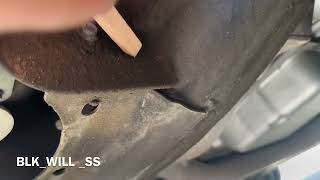
- Loose Main Ground Connection (Less Common) — Loose or corroded main ground connections (G110 and G114) cause widespread electrical voltage drops that mimic a severed harness (GM bulletin PIE0548).
- Water Intrusion into Harness Connector (Less Common) — Poor seals on critical harness connectors (like the X184 on C6 Corvettes) allow water entry, shorting CAN bus lines and triggering related U-codes.
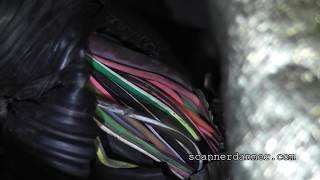
- Rodent Damage (Rare) — Rodents chew through soy-based wiring insulation, causing direct shorts and open circuits that require extensive harness repair. 🎬 Watch: A guide to repairing chewed wiring in Chevy trucks.
- Internal Component Electrical Failure (Rare) — Internal failures in connected components, like a gummed-up electronic coolant control valve, send electrical noise onto the data bus, triggering false harness codes.
- Failed Engine Control Module (ECM) (Very Rare) — A shorted wiring harness sometimes damages the ECM permanently. However, ECM replacement is only necessary after repairing the wiring; TSB 21-NA-149 explicitly warns against replacing the ECM first.
Symptoms
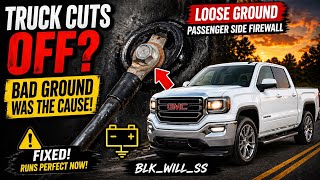
- Engine Stalls Unexpectedly — The engine shuts off instantly without warning at any speed. 🎬 Watch: How to fix GM stalling and cutting off issues.
- No Start or Intermittent Start — The starter refuses to crank, or the engine requires multiple attempts to start.
- Erratic Gauges or Inoperative Instrument Cluster — Gauges drop to zero or sweep randomly due to lost module communication.
- Check Engine Light and Multiple Warning Messages (also visible on scanner) — The dashboard illuminates with the Check Engine Light and a cascade of warnings like 'Reduced Engine Power' or 'Service Stabilitrak'.
- Rough Running / Misfiring (also visible on scanner) — The engine idles erratically and hesitates during acceleration, often triggering P0300 misfire codes.
- Multiple Blown Fuses (also visible on scanner) — A direct short to ground blows underhood fuses immediately upon turning the ignition.
Diagnostic Flowchart
Tap your situation to follow the diagnostic path that matches what you're seeing on this code.
Common Fixes & Costs
- Repair Chafed Wires and Secure Harness — Parts: $20-$100, Labor: $250-$800, ~2.5 hr book time (Professional)
- Apply TSB-Approved Protective Measures — Parts: $50-$150, Labor: $100-$200, ~1 hr book time (DIY)
- Clean and Tighten Ground Connections — Parts: $0-$10, Labor: $50-$150, ~0.8 hr book time (DIY)
- Full Engine Wiring Harness Replacement — Parts: $700-$3000, Labor: $1000-$3000, ~15 hr book time (Professional)
- Engine Control Module (ECM) Replacement — Parts: $300-$800, Labor: $150-$300, ~1.5 hr book time (Professional)
Used vs. New Parts: Buying Guide
When a used part is worth it: A used OEM harness is a practical choice for older, high-mileage vehicles where a new harness is prohibitively expensive.
Donor-vehicle mileage cap: roughly under 100000 miles for the part to have meaningful remaining life.
Donor quality checklist:
- Visually inspect for melted connectors, brittle insulation, corrosion, and previous hacked repairs.
- Ensure the part number matches exactly for your vehicle's year, model, engine, and transmission.
- Verify the donor vehicle was not scrapped due to fire or flood damage.
Decision logic:
- If Vehicle is newer and still under warranty or has low mileage → Buy new OEM to ensure perfect fitment and quality.
- If Budget is the primary concern on a high-mileage vehicle → A carefully inspected used OEM harness is an acceptable risk.
- If The only options are a used harness with visible wear or a new, non-OEM aftermarket harness → Favor the new aftermarket harness from a reputable brand.
Warranty tradeoff: Used parts from salvage yards typically offer a 30-90 day functional warranty. New aftermarket parts range from 1-year to a limited lifetime warranty. New OEM parts usually carry a 1-2 year warranty.
Worst-case if a used part fails: $1500-3000 if a faulty used harness is installed, requiring repeat labor costs plus the price of another harness.
What Happens If You Wait — Timeline
- 0-1 month: Intermittent shorting occurs. The Check Engine Light and P3098 code appear, but clear on their own. Symptoms are rare, possibly a single, unexplained stall. (MPG impact: 0%% · Added cost: $0)
- 1-3 months: Chafing worsens, causing frequent shorts. The vehicle experiences intermittent stalling, rough idle, and a cascade of warning lights. The issue becomes a dangerous drivability problem. (MPG impact: 0-2%% · Added cost: $0, but high safety risk)
- 3-6 months: A wire wears completely through and contacts ground. The vehicle fails to start or stalls immediately. Repeated, high-current shorts stress the internal circuits of the Engine Control Module (ECM). (MPG impact: N/A (Vehicle likely undrivable)% · Added cost: $800 - $1,500 (Risk of ECM damage))
- 6+ months: Catastrophic failure. The constant short circuit overheats the wiring, melting insulation on adjacent wires. This permanently damages the ECM's internal drivers or leads to an electrical fire. (MPG impact: N/A (Vehicle inoperative)% · Added cost: $1,500 - $5,000+ (Guaranteed ECM replacement, possible full harness replacement or total vehicle loss))
Cost of Not Fixing It
- 0-1 Month: Intermittent stalling and system warnings. The vehicle is critically unsafe to drive. (Added cost: Negligible, but critical safety risk)
- 1-6 Months: Repeated electrical shorts permanently damage the Engine Control Module (ECM) internal drivers. (Added cost: $800 - $2500)
- 6+ Months: Catastrophic failure of multiple electronic modules or an underhood electrical fire. (Added cost: $5000+ up to total vehicle value)
Diagnosis Steps
- Scan for All DTCs in All Modules
Use a full-system OBD-II scanner to read codes from every module. Note P3098 and U-series communication codes (U0073, U0100), which confirm a physical wiring short.
Tools: OBD-II Scanner (Beginner) - Obtain and Review TSB 21-NA-149
Download GM TSB 21-NA-149. It contains diagrams of specific, known chafe points for each engine type (2.7L, 3.0L, 5.3L, 6.2L).
Tools: Internet Access (Beginner) - Perform a Detailed Visual Inspection
Disconnect the battery. Inspect the harness at all TSB-specified chafe points. Look for worn conduit, exposed copper, and shiny metal on nearby brackets.
Tools: Flashlight, Basic Hand Tools, Inspection Mirror (Intermediate) - Perform a 'Wiggle Test'
With the engine running, have a helper aggressively wiggle the harness in suspect areas. An immediate engine stumble or stall pinpoints the short.
Tools: OBD-II Scanner (Live Data), Helper (Intermediate) - Test for Shorts to Ground
Set a multimeter to Ohms (Ω). Probe the exposed copper wire and a clean chassis ground. A reading near 0 Ω confirms a direct short to ground.
Tools: Digital Multimeter (Advanced) - Inspect Main Ground Connections
Remove, clean, and tightly re-secure the main engine and chassis ground bolts (G110, G114) to eliminate ground-fault mimics.
Tools: Socket/Wrench Set, Wire Brush (Intermediate) - Advanced Multimeter Testing (CAN Bus Resistance)
Measure resistance between CAN High and CAN Low at the OBD-II port (Pins 6 & 14) with the battery disconnected. Exactly 60 Ohms is healthy; 0 Ohms indicates a short; 120 Ohms indicates an open circuit.
Tools: Digital Multimeter, Wiring Diagram (Professional) - Oscilloscope Signal Analysis
Connect a lab scope to the CAN lines. A shorted wire displays distorted or flat-lined square waves when wiggling the harness, providing definitive proof of physical damage.
Tools: Automotive Oscilloscope (Professional)
When This Code Triggers (Freeze-Frame Conditions)
- Engine Coolant Temp: 180-200°F (Fully warmed up)
- RPM: 1500-2500 (Cruise / steady throttle)
- Engine Load: 30-60% (Steady state driving)
- Vehicle Speed: 35-65 mph (Highway or city cruising)
Related Codes
- U0073 — A chafed wire shorts the CAN bus network. U0073 means the entire network is offline, confirming a physical wiring problem.
- U0100 — A direct consequence of U0073. When the communication bus fails, other modules lose contact with the ECM.
- P0300 — Harness damage interrupts power to ignition coils or fuel injectors, causing random cylinder misfires.
- P0700 — The Transmission Control Module (TCM) sets this generic fault when it loses communication with the ECM due to the severed harness.
Climate & Environmental Factors
- Cold Weather: Sub-zero temperatures harden wire insulation and plastic conduit. Engine vibration shatters this brittle material, exposing the copper wires rapidly.
- Road Salt & High Humidity: Saltwater penetrates breached insulation and acts as a powerful electrolyte. This dramatically accelerates copper corrosion, turning a minor intermittent short into a permanent, catastrophic failure.
How to Talk to a Mechanic About This Code
Say this: "I have a P3098 code on my [Vehicle Year/Model] and I suspect it's the harness chafing issue described in TSB 21-NA-149. I'd like to schedule a diagnostic specifically to inspect the known chafe points on the engine harness, not to replace any modules at this time."
This signals to the service advisor that you are informed about this specific problem. It directs the technician to the most likely cause and prevents them from suggesting expensive, unnecessary replacements of the ECM.
Avoid saying:
- 'My check engine light is on, can you just fix it?'
- 'The truck is stalling, just replace whatever is broken.'
- 'I read online it might be the computer, should we replace that?'
Questions to ask before authorizing the repair:
- Did you find the specific point of harness chafing described in TSB 21-NA-149?
- Can you show me a photo of the damaged wiring before you repair it?
- Is the proposed fix a spot repair of the wires per the TSB, or a full harness replacement? If you're recommending a full replacement, why is a spot repair not possible?
- Have you confirmed with a multimeter that the grounds are good and the ECM itself has not failed?
- What is the warranty on this specific wire repair?
Where to Take It: Dealer vs Independent vs Chain
- Dealer:
Best for: Vehicles still under the original bumper-to-bumper or powertrain warranty., Getting the repair done exactly according to the manufacturer's TSB.
Downsides: Highest labor rate, often 1.5-2x more than an independent shop., Defaults to a full harness replacement if out of warranty, which is extremely expensive and unnecessary. (Typical cost: +50% vs. baseline) - Independent Shop:
A strong choice if you find the right shop. An independent specialist in automotive electronics is the best combination of expertise and value for this specific repair.
Best for: Out-of-warranty vehicles where cost is a major factor., Shops that specialize in electrical diagnostics.
Downsides: Quality and experience vary wildly. A shop without TSB access or strong electrical skills misdiagnoses the issue., Must vet the shop carefully; look for ASE certifications in electrical systems. (Typical cost: +0% vs. baseline) - Chain Shop:
AVOID. This is a complex diagnostic and repair job, not a simple part swap. A chain shop is the most likely place to get an expensive misdiagnosis.
Best for: Simple, routine maintenance like oil changes, tires, and brakes.
Downsides: Technicians are not equipped or trained for complex electrical diagnostics., High pressure to sell parts leads to misdiagnosis (e.g., recommending a new ECM or battery instead of finding the wire short). (Typical cost: -10% vs. baseline)
When to Walk Away From the Repair
If the estimated repair cost exceeds 50% of the car's private-party value, seriously consider not fixing it.
- Car worth $30000, fix is $800: Fix it. The TSB-approved spot repair is a small fraction of the vehicle's value.
- Car worth $30000, fix is $5000: Get a second opinion. This quote is for a full harness replacement. Find a shop that performs the TSB spot repair for under $1,000.
- Car worth $8000, fix is $5000: Walk away. The repair cost is over 60% of the car's value, making it a poor investment.
What Scan Tool You Need for This Code
Minimum: A scanner that reads codes from ALL vehicle modules (Engine, Transmission, ABS, Airbag, etc.), not just basic engine codes.
A cheap $20 reader only shows the P3098 engine code. It misses the critical U-series communication codes (like U0073) from other modules that confirm a network-wide wiring problem.
Budget: BlueDriver Pro (~$90) — Connects to your phone and performs a full system scan, reading codes from all modules to confirm related U-codes. It provides live data, essential for performing a 'wiggle test' to pinpoint the intermittent short.
Mid-range: Foxwell NT604 Elite or Autel MaxiCheck Series (~$150) — Provides full system diagnostics and live data graphing with a dedicated screen and faster operation. Robust tools for a serious DIYer.
Professional: Autel MaxiCOM MK808 / MK906BT or XTOOL D-series (~$500-1200) — Offers full bidirectional control, allowing a technician to command specific modules and components to test functionality. This is professional-level and overkill for most DIYers but is what a good shop uses.
How to Clear the Code After You Fix It
- Reconnect battery if disconnected for repair
- Use an OBD-II scan tool to clear all Diagnostic Trouble Codes (DTCs)
- Perform a complete GM drive cycle to allow readiness monitors to run
Drive cycle (~30 minutes): From a cold start (engine temp below 122°F), idle for 2-3 minutes with A/C on. Accelerate to 55 mph and hold steady for 3-5 minutes. Coast down to 20 mph without using the brake. Accelerate to 55-60 mph and hold steady for 5-6 minutes. Coast to a stop.
Readiness monitors affected: Catalyst (CAT) monitor, Evaporative System (EVAP) monitor, Oxygen (O2) Sensor monitor
Before emissions retest: drive at least 100 miles to fully set monitors.
Watch out for:
- Disconnecting the battery clears the code but resets all readiness monitors, guaranteeing an emissions test failure.
- The code returns immediately upon starting the engine if the severed wire remains unpatched.
Will This Fail Emissions / State Inspection?
Yes — this code typically fails an OBD-II emissions inspection.
- California: An active Check Engine Light from code P3098 is an automatic failure. After repair, most readiness monitors must be 'Ready' to pass, requiring 100+ miles of driving.
- New York: The NYS inspection includes an OBD-II scan. An illuminated Check Engine Light causes an automatic failure.
- Texas: In the 17 counties requiring emissions testing, a vehicle with an active P3098 code automatically fails the inspection.
Most Commonly Affected Vehicles
- Chevrolet Silverado 1500 (2019-2022) — The most commonly cited vehicle. TSB 21-NA-149 details specific chafe points that vary by engine: 2.7L (cam cover, generator bracket), 3.0L Diesel (PVC hose clamp), and 5.3L/6.2L (ECM bracket, shock tower).
- GMC Sierra 1500 (2019-2022) — Shares the same platform, wiring harness vulnerability, and engine-specific chafe points as the Silverado.
- Chevrolet Tahoe (2021-2022) — Experiences harness chafing against the ECM bracket and shock tower.
- GMC Yukon / Yukon XL (2021-2022) — Shares the same chassis and electrical architecture as the Tahoe and is susceptible to the same fault.
- Cadillac Escalade / Escalade ESV (2021-2022) — Exhibits the P3098 code for the same harness issue, particularly with the 6.2L engine.
- Chevrolet Corvette (C6) (2005-2013) — Owners report identical symptoms (stalling, communication loss) from related codes U0073/U0100 caused by water intrusion into the X184 harness connector.
- Volkswagen Diesel Models (Various) (2009-2015) — P3098 is a manufacturer-specific code pointing directly to an internal failure of the Engine Control Module (ECM), rather than a wiring harness issue.
- Other GM Models Various (2019-2024) — TSB 21-NA-149 applies to a wide range of GM vehicles sharing the same platform architecture globally.
Manufacturer-Specific Notes
- General Motors: GM intentionally omitted a harness retaining clip during factory assembly for ergonomic reasons, causing this widespread chafing issue.
- General Motors: GM TSB 21-NA-149 explicitly forbids technicians from replacing the ECM based on communication codes alone.
- General Motors: GM Engineering Information bulletin PIE0548 highlights that loose factory grounds at G110 and G114 cause identical electrical failures.
- General Motors: GM issued Customer Satisfaction Program N192219370 for 2019 2.7L models, offering a limited-time free repair, but denied a full safety recall.
- Volkswagen / Audi: On VW/Audi vehicles, P3098 indicates an internal ECM fault, but similar stalling symptoms usually stem from throttle body or sensor failures triggering the EPC light.
Real Owner Stories
2019 Chevy Silverado 5.3L with ~20,000 miles
Vehicle experienced multiple issues including blown push rods, failed lifters, and a bad rocker arm, culminating in a hole in the engine block.
Outcome: The engine was replaced by the dealership. This case highlights that while P3098 points to wiring, severe mechanical failures cause similar symptoms like rough running and stalling.
Lesson: Do not ignore other potential severe mechanical problems (like lifter failure) that cause similar drivability symptoms.
2021 Chevy Tahoe Z71 at 65,000 miles
The vehicle suddenly started stalling at red lights, and the infotainment screen glitched when the auto start/stop system re-engaged the engine.
Outcome: Disconnecting the battery resolved the glitching and stalling issues.
Lesson: For purely electronic glitches without hard fault codes like P3098, a simple battery disconnect resets modules and resolves temporary issues.
2004 GMC Yukon with persistent random stalling
The vehicle randomly stalled at low speeds and became progressively worse.
Outcome: Running a new ground wire from the throttle control module stud to a chassis ground completely solved the stalling issue.
Lesson: Symptoms identical to the P3098 chafing issue are caused by poor grounds. Verifying all main engine and module ground connections are clean and tight is a critical diagnostic step.
2019 Silverado 2.7L with multiple electrical warnings
Truck suddenly displayed multiple warnings and refused to start.
Outcome: The dealer found the engine wiring harness chafed through on a bracket. They repaired the wires and applied the TSB-specified protective wrap under warranty.
Lesson: If your vehicle is under warranty and exhibits these symptoms, immediately take it to a dealer and reference TSB 21-NA-149.
How to Prevent This Code From Triggering
- Proactively inspect harness at TSB-specified chafe points. (Once, or at every oil change.) — Visually checking the known rubbing spots (ECM bracket, shock tower, control arm) catches wear before it breaks through the insulation.
- Apply TSB-approved protective materials. (Once, as a preventative measure.) — Wrapping the harness at vulnerable points with anti-abrasion tape (Kent P/N 1089482) provides a durable sacrificial layer, preventing the metal edge from reaching the wires.
- Secure the harness with new clips and zip ties. (Once, during inspection/protection.) — Securing the harness tightly to designated mounting points prevents the vibration and engine rock that leads to chafing.
- Inspect and clean main engine/chassis grounds. (Every 30,000 miles or if electrical issues arise.) — Ensuring clean, tight grounds at points like G110/G114 provides a stable electrical foundation for all modules.
Frequently Asked Questions
What is the most common misdiagnosis for P3098?
The most common mistake is replacing components based on secondary codes. Technicians often replace the ECM or ignition coils needlessly. The TSB confirms the root cause is almost always the wiring harness.
The shop wants to replace the whole engine harness for thousands of dollars. Is that necessary?
Usually, no. The TSB-approved repair is to locate the chafed section, solder new wires, and protect the area with anti-abrasion tape. Full harness replacement is only necessary for severe fire or rodent damage.
Why isn't this a recall?
A Technical Service Bulletin (TSB) provides dealers with a standardized repair procedure for a known defect, but it is not a legally mandated safety recall. Repairs are only free if the vehicle is within its bumper-to-bumper warranty. GM offered a limited 'Customer Satisfaction Program' for some 2019 models, but it has expired.
What is TSB 21-NA-149?
TSB 21-NA-149 is GM's official dealer repair guide for engine harness chafing. It lists specific DTCs (including P3098) and provides step-by-step instructions for inspecting, repairing, and securing the harness on affected engines.
Can I fix this myself?
While visual inspection is DIY-friendly, repairing individual wires requires advanced soldering and weather-proofing skills. Improper repairs cause high resistance, rapid corrosion, and potential ECM damage. Applying protective sleeves post-repair is a safer DIY task.
Is it safe to just clear the code and keep driving?
No. Clearing the code does not fix the severed copper wires. The engine will stall unpredictably while driving, creating a critical safety hazard.
My Volkswagen has an EPC light, is that the same as P3098?
Not necessarily. While P3098 on a VW indicates an ECM failure, the EPC light is a general warning for throttle body or sensor issues. It does not point to a harness chafing defect.
How can I prevent P3098 from happening?
Proactively inspect the harness at the known chafe points listed in TSB 21-NA-149. Apply the recommended anti-abrasion tape and secure the harness away from sharp metal edges with zip ties before damage occurs.
Key Takeaways
- Code P3098 on 2019-2022 GM trucks and SUVs indicates the main engine wiring harness has chafed against a sharp metal bracket, causing an electrical short.
- Stop driving immediately; the damaged wiring causes unpredictable engine stalling at highway speeds, creating a critical safety hazard.
- Do not replace the Engine Control Module (ECM); the definitive fix requires locating the chafed wire, soldering a repair, and applying protective tape per GM TSB 21-NA-149.
- Expect repair costs between $250 and $800 for a spot wire repair, which is only covered for free if your vehicle remains under its original 3-year/36,000-mile bumper-to-bumper warranty.
Helpful Videos

Shop the Parts Behind P3098
Below are the parts most often responsible for code P3098, ranked by how frequently each one is the actual culprit (per the diagnosis above). Tap any to see what we have for your vehicle.



The information in this article is provided for general reference and educational purposes only. Vehicle specifications, procedures, and part compatibility can vary by production date, trim level, and region. Always consult your vehicle's factory service manual and verify part numbers before purchasing or performing repairs. Safety-critical components such as airbags, seat belts, and braking systems should be installed by a qualified professional.
- 🧭 Diagnostic Flowchart
- 🎬 Helpful Videos
- 🛍️ Shop This Part
- What Does P3098 Mean?
- Can I Drive With P3098?
- Common Causes
- Symptoms
- Common Fixes & Costs
- Used vs. New Parts: Buying Guide
- What Happens If You Wait — Timeline
- Cost of Not Fixing It
- Diagnosis Steps
- When This Code Triggers (Freeze-Frame Conditions)
- Related Codes
- Climate & Environmental Factors
- How to Talk to a Mechanic About This Code
- Where to Take It: Dealer vs Independent vs Chain
- When to Walk Away From the Repair
- What Scan Tool You Need for This Code
- How to Clear the Code After You Fix It
- Will This Fail Emissions / State Inspection?
- Most Commonly Affected Vehicles
- Manufacturer-Specific Notes
- Real Owner Stories
- 2019 Chevy Silverado 5.3L with ~20,000 miles
- 2021 Chevy Tahoe Z71 at 65,000 miles
- 2004 GMC Yukon with persistent random stalling
- 2019 Silverado 2.7L with multiple electrical warnings
- How to Prevent This Code From Triggering
- Frequently Asked Questions
- What is the most common misdiagnosis for P3098?
- The shop wants to replace the whole engine harness for thousands of dollars. Is that necessary?
- Why isn't this a recall?
- What is TSB 21-NA-149?
- Can I fix this myself?
- Is it safe to just clear the code and keep driving?
- My Volkswagen has an EPC light, is that the same as P3098?
- How can I prevent P3098 from happening?
- Key Takeaways
- 🎟️ Get 5% Off