

OBD-II Code P3105: ECU Communication Error / Intake Flap Valve Fault
What P3105 means, why it triggers, and how to fix it
- Code P3105 indicates an ECU communication error in Toyota/Lexus hybrids, but points to a faulty intake flap valve (N239) in Volkswagen/Audi diesels.
- Failing battery cooling fans in Toyota/Lexus hybrids create electrical noise that corrupts ECU communication, causing dangerous highway-speed stalling.
- On VW/Audi TDI engines, a P3105 code guarantees a failed N239 anti-shudder valve or solenoid, resulting in a violent engine shake during shutdown.
- When replacing Toyota/Lexus hybrid fans, you must fully bolt down the metal high-voltage battery cover to restore electromagnetic shielding and permanently clear the code.
What Does P3105 Mean?
The meaning of code P3105 depends heavily on your car's manufacturer. For Toyota and Lexus hybrids, it means the main computer lost communication with the hybrid battery's computer (Battery ECU). For Volkswagen and Audi vehicles, it points to a problem with the intake manifold flap (N239), a small valve controlling engine airflow. For some BMW models, this code indicates a short circuit in a specific cylinder's fuel injector.
Technical definition: The formal SAE/OBD-II definition for this code is manufacturer-specific. For Toyota/Lexus, it is 'Battery ECU Communication Circuit Malfunction'. For Volkswagen/Audi, it is 'Valve for Intake Manifold Flap (N239): Open or Short to Ground'. For BMW, it is 'Cylinder 2 High-Pressure Fuel Injector Low Side Circuit Low'.
Can I Drive With P3105?
No — Do Not Drive. Driving is not recommended. On Toyota/Lexus hybrids, this code causes sudden, complete vehicle shutdown at highway speeds, resulting in an immediate loss of power steering and propulsion. Continuing to drive also turns a moderate repair (fans) into a catastrophic one (entire hybrid battery). On VW/Audi TDI vehicles, a malfunctioning intake flap causes a no-start condition if it sticks closed, and in rare runaway situations, it is the primary mechanism for shutting down the engine. Ignoring it is unsafe.
Common Causes
- Failing Hybrid Battery Cooling Fans (Toyota/Lexus) (Very Common) — As electric motors in the battery cooling fans wear out, they create electrical 'noise' that interferes with the communication signal between the hybrid battery ECU and the main engine ECU, triggering P3105.
- Faulty Intake Manifold Flap Valve/Solenoid (N239) (VW/Audi) (Very Common) — The N239 valve controlling the intake manifold flap fails internally or its solenoid shorts out due to engine heat and vibration.
- Improper Grounding of HV Battery Case (Toyota/Lexus) (Common) — If the metal cover of the high-voltage battery pack is not reinstalled correctly with all bolts during service, it creates a poor ground. This introduces electrical noise and triggers P3105, even with perfectly working fans.
- Weak or Failing 12-Volt Auxiliary Battery (Common) — A weak 12V battery provides unstable voltage to control modules, disrupting sensitive communication signals between ECUs and triggering false communication faults.
- Chafed or Damaged Wiring (Common) — Wires leading to the responsible component fray, corrode, or short. On VWs, N239 valve wiring chafes near the connector due to engine vibration. On hybrids, communication wiring for the battery ECU corrodes.
- Blocked Hybrid Battery Air Vents (Toyota/Lexus) (Less Common) — If cabin air intake vents are blocked by floor mats or debris, cooling fans overwork and the battery overheats, leading to communication faults.
- Water Intrusion and Corrosion (Toyota/Lexus) (Less Common) — Moisture entering the cabin pools around hybrid battery components, corroding connectors for the battery ECU or cooling fans.
- Faulty Telematics/DCM Module (Toyota/Lexus) (Rare) — A failing Telematics module fails to 'go to sleep', causing a parasitic battery drain and creating network communication errors.
Symptoms
- Sudden Stalling or Complete Shutdown While Driving (Toyota/Lexus) — The vehicle unexpectedly shuts off at highway speeds, requiring the driver to pull over and restart the car. This is the most dangerous symptom.
- Engine Shakes or Rough Shutdown (VW/Audi) — The intake flap closes during shutdown to prevent engine shudder. When it fails, you experience a distinct shake or rough judder when turning the engine off.
- Reduced Power or 'Limp Mode' — The vehicle has significantly less acceleration and power as the hybrid system or engine enters a protective fail-safe mode.
- Hissing Noises from Engine Bay (VW/Audi) — A failing intake manifold flap or a related vacuum leak causes audible hissing sounds from the engine area, particularly during acceleration.
- Check Engine Light and/or 'Check Hybrid System' Warning (also visible on scanner) — The Malfunction Indicator Lamp (MIL) illuminates, and hybrid models display a specific warning message on the dashboard.
Diagnostic Flowchart
Tap your situation to follow the diagnostic path that matches what you're seeing on this code.
Common Fixes & Costs
- Replace Hybrid Battery Cooling Fan Assembly (Toyota/Lexus) — Parts: $200-$450 (for a set of 3 aftermarket or OEM fans), Labor: $600-$1000 (dealer or independent shop), ~5 hr book time (Professional)
- Replace Intake Manifold Flap Valve (N239) or Solenoid (VW/Audi) — Parts: $50-$150 (solenoid only), Labor: $100-$200, ~1.5 hr book time (Intermediate)
- Replace 12-Volt Auxiliary Battery — Parts: $150-$300, Labor: $50-$100, ~0.5 hr book time (DIY)
- Repair Damaged Wiring — Parts: $5-$20, Labor: $150-$350, ~2 hr book time (Intermediate)
- Replace Intake Manifold (VW/Audi) — Parts: $400-$700, Labor: $400-$800, ~4 hr book time (Professional)
Used vs. New Parts: Buying Guide
When a used part is worth it: For the VW/Audi N239 solenoid, a used part from a low-mileage, accident-damaged vehicle is a cost-effective option. For Toyota/Lexus hybrid cooling fans, buying used is NOT recommended. The failure mode is internal motor wear, so a used part has an unknown lifespan, making the high labor cost to replace them again a poor value.
Donor-vehicle mileage cap: roughly under 60000 miles for the part to have meaningful remaining life.
Donor quality checklist:
- Verify the exact part number matches your original component.
- For the VW solenoid, check for any cracks in the plastic housing or connector.
- Avoid parts from vehicles scrapped due to high mileage or engine-related failures.
Decision logic:
- If The part is a Toyota/Lexus hybrid cooling fan assembly. → Buy new OEM or a high-quality aftermarket brand (e.g., VDO, Denso). The risk and cost of repeat labor is too high for a used part.
- If The part is a VW/Audi N239 solenoid and the budget is tight. → A used part from a verified low-mileage donor is an acceptable risk due to the low cost of the part and relatively simple replacement labor.
- If The vehicle is a keeper and reliability is the top priority. → Always buy new OEM or OEM-supplier parts for the longest service life.
Warranty tradeoff: Used parts from a salvage yard typically come with a 30-90 day functional warranty. New aftermarket parts usually offer a 1-year to limited lifetime warranty. New OEM parts carry a 1-year/12,000-mile warranty.
Worst-case if a used part fails: $800-1200 if a used hybrid fan assembly fails after installation, as you must pay for the multi-hour labor charge a second time.
What Happens If You Wait — Timeline
- First Occurrence: For Toyota/Lexus: Code sets, 'Check Hybrid System' light appears. A dangerous, intermittent stall occurs at highway speeds. For VW/Audi: Code sets, engine shudders when turned off. (MPG impact: 0%% · Added cost: $0 (but critical safety risk for hybrids))
- 1-3 Months: For Toyota/Lexus: Stalling incidents become more frequent. The HV battery begins to overheat regularly due to fan issues, starting irreversible cell degradation. For VW/Audi: Annoying shudder continues; flap begins to stick, causing rare no-start issues. (MPG impact: 0-5% (Hybrid only)% · Added cost: $0-50 in wasted fuel)
- 3-6 Months: For Toyota/Lexus: Chronic overheating causes a noticeable loss of HV battery capacity and performance. EV-only mode is less available. For VW/Audi: No change; problem is an inconvenience, not progressively damaging. (MPG impact: 5-10% (Hybrid only)% · Added cost: $200 (estimated cost of irreversible battery capacity loss))
- 6+ Months: For Toyota/Lexus: Catastrophic failure of the HV battery pack from heat damage. The vehicle no longer starts or runs reliably. For VW/Audi: The original issue persists without causing further damage. (MPG impact: 10-20%+ (Hybrid only)% · Added cost: $2,500 - $5,000+ (cost to replace the entire high-voltage battery pack))
Cost of Not Fixing It
- Immediate (Toyota/Lexus): Sudden, complete vehicle shutdown at highway speeds. This is a critical safety failure, not a monetary cost. (Added cost: N/A (Safety Risk))
- 0-6 Months (Toyota/Lexus): Continued driving with failing fans causes the high-voltage battery to repeatedly overheat, leading to accelerated degradation of battery cells and a permanent loss of capacity. (Added cost: Negligible, but incurs irreversible battery damage.)
- 6+ Months (Toyota/Lexus): Catastrophic failure of the high-voltage battery pack due to chronic overheating, requiring complete replacement. (Added cost: $2,500 - $5,000+)
- Ongoing (VW/Audi): Persistent rough engine shutdowns and potential no-start conditions if the intake flap sticks closed. (Added cost: Negligible, other than the eventual cost of the required repair.)
Diagnosis Steps
- Identify Your Vehicle Type
Determine if you have a Toyota/Lexus hybrid, a VW/Audi, or a BMW. The diagnosis and repair for P3105 are completely different for these brands.
Tools: None (Beginner) - Test the 12-Volt Battery
A weak 12-volt auxiliary battery causes strange electrical issues and communication codes. A healthy battery reads approximately 12.6 volts with the car off and 13.7-14.7 volts when running. Have the 12V battery properly load-tested.
Tools: Digital Multimeter, Digital Battery Tester (Beginner) - Inspect Wiring Harness (Visual)
Visually inspect the wiring harnesses associated with the fault. For VW/Audi, check the wires going to the N239 intake flap solenoid for chafing. For hybrids, check for obvious damage, corrosion from water intrusion, or signs of rodents.
Tools: Flashlight (Intermediate) - Test N239 Solenoid (Advanced, VW/Audi)
Disconnect the solenoid and test resistance across its pins with a multimeter; 25-45 ohms is normal. Next, apply 12V directly to the pins to listen for a distinct 'click'. Finally, connect a hand vacuum pump; it should only hold vacuum when 12V is applied. Failing any test confirms a bad solenoid.
Tools: Multimeter, 12V Power Source, Handheld Vacuum Pump (Advanced) - Monitor Communication Signal with a Scope (Advanced, Toyota/Lexus)
Tap into the CAN communication wires between the Battery ECU and the HV Control ECU with an oscilloscope. With fans off, you see a clean, square digital waveform. Command the battery cooling fans to high speed. If the waveform becomes 'hairy' or filled with electrical noise, it definitively proves the fan motors are the source of the interference.
Tools: Oscilloscope, Advanced Scan Tool, Wiring Diagrams (Advanced) - Perform Parasitic Draw Test (Pro Tip, Toyota/Lexus)
If fans and wiring seem okay but the 12V battery dies, perform a parasitic draw test. A normal draw after all modules go to sleep is under 85mA. If the draw is high, pull fuses. Pay close attention to the 'DOME' and 'ECU-B' fuses, as a high draw here points to a failed Telematics (DCM) module.
Tools: Multimeter with Amp Clamp or inline capability (Advanced) - Check for Technical Service Bulletins (TSBs)
Check for any TSBs related to P3105 for your specific vehicle. For example, Toyota issued TSB EG052-07 for the 2006-2007 Highlander Hybrid, explicitly pointing to the battery cooling fans as the primary cause.
Tools: Online access to TSB database or ALLDATA/Mitchell1 (Beginner)
When This Code Triggers (Freeze-Frame Conditions)
- Engine Coolant Temp: 175-210°F (80-99°C) (Vehicle is fully warmed up after being driven for at least 10-15 minutes.)
- RPM: 1500-3000 RPM (Indicates steady-state cruising or light acceleration, not idling.)
- Engine Load: 25-60% (The hybrid system is under a consistent load, typical of highway driving, requiring active battery management and cooling.)
- Vehicle Speed: 45-70 mph (72-113 km/h) (Fault triggers at highway speeds when hybrid battery cooling fans are commanded to high speed, revealing the electrical noise issue.)
Related Codes
- P3000 — Often appears with P3105 in Toyota/Lexus hybrids. P3000 is a general 'Battery Control System Malfunction' code. If you see both, P3105 is the more specific code pointing you toward a communication line problem (likely the fans).
- P0A0F — This code means 'Engine Failed to Start'. In a hybrid, P0A0F logs alongside P3105 if the communication failure prevents the hybrid system from properly engaging the gasoline engine during a startup attempt.
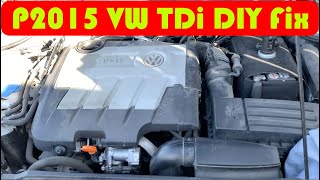
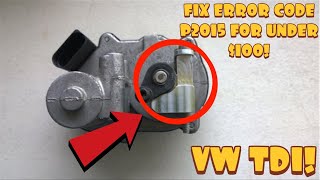
- P2015 (VW/Audi) — This code for 'Intake Manifold Runner Position Sensor' is very common on later model TDIs and points to the same component group. The issue is often a worn plastic stopper on the flap actuator.
- U0111 (Toyota/Lexus) — This is a generic SAE code for 'Lost Communication With Battery Energy Control Module'. It is functionally identical to the manufacturer-specific P3105 code in a Toyota/Lexus context and points to the same diagnostic path.
Climate & Environmental Factors
- High Ambient Temperatures: Heat is a primary enemy of hybrid batteries. In hot climates, the battery cooling fans run more frequently and at higher speeds to maintain optimal battery temperature. This increased workload accelerates wear on the fan motors, leading to premature failure and the P3105 code.
- Dust and Debris: The hybrid battery cooling system draws air from the vehicle's cabin. In dusty environments or for drivers transporting pets, the system's air filter and fan blades clog with dust and pet hair. This restricts airflow, forcing the fans to work harder and eventually fail.
How to Talk to a Mechanic About This Code
Say this: "{'Toyota/Lexus': "I have a P3105 code and 'Check Hybrid System' light on my [Year, Model]. I need a diagnostic confirmation that the battery cooling fans are creating electrical noise on the communication line, including an oscilloscope waveform check.", 'VW/Audi': 'I have a P3105 code on my TDI and it shudders when I turn it off. I need a diagnostic to confirm a faulty N239 anti-shudder valve or solenoid, including an output test.'}"
This language shows you've done your research and directs the technician to the most likely cause, saving diagnostic time and preventing them from suggesting unnecessary, expensive repairs like replacing an entire ECU or wiring harness.
Avoid saying:
- 'My check engine light is on, can you look at it?' (This is too vague and invites a costly, broad diagnostic process.)
- 'Just fix whatever's wrong.' (This gives the shop a blank check to replace parts without your approval.)
- 'The internet said it's the fans, just replace them.' (Always allow the shop to perform their own diagnosis to confirm the problem; this ensures they are responsible if the fix doesn't work.)
Questions to ask before authorizing the repair:
- For Toyota/Lexus: Can you show me the 'hairy' waveform on the oscilloscope that confirms the fans are the issue?
- For VW/Audi: Did the N239 solenoid fail the resistance test or the output test?
- Is the replacement part OEM, OEM-supplier, or aftermarket?
- What is the warranty on the parts and the labor for this specific repair?
- Will you ensure the high-voltage battery cover is fully reinstalled and grounded before I pick up the car? (Crucial for Toyota/Lexus)
Where to Take It: Dealer vs Independent vs Chain
- Dealer:
Best for: Vehicles still under an extended warranty or subject to a related recall., Complex electrical issues where access to manufacturer-specific diagnostic tools and information is critical.
Downsides: Highest labor rates and part markups., May be quick to recommend replacing entire expensive assemblies (e.g., whole intake manifold) instead of smaller, known-to-fail components. (Typical cost: +50% vs. baseline) - Independent Shop:
Best fit, with a major condition: For Toyota/Lexus, you MUST go to an independent shop that specializes in hybrid repair. For VW/Audi, an independent shop that specializes in German or VW/Audi Group (VAG) vehicles is ideal.
Best for: Out-of-warranty vehicles where cost is a major factor., Finding a specialist (e.g., a hybrid-certified shop or a German car expert) who has likely seen this exact issue many times.
Downsides: Quality and expertise can vary widely. A general mechanic may not have the specific high-voltage training for the hybrid repair or the VW-specific scan tools for the TDI repair. (Typical cost: +0% vs. baseline) - Chain Shop:
AVOID for this code. The risk of misdiagnosis or causing further damage is extremely high, especially on the Toyota/Lexus hybrid system.
Best for: Simple jobs like oil changes, tires, and 12V battery replacement.
Downsides: Technicians generally lack the specialized training for high-voltage hybrid systems or nuanced German engine repairs. High pressure to meet sales quotas leads to misdiagnosis and unnecessary upselling. (Typical cost: -10% vs. baseline)
When to Walk Away From the Repair
If the estimated repair cost exceeds 50% of the car's current private-party value, seriously consider selling or trading it in rather than repairing it.
- Car worth $6000, fix is $1500: Fix it. A $1,500 repair on a 2007 Lexus RX 400h valued at around $5,000-$6,700 is well below the threshold and prevents a much more expensive future battery failure.
- Car worth $3000, fix is $350: Fix it. A $350 repair for the N239 valve on a 2006 VW Jetta TDI valued at $2,500-$3,300 is a clear and sensible investment.
- Car worth $4000, fix is $2500: Walk away. If the P3105 on your hybrid was ignored and has now led to a diagnosis of a failed main hybrid battery costing $2,500+, and the car is only worth $4,000, this repair is not economically viable.
What Scan Tool You Need for This Code
Minimum: A basic code reader can only tell you the code is present. For any real diagnosis, you need a tool with manufacturer-specific live data and the ability to perform active tests (bidirectional control).
A cheap reader can't command the hybrid fans to turn on to check for electrical noise, nor can it run an output test on the VW's N239 valve. You will be guessing, which costs more in the long run.
Rent vs buy: For this code, renting is not effective. The free rental scanners at auto parts stores are basic code readers that cannot perform the required active tests. You must own a tool with bidirectional capabilities or pay for a professional diagnosis.
How to Clear the Code After You Fix It
- Reconnect the 12V battery if it was disconnected for the repair.
- Use an OBD-II scan tool to erase the P3105 fault code from the ECU's memory.
- Perform a complete drive cycle to allow the vehicle's readiness monitors to run their self-tests.
Drive cycle (~30 minutes): A general drive cycle includes: 1) Cold start and idle for 5-10 minutes. 2) Drive for 15-20 minutes with mixed city/highway speeds, including a period of steady-state driving between 45-65 mph. 3) Allow the vehicle to cool down completely (8+ hours) for the EVAP monitor to run.
Readiness monitors affected: Comprehensive Component Monitor, Catalyst Monitor, Oxygen Sensor Monitor
Before emissions retest: drive at least 100 miles to fully set monitors.
Watch out for:
- Simply disconnecting the 12V battery clears the code, but it also resets all readiness monitors to 'incomplete', causing an immediate emissions test failure.
- The code returns immediately or within a few drive cycles if the underlying problem (e.g., noisy fans, faulty solenoid, bad wiring) was not correctly repaired.
Will This Fail Emissions / State Inspection?
Yes — this code typically fails an OBD-II emissions inspection.
- California: An active Check Engine Light results in an automatic smog check failure. After repairs, a full drive cycle must be completed to set readiness monitors before a retest is possible.
- New York: The NYVIP3 inspection includes an OBD-II scan. An illuminated MIL for code P3105 is an automatic failure. After clearing the code, the state allows for one 'Not Ready' monitor on 2001+ vehicles.
- Texas: In counties requiring emissions testing, an active P3105 code causes the vehicle to fail. After repair, Texas allows for one 'Not Ready' monitor on 2001+ vehicles before re-inspection.
Most Commonly Affected Vehicles
- Lexus RX 400h (2006-2008) — Extremely common issue where aging battery cooling fans (Part No. G9230-48010) cause electrical interference, triggering P3105 and dangerous stalling.
- Toyota Highlander Hybrid (2006-2007) — Shares the same hybrid powertrain as the RX 400h and suffers from the identical battery cooling fan issue. Toyota TSB EG052-07 directly addresses this.
- Volkswagen Jetta (TDI) (1999-2006) — The ALH engine is known for P3105 caused by a faulty intake manifold flap valve (N239) or chafed wiring to its solenoid due to engine vibration.
- Volkswagen Golf (TDI) (1999-2006) — Uses the same ALH and similar TDI engines as the Jetta, making it prone to the same intake flap valve and wiring failures.
- Audi A3 (TDI) (2009-2013) — As part of the VAG family, TDI models use a similar intake flap system. Later models may also set a P2015 code for the same fault.
- Toyota Camry Hybrid (2007-2011) — While less common than the Highlander/RX, these models experience communication issues related to the hybrid battery system, sometimes triggering P3105.
- Hyundai Sonata Hybrid / Ioniq Hybrid (2016+) — P3105 appears as part of a larger set of communication (U-code) faults if the Hybrid Power Control Unit (HPCU) fails or loses connection.
- BMW Various (e.g., E90 3-series) (2006-2013) — On some BMWs, P3105 has a completely different meaning, pointing to a 'low side circuit low' fault for a high-pressure fuel injector, typically on cylinder 2.
Manufacturer-Specific Notes
- Toyota / Lexus: The root cause is almost always electrical noise from the battery cooling fans. Toyota's TSB for the Highlander Hybrid explicitly states this, but the service info for the identical Lexus RX 400h initially omitted it, leading to widespread misdiagnosis.
- Volkswagen / Audi: The P3105 code is for the intake manifold flap (N239), used for smooth shutdown. A common DIY fix is to relocate the control solenoid from the vibrating engine block to the firewall with zip ties and extended vacuum lines, preventing premature failure.
- Volkswagen / Audi: For the related P2015 code on later TDI models, dealers quote over $900 to replace the entire intake manifold. However, the community widely adopted a simple, sub-$70 metal bracket that limits the actuator's movement, fixing the sensor's 'implausible signal'.
- BMW: BMW uses P3105 for a completely unrelated issue: a low-side circuit fault on the high-pressure fuel injector for cylinder 2. Diagnosis involves checking injector wiring and the injector itself, not intake flaps or cooling fans.
- Toyota / Lexus: While there is no specific recall for P3105 or the battery cooling fans, Toyota issued recall 11V-342 for some 2006-2007 Highlander Hybrids due to a faulty hybrid inverter module that causes stalling, a symptom shared with the P3105 fan failure.
Real Owner Stories
2007 Lexus RX 400h stalls on highway
Owner experienced multiple incidents where the vehicle completely shut down at highway speeds (up to 90 mph). All warning lights illuminated. After pulling over and restarting, it drove normally for a while before happening again.
What they tried:
- A local shop read the P3105 code but recommended going to the dealer.
- The Lexus dealer suspected a wiring harness issue with corrosion and quoted $900 just for inspection.
- Owner self-inspected but found no visible corrosion.
Outcome: Based on extensive forum research pointing to noisy battery cooling fans, the owner DIY-replaced the three HV battery fan blowers. The stalling issue was permanently resolved.
Lesson: On an RX 400h or Highlander Hybrid, sudden stalling with code P3105 is almost certainly caused by aging battery cooling fans creating electrical interference. Do not let a shop replace expensive ECUs or wiring harnesses before addressing the fans.
2006 VW Jetta TDI with rough shutdown
The car developed a noticeable shudder/shake every time the engine was turned off. The Check Engine Light came on with code P3105.
What they tried:
- Visual inspection confirmed the intake flap (anti-shudder valve) was not closing when the key was turned off.
- The owner removed the N239 solenoid that controls the valve and tested it directly with a 12V power source, confirming it was faulty.
Outcome: Replacing the N239 solenoid (Part # 1K0906283A) fixed the rough shutdown and cleared the P3105 code. This is a common failure point due to heat and vibration.
Lesson: The 'rough shutdown' symptom on a TDI is a direct pointer to the anti-shudder valve system. Test the solenoid directly before replacing other parts. Some owners prevent repeat failures by relocating the new solenoid off the engine block to the firewall.
2006 Toyota Highlander Hybrid - P3105 returned after DIY fan replacement
After correctly diagnosing failing battery fans, the owner replaced the three fan units. Testing the repair with the main battery cover off caused the P3105 code to immediately return.
What they tried:
- The owner initially thought the new fans were defective or that there was a deeper wiring problem.
Outcome: The large metal battery cover is a critical grounding and RF shielding component. Reinstalling the cover with all bolts permanently cleared the code.
Lesson: When replacing the hybrid battery fans on a Toyota/Lexus, you MUST fully reinstall the metal battery case cover before testing. It provides essential grounding for the fans and ECUs and shields the communication lines from electrical noise.
2014 VW Jetta TDI with P2015 and P3105
Owner had a Check Engine Light with code P2015, related to the intake manifold flap position sensor. The dealer quoted over $1,000 to replace the entire intake manifold assembly.
What they tried:
- The owner purchased a sub-$70 aftermarket repair bracket from a company called Dieselgeek.
Outcome: The owner installed the bracket in about 90 minutes. The bracket limits the movement of the actuator arm, preventing it from traveling past the point the sensor expects. This cleared the Check Engine Light and saved over $900.
Lesson: For later model VW/Audi TDIs with the related P2015 code, do not immediately agree to a full intake manifold replacement. The widely-used Dieselgeek (or similar) repair bracket is a proven, cost-effective, and permanent fix.
How to Prevent This Code From Triggering
- Clean or replace hybrid battery air filters and vents (Toyota/Lexus) (Every 15,000 miles or annually) — The HV battery is cooled by cabin air. Pet hair, dust, and debris clog the intake vents and filter, restricting airflow. This makes the fans work harder, accelerating wear and leading to overheating and failure.
- Test the 12V auxiliary battery annually (Once per year) — All of the car's computers (ECUs) run on the 12V system. A weak or failing 12V battery provides unstable voltage, which corrupts sensitive communication signals between ECUs and triggers false codes like P3105.
- Inspect N239 solenoid wiring (VW/Audi) (During every oil change) — On TDI engines, the wiring harness for the N239 anti-shudder valve solenoid is subject to intense vibration and heat. Wires chafe near the connector, causing a short. Securing the harness prevents this common failure.
- Address cabin water leaks immediately (As needed) — On hybrids, water from a clogged sunroof drain or leaking window seal pools in the rear seat or trunk area where the HV battery and its electronics are located. This moisture leads to corrosion on critical connectors, causing communication faults.
- Consider relocating the N239 solenoid (VW/Audi TDI Mod) (Once) — A popular modification in the TDI community is moving the N239 solenoid from its position on the hot, vibrating engine block to a cooler spot on the firewall, extending its service life.
Frequently Asked Questions
Why does my hybrid car stall on the highway with code P3105?
The hybrid system relies on constant, clean communication between the main computer and the battery computer. When battery cooling fans wear out, their motors generate electrical 'noise' that corrupts this signal. The main computer loses critical battery data and shuts down the entire hybrid system as a safety measure, causing a dangerous stall.
Can I just clean my hybrid battery fans instead of replacing them?
No. While cleaning a clogged filter is good maintenance, it will not fix P3105. The problem is internal electrical wear inside the fan motors creating communication interference, requiring complete fan assembly replacement.
I replaced the hybrid battery fans on my Lexus, but the P3105 code came back. What went wrong?
The most likely cause is failing to correctly reinstall the large metal cover over the high-voltage battery. This cover acts as a crucial electromagnetic shield and ground, and leaving it loose guarantees electrical noise and a returning P3105 code. Other possibilities include a defective replacement fan or an underlying wiring issue.
Can a bad 12-volt battery really cause a major hybrid system code like P3105?
Yes, the 12-volt auxiliary battery powers all electronic control units (ECUs). A weak 12V battery provides unstable voltage to these computers, disrupting sensitive communication signals. This triggers a P3105 fault even if all hybrid components are perfectly fine.
On my VW TDI, the engine is shaking when I turn it off. Is that related to P3105?
Yes, that is the classic symptom for P3105 on a VW TDI. The code refers to the intake manifold flap (anti-shudder valve), which closes during engine shutdown to prevent shaking. When it fails, you experience a rough, juddering shutdown.
A dealer quoted me $1,600 to fix P3105 on my Lexus. Is that a fair price?
That price is on the higher end but within the typical dealer range for this labor-intensive repair in 2024. An independent shop specializing in hybrids typically charges between $800 and $1,300. The parts (a set of three fans) cost between $200 and $450.
What does the oscilloscope pattern for a P3105 fault look like on a Lexus?
A healthy communication line shows a clean, sharp 'square wave' pattern. When battery fans fail, the oscilloscope shows this same square wave but with significant 'fuzz' or 'hair' on the horizontal lines. This visual noise is the electrical interference from the bad fan motors corrupting the data signal.
Can I just unplug the N239 valve on my VW TDI to fix the rough shutdown?
Unplugging the valve stops it from actuating, but it won't solve the underlying electrical short or open circuit triggering the code. The Check Engine Light will remain on, making this a temporary diagnostic step rather than a fix. The proper solution is repairing the wiring or replacing the faulty solenoid.
Key Takeaways
- Code P3105 indicates an ECU communication error in Toyota/Lexus hybrids, but points to a faulty intake flap valve (N239) in Volkswagen/Audi diesels.
- Failing battery cooling fans in Toyota/Lexus hybrids create electrical noise that corrupts ECU communication, causing dangerous highway-speed stalling.
- On VW/Audi TDI engines, a P3105 code guarantees a failed N239 anti-shudder valve or solenoid, resulting in a violent engine shake during shutdown.
- When replacing Toyota/Lexus hybrid fans, you must fully bolt down the metal high-voltage battery cover to restore electromagnetic shielding and permanently clear the code.
Helpful Videos




Shop the Parts Behind P3105
Below are the parts most often responsible for code P3105, ranked by how frequently each one is the actual culprit (per the diagnosis above). Tap any to see what we have for your vehicle.



The information in this article is provided for general reference and educational purposes only. Vehicle specifications, procedures, and part compatibility can vary by production date, trim level, and region. Always consult your vehicle's factory service manual and verify part numbers before purchasing or performing repairs. Safety-critical components such as airbags, seat belts, and braking systems should be installed by a qualified professional.
- 🧭 Diagnostic Flowchart
- 🎬 Helpful Videos
- 🛍️ Shop This Part
- What Does P3105 Mean?
- Can I Drive With P3105?
- Common Causes
- Symptoms
- Common Fixes & Costs
- Used vs. New Parts: Buying Guide
- What Happens If You Wait — Timeline
- Cost of Not Fixing It
- Diagnosis Steps
- When This Code Triggers (Freeze-Frame Conditions)
- Related Codes
- Climate & Environmental Factors
- How to Talk to a Mechanic About This Code
- Where to Take It: Dealer vs Independent vs Chain
- When to Walk Away From the Repair
- What Scan Tool You Need for This Code
- How to Clear the Code After You Fix It
- Will This Fail Emissions / State Inspection?
- Most Commonly Affected Vehicles
- Manufacturer-Specific Notes
- Real Owner Stories
- 2007 Lexus RX 400h stalls on highway
- 2006 VW Jetta TDI with rough shutdown
- 2006 Toyota Highlander Hybrid - P3105 returned after DIY fan replacement
- 2014 VW Jetta TDI with P2015 and P3105
- How to Prevent This Code From Triggering
- Frequently Asked Questions
- Why does my hybrid car stall on the highway with code P3105?
- Can I just clean my hybrid battery fans instead of replacing them?
- I replaced the hybrid battery fans on my Lexus, but the P3105 code came back. What went wrong?
- Can a bad 12-volt battery really cause a major hybrid system code like P3105?
- On my VW TDI, the engine is shaking when I turn it off. Is that related to P3105?
- A dealer quoted me $1,600 to fix P3105 on my Lexus. Is that a fair price?
- What does the oscilloscope pattern for a P3105 fault look like on a Lexus?
- Can I just unplug the N239 valve on my VW TDI to fix the rough shutdown?
- Key Takeaways
- 🎟️ Get 5% Off