

OBD-II Code P3116: Pump-Nozzle Injector Performance
What P3116 means, why it triggers, and how to fix it on VW, Audi, Skoda & SEAT diesel vehicles
- Code P3116 indicates a severe under-fueling condition in a specific Pumpe-Düse (PD) injector on VW/Audi diesels, requiring immediate attention to prevent engine damage.
- Always inspect the $100 in-head injector wiring harness for cracked insulation before replacing a $500 fuel injector, as harness failure is the most common cause.
- Stop driving immediately if the engine oil level rises or smells of diesel; this means fuel is washing past the rings and will destroy the camshaft and bearings.
- Use a VAG-specific scanner like VCDS to check Measuring Block 013 at idle; a healthy injector reads near 0.0 mg/str, while a failing one approaches +2.99 mg/str.
- If replacing the harness and injector does not clear the code, inspect the camshaft; worn lobes from using non-VW 505.01 spec oil frequently mimic injector failures.
What Does P3116 Mean?
Code P3116 is a manufacturer-specific fault for Volkswagen Group (VAG) diesel vehicles indicating a critical performance failure in a 'Pumpe-Düse' (PD) fuel injector. The Engine Control Unit (ECU) has detected that the injector's performance has fallen below its lower control limit. The injector fails to deliver the commanded amount of fuel, creating a severe lean condition and misfire in that specific cylinder.
Technical definition: Cylinder 9 Pump-Nozzle Valve (N305): Lower Control Limit Exceeded. Note: While the official VAG definition specifies Cylinder 9, P3116 is part of a family of codes (P3110-P3127) covering all PD injectors. The diagnostic principles apply universally, and the specific cylinder is identified by accompanying misfire codes or live data.
Can I Drive With P3116?
No — Do Not Drive. Do not drive the vehicle. Severe under-fueling from code P3116 causes unburnt fuel to wash past the piston rings, heavily diluting the engine oil. This strips the oil of its lubricating properties. Continuing to drive leads to rapid, catastrophic failure of the camshaft, main bearings, and turbocharger. A $300 harness repair will quickly escalate into a $5,000 engine replacement. Tow the vehicle to a repair facility.
Common Causes
- Worn or Damaged Injector Wiring Harness (Very Common) — The wiring harness connecting the injectors sits inside the cylinder head, submerged in hot engine oil. This extreme environment degrades the wire insulation, causing it to crack and flake off. This creates intermittent shorts or high resistance, perfectly mimicking a dead injector.
- Defective Pump-Nozzle (PD) Fuel Injector (Very Common) — Internal solenoid or mechanical valve failure prevents the injector from delivering commanded fuel. This is standard wear-and-tear on high-mileage PD engines.
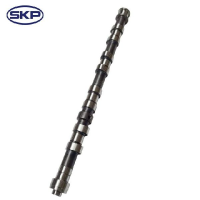
- Worn Camshaft Lobes or Lifters (Common) — PD injectors are mechanically actuated by the camshaft. Using incorrect oil (non-VW 505.01 specification) accelerates wear on these high-pressure lobes. A flattened lobe cannot physically push the injector plunger far enough to generate fuel pressure.
- Failed Injector Seals (O-rings) (Common) — Degraded O-rings allow combustion gases to bypass the injector, or leak fuel directly into the engine oil, dropping injection pressure and triggering the code.
- Failing Tandem (Fuel/Vacuum) Pump (Uncommon) — Internal tandem pump failure starves the cylinder head of low-pressure fuel supply, or leaks fuel into the oil system. This starvation prevents the injectors from filling properly.
- Incorrect Injector Adjustment (Uncommon) — Improper seating depth or incorrect rocker arm adjustment (often after a DIY timing belt or injector replacement) restricts fuel delivery.
- Contaminated Fuel (Rare) — Debris or water in poor-quality diesel clogs the microscopic internal passages of the injector nozzle.
- Faulty ECU Injector Driver (Rare) — The ECU's internal electronic driver circuit fails, causing a persistent single-cylinder code even after replacing the injector, harness, and verifying the camshaft.
Symptoms
- Rough Idle and Engine Vibration — The engine shakes or runs unevenly at idle due to the affected cylinder failing to contribute power.
- Loss of Power — The vehicle feels sluggish and struggles to reach highway speeds due to the severe under-fueling condition.
- Rising Engine Oil Level — Unburnt fuel washes past the piston rings and accumulates in the oil pan, causing the oil level on the dipstick to rise and smell strongly of diesel.
- Difficulty Starting — Extended cranking times, especially when hot (due to seal leaks dropping pressure) or cold (due to weak cranking RPM).
- Decreased Fuel Economy — A noticeable 10-20% drop in MPG as the engine struggles to maintain power with a dead cylinder.
- Engine Misfire and Hesitation (also visible on scanner) — Sputtering or stumbling during acceleration, often accompanied by a flashing Check Engine Light.
Diagnostic Flowchart
Tap your situation to follow the diagnostic path that matches what you're seeing on this code.
Common Fixes & Costs
- Replace Injector Wiring Harness — Parts: $80-$130, Labor: $150-$300, ~1.5 hr book time (Intermediate)
- Replace a Single Pump-Nozzle (PD) Injector — Parts: $300-$600, Labor: $250-$450, ~2.5 hr book time (Professional)
- Replace All Injector Seals (O-rings) — Parts: $40-$80, Labor: $200-$400, ~2.0 hr book time (Intermediate)
- Replace Camshaft and Lifters — Parts: $600-$1300, Labor: $900-$1600, ~8.5 hr book time (Professional)
- Replace Tandem (Fuel/Vacuum) Pump — Parts: $250-$500, Labor: $200-$400, ~2.0 hr book time (Intermediate)
DIY vs Professional
- Replace Injector Wiring Harness 🟢 Beginner
Tools: Basic socket set, torque wrench. - Replace a Single Pump-Nozzle (PD) Injector 🟢 Beginner
Tools: Injector puller, dial indicator, torque wrench, stretch bolts, VCDS. - Replace Camshaft and Lifters 🟢 Beginner
Tools: Timing belt tool kit, dial indicator, triple-square sockets, torque wrenches. - Replace Tandem (Fuel/Vacuum) Pump 🟢 Beginner
Tools: Basic socket set, torque wrench.
Used vs. New Parts: Buying Guide
When a used part is worth it: Never buy a 'used' PD injector. Only purchase professionally remanufactured units from reputable suppliers like Bosch. Used injectors are highly prone to immediate failure.
Donor quality checklist:
- Verify the rebuilder uses genuine Bosch nozzles and solenoids.
- Ensure the part number matches your engine code exactly; PD injectors are not interchangeable.
- Demand a detailed flow-test report with the remanufactured injector.
Decision logic:
- If The part is a remanufactured unit from Bosch or a highly reputable TDI specialist. → Buy it. It offers new-part reliability at half the cost, with a warranty.
- If The part is listed as 'used' on eBay or from a junkyard. → Avoid entirely. The labor cost to replace a failed used injector negates any savings.
Warranty tradeoff: Remanufactured injectors typically offer a 1-2 year warranty. New OEM injectors offer up to 3 years but cost double.
Worst-case if a used part fails: $800 if a cheap used injector fails, requiring duplicate labor and a second replacement part.
What Happens If You Wait — Timeline
- 0-1 month: Check Engine Light illuminates. Intermittent rough idle occurs when the engine is warm. Fuel economy drops slightly. (MPG impact: 5%% · Added cost: $0)
- 1-3 months: Rough idle becomes permanent. Hesitation occurs during acceleration. Unburnt fuel begins washing past piston rings, starting to dilute the engine oil. (MPG impact: 10%% · Added cost: $100 in wasted fuel.)
- 3-6 months: Fuel heavily dilutes the oil, destroying its viscosity. This accelerates wear on the camshaft lobes and lifters. A faint ticking noise begins. (MPG impact: 20%% · Added cost: $1,500 for secondary camshaft damage.)
- 6+ months: Camshaft lobes round off completely or lifters collapse. Diluted oil destroys main bearings, rod bearings, and the turbocharger, seizing the engine. (MPG impact: 50%% · Added cost: $5,000+ for complete engine replacement.)
Cost of Not Fixing It
- 0-1 month: Rough idle, hesitation, and a 10-15% drop in fuel economy. The vehicle will fail emissions testing. (Added cost: $100 in wasted fuel.)
- 1-6 months: Unburnt fuel washes past piston rings, diluting engine oil and destroying its lubricating properties. Camshaft wear accelerates rapidly. (Added cost: $1,500 for camshaft and lifter replacement.)
- 6+ months: Fuel-diluted oil destroys main bearings, rod bearings, and the turbocharger, requiring complete engine replacement. (Added cost: $5,000+ for a replacement engine.)
Diagnosis Steps
- Read Live Data with VAG Scanner
Connect a VAG scanner (VCDS/OBDeleven). Check Engine Measuring Block 013 at idle. A healthy cylinder reads between -1.0 and +1.0 mg/str. The faulty cylinder will approach the +2.99 mg/str limit. Check Block 023 (BIP); values over +60 indicate a slow-acting injector.
Tools: VAG-compatible OBD-II Scanner (VCDS or OBDeleven) (Beginner) - Inspect the Injector Wiring Harness
Remove the valve cover and inspect the in-head wiring harness for cracked insulation, brittle plastic, or loose pins. Wiggle the connectors while watching Block 013 live data to spot intermittent electrical faults.
Tools: Basic hand tools (sockets, screwdrivers) (Intermediate) - Test Injector Electrical Resistance
Disconnect the harness and measure resistance across the injector solenoid pins. A healthy PD injector reads 0.3 to 0.7 Ohms. Infinite or near-zero readings confirm internal electrical failure.
Tools: Multimeter, basic hand tools (Intermediate) - Perform an Injector Swap
Swap the suspect injector with a known-good one from another cylinder. Clear codes and re-check Block 013. If the +2.99 mg/str deviation follows the injector, the part is bad. If it stays on the original cylinder, the camshaft or tandem pump is at fault.
Tools: Injector puller tool, new injector seals, torque wrench, new stretch bolts (Advanced) - Check for Worn Camshaft Lobes (Visual)
Rotate the engine by hand and visually inspect the camshaft lobe actuating the faulty injector. Look for scoring, flattening, or a sharp edge indicating severe wear. The tip should be perfectly convex.
Tools: Socket set (to turn crankshaft) (Advanced) - Measure Camshaft Lobe Lift
Place a dial indicator on the rocker arm. Rotate the engine and measure total lift at the lobe's peak. A difference of >0.5mm compared to a healthy lobe confirms mechanical wear requiring camshaft replacement.
Tools: Dial Indicator with Magnetic Base, Socket Set (Advanced) - Analyze Injector Waveform (Pro Tip)
Back-probe the injector with an oscilloscope. A missing 'pintle hump' in the current waveform confirms internal mechanical failure without needing to remove or swap the injector.
Tools: Automotive Oscilloscope, Current Clamp, Back-Probing Pins (Advanced) - Test Tandem Pump Fuel Pressure
Connect a fuel pressure gauge to the tandem pump test port. Low supply pressure starves the injectors and triggers P3116 across multiple cylinders.
Tools: Fuel pressure gauge with appropriate fittings (Advanced) - Replace Faulty Component
Replace the identified part. Always use new stretch bolts and O-rings when reinstalling an injector, and perform the mandatory 180-degree rocker arm adjustment.
Tools: Appropriate replacement parts, torque wrench, VCDS for adaptation (Professional)
When This Code Triggers (Freeze-Frame Conditions)
- Engine Coolant Temp: 180-200°F (82-93°C) (The engine has reached full operating temperature, thinning the oil and exposing mechanical wear.)
- Engine RPM: 800-2500 RPM (The fault is most prominently detected at idle or during steady-state cruising.)
- Engine Load: 20-60% (The ECU flags the deviation during normal driving conditions when comparing requested versus actual fuel delivery.)
- Vehicle Speed: 0-60 mph (0-97 km/h) (The code triggers while stationary or driving, whenever the fuel deviation exceeds the +2.99 mg/str threshold.)
Related Codes
- P0300-P0308 — P3116 causes the misfire. The ECU detects under-fueling (P3116) and flags the resulting incomplete combustion as a misfire (P030X). Fix P3116 first.
- P3115 — P3115 is the opposite (Upper Limit Exceeded / over-fueling). P3116 indicates under-fueling.
- P3117 — P3117 is a strict electrical circuit fault. P3116 is a performance fault. If both are present, the harness or solenoid is definitively dead.
- P0299 — Misfires reduce exhaust energy, preventing the turbo from spooling. The ECU flags P0299 (Underboost) as a secondary symptom of the P3116 misfire.
Climate & Environmental Factors
- Cold Weather: Cold temperatures exacerbate symptoms. The ECU requires 280+ RPM to inject fuel; thick oil and weak batteries prevent this, causing no-starts.
- High Altitude: Reduced air density amplifies the power loss caused by the under-fueling condition.
How to Talk to a Mechanic About This Code
Say this: "I have a P3116 code. Please check the injector deviation in Measuring Block 013 and physically inspect the in-head wiring harness before quoting an injector replacement."
This signals you know the common, inexpensive failure points and the specific VAG diagnostic data required. It prevents a shop from immediately quoting a $1,000 injector replacement.
Avoid saying:
- 'Just fix my check engine light.'
- 'My car is shaking, I think it needs a tune-up.'
- 'My friend says it's a bad injector, just replace it.'
Questions to ask before authorizing the repair:
- What was the fuel deviation reading in mg/str for the faulty cylinder in Block 013?
- Did you physically inspect the injector wiring harness for cracked insulation? Can I see a photo?
- If recommending an injector, what tests confirmed it's not the harness or a worn camshaft lobe?
- Does your estimate include new injector seals and new torque-to-yield stretch bolts?
- What is the warranty on the parts and labor for this specific repair?
Where to Take It: Dealer vs Independent vs Chain
- Dealer:
Recommended ONLY if the vehicle is covered by warranty. Otherwise, an independent specialist is superior.
Best for: Vehicles still under any extended emissions warranties., Complex ECU driver diagnoses.
Downsides: Highest labor rates., Will likely quote full assembly replacements rather than harness repairs., May lack deep experience with older PD engines. (Typical cost: +50% vs. baseline) - Independent Shop:
Best Fit. A VW/Audi TDI specialist will diagnose this efficiently using VCDS, starting with the harness.
Best for: Out-of-warranty TDI vehicles., Accessing deep engine-specific knowledge regarding camshaft wear., Cost-effective repairs with OEM parts.
Downsides: MUST be a dedicated 'VW/Audi' specialist. General mechanics lack VCDS tools. (Typical cost: +0% vs. baseline) - Chain Shop:
AVOID. This is a specialized repair far outside the scope of a typical chain shop.
Downsides: Technicians lack experience with VAG-specific diesel engines., Lack of required diagnostic tools (VCDS) to read critical live data blocks., High risk of misdiagnosis and unnecessary parts replacement. (Typical cost: -10% vs. baseline)
When to Walk Away From the Repair
Walk away if a camshaft replacement ($2,500+) is required on a vehicle valued under $4,000.
- Car worth $3000, fix is $450: Fix it. A harness or seal repair is well below the threshold and restores full drivability.
- Car worth $3000, fix is $1200: Borderline. This involves a new injector. Get a second opinion to confirm it's not just the harness.
- Car worth $3000, fix is $2500: Walk away. A camshaft replacement on a car of this value is rarely economical.
What Scan Tool You Need for This Code
Minimum: A VAG-specific tool capable of reading live data from Engine Measuring Blocks 013 and 023.
Generic readers cannot access VW Measuring Blocks. You must use a VAG-specific tool to view Block 013 data to identify the failing cylinder.
Budget: OBDeleven (~$80) — Connects to your smartphone via Bluetooth. Reads fault codes and accesses the critical Measuring Blocks (013, 023) needed for P3116 diagnosis.
Mid-range: Ross-Tech VCDS (VAG-COM) (~$200) — The gold standard for VAG diagnostics. Provides dealership-level access to all modules, easy viewing of Measuring Blocks, and output tests.
Professional: Autel MaxiCOM MK808 (~$400) — A powerful handheld tablet providing VAG-specific functions and multi-brand coverage for serious DIYers.
Rent vs buy: Buy. Free scanner rentals at auto parts stores use generic readers that cannot access the required VW-specific data.
How to Clear the Code After You Fix It
- Use a VAG-compatible scanner to clear all fault codes from the Engine Control Module.
- Perform a cold start and let the vehicle idle for 3 minutes.
- Drive the vehicle at steady highway speeds (55-60 mph) for 15 minutes to run the fuel system monitors.
- Re-scan to ensure P3116 has not returned and readiness monitors are set.
Drive cycle (~20 minutes): Cold start (coolant below 122°F). Idle 3 minutes with A/C on. Accelerate to 55 mph and hold for 5 minutes. Decelerate to 20 mph without braking. Accelerate to 60 mph and hold for 5 minutes. Coast to a stop and idle for 2 minutes.
Readiness monitors affected: Misfire Monitor, Fuel System Monitor, Comprehensive Component Monitor
Before emissions retest: drive at least 50 miles to fully set monitors.
Watch out for:
- Clearing the code without a drive cycle leaves monitors 'Not Ready', causing an automatic emissions failure.
- Failing to adjust the injector rocker arm properly will cause the code to return immediately upon startup.
Will This Fail Emissions / State Inspection?
Yes — this code typically fails an OBD-II emissions inspection.
- California: An active P3116 triggers an automatic smog failure. All OBD readiness monitors must be set to 'Ready' after repair.
- New York: An illuminated Check Engine Light is an automatic failure. Clearing the code just before the test results in a 'Not Ready' rejection.
- Texas: In emissions-testing counties, any active fault code in the OBD-II system is grounds for immediate rejection.
Most Commonly Affected Vehicles
- Volkswagen Jetta TDI (2004-2006) — 1.9L PD engines (BEW/BRM) are highly prone to harness, injector, and camshaft failures.
- Volkswagen Golf TDI (2004-2006) — Shares the 1.9L BEW engine; frequently suffers from degraded in-head wiring harnesses.
- Volkswagen Passat TDI (2004-2005) — The 2.0L BHW engine is notorious for premature camshaft lobe wear and tandem pump failures.
- Volkswagen New Beetle TDI (2004-2006) — Susceptible to identical BEW engine harness and camshaft issues.
- Audi A4 TDI (2004-2008) — European models with 2.0L PD engines (BMM/BPW) experience frequent harness faults.
- Skoda Octavia TDI (2004-2013) — 1.9L and 2.0L PD engines commonly suffer from injector wiring loom failures.
Manufacturer-Specific Notes
- Volkswagen/Audi: The in-head wiring harness is submerged in hot oil, making it the #1 failure point for this code. Always replace it before the injector.
- Volkswagen/Audi: PD camshaft lobes wear prematurely if non-VW 505.01 oil is used, perfectly mimicking a dead injector.
- Volkswagen/Audi: The tandem pump frequently leaks fuel internally into the oil, accelerating camshaft wear and causing P3116.
Real Owner Stories
2006 VW Jetta TDI (BRM) at 185,000 miles with intermittent rough idle.
Owner experienced a stumbling idle and hesitation from a stop. Check Engine Light illuminated with P3116 and P0302 (Cylinder 2 Misfire).
What they tried:
- Received an $800 quote from a chain shop to replace the #2 injector.
- Consulted a TDI forum and decided to inspect the in-head wiring harness first.
- Found the plastic insulation on the cylinder 2 connector was completely shattered, causing a short.
Outcome: Replaced the injector wiring harness (Part #038971600) for $95 in two hours. The rough idle and codes permanently resolved.
Lesson: Always inspect the $100 wiring harness before condemning a $500 injector. Visual inspection prevents massive misdiagnosis costs.
2005 VW Passat TDI (BHW) at 210,000 miles with major power loss and thumping noise.
Vehicle suffered severe power loss, black smoke, and a rhythmic 'thumping' from the intake. Codes P3116 and P0304 were active.
What they tried:
- A general mechanic replaced the #4 injector and harness, but symptoms remained identical.
- Took the car to a VW diesel specialist who immediately pulled the valve cover.
- The specialist found the camshaft lobe for cylinder #4 was completely rounded off, and the lifter had dished inward.
Outcome: Required a full camshaft, lifter, and bearing replacement costing $2,100. The repair restored full power and cleared the codes.
Lesson: If a new injector and harness do not fix P3116, the root cause is mechanical camshaft wear. This is highly common on PD engines run on incorrect oil.
2004 VW Golf TDI (BEW) at 160,000 miles with a persistent misfire.
Car shook violently at idle. Using VCDS, the owner checked Measuring Block 013 and saw cylinder #3 stuck at +2.99 mg/str.
What they tried:
- Replaced the wiring harness with no change.
- Swapped the #3 injector with the #1 injector. Re-scanned with VCDS.
- The +2.99 mg/str reading moved to cylinder #1, definitively proving the injector itself was dead.
Outcome: Installed one remanufactured Bosch injector and a new seal kit for $350. Adjusted the rocker arm to spec. VCDS readings returned to 0.0 mg/str.
Lesson: Swapping injectors between cylinders is the ultimate DIY diagnostic test. If the high deviation follows the part, the injector is faulty. If it stays on the same cylinder, suspect the camshaft.
How to Prevent This Code From Triggering
- Use only VW 505.01 specification engine oil. (Every 10,000 miles.) — This is mandatory. PD engines place extreme pressure on the camshaft lobes. VW 505.01 oil contains specific anti-wear additives to protect these lobes. Incorrect oil guarantees premature camshaft failure.
- Replace the fuel filter. (Every 20,000 miles.) — Clean fuel prevents microscopic debris from destroying the tight-tolerance internal valves of the PD injectors and reduces strain on the tandem pump.
- Proactively replace the injector wiring harness. (Every 100,000 miles.) — The in-head harness degrades from constant exposure to hot oil. Replacing it during a timing belt service prevents future P3116 codes and misdiagnosis.
- Use high-quality diesel and a lubricity additive. (Every fill-up.) — Modern Ultra-Low Sulfur Diesel (ULSD) lacks lubricity. Additives reduce internal wear on the injectors and tandem pump.
Frequently Asked Questions
Can I just use a fuel injector cleaner to fix code P3116?
No, a chemical cleaner cannot fix P3116. This code indicates a severe mechanical or electrical control limit failure, not just a dirty nozzle. You must diagnose the harness, injector, or camshaft.
My mechanic says I need to replace all the injectors. Is this necessary?
It is not strictly necessary, but highly recommended on vehicles over 150,000 miles. PD injectors wear evenly, so if one fails from age, the others will follow shortly. Replacing all four saves duplicate labor costs.
What is the most common misdiagnosis for P3116?
The most common misdiagnosis is replacing a $500 injector without testing the $100 wiring harness first. The in-head harness degrades from hot oil and causes identical symptoms. Always inspect the harness and check VCDS live data before buying parts.
I replaced the injector and harness, but the P3116 code came back. What now?
If the code returns on the same cylinder, the fault is mechanical. Inspect the camshaft lobe for severe wear or test the tandem pump for low fuel pressure. Both issues prevent the injector from building adequate pressure.
What is a tandem pump and why does it fail?
The tandem pump is a camshaft-driven unit providing fuel pressure and brake vacuum. Internal seal failures cause fuel to leak into the engine oil or result in low fuel pressure to the injectors. This starvation triggers performance codes like P3116.
Can P3116 cause a turbo underboost code like P0299?
Yes, P3116 causes a misfire that reduces exhaust gas energy, preventing the turbocharger from spooling properly. The ECU detects this lack of boost and triggers a secondary P0299 code. Fixing the primary injector fault restores exhaust flow and resolves the underboost.
What happens if I keep driving with fuel in my oil?
Driving with fuel-diluted oil destroys the engine's internal bearings, camshaft, and turbocharger within hundreds of miles. The fuel acts as a solvent, completely stripping the oil's lubricating properties. If your oil level rises or smells like diesel, tow the vehicle immediately.
Does P3116 apply to other brands like Ford, Honda, or BMW?
No, P3116 as it relates to 'Pump-Nozzle Injector Performance' is specific to the Volkswagen Audi Group (VAG) and vehicles that used their PD TDI engines.
Key Takeaways
- Code P3116 indicates a severe under-fueling condition in a specific Pumpe-Düse (PD) injector on VW/Audi diesels, requiring immediate attention to prevent engine damage.
- Always inspect the $100 in-head injector wiring harness for cracked insulation before replacing a $500 fuel injector, as harness failure is the most common cause.
- Stop driving immediately if the engine oil level rises or smells of diesel; this means fuel is washing past the rings and will destroy the camshaft and bearings.
- Use a VAG-specific scanner like VCDS to check Measuring Block 013 at idle; a healthy injector reads near 0.0 mg/str, while a failing one approaches +2.99 mg/str.
- If replacing the harness and injector does not clear the code, inspect the camshaft; worn lobes from using non-VW 505.01 spec oil frequently mimic injector failures.
Shop the Parts Behind P3116
Below are the parts most often responsible for code P3116, ranked by how frequently each one is the actual culprit (per the diagnosis above). Tap any to see what we have for your vehicle.

The information in this article is provided for general reference and educational purposes only. Vehicle specifications, procedures, and part compatibility can vary by production date, trim level, and region. Always consult your vehicle's factory service manual and verify part numbers before purchasing or performing repairs. Safety-critical components such as airbags, seat belts, and braking systems should be installed by a qualified professional.
- 🧭 Diagnostic Flowchart
- 🛍️ Shop This Part
- What Does P3116 Mean?
- Can I Drive With P3116?
- Common Causes
- Symptoms
- Common Fixes & Costs
- DIY vs Professional
- Used vs. New Parts: Buying Guide
- What Happens If You Wait — Timeline
- Cost of Not Fixing It
- Diagnosis Steps
- When This Code Triggers (Freeze-Frame Conditions)
- Related Codes
- Climate & Environmental Factors
- How to Talk to a Mechanic About This Code
- Where to Take It: Dealer vs Independent vs Chain
- When to Walk Away From the Repair
- What Scan Tool You Need for This Code
- How to Clear the Code After You Fix It
- Will This Fail Emissions / State Inspection?
- Most Commonly Affected Vehicles
- Manufacturer-Specific Notes
- Real Owner Stories
- 2006 VW Jetta TDI (BRM) at 185,000 miles with intermittent rough idle.
- 2005 VW Passat TDI (BHW) at 210,000 miles with major power loss and thumping noise.
- 2004 VW Golf TDI (BEW) at 160,000 miles with a persistent misfire.
- How to Prevent This Code From Triggering
- Frequently Asked Questions
- Can I just use a fuel injector cleaner to fix code P3116?
- My mechanic says I need to replace all the injectors. Is this necessary?
- What is the most common misdiagnosis for P3116?
- I replaced the injector and harness, but the P3116 code came back. What now?
- What is a tandem pump and why does it fail?
- Can P3116 cause a turbo underboost code like P0299?
- What happens if I keep driving with fuel in my oil?
- Does P3116 apply to other brands like Ford, Honda, or BMW?
- Key Takeaways
- 🎟️ Get 5% Off