

OBD-II Code P3141: Manufacturer-Specific Fault Guide
What P3141 means, why it triggers, and how to fix it on Nissan, VW, and Audi vehicles
- P3141 indicates an on-board charger failure on Nissan Leafs, preventing AC charging, or an electrical short in the EVAP N80 purge valve on VW/Audi vehicles.
- For VW and Audi owners, a hard start immediately after refueling combined with P3141 confirms a stuck-open N80 purge valve.
- Test the VW/Audi N80 valve with a multimeter; a reading outside the 22-30 Ohm range confirms an internal short requiring a $40-$80 replacement.
- Nissan Leaf owners must test the 12V battery first, as resting voltage below 12.4V triggers false P3141 and U1000 communication codes.
- Replacing a Nissan Leaf Power Delivery Module (PDM) costs $1,500 to $5,000; always verify the J1772 charge port wiring is secure before authorizing this repair.
What Does P3141 Mean?
P3141 is a manufacturer-specific code. On Nissan Leaf electric vehicles, it signals an on-board charger failure that prevents AC charging. On Volkswagen and Audi vehicles, it indicates an electrical short circuit in the EVAP system's N80 purge valve.
Technical definition: P3141 lacks a standard SAE/ISO definition. For Nissan, it indicates the on-board charger's insulation self-test failed a specified number of times. For VW/Audi, it indicates a short circuit in the EVAP Purge Valve (N80).
Can I Drive With P3141?
Yes, But With Caution. For Nissan Leaf, you can drive, but you cannot charge the high-voltage battery using Level 1 or Level 2 AC power. For VW/Audi, the vehicle is drivable, but you will experience rough idling and difficulty starting after refueling. Driving for extended periods with a faulty EVAP valve causes a rich fuel mixture, destroying the catalytic converter over time. Replacing a VW catalytic converter costs $1,600 to $2,500, so address the N80 valve promptly.
🎬 Watch: How to diagnose and replace the N80 valve.Common Causes
- Faulty EVAP Purge Valve (N80) (VW/Audi) (Very Common) — An electrical short circuit within the EVAP Purge Valve (N80) triggers the code. Carbon contamination from the EVAP canister often causes the valve to stick, leading to this electrical failure.
- Failed On-Board Charger / PDM (Nissan) (Very Common) — An internal component failure, such as a blown diode failing its insulation check, within the On-Board Charger (2011-2012 models) or Power Delivery Module (2013+ models).
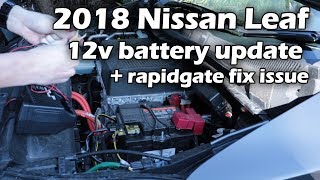
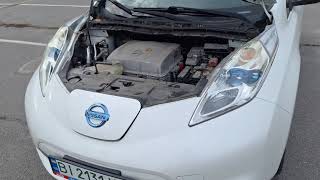
- Poor J1772 Pigtail Connection (Nissan) (Common) — A poorly seated or corroded connection on the J1772 pigtail connector under the hood interrupts proximity and pilot signals, causing charging to fail. 🎬 See this walkthrough on fixing Nissan Leaf charging issues.
- Wiring or Connector Issues (All Brands) (Common) — Damaged wires or corroded connectors leading to the Nissan PDM or VW/Audi EVAP valve interrupt the circuit. Shoddy previous repairs are a frequent culprit.
- Weak 12V Battery (Nissan) (Less Common) — A 12-volt battery resting below 12.4V causes system-wide voltage instability, triggering false P3141 and U1000 🎬 Watch: How to fix a Leaf that won't start. communication codes.
- Software Glitches (Nissan) (Rare) — Outdated PDM firmware on 2013 Leaf models incorrectly detects faults at high temperatures. Nissan issued voluntary service campaign P3259 to update this software.
Symptoms
- Charging Failure (Nissan) — The vehicle refuses to charge using a Level 1 or Level 2 AC charger. DC fast charging usually remains functional.
- Difficulty Starting After Fueling (VW/Audi) — A stuck-open EVAP valve allows excess fuel vapors into the engine during refueling, creating a rich mixture that requires extended cranking to start.
- Check Engine Light (VW/Audi) — The dashboard check engine light illuminates immediately upon detecting the electrical short.
- Rough Idle & Reduced Power (VW/Audi) — The engine idles erratically and loses acceleration power due to the improper air-fuel mixture caused by unmetered EVAP vapors.
- No 'Ready to Drive' Indicator (Nissan) — The Leaf fails to boot into the 'ready to drive' state after a failed charging attempt.
Diagnostic Flowchart
Tap your situation to follow the diagnostic path that matches what you're seeing on this code.
Common Fixes & Costs
- Replace EVAP Purge Valve (N80) (VW/Audi) — Parts: $20 - $150, Labor: $50 - $180, ~0.5 hr book time (Beginner)
- Replace On-Board Charger (Nissan 2011-2012) — Parts: $500 - $2,200, Labor: $600 - $1,000, ~5 hr book time (Professional)
- Replace Power Delivery Module (PDM) (Nissan 2013+) — Parts: $800 - $4,000, Labor: $800 - $1,200, ~6 hr book time (Professional)
- Repair Damaged Wiring or Connectors — Parts: $10 - $60, Labor: $100 - $400, ~1.5 hr book time (Intermediate)
Used vs. New Parts: Buying Guide
When a used part is worth it: For VW/Audi, the N80 valve is inexpensive new; used parts offer negligible savings. For the Nissan Leaf On-Board Charger (OBC) or Power Delivery Module (PDM), a used part from a reputable EV dismantler saves thousands.
Donor-vehicle mileage cap: roughly under 80000 miles for the part to have meaningful remaining life.
Donor quality checklist:
- For Nissan OBC/PDM, verify the part number is a later, more reliable revision.
- Ensure the donor vehicle was not scrapped due to a high-voltage system failure.
- Obtain the VIN of the donor car to verify year and model compatibility.
- Purchase from a seller offering at least a 90-day warranty.
Decision logic:
- If Fix is VW/Audi N80 valve → Buy a new OEM or quality aftermarket (Bosch) part. Used parts are impractical.
- If Fix is Nissan OBC/PDM and vehicle value is low → A used part from a low-mileage vehicle is the most financially sensible option.
- If Fix is Nissan OBC/PDM and vehicle is under warranty → Use a new OEM part installed by a dealer to maintain the warranty.
Warranty tradeoff: Used parts carry a 30-90 day warranty covering only the part. New aftermarket parts carry a 1-3 year warranty. New OEM parts installed by a dealer include a 1-year/12,000-mile parts and labor warranty.
Worst-case if a used part fails: For Nissan, installing a faulty used PDM costs $800-$1500 in repeat labor, plus the cost of another used part.
What Happens If You Wait — Timeline
- Immediate (VW/Audi): Check Engine Light illuminates. Car exhibits a slightly rough idle and is hard to start after refueling. (MPG impact: 0-2%% · Added cost: $0)
- 1-3 Months (VW/Audi): The stuck-open valve forces the engine to run rich. Fuel economy drops noticeably, and spark plugs begin to foul. (MPG impact: 5-10%% · Added cost: $50-$150)
- 3-9 Months (VW/Audi): The prolonged rich fuel mixture overheats the catalytic converter. The internal ceramic substrate begins to melt, causing a permanent loss of efficiency. (MPG impact: 10-15%% · Added cost: $200-$400)
- 9+ Months (VW/Audi): The catalytic converter fails completely, triggering P0420. The vehicle fails emissions testing and requires an expensive catalytic converter replacement. (MPG impact: 15-25%% · Added cost: $1,600 - $2,800)
- Immediate & Ongoing (Nissan Leaf): The vehicle instantly loses the ability to charge using Level 1 or Level 2 AC power. This is not a progressive failure; function is lost immediately. (MPG impact: N/A% · Added cost: $3,000 - $5,000)
Diagnosis Steps
- Read All Fault Codes
Use an OBD-II scanner to read all stored fault codes. For Nissan Leaf, the LeafSpy app provides mandatory detailed information on high-voltage systems.
Tools: OBD-II Scanner, LeafSpy App (Nissan) (Beginner) - Measure EVAP Purge Valve (N80) Resistance (VW/Audi)
Disconnect the N80 valve's electrical connector. Use a multimeter set to Ohms (Ω) to measure resistance between the two pins. A reading between 22 and 30 Ohms is healthy. Near 0 Ohms (short) or infinite (open) confirms a faulty valve.
Tools: Multimeter (Beginner) - Inspect the 12V Battery (Nissan)
Test the health of the 12V accessory battery. Voltage below 12.4V at rest causes communication codes like U1000 that accompany P3141.
Tools: Multimeter (Beginner) - Visual Inspection of Wiring and Connectors
Inspect wiring and connectors associated with the Nissan PDM or VW/Audi EVAP valve. For Nissan, check the J1772 pigtail connector under the hood for corrosion or loose connections.
Tools: Flashlight (Intermediate) - Check N80 Valve Connector Voltage (VW/Audi)
With the N80 valve disconnected, turn the ignition 'On'. Use a multimeter set to DC Volts to check for 12V at the harness connector. If there is no voltage, the problem is in the wiring or a fuse.
Tools: Multimeter (Intermediate) - Activate N80 Valve with Scan Tool (VW/Audi)
Use a bidirectional scan tool to command the EVAP Purge Valve (N80) to open and close. If it clicks but flow codes persist, it is mechanically stuck. If it does not click and wiring is good, the coil failed.
Tools: Bidirectional OBD-II Scanner (Advanced) - Check J1772 Pilot/Ground Resistance (Nissan)
With the car off, measure resistance between the ground and pilot pins on the car's J1772 charge port. A healthy car shows Mega-Ohms; a faulty one shows Kilo-Ohms, indicating an internal charger fault.
Tools: Multimeter (Advanced) - Diagnose the On-Board Charger / PDM (Nissan)
Take the vehicle to a certified EV technician. Testing internal PDM components involves lethal high-voltage systems and requires specialized insulation testing equipment.
Tools: Insulation Tester, EV Diagnostic Equipment (Professional)
When This Code Triggers (Freeze-Frame Conditions)
- Vehicle/System State (Nissan): 0 RPM / 0 MPH (Code sets when initiating a Level 1 or Level 2 charge cycle, not while driving.)
- Engine Coolant Temp (VW/Audi): 80-110°C (176-230°F) (The EVAP monitor runs only when the engine is fully warmed up.)
- Fuel Tank Level (VW/Audi): 25-75% (The EVAP system test requires the fuel level to be between 1/4 and 3/4 of a tank.)
- Vehicle Speed (VW/Audi): 45-65 mph (72-105 kph) (The monitor runs during steady-state highway cruising.)
Related Codes
- P0AA6 — On a Nissan Leaf, this high-voltage isolation fault often accompanies P3141. Together, they confirm a dangerous insulation leak within the charging system.
- U1000 — A CAN Bus communication error. On a Nissan Leaf, it points to a weak 12V battery. Diagnose the 12V battery first if U1000 appears with P3141.
- P0441 — On VW/Audi, this 'Incorrect Purge Flow' code indicates a mechanical problem. P3141 points to an electrical short. Seeing both confirms the N80 valve is completely dead.
- P0444 — For VW/Audi, this means 'EVAP Purge Control Valve Circuit Open'. P3141 means a short circuit, while P0444 means an open circuit. Both require replacing the N80 valve.
Climate & Environmental Factors
- High Ambient Temperature: On 2013 Nissan Leaf models, high ambient temperatures cause the PDM to incorrectly trigger P3141. Software update P3259 corrects this.
How to Talk to a Mechanic About This Code
For Nissan, it establishes you know this is a high-voltage issue and opens the door to cost-saving options. For VW/Audi, it steers the mechanic away from an expensive leak test and directs them to the specific electrical failure point.
Avoid saying:
- 'My car won't charge.' (Too vague for a Leaf)
- 'My check engine light is on.' (Invites broad, expensive diagnostics)
- 'I think I have an EVAP leak.' (Incorrect for P3141, leads to the wrong test)
Questions to ask before authorizing the repair:
- For VW/Audi: Did you measure the resistance of the N80 valve, and what was the reading?
- For Nissan: Can you provide a quote for both a new and a used PDM/OBC, including labor?
- What is the warranty on the replacement part and the labor?
Where to Take It: Dealer vs Independent vs Chain
- Dealer:
Necessary for Nissan Leaf warranty work. For an out-of-warranty VW/Audi, it's a reliable but expensive option for a simple fix.
Best for: Vehicles under the EV system or emissions warranty., Complex software or firmware updates (Nissan).
Downsides: Highest labor rates, often 20-50% more than independent shops., Will only replace the entire OBC/PDM assembly (Nissan), refusing used-part repairs. - Independent Shop:
For VW/Audi, an independent shop specializing in German cars is perfect. For Nissan Leaf, ONLY a specialized EV independent shop is a viable alternative to the dealer.
Best for: Out-of-warranty vehicles where cost is a major factor., VW/Audi N80 valve replacement., Nissan Leaf repairs IF the shop is a certified EV specialist.
Downsides: General auto shops are NOT equipped for Nissan Leaf high-voltage repairs., Quality and expertise vary widely. - Chain Shop:
AVOID for this code on both Nissan and VW/Audi. The risk of misdiagnosis is too high.
Best for: Simple jobs like tires, oil changes, and brakes.
Downsides: Technicians lack high-voltage training (Nissan)., High risk of misdiagnosis on manufacturer-specific codes (VW/Audi).
When to Walk Away From the Repair
If the total estimated repair cost exceeds 50% of the car's current private-party market value, seriously consider selling the car as-is.
- Car worth $4500, fix is $3800: Walk away. The repair cost for the Nissan Leaf's on-board charger is nearly the entire value of the car. This vehicle is economically totaled.
- Car worth $8000, fix is $250: Fix it. The cost to replace the N80 valve on the VW is a tiny fraction of the car's value and is critical for passing emissions.
What Scan Tool You Need for This Code
For a Nissan Leaf, a generic scanner only gives the code, while LeafSpy provides dealer-level insight into the high-voltage system. For a VW/Audi, the code alone doesn't confirm the failure; a multimeter test is required.
Rent vs buy: For a VW/Audi, rent a basic code reader from an auto parts store for free, but buy a multimeter ($20) for the definitive test. For a Nissan Leaf, buying an OBD-II dongle and the LeafSpy app is mandatory for long-term health monitoring.
How to Clear the Code After You Fix It
- Reconnect all high-voltage and 12V connections (Nissan) or replace the faulty N80 valve (VW/Audi).
- Use an OBD-II scan tool to clear the codes.
- Perform a complete drive cycle to allow the readiness monitors to set.
Drive cycle (~20 minutes): For VW/Audi: Start with a cold engine. Idle for 3 minutes. Drive at a steady 45-55 mph for 7 minutes. Accelerate to 60-65 mph and hold for 5 minutes. Decelerate to a stop without aggressive braking. Idle for 3 minutes.
Readiness monitors affected: Evaporative System (EVAP), Catalyst (CAT), Oxygen Sensor (O2S)
Before emissions retest: drive at least 50 miles to fully set monitors.
Watch out for:
- For VW/Audi, the EVAP monitor will not run if the fuel tank is completely full or nearly empty.
- For Nissan, the code returns immediately upon the next failed charging attempt if the root cause remains.
Will This Fail Emissions / State Inspection?
Yes — this code typically fails an OBD-II emissions inspection.
- California: For VW/Audi, an active P3141 is an automatic Smog Check failure. Nissan Leafs are exempt from smog checks.
- New York: For VW/Audi, the vehicle automatically fails the emissions inspection if the Check Engine Light is on. Nissan Leafs are exempt from emissions testing.
- Texas: In emissions-testing counties, a VW or Audi with P3141 fails. Fully electric vehicles like the Nissan Leaf are exempt.
Most Commonly Affected Vehicles
- Nissan Leaf (2011-2017) — First-generation models are notorious for on-board charger failures.
- Volkswagen Jetta (2008-2015) — Frequently experiences EVAP system faults triggering P3141 due to a failed N80 purge valve.
- Audi A3 (2009-2016) — Shares EVAP system components with Volkswagen that lead to this fault.
- Volkswagen Golf / GTI (2010-2016) — Prone to N80 valve failures, especially in GTI models with the 2.0T engine.
- Audi A4 (2009-2015) — Logs this code due to electrical shorts in the N80 valve.
Manufacturer-Specific Notes
- Nissan: The official definition states 'charge insulation resistance loss protection control is repeated'. The car detects a potential electrical leak during the charging handshake and aborts the charge to prevent danger.
- Volkswagen/Audi: The official definition 'Valve for starting with empty tank' is highly misleading. The component is simply the standard N80 EVAP purge valve.
- Volkswagen/Audi: Recall 20UF (NHTSA #24V110000) covers many 2015-2020 models for a faulty fuel tank suction pump that leaks fuel into the EVAP system, causing similar symptoms.
Real Owner Stories
2015 VW GTI with 75,000 miles - The Classic N80 Fix
Check Engine Light illuminated. The car cranked for several extra seconds before starting, but only immediately after getting gas.
What they tried:
- Tightened the gas cap, which did nothing.
- Scanned the code, revealing P3141.
- Tested the N80 purge valve resistance with a multimeter and found a dead short (near 0 Ohms).
Outcome: Replaced the N80 valve (Bosch part #0280142431) in 15 minutes. Total cost was under $40. The code cleared and the hard starting issue vanished.
Lesson: The 'hard start after fueling' symptom points directly to the N80 valve on VW/Audi vehicles. A 5-minute multimeter resistance test confirms the failure before spending money.
2013 Nissan Leaf SV - A Misleading Wiring Problem
Bought a used Leaf that refused to AC charge, throwing codes P3141 and P0AA6. A dealership previously quoted a massive repair bill.
What they tried:
- Performed a detailed visual inspection under the hood.
- Found a dealership-installed cable connector was not seated properly and was dangling, trapping water.
Outcome: Properly seated the connector and re-taped the wiring to be watertight. After clearing the codes, the car charged normally. The fix cost $0.
Lesson: Always perform a thorough visual inspection. A loose connector mimics the symptoms of a $4,000 component failure.
2012 Nissan Leaf with 105,000 miles - The Dreaded Charger Failure
Car started charging on a Level 2 EVSE, stopped after 5 minutes, flashed blue lights, and logged P3141. DC fast charging worked perfectly.
What they tried:
- Replaced the EVSE charging cable, but the problem remained.
- Checked the 12V battery, which was healthy.
- Took it to an independent EV repair shop.
Outcome: The shop confirmed an internal failure of the on-board charger (OBC). The owner bought a used OBC from a salvage vehicle for $600. Labor was $800. Total cost was $1,400, saving over $1,600 compared to a dealer quote.
Lesson: If DC fast charging works but AC charging fails with P3141, the on-board charger/PDM is the culprit. Sourcing a used unit from an EV dismantler saves thousands.
2014 Audi A4 - Misdiagnosed as a Leak
Check Engine Light with code P3141 and an occasional fuel smell.
What they tried:
- A general repair shop performed a $150 smoke test to find a leak. No leak was found.
- The shop suggested replacing the charcoal canister for $500.
- The owner declined and visited a VW/Audi specialist.
Outcome: The specialist noted P3141 is an electrical code, not a leak code. They tested the N80 valve, confirmed it was shorted, and replaced it for $160. The fuel smell was from the valve being stuck open.
Lesson: Code definitions matter. P3141 on a VW/Audi points to an electrical fault in the N80 valve. Smoke tests are the wrong diagnostic path for this specific code.
How to Prevent This Code From Triggering
- Maintain a Healthy 12V Battery (Nissan Leaf) (Check voltage monthly) — A weak 12V battery causes system-wide voltage instability, stressing electronic modules like the PDM/OBC and triggering spurious fault codes.
- Use Top Tier Gasoline (VW/Audi) (Every fill-up) — Detergent additives prevent carbon buildup, reducing the chance of charcoal particles contaminating the N80 purge valve and causing it to stick.
- Avoid Over-Topping the Fuel Tank (VW/Audi) (Every fill-up) — Forcing extra fuel into the tank floods the charcoal canister with liquid gasoline, sending contaminants down the line to destroy the N80 purge valve.
- Prioritize Level 2 AC Charging (Nissan Leaf) (Daily charging habit) — Relying heavily on DC fast charging generates significant heat, stressing the power electronics. Slower AC charging extends their lifespan.
- Ensure Clean Charging Connections (Nissan Leaf) (Inspect periodically) — A clean, secure connection ensures stable communication and power transfer, reducing electrical stress on the charger's control logic.
Frequently Asked Questions
Can I still use a DC fast charger on my Nissan Leaf if I have code P3141?
Yes. DC fast charging bypasses the on-board charger entirely, feeding power directly to the battery. Even if Level 1 or 2 charging fails due to P3141, fast charging remains functional.
What are common misdiagnosis mistakes for P3141?
Nissan Leaf owners mistakenly replace the EVSE charging cable when the fault is the car's internal charger. VW/Audi technicians often perform expensive smoke tests instead of testing the N80 valve's electrical circuit.
Why does my VW/Audi have trouble starting after I get gas?
A faulty EVAP purge valve (N80) gets stuck open. During refueling, this open valve allows highly concentrated fuel vapors to flood the engine intake. This creates an overly rich mixture that requires extended cranking to clear.
I cleared the P3141 code but it came back. Does that mean the part is definitely bad?
Yes, this confirms a hard hardware fault rather than a temporary glitch. The code returns immediately when the vehicle runs its self-diagnostics and detects the short circuit (VW/Audi) or insulation failure (Nissan).
Is it safe to drive with code P3141?
For a Nissan Leaf, it is safe to drive, but you lose AC charging capability. For a VW/Audi, short-term driving is safe, but long-term driving with a rich fuel mixture destroys the catalytic converter.
Why is the repair cost for a Nissan Leaf on-board charger so high?
The on-board charger and PDM are complex, high-voltage power electronics. Dealerships replace the entire sealed unit rather than repairing internal components, pushing total repair bills near $4,500.
Can I fix code P3141 myself?
VW/Audi owners with basic tools can easily replace the EVAP N80 valve in 15 minutes. Nissan Leaf owners must never attempt DIY repairs on the on-board charger due to the risk of lethal electric shock.
Key Takeaways
- P3141 indicates an on-board charger failure on Nissan Leafs, preventing AC charging, or an electrical short in the EVAP N80 purge valve on VW/Audi vehicles.
- For VW and Audi owners, a hard start immediately after refueling combined with P3141 confirms a stuck-open N80 purge valve.
- Test the VW/Audi N80 valve with a multimeter; a reading outside the 22-30 Ohm range confirms an internal short requiring a $40-$80 replacement.
- Nissan Leaf owners must test the 12V battery first, as resting voltage below 12.4V triggers false P3141 and U1000 communication codes.
- Replacing a Nissan Leaf Power Delivery Module (PDM) costs $1,500 to $5,000; always verify the J1772 charge port wiring is secure before authorizing this repair.
Helpful Videos


Shop the Parts Behind P3141
Below are the parts most often responsible for code P3141, ranked by how frequently each one is the actual culprit (per the diagnosis above). Tap any to see what we have for your vehicle.



The information in this article is provided for general reference and educational purposes only. Vehicle specifications, procedures, and part compatibility can vary by production date, trim level, and region. Always consult your vehicle's factory service manual and verify part numbers before purchasing or performing repairs. Safety-critical components such as airbags, seat belts, and braking systems should be installed by a qualified professional.
- 🧭 Diagnostic Flowchart
- 🎬 Helpful Videos
- 🛍️ Shop This Part
- What Does P3141 Mean?
- Can I Drive With P3141?
- Common Causes
- Symptoms
- Common Fixes & Costs
- Used vs. New Parts: Buying Guide
- What Happens If You Wait — Timeline
- Diagnosis Steps
- When This Code Triggers (Freeze-Frame Conditions)
- Related Codes
- Climate & Environmental Factors
- How to Talk to a Mechanic About This Code
- Where to Take It: Dealer vs Independent vs Chain
- When to Walk Away From the Repair
- What Scan Tool You Need for This Code
- How to Clear the Code After You Fix It
- Will This Fail Emissions / State Inspection?
- Most Commonly Affected Vehicles
- Manufacturer-Specific Notes
- Real Owner Stories
- 2015 VW GTI with 75,000 miles - The Classic N80 Fix
- 2013 Nissan Leaf SV - A Misleading Wiring Problem
- 2012 Nissan Leaf with 105,000 miles - The Dreaded Charger Failure
- 2014 Audi A4 - Misdiagnosed as a Leak
- How to Prevent This Code From Triggering
- Frequently Asked Questions
- Can I still use a DC fast charger on my Nissan Leaf if I have code P3141?
- What are common misdiagnosis mistakes for P3141?
- Why does my VW/Audi have trouble starting after I get gas?
- I cleared the P3141 code but it came back. Does that mean the part is definitely bad?
- Is it safe to drive with code P3141?
- Why is the repair cost for a Nissan Leaf on-board charger so high?
- Can I fix code P3141 myself?
- Key Takeaways
- 🎟️ Get 5% Off