

OBD-II Code P3187: Fuel Pump Pressure Performance
The Ultimate Guide to Diagnosing and Fixing P3187 on GM, Nissan, and VW Vehicles
What Does P3187 Mean?

P3187 is a manufacturer-specific code. On modern General Motors (GM) vehicles, it indicates the Engine Control Module (ECM) detected fuel pressure critically lower than the target commanded by the Fuel Pump Control Module (FPCM). This discrepancy points to a performance issue within the low-pressure fuel system, preventing the engine from receiving the consistent fuel volume needed to run.
Technical definition: The official GM definition for P3187 is "Fuel Pump Pressure Performance - Low Pressure". The DTC sets when the FPCM reports actual fuel pressure is below the minimum required threshold for a calibrated period, indicating a fault in fuel delivery.
Can I Drive With P3187?

No — Do Not Drive. Do not drive the vehicle. Sudden engine stalling poses a severe safety hazard in traffic. Driving with low fuel pressure causes the engine to run lean, leading to misfires that overheat and destroy the catalytic converter. This adds a $1,900 to $3,200 repair.
Common Causes

- Chafed Engine Wiring Harness (Very Common) — On 2019+ GM trucks, the engine wiring harness rubs against sharp metal brackets (alternator, shock tower). Engine vibration wears through the conduit, exposing wires that short to ground. This is documented extensively in GM TSBs 21-NA-149 and 23-NA-102.
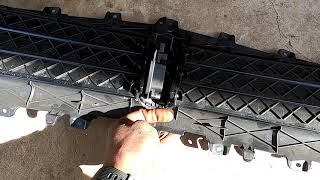
- Poor Connection at Active Grille Shutter (Common) — A loose or corroded connector for the active grille shutter triggers P3187 and U-prefix communication codes. The shutter shares the Local Interconnect Network (LIN) bus with the FPCM; a fault here disrupts the entire network.
- Loose or Corroded Ground Wires (Common) — High resistance from loose or corroded grounds (specifically G132 and G133 behind the right-front wheelhouse liner on GM trucks) causes intermittent electrical drops, triggering this code.
- Water Intrusion in Electrical Connectors (Less Common) — Inadequate factory seals on connectors (like the Charge Air Cooler pump) allow water penetration. This creates short circuits that crash the shared data bus.
- Weak Vehicle Battery (Less Common) — A weak battery causes significant voltage drops during startup. This disrupts LIN bus communication, leading to ghost codes including P3187.
- Failing Fuel Pump Control Module (FPCM) (Rare) — The FPCM fails from internal corrosion or heat. GM issued a recall (N212332040) for 2021 SUVs for this exact module failing and causing engine stalls.
- Failed Low-Pressure Fuel Sensor (Rare) — The sensor reading fuel pressure fails, sending an inaccurate low-pressure signal. This triggers P3187 even if the pump and wiring function correctly.
Symptoms

- Engine Stalling or Hesitation — The vehicle stumbles during acceleration or stalls completely at low speeds. This is the primary safety concern.
- Check Engine Light & Reduced Power — The MIL illuminates, often accompanied by a 'Reduced Engine Power' message as the vehicle enters limp mode.
- Rough Transmission Shifting — Erratic engine performance from inconsistent fuel delivery confuses the Transmission Control Module (TCM), causing harsh shifts and triggering a P0700 code.
- Difficulty Starting — The engine cranks for an extended period or fails to start entirely due to insufficient fuel pressure.
Common Fixes & Costs

- Repair Chafed Wiring Harness — Parts: $20-$75, Labor: $200-$800, ~2.5 hr book time (Professional)
- Replace Active Grille Shutter Assembly — Parts: $200-$500, Labor: $200-$400, ~2.0 hr book time (Intermediate)
- Clean and Secure Ground Connection — Parts: $5-$15, Labor: $100-$200, ~1.0 hr book time (DIY)
- Replace Fuel Pump Control Module (FPCM) — Parts: $60-$150, Labor: $150-$250, ~1.0 hr book time (Intermediate)
- Replace Engine Wiring Harness — Parts: $600-$1500, Labor: $1000-$2000, ~10.0 hr book time (Professional)
DIY vs Professional
- Repair Chafed Wiring Harness — Beginner: No
Tools: Soldering iron, quality solder, heat shrink tubing, wire strippers, TESA harness tape, digital multimeter. - Replace Active Grille Shutter — Beginner: Yes, with patience.
Tools: Socket/ratchet set (7mm, 10mm), trim removal tool kit, flashlight. - Clean and Secure Ground Connection — Beginner: Yes.
Tools: Socket/ratchet set, wire brush, sandpaper, dielectric grease. - Replace Fuel Pump Control Module (FPCM) — Beginner: Yes.
Tools: Socket/ratchet set. - Replace Engine Wiring Harness — Beginner: No.
Tools: Extensive set of professional mechanic's tools, socket sets, torque wrenches, trim tools, wiring diagram access.
Used vs. New Parts: Buying Guide
When a used part is worth it: For electronic modules like the FPCM or an Active Grille Shutter assembly, a used part from a low-mileage vehicle is a cost-effective option. It is not recommended for wiring harnesses.
Donor-vehicle mileage cap: roughly under 60000 miles for the part to have meaningful remaining life.
Donor quality checklist:
- Verify the donor vehicle's VIN to ensure it wasn't part of a recall for that specific component.
- Inspect connectors for corrosion, bent pins, or water damage.
- Match the part number exactly; superseded numbers may not be compatible without programming.
Decision logic:
- If The part is a control module (FPCM, etc.) and the new OEM part is under $150 → Buy new OEM. The savings from a used part are minimal compared to the risk of hidden damage.
- If The part is a mechanical assembly (Active Grille Shutter) and the vehicle is over 100,000 miles → A used part is an acceptable risk to save money, but expect a shorter remaining service life.
- If The part is known to fail from internal electronic issues (like the recalled FPCM) → Strongly favor a new part to ensure you get the most updated, reliable version.
Warranty tradeoff: Used parts from salvage yards typically offer a 30-90 day warranty. New aftermarket parts offer a 1-year to limited lifetime warranty. New OEM parts carry a 1-2 year warranty.
Worst-case if a used part fails: 300-800. If a used electronic module fails, you pay for diagnostic time and labor to replace it again.
Cost of Not Fixing It
- Immediate: Unpredictable engine stalling, posing a significant safety risk in traffic. Reduced engine power and poor acceleration. (Added cost: 0)
- Weeks to Months: Engine misfires caused by a lean fuel mixture begin to overheat the catalytic converter. Fuel economy drops by 5-15%. (Added cost: 50-150)
- Several Months: Catastrophic failure of the catalytic converter due to sustained high temperatures from unburnt fuel igniting in the exhaust. (Added cost: 1900-3200)
Diagnosis Steps
- Perform a Full Vehicle DTC Scan
Use a professional scanner to read ALL modules. P3187 rarely appears alone. Document communication codes (U0284, U0073) and transmission codes (P0700), which prove this is a network/wiring issue, not a fuel pump failure.
Tools: Professional OBD-II Scanner (Beginner) - Visually Inspect the Engine Wiring Harness
Meticulously inspect the harness for chafing per GM TSB 21-NA-149. Check where the harness passes the alternator bracket, A/C lines, and the driver's side shock tower. Look for worn insulation and exposed copper.
Tools: Flashlight, Inspection Mirror (Intermediate) - Inspect LIN Bus Connectors
Inspect the main connectors on the LIN bus, starting with the Active Grille Shutter actuator (X132/X604A) and Charge Air Cooler pump. Look for moisture, corrosion, or loose pins.
Tools: Flashlight (Intermediate) - Check Key Ground Connections
Locate, remove, and clean the main engine and chassis grounds. On GM trucks, focus on grounds G132 and G133 behind the front right wheelhouse liner. Ensure bare metal contact.
Tools: Socket Set, Wire Brush, Dielectric Grease (Intermediate) - [PRO TIP] Monitor Low-Pressure Fuel System PIDs
Use a scan tool to view 'Low-Side Fuel Pressure'. It should hold steady between 58-72 PSI (400-500 kPa). Compare 'Commanded' to 'Actual' pressure. A significant drop confirms a performance issue.
Tools: Professional OBD-II Scanner (with Live Data) (Advanced) - [PRO TIP] Analyze FPCM Duty Cycle
Monitor the 'FPCM Duty Cycle' PID. If the duty cycle hits 90-100% but actual fuel pressure remains low, the FPCM is maxed out but the pump cannot keep up, indicating high circuit resistance.
Tools: Professional OBD-II Scanner (with Live Data) (Advanced) - [PRO TIP] LIN Bus Voltage Analysis
Set a multimeter to 'peak' min/max. A healthy LIN bus toggles rapidly between ~1V and 1V below battery voltage. A constant 12V means an open circuit; 0V means a short to ground.
Tools: Digital Multimeter (with Min/Max Peak Hold) (Advanced) - [PRO TIP] FPCM Power and Ground Voltage Drop Test
Connect a sealed-beam headlamp between the FPCM connector's main power and ground. Command the pump on. Measure voltage drop on both sides. Excessive drop (>0.5V) indicates high wiring resistance.
Tools: Professional Scan Tool, Digital Multimeter, Sealed-Beam Headlamp (Advanced) - [PRO TIP] Isolate the Faulty LIN Bus Device
Disconnect all slave devices on the affected bus. Using an oscilloscope at the ECM, plug devices in one by one. The waveform will corrupt or flatline when the faulty device is connected.
Tools: Oscilloscope, Wiring Diagram (Professional) - Test the Fuel Pump Control Module
If wiring and networks pass, use an oscilloscope to check the duty-cycled signal from the FPCM to the fuel pump. A missing signal despite an ECM command confirms a failed module.
Tools: Professional Scan Tool, Oscilloscope (Professional)
When This Code Triggers (Freeze-Frame Conditions)
- Engine Coolant Temp: 170-210°F (77-99°C) (The code typically sets when the engine is fully warmed up and operating in closed loop.)
- RPM: 1200-2500 RPM (Occurs under light to moderate load, such as steady cruising, rather than hard acceleration.)
- Engine Load: 20-50% (The fault is detected when the fuel system is expected to maintain stable pressure under a consistent load.)
- Vehicle Speed: 45-65 mph (72-105 kph) (Highway driving provides a sustained period for the ECM to compare commanded versus actual fuel pressure.)
Related Codes
- U0284 — 'Lost Communication with Active Grille Air Shutter'. If it appears with P3187, it strongly suggests the root cause is a shared LIN bus wiring or connector fault, disrupting the entire network.
- P0700 — An informational code from the Transmission Control Module (TCM). It accompanies P3187 because erratic engine power causes the transmission to shift harshly. P0700 is the symptom; P3187 is the root cause.
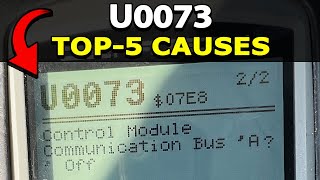
- U0073 — 'Control Module Communication Bus A Off'. Seeing U0073 with P3187 makes an isolated component failure highly unlikely. It points directly to a major wiring issue shorting out an entire communication bus.
- P069E — 'Fuel Pump Control Module Requested MIL Illumination'. The FPCM detected an internal fault or circuit problem and asked the ECM to turn on the Check Engine Light.
Climate & Environmental Factors
- Road Salt and Humidity: Vehicles in regions with heavy road salt use or high humidity are highly susceptible to the electrical faults triggering P3187. Saltwater spray penetrates wiring harnesses, accelerating corrosion and creating high resistance in ground connections.
- Extreme Cold: In freezing temperatures, wiring insulation becomes brittle and prone to cracking from engine vibration. Water inside connectors freezes and expands, pushing terminals apart.
How to Clear the Code After You Fix It
- Reconnect battery if it was disconnected for the repair.
- Use a quality OBD-II scan tool to erase the DTCs from all modules.
- Perform a complete GM drive cycle to allow readiness monitors to run.
Drive cycle (~20 minutes): From a cold start, idle for 2-3 minutes with electrical loads on. Accelerate to 55 mph and hold steady for 3-5 minutes. Coast down to 20 mph without braking. Accelerate again to 55-60 mph and hold for 5 minutes. Cool down.
Readiness monitors affected: Catalyst (CAT) monitor, Evaporative System (EVAP) monitor, Oxygen (O2) Sensor monitor
Watch out for:
- Simply clearing the code resets the readiness monitors, causing an automatic emissions test failure until a full drive cycle is completed.
- The code returns quickly if the underlying electrical fault was not properly repaired.
Will This Fail Emissions / State Inspection?
Yes — this code typically fails an OBD-II emissions inspection.
- California: An illuminated Check Engine Light is an automatic failure. After repair, a complete drive cycle must be performed to set all readiness monitors.
- New York: A vehicle automatically fails the emissions portion of the NYS inspection if the Check Engine Light is on.
- Texas: In the 17 counties requiring emissions testing, an active P3187 code causes an automatic failure of the OBD-II test.
Most Commonly Affected Vehicles
- Chevrolet Silverado 1500 (2019-2024) — A primary vehicle cited in TSB 21-NA-149 and 23-NA-102 for harness chafing.
- GMC Sierra 1500 (2019-2024) — Shares the same platform and is equally affected by the wiring harness issues.
- Chevrolet Tahoe (2021-2024) — Built on the T1 platform and susceptible to the same wiring, connector, and ground faults.
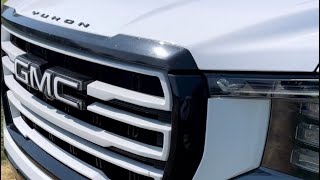
- GMC Yukon / Yukon XL (2021-2024) — Included in TSB 21-NA-149 and the FPCM recall (NHTSA 21V739000).
- Cadillac Escalade (2021-2024) — Subject to both the wiring harness TSBs and a specific recall for a faulty Fuel Pump Power Control Module.
- Nissan Leaf (2013-2017) — P3187 on a Nissan Leaf means 'Electric Shift System' fault. It is unrelated to the fuel system.
- Volkswagen / Audi Various (Golf, Jetta, A3, etc.) (2015-2024) — On VW/Audi, P3187 is defined as 'Injector Cylinder 15: Open Circuit'.
- BMW Various (335i, 135i, etc.) (2007-2015) — Does not use code P3187, but low-pressure fuel sensor failures produce identical symptoms.
Manufacturer-Specific Notes
- General Motors (Chevrolet, GMC, Cadillac): For 2019+ models, P3187 is almost always an electrical problem, not a fuel pump failure. Technicians must inspect the engine harness for chafing near the alternator and shock towers per TSBs 21-NA-149 and 23-NA-102 before replacing parts.
- General Motors (Chevrolet, GMC, Cadillac): GM issued safety recall N212332040 for certain 2021 SUVs. A manufacturing defect in the Fuel Pump Control Module causes it to fail intermittently, leading to an engine stall.
- Nissan: Code P3187 on a Nissan Leaf is completely unrelated to fuel pressure. It indicates a fault in the 'Electric Shift' control system.
- Volkswagen & Audi: P3187 is defined as an open circuit for 'Injector Cylinder 15'. However, many VW/Audi models experience identical stalling symptoms due to Fuel Pump Control Module failures, which set different codes like P3089.
Helpful Videos
Shop the Parts Behind P3187
Below are the parts most often responsible for code P3187, ranked by how frequently each one is the actual culprit (per the diagnosis above). Tap any to see what we have for your vehicle.




The information in this article is provided for general reference and educational purposes only. Vehicle specifications, procedures, and part compatibility can vary by production date, trim level, and region. Always consult your vehicle's factory service manual and verify part numbers before purchasing or performing repairs. Safety-critical components such as airbags, seat belts, and braking systems should be installed by a qualified professional.
- 🎬 Helpful Videos
- 🛍️ Shop This Part
- What Does P3187 Mean?
- Can I Drive With P3187?
- Common Causes
- Symptoms
- Common Fixes & Costs
- DIY vs Professional
- Used vs. New Parts: Buying Guide
- Cost of Not Fixing It
- Diagnosis Steps
- When This Code Triggers (Freeze-Frame Conditions)
- Related Codes
- Climate & Environmental Factors
- How to Clear the Code After You Fix It
- Will This Fail Emissions / State Inspection?
- Most Commonly Affected Vehicles
- Manufacturer-Specific Notes
- 🎟️ Get 5% Off