

OBD-II Code P3189: Cylinder 1 Performance Fault
The Ultimate Guide to P3189: What it means, why it triggers, and how to fix it on GM vehicles
- Code P3189 is a GM-specific critical fault indicating a severe mechanical failure in cylinder 1, most commonly a broken valve spring or collapsed AFM/DFM lifter.
- Stop driving immediately and tow the vehicle; continuing to drive with a broken valve spring turns a $1,000 repair into a $10,000 complete engine replacement.
- Check your build date: 2020-2021 GM V8 trucks and SUVs built between June and October 2020 have a known factory defect causing premature valve spring failure.
- Require a cylinder leakage test from your mechanic if a broken spring is found; a result over 20% confirms bent valves and necessitates cylinder head removal.
- Ignore secondary codes like P0106 (MAP Sensor) or P0301 (Misfire); P3189 is the root cause and replacing sensors or spark plugs will not fix the underlying mechanical damage.
What Does P3189 Mean?
P3189 is a GM-exclusive code indicating a severe performance failure in cylinder 1. Unlike a generic P0301 misfire code, P3189 triggers when the Engine Control Module (ECM) detects a massive drop in crankshaft rotational speed during cylinder 1's power stroke. This specific variation confirms a critical mechanical fault—typically a total loss of compression from a broken valve spring or collapsed lifter—rather than a simple spark or fuel issue.
Technical definition: A manufacturer-specific General Motors code indicating 'Cylinder 1 Performance Fault'. The ECM sets this code when crankshaft position sensor data reveals an unexpected, severe deceleration during cylinder 1's power stroke, pointing to a critical mechanical failure preventing the cylinder from contributing power.
Can I Drive With P3189?
No — Do Not Drive. Tow the vehicle immediately. The most common cause is a broken valve spring. Continuing to drive allows the valve to drop into the cylinder, turning a $1,000 spring replacement into a $10,000+ catastrophic engine failure.
Common Causes
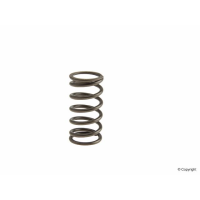
- Broken Valve Spring (Very Common) — The primary cause on 2020-2021 GM V8 engines due to a documented bad batch of supplier parts. The spring cracks, failing to close the valve, resulting in total compression loss and a loud ticking noise.
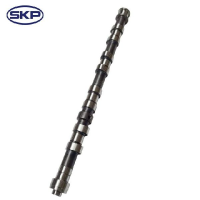
- Collapsed AFM/DFM Lifter & Worn Camshaft (Common) — Active/Dynamic Fuel Management lifters frequently collapse or stick, failing to open the valve. A seized lifter roller quickly destroys the corresponding camshaft lobe, requiring replacement of both components.
- Crankshaft Position Variation Not Learned (Less Common) — After a battery replacement or ECM update, the computer's adaptive memory for crankshaft position resets. Without a scan tool 'relearn' procedure, the ECM misinterprets normal data and falsely triggers P3189 (per TSB #PIP5774B).
- Bent Pushrod (Less Common) — Collateral damage from a broken valve spring or collapsed lifter. If a mechanic replaces a broken spring without verifying the pushrod is perfectly straight, the code and misfire will immediately return.
- Engine Harness Chafing (Rare) — The main engine wiring harness chafes against the ECM bracket or driver's side shock tower, shorting critical sensor circuits and causing the ECM to misinterpret data (per GM TSB 21-NA-149).
- Damaged Intake Manifold Runner (Rare) — During severe valvetrain failure, backfires or extreme pressure pulses can crack the plastic intake manifold runner for cylinder 1, causing a massive vacuum leak.
Symptoms
- Flashing Check Engine Light — A flashing MIL indicates a severe, catalyst-damaging misfire. Stop driving immediately.
- Loud Ticking or Metallic Clacking — A distinct, rhythmic metallic tapping from the driver's side wheel well, indicating broken valvetrain components.
- Severe Shudder and Power Loss — The vehicle vibrates violently under acceleration and struggles to maintain highway speeds.
- Service Stabilitrak Warning — The engine misfire disrupts chassis control systems, triggering secondary traction control and Stabilitrak warnings on the dash.
Diagnostic Flowchart
Tap your situation to follow the diagnostic path that matches what you're seeing on this code.
Common Fixes & Costs
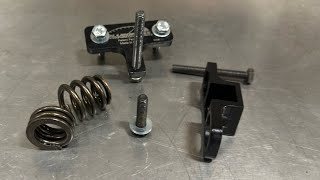
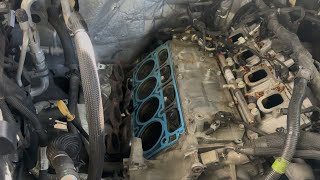
- Replace Broken Valve Spring(s) 🎬 See how to replace a spring without removing the head — Parts: $50 - $150, Labor: $600 - $1200, ~4.2 hr book time (Professional)
- Replace Collapsed Lifters and Camshaft — Parts: $1000 - $2000, Labor: $2500 - $4500, ~22.5 hr book time (Professional)
- Perform Crankshaft Variation Relearn Procedure — Parts: $0, Labor: $150 - $200, ~1.0 hr book time (Professional)
- Repair Chafed Wiring Harness — Parts: $10 - $50, Labor: $150 - $300, ~2.0 hr book time (DIY)
Used vs. New Parts: Buying Guide
When a used part is worth it: Never buy used valve springs, lifters, or camshafts for a P3189 repair. The labor cost is too high to risk installing stressed internal engine components.
Donor quality checklist:
- Valve springs are inexpensive wear items; always buy new.
- A failed lifter destroys the camshaft. Installing a junkyard lifter guarantees you will pay for the 20-hour labor job twice.
- Only consider used parts if buying a complete, low-mileage replacement engine assembly with a warranty.
Decision logic:
- If Replacing a valve spring, lifter, or camshaft → Buy new OEM or upgraded aftermarket parts exclusively.
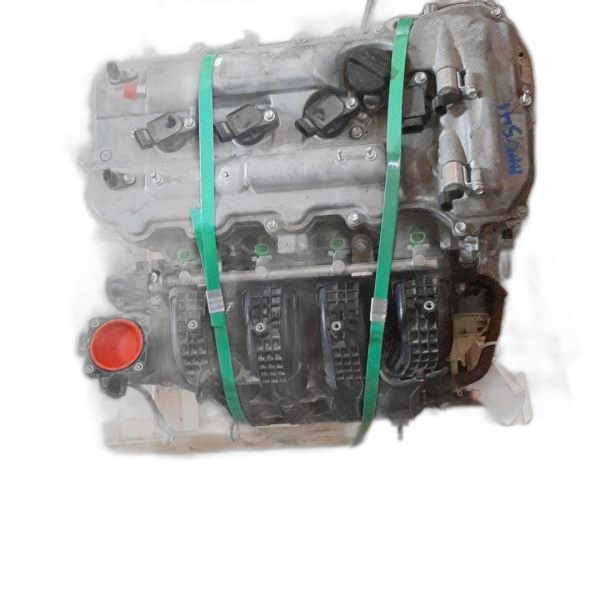
- If The engine is destroyed and requires replacement → A used engine from a low-mileage collision donor is acceptable if it includes a parts and labor warranty.
Warranty tradeoff: Used internal parts carry no warranty. New OEM parts offer 1-year coverage, which is mandatory protection for a $3,000+ repair.
Worst-case if a used part fails: $4,500 if a used lifter fails, requiring the entire teardown to be repeated.
What Happens If You Wait — Timeline
- Immediate: Valve spring breaks or lifter collapses. Code P3189 sets, check engine light flashes, and loud ticking begins. Cylinder 1 loses compression. (MPG impact: 15-25%% · Added cost: $0)
- Minutes of Driving: The broken valve spring fragment shifts. Without spring tension, the tiny metal keepers holding the valve to the spring dislodge. (MPG impact: N/A% · Added cost: $0)
- Seconds After Stage 2: The unsupported valve drops directly into the engine cylinder and is violently struck by the piston moving upward at thousands of RPMs. (MPG impact: N/A% · Added cost: $3,000 - $5,000)
- Catastrophic Failure: The piston shatters, the cylinder head is destroyed, and metal shrapnel scores the engine block. The engine is non-repairable and requires full replacement. (MPG impact: N/A% · Added cost: $8,000 - $15,000+)
Cost of Not Fixing It
- Immediate: Severe misfire dumps raw fuel into the exhaust, rapidly overheating and melting the catalytic converter. (Added cost: $1,500 - $2,500)
- Minutes of Driving: The broken spring releases the valve keepers, dropping the valve directly into the path of the piston. (Added cost: $3,000 - $5,000)
- Catastrophic Failure: Piston-to-valve collision shatters the piston and destroys the engine block, requiring a complete engine replacement. (Added cost: $8,000 - $15,000+)
Diagnosis Steps
- Scan for All Trouble Codes
Confirm P3189. Note secondary codes like P0300, P0301, or P0106, which confirm the severity of the mechanical fault.
Tools: ['OBD-II Scanner'] (Beginner) - Listen to the Engine
Start the engine for no more than 15 seconds. Listen for a loud metallic ticking from the driver's side. If the engine is completely silent, skip to Step 3. If it ticks loudly, skip to Step 4.
Tools: ["Mechanic's Stethoscope"] (Beginner) - Perform Crankshaft Variation Relearn (Silent Engines Only)
If there is no mechanical noise, the ECM has likely lost its crankshaft calibration. Use a bidirectional scanner to perform the 'Crankshaft Position Variation Learn' procedure to reset the software.
Tools: ['Bidirectional Scan Tool'] (Advanced) - Remove the Driver's Side Valve Cover
If ticking is present, disconnect the battery and remove the driver's side valve cover to expose the valvetrain for Cylinder 1.
Tools: ['Socket Set', 'Pliers', 'Screwdrivers'] (Intermediate) - Inspect Valve Springs and Pushrods
Examine the two valve springs on Cylinder 1 for fractures. Use a pry bar to gently press the rocker arms; excessive play indicates a collapsed lifter. Remove and roll the pushrods on a flat surface to check for bending.
Tools: ['Flashlight', 'Pry Bar'] (Intermediate) - [PRO TIP] Perform a Cylinder Leakage Test
If a broken spring is found, GM mandates a cylinder leakage test. Pressurize the cylinder with air; leakage over 20% confirms the valve bent when it hit the piston, requiring cylinder head removal.
Tools: ['Cylinder Leak-Down Tester', 'Air Compressor'] (Advanced) - Inspect for Wiring Harness Chafing
If mechanical parts are intact, inspect the main engine wiring harness near the ECM bracket and driver's side shock tower for rubbed wires shorting out the sensor signal.
Tools: ['Flashlight', 'Electrical Tape'] (Beginner)
When This Code Triggers (Freeze-Frame Conditions)
- Engine Coolant Temp: 180-210°F (The engine is at full operating temperature.)
- RPM: 1500-2500 RPM (Sets during steady-state cruise or light acceleration, rarely at idle.)
- Engine Load: 30-60% (Most detectable when the cylinder is expected to contribute sustained power, such as highway cruising.)
- Vehicle Speed: 45-65 mph (Consistent with highway driving conditions under moderate load.)
Related Codes
- P0300 — Random Misfire. Appears because the severe mechanical failure in cylinder 1 violently disrupts the engine's balance, causing the ECM to detect sympathetic misfires across other cylinders.
- P0301 — Cylinder 1 Misfire. P3189 is the advanced version of this code. Seeing both confirms the misfire is caused by a mechanical compression loss, not a bad spark plug.
- P0106 — MAP Sensor Performance. Triggered because a broken intake valve spring allows exhaust pressure to pulse backward into the intake manifold. Do not replace the MAP sensor.
- P318A - P3190 — The rest of the GM cylinder performance family. P318A is Cylinder 2, P318B is Cylinder 3, up to P3190 for Cylinder 8.
Climate & Environmental Factors
- Cold Weather Starts: Cold, thick oil delays lubrication to the AFM/DFM lifters upon startup. Repeated short trips in winter accelerate wear on the lifter's internal locking pins, leading to premature collapse.
How to Talk to a Mechanic About This Code
Say this: "My vehicle has a P3189 code and a loud ticking noise. Based on GM TSBs, I suspect a broken valve spring or collapsed lifter. Please start with a visual inspection under the driver's side valve cover. If you find a broken spring, please perform a cylinder leak-down test before reassembly."
This proves you know the specific mechanical causes of P3189. It directs the technician straight to the valve cover, preventing them from wasting your money diagnosing spark plugs or MAP sensors, and mandates the crucial leak-down test to check for piston damage.
Avoid saying:
- 'Just fix whatever's wrong'
- 'My check engine light is on and it's running rough'
- 'I think it needs a tune-up or a new MAP sensor'
Questions to ask before authorizing the repair:
- If you found a broken valve spring, did you perform a cylinder leak-down test to check for bent valves?
- Did you roll the pushrod on a flat surface to ensure it wasn't bent during the failure?
- If the cause is a failed lifter, what is the cost difference between replacing the lifters versus a full AFM/DFM delete?
- If the engine is quiet, can you confirm you attempted the 'Crankshaft Position Variation Learn' procedure before tearing down the engine?
Where to Take It: Dealer vs Independent vs Chain
- Dealer:
The absolute best choice if your vehicle is under warranty, as this $1,000-$4,000 repair will be free.
Best for: Vehicles under the 5-year/60,000-mile powertrain warranty., Ensuring repairs follow the exact GM TSB protocols for the 2020 valve spring defect.
Downsides: Labor rates are 50% higher than independent shops., They will not install aftermarket AFM/DFM delete kits. (Typical cost: +50% vs. baseline) - Independent Shop:
The best choice for out-of-warranty repairs. A GM specialist can save you thousands and offer better long-term solutions than the dealer.
Best for: Out-of-warranty vehicles facing a $4,000+ lifter replacement., Owners who want to permanently fix the lifter issue with an aftermarket AFM/DFM delete kit.
Downsides: Requires vetting to ensure the shop specializes in modern GM V8 internal engine repair. (Typical cost: +0% vs. baseline) - Chain Shop:
AVOID. This is a critical internal engine fault far beyond the capabilities of a quick-lube or chain repair shop.
Best for: Oil changes and tire rotations.
Downsides: Technicians lack the specialized tools and training for invasive valvetrain repair., High risk of misdiagnosing P3189 as a simple spark plug or sensor issue. (Typical cost: -10% vs. baseline)
When to Walk Away From the Repair
If the repair cost exceeds 50% of the vehicle's value, or if the engine requires a $12,000 replacement on a truck older than 2015, consider selling it as-is.
- Car worth $35000, fix is $4500: Fix it. A $4,500 lifter replacement is only 12% of a newer Silverado's value.
- Car worth $25000, fix is $12000: Borderline. A $12,000 full engine replacement is 48% of the truck's value. Get multiple quotes for a used engine swap before authorizing.
- Car worth $12000, fix is $10000: Walk away. Putting a $10,000 engine into a $12,000 truck makes no financial sense.
What Scan Tool You Need for This Code
Minimum: A bidirectional scan tool capable of performing the GM 'Crankshaft Position Variation Learn' special function.
A $50 code reader can only display P3189. It cannot perform the crank relearn procedure, which is the mandatory fix if the code is caused by a software glitch. Without bidirectional control, you cannot fix a silent P3189.
Budget: None Recommended (~$0) — Cheap scanners lack the bidirectional control required to command the ECM to relearn the crankshaft position.
Mid-range: Foxwell NT510 Elite for GM (~$160) — Provides GM-specific bidirectional control, allowing you to perform the Crankshaft Position Variation Learn procedure at home.
Professional: Autel MaxiCOM MK808 (~$450) — Offers full OEM-level bidirectional control, live misfire data graphing, and the ability to command individual engine components for deep diagnostics.
Rent vs buy: Rentals from auto parts stores cannot perform the crank relearn. If you only need to do the relearn once, pay a shop $150 to do it. Buy the Foxwell only if you plan to do your own advanced GM diagnostics long-term.
How to Clear the Code After You Fix It
- Use an OBD-II scanner to clear P3189 and related misfire codes.
- Perform a GM drive cycle to run readiness monitors.
- If the code was caused by a software glitch, ensure the Crankshaft Relearn procedure is completed before driving.
Drive cycle (~20 minutes): Cold start (coolant below 122°F). Idle 3 minutes with A/C on. Accelerate to 55 mph and hold for 5 minutes. Coast to 20 mph without braking. Accelerate to 60 mph and hold for 5 minutes. Stop and idle for 2 minutes.
Readiness monitors affected: Catalyst Monitor, O2 Sensor Monitor, Misfire Monitor
Before emissions retest: drive at least 50 miles to fully set monitors.
Watch out for:
- Clearing the code without fixing the mechanical issue will cause P3189 to return the moment the engine reaches operating temperature under load.
- Failing to perform the Crankshaft Relearn after a battery swap will cause the code to persist permanently.
Will This Fail Emissions / State Inspection?
Yes — this code typically fails an OBD-II emissions inspection.
- California: An active P3189 or illuminated Check Engine Light is an automatic failure. You must complete a full drive cycle after repair to reset monitors before re-testing.
- New York: NYS OBD-II scans will instantly fail the vehicle if P3189 is stored in the ECM history.
- Texas: In emissions-testing counties, the vehicle fails immediately. After repair, you can pass with one monitor 'Not Ready', but the CEL must be off.
Most Commonly Affected Vehicles
- Chevrolet Silverado 1500 (2019-2025) — The most common vehicle for this code. 5.3L (L84) and 6.2L (L87) models built between June and October 2020 are highly susceptible to broken valve springs.
- GMC Sierra 1500 (2019-2025) — Shares the L84 and L87 V8s with the Silverado; equally affected by the 2020-2021 valve spring defect.
- Chevrolet Tahoe / Suburban (2021-2023) — Included in GM TSB PIP5752M for defective valve springs on 5.3L and 6.2L engines.
- GMC Yukon / Yukon XL (2021-2023) — GMC counterparts to the Tahoe/Suburban; heavily affected by both valve spring and lifter failures.
- Cadillac Escalade (2021-2023) — Models with the 6.2L L87 V8 are prone to the same broken valve spring failures.
- Chevrolet Corvette (2020-2022) — The 6.2L LT2 engine in the C8 Corvette built between June and September 2020 was affected by the valve spring defect.
Manufacturer-Specific Notes
- General Motors: P3189 is exclusive to GM. It was created to flag catastrophic mechanical failures (like the massive 2020 valve spring defect) faster than a standard misfire monitor.
- General Motors: GM issued TSB PIP5752 (and revisions A-M) instead of a recall for the valve spring issue. If your 6.2L engine was built between June-Sept 2020, the TSB requires replacing all 16 springs; for 5.3L engines, only the broken spring is replaced.
Real Owner Stories
2021 Chevy Trail Boss (10K miles) - Sudden power loss and smoke
While driving home, the truck lost power, the check engine light flashed, and exhaust smoke appeared. Engine noise grew louder with throttle.
Outcome: Diagnosed with a broken valve spring and bent pushrod. Repaired under powertrain warranty. Immediate towing saved the engine from catastrophic piston damage.
Lesson: Sudden power loss paired with loud metallic noise means internal failure. Towing immediately prevents a repairable top-end issue from becoming a $10,000 engine replacement.
2020 Silverado 5.3L - Code P3189 with NO noise after battery change
P3189 appeared after a battery swap, but the engine ran smoothly with zero ticking or metallic noise.
Outcome: A shop performed a 'Crankshaft Position Variation Learn' with a bidirectional scanner, recalibrating the sensor and permanently clearing the code.
Lesson: If P3189 appears on a quiet, smooth-running engine (especially after electrical work), demand a $150 crank relearn procedure before authorizing invasive engine teardowns.
2019 GMC Sierra 5.3L (63K miles) - Out of warranty lifter failure
Developed a collapsed lifter just outside the 60K-mile powertrain warranty. Dealer quoted $4,500 for lifters, warning it could hit $10,000 if the camshaft was scored.
Outcome: Towed to an independent specialist for a full mechanical AFM/DFM delete kit ($5,000), permanently removing the failure-prone factory system.
Lesson: For out-of-warranty lifter failures, an aftermarket AFM/DFM delete is often a more reliable, cost-effective long-term investment than reinstalling flawed OEM components.
How to Prevent This Code From Triggering
- Change oil every 5,000 miles using dexos1 Gen 3 full synthetic 0W-20. (Every 5,000 miles) — AFM/DFM lifters rely on precise oil pressure to lock and unlock. Dirty oil clogs the microscopic internal pins, causing the lifter to collapse. Ignoring the 10,000-mile dash monitor in favor of 5,000-mile intervals is the best defense.
- Install an OBD-II AFM/DFM Disabler device. (One-time installation) — Plugs into the OBD-II port to electronically prevent the engine from dropping into 4-cylinder mode. This drastically reduces the mechanical cycling of the fragile lifters, extending their lifespan.
- Perform a complete mechanical AFM/DFM delete. (Once, during a major repair) — The only permanent fix. Replaces the failure-prone collapsing lifters and specialized camshaft with robust, standard V8 components, completely eliminating the root cause of lifter failure.
Frequently Asked Questions
Can I just clear the P3189 code and keep driving?
Absolutely not. This code indicates a critical mechanical fault that clearing will not fix. Continuing to drive allows the valve to drop into the cylinder, causing complete engine failure and a massive repair bill.
Why did the valve spring break on my newer GM truck?
The overwhelming reason for 2020-2021 models is a manufacturing defect. A bad batch of valve springs from a supplier was used across thousands of GM V8 engines, leading to premature failure.
Is the repair for code P3189 covered under warranty?
If your vehicle is within the 5-year/60,000-mile powertrain warranty, this repair is fully covered. For older vehicles with lifter failures, GM occasionally offers special coverage, so always check with your dealer first.
My truck has code P3189 but doesn't make a ticking noise. What is it?
If the engine is silent, the cause is likely a software calibration issue requiring a 'Crankshaft Position Variation Learn' procedure, or an electrical short from a chafed wiring harness.
The shop wants to replace all 16 valve springs. Is that necessary?
It depends on your engine. For 6.2L engines built between June and September 2020, GM TSBs recommend replacing all 16 springs. For 5.3L engines, replacing only the single broken spring is the official procedure.
What is the most common misdiagnosis for P3189?
Mechanics often mistakenly replace the MAP sensor because code P0106 appears alongside P3189. The MAP sensor is merely reacting to pressure pulses from the broken valvetrain; P3189 is the root cause.
My mechanic replaced the broken spring, but the code came back immediately. Why?
The mechanic likely failed to inspect the pushrod, which bends during the initial failure. Alternatively, the valve bent when it hit the piston and is no longer sealing, which a mandatory leak-down test would have caught.
What's the difference between P3189 and a regular P0301 misfire code?
P0301 is a generic misfire caused by anything from a bad spark plug to low fuel pressure. P3189 is a specific GM diagnostic confirming the misfire is so severe it is almost certainly a mechanical compression loss.
Key Takeaways
- Code P3189 is a GM-specific critical fault indicating a severe mechanical failure in cylinder 1, most commonly a broken valve spring or collapsed AFM/DFM lifter.
- Stop driving immediately and tow the vehicle; continuing to drive with a broken valve spring turns a $1,000 repair into a $10,000 complete engine replacement.
- Check your build date: 2020-2021 GM V8 trucks and SUVs built between June and October 2020 have a known factory defect causing premature valve spring failure.
- Require a cylinder leakage test from your mechanic if a broken spring is found; a result over 20% confirms bent valves and necessitates cylinder head removal.
- Ignore secondary codes like P0106 (MAP Sensor) or P0301 (Misfire); P3189 is the root cause and replacing sensors or spark plugs will not fix the underlying mechanical damage.
Helpful Videos
Shop the Parts Behind P3189
Below are the parts most often responsible for code P3189, ranked by how frequently each one is the actual culprit (per the diagnosis above). Tap any to see what we have for your vehicle.





The information in this article is provided for general reference and educational purposes only. Vehicle specifications, procedures, and part compatibility can vary by production date, trim level, and region. Always consult your vehicle's factory service manual and verify part numbers before purchasing or performing repairs. Safety-critical components such as airbags, seat belts, and braking systems should be installed by a qualified professional.
- 🧭 Diagnostic Flowchart
- 🎬 Helpful Videos
- 🛍️ Shop This Part
- What Does P3189 Mean?
- Can I Drive With P3189?
- Common Causes
- Symptoms
- Common Fixes & Costs
- Used vs. New Parts: Buying Guide
- What Happens If You Wait — Timeline
- Cost of Not Fixing It
- Diagnosis Steps
- When This Code Triggers (Freeze-Frame Conditions)
- Related Codes
- Climate & Environmental Factors
- How to Talk to a Mechanic About This Code
- Where to Take It: Dealer vs Independent vs Chain
- When to Walk Away From the Repair
- What Scan Tool You Need for This Code
- How to Clear the Code After You Fix It
- Will This Fail Emissions / State Inspection?
- Most Commonly Affected Vehicles
- Manufacturer-Specific Notes
- Real Owner Stories
- 2021 Chevy Trail Boss (10K miles) - Sudden power loss and smoke
- 2020 Silverado 5.3L - Code P3189 with NO noise after battery change
- 2019 GMC Sierra 5.3L (63K miles) - Out of warranty lifter failure
- How to Prevent This Code From Triggering
- Frequently Asked Questions
- Can I just clear the P3189 code and keep driving?
- Why did the valve spring break on my newer GM truck?
- Is the repair for code P3189 covered under warranty?
- My truck has code P3189 but doesn't make a ticking noise. What is it?
- The shop wants to replace all 16 valve springs. Is that necessary?
- What is the most common misdiagnosis for P3189?
- My mechanic replaced the broken spring, but the code came back immediately. Why?
- What's the difference between P3189 and a regular P0301 misfire code?
- Key Takeaways
- 🎟️ Get 5% Off