

OBD-II Code P3190: Poor Engine Power
What P3190 means, why it triggers, and how to fix it
- Code P3190 on Toyota and Lexus hybrids indicates the gas engine is failing to produce power, not a failure of the high-voltage hybrid battery.
- Add 2 to 3 gallons of fresh gasoline immediately, as inaccurate fuel gauges on older hybrids are the number one cause of this code.
- Stop attempting to start the vehicle after 3 failed tries to prevent draining and permanently damaging the $2,000+ high-voltage hybrid battery.
- On 2019 and newer GM V8 trucks, P3190 means 'Cylinder 8 Trapped High Pressure Exhaust Charge,' signaling a broken valve spring that requires immediate towing.
What Does P3190 Mean?
P3190 indicates the Engine Control Module (ECM) detects the gasoline engine is producing significantly less power than requested. On hybrids, the system tries to start the gas engine, but it fails or runs poorly, unable to meet the hybrid system's demands.
Technical definition: The ECM sets P3190 when estimated engine torque remains below 20% of the target torque for 6 seconds or 100 engine revolutions.
Can I Drive With P3190?
No — Do Not Drive. The vehicle stalls or fails to start unpredictably, creating an immediate safety hazard. On Toyota and Lexus hybrids, repeated starting attempts drain and destroy the high-voltage battery. On GM V8 engines, this code signals a broken valve spring; driving drops the valve into the cylinder, destroying the engine.
Common Causes
- Out of Fuel (Very Common) — The most common cause. Hybrid fuel tank bladders degrade, causing inaccurate gauge readings. The tank is empty even when the dashboard gauge shows two bars remaining.
- Vacuum Leak (Disconnected Hose) (Common) — A disconnected PCV or Purge VSV hose creates a massive vacuum leak, starving the engine of metered air. This frequently occurs immediately after EGR system service or oil changes.
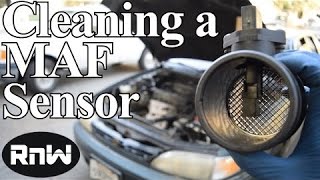
- Dirty Mass Air Flow (MAF) Sensor (Common) — Dust or oil vapor coats the MAF sensor wires, sending incorrect airflow data to the ECM. 🎬 Watch: How to clean and diagnose a dirty MAF sensor. This forces the wrong air-fuel mixture, killing engine power.
- Failing Fuel Pump (Less Common) — A weak fuel pump fails to deliver the required 44-50 PSI of fuel pressure. The engine starves for fuel and stalls, even if the pump still makes noise.
- Dirty Throttle Body (Common) — Carbon buildup on the throttle plate restricts airflow at idle, choking the engine and preventing a smooth start.
- Weak 12V Auxiliary Battery (Less Common) — A dying 12V battery drops voltage to the ECUs, corrupting sensor data and triggering false power-loss codes.
- Engine Mechanical Failure (Broken Valve Spring) (Rare) — On 2019+ GM V8s, this indicates a broken cylinder 8 valve spring. 🎬 See what a broken GM valve spring sounds like. On hybrids, it points to low compression, a jumped timing chain, or a blown head gasket.
Symptoms
- Engine fails to start or dies immediately — The car enters "Ready" mode, but the gasoline engine either never kicks on or tries to start for 10 seconds before shutting off.
- Engine stalls while driving — The vehicle suddenly loses power and the gasoline engine shuts off completely.
- Severe loss of power (Limp Mode) — Acceleration is severely restricted. The car only moves slowly using the electric motor until the hybrid battery depletes.
- Multiple dashboard warning lights — The Check Engine light, main hybrid system warning light (red triangle), and VSC/traction control lights illuminate simultaneously.
Diagnostic Flowchart
Tap your situation to follow the diagnostic path that matches what you're seeing on this code.
Common Fixes & Costs
- Adding gasoline to an empty tank — Parts: $10-$20, Labor: $0, ~0.1 hr book time (DIY)
- Reconnecting a disconnected vacuum hose — Parts: $0-$10, Labor: $0 (DIY) or ~$100 (Shop), ~0.5 hr book time (DIY)
- Cleaning the Mass Air Flow (MAF) Sensor — Parts: $10-$15, Labor: $0 (DIY) or ~$125 (Shop), ~0.5 hr book time (DIY)
- Replacing the Fuel Pump
— Parts: $300-$850, Labor: $150-$400, ~2.5 hr book time
(Professional)
Toyota Prius (2004-2009): OEM 77020-47041 (Alt: {"brand": "Denso", "part_number": "951-0006"})
Toyota Prius (2010-2015): OEM 77020-47111 (Alt: {"brand": "Denso", "part_number": "951-0023"}) - Cleaning the Throttle Body — Parts: $10-$20, Labor: $100-$225, ~0.8 hr book time (DIY)
- Replacing the Mass Air Flow (MAF) Sensor
— Parts: $250-$350, Labor: $75-$150, ~0.7 hr book time
(Intermediate)
Toyota Prius (2004-2009): OEM 22204-22010 (Alt: {"brand": "Denso", "part_number": "197-6020", "price_comparison": "$70-$150"})
DIY vs Professional
- Adding gasoline 🟢 Beginner
Tools: Gas can - Cleaning MAF Sensor 🟢 Beginner
Tools: Screwdriver/socket, MAF cleaner spray - Reconnecting Vacuum Hose 🟢 Beginner
Tools: Flashlight, pliers - Cleaning Throttle Body 🟢 Beginner
Tools: Screwdriver/socket, throttle body cleaner, rags - Replacing Fuel Pump 🟢 Beginner
Tools: Fuel line disconnect tools, socket set, floor jack, jack stands - Replacing MAF Sensor 🟢 Beginner
Tools: Screwdriver or small socket set
Used vs. New Parts: Buying Guide
When a used part is worth it: For expensive electronic components like a MAF sensor, a used OEM part from a reputable salvage yard is a cost-effective alternative to a poorly calibrated aftermarket part. For fuel pumps, always buy new.
Donor-vehicle mileage cap: roughly under 100000 miles for the part to have meaningful remaining life.
Donor quality checklist:
- Verify the part number matches exactly.
- Ensure there is no physical damage to the housing or connector.
- Purchase from a seller offering a warranty or return policy.
Decision logic:
- If The part is a simple mechanical component like a vacuum hose → buy new, as the cost is low and new rubber is more reliable.
- If The part is an expensive electronic sensor (e.g., MAF) and budget is a primary concern → a used OEM part is often a better choice than a cheap new aftermarket part.
- If The part is critical for fuel delivery (e.g., fuel pump) → buy a new, quality OEM or reputable aftermarket part to ensure reliability.
Warranty tradeoff: Used parts typically come with a 30-90 day warranty. New aftermarket parts offer 1-year to limited lifetime warranties. New OEM parts carry a 1-year warranty.
Worst-case if a used part fails: $200-$500 if a used part fails shortly after installation, requiring repeat labor costs.
What Happens If You Wait — Timeline
- Immediate: Check Engine Light illuminates with code P3190. The engine fails to start or stalls immediately. The vehicle is undrivable. (MPG impact: N/A% · Added cost: $150-$300 (for a tow and initial diagnostic fee))
- 0-1 week: Repeatedly trying to start the car drains the high-voltage hybrid battery, triggering secondary battery codes (like P0A80) and complicating diagnosis. (MPG impact: N/A% · Added cost: $200-$500 (for specialized HV battery charging))
- 1 week - 2 months: If driven with an intermittent stall caused by a lean condition, the engine runs hotter, degrading the catalytic converter. (MPG impact: 10-20%% · Added cost: $1200-$2500 (for catalytic converter replacement))
- Ignored (GM Specific): On a GM vehicle, driving with a broken valve spring drops the valve into the cylinder, causing catastrophic engine damage. (MPG impact: N/A% · Added cost: $7,000-$12,000+ (for complete engine replacement))
Cost of Not Fixing It
- Immediate: Vehicle stalls or fails to start, leaving you stranded. Repeated start attempts drain the high-voltage hybrid battery. (Added cost: $200-$1000+ (for tow and HV battery charging))
- 1-3 months: A persistent lean condition (vacuum leak, weak fuel pump) increases engine temperatures, destroying the catalytic converter. (Added cost: $1200-$2500 (for catalytic converter replacement))
- 3+ months: On GM vehicles, driving with a broken valve spring drops the valve into the cylinder, causing catastrophic engine failure. (Added cost: $5000-$10000+)
Diagnosis Steps
- Check the Fuel Level
Add 2 to 3 gallons of fresh gasoline. Do not trust the dashboard gauge. This resolves 50% of P3190 codes on older hybrids.
Tools: Gas can (Beginner) - Inspect Vacuum Hoses
Inspect the air intake, PCV, and Purge VSV hoses near the throttle body. Reconnect any loose or popped-off black rubber hoses.
Tools: Flashlight (Beginner) - Clean the MAF Sensor
Remove the MAF sensor from the intake tube. Spray the wires with MAF cleaner and let dry completely. Never touch the delicate wires.
Tools: Screwdriver, MAF sensor cleaner spray (Beginner) - Perform a Starting Fluid Test
Spray a 1-second burst of starting fluid into the intake while a helper cranks the engine. If it fires briefly, you have a fuel delivery problem (pump or filter).
Tools: Starting fluid (Advanced) - Analyze Freeze Frame Data
Read the freeze frame data with an OBD-II scanner. Check engine coolant temp, RPM, and fuel trims at the exact moment the code triggered to isolate the failing system.
Tools: Advanced OBD-II scanner (Intermediate) - Test Fuel Pressure
Connect a fuel pressure gauge to the fuel rail. Toyota Prius models require 44-50 PSI. A lower reading confirms a failing fuel pump or clogged filter.
Tools: Fuel pressure gauge (Advanced) - Monitor Fuel Trims
Check Short Term (STFT) and Long Term Fuel Trims (LTFT) on a scanner. Consistently high positive trims (+15% or more) confirm a vacuum leak or fuel starvation.
Tools: Advanced OBD-II scanner (Advanced) - Clean the Throttle Body
Remove the intake hose. Spray throttle body cleaner on a rag and wipe away carbon buildup from the throttle plate and bore.
Tools: Screwdriver, throttle body cleaner, rags (Intermediate)
When This Code Triggers (Freeze-Frame Conditions)
- Engine Coolant Temp: 70-125°F (During warm-up phase after a cold start)
- Engine RPM: 800-1200 RPM (During initial start attempt or at low speed)
- Calculated Engine Load: 15-40% (Low to moderate engine load)
- Vehicle Speed: 0-30 mph (At startup or during low-speed driving)
Related Codes
- P3191 — Means 'Engine Does Not Start'. Set when the hybrid system commands an engine start, but the ECM detects a complete failure to generate any torque.
- P0A0F — Means 'Engine Failed to Start.' Set by the Hybrid Control Module. It is the hybrid system's perspective of the exact same failure causing P3190.
- P0171 — Means 'System Too Lean.' Frequently appears with P3190 because a vacuum leak allows unmetered air into the engine, creating a lean mixture.
- P3193 — Means 'Fuel Run Out.' If present with P3190, it definitively confirms the car ran out of gasoline. Add fuel; no further diagnosis is needed.
Climate & Environmental Factors
- High Altitude and High Temperature: On 2017-2018 Toyota Highlander Hybrids, driving in high altitude combined with high ambient temperatures incorrectly triggers P3190. Toyota TSB T-SB-0056-18 provides a software update to correct this.
- Cold Weather: Cold weather exacerbates underlying issues. A weak fuel pump struggles to build adequate pressure in the cold, and a faulty Engine Coolant Temperature sensor fails to command the rich air-fuel mixture needed for a cold start.
How to Talk to a Mechanic About This Code
Say this: "I have a P3190 code and the engine is stalling. I've already added fresh fuel. I'd like to schedule a diagnostic to check for vacuum leaks and test fuel pressure."
Shows you've done basic troubleshooting and guides the mechanic toward the most likely causes (air and fuel delivery), preventing them from assuming a complex hybrid battery problem.
Avoid saying:
- 'My car won't start, I think the hybrid battery is dead.' (Misdirects diagnosis to the most expensive component.)
- 'Just fix the check engine light.' (Too vague, leads to unnecessary part replacements.)
- 'Do whatever you think is best.' (Gives the shop a blank check.)
Questions to ask before authorizing the repair:
- What were the fuel pressure readings?
- Did you find any vacuum leaks, and can you show me where?
- Can you provide the freeze frame data from the original P3190 code?
- What is the warranty on the proposed parts and labor?
Where to Take It: Dealer vs Independent vs Chain
- Dealer:
Recommended for GM vehicles or specific Toyota TSB repairs. For an out-of-warranty Prius, an independent specialist is better.
Best for: Vehicles under warranty, GM trucks with P3190 (due to the specific valve spring issue), Cases where a Toyota/Lexus TSB is applicable
Downsides: Higher labor rates, Less familiar with issues on older, high-mileage hybrids compared to a specialist (Typical cost: +50% vs. baseline) - Independent Shop:
Best fit for most P3190 scenarios on Toyota/Lexus vehicles, offering a balance of expertise and value.
Best for: Out-of-warranty Toyota/Lexus hybrids, Diagnosing common causes like fuel pumps, MAF sensors, and vacuum leaks
Downsides: Quality and experience with hybrids varies greatly. Look for a shop specializing in Toyota. (Typical cost: +0% vs. baseline) - Chain Shop:
AVOID for P3190 diagnosis. The risk of misdiagnosis is very high, leading to expensive and incorrect repairs.
Best for: Checking/replacing the 12V battery
Downsides: Technicians lack hybrid experience and frequently misdiagnose P3190 as a hybrid battery failure. (Typical cost: -10% vs. baseline)
When to Walk Away From the Repair
If the estimated repair cost exceeds 50% of the car's private-party value, seriously consider selling the vehicle as-is.
- Car worth $5500, fix is $1200: Fix it. The repair cost is well under the threshold.
- Car worth $4000, fix is $2200: Walk away. The repair cost is over 50% of the vehicle's value.
- Car worth $2500, fix is $1500: Walk away. The repair cost is 60% of the car's value.
What Scan Tool You Need for This Code
Minimum: A scanner that reads and clears codes, displays live data streams, and shows freeze frame data.
A simple code reader only shows 'P3190'. To diagnose the problem, you need live data like MAF airflow, fuel trims, and engine coolant temperature to isolate the failing system.
Budget: BlueDriver Pro (~$100) — Connects to your smartphone via Bluetooth. Reads codes, views freeze frame data, and graphs live data streams to diagnose MAF sensors or vacuum leaks.
Mid-range: Innova 5610 (~$330) — Offers bidirectional controls to test components, specific tests for hybrid battery systems, and detailed live data graphing.
Professional: Autel MaxiCOM MK808 / MK900 (~$500-700) — Provides professional-level diagnostics. Allows deep analysis of all vehicle modules, including the hybrid control system, essential for tracking down complex causes.
Rent vs buy: Auto parts stores read codes for free but don't provide critical live data. Buying a scanner like the BlueDriver Pro pays for itself after one use.
How to Clear the Code After You Fix It
- Use an OBD-II scan tool to clear the diagnostic trouble codes (DTCs).
- Start the vehicle and let it idle for at least 5 minutes to allow the system to stabilize.
- Perform a drive cycle that includes a mix of city and highway driving to allow the readiness monitors to run.
Drive cycle (~20 minutes): Start the engine and let it idle for 2-3 minutes. Drive in stop-and-go traffic for 5-10 minutes. Drive at a steady speed of 45-55 mph for 5-10 minutes. Let the vehicle cool down completely.
Readiness monitors affected: Comprehensive Component Monitor, Fuel System Monitor, Misfire Monitor
Before emissions retest: drive at least 50 miles to fully set monitors.
Watch out for:
- Disconnecting the 12V battery fails to clear the code from the hybrid control module.
- The code returns immediately if the underlying mechanical or electrical fault remains.
- Failing to complete a proper drive cycle leaves readiness monitors 'not ready', causing an automatic emissions test failure.
Will This Fail Emissions / State Inspection?
Yes — this code typically fails an OBD-II emissions inspection.
- California: An active P3190 code results in an automatic smog check failure. All readiness monitors must be complete before passing.
- New York: The NYVIP3 inspection includes an OBD-II check. An illuminated Check Engine Light with P3190 fails the inspection.
- Texas: In the 17 counties requiring emissions testing, an OBD-II scan is performed. P3190 causes an automatic failure.
Most Commonly Affected Vehicles
- Toyota Prius (2004-2015) — Extremely common. Gen 2 models suffer from PCV oil contaminating the MAF sensor. Gen 3 models are subject to TSB T-SB-0041-15 for a Purge VSV hose that separates from the throttle body.
- Lexus CT200h (2011-2017) — Shares the 3rd Gen Prius powertrain. A known problem involves a vacuum hose separating from the throttle body, covered by Lexus TSB L-SB-0019-15.
- Toyota Prius V (2012-2017) — Prone to a disconnected Purge VSV/PCV hose near the throttle body, as noted in Toyota TSB T-SB-0041-15.
- Chevrolet Silverado, Tahoe (2019-2025) — On GM vehicles, P3190 means 'Cylinder 8 Trapped High Pressure Exhaust Charge'. This indicates a broken valve spring on the 5.3L or 6.2L V8 engines.
- Toyota Highlander Hybrid (2017-2018) — Toyota TSB T-SB-0056-18 addresses these models exhibiting P3190 in high altitude and high temperature conditions, requiring an ECM software update.
- Lexus RX400h (2005-2008) — Frequently appears in conjunction with fuel delivery issues, pointing towards a failing fuel pump.
- GMC Yukon, Sierra (2019-2025) — Points to a specific valvetrain issue on Cylinder 8. The root cause is a broken valve spring or failed DFM lifter.
Manufacturer-Specific Notes
- Toyota/Lexus: Toyota issued TSBs T-SB-0041-15 and L-SB-0019-15 for a Purge VSV vacuum hose that detaches from the throttle body, causing a massive vacuum leak. The repair involves an updated part and an ECM reprogram.
- General Motors (Chevrolet/GMC): On GM trucks with Dynamic Fuel Management (DFM), P3190 means 'Cylinder 8 Trapped High Pressure Exhaust Charge'. This points directly to a broken valve spring. Driving with this code destroys the engine.
- Toyota: For 2017-2018 Highlander Hybrids, TSB T-SB-0056-18 acknowledges P3190 sets incorrectly at high altitudes in high temperatures. The fix is an ECM software update covered under the 96-month/80,000-mile emissions warranty.
- Toyota: On 2004-2009 Prius models, the PCV system draws excessive oil vapor into the air intake. This oil coats the throttle body and MAF sensor, eventually triggering P3190.
Real Owner Stories
2008 Toyota Prius at 150K miles stalls immediately after oil change
The car ran perfectly before a routine oil change where the shop checked the air filter. Half a block away, the 'triangle of death' illuminated, the car stalled, and set code P3190.
What they tried:
- Checked the oil level and visible connections.
- Towed the car home.
Outcome: Debris was knocked into the MAF sensor when the air filter was checked. Cleaning the MAF sensor and ensuring the intake was sealed fixed the issue.
Lesson: If P3190 appears immediately after an oil or air filter service, the cause is a contaminated MAF sensor or a disconnected air intake hose.
2010 Toyota Prius stalls on highway, misdiagnosed as bad 12V battery
While driving, the car threw multiple warning lights, stalled, and set P3190. Suspecting the original 12V battery, the owner replaced it. The car ran briefly but stalled again the next day.
What they tried:
- Replaced the 12V auxiliary battery.
Outcome: A Toyota dealer diagnosed a failed fuel pump. The owner purchased a used fuel pump assembly for under $100 and replaced it themselves, resolving the issue.
Lesson: A weak 12V battery causes strange issues, but it rarely causes P3190. If basic air/intake checks fail, test fuel delivery next.
2010 Lexus CT200h sputters and dies with P3190 after DIY EGR cleaning
Immediately after cleaning the EGR cooler and intake manifold, the car started, ran for a minute, sputtered, and died with code P3190.
What they tried:
- Cleaned the throttle body.
- Re-checked visible connections.
Outcome: A vacuum leak from a PCV hose left disconnected during reassembly caused the code. Reconnecting the hose fixed the car instantly.
Lesson: When P3190 appears right after a repair, the cause is related to the work just done. Double-check every hose before assuming a part failed.
2021 Chevrolet Silverado with P3190 and engine noise
A 2021 Silverado 5.3L V8 developed an engine misfire, noise, and set code P3190.
What they tried:
- Took the vehicle to a GM dealership.
Outcome: The dealership diagnosed a broken valve spring on cylinder 8. The repair involved replacing the broken spring under warranty.
Lesson: On a modern GM truck, P3190 points directly to a serious mechanical valvetrain fault. Do not drive the vehicle; tow it immediately.
How to Prevent This Code From Triggering
- Clean the Mass Air Flow (MAF) Sensor (Every 30,000 miles or with every air filter change) — Oil vapor and dust coat the sensor, causing incorrect air readings. Cleaning maintains accurate air-fuel ratio calculations.
- Clean the Throttle Body (Every 50,000-60,000 miles) — Carbon deposits build up on the throttle plate, restricting airflow at idle and causing stalling.
- Keep the fuel tank at least 1/4 full (Daily habit) — Running near empty causes the fuel pump to overheat and suck up sediment, leading to premature failure.
- Be careful during air filter changes (During service) — Ensures no debris falls into the intake tube. Debris directly impacts the MAF sensor, causing an immediate P3190 code.
Frequently Asked Questions
Does P3190 mean my expensive hybrid battery has failed?
No. P3190 is an engine power fault, not a hybrid battery failure. However, repeatedly trying to start the car drains the high-voltage battery, triggering secondary battery codes. The battery drain is a symptom, not the root cause.
Can I really fix this just by adding gas?
Yes. Fuel gauges on older hybrids degrade and read inaccurately over time. Always add 2 to 3 gallons of fresh gas as your first diagnostic step, even if the gauge shows fuel.
My car died right after I cleaned the EGR system. What went wrong?
You likely left a vacuum hose disconnected during reassembly. The PCV hose connecting to the intake manifold is the most common culprit. Recheck all hose connections around the throttle body.
Why shouldn't I keep trying to start the car?
Hybrids use the high-voltage battery to crank the gas engine. Each failed start drains this battery without the engine running to recharge it. Draining it completely causes permanent damage and requires an expensive specialized recharge.
My car died right after an oil and air filter change. Could that be related?
Yes. Mechanics often knock debris into the Mass Air Flow (MAF) sensor when checking the air filter. This instantly corrupts the sensor's readings and triggers P3190. A disconnected main intake hose causes the exact same issue.
Is it expensive to fix code P3190?
Costs range from $15 for DIY MAF cleaner to $1,200 for a professional fuel pump replacement. Adding gas or reconnecting a vacuum hose is virtually free. On GM trucks, fixing the broken valve spring costs $500 to $1,700.
Key Takeaways
- Code P3190 on Toyota and Lexus hybrids indicates the gas engine is failing to produce power, not a failure of the high-voltage hybrid battery.
- Add 2 to 3 gallons of fresh gasoline immediately, as inaccurate fuel gauges on older hybrids are the number one cause of this code.
- Stop attempting to start the vehicle after 3 failed tries to prevent draining and permanently damaging the $2,000+ high-voltage hybrid battery.
- On 2019 and newer GM V8 trucks, P3190 means 'Cylinder 8 Trapped High Pressure Exhaust Charge,' signaling a broken valve spring that requires immediate towing.
Helpful Videos
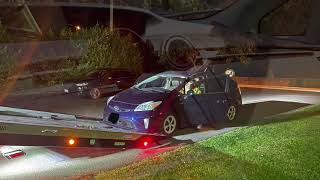
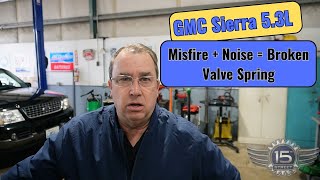
Shop the Parts Behind P3190
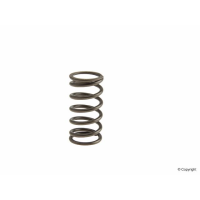
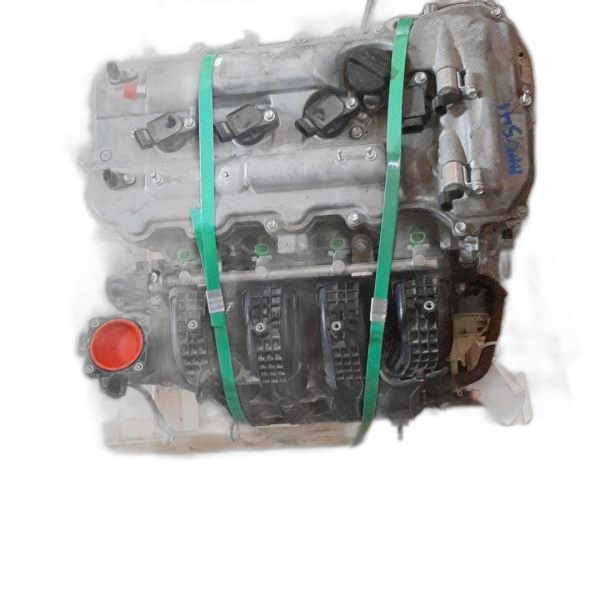
Below are the parts most often responsible for code P3190, ranked by how frequently each one is the actual culprit (per the diagnosis above). Tap any to see what we have for your vehicle.







The information in this article is provided for general reference and educational purposes only. Vehicle specifications, procedures, and part compatibility can vary by production date, trim level, and region. Always consult your vehicle's factory service manual and verify part numbers before purchasing or performing repairs. Safety-critical components such as airbags, seat belts, and braking systems should be installed by a qualified professional.
- 🧭 Diagnostic Flowchart
- 🎬 Helpful Videos
- 🛍️ Shop This Part
- What Does P3190 Mean?
- Can I Drive With P3190?
- Common Causes
- Symptoms
- Common Fixes & Costs
- DIY vs Professional
- Used vs. New Parts: Buying Guide
- What Happens If You Wait — Timeline
- Cost of Not Fixing It
- Diagnosis Steps
- When This Code Triggers (Freeze-Frame Conditions)
- Related Codes
- Climate & Environmental Factors
- How to Talk to a Mechanic About This Code
- Where to Take It: Dealer vs Independent vs Chain
- When to Walk Away From the Repair
- What Scan Tool You Need for This Code
- How to Clear the Code After You Fix It
- Will This Fail Emissions / State Inspection?
- Most Commonly Affected Vehicles
- Manufacturer-Specific Notes
- Real Owner Stories
- 2008 Toyota Prius at 150K miles stalls immediately after oil change
- 2010 Toyota Prius stalls on highway, misdiagnosed as bad 12V battery
- 2010 Lexus CT200h sputters and dies with P3190 after DIY EGR cleaning
- 2021 Chevrolet Silverado with P3190 and engine noise
- How to Prevent This Code From Triggering
- Frequently Asked Questions
- Does P3190 mean my expensive hybrid battery has failed?
- Can I really fix this just by adding gas?
- My car died right after I cleaned the EGR system. What went wrong?
- Why shouldn't I keep trying to start the car?
- My car died right after an oil and air filter change. Could that be related?
- Is it expensive to fix code P3190?
- Key Takeaways
- 🎟️ Get 5% Off