

P3190 on 2011-2017 Lexus CT200h: Poor Engine Power Causes and Fixes
On a 2011-2017 Lexus CT200h, code P3190 means 'Poor Engine Power' and is most often caused by running out of fuel or a vacuum leak. Before attempting complex repairs, add a few gallons of gas and check for disconnected hoses around the air intake and throttle body, a common issue addressed by Lexus TSB L-SB-0019-15 for 2011-2013 models.
- P3190 means 'Poor Engine Power'; it's an engine problem, not a hybrid battery failure.
- The most common and easiest fixes are to add fuel to the tank and inspect all vacuum hoses around the air intake for leaks, especially if you recently performed maintenance.
- For 2011-2013 models, a known issue is a vacuum hose separating from the throttle body, as detailed in Lexus TSB L-SB-0019-15.
- Avoid repeatedly trying to start the engine. This will drain the high-voltage hybrid battery, complicating diagnosis and potentially leading to an expensive, incorrect replacement of the battery.
What's Unique About the 2011-2017 Lexus CT200h
On the CT200h hybrid platform, this code has unique implications. The vehicle can operate silently in EV mode, which can mask the fact that the gasoline engine has failed to start or is out of fuel. Drivers may only notice a problem when the 'Check Hybrid System' light appears, or the car refuses to start after the hybrid battery is depleted from repeated failed engine start attempts. This can lead to a misdiagnosis of a failed hybrid battery, when the root cause is a much simpler engine-related issue. Repeatedly trying to start the engine can drain the State of Charge (SOC) of the high-voltage battery, complicating diagnosis.
Symptoms You May Notice
- "Check Hybrid System" warning light on the dashboard.
- Engine fails to start or starts and then quickly sputters and dies.
- Vehicle may only run in EV mode for a short distance before stopping.
- Engine shudders, shakes, or runs very roughly, especially on startup.
- No response from the gasoline engine when pressing the accelerator.
- Illuminated Check Engine Light.
- Multiple other warning lights (ABS, VSC, etc.) may illuminate simultaneously.
- Failed Hybrid Battery: The engine's failure to start can drain the high-voltage hybrid battery, leading to additional battery-related codes like P3000. This often causes a misdiagnosis of a bad hybrid battery, when the battery was simply depleted by the engine's repeated starting attempts.
- Failed 12V Auxiliary Battery: While a weak 12V battery can cause a host of electrical issues and no-start conditions, it typically won't cause the engine to start, run poorly, and then die, which is characteristic of P3190. However, a very weak 12V battery can sometimes trigger a P3190.
Most Likely Causes
- Out of Fuel 🔴 High Probability The hybrid system can mask the issue by allowing the car to move on battery power, so a driver may not realize the tank is empty until the engine is required to start. The fuel gauge can also be inaccurate when levels are very low.
How to confirm: The simplest confirmation is to add 2-3 gallons of gasoline to the tank and attempt to start the vehicle. Do not trust the fuel gauge if the level is very low. This is the first step recommended in official diagnostic procedures.
Typical fix: Refill the fuel tank.
Est. part cost: $10-$20 - Vacuum Line Separation (Purge VSV / PCV Hose) 🔴 High Probability Lexus issued Technical Service Bulletin (TSB) L-SB-0019-15 for 2011-2013 models specifically for a Purge VSV/PCV vacuum line separating from the throttle body housing, causing a massive vacuum leak. This is also an extremely common issue after maintenance, like EGR or intake manifold cleaning, where a hose is accidentally left disconnected.
How to confirm: Visually inspect all vacuum hoses connected to the throttle body and intake manifold for disconnection, cracks, or looseness. A hissing noise near the intake manifold after starting is a strong indicator. This is a very frequent cause reported by owners on forums like PriusChat and Reddit after performing DIY maintenance.
Typical fix: Reconnect the separated hose. For the issue described in the TSB, the full fix involves replacing the Purge VSV and reprogramming the ECM to prevent recurrence. 🎬 Watch: This DIY fix shows how to resolve P3190 no-start issues.
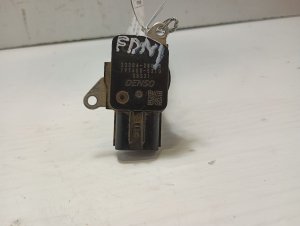
Est. part cost: $0-$70 - Dirty or Faulty Mass Air Flow (MAF) Sensor 🟡 Medium Probability → Shop Fuel Injection Air Flow Meter
How to confirm: Remove the MAF sensor from the air intake tube and inspect it for dirt, debris, or oil on the delicate hot wires. A scan tool can also monitor the 'MAF' data PID; readings should be stable at idle (around 1.5-2.5 gm/s) and increase smoothly with RPM.
Typical fix: Clean the sensor using a dedicated MAF sensor cleaner spray. If cleaning does not resolve the issue, the sensor must be replaced. Denso is the OEM supplier.
Est. part cost: $10-$200 - Weak or Failing Fuel Pump 🟡 Medium Probability → Shop Fuel Pump On higher mileage vehicles, the in-tank fuel pump can weaken and fail to provide adequate pressure, starving the engine of fuel under load. This is a growing trend for Gen 3 Prius platform mates as they age.
How to confirm: A fuel pressure test is required. This involves connecting a fuel pressure gauge to the fuel system to verify it meets manufacturer specifications (typically 304-343 kPa or 44-50 psi).
Typical fix: Replace the in-tank fuel pump assembly, which often includes the fuel filter.
Est. part cost: $200-$400
Rare But Worth Checking
- Clogged or Stuck EGR Valve: The 2ZR-FXE engine is known for severe carbon buildup in its EGR system. If the valve is stuck open, it creates a large vacuum leak at idle, which can cause stalling, rough running, and trigger P3190, often after recent EGR service.
- Clogged Fuel Injectors: On higher mileage vehicles or those run on poor quality fuel, clogged injectors can cause a lean condition and power loss sufficient to set this code.
- Failed Crankshaft or Camshaft Position Sensor: While less common, a failure of these sensors can prevent the engine from starting or cause it to run very poorly, directly leading to a P3190 code.
- Clogged Catalytic Converter: A severely clogged catalytic converter can create excessive exhaust backpressure, choking the engine and preventing it from producing power, which can trigger a P3190 code.
Diagnosis Steps
- Check for other DTCs. If codes like P0171 are present, it strongly suggests a vacuum leak. If P3193 is present, it's almost certainly out of fuel. Troubleshoot other codes first.
- Check the fuel level. Add 2-3 gallons of gas, even if the gauge shows fuel. This is the most common, simplest, and cheapest fix.
- Inspect the air intake system THOROUGHLY. If maintenance was recently performed (especially EGR or intake manifold cleaning), this is the most likely cause. Check for disconnected, cracked, or loose vacuum hoses around the throttle body and intake manifold, paying close attention to the PCV and Purge VSV lines. Ensure the main intake boot between the air filter box and throttle body is secure.
- Inspect and clean the Mass Air Flow (MAF) sensor. Use a dedicated MAF sensor cleaner and handle the sensor carefully. Do not touch the wires.
- Inspect the air filter. A severely clogged air filter can restrict airflow and cause this code.
- Check fuel pressure. If the simple checks do not resolve the issue, a fuel pressure test is needed to diagnose a potential weak fuel pump. The specification is 304-343 kPa (44-50 psi). 🎬 See how to diagnose poor engine power and failed start codes.
- Inspect the throttle body. Check for heavy carbon buildup that could restrict movement and airflow. Clean with a dedicated throttle body cleaner if necessary.
- Check EGR valve. Using a scan tool like Techstream, you can perform an active test to command the EGR valve open and closed to check for response. A stuck-open valve will cause a stall at idle. 🎬 Watch: How to clean the intake manifold to stop engine shaking.
Parts You'll Likely Need
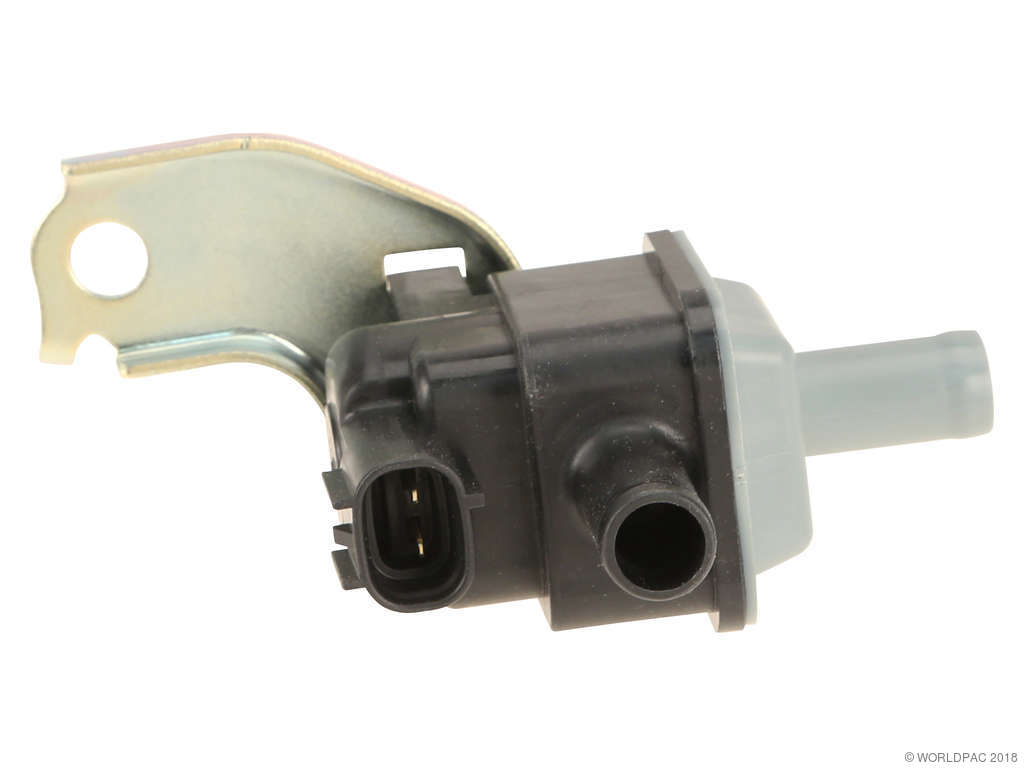
- Purge VSV (Vacuum Switching Valve)
(OEM #25860-37020)— Identified in Lexus TSB L-SB-0019-15 as a primary cause for a vacuum leak that triggers P3190, P0171, and P0A0F on 2011-2013 models. The repair includes replacing this part and reprogramming the ECM.
Trusted brands: Lexus (OEM)
OEM price range: $50-$80
Aftermarket price range: $30-$60 - Mass Air Flow (MAF) Sensor
(OEM #22204-37010)— A dirty or faulty MAF sensor provides incorrect air-fuel mixture data to the ECM, which is a common cause of poor engine performance. Cleaning is often sufficient, but replacement is sometimes necessary.
Trusted brands: Denso (OEM)
OEM price range: $150-$200
Aftermarket price range: $60-$120 - Fuel Pump Assembly
(OEM #77020-76010)— If fuel pressure is low, the engine will be starved of fuel, causing a lack of power and triggering P3190. This is becoming more common as these vehicles age.
Trusted brands: Denso (OEM), Aisin
Related Codes That Often Appear With This One
- P0A0F — Means 'Engine Failed to Start'. This is a very common companion code, as the poor power condition (P3190) often leads to a complete failure to start. TSB L-SB-0019-15 lists them together.
- P3191 — Means 'Engine Does Not Start'. This is a more severe version of P3190 and is often set at the same time, also mentioned in TSB L-SB-0019-15.
- P0171 — Means 'System Too Lean'. This code frequently appears with P3190 when the cause is a major vacuum leak, such as the Purge VSV hose separation mentioned in TSB L-SB-0019-15.
- P3193 — Means 'Fuel Run Out'. This code is specifically triggered alongside P3190 if the system determines the engine failure is due to an empty fuel tank.
Technical Service Bulletins (TSBs) & Recalls
- L-SB-0019-15: Addresses a MIL ON condition with codes P0A0F, P3190, P3191, and P0171 due to the Purge VSV vacuum line separating from the throttle body on 2011-2013 CT200h models.
Platform-Specific Known Issues
- TSB L-SB-0019-15: For 2011-2013 models, this TSB specifically addresses a MIL ON condition with codes P0A0F, P3190, P3191, and/or P0171. The cause is identified as the Purge VSV/PCV vacuum line separating from the throttle body. The official repair is to replace the Purge VSV (part 25860-37020) and update the ECM software. This TSB is a critical piece of information for diagnosing these specific codes on early models.
- Post-Maintenance Faults: A significant number of P3190 cases reported by owners occur immediately after DIY maintenance on the EGR system or intake manifold. In nearly all these cases, the cause was a vacuum hose (most often the PCV hose) that was not reconnected properly, creating a massive vacuum leak.
Mechanic-Grade Diagnostic Values
- Fuel Pressure — expected: 304-343 kPa (44-50 psi). Failure: Pressure below 44 psi indicates a weak fuel pump or clogged filter. One owner found their pressure was only 24 psi, causing the P3190 code.
- Mass Air Flow (MAF) Sensor Reading at Idle — expected: 1.5 - 2.5 gm/s (grams per second). Failure: A reading significantly outside this range, or one that doesn't increase smoothly when the engine is revved, points to a dirty or faulty MAF sensor or a vacuum leak.
- Crankshaft Position Sensor Resistance (Cold) — expected: 1,630 to 2,740 Ohms. Failure: A resistance reading outside of this range when the engine is cold (between -10°C and 50°C) indicates a faulty sensor.
- Crankshaft Position Sensor Resistance (Hot) — expected: 2,065 to 3,225 Ohms. Failure: A resistance reading outside of this range when the engine is hot (between 50°C and 100°C) indicates a faulty sensor.
- Freeze Frame Data Torque Comparison (Techstream) — expected: Actual Engine Torque should be 60% or more of the Requested Torque.. Failure: If the Actual Engine Torque is less than 60% of the Requested Torque value calculated from freeze frame data, it confirms the 'Poor Engine Power' condition.
Scan Tool Commands That Help
- Toyota Techstream: Active Test: Control the Fuel Pump Speed — This allows a technician to command the fuel pump to run without starting the engine, which is essential for safely and easily performing a fuel pressure test.
- Toyota Techstream: Active Test: Control the EGR Step Position — This test commands the EGR valve to open and close. If the engine stalls or runs rough when the valve is commanded closed, it indicates the valve is stuck open, a potential cause of P3190.
- Toyota Techstream: Utility: All Readiness — After performing a repair, this function can be used to check if the monitor for DTC P3190 will run and pass, confirming the fix without extensive driving.
- Toyota Techstream: ECM Reprogramming / Calibration Update — This is required after replacing the Purge VSV for the vacuum line issue on 2011-2013 models, as per TSB L-SB-0019-15, to prevent intake backfires that could dislodge the hose again.
Wiring & Ground Locations
- Engine Ground Points — Several key ground points are located on the front of the engine, visible after removing the plastic engine cover.. A poor engine ground can cause erratic behavior from critical sensors like the crankshaft position sensor, MAF sensor, and throttle body, leading to incorrect data and triggering a P3190 code.
- ECM (Engine Control Module) — Located behind the right side of the dashboard, typically accessible by removing the glove box.. This is the central computer that receives all sensor inputs and sets the P3190 code. Verifying connector integrity and checking for corrosion is a crucial step in advanced diagnosis if sensor and wiring checks prove inconclusive.
Real Owner Repair Stories
- PriusChat user 'nicefighter80' (2012 Lexus CT200h, 155k miles) — After cleaning the EGR valve, cooler, and intake manifold, the engine had a bad shudder/shake on startup, ran for 15 seconds, then sputtered and died, throwing P3190 and other codes. A loud hissing noise was present.
❌ Tried (didn't work) Initial reassembly after cleaning EGR system.
✅ What actually fixed it The user later confirmed a hose connection to the throttle body was left disconnected, causing a massive vacuum leak. Reconnecting the hose resolved the issue. - Reddit user 'ChampionshipBrief669' (2010 Toyota Prius (same 2ZR-FXE powertrain), ~130k miles) — Immediately after a large EGR/intake cleaning job, the engine would start, run smoothly for 10-15 seconds, then shut off with a 'Check Hybrid System' message and code P3190.
❌ Tried (didn't work) Checking EGR valve continuity., Verifying power to the EGR harness.
✅ What actually fixed it The user missed reconnecting the PCV hose to the intake manifold. Securing this hose fixed the no-start/stall condition and cleared the P3190 code. - PriusChat user 'Jdap' (Toyota Prius, 125k miles) — After a major service including EGR/intake cleaning and replacing the PCV valve and spark plugs, the engine made an awful rattling noise and set code P3190.
❌ Tried (didn't work) Thoroughly checking all vacuum hoses and electrical connectors multiple times., Cleaning the MAF and MAP sensors.
✅ What actually fixed it The owner had installed a cleaned EGR valve from a junkyard. The issue was resolved by reinstalling the original EGR valve. The suspicion was that the replacement EGR valve was faulty and likely stuck open, causing the severe running issue.
OEM Part Supersession History
89660-76010, 89660-76011→89660-76012— Updated calibration to address the condition where a vacuum line could separate from the throttle body, as detailed in TSB L-SB-0019-15.
Heads up: When replacing the Purge VSV on a 2011-2013 model for the TSB-related issue, the ECM must be reprogrammed to the latest calibration (or replaced with the updated part number) to complete the repair. Simply replacing the valve is not sufficient.
Model Year Variations Within This Range
- 2011-2013: These model years are specifically called out in Lexus TSB L-SB-0019-15 for an issue where the Purge VSV/PCV vacuum line can separate from the throttle body. The official fix requires replacing the Purge VSV (P/N 25860-37020) and reprogramming the ECM with an updated calibration.
- 2014+: The 2014 facelift model and later years are not included in the TSB for the separating vacuum line, suggesting a design change may have resolved the issue. While vacuum leaks can still occur, they are less likely to be from this specific known defect. Some owners report the EGR system was improved in 2014/2015 models, potentially reducing carbon buildup issues that can contribute to rough running.
Diagnostic Flowchart
Other Known Issues on This Vehicle
Issues unrelated to this code that are worth knowing about as an owner of this generation:
- EGR System Clogging (Valve, Cooler, and Intake Manifold) 🔴 High — Extremely common, especially on vehicles over 80,000 miles. Clogging can begin earlier. Failure to clean the system is a known contributor to head gasket failure. (Ref: Lexus TSB L-SB-0019-16 addresses misfires caused by clogged intake manifold EGR ports for 2011-2016 models.)
- Head Gasket Failure 🔴 High — A well-documented and feared issue, often occurring between 100,000 and 200,000 miles. It is strongly linked to a clogged EGR system causing engine knock and overheating.
- Brake Actuator Assembly Failure 🔴 High — Common failure item, typically after 8-10 years or over 100,000 miles. Results in a loss of braking power, warning lights, and a loud, repetitive buzzing/clicking noise. It is an expensive repair. (Ref: Lexus has had warranty enhancement programs for this part on other models, but coverage for the CT200h may vary.)
- Inverter Failure 🟠 Medium — While less common than EGR or head gasket issues, the inverter (which converts DC from the battery to AC for the motors) can fail, causing a sudden loss of power and a 'Check Hybrid System' warning. (Ref: Recalls were issued for inverters on other Toyota/Lexus hybrids of this era, but the CT200h was not always included.)
- Oil Consumption 🟠 Medium — Early models (approx. 2011-2013) are more prone to oil consumption due to a piston ring design. This can exacerbate EGR clogging and contribute to premature engine wear.
Used vs. New Parts: Buying Guide for This Vehicle
When a used part is the smart pick: Structural components like the intake manifold or the EGR cooler body are excellent candidates for used parts, as they have no moving components and their primary failure mode is clogging with carbon. Buying a used one from a junkyard allows you to clean it thoroughly at your convenience before swapping it onto your car, minimizing vehicle downtime.
Donor-vehicle mileage cap: roughly under 120000 miles for the part to have meaningful remaining life.
What to inspect on the donor part:
- For an EGR cooler or intake manifold, ensure there are no visible cracks or damage to the housings or mounting points.
- Check that all threaded holes are intact and not stripped.
- Avoid parts from vehicles that show signs of a severe head gasket failure (milky oil/coolant residue), as this can be difficult to clean completely.
OEM-only on this vehicle (don't cheap out):
- Mass Air Flow (MAF) Sensor: The ECM is calibrated for the precise readings of the OEM Denso sensor. Aftermarket MAF sensors are notoriously problematic and can cause persistent performance issues and codes.
- Fuel Pump: The fuel pump is critical for system pressure. Denso and Aisin are the OEM suppliers and are highly recommended for reliability. Cheaper aftermarket pumps have a higher failure rate.
- EGR Valve: As seen in repair stories, even a used OEM EGR valve can be faulty. Given the labor to access it, a new OEM valve is a safer investment to avoid repeat work.
Aftermarket brands forum-validated for this vehicle:
- Denso (for MAF, Fuel Pump, Sensors - as they are the OEM)
- Aisin (for Fuel Pump - also an OEM supplier)
Brands owners have reported issues with on this vehicle:
- Unbranded or generic 'white-box' MAF sensors and fuel pumps from online marketplaces are frequently cited as causing more problems than they solve.
Real Owner Stories
Aggregated from forums and TSBs cited above. Mileages and costs reflect what owners reported in those sources.
2012 Lexus CT200h 1.8L 2ZR-FXE
Symptoms: Vehicle shuddered and would not run, displaying code P3190 immediately after the owner cleaned the EGR system and intake manifold.
What fixed it: Reconnecting a PCV hose that had been left disconnected during the maintenance.
Source hint: PriusChat.com thread titled 'P3190, shudder, doesn't run after EGR and IM cleaning'
Lexus CT200h 1.8L 2ZR-FXE
Symptoms: After performing an EGR service, the engine would sputter and die, triggering a P3190 code.
What fixed it: Checking for and reconnecting a disconnected vacuum hose, as suggested by the online community.
Source hint: Reddit r/CT200h thread titled 'P3190 code'
2010-2015 Toyota Prius 1.8L 2ZR-FXE
Symptoms: The vehicle had a P3190 code. The owner replaced the fuel pump, but the issue persisted.
What fixed it: The problem was ultimately traced to bad gasoline. Draining the old fuel and refilling the tank with fresh gasoline resolved the code.
Source hint: PriusChat.com thread titled 'Gen 3 Prius error codes p3190,c1259,c1310'
Related OBD-II Codes
Frequently Asked Questions
I just cleaned the EGR system on my CT200h and now it won't start and shows code P3190. What did I do wrong?
Is there a Technical Service Bulletin (TSB) for code P3190 on my 2012 Lexus CT200h?
My CT200h fuel gauge shows two bars, but the engine sputters and dies with a P3190 code. Could it still be out of fuel?
The dashboard says 'Check Hybrid System' and the engine shudders. Is my expensive hybrid battery failing?
Does the P3190 code on the CT200h affect the Toyota Prius as well?
Helpful Videos
Used OEM Parts in Stock
New Aftermarket Parts Available


The information in this article is provided for general reference and educational purposes only. Vehicle specifications, procedures, and part compatibility can vary by production date, trim level, and region. Always consult your vehicle's factory service manual and verify part numbers before purchasing or performing repairs. Safety-critical components such as airbags, seat belts, and braking systems should be installed by a qualified professional.
- Lexus CT200h:
- 🧭 Diagnostic Flowchart
- 🎬 Helpful Videos
- 🛍️ Shop This Part
- What's Unique About the 2011-2017 Lexus CT200h
- Symptoms You May Notice
- Most Likely Causes
- Rare But Worth Checking
- Diagnosis Steps
- Parts You'll Likely Need
- Related Codes That Often Appear With This One
- Technical Service Bulletins (TSBs) & Recalls
- Platform-Specific Known Issues
- Mechanic-Grade Diagnostic Values
- Scan Tool Commands That Help
- Wiring & Ground Locations
- Real Owner Repair Stories
- OEM Part Supersession History
- Model Year Variations Within This Range
- Other Known Issues on This Vehicle
- Used vs. New Parts: Buying Guide for This Vehicle
- Real Owner Stories
- 2012 Lexus CT200h 1.8L 2ZR-FXE
- Lexus CT200h 1.8L 2ZR-FXE
- 2010-2015 Toyota Prius 1.8L 2ZR-FXE
- Related OBD-II Codes
- Frequently Asked Questions
- 🎟️ Get 5% Off